Pages

Showing posts with label GM Fish. Show all posts

Saturday, 29 October 2016

Soylent Sickness

Life hacks are designed to be simple and quick solutions to some of life’s complex problems. Sometimes it’s a tip or another way of looking at a problem that makes it ... 

October 26, 2016

Food Quality

Story at-a-glance

  • Developed by a technology entrepreneur, Soylent has produced a nutritional product claiming to meet all your daily requirements in a powder or bottle
  • Now facing their second production problem in the three years they’ve been in business, Soylent denies any issue with contamination or flaws in production
  • Soylent proudly uses as many GMO foods as possible, increasing your toxic load of pesticides and ignoring independent research demonstrating significant health effects
By Dr. Mercola
Life hacks are designed to be simple and quick solutions to some of life’s complex problems. Sometimes it’s a tip or another way of looking at a problem that makes it easier to address the challenge. In the case of Rob Rhinehart, serial entrepreneur, he decided to hack his food supply.
Having spent $100,000 without success from the $170,000 he and his partners had received from Y Combinator, Rhinehart stopped looking at technological advancements.
He had become fascinated with the idea of reducing his food bill and the time it took to cook and eat. Without any education in nutrition, food preparation or biology, he used the last of the money to start Soylent.1
While his new company has a large fan base, the product will have difficulty living up to the hype based on the nutritional premise behind the product line and the manufacturing foundation of the product.
Although using a meal replacement may allow you slightly increased productivity, eating meals with friends and family has a distinct emotional and psychological benefit to your health.2,3,4
In recent weeks their newest product line, Soylent Bar, has been recalled as consumers are suffering from hours of vomiting, dehydration and diarrhea, some requiring hospitalization. The first health issues were reported September 7, and the company is still struggling to determine the source of the problem.5

Can You Drink Your Daily Nutritional Requirements?

The primary premise behind Soylent is that you can drink your complete nutritional requirements and never have to eat food again. Taking advantage of a large community of people who continually strive to find more hours in their day, Rhinehart hit upon a marketing strategy that launched his company and built a strong fan base.
Other companies have produced liquid nourishment they claim are supplements to your regular food intake, reportedly designed to improve your vitamin intake without compromising taste and quality.
However, manufactured liquid food cannot adequately replace the nutrients and micronutrients your body extracts from organic, whole foods.
Ambronite, a self-proclaimed “supermeal” in a bottle, marketed as a meal replacement drink, has a similar idea about natural food sources. Founded in 2013 and carried in 35 countries,6 co-founder Simo Suoheimo told International Business Times:7
"The main thing with longer space voyages that we're currently seeing, the trend in this sort of research, is stemming from the fact that we haven't really solved nutrition science.
We're still very much in the beginning of understanding what nutrients play a part in human survival and indeed optimizing performance.
The fact is that with the current knowledge it's really hard to create a complete product with synthetics because we don't even know yet what we have to include in there. Whereas products based on real actual foods solve this pretty well."

Soylent Soy Not Soylent Green

In the 1973 science-fiction film “Soylent Green,” an overpopulated futuristic society was reduced to living on wafers, called Soylent Green. Only at the end of the film do consumers learn the wafers have been made of human flesh.
In the early months, Rhinehart was encouraged to change the name of his company, but said he liked the self-deprecating nature of the name. His idea was to poke fun:8“The general ethos of natural, fresh, organic [and] bright — this is the opposite.”
The early recipes used canola oil for lipids and fats, maltodextrin (another name for sugar) and oat flour for carbohydrates, rice for protein and sucralose (key ingredient in artificial sweetener Splenda) to mask the taste of the vitamins.9
It is outwardly apparent from observing dietary habits that you can survive on less than optimal nutrition. But the resulting poor health, obesity, heart disease, diabetes, cancers and other illnesses make it less than an ideal choice.
Scientists are not yet aware of how your body uses phytochemicals and other nutrients that have not yet been identified. Dr. Walter Willett, Harvard School of Public Health chair of the nutritional department, was quoted in The New Yorker, saying:10
“It’s a little bit presumptuous to think that we actually know everything that goes into an optimally healthy diet. [You can live without plant chemicals.] But you may not live maximally, and you may not have optimal function. We’re concerned about much more than just surviving.”

Proud to Use Genetically Engineered Foods Despite Overwhelming Evidence of Risks

In this documentary you’ll discover some of what happens when we use genetically engineered (GE) foods. Scientists are only beginning to uncover the long-term effects of splicing the genes of one living creature into another.
However, Soylent isn’t convinced by independently funded research and has relied on information from the American Medical Association (AMA), World Health Organization (WHO) and the European Commission, claiming no credible evidence exists that genetically modified (GM) foods are unsafe.11 However, even WHO admits that:12
“Different GM organisms include different genes inserted in different ways. This means that individual GM foods and their safety should be assessed on a case-by-case basis and that it is not possible to make general statements on the safety of all GM foods.”
Then, in 2015, 19 of the 28 countries in the European Commission decided it was in the best interest of their citizens to say “No” to genetically modified organisms (GMOs) within their borders, and all 28 countries require labeling of foods containingGMO products.13 According to Soylent:14
“All of our products use bioengineered algae as a source of lipids and essential omega fatty acids. Produced efficiently in bioreactors, rather than on farmland, these single-celled organisms require far less resources than traditional agriculture.”

Genetic Engineering Is Not Clear Cut

Although many organization claim that “GMO foods are safe,” this statement is far from the truth for two different reasons. In the first place, genetically engineering any plant or animal is not as clear cut as moving one puzzle piece from one plant or animal to another.
This is a laboratory-based technique that has produced unexpected and toxic results when scientists begin tampering with the DNA of living organisms. Manipulating the genetics of a plant or animal is very imprecise.
Pesticide-producing plants designed to increase crop yield, and an inability to adequately predict the long-term effects of GM plants and animals in the food supply chain, only increases your risk of illness and disease.
In one 90-day trial researchers were able to detect organ disruption in the kidneys and livers of laboratory animals that “could be the onset of chronic diseases.”15
The researchers noted that at that time there was no time limit for studying the effects of GMO food on humans and suggested it should be made compulsory to study these effects longer than 90 days, and should include multigenerational studies to assess long-term health and fertility issues.
This is plain common sense, since no one alive today will eat GMOs for mere months unless they’re eating a wholly organic diet from birth until death.

Toxic Chemical Exposure Increases When Total Food Supply Is GMO

Soylent promises their customers that the drinks and bars they sell can meet all your nutritional needs. Some of their customers have taken this to heart and completely eliminated other food sources. This may be a very dangerous choice, as plant-based GMO products are genetically manipulated to withstand powerful pesticides allowing farmers to use higher and higher doses to kill weeds that are becoming resistant to chemical control.16,17 
This means you are exposed to greater amounts of toxic chemicals with the increased number of GMO products you consume. If your total nutrition comes from a product using mostly GMO-based nutrients, then it stands to reason that unless those ingredients are first completely cleansed of pesticide residue and pesticides bred into the plant are removed (which is currently not possible), you are increasing your toxic load with each meal.

Current Bar Recall Is Not the First Problem Soylent Has Experienced

Soylent’s new bars are being recalled due to their causing severe illness, but this isn’t the first problem this company has faced since its inception in 2013. In 2015 they introduced 2.0, their signature drink in a bottle. Whereas before customers mixed a bottle of lipids with powder and water, the 2.0 drink came premixed in a slick white plastic bottle.
Mere weeks after the product’s introduction, shipments were delayed.18 Amid customer complaints, the company admitted that some of their bottles were growing mold on the exterior surfaces. However, images sent to Motherboard clearly show mold growth both on the exterior and interior of their bottles.19
The current problems with the Soylent bar will not disappear quickly. One Reddit user has compiled 58 reports of gastrointestinal distress since September 7.20,21 The original report in Ars Technica listed 33 reported illnesses on October 10, but the list jumped to 58 by October 16. Rosa Labs, manufacturers of the Soylent bars released this statement:22
“After these reports, we have retrieved remaining bars from our consumers and have personally consumed many of the remaining bars without adverse effects. We have also sent them for further microbiological testing and all tests have come back negative. Based on this we remain very confident in the safety of the bars.”
Soylent has theorized the problem results from an intolerance or sensitivity to one of the ingredients in the bars. Although Soylent said the manufacturing facility, Betty Lou’s in McMinnville Oregon, is inspected annually, an online U.S. Food and Drug Administration (FDA) database indicates the last inspection was done in 2014 with a “voluntary action indicated” result.23

Is Artificial Sweetener to Blame?

BuzzFeed quotes sources close to Soylent’s production who believe the gastrointestinal problems may be related to the amount of sucralose in the bar, but the company has no current plans to reduce the amount.24 Each bar contains 30 milligrams (mg) of sucralose, the key ingredient in the artificial sweetener Splenda.25
Despite the company’s interest in laying responsibility for the vomiting and diarrhea at the doorstep of sucralose, Diet Coke and Pepsi One both have 40 mg of sucralose in one can of soda, 10 mg more than a Soylent bar.26
That said, sucralose does come with other health concerns. In 2013, the Center for Science in the Public Interest (CSPI) downgraded sucralose from “safe” to “caution” after preliminary findings suggested sucralose consumption caused leukemia in mice.27 The study was finally published in early 2016, demonstrating male mice who consumed sucralose had a greater potential of developing leukemia and malignant tumors in their lifetime than did the female mice.28 The researchers concluded:
“These findings do not support previous data that sucralose is biologically inert. More studies are necessary to show the safety of sucralose, including new and more adequate carcinogenic bioassay on rats. Considering that millions of people are likely exposed, follow-up studies are urgent.”
Lisa Lefferts, senior scientist at CSPI, addressed concerns that in this study mice received doses of sucralose higher than currently recommended by the FDA. She was quoted by EatClean.com saying:29
"[E]ven if you consume less, that doesn't mean there's no problem. When something causes cancer at high doses, it generally causes cancer at lower doses, the risk is just smaller."

SAD NEWS: House Passes DARK Act Compromise

The House passed a compromise to the DARK Act that will force food distributors to disclose the presence of genetically engineered (GE) ingredients with a smartphone scan code. President Obama has signed the bill that removes states’ rights for labeling GMOs. The bill is full of loopholes, which may allow genetically modified ingredients to slip through unannounced.

Genetically modified organisms (GMOs), aka GE foods, are live organisms whose genetic components have been artificially manipulated in a laboratory setting through creating unstable combinations of plant, animal, bacteria and even viral genes that do not occur in nature or through traditional crossbreeding methods.

GMO proponents claim that genetic engineering is “safe and beneficial,” and that it advances the agricultural industry. They also say that GMOs help ensure the global food supply and sustainability. But is there any truth to these claims? I believe not. For years, I’ve stated the belief that GMOs pose one of the greatest threats to life on the planet. Genetic engineering is NOT the safe and beneficial technology that it is touted to be.

The FDA cleared the way for GE Atlantic salmon to be farmed for human consumption. Thanks to added language in the federal spending bill, the product will require special labeling so at least consumers will have the ability to identify the GE salmon in stores. However, it's imperative ALL GE foods be labeled clearly without a smartphone scan code because not everyone owns a smartphone.

The FDA is threatening the existence of our food supply. We have to start taking action now. I urge you to share this article with friends and family. If we act together, we can make a difference and put an end to the absurdity.

Boycott Smart Labels Today

When you see the QR code or so-called Smart Label on a food product, pass it by. Products bearing the Grocery Manufacturer’s Association’s (GMA) Smart Label mark are in all likelihood filled with pesticides and/or GMO ingredients.

The GMA’s 300-plus members include chemical technology companies, GE seed and food and beverage companies. Monsanto, Dow and Coca-Cola are just some of the heavy-hitters in this powerful industry group, which has showed no qualms about doing whatever it takes to protect the interest of its members.

Don’t waste your time searching through their website, which may or may not contain the information you’re looking for. If they insist on wasting your time and making your shopping difficult, why reward them with a purchase?

A little known fact is that the GMA actually owns the "Smart Label" trademark that Congress has accepted as a so-called “compromise” to on-package GMO labeling, and that’s another reason why I believe the Smart Label mark is the mark of those with something to hide, such as Monsanto.
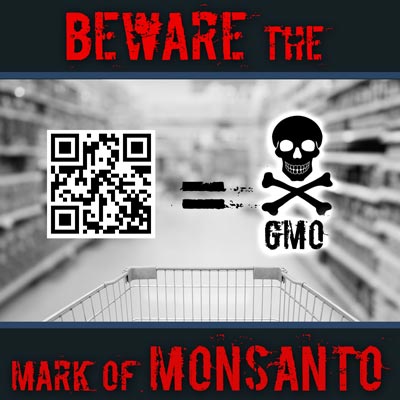

Will you financially support a corrupt, toxic and unsustainable food system, or a healthy, regenerative one? There are many options available besides big-brand processed foods that are part of the “GMA’s verified ring of deception.” You can:
  • Shop at local farms and farmers markets
  • Only buy products marked either “USDA 100 percent Organic” (which by law cannot contain GMOs), “100 percent Grass-Fed” or “Non-GMO Verified”
  • If you have a smartphone and you don’t mind using it, download the OCA’s Buycott app to quickly and easily identify the thousands of proprietary brands belonging to GMA members, so you can avoid them, as well as identify the names of ethical brands that deserve your patronage
Last but not least, encourage good companies to reject QR codes and to be transparent and clear with their labeling. This will eventually ensure that all GMO foods can easily be identified by the GMA’s “verified ring of deception” mark that is the Smart Label.

Campbell’s, Mars, Kellogg’s, ConAgra and General Mills all vowed to voluntarily comply with Vermont's GMO labeling law by labeling all of their foods sold across the U.S. Will their plans change now that the law has been passed by Congress and signed by the President? That remains to be seen, but if you like these companies, I would encourage you to reach out to them and ask them to remain steadfast in their promise.

Non-GMO Food Resources by Country

If you are searching for non-GMO foods, here is a list of trusted sites you can visit.

http://articles.mercola.com/sites/articles/archive/2016/10/26/soylent-gmo-foods.aspx

Friday, 18 December 2015

Shocking News — FDA Approves Genetically Engineered Salmon

No Matter How Healthy It Appears - Don't Eat This New Fish
Long considered healthy, it's been modified into a strange new fish, which will probably prove to be an unmitigated health disaster. How the FDA got it so wrong, and how this landmark reckless action opens the floodgates to 35 other animal species waiting in the genetic engineering pipeline.

December 01, 2015

Story at-a-glance
  • The US Food and Drug Administration (FDA) has approved the first genetically modified food animal — an Atlantic salmon that grows twice as fast as natural salmon
  • The FDA will not require any additional labeling identifying the genetic alteration of this salmon
  • The food industry is trying to convince the Senate to preempt state labeling, and halt federal labeling, by introducing QR codes on foods, which gives the appearance of providing information on GMOs


By Dr. Mercola
On November 2, 2015, the U.S. Food and Drug Administration (FDA) approved the first genetically modified food animal1 — an Atlantic salmon that grows twice as fast as natural salmon, thanks to the insertion of genes from Chinook salmon and eelpout (an eel-like fish).
As a result, they carry three copies of each chromosome instead of two. But that's not the only change. Their sex hormones will also undergo complicated manipulation to ensure they're all female.
They're also said to be sterile, as an added precaution should they manage to escape, but the sterilization process has been criticized as flawed, and not 100 percent guaranteed.2
Adding insult to recklessness, the FDA will not require any additional labeling identifying the genetically aberrant nature of this salmon. The news of the approval was shocking to many, considering the strong opposition to it, and undoubtedly resulted in more than a few exasperated facepalms.

Critics Have Long Raised Serious Questions About Human and Environmental Safety

The FDA claims there's "reasonable certainty of no harm" coming from eating Aquabounty's "Frankenfish." Even the Center for Science in the Public Interest3(CSPI) has gone on record saying the genetically engineered (GE) salmon is safe to eat and will not harm the environment.
But on what, exactly, are these opinions based? As noted by Food Democracy Now!:
"... [A]pproval of AquaBounty's genetically engineered salmon was done using only the company's own shoddy scientific studies, which were so poorly designed they wouldn't pass a 5th grade science fair.
For two of the studies submitted, AquaBounty used sample sizes so small that they have no scientific credibility, with only 12 fish tested for one study, while another study on possible allergic reactions in humans involved only six fish!"
They're far from alone in their critique. In a 2011 interview,4 Professor Anne Kapuscinski of Dartmouth College, an environmental scientist and scientific adviser to the government on transgenic organisms noted:
"My main concern was that the kind of data presented [by Aquabounty] had gaps, and the quality of the analysis of the data, especially the statistical analysis, was really quite a low bar...
I was concerned that there were some problems with small sample sizes, some problems with statistical analysis, and I was even more concerned that there were key parts missing from the risk assessment.
It seemed like the approach taken, the risk assessment, wasn't really up to speed with the state of the art risk assessment."

Wait... Is It a Fish, or a Drug?

But that's not all. The FDA is not regulating Aquabounty's salmon as food. It chose to review it as a drug.5
That's right, all GE animals, starting with this GE salmon, will be regulated under the new animal drug provisions of the Federal Food, Drug, and Cosmetic Act, "because the recombinant DNA (rDNA) construct introduced into the animal meets the definition of a drug."
Yet the reason it puts forth for not requiring a label is that it's nutritionally equivalent to conventional farm-raised Atlantic salmon. So which is it — a fish or a drug?
In the eyes of the FDA, it's a perfectly normal fish, but it's also a drug, but since it's a fish that is comparable to other fish, it doesn't need to be labeled, even though all drugs typically need to be labeled... Figure that one out if you can!
It's worth reiterating that the alleged nutritional equivalence is that of farm-raised salmon, not wild.
And studies have shown there are significant nutritional differences between farmed and wild salmon, and as for the labeling issue, we have labeling requirements to distinguish between farmed and wild too. But not for this sterile, genetically engineered, all-female lab-created salmon.

Why Regulating GE Animals As Drugs Is a Bad Idea

It's important to realize that regulating this fish (and any subsequent GE food animals) as a drug rather than a food has implications. As previously noted by Food and Water Watch:6
"The FDA has gotten it wrong from the very beginning: it chose to regulate GE salmon as it would regulate a drug, not a food — even though consumers could end up eating it.
This means that the FDA is not comprehensively examining many critical dimensions surrounding the food safety of GE salmon as an actual food product for human consumption.
Independent scientists have criticized the risk assessment for GE salmon due to the agency's heavy dependence on very small sample sizes. Using only a handful of GE salmon in their assessment makes the FDA's subsequent statistical analysis questionable at best.
Their analysis did demonstrate that their small sample of GE salmon showed 40 percent higher rates of a hormone linked to cancer and 20 to 50 percent higher allergenic rates — along with higher rates of physical deformities in GE salmon.
But the FDA's conclusion focused on the fact that it could not detect a difference between GE and non-GE salmon. This is how they determined that GE salmon is safe." [Emphasis mine]
In a 2010 letter7 to the FDA, the group notes:
"The fish exhibits a multitude of material differences, evident in measures of allergenicity, hormone levels, fatty acids, amino acids, vitamins, and minerals. In fact, in every food safety aspect considered by the FDA, the agency found double-digit differences between GE salmon and control groups.
Disconcertingly, as members of the FDA's Veterinary Medicine Advisory Committee repeatedly pointed out during their meeting in September, the FDA's scientific approach and statistical analysis were conducted in such a way that these differences went largely unacknowledged and unexamined by the agency.
But even the pervasive flaws in the FDA's process cannot mask the ubiquitous differences in GE salmon. Of the 60 nutrition analytes that the FDA considered... more than a third of these showed double-digit differences compared to control groups. And the GE salmon exhibited triple-digit differences in four fatty acids.
Indeed the overall picture from the data is one of GE salmon being high in fat — though not higher in beneficial omega fats-and lower in protein. Because salmon are prized for having high protein content and healthy fat levels... these differences are of particular interest to consumers."

FDA Does Not Have a Track Record of Correctly Assessing Health Threats

Both the FDA and CSPI have a history of being wrong. Both were wrong about trans fats, for example, but the truth didn't become fully apparent until decades had passed and tens of thousands of people had died from heart disease as a result of eating a trans fat-laden diet. CSPI purports to be a consumer watchdog group focused on nutrition and food safety, but history shows they're seriously misguided when determining what's in the public's best interest.
As for the FDA, it has become little more than a rubber-stamping agency for food and drug industry experiments. At one point, "FDA Approved" actually meant something, but those days are long done. It's truly shocking that, right in the midst of rising scientific concern about genetically modified organisms (GMOs), the FDA ignores all warning signs and approves a genetically engineered food animal, and without a labeling requirement to boot!
As reported by Reuters:8

"The approval for the fish, to be sold under the AquAdvantage brand, requires that the salmon be raised only in two designated land-based and contained hatcheries in Canada and Panama, and not in the United States. All of the fish will be female, and reproductively sterile, to prevent inadvertent breeding of the genetically modified fish with wild salmon, FDA officials said.
The agency on Thursday also issued draft guidelines on how food manufacturers could identify whether the salmon in their products are genetically modified. The guidelines state that such labeling would be voluntary."

Approval of GE Salmon Intensifies Opposition

Following the approval, Food and Water Watch announced it is talking to members of Congress about rolling back the approval. If that doesn't work, the group may file a lawsuit to block the fish from getting to market. Some retailers have already pledged to not carry the GE salmon, including Kroger Co., Safeway, Trader Joe's, and Whole Foods Market.
The Center for Food Safety has also vowed to sue the FDA over the decision, and environmental groups have already filed suit against the Canadian government. As reported by Newsweek,9 the groups argue that: "the permission granted to AquaBounty Technologies to cultivate its AquAdvantage salmon eggs on Prince Edward Island was too wide in scope and would allow other GM animal companies to do the same without proper oversight."
According to Friends of the Earth, an estimated 35 other species of genetically altered food animals are in the pipeline, including chickens, pigs,10 cows, and other species of fish. The approval of GE salmon effectively opens the floodgates to a dietary experiment of gigantic proportions, and the results are far from predictable!
Zen Honeycutt, founder of Moms Across America, may have stated the solution best when she said:11 "Moms buy 85 percent of the food. If we don't buy it they can't sell it, regardless of the corrupt lawmaking." [Emphasis mine] A growing number of studies have linked GE crops like corn and soy to animal and human health problems, as well as environmental problems.
As for the salmon; they will only be allowed to be raised in land-based tanks, but what if there's an environmental disaster, such as a flood, hurricane, or earthquake? Accidental or even intentional release by an employee is another variable.
Just look at places like Florida, where deadly pythons have been released into the wild. It's virtually inevitable that somehow, some way, somebody will release a few of these hatchlings or fish into the wild, because that's what humans do — we're inherently reckless and largely ignorant.
Were these gigantic carnivorous salmon to get out into the wild, they could potentially wipe out the natural salmon population.12 And should even a small fraction of escaped fish turn out to be fertile after all, they could breed with other salmon, permanently altering the entire salmon population. 
Why in the world are we taking these insane risks just so salmon farms can save a few bucks in the short-term?

The Great Salmon Fraud — yet Another Reason Why GE Salmon Should Be Labeled

According to recent reports,13,14,15 massive fraud is being committed already, with more than 40 percent of salmon being mislabeled during off-season. If the industry cannot keep track of farmed versus wild, how can we expect them to prevent farmed GE salmon from entering the wild, and/or getting mixed up — label wise — with wild salmon, which at present is the only way to avoid this GE fish?
The salmon fraud in question was revealed by the environmental group Oceana, which conducted DNA testing on 82 samples of salmon gathered from stores and restaurants in Virginia, Washington D.C., Chicago, and New York, between December 2013 and March 2014. Their results showed that:
  • Overall, 43 percent of the samples were mislabeled
  • 69 percent involved farm-raised salmon being represented as wild-caught salmon
  • 67 percent of the restaurant samples were mislabeled
  • 20 percent of store bought salmon was mislabeled
  • Larger grocery chains had fewer incidences of mislabeling compared to smaller grocery stores
The organization notes that during winter months, when wild-caught fish are out of season, your likelihood of buying mislabeled fish is far higher than during summer months when wild salmon is plentiful. A 2013 investigation, in which samples were collected from stores and restaurants in the summer, found that only seven percent of the salmon were mislabeled. As reported by NBC2 News:16
"There is little traceability in the supply chain for fish, in large part because the majority of wild-caught salmon in the US is exported for processing overseas in order to cut costs. After exporting, it is very difficult to determine how much of our wild salmon returns to the US with the correct labeling... Consumers should be suspicious of wild-caught salmon that has a relatively low price out-of-season. "
The likelihood that GE salmon will end up being mislabeled as wild is probably just as high as farmed fish being mislabeled as wild. Overall, your chances of being fooled into eating this GE salmon disguised as something else is high unless you don't know the complete supply chain, which most don't. In light of the rampant mislabeling already occurring, it seemsinevitable that GE salmon will simply become part of the 'wild salmon scam.'

The Hypocrisy of Senator Murkowski Has Not Gone Unnoticed

Senator Lisa Murkowski from Alaska recently shared her concerns with the President, saying17 the FDA's approval of AquAdvantage salmon is "quite disturbing news to any of us who care about our wild species of salmon." She went on to say:
"This ... is a process that splices genetic material from a Chinook salmon, a king salmon, and ... integrates it with a pout fish and an Atlantic salmon. People might know about an Atlantic salmon, a farmed salmon. What is an ocean pout? ... An ocean pout is basically this eel-type of bottom fish. Those of my colleagues who know their salmon know about the Chinooks, the sockeyes, and the chums, and they know that this isn't anything close to a salmon ... This is an eel ...
The resulting organism, this company claims, is going to grow to the size of an Alaskan king salmon in a shorter period of time than that found in nature. Freaky. We call this combination 'Frankenfish' because it is just not right ... It disturbs me, quite honestly, that the FDA would sign off on the approval of a genetically engineered animal designed for human consumption...
If this is going to be allowed into the markets...then it needs to be labeled as such. The FDA has said there will be draft guidance on voluntary labeling ... That is not good enough for this mom. That is not good enough for most who care about what their families are eating. So we are going to continue to press for mandatory labeling if the FDA is going toapprove — wrongheadedly, in my mind — this genetically engineered fake fish for human consumption. They darn well better agree that labeling will be required because I am not going to eat it ..."
With a speech like that, you'd think Sen. Murkowski would be supportive of GMO labeling. But no. She's not. She does want labeling for GE salmon, but she has as of yet refused to support GMO labeling of all foods. This is about as hypocritical as it gets. To garner support for her GE salmon label, Murkowski said it wouldn't set a precedent for labeling of GE crops, because: "Corn doesn't swim from one field to another and propagate with other corn in another state. Fish move. Fish escape." 18
Clearly she's clueless about how crop pollination worksThat level of ignorance if completely unacceptable at this point, as the future of mankind is hanging in the balance. Pollen, like fish, escape their confines by way of blowing winds and pollinating insects.
There's absolutely no way to stop transgenic plants from propagating outside their designated planting areas. Since they cannot be confined, transgenic plants pose just as much risk to the environment and to native or conventional plant species as transgenic fish do.
Transgenic organisms are novel; different than their traditional counterparts. Consumers have a right to know if eel is spliced with salmon, and if bacteria are spliced with corn. One is not more important to label than another. Transgenic food is not a consumer expectation, and therefore it must be identified, and states have a right to do so.
Center for Science in the Public Interest has also been staunchly against labeling GMO's, yet they too recently told Politico that consumers should know if they are eating GE fish. This is the same hypocritical double speak we've seen from Senator Murkowski, showing just how contradictory this organization really is.

Senators Ready to Preempt State Labeling in Exchange for SmartLabels

The Grocery Manufacturers Association (GMA), which was one of the hidden architects of HR 1599,19 incorrectly named "The Safe and Accurate Food Labeling Act"20,21,22 but more appropriately called the DARK Act (Deny Americans Right to Know) claims that GMO labeling would increase food prices by $500 for a family living in New York.23
This lie was in part how this anti-democratic, anti-consumer, and Monsanto-protection legislation ended up being passed by the House of Representatives back in July 2015. The bill prevents states from creating their own food labeling requirements for GMOs, and if passed by the Senate, it would rescind Vermont's labeling law, set to take effect in July 2016. However, as noted by The Huffington Post:24

"The Senate does not seem to want to go along with this trampling on the democratic decision making of states that have voted for labeling. So the industry is now floating an idea in the Senate that would still preempt state labeling and halt even federal labeling, but would give the appearance of calling for labeling of all GE foods.
The latest ploy? QR codes... [USDA Secretary Tom] Vilsack and... Hillary Clinton are promoting QR code information on GE foods as sufficient to rescind the mandatory on package clear and accessible labeling required by the state laws."
QR stands for Quick Response, and the code can be scanned and read by smart phones and other QR readers.25 The code brings you to a product website that provides further details about the product. So instead of declaring GMO ingredients right on the box so you can see it at the moment of purchase, you have to navigate through the product's website to try to figure out if any of its ingredients are transgenic.
And that's if the company is honest about it in the first place. There's nothing forcing companies to declare GMOs on their website. On the contrary, HR 1599 allows GMOs to be promoted as "natural," which further adds to the confusion. But getting back to the issue of cost, how can printing four words on a label raise the annual food cost by $500 per family, while printing a new QR code and implementing and maintaining a website doesn't affect prices at all?
The industry completely destroys their own argument with the QR code program, and show us their true intention — which is to HIDE any information relating to GMO ingredients as far away from the product as possible. Unfortunately, the food industry is inching closer to converting the Senate to this idea, which would be an absolute disaster.

Important Action Item: Speak to Your Senators

At this point, it's really important to contact your Senators to tell them that QR codes do NOT in any way eliminate the need for GMO labeling. In fact, QR codes or SmartLabels are inherently discriminatory, since you cannot use them unless you own a smartphone. Thirty-six percent of Americans do not own one.26 Moreover, only 50 percent of low income people and those living in rural areas own a smartphone.
The DARK Act preempts states' rights and violates individual rights, and as such must not pass. Implementing QR codes does not change those facts. Democrats from agricultural states in particular need to be reminded about the President's executive order on preemption of states' rights and standing up for the rights of consumers. As noted in a 2009 article by the Federalist Society for Law and Public Policy Studies:27
"On May 20, 2009, President Obama issued a Memorandum for the heads of executive departments and agencies on preemption. The purpose of that Memorandum was to declare the new Administration's 'general policy' to be that 'preemption of State law by executive departments and agencies should be undertaken only with full consideration of the legitimate prerogatives of the States and with a sufficient legal basis for preemption.'
The President explained that, even though the Federal Government's role in promoting the general welfare is 'critical,' the States play a concurrent and often more aggressive role in protecting the health and safety of their citizens and the environment. He stated that overreaching by the Federal Government with respect to preemption limits the ability of the States to 'apply to themselves rules and principles that reflect the[ir own particular] circumstances and values...'
The President's Memorandum discouraging regulatory preemption comes against a backdrop of calls from Congress and others for increased regulation in a variety of areas. If put into law, market participants will have to shoulder greater regulatory burdens, but they will not receive immunity from state court lawsuits by doing so unless Congress provides for such immunity."
You can also find your Senators' contact information by calling the Capitol Switchboard at 202-224-3121. A phone call has greater impact than an email, but a face-to-face meeting is usually the most impactful of all. In addition to contacting the two Senators representing your state, you can also sign the Food Democracy Now!'s petition, addressed to members of Congress, the FDA, and the President Obama.

SmartLabel Campaign Is a Ploy That Has Nothing to Do with GMO Transparency

For the record, the idea that adding the words "Produced with Genetic Engineering" to food labels would increase food prices was a bold-faced lie to begin with. The argument is quite idiotic if you take a moment to reflect on past label changes. Did the addition of a peanut allergy warning raise food prices? How about "contains soy and milk" warnings?
Now, the FDA wants to add a line for added sugars to the label, and while the food industry has a lot to say about why that shouldn't be added, the issue of it raising prices is NOT one of them. That really should tell you something.
If your personal experience with food prices through various label changes does not convince you that the GMA's argument is a ploy, take a look at the Environmental Working Group's "GMO Labeling Won't Increase Food Prices" page.28 It lists six different studies that have analyzed the costs associated with GMO labeling and found them to be negligible to nonexistent.
However, for companies to create and maintain a website filled with information for each and every product, THAT, I bet, will cost money, and could very well result in price hikes.
These SmartLabels do not improve access to information, as Hershey's claims in their ad. Instead, by making finding the truth time consuming and cumbersome, food makers can count on many Americans staying in the dark about the presence of GMOs in their products. Imagine, for each and every product you're considering buying, you have to scroll through an entire website on your smartphone! How helpful is that really?
Personally, I cannot be bothered with such aggravation, but then again, I rarely buy processed foods and therefore avoid label reading altogether. That is, I believe, the best answer in these times of obfuscations and lies. However, GMO labeling is ultimately about being helpful to everyone. You shouldn't have to own a smartphone to obtain this information. Polls29 show 94 percent of Americans want GMOs to be labeled.
We didn't say we want to wade through pages of nonessential information and advertising gimmicks for each and every product to get to that information. Another irony is that the food industry has often balked at adding information on labels because too much information would simply confuse consumers. And then they add entire websites to the label!
URGENT: Two Major Issues to Set Our Senators Straight on Before It's Too Late
It's imperative to concentrate our efforts on our senators right now, and to inform them accurately. They're being deceived by industry lobbyists, and this is our last chance to preserve our right to know what is in our food.

For example, Rep. Mike Pompeo (R-Kan) introduced a bill that would preempt states' rights to enact GMO labeling laws. It would specifically prohibit Congress or individual states from requiring mandatory labeling of GMO foods or ingredients. It would also allow food manufacturers to use the word "natural" on products that contain GMOs.

Unfortunately, the bill has been passed in the House and now heads to the Senate. It's critical that you contact your senators today urging them to not support HR 1599. Tell them this bill is an attack on consumer rights and states' rights, and you expect your elected officials to protect you.


In addition, the FDA has now cleared the way for GE (Genetically Engineered) Atlantic salmon to be farmed for human consumption. The product will not require special labelling because it’s claimed to be nutritionally equivalent to conventional farm-raised Atlantic salmon. By allowing this there is no guarantee GE salmon will not enter the wild, which can be detrimental to the ecosystem.

The biotech industry is trying to push the QR code as an answer for consumer concerns about GE foods. QR stands for Quick Response, and the code can be scanned and read by smart phones and other QR readers. The code brings you to a product website that provides further details about the product. There’s nothing forcing companies to declare GMOs on their website. On the contrary, HR 1599 allows GMOs to be promoted as “natural,” which further adds to the confusion.

The FDA is threatening the existence of our food supply. We have to start taking action now. I urge you to share this information with friends and family. If we act together, we can make a difference and put an end to the absurdity.

You can find your senators' contact information by clicking the button below, or by calling the Capitol Switchboard at 202-224-3121. To set up an in-person meeting with your senators, contact their district office. Remember, here are the two points you should address when contacting them:
  • Do not support HR 1599 — consumers have the right to know what’s in their food
  • You demand mandatory, on-package labeling of GMOs — and any compromise, including a voluntary labeling QR code scheme, is unacceptable.

Non-GMO Food Resources by Country


http://articles.mercola.com/sites/articles/archive/2015/12/01/fda-approves-genetically-engineered-salmon.aspx?

This post is on Healthwise


Also read: