ANOTHER study concludes that just one sugary drink a day can increase your risk of developing cardiovascular, or heart, disease.
The Star Malaysia
By NANCY CLANTON
A father and daughter check the ingredients label on a fruit drink at the supermarket. drinking sugary beverages daily, including fruit drinks with added sugar, can increase a person’s risk of heart disease. — Positive Parenting
ANOTHER study concludes that just one sugary drink a day can increase your risk of developing cardiovascular, or heart, disease.
Last year, researchers in France found that even one small glass of soft drink or sugary juice can increase your chances of getting cancer or having heart problems.
Now, in a study recently published in the Journal of the American Heart Association, California researchers in the United States have found that one serving daily of a sugary soft drink is associated with a higher risk of cardiovascular disease.
Sugar-sweetened beverages were defined as “caloric soft drinks, sweetened bottled waters or teas, and fruit drinks.”
For their study, the scientists questioned 106.178 women free from cardiovascular disease and diabetes mellitus in the California Teachers Study, a cohort of female teachers and administrators who have been followed since 1995.
The women were questioned for 20 years to determine beverage consumption and whether they had been diagnosed with heart disease, stroke or diabetes.
During those two decades, many of the women began showing signs of those conditions.
The study found that women who consumed fruit drinks with added sugar daily – “fruit drink” excluded fruit juices and included only flavoured fruity drinks with added sugar – were 42% more likely to develop cardiovascular disease, compared with those who drank no sugary beverages.
Frequent (but not daily) soft drinkers had less risk, with a 23% greater likelihood for cardiovascular disease overall.
The American Heart Association advises no added sugar for children younger than two years of age, no more than 100 calories from added sugar a day for children older than two years and most women, and no more than 150 calories from added sugar a day for most men.
That’s about six teaspoons or 24g of sugar for children older than two years and women, and nine teaspoons or 36g of sugar for men.
According to the Mayo Clinic in the US, one teaspoon of sugar (which equals about 4g) has about 16 calories.
A 12oz (355ml) can of regular soft drink has about 160 calories – about 10 teaspoons or 40g of sugar.
“We hypothesise that sugar may increase the risk of cardiovascular diseases in several ways,” said lead author Cheryl Anderson, a professor of family and public health at the University of California, San Diego.
“It raises glucose levels and insulin concentrations in the blood, which may increase appetite and lead to obesity – a major risk factor for cardiovascular disease.”
In addition, she said, excessive sugar is associated with inflammation, insulin resistance and type 2 diabetes.
To avoid consuming too much added sugar, the American Heart Association recommends reading labels.
Many foods – not just beverages – have sugar added, so checking labels can help keep amounts in check. – The Atlanta JournalConstitution/Tribune News Service
We join Yuka Muranaka and Dr. Tetsuo Muneta in our Eastern Medicine documentary to discuss the ketogenic diet and its potential as…
By Ty & Charlene Bollinger June 4, 2019
Video Transcript: Keto in the Land of the Rising Sun | Clip from Episode 1 of Eastern Medicine: Journey through ASIA
Yuka Muranaka: Two years ago, I was diagnosed with uterine cancer sarcoma, a very aggressive type of cancer. I decided to have surgery and have my uterus removed, but since the cancer was very aggressive, the doctor recommended that I have chemotherapy as well.
I took one round of chemotherapy, but it caused an allergic reaction, so I stopped after one round and took no more chemo. Chemotherapy was very painful, and I didn’t like it. I had to apologize to my body because I had put toxic poison into my body.
My family was very worried about me, and they wanted me to take more chemotherapy because they believe in that medicine. I declined all other forms of conventional treatments and medications. Then I decided to come to this Cancer Control Society convention to discover other ways. This was two years ago. I tried the macrobiotic diet, but it didn’t work. Then I began to eat a ketogenic diet with healthy meats, vegetables, and good oils. I have been doing this for the past 2 years, with no sugar and low salt.
Two years ago, I was diagnosed with uterine cancer sarcoma, a very aggressive type of cancer. I feel very strong now! I am very athletic naturally, and I really love sports and exercising, like aikido and like jogging. After 6 months on the ketogenic diet, my skin became vibrant, and my hair (which fell out from chemo) grew back. I’m very happy. My family now admits that I was right!
Ty Bollinger:You were right. That’s awesome. Well, that’s good, it’s a great story. Thank you for sharing your cancer story, and I’m so glad that you’re doing well. You look great. I can tell you’re healthy and I’m glad that your family now thinks you’re right, because clearly, you’ve done something right. So, thank you so much. Yuka utilized the ketogenic diet to treat her advanced cancer.
Dr. Tetsuo Muneta: Ketone bodies are made of fat. If you consume a lot of sugar or grains, ketone bodies will not be produced. But if you decrease sugar intake, and have a low-carbohydrate diet, ketone bodies will be produced in your body. On the ketogenic diet, your diet should consist of lots of good fats, meat, eggs, and cheese. Some examples of “good fats” are saturated fats from animal sources and coconut oil, which contain MCTs, which are medium-chain triglycerides.
These are appropriate fats for the ketogenic diet. The advantage of the ketogenic diet is that the energy source is not sugar, so it starves cancer cells, while at the same time, giving energy to normal cells. This is why the ketogenic diet works for cancer. The mitochondria are the “energy generators” for the cells in our body, and they can use sugar or fat for energy.
However, in cancer cells, we typically see damaged mitochondria and/or inactive mitochondria. As a result of damaged or inactive mitochondria in the cancer cells, they begin fermenting sugar, called glycolysis, and they are not able to utilize the ketone bodies for energy. Cancer cells cannot live without sugar to provide energy.
Thus, the ketogenic diet works by reducing sugar intake and starving the cancer cells to death. If I were diagnosed with cancer, I would utilize the ketogenic diet. I already eat a “loose” ketogenic diet, but then I would work on it even harder and be even more strict.
COPENHAGEN (AFP) - Commercial baby foods often contain too much sugar and display confusing ingredient lists, according to a UN report that proposed new guidelines Monday to improve infant diets.
Last Updated On 15 July,2019 04:59 pm
A high sugar intake can increase the risk of overweight and dental cavities, the organisation warned.
The World Health Organization (WHO) examined nearly 8,000 products from more than 500 stores in Austria, Bulgaria, Israel and Hungary between November 2017 and January 2018.
"In around half of products examined... more than 30 percent of calories were from total sugars and around a third of products contained added sugar or other sweetening agents," the European branch of the WHO stated.
The WHO noted that while foods that naturally contain sugars, such as fruits and vegetables, can be appropriate in young child diets, "the very high levels of sugars present in commercial products is a cause for concern".
A high sugar intake can increase the risk of overweight and dental cavities, the organisation warned.
And early exposure to overly sweet products can create a potentially harmful lifelong preference for sugary foods.
"Good nutrition in infancy and early childhood remains key to ensuring optimal child growth and development, and to better health outcomes later in life," WHO Regional Director for Europe Zsuzsanna Jakab said in a statement.
Up to 60 percent of inspected food products were labelled as suitable for infants under six months old, contrary to WHO recommendations "that infants receive exclusively breast milk for the first six months of life", said the report.
The WHO said it was updating its guidelines to help member countries adopt new legislation to curb high sugar intake.
The WHO wants the promotion of breast milk substitutes to end, and recommends that children between six months and two years be fed nutrient-rich foods prepared at home.
The organisation called for the banning of added sugars and sweeteners in baby foods, and said labels on candies and sweetened beverages -- including fruit juices and condensed milk -- should state the products are not suitable for children under three.
The study concluded that drinking an extra 100ml of sugary drinks a day - about two cans a week - would increase the risk of developing cancer by 18%.
For every 1,000 people in the study, there were 22 cancers.
So, if they all drank an extra 100ml a day, it would result in four more cancers - taking the total to 26 per 1,000 per five years, according to the researchers.
"However, this assumes that there is a genuine causal link between sugary drink intake and developing cancer and this still needs further research," said Dr Graham Wheeler, a senior statistician at Cancer Research UK.
Of the 2,193 cancers found during the study, 693 were breast cancers, 291 were prostate cancers and 166 were colorectal cancers.
Image copyrightGETTY IMAGES
Is this definitive proof?
No - the way the study was designed means it can spot patterns in the data but cannot explain them.
So, it did show that the people who drank the most (about 185ml a day) had more cancer cases than those who drank the least (less than 30ml a day).
And one possible explanation is that sugary drinks are increasing cancer risk.
But, alternatively, people who drink the most sugary drinks could have other unhealthy behaviours (eating more salt and calories than then rest, for example) that raise their cancer risk and the sugary drinks themselves could be irrelevant.
So, the study cannot say that sugary drinks cause cancer.
"While this study doesn't offer a definitive causative answer about sugar and cancer, it does add to the overall picture of the importance of the current drive to reduce our sugar intake," said Dr Amelia Lake, from Teesside University.
She added: "Reducing the amount of sugar in our diet is extremely important."
Is this just about obesity?
Obesity is a major cause of some cancers - and excessive consumption of sugary drinks would increase the odds of putting on weight.
However, the study said it was not the whole story.
"Obesity and weight gain caused by sugary-drink excessive consumption certainly played a role in the association but they did not explain the whole association," Dr Mathilde Touvier, one of the researchers, told BBC News.
The French researchers say the link "was strongly driven by sugar content" and they blame blood sugar levels.
They also suggest some chemicals in the beverages, such as those that give an appealing colour, may be to blame.
However, their study does not attempt to answer this question.
"I find the biological plausibility of this difficult, given there was no significant difference between groups in relation to body weight or incidence of diabetes, which is often cited as an associated risk," Catherine Collins, an NHS dietitian, said.
The team at Université Sorbonne Paris Cité say more large scale studies are needed to corroborate the findings.
"Sugary drinks are known to be associated with an increased risk of cardiovascular diseases, overweight, obesity and diabetes," said Dr Touvier.
"But what we show is they are also associated, maybe, with cancer risk."
They say their research is further evidence that taxing sugary drinks is a good idea.
"These data support the relevance of existing nutritional recommendations to limit sugary drink consumption, including 100% fruit juice, as well as policy actions, such as taxation and marketing restrictions targeting sugary drinks," their report says.
The UK introduced a sugar tax in 2018, with manufacturers having to pay a levy on high-sugar drinks they produce.
What do drinks companies have to say?
The British Soft Drinks Association said the study "does not provide evidence of cause, as the authors readily admit".
Its director general, Gavin Partington, added: "Soft drinks are safe to consume as part of a balanced diet.
"The soft drinks industry recognises it has a role to play in helping to tackle obesity, which is why we have led the way in calorie and sugar reduction."
Cancer Research UK says it is not about blaming people for being overweight.
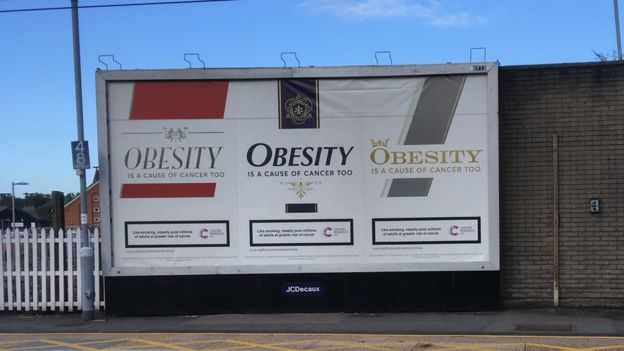
Nor is it suggesting that smoking and obesity are directly comparable in terms of cancer risk. Both increase a person's risk.
But it says being overweight or obese causes around 22,800 cases of cancer each year, compared to smoking which causes 54,300. For the four highlighted cancers:-
Bowel - Of around 42,000 new cases, being overweight or obese causes 4,800, smoking 2,900
Kidney - 12,900 in total; being overweight or obese causes 2,900, smoking 1,600
Liver - 5,900 in total; being overweight or obese causes 1,300 cases, smoking 1,200
Ovarian - 7,500 in total; being overweight or obese causes 490 cases per year, smoking 25
Smoking remains the UK's leading preventable cause of cancer overall. Obesity ranks second, says CRUK.
But while smoking rates are decreasing, obesity is increasing, which health experts agree is concerning.
When asked about plans to extend the tax on soft drinks to milkshakes, Mr Johnson mocked his own weight and said he was "very, very reluctant" to imposes taxes that "clobber those who can least afford it".
He suggested we "encourage people to walk, cycle and generally do more exercise".
Media captionIn 2018, Cancer Research UK said around 38% of all cancers diagnoses could have been prevented
Just over one in four UK adults are obese.
In the UK, there are about:
13.4 million obese adults who do not smoke
6.3 million adult smokers who are not obese
1.5 million obese adult smokers
While the link between obesity and cancer is well established, the biological mechanisms behind it are not yet fully understood.
Fat cells make extra hormones and growth factors that tell cells in the body to divide more often. This increases the chance of cancerous cells being made.
Physical activity probably plays a role too, experts say.
Being overweight or obese does not mean a person will definitely develop cancer but it does raise their risk.
And this risk is higher the more weight a person gains and the longer they are overweight for.
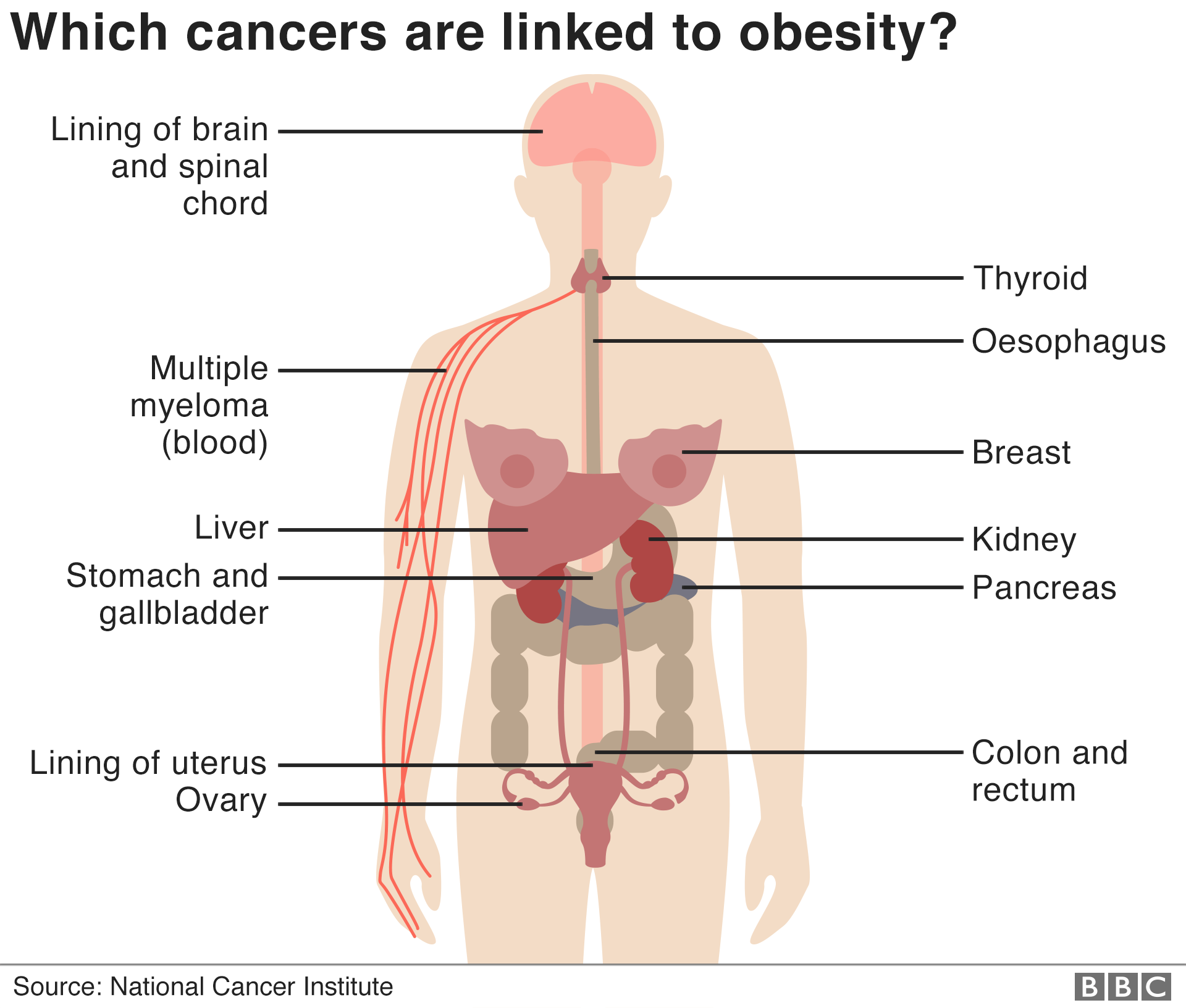
According to Cancer Research UK, 13 different cancers are linked to obesity: • breast (in women after the menopause) • bowel • pancreatic • oesophageal (food pipe) • liver • kidney • upper stomach • gallbladder • womb • ovarian • thyroid • multiple myeloma (blood cancer) • meningioma (brain cancer)
The link between obesity and cancer is in adults only, although a healthy weight is important for children too.
Each year in the UK, the charity says, excess weight causes about:
1,900 more cases of bowel cancer than smoking
1,400 more cases of kidney cancer
460 more cases of ovarian cancer
180 more cases of liver cancer
Prof Linda Bauld, Cancer Research UK's prevention expert, said the government should do more to tackle the UK's obesity problem.
The government had been slow to restrict unhealthy food and drink ads, the British Medical Association said.
"While we are very much aware of the health risks associated with smoking, less effort has been thrown behind tackling obesity, which is now a major cause of cancer," it said,
NHS England chief executive Simon Stevens said: "The NHS can't win the 'battle against the bulge' on its own.
"Families, food businesses and government all need to play their part if we're to avoid copying America's damaging and costly example."


 GETTY IMAGES
 GETTY IMAGES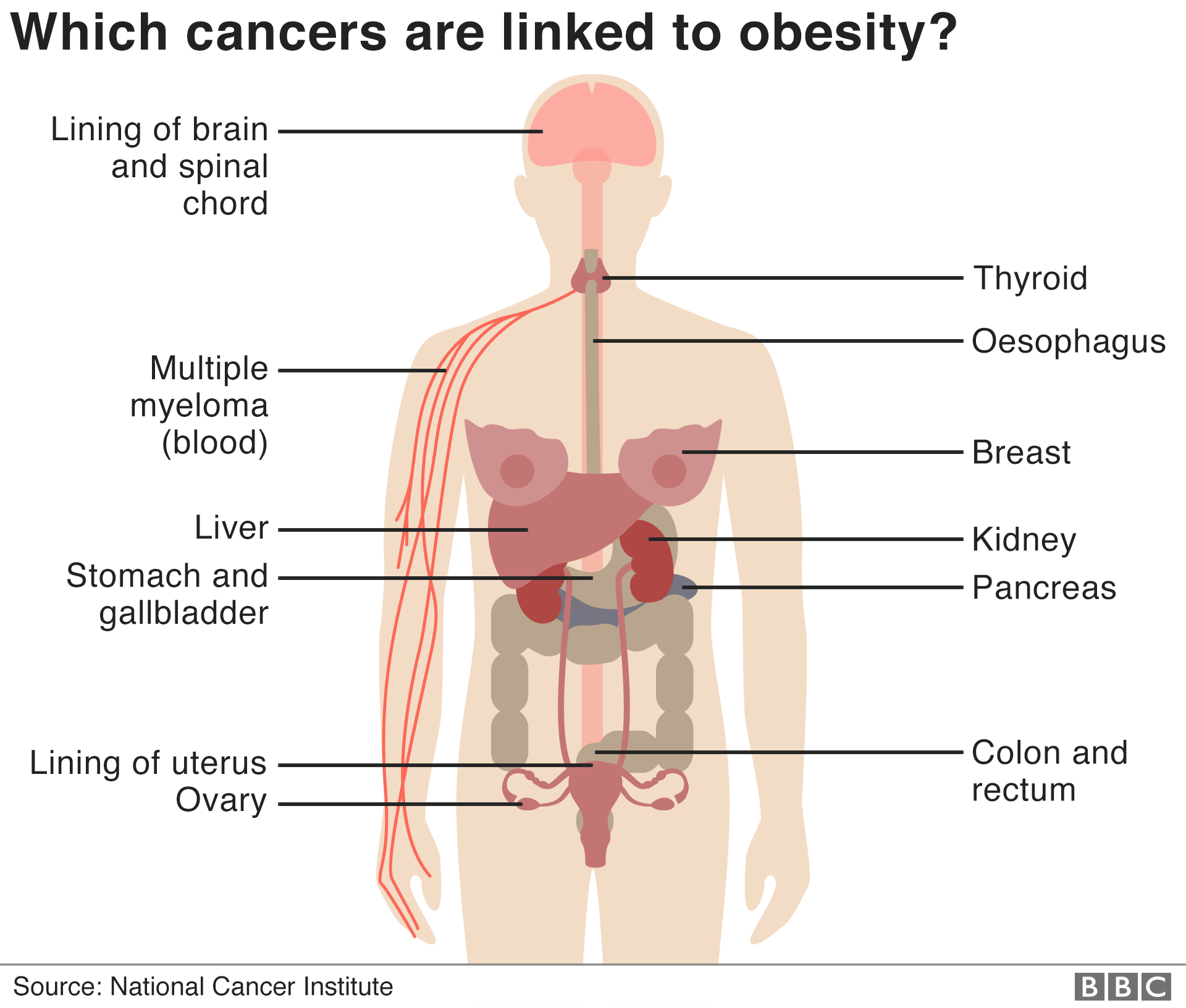
 GETTY IMAGES