Pages

Showing posts with label Anti-bacteria. Show all posts

Monday, 26 June 2017

Antibacterial soaps may do more harm than good, scientists warn

 Anti-bacterial soaps and gels are useless and may cause harm, 200 scientists and medics have warned.

People washing their hands with soap
Scientists said "plain soap and water" is best  CREDIT: GETTY


The consensus statement, published in the scientific journal Environmental Health Perspectives also cautions against the use of antimicrobial agents in food storage containers, exercise mats and paints.
Environmental health professors said “plain soap and water” was the best way to protect against illness.
Antimicrobial soaps perform no better than plain soap and waterDr Barbara Sattler
But they also said antibacterial products - some of which have been banned in the United States, and are being phased out here - could cause harm to some consumers, especially pregnant women and those breastfeeding.
Environmental health professor at the University of San Francisco, Dr Barbara Sattler said: "People think antimicrobial hand soaps offer better protection against illness, but generally, antimicrobial soaps perform no better than plain soap and water."
Late last year, America banned 19 different antimicrobial chemicals, including triclosan and triclocarban, saying they were not effective and should not be marketed for use in over-the-counter consumer wash products.

However scientists fear they have merely been replaced with ones that are even worse.
British firms such as Unilever say they are phasing the two chemicals out of their products by the end of this year,adding they will be replaced by “a range of alternatives, including natural and nature-inspired antibacterial ingredients”.
Dr Arlene Blum, Executive Director of Green Science Policy Institute said: "I was happy that the FDA (US Food and Drug Administration) finally acted to remove these chemicals from soaps.
"But I was dismayed to discover at my local drugstore that most products now contain substitutes that may be worse.
"Antimicrobials are also commonplace in products where you wouldn't expect them, including paints, exercise mats, flooring, apparel, food storage containers, home textiles, electronics, kitchenware, school supplies, and countertops."


Pears soapĀ 
The new advice calls for thorough handwashing using liquid soap  CREDIT: ALAMY
Dr Ted Schettler, Science Director of the Science and Environmental Health Network, said: "Customers may think added antimicrobials are a way to reduce infections, but in most products there is no evidence that they do."
Dr Rolf Halden, Professor of engineering at Arizona State University added: "Environmental and human exposures to triclosan and triclocarban are widespread, affecting pregnant women, developing foetuses, and breast-feeding babies.
"We must develop better alternatives and prevent unneeded exposures to antimicrobial chemicals."
They discovered washing in cool water removes just as many germs as hot water.
The study by Rutgers University in New Jersey also found antibacterial soap was no better than normal soap.
http://www.telegraph.co.uk/news/2017/06/25/antibacterial-soaps-may-do-harm-good-scientists-warn/


Sunday, 4 September 2016

Antibacterial soaps banned in US amid claims they do 'more harm than good'

The Food and Drug Administration has washed its hands of the products, saying there is no scientific evidence that they are better than plain soap and water

Friday 2 September 2016 

Manufacturers had failed to show either the safety of ‘long-term daily use’ or that the products were ‘more effective than plain soap and water in preventing illness and the spread of certain infections’.
Manufacturers had failed to show either the safety of ‘long-term daily use’ or that the products were
‘more effective than plain soap and water in preventing illness and the spread of certain infections’.
Photograph: Andy Crawford/Getty Images/Dorling Kindersley
Antibacterial soaps were banned from the US market on Friday in a final ruling by the Food and Drug Administration, which said that manufacturers had failed to prove the cleansers were safe or more effective than normal products.
Dr Janet Woodcock, director of the FDA’s center for evaluation and research, said that certain antimicrobial soaps may not actually serve any health benefits at all.
“Consumers may think antibacterial washes are more effective at preventing the spread of germs, but we have no scientific evidence that they are any better than plain soap and water,” she said in a statement. “In fact, some data suggests that antibacterial ingredients may do more harm than good over the long term.”
Manufacturers had failed to show either the safety of “long-term daily use” or that the products were “more effective than plain soap and water in preventing illness and the spread of certain infections”.
The new federal rule applies to any soap or antiseptic product that has one or more of 19 chemical compounds, including triclocarbon, which is often found in bar soaps, and triclosan, often in liquid soaps. It does not affect alcohol-based hand sanitizers and wipes, which the FDA is still investigating, or certain healthcare products meant specifically for clinical settings. The FDA has given manufacturers a year to change their products or pull them off shelves.
The FDA first proposed a rule about the chemicals in 2013, following research that they might affect human hormones or change natural resistance to bacteria. The agency requested research from the producers to back up their health claims, but in the three years since has found that data lacking or their requests ignored.
Triclosan has been proven effective at killing bacteria if used at sustained length – far longer than the few seconds most people spend washing their hands – and was once only found in healthcare settings.
Recent studies have linked triclosan to a series of disruptions in human and animal health. A University of Chicago study released in July found that triclosan changed the microbiome inside human guts, and its researchers suggested that exposure could damage developing fetuses. A study from earlier this year found that overuse could also be contributing to antibiotic resistance, and a 2015 study found that antibacterial formulas were not more effective than soap and water.
Triclosan can be found in 93% of liquid soaps labeled “antibacterial” or “antimicrobial”, according to the FDA, though some companies, including Proctor & Gamble, have already begun phasing the chemical out of products. There are partial triclosan bans in the European Union and Minnesota, but the chemical remains common in toothpaste, as it is believed effective against the bacteria that cause gum disease.
People should still keep their hands clean, the FDA noted. “Washing with plain soap and running water remains one of the most important steps consumers can take to avoid getting sick and to prevent spreading germs to others,” the agency said. The Centers for Disease Control and Prevention recommends that if people need to use a hand sanitizer, it should have at least 60% alcohol.
Professor Patrick McNamara, who has published research on antimicrobial soaps, called the ruling “logical” because research shows “there is no added benefit to having these antimicrobial chemicals in soaps”.
He added that triclosan could play a part in driving antibiotic resistance, saying, “after these chemicals are used in our homes they go down the drain to wastewater treatment plants and eventually to the environment where they can select for antibiotic resistance genes”.
“In short, triclosan and triclocarbon present a risk towards propagation of antibiotic resistance,” he said. “Since they do not offer added benefits when washing hands, their use is not worth their environmental risk.
https://www.theguardian.com/science/2016/sep/02/antibacterial-soaps-banned-us-fda

Saturday, 5 September 2015

7 Dangerous Toxins That Harming Your Thyroid

- Drink To Heal Thyroid naturally

Thyroid is a butterfly-shaped gland that sits at the base of the neck. It is the body’s master controller. It  how the body uses energy, makes proteins, and controls how sensitive the body is to other hormones

image

Posted Thursday, September 3, 2015 at 05:15pm EDT

Thyroid is a butterfly-shaped gland that sits at the base of the neck. It is the body’s master controller. It  how the body uses energy, makes proteins, and controls how sensitive the body is to other hormones.
There is no doubt that we live in a toxic environment. Impaired detoxification can lead to the development and progression of autoimmunity. The thyroid is especially susceptible to the detrimental effects of environmental toxins.

7 Dangerous Toxins That Harming Your Thyroid

Dangers of Thyroid Toxins
Toxins are present in our environment, and its very tough to eliminate all of them. By limit exposure to toxic compounds, we can reduce many thyroid problem. Iodine supplementing is way to protecting your thyroid from toxic compounds.
Phthalates
Phthalates is dangerous chemical can trigger testicular cell death and reduce sperm count.  Studies also indicate more exposure to phthalates possible links with diabetes, thyroid issues and obesity.
Antibacterial Products
Triclosan is an example of an antibacterial addition found in many lotions, soaps and toothpastes. Study suggests that it is a hormone disruptor that suppress proper function of the thyroid gland and its hormones.
BPA
Bisphenol A (BPA) is found in plastics and the liners of food cans, including baby formula – it alter main function of thyroid hormone in the brain, potentially leading  to ADHD.
Pesticides
Studies warn that 60 percent of pesticides negatively affect the thyroid. It’s also related to the inability to lose weight.
Soy
A GMO food found to inhibit the body’s use of iodine which the thyroid uses. It can also alter thyroid function by interfering with the body’s ability to use iodine. Iodine would then be less able to help create thyroid hormones.
Dioxins
Both PCBs and dioxins are known to have disruptive effects on the endocrine system, and a dioxin is the primary toxic component of Agent Orange. I have seen many patients who served in Vietnam, and they have linked their current thyroid problems to Agent Orange.
Heavy Metals
Aluminum, lead and mercury can initiate changes that cause Grave’s disease and Hashimoto’s disease and other autoimmune conditions affecting the thyroid.
Drink That Heal Thyroid naturally
RECIPE:
– 1 cup unsweetened 100% cranberry juice
– 7 cups purified water
– 1/2 tsp ground cinnamon
– 1/4 tsp ground ginger
– 1/4 tsp ground nutmeg
– 3/4 Cup fresh squeezed orange juice (approx. 3 oranges)
– 1/4 Cup fresh squeezed lemon juice (approx. 1-2 lemons)
DIRECTIONS:
Bring water to a boil; add cranberry juice, reduce heat to low
Add cinnamon, ginger, & nutmeg, stir and let simmer for 20 minutes; let it cool down to room temperature
Stir in orange & lemon juices…Add ice and enjoy!
Reference:

This post is on Healthwise

Sunday, 30 March 2014

Oil of Oregano Has Natural Antibiotic Uses and Health Benefits


oil of oreganoOil of oregano is a powerful natural antibiotic and has many other health benefits and uses. The oil is pressed from the leaves of the oregano plant (origanum vulgare) – not to be confused with common oregano used as a culinary spice (origanum majorana).
Although oil of oregano has long been prized for its anti-microbial and anti-fungal properties, as well as a remedy for stomach aches and coughs, recent studies have shown that its active ingredient, carvacrol, may be an effective treatment against bacterial infections that are resistant to drugs.
When used in low doses, oil of oregano has been favorably compared to the efficacy of antibiotics such as streptomycin, penicillin and vancomycin when it comes to fighting Staphylococcus bacteria.
Dr. Harry G. Preuss of Georgetown University presented his study’s findings, which confirm that oil of oregano reduces infection “as effectively as traditional antibiotics.” (Published in Science Daily)
The Journal of Applied Microbiology reported that among 52 plant oils tested, oregano was considered to have “pharmacologic” action against common bugs such as Candida albicans (yeast), E. coli, Salmonella enterica and Pseudomonas aeruginosa.
The issue of growing resistance to pharmaceutical antibiotics has been troubling to medical practitioners. Various germs have shown resistance to a number of these antibiotics, including vancomycin, which is considered the most potent antibiotic. Resistance does not appear to develop against a naturally-occurring antibiotic such as oil of oregano. Price-wise, vancomycin costs approximately $16.00 per pill compared to approximately $1.00 for therapeutic strength oil of oregano.
Thymol, a chemical also found in oil of oregano, has been shown to be a powerful antifungal, antimicrobial, and antiviral agent.
Oil of oregano is available in either capsule or liquid form at most health food and natural food stores, as well as online retailers. Many swear by oregano oil’s benefits such as, the ability to stop colds, sore throats or headaches dead in their tracks. Still others use the oil to get rid of nail fungi or athlete’s foot. For best results, follow dosage directions on the package.
http://undergroundhealthreporter.com/?p=404

Wednesday, 9 October 2013

Sore throat? An Amazing Sore Throat Remedy

Cure your Sore Throat Fast ! Using Salt, Yes just table salt Get relief within hours


This simple home remedy has worked 100% of the time for anyone that has tried it. Instead of suffering with a sore throat for a week or more, you can drive it away immediately, sometimes in less than a day. However, this remedy is not medical advice; it is a shared experience that really works!

This site is not for profit; it's aim is simply to help people cure their sore throats.

    
The most common sore throat remedies for sore throat are usually over-the-counter sprays, lozenges and pastilles that are ineffective and smelly. The most common doctor-prescribed remedies are antibiotics, which take time to obtain, cost money and can have many negative side effects.
   
Most often, people waste time waiting while trying to figure out whether or not they really have a sore throat. By the time they realize they do have a sore throat, it's usually to the point that they are already suffering from serious sore throat pain, can barely speak, swallow or even eat.
 
This remedy is salt, and not just about gargling saltwater, it is actually about using common table salt as it is.
 
What you have to do is: tilt your head backwards and shake a little bit of salt straight into the back of your throat. Make sure you shake it straight into your throat, onto the base of your tongue and not over the middle sore throat remediesor the tip your tongue (this way you will not suffer from any unpleasant taste). After that, do not swallow your saliva, just let the salt dissolve right there on the back of your throat, letting the salt stay there for as long as you possibly can. If you're using a salt shaker, shake 2 to 6 times depending how bad your sore throat is. If you're using a fast food style paper saltshaker, you should shake about 1/4 of the packet directly into your throat.
 
Also highly suggested, is to shake an even larger amount of salt into your throat right before you go to sleep for the night. During your sleep, without food or drink, bacteria thrive without any interruption to incubation and growth. Therefore, using salt while you are asleep can be extremely effective. Keep a salt shaker near your bed. If you wake up in the middle of the night feeling sore, you can shake some more salt into your throat.
 
Salt is a very old remedy that kills bacteria. In the old days they traditionally used salt to salt packetspreserve meat and fish. Why? Because salt attracts water and attacks the bacteria cell walls, causing the bacteria to dehydrate and self-destruct in the process.
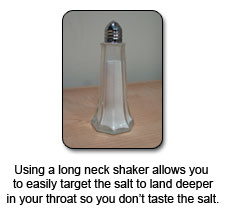
 
If your sore throat is really severe you can use salt as often as every 30 minutes. Use it as soon as you feel the first symptoms of a sore throat and the earlier you use it, the faster you’ll get rid of that sore throat.
 
salt throat remedy Salt is available nearly everywhere. You can stop in to any fast food place on any street and grab some. Don’t wait around trying to figure out whether or not your sore throat is serious. Instead you can use this quick sore throat cure. As soon as you feel the first signs of a sore throat, use the salt immediately. Gargling salt water is not nearly as effective since the concentration of salt is not high enough to take care of the problem. Also, gargling water requires a cup of water and the time to dissolve the salt in it, yet more inconvenience that makes you wait for relief.
 
Not all sore throats are the result of a bacteria infection. Sometimes the cause is a virus, commonly known as influenza virus. Many times your sore throat starts as a viral infection which develops into a bacterial infection. Salt is intended to fight only the bacteria, not the virus. Therefore salt might not be totally effective if you are suffering from a viral throat infection. Nevertheless, you really have nothing to lose by using salt. According to experience, salt can be extremely effective in most all cases, depending on the cause of your sore throat.
 
A sore throat is also often the first stage of a common cold, also known as the Flu. First to arrive is the sore throat, followed by nasal congestion and coughing. If you can take care of it fast, you won't wear down your immune system fighting the sore throat and your immune system has more energy to fight the other cold symptoms. Therefore, using salt could also shorten the total duration of suffering from the common cold.

 http://www.throatsore.com/

Friday, 28 June 2013

Can Citrus Fruit Save Your Life?

Originally published on Friday, June 21st, 2013
HEALTHY EATING by for Bel Marra Health


Orange you going to eat your daily dose of citrus fruit? You’ll definitely want to after discovering that these juicy balls of sweet ‘n sour goodness can provide you with far more life-saving nutrients than just a shot of vitamin C.

78652392Citrus fruits contain high levels of phytonutrients, which are plant-based nutrients with some powerful properties. One type of phytonutrient found in citrus, called limonoids, are responsible for the sour kick you get when you bite into a piece of citrus fruit — recent researchers discovered that limonoids are also responsible for a whole lot of sweet health benefits as well.

Citrus Fruit – Healthy Foods with Powerful Antioxidants


Free radicals are the by-products of your body’s energy metabolism process; they bang around your body causing damage to cells, tissues, and organs, contributing to early signs of aging as well as illness and disease.

But, while we can’t avoid the production of free radicals in our bodies, we can neutralize their damaging effects by eating a diet rich in antioxidant nutrients. Recently, researchers took note of two antioxidant nutrients from the citrus family: limonin and limonin glucoside. They found that the antioxidant properties of these two limonoid nutrients can reduce the risk of stroke, lower high blood pressure, and reduce inflammation.

Citrus Fruits Fight Cancer


Eating limonoid-rich healthy foods can help your body fight off cancer in three ways: they help to prevent cancer from developing; they slow the growth of existing cancer; and they kill existing cancer cells. Several studies have also shown that limonoids can help improve and prevent a wide variety of cancer types, such as pancreatic cancer, colon cancer, leukemia and breast cancers .

The influence limonoids exert on breast cancer is particularly impressive, as they have been found to impede the growth of cancerous cells in both estrogen-positive and estrogen-negative cancers. Most treatments are only able to tackle one specific breast cancer type. A study published in the Journal of Agricultural and Food Chemistry showed that not only were higher doses of limonoids safe and cancer fighting, but they also remained in the blood for a significant period of time, able to exert longer-lasting health-protecting effects.

Antibacterial Powers of Citrus Foods


Studies have shown that certain aspects of limonoids have powerful antibacterial and antimicrobial effects as well. In a study published in 2010, researchers found that limonoids inhibited the growth of Escherichia coli bacteria (E. coli), commonly found on certain foods and known to cause diarrhea, seizure, stroke, kidney damage or even death. Researchers are hopeful that this promising limonoid research could lead to a brand new therapy to combat strains of E.coli infections.

Orange You Convinced Yet?


Citrus fruits, such as oranges, lemons, and grapefruit, have all been found to be rich in powerful limonoid nutrients. Limonoids are found in the white material that surrounds the fruit and the peel, so be sure not to leave this precious stuff behind when enjoying a fresh, whole orange, or even when using the rinds.

http://www.belmarrahealth.com/healthy-eating-2/can-oranges-save-your-life/

Friday, 22 February 2013

Tea Tree Oil Reverses Gum Disease

February 20, 2013           

The Healing Oil That Reverses Gum Disease


Reverse Gum DiseaseGum disease isn’t just painful. And the complications from it aren’t just confined to your mouth. It can be downright dangerous—leading to heart disease and stroke.1

It goes without saying that you should see your dentist regularly. But there is a natural treatment to help speed up the recovery process if you suffer from gum disease.

An Australian study tested three different topical ointments.2

Subjects were between the ages 18 and 60 and had severe chronic gingivitis. Researchers randomly assigned gels to the subjects. Subjects received a chemical antiseptic, a placebo gel, or an herbal gel.

They applied the gel using a toothbrush two times a day for eight weeks.

There were no side effects for any of the gels. But just one proved especially effective.

The herbal gel, of course. It showed significant reduction in gum disease and bleeding. It helped reduce inflammation of the gums.

And it’s probably one you’ve heard of before. It was…

Tea tree oil.

It is a common herbal remedy with antiseptic properties. Tea tree oil heals an array of ailments from acne, to lice, to even ringworm.

But how does tea tree oil work to heal your gums? Gum disease happens when plaque builds up on your teeth. If you don’t remove it then it hardens underneath the gum line causing irritation. Plaque forms from bacteria. And that’s where tea tree oil comes into play. Tea tree oil’s antifungal and antibacterial properties kill the fungi and bacteria that form in your mouth from food particles.

If left untreated, gum disease can cause teeth to become loose and eventually they can fall out. After the age of 30, periodontitis—the most severe form of gum disease—is responsible for more lost teeth than cavities.3 Gum disease can also cause chronic bad breath and receding gums.

Tea tree oil can help ease your irritated gums. But do not use straight tea tree oil. You should never swallow the topical form of tea tree oil. Use a commercial tea tree toothpaste or gel. You can find them at your local drugstore or health food store. You can also find mouthwash with tea tree oil to help combat that pesky bacteria.

References:

1 http://medicalnewstoday.com/articles/167727.php
2 http://ncbi.nlm.nih.gov/pubmed/15293818
3 http://altmedicine.about.com/od/healthconditionsdisease/a/gum_disease.htm

Related Articles:


The Healing Oil That Reverses Gum Disease

Thursday, 21 February 2013

This Cooking Oil is a Powerful Virus-Destroyer and Antibiotic…

October 22, 2010 | 553,439views

 Story at-a-glance
  • Despite the fact that the majority of health officials have claimed all saturated fats are bad for you and cause heart disease, recent evaluation of the basis for this recommendation has found it to be seriously flawed, as unprocessed saturated fats are an important part of a healthy diet should be regularly consumed not assiduously avoided
  • An important and beneficial saturated fat is coconut oil, which has scientifically demonstrated health benefits, including healthy support for your heart and brain, skin, immune system, and thyroid
  • Coconut oil is rich in lauric acid, which your body converts to monolaurin, and this special agent has antiviral, antibacterial, and antiprotozoalproperties; coconut oil is also rich in capric acid, which shares some of the same antimicrobial benefits that help protect you from infections
  • Coconut oil is also rich is medium chain fatty acids (MCFAs), which stimulate your body’s metabolism and help you trim off excess body fat

By Dr Mercola

You've no doubt noticed that for about the last 60 years the majority of health care officials and the media have been telling you saturated fats are bad for your health and lead to a host of negative consequences, like elevated cholesterol, obesity, heart disease and Alzheimer's disease.

Meanwhile during this same 60 years the American levels of heart disease, obesity, elevated serum cholesterol and Alzheimer's have skyrocketed compared to our ancestors, and even compared to modern-day primitive societies using saturated fat as a dietary staple.

Did you know that multiple studies on Pacific Island populations who get 30-60% of their total caloric intact from fully saturated coconut oil have all shown nearly non-existent rates of cardiovascular disease?1

Clearly, a lot of confusion and contradictory evidence exists on the subject of saturated fats, even among health care professionals.

But I'm going to tell you something that public health officials and the media aren't telling you.
The fact is, all saturated fats are not created equal.

The operative word here is "created", because some saturated fats occur naturally, while other fats are artificially manipulated into a saturated state through the man-made process called hydrogenation.

Hydrogenation manipulates vegetable and seed oils by adding hydrogen atoms while heating the oil, producing a rancid, thickened oil that really only benefits processed food shelf life and corporate profits.

The medical and scientific communities are now fairly united in the opinion that hydrogenated vegetable and seed oils should be avoided.

These unsaturated fats, artificially manipulated into saturated fats, are also called trans fats, and no doubt you've heard about them lately. Some cities and states have now outlawed their use. There is no controversy anymore regarding the health dangers of these artificially saturated fats.

And guess what?

These are the same damaged trans fats that have been touted as "healthy" and "heart-friendly" for the last 60 years by the vegetable and seed oil interests!

But the truth finally came out. Trans fat was rebuked, debunked, and revealed as the true enemy to good health that it has always been, regardless of what the seed- and vegetable oil shills told the American public for the last half century.

Unfortunately, this rightful vilification of hydrogenated saturated fats has created a lot of confusion regarding naturally occurring saturated fats, including coconut oil.

If one form of saturated fat is bad for you, the argument goes, then all saturated fat must be bad.
Right?

Nothing could be further from the truth!

The Truth about Coconut Oil

The truth about coconut oil is obvious to anyone who has studied the health of those who live in traditional tropical cultures, where coconut has been a nutritious diet staple for thousands of years.

Back in the 1930's, a dentist named Dr. Weston Price traveled throughout the South Pacific, examining traditional diets and their effect on dental and overall health. He found that those eating diets high in coconut products were healthy and trim, despite the high fat concentration in their diet, and that heart disease was virtually non-existent.

Similarly, in 1981, researchers studied populations of two Polynesian atolls. Coconut was the chief source of caloric energy in both groups. The results, published in the American Journal of Clinical Nutrition,2 demonstrated that both populations exhibited positive vascular health.

In fact, no evidence exists that the naturally occurring high saturated fat intake had any kind of harmful effect in these populations!

That's not what you expected, is it? Based on 60 years of negative public policy towards naturally occurring saturated fats, you would expect these cultures to be rife with clogged arteries, obesity and heart disease.

It may be surprising for you to realize that the naturally occurring saturated fat in coconut oil actually has some amazing health benefits, such as:
  • Promoting your heart health3
  • Promoting weight loss, when needed4
  • Supporting your immune system health5
  • Supporting a healthy metabolism6
  • Providing you with an immediate energy source7
  • Keeping your skin healthy and youthful looking
  • Supporting the proper functioning of your thyroid gland8
But how is this possible?

Does coconut oil have some secret ingredients not found in other saturated fats?

The answer is a resounding "yes".
Coconut Oil's Secret Ingredient
50 percent of the fat content in coconut oil is a fat rarely found in nature called lauric acid. If you're a frequent reader of my newsletter you already know that I consider lauric acid a "miracle" ingredient because of its unique health promoting properties.

Your body converts lauric acid into monolaurin, which has anti-viral, anti-bacterial and anti-protozoa properties.9

Monolaurin is a monoglyceride which can actually destroy lipid coated viruses such as:
  • HIV, herpes
  • Measles
  • Influenza virus
  • Various pathogenic bacteria
  • Protozoa such as giardia lamblia.
Lauric acid is a powerful virus and gram-negative bacteria destroyer, and coconut oil contains the most lauric acid of any substance on earth!

Capric acid, another coconut fatty acid present in smaller amounts, has also been added to the list of coconut's antimicrobial components.

This is one of the key reasons you should consider consuming coconut oil, because there aren't many sources of monolaurin in our diet. But the health benefits of coconut oil don't stop there.
The Benefits of Medium-Chain Fatty Acids
Coconut oil is about 2/3 medium-chain fatty acids (MCFAs), also called medium-chain triglycerides or MCTs. These types of fatty acids produce a whole host of health benefits.

Coconut oil is nature's richest source of these healthy MCFAs.

By contrast, most common vegetable or seed oils are comprised of long chain fatty acids (LCFAs), also known as long-chain triglycerides or LCTs.

Let me tell you why these long-chain fatty acids are not as healthy for you as the MCFAs found in coconut oil10:
  • LCFAs are difficult for your body to break down -- they require special enzymes for digestion.
  • LCFAs put more strain on your pancreas, liver and your entire digestive system.
  • LCFAs are predominantly stored in your body as fat.
  • LCFAs can be deposited within your arteries in lipid forms such as cholesterol.
  • In contrast to LFCAs, the MCFAs found in coconut oil have many health benefits, including the following beneficial qualities:
  • MCFAs are smaller. They permeate cell membranes easily, and do not require special enzymes to be utilized effectively by your body.
  • MCFAs are easily digested, thus putting less strain on your digestive system.
  • MCFAs are sent directly to your liver, where they are immediately converted into energy rather than being stored as fat.
  • MCFAs actually help stimulate your body's metabolism, leading to weight loss.

Coconut Oil Helps Fight Diabetes
Your body sends medium-chain fatty acids directly to your liver to use as energy. This makes coconut oil a powerful source of instant energy to your body, a function usually served in the diet by simple carbohydrates.

But although coconut oil and simple carbohydrates share the ability to deliver quick energy to your body, they differ in one crucial respect.

Coconut oil does not produce an insulin spike in your bloodstream. You read that correctly, Coconut oil acts on your body like a carbohydrate, without any of the debilitating insulin-related effects associated with long-term high carbohydrate consumption!

Diabetics and those with pre-diabetes conditions (an exploding health epidemic in America), should immediately realize the benefit of a fast acting energy source that doesn't produce an insulin spike in your body. In fact, coconut oil added to the diets of diabetics and pre-diabetics has actually been shown to help stabilize weight gain, which can dramatically decrease your likelihood of getting adult onset type-2 Diabetes.11
Cococut Oil, the Friend to Athletes and Dieters
If you live in the United States, you have an almost 70 percent chance of being overweight.

And, by now, I'm sure you're well aware that obesity affects your quality of life and is linked to many health concerns.

One of the best benefits of coconut oil lies in its ability to help stimulate your metabolism.

Back in the 1940s, farmers found out about this effect by accident when they tried using inexpensive coconut oil to fatten their livestock.

It didn't work!

Instead, coconut oil made the animals lean, active and hungry.

However, many animal and human research studies have demonstrated that replacing LCFAs with MCFAs results in both decreased body weight and reduced fat deposition.
In fact, the ability of MCFAs to be easily digested, to help stimulate the metabolism and be turned into energy has entered the sports arena. Several studies have now shown that MCFAs can enhance physical or athletic performance.12

Additionally, research has demonstrated that, due to its metabolic effect, coconut oil increases the activity of the thyroid. And you've probably heard that a sluggish thyroid is one reason why some people are unable to lose weight, no matter what they do.

Besides weight loss, there are other advantages to boosting your metabolic rate. Your healing process accelerates. Cell regeneration increases to replace old cells, and your immune system functions better overall.
Coconut Oil on Your Skin
Besides the mounting medical and scientific evidence that coconut oil has powerful positive health benefits when eaten, it has also been used for decades by professional massage therapists to knead away tight stressed muscles.

However, you don't have to be a professional massage therapist to gain the skin and tissue support benefits of coconut oil. Just use coconut oil as you would any lotion.

Coconut oil is actually ideal for skin care. It helps protect your skin from the aging effects of free radicals, and can help improve the appearance of skin with its anti-aging benefits.

In fact, physiologist and biochemist Ray Peat, Ph.D. considers coconut oil an antioxidant13, due to its stability and resistance to oxidation and free radical formation. Plus, he believes it reduces our need for the antioxidant protection of vitamin E.

Like Dr. Peat, many experts believe coconut oil may help restore more youthful-looking skin. When coconut oil is absorbed into your skin and connective tissues, it helps to reduce the appearance of fine lines and wrinkles by helping to keep your connective tissues strong and supple, and aids in exfoliating the outer layer of dead skin cells, making your skin smoother.
Coconut Oil and Your Heart
Heart disease is the number one cause of death in the U.S. And heart disease is often a silent killer. The first sign of cardiovascular disease is commonly a heart attack, and sadly, over one third of heart attacks are fatal.

And despite the propaganda, the truth is this: it is UNSATURATED fats that are primarily involved in heart disease, not the naturally occurring saturated fats, as you have been led to believe.14

Plus, the polyunsaturated fats in vegetable and seed oils encourage the formation of blood clots by increasing platelet stickiness. Coconut oil helps to promote normal platelet function.
Coconut Oil in Your Kitchen
I only use two oils in my food preparation.

The first, extra-virgin olive oil, is a better monounsaturated fat that works great as a salad dressing.

However, it should not be used for cooking. Due to its chemical structure, heat makes it susceptible to oxidative damage.

And polyunsaturated fats, which include common vegetable oils such as corn, soy, safflower, sunflower and canola, are absolutely the worst oils to use in cooking.

These omega-6 oils are highly susceptible to heat damage because of their double bonds.

I strongly urge you to throw out those omega-6 vegetable oils in your cabinets.

Why?
Reason # 1: Most people believe that frying creates trans-fat
. That is not the major problem, in my opinion. Although some are created, they are relatively minor. There are FAR more toxic chemicals produced by frying omega-6 oils than trans-fat.

Frying destroys the antioxidants in oil and as a result oxidizes the oil. This causes cross-linking, cyclization, double-bond shifts, fragmentation and polymerization of oils that cause far more damage than trans-fat.

Reason # 2: Most of the vegetable oils are GMO. This would include over 90 percent of the soy, corn and canola oils.

Reason # 3: Vegetable oils contribute to the overabundance of damaged omega-6 fats in your diet, which creates an imbalance in the ratio of omega-6 to omega-3. As you know from my extensive writing on this subject, I believe that excessive consumption of damaged omega-6 fats contributes to many health concerns.

They are all highly processed and consumed in amounts that are about 100 times more than our ancestors did a century ago. This causes them to distort the sensitive omega-6/omega-3 ratio which controls many delicate biochemical pathways which results in accelerating many chronic degenerative diseases.
There is only one oil that is stable enough to resist mild heat-induced damage, while it also helps you promote heart health and even supports weight loss and thyroid function -- coconut oil.

So, whenever you need an oil to cook with, use coconut oil instead of butter, olive oil, vegetable oil, margarine, or any other type of oil called for in recipes. Even though I don't fully recommend frying foods, if you must fry, by all means use coconut oil -- it's your smartest choice.
Coconut Oil Safety
The medium-chain fats in coconut oil are considered so nutritious that they are used in baby formulas, in hospitals to feed the critically ill, those on tube feeding, and those with digestive problems. Coconut oil has even been used successfully by doctors in treating aluminum poisoning.15

Coconut oil is exceptionally helpful for pregnant women, nursing moms, the elderly, those concerned about digestive health, athletes (even weekend warriors), and those of you who just want to enhance your overall health.
[-] Sources and References

Kaunitz H, Dayrit CS. Coconut oil consumption and coronary heart disease. Philippine Journal of Internal Medicine, 1992;30:165-171.
  • 2Prior IA, Davidson F, Salmond CE, Czochanska Z. Cholesterol, coconuts, and diet on Polynesian atolls: a natural experiment: the Pukapuka and Tokelau I
  • 3 Dr. Mary G. Enig, Ph.D., F.A.C.N. Source: Coconut: In Support of Good Health in the 21st Century, part 2.
  • 4 Effects of dietary coconut oil on the biochemical and anthropometric profiles of women presenting abdominal obesity, Lipids, 2009 Jul;44(7):593-601.
  • 5 Dr. Mary G. Enig, Ph.D., F.A.C.N. Source: Coconut: In Support of Good Health in the 21st Century.
  • 6 g, Ph.D., F.A.C.N. Source: Coconut: In Support of Good Health in the 21st Century. [6] Baba, N 1982. Enhanced thermogenesis and diminished deposition
  • 7 Bruce Fife, ND. Coconut Oil and Medium-Chain Triglycerides.
  • 8 Raymond Peat Newsletter, Coconut Oil, reprinted at www.heall.com.
  • 9 Defaunation Effects of Medium Chain Fatty Acids and Their Derivatives on Goat Rumen Protozoa
  • 10 Greater rise in fat oxidation with medium-chain triglyceride consumption relative to long-chain triglyceride is associated with lower initial body we
  • 11 Overfeeding with a diet of medium-chain triglycerides impedes accumulation of body fat, Clinical Nutrition, 28:595.
  • 12 Swimming endurance capacity of mice is increased by consumption of medium-chain triglycerides, Journal of Nutrition, 1995;125:531.
  • 13 Inactivation of thyroid peroxidase by soy isoflavones in vitro and in vivo", Journal of Chromotography B, September 2002; 777(1,2);25:269-79
  • 14 Nevin KG, Rajamohan T. Effect of topical application of virgin coconut oil on skin components and antioxidant status during dermal wound healing
  • 15 Antioxidant capacity and phenolic acids of virgin coconut oil, Int J Food Sci Nutr, 2009;60 Suppl 2:114-23. Epub 2008 Dec 27
  • 16 Barry Groves, PhD. Second Opinions: Exposing Dietary Misinformation: The Cholesterol Myth, parts 1 and 2.
  • 17 Barry Groves, PhD. Second Opinions: Exposing Dietary Misinformation: The Cholesterol Myth, (part 2)
  • 18 Saturated fat prevents coronary artery disease? An American paradox, American Journal of Clinical Nutrition,
  • 19 Dietary fats, carbohydrate, and progression of coronary atherosclerosis in postmenopausal women
  • 20 "Beneficial effects of virgin coconut oil on lipid parameters and in vitro LDL oxidation",

  • Source:  http://articles.mercola.com/sites/articles/archive/2010/10/22/coconut-oil-and-saturated-fats-can-make-you-healthy.aspx

    Also Read:  Vegetable Oils Can Increase Your Heart Disease RIsk