Pages

Showing posts with label Steve Jobs. Show all posts

Thursday, 2 February 2017

Strong iPhone 7 sales 'a bridge' to Apple's next upgrade

"Things don't have to change the world to be important," Apple Inc co-founder Steve Jobs said in an interview in 1996.

Wed Feb 1, 2017 | 9:57pm GMT
By Supantha Mukherjee and Rishika Sadam

A visitor takes pictures as customers gather at a store selling Apple products during the launch of the new iPhone 7 sales at the State Department Store, GUM, in central Moscow, Russia September 23, 2016. REUTERS/Sergei Karpukhin
A visitor takes pictures as customers gather at a store selling Apple products during the launch of the new iPhone 7 sales at the State Department Store, GUM, in central Moscow, Russia September 23, 2016. REUTERS/Sergei Karpukhin

His words rang true, two decades later, as sales of the iPhone 7 and 7 Plus - similar in design to their predecessor - surpassed expectations to reinstate Apple as the world's biggest smartphone seller after a five-year gap.
This has only built expectations, however, that the 10th-anniversary iPhone will need to offer revolutionary new features if it is to trigger a substantial uptick in sales.
"This is really the last (quarter) that anybody is going to care about iPhone until the launch this fall," Cowen & Co analysts wrote in a note. "It can be said that iPhone 7/7+ 'did its job' as a bridge to get to the supercycle in 2017."
Apple's shares rose as much as 5.8 percent to $128.30 early on Wednesday, their highest in 18 months, a day after the company dethroned Samsung Electronics Co Ltd as the world's top smartphone seller based on units shipped.
At the day's high, more than $36 billion was added to the company's market value.
Apple sold 78.29 million iPhones in its fiscal first quarter ended Dec. 31, up from 74.78 million a year earlier. Analysts on average had expected sales of 77.42 million.
The sales reflected the first full quarter of iPhone 7 sales and come at a time when global demand for smartphones is slowing and cheaper Android alternatives are flooding the market. Apple may also have benefited from Samsung's much-publicized recall of its fire-prone Galaxy Note 7.
Apple's strong sales set the stage for the 10th-anniversary iPhone, which analysts say is expected to feature better touchscreen display, wireless charging and a shift to a higher-resolution OLED display.
The company typically launches new iPhones in September. A big jump in sales usually follows in the holiday quarter, before demand tapers over the next few quarters as customers hold back in anticipation of the next launch.
Existing iPhone users tend to upgrade their devices when the new model has significant design changes. Apple last saw a significant uptick in sales with the introduction of iPhone 6 in 2015.
"We see pent-up demand heading into a significant form factor change that is likely to accelerate iPhone unit growth," Morgan Stanley analysts wrote in a note.
At least twelve brokerages raised their price targets on Apple. Stifel Nicolaus & Co and RBC Capital Markets - the most bullish brokerages - raised their price targets by $15.
No brokerage changed their rating on the stock.
Of the 48 analysts covering Apple's stock, 39 have a "buy" rating or higher. Eight have a "hold" rating and one a "sell".
Their median price target is $139.
To Tuesday's close of $121.35, Apple's shares had risen nearly 25 percent in the past 12 months.
http://uk.reuters.com/article/uk-apple-results-research-idUKKBN15G4UN

Friday, 6 January 2017

10 years on: How the iPhone changed the world

The decade anniversary of the device feels short and at the same time a lifetime. On 9 January 2007, we had no idea how the pocket sized computer would change our lives and business as we knew it.

Thursday 5 January 2017 6:56pm
Lynsey Barber

Steve Jobs Unveils Apple iPhone At MacWorld Expo
Steve Jobs unveiled the first iPhone on 9 January 2007 (Source: Getty)

The iPhone got off to a subdued start when it was first unveiled by Steve Jobs 10 years ago on Monday, with headlines such as...
The decade anniversary of the device feels short and at the same time a lifetime. On 9 January 2007, we had no idea how the pocket sized computer would change our lives and business as we knew it.
One man did, of course, and whether that was just bravado or not, reflecting 10 years later, he turned out to be right. Jobs in trademark black polo neck announced on stage at the MacWorld Expo that the “magical” iPhone would “revolutionise the industry".
The impact of the iPhone is something that WPP’s Sir Martin Sorrell describes as life-changing.
“The impact has been fundamental although Blackberry missed out on a major opportunity. It changed speed, communication (both internal and external) and entertainment - in fact it's a way of life. And we're still in the foothills given virtual reality, artificial intelligence, voice recognition and more,” he said.
In fact, competition in the market, along with the high price, was one concern raised by many and the BBC’s now-technology editor Rory Cellan-Jones at the time, pointed towards “a market where giants like Nokia, Motorola and Samsung are making pretty smart phones”.
There were smartphones before, but the iPhone pioneered its popularity with a completely touch screen device, ushering in the age of second screens and an always on mentality - whether it be shopping, reading the news, planning a journey, getting updates from friends, looking at your finances, telling the time (bye-bye watch), watching a movie, or (unfortunately, perhaps) catching up with email.
Maybe even making a phone call? Let’s be honest that’s unlikely. No wonder on average say Ofcom, we now spend the equivalent of a day a week online.
It’s no longer the iPhone itself, but what it allows us to do.

WATCH: Steve Jobs's keynote announcing the iPhone

Five billion people in the world now have a mobile phone, 2.5bn of them are now smartphones, according to research from Benedict Evans at Andreessen Horowitz. In 2011 smartphone sales overtook that of PCs.
It wasn’t until more than a year after the first iPhone was unveiled that the app store was launched with an, at-the-time astonishing, 500 or so apps which included Facebook and MySpace.
Again, Apple didn’t invent applications, but it made them a household name via an almost magical concoction of seductive image and marketing: remember “there’s an app for that”? By 2010 app had become the word of the year.
“There’s an app for that”
And in tandem with the rise of cloud computing, anyone could quickly, easily and cheaply reach a consumer's palm - and make money from it.
Entire businesses such as Uber, Angry Birds-maker Rovio and Monzo would not exist without Apple ushering in the smartphone age with the seductive iPhone.
New figures from Apple reveal developers earned $20bn from the App Store last year, a rise of 40 per cent on 2015. Total earnings since 2008 now stand at $60bn and the global app economy is forecast to be worth $100bn by 2020, according to App Annie.

WATCH: The first TV ad for the iPhone

The UK’s digital economy now makes up 10 per cent of the UK’s GDP - the largest internet economy in the G20, according to figures from Boston Consulting Group. Official economic figures fail to take account of all the economic benefits of the digital economy, leading MPs have said, “such as time saved, increased, choice and lower cost of production.”
The London Stock Exchange’s James Clark, who is in charge of technology business development, said: “Looking at companies in the FTSE 100 over the 10 year period it’s impossible to miss the sweeping changes that digital has made to virtually entire industry base.”
Any analysis of the changing face of the FTSE over the last decade does not work half as well as those popular charts shared on social media that show how Apple and other tech firms supplanted the likes of General Electric in the US as the biggest companies, he points out.
“Take the finance sector which has comprised 25-30 per cent of FTSE 100 companies over the last decade. Banks have been digitally powered in the back-end for decades now, but in the last 10 years their customer face is almost entirely digital to the point that you now have mobile only banks,” said Clark.
"The real legacy of iPhone has been the consumer at the centre of corporate technology spending."
The world will pass the smartphone tipping point in 2017, eMarketer predicts.
“For the first time, more than half of the world’s mobile phone users 53.1 per cent, according to eMarketer’s estimate - will regularly use a smartphone,” said principal mobile analyst Cathy Boyle.
“Now, more than ever, success for businesses hinges on how quickly they learn and adapt to how smartphones are changing the way people communicate, consume media, engage with brands and shop.”

How City A.M. covered the iPhone launch

The launch of the iPhone was, as ever with Apple, long-awaited and much-hyped, with rumours swirling beforehand that it was getting into the telecoms business.
But it wasn’t a splash-worthy event. A page two picture was warranted of Steve Jobs posing with the pocket-sized device.
“UPWARDLY MOBILE: Apple spikes on unveiling of iPhone” the headline read.
“Shares in Apple Computer leapt 8 per cent in New York last night as company chief Steve Jobs, above, unveiled his latest innovation, the iPhone — a touch screen mobile phone handset.
"The device will cost from $499 to $599 (£257 to £310) and will go on sale in America from June and in Europe from October.”
In the front page, however, Apple had already made an impact, perhaps signalling things to come. An iPod urging readers to download “tomorrow’s news today” on your iPod featured.
There also appeared an unspecified mobile phone prompting you text a number to get “stories to your mobile daily from 6pm” like an early precursor to chatbots.
(Click or tap on the images to see them in full screen)


http://www.cityam.com/256463/10-years-iphone-changed-world

Wednesday, 20 November 2013

A deadly cancer

Wednesday August 14, 2013 MYT 11:23:33 AM

by dr ylm

The late Steve Jobs had a neuroendocrine tumour of the pancreas. - Reuters
 
Pancreatic cancer is a disease with a very poor outlook. Once diagnosed, usually, only 5% of patients survive five years.

MY aunt has been diagnosed recently with pancreatic cancer. The only positive thing I can say about this is that she is 89 years old. Funnily enough, a few years back, she had some symptoms of bloating and indigestion. She was investigated then, and the doctor said she had some pancreatic enzyme problems. Where is our pancreas and what does it do?

We all have a pancreas. It is a six-inch long organ that sits at the back of our abdomen, behind our stomach. The head of the pancreas is connected to the first part of our small intestine, called the duodenum. The part that connects the pancreas to the duodenum is called the pancreatic duct.

The head tapers to a tail, which sits on the left side of our body. The pancreas actually looks like a leaf.

The pancreas has several functions. It has an exocrine component, as well as an endocrine component called the Islets of Langerhans. Tumours can arise from either part, but mostly from the exocrine portion. The exocrine produces the pancreatic enzymes which aid in our digestion. The endocrine produces the hormones insulin and glucagon, which regulate our body’s metabolism.

In the US, 30,000 people are diagnosed every year with pancreatic cancer. It is a cancer with a very poor outlook. Once diagnosed, only 5% of patients survive five years.

It is extremely deadly, and that’s why you should really understand that it exists, and it is getting more common than you think. I personally know of seven relatives and friends who have had pancreatic cancer.

Is this the type of cancer that Steve Jobs had?

Steve Jobs had a neuroendocrine tumour of the pancreas, and we talked about it a while back in this column. Because the neuroendocrine tumours often present with very specific hormonal imbalance symptoms, they are much easier to detect and are associated with a better outcome.

Today, we will be focusing on the exocrine part of the pancreas that can lead to cancer. This is the extremely deadly type of pancreatic cancer.

How will I know if I have pancreatic cancer?

Pancreatic cancer is one of the most difficult cancers to detect. Unlike breast cancers that present with a lump or lung cancers that present with a cough, the symptoms of pancreatic cancer are very non-specific and often occur very late into the disease.

But as the pancreatic cancer grows, there can be symptoms like:
  • Pain in the upper abdomen due to the cancer growth pushing against your nerves.
  • Jaundice, if the cancer is located at the head of the pancreas and encroaches upon the bile duct and liver.
  • Loss of appetite, loss of weight.
  • Nausea, vomiting.
  • Weakness and fatigue.
  • Pale or grey stools and excess fat in the stools.
  • Depression.
But these symptoms are extremely non-specific and can be attributed to a number of diseases involving the organs around the area.

There is a particular symptom or sign that pancreatic cancer is associated with, called Trosseau’s sign. This presents as spontaneous blood clots which occur in the main blood vessel of the abdomen called the portal vein and deep vein clots in the arms and legs.

If it’s so difficult to diagnose, how does pancreatic cancer actually get detected?

It is usually detected after a battery of tests. There are some blood tests which detect tumour specific markers like CEA and CA19-9. If these are raised, there is a strong suspicion of pancreatic cancer (and also other cancers).

This is followed by imaging of the patient’s body involving CT scans, and perhaps MRI scans.

Ultrasound and scopes may also be used, depending on the symptoms of the patient, especially a scope called the ERCP, which is administered through the mouth and into the stomach to look at the duodenum and pancreatic head.

A biopsy is then taken of the suspected tumour.

Is there any treatment for pancreatic cancer?

Yes, but most of the time, it’s just to extend life and make the patient comfortable for a little while longer (palliative).

You can surgically remove the pancreas or part of it. The Whipple’s procedure is the most common surgery done for cancers of the pancreatic head. In this, not only the pancreas is removed, but also the stomach, duodenum, lymph nodes and surrounding tissue.

If the cancer cannot be removed, the surgeon can opt to bypass the blocked bile duct so that bile and enzymes can flow again.

Naturally, there is also chemotherapy and radiotherapy.

Can I prevent myself and my loved ones from getting pancreatic cancer?

Pancreatic cancer is associated with smoking, so quit smoking. Keep healthy, maintain your weight, exercise, and eat more fruits and vegetables.

But even then, you cannot really prevent pancreatic cancer or any sort of cancer. Still, you can reduce the risk.

http://www.thestar.com.my/Lifestyle/Viewpoints/Tell-Me-About/Profile/Articles/2013/07/24/A-deadly-cancer.aspx

Friday, 6 September 2013

Chemotherapy causes cancer

Decided to put this article on the blog despite being 4 years old.
The message is still more relevant than ever.
All of us are led to believe that chemo can save your life which it can't.
After all, what else do you expect the man in the white coat to say? He is just dishing out what he has been taught and inculcated at medical school.  To say otherwise would be against the expected norm and could land him in trouble.
Alternative and natural medicine treatments of cancer are also mentioned in this article.


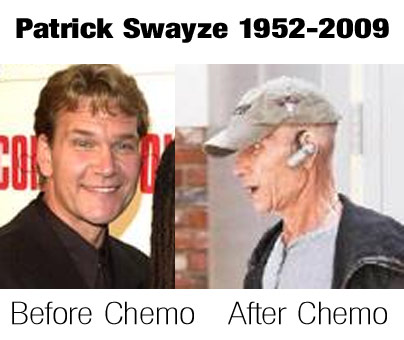
Patrick Swayze dead at 57 after chemotherapy for pancreatic cancer

Tuesday, September 15, 2009
by Mike Adams, the Health Ranger
Editor of NaturalNews.com (See all articles...)

(NaturalNews) Beloved actor Patrick Swayze died yesterday evening after a 20-month battle with pancreatic cancer. Having put his faith in conventional chemotherapy, he largely dismissed ideas that nutrition, superfoods or "alternative medicine" might save him, instead betting his life on the chemotherapy approach which seeks to poison the body into a state of remission instead of nourishing it into a state of health.

These are not condemnations of this remarkable man; they are simply descriptive explanations of the path he chose and the results he experienced. Patrick Swayze was a talented, dedicated actor and dancer, and his work brought joy to the lives of millions. He will be deeply missed, and in his death, he joins many other celebrities who have been recently killed by pharmaceuticals or chemotherapy.

Peter Jennings died following chemotherapy for lung cancer. Heath Ledger died following an accidental overdose of prescription medications (http://www.naturalnews.com/022602.html). Michael Jackson was killed by a doctor-administered injection of lethal painkillers. Famed newscaster Tim Russert most likely died from the fatal side effects of cholesterol medications (http://www.naturalnews.com/023434_Tim_Russert_disease_medication.html). Former White House Press Secretary Tony Snow died after receiving chemotherapy for colon cancer (http://www.naturalnews.com/023626_cancer_chemotherapy_colon_cancer.ht...), and Bernie Mac was most likely killed by pharmaceutical side effects (http://www.naturalnews.com/023817_Bernie_Mac_immune_system_doctors.ht...).

The list of celebrities killed by western medicine is seemingly endless. And now, sadly, Patrick Swayze joins that ever-growing list of famous, endearing people who paid the ultimate price for their misplaced faith in slash-and-burn medicine and "conventional" chemotherapy treatments.

Western medicine offers no hope, no solutions


Of course, the cancer industry takes no responsibility for his death. Drug companies and cancer docs never accept responsibility for the way their poisonous treatments harm (and often kill) many fine people.

Had Patrick Swayze's pancreatic cancer gone away, doctors would have hailed chemotherapy as the genius treatment that saved Swayze's life. But chemotherapy has never healed anyone of cancer. Not once in the history of medicine. And when people die after being poisoned by chemotherapy, the oncologists and conventional medical doctors just shrug and say ridiculous things like, "The cancer was too far along" or "He didn't fight it hard enough."

No one fought cancer more diligently and optimistically than Patrick Swayze. Even after being diagnosed with an admittedly scary disease -- pancreatic cancer -- he remained upbeat and enthusiastic about beating the condition. He put more faith in conventional medicine and chemotherapy than perhaps anyone, and yet that medicine failed him just the same. No one can fault Swayze himself for a lack of optimism.

"I want to last until they find a cure, which means I'd better get a fire under it," Swayze said in a highly-publicized interview with ABC's Barbara Walters. No one apparently told Swayze the cancer industry isn't looking for a cure. They're looking for more business from more patients, and a genuine "cure" for cancer is flatly incompatible with the industry's business interests.

Could he have been saved?


Could Patrick Swayze have saved his own life with natural medicine? Absolutely. Without question. Even late-stage pancreatic cancer can be reversed (yes, reversed) with full-on naturopathic treatments involving Chinese herbal medicine, deep body detoxification that includes sweat saunas and colon cleansing, radical changes in diet from "dead" foods to "live" foods, a healthy dose of vitamin D and the daily consumption of raw anti-cancer living juices made from fresh, organic produce like cabbage, broccoli and garlic.

Many people, of course, aren't willing to engage in these lifestyle changes in order to save their own lives, but for those who are, the results are astounding. I've personally met numerous people who told me their personal stories of reversing cancer (even late-stage liver cancer) by turning to natural medicine. I've met all kinds of people who once had cancer and are now completely cured of cancer after making the very simple lifestyle changes espoused here on NaturalNews.com. And yet, at the same time, I've never met a person who was cured by cancer with chemotherapy. Not a single one. Never even heard of such a person. They don't exist. Even the cancer industry will tell you their "cure rate" is zero (because they don't believe cancer can ever be cured).

So if you have cancer, and you want a zero percent chance of being cured, go with chemotherapy. Your chance of being cured is zero, but your chance of being killed is significantly higher -- as much as 90 percent, depending on your diagnosis. The advantage with choosing chemotherapy, however, is that you don't have to change your eating habits or think outside the box. Your doctor will tell you what to do, what pills to take, what questions to stop asking, etc., and he won't even request that you stop eating those cancer-causing hot dogs and breakfast sausages which have been shown to significantly increase your risk of pancreatic cancer (http://www.naturalnews.com/007024.html) (http://www.naturalnews.com/News_000708_sodium_nitrite_leukemia_proces...).

Actually saving your own life, on the other hand, takes real effort. It requires thinking for yourself and casting off the "do what you're told" attitude that gets cancer patients killed. It means questioning the sanity of poisoning your own body with extremely carcinogenic chemicals -- chemicals which, by the way, have the side effect of causing cancer!

Chemotherapy causes cancer


If you've never received chemotherapy, you may not know this, but before the cancer doctors inject you with their poisons, they usually make you sign a disclaimer that spells out the risks associated with chemotherapy. Among those risks, you'll see mentions of cancer, brain damage, liver failure, kidney failure and all sorts of other horrifying end results that might befall you if you're crazy enough to agree to be poisoned.

I've often wondered how any human being could actually read that document and sign it, but now I know the answer: Cancer doctors use FEAR to recruit patients into their profitable but extremely dangerous treatments. They say things like, "Unless you get this chemotherapy, you'll only have six months to live." It's ludicrous, of course, but as a marketing gimmick, it works like gangbusters. Patrick Swayze was told much the same thing, and he believed it. And he paid the ultimate price for that misplaced belief.

NaturalNews contributing author Tony Isaacs foresaw all this. In a January, 2009 article published on NaturalNews.com (http://www.naturalnews.com/025289_cancer_health_medicine.html), Isaacs admonished Patrick Swayze for pursuing toxic chemotherapy instead of natural anti-cancer therapies. He foresaw precisely the outcome the whole world now knows to be true: That chemotherapy often leads to death.

Make a better choice


As the editor of NaturalNews, I urge everyone reading this to learn from Patrick Swayze's passing. Let his passing mean something positive to you in the realization that you don't have to die from chemotherapy. Even if you have cancer, you have lots of options that Swayze chose to ignore. You can choose Gerson Therapy (www.Gerson.org), for example -- and check out the documentary movie The Beautiful Truth to learn more about that (http://www.thebeautifultruthmovie.com).

One of the best Traditional Chinese Medicine clinics in the United States is called "Han Tang," located near Merritt Island, Florida (East of Orlando). The website is http://www.hantang.com - you'll have to look up their phone number on Google.

There's also an excellent "integrative" cancer treatment center in Arizona run by Dr. Thomas Lodi (www.AnOasisOfHealing.com). For topical cancers, there are numerous products that really work, such as Cansema (http://www.altcancer.com/cansema.htm). Other effective anti-cancer products can be found at websites like http://www.cancerchoices.com or http://www.DanielChapterOne.com

Some trusted health centers to check out for raw food juicing and detox lifestyle changes include the Hippocrates Institute (www.hippocratesinst.org) and the Tree of Life Rejuvenation Center (www.TreeOfLife.nu).

The automatic cure for cancer


Cancer cures already exist. They're everywhere in the world except in mainstream American medicine (where they've been outlawed). Curing cancer is not only easy to do, it's the most natural thing in the world. Your body knows how to do it so amazingly well that if you feed your body the right nutrients, you can't even stop it from curing cancer!

But most people in first-world countries are living a "pro-cancer" lifestyle. They are chronically deficient in Vitamin D, the miraculous anti-cancer nutrient (http://www.naturalnews.com/021892.html), they eat cancer-causing processed meats, they consume cancer-causing artificial sweeteners, and they subsist on dead, refined foods that are almost completely devoid of anti-cancer nutrients like selenium, vitamin C and specific phytonutrients.

On top of that, a lot of people choose to further destroy their health through the regular use of toxic perfumes and colognes (which often contain cancer-causing chemicals), smoking cigarettes, using carcinogenic hair dyes, spraying pesticides on their lawns and generally engaging in a radical cancer-causing lifestyle. For those people, an eventual diagnosis of cancer should really be no surprise because it's a result they created through a lifetime of poor choices about personal health.

I've noticed a pattern in all this: Those who make the worst choices in life also tend to make the worst choices about the way they die. If they lived a toxic lifestyle that gave them cancer in the first place, they almost always choose a toxic chemotherapy death to go with it.

A few folks, however, are opening their eyes and living vibrant lives even long after chemotherapy by embracing a truly healthful lifestyle. If you survive chemo, you can go on to live a long, long time by making new choices in foods, exercise and environments. And if you're one day found to be free of cancer, it wasn't the chemo that cured you, it was your own body healing itself! With the right nutrients, sufficient hydration and the dedicated avoidance of cancer-causing chemicals, the human body can heal itself of cancer, accomplishing what no doctor, surgeon or oncologist could ever hope to achieve.

Are you living in a cancer box?


Sadly, cancer-causing chemicals are in almost everything. The average American household contains probably five hundred (or more) different cancer-causing chemicals found in cleaning products, cosmetics, personal care products, lawn care products, car care products, laundry products, foods, medicines, air fresheners and even in the walls, carpets and paints. For the most part, people live in little cancer boxes they call "homes." And they rarely venture outside their cancer boxes to embrace the real world where cancer cures are as easy to find as picking weeds (because many of them really are extracted from common weeds).

So protecting yourself from cancer most definitely involves a change in your day-to-day choices about where you live, how you live and what you consume. There is no doctor in the world who can take cancer out of your body for any significant duration if you continue to live a cancer-causing lifestyle. That's why chemo just flat out doesn't work: Because it doesn't address the causes of cancer. So it can never offer a cure.

Only you can do that.

What would God say about chemotherapy?


By the way, I don't usually do this, but I'd like to make a comment here related to those who follow a religious practice. In almost every major world religion, it is considered a sin to desecrate your own body. Many religions consider it sinful to commit suicide, for example. In Judaism, people who mark their bodies with tattoos are considered to be in violation of the Torah ("You shall not make gashes in your flesh for the dead, or incise any marks on yourselves: I am the Lord" - Leviticus 19:28), and those who commit suicide may be denied burial in a Jewish cemetery.

Under Islamic law, self-mutilation of any kind is also forbidden, including tattoos (http://en.wikipedia.org/wiki/History_of_tattooing). Under Christian principles, the body is considered a "temple" (a church) which must be honored as a reflection of God (http://www.mybodyhistemple.com).

My question to those who follow any major religion -- and who may also be considering chemotherapy -- is simply this: What would God think about you poisoning your God-given body with deadly chemicals?

There is no way around it, really: Chemotherapy is a violation of the principles of body holiness found in every major world religion. Intentionally poisoning yourself to a point where your hair falls out, where you vomit and waste away flesh and bone, where you cannot eat, or think, or often even digest your own food cannot possibly be something that is endorsed by any church or any God. It is sacrilegious to harm or destroy your body with chemical intervention based on man-made poison. God would no more wish for you to inject chemotherapy into your veins than heroin or crack.

That's why chemotherapy isn't just bad for your immune system and bad for your body; it's also bad for your soul. Whether you believe in the Pearly Gates or some other version of an afterlife, there's no question that showing up on Judgment Day after having died from chemotherapy is not a comfortable episode of spiritual scrutiny. If God, in a booming voice, asks, "I gave you a perfect body, in my own image. What did you choose to do with it?" And if you answer, "Well, I smoked two packs of cigarettes a day, I swore off all the natural medicine that you provided us, and I allowed my body temple to be injected and destroyed with man-made toxic chemicals that killed me and brought me here," chances are you're not going to find yourself in God's favor. He might even hold up your chemotherapy disclaimer contract and say, "Did you actually SIGN this thing?"

Think about it.

Then again, most conventional cancer doctors don't believe in God anyway. They believe in chemicals. At least, they believe in them for YOU, but not necessarily for themselves. Most oncologist, it turns out, would never subject themselves to chemotherapy.

Why? Because they've seen what it does to people. Even oncologists don't want to die in the same way they see their patients dying. Whether they believe in a God or not, they definitely believe in avoiding suffering, and that means avoiding chemotherapy.

At the risk of once again being way too blunt for the general public, I feel compelled to ask people reading this: Did you ever stop to consider the degree of suffering Patrick Swayze must have gone through, dying from pancreatic cancer combined with toxic chemotherapy?

I can speak on this subject because I've watched a man die from precisely the same diagnosis and the same treatment. I've been at the bedside, watching the digitized intravenous dripping of morphine into the shell of a man, with sunken jawbones and hollow eyes. The cancer industry won't show you photos of Patrick Swayze's death for the same reason the Pentagon won't show you photos of young U.S. soldiers getting their legs blown off: It's just too much reality for people to deal with.

And it changes people, too, because once you see a precious human being die from chemotherapy, you'll never seek it out for yourself. You'll swear it off for the rest of your life, and the cancer industry will lose a likely future customer.

The cancer industry loves to talk about those people who are "survivors" of cancer and chemotherapy. But they never talk honestly about those who were killed by their poison. The truth is simply swept away, dumped in a casket and buried along with the victim. It's all business as usual for the U.S. cancer industry.

May Patrick Swayze rest in peace, wherever his eternal soul may now exist.

http://www.naturalnews.com/027030_cancer_chemotherapy_natural.html


Article on Steve Jobs: 

 Steve Jobs dead at 56, his life ended prematurely by chemotherapy and radiotherapy for cancer

Monday, 11 February 2013

Health Hazards Associated with All-Fruit Diet

Don't Eat Too Much of This Healthy Food (Even Organic) - It May Be Linked to Cancer

If you want to help prevent cancer, or if you have cancer, then you need to know what this recent research suggests about one of nature's healthiest foods and its effect on cancer cells in your body. Are you making this common mistake?


Surprising Health Hazards Associated with All-Fruit Diet

Fruit Diet

Story at-a-glance

  • Ashton Kutcher recently disclosed he suffered pancreatic problems brought on by following an all-fruit diet adopted in preparation to play the character of Steve Jobs in the upcoming film “Jobs.” Steve Jobs died of pancreatic cancer in 2011
  • Fruits are loaded with antioxidants, vitamins and minerals, which is why eating a small amount of them is fine for healthy people. However, many benefit by restricting their fruit intake due to its high fructose content
  • Research suggests fructose may have a particularly significant impact on pancreatic cancer, as pancreatic cancer cells have been shown to use fructose for cell division, speeding up the growth and spread of the cancer
  • As a general guideline, I recommend limiting your total fructose consumption to 25 grams of fructose per day. If you suffer with any fructose-related health issues, such as insulin resistance, metabolic syndrome, heart disease, obesity or cancer, you would be wise to limit your total fructose consumption to 15 grams of fructose per day. This includes fructose from ALL sources, including whole fruit

By Dr. Mercola
Fruits are loaded with healthy antioxidants, vitamins and minerals, which is why eating them in moderation is fine for healthy people. However, many benefit by restricting their fruit intake.

Fructose, a simple sugar found in fruit, is preferentially metabolized to fat in your liver, and eating large amounts has been linked to negative metabolic and endocrine effects. So eating very large amounts – or worse, nothing but fruit– can logically increase your risk of a number of health conditions, from insulin and leptin resistance to cancer.

For example, research has shown that pancreatic tumor cells use fructose, specifically, to divide and proliferate, thus speeding up the growth and spread of the cancer.

As a general health rule, I recommend limiting your total fructose consumption to about 25 grams per day on average, and that includes fructose from fruit. However, if you have insulin resistance, heart disease, cancer or high blood pressure, you may want to cut it down to 15 grams or less.
 
Kutcher Lands in Hospital After Adopting All-Fruit Diet

Actor Ashton Kutcher recently disclosed health issues brought on by following an all-fruit diet,1 adopted in preparation to play the character of Steve Jobs in the upcoming film “Jobs,” due out April 19.

Jobs had adopted an all-fruit diet in his younger days, and even the brand he co-founded – Apple – was a nod to his dietary obsession. Kutcher recently told USA Today:2
"First of all, the fruitarian diet can lead to like severe issues. I went to the hospital like two days before we started shooting the movie. I was like doubled over in pain. My pancreas levels were completely out of whack. It was really terrifying ... considering everything."
The “everything” is likely a reference to pancreatic cancer – the disease that killed Steve Jobs on October 5, 2011, at the age of 56. Even though Jobs consumed a fruitarian diet years before he contracted his pancreatic cancer, there could be some relationship.
 
Why Large Amounts of Fruit May Not Be Healthy

While people are becoming increasingly aware of the connection between excessive fructose consumption and obesity and chronic disease, many forget that fruit is a source of fructose as well. Many tend to believe that as long as fruit is natural and raw they can have unlimited quantities without experiencing any adverse metabolic effects.

Eliminating processed foods and soda – which are loaded with high fructose corn syrup – and replacing it with an all-fruit diet is likely not going to improve your health. As Marisa Moore, registered dietician and spokeswoman for the Academy of Nutrition and Dietetics told CNN Health:3
“When you only eat fruit, you're excluding a lot of valuable nutrients from your diet. Protein is one of the main ones that comes to mind... Protein acts like a building block for your muscles and skin and organs. The same goes for fats. Although they often get demonized, fats play an important role in our hormone levels and brain function.”
It’s important to consider ALL sources of fructose, and to try to limit your total consumption if you want to optimize your health. Granted, fruits contain beneficial dietary fibers, antioxidants, vitamins and minerals, which is why they’re an important part of a healthy diet – as long as they’re eaten in moderation. I believe most people would benefit by replacing the fruit with 50-70 percent of their calories from healthy fat. You also need moderate amounts of high quality protein.

An all-fruit diet is essentially an all-fructose diet, and this is bound to spell disaster for your health, at least long-term. Studies have shown that fructose can induce:

Impaired glucose tolerance, insulin resistance, and diabetes Elevated triglycerides Abdominal obesity
Leptin resistance Inflammation and oxidative stress Endothelial dysfunction
Microvascular disease Hyperuricemia Renal (kidney) damage
Fatty liver disease High blood pressure Metabolic syndrome
The Fructose Pancreatic Cancer Connection
Pancreatic cancer is one of the faster spreading cancers; only about four percent of patients can expect to survive five years after their diagnosis. Each year, about 44,000 new cases are diagnosed in the U.S., and 37,000 people die of the disease. Cancer of the pancreas has a terrible prognosis--half of all patients with locally advanced pancreatic cancer die within 10 months of the diagnosis; half of those in whom it has metastasized die within six months.

Your pancreas contains two types of glands: exocrine glands that produce enzymes that break down fats and proteins, and endocrine glands that make hormones like insulin that regulate sugar in your blood.

Steve Jobs died of tumors originating in the endocrine glands, which are among the rarer forms of pancreatic cancer. His cancer was detected during an abdominal scan in October 2003, as Fortune magazine reported in a 2008 cover story.4 He reportedly spent nine months on "alternative therapies," including what Fortune called "a special diet,” although there was no mention of what type of diet this might have been. In 2004, after the cancer had spread, Jobs opted for surgery. Unfortunately, it did not cure him.
Five years later, he underwent an experimental procedure called peptide receptor radionuclide therapy (PRRT), which involves delivering radiation to tumor cells by attaching one of two radioactive isotopes to a drug that mimics somatostatin, the hormone that regulates the entire endocrine system and the secretion of other hormones. This treatment also failed. After having a liver transplant, Jobs succumbed to the cancer in 2011.

Interestingly enough, research published in 20105 suggests fructose may have a particularly significant impact on pancreatic cancer.

Insulin production is one of your pancreas’ main functions, used by your body to process blood sugar, and, in the laboratory, insulin promotes the growth of pancreatic cancer cells. However, there’s more to it than that. The research in question showed that the way the different sugars are metabolized (using different metabolic pathways) is of MAJOR consequence when it comes to feeding pancreatic cancer cells and making them proliferate. According to the authors:
"Importantly, fructose and glucose metabolism are quite different... These findings show that cancer cells can readily metabolize fructose to increase proliferation."
The study confirms the old adage that sugar feeds cancer – a finding that Dr. Warburg received a Nobel Prize for over 90 years ago. Tumor cells do thrive on glucose and do not possess the metabolic machinery to burn fat. However, the cells used fructose for cell division, speeding up the growth and spread of the cancer. If this difference isn't of major consequence, then I don't know what is. Whether you're simply interested in preventing cancer, or have cancer and want to live longer, you ignore these facts at your own risk.

There’s reasonable cause to suspect that if your body maintains high levels of insulin, you increase the pancreatic cancer's ability to survive and grow. In fact, researchers now believe that up to a third of all types of cancers may be caused by diet and lifestyle. So if you want to prevent cancer, or want to treat cancer, it is imperative that you keep your insulin levels as low as possible.
 
Should You Eliminate Fruit from Your Diet?

Short answer, no, it wouldn’t be wise to eliminate fruit entirely. Fruit is definitely a source of fructose, and one that can harm your health if you eat it in vast quantities, but eating small amounts of whole fruits is fine if you are healthy.

In vegetables and fruits, the fructose is mixed in with fiber, vitamins, minerals, enzymes, and beneficial phytonutrients, all of which help moderate the negative metabolic effects.  
However, if you suffer with any fructose-related health issues, such as insulin resistance, metabolic syndrome, heart disease, obesity or cancer, you would be wise to limit your total fructose consumption to 15 grams of fructose per day. This includes fructose from ALL sources, including whole fruit.

If you are not insulin resistant, you may increase this to 25 grams of total fructose per day on average.

If you received your fructose only from vegetables and fruits (where it originates) as most people did a century ago, you'd consume about 15 grams per day. Today the average is 73 grams per day which is nearly 500 percent higher a dose and our bodies simply can't tolerate that type of biochemical abuse. So please, carefully add your fruits based on the following table to keep your total fructose below 15-25 grams per day, depending on your current health status.
Fruit Serving SizeGrams of Fructose
 
Limes 1 medium 0
Lemons 1 medium 0.6
Cranberries 1 cup 0.7
Passion fruit 1 medium 0.9
Prune 1 medium 1.2
Guava 2 medium 2.2
Date (Deglet Noor style) 1 medium 2.6
Cantaloupe 1/8 of med. melon 2.8
Raspberries 1 cup 3.0
Clementine 1 medium 3.4
Kiwifruit 1 medium 3.4
Blackberries 1 cup 3.5
Star fruit 1 medium 3.6
Cherries, sweet 10 3.8
Strawberries 1 cup 3.8
Cherries, sour 1 cup 4.0
Pineapple 1 slice (3.5" x .75") 4.0
Grapefruit, pink or red 1/2 medium 4.3
FruitServing SizeGrams of Fructose
Boysenberries 1 cup4.6
Tangerine/mandarin orange 1 medium 4.8
Nectarine 1 medium 5.4
Peach 1 medium 5.9
Orange (navel) 1 medium 6.1
Papaya 1/2 medium 6.3
Honeydew 1/8 of med. melon 6.7
Banana 1 medium 7.1
Blueberries 1 cup 7.4
Date (Medjool) 1 medium 7.7
Apple (composite) 1 medium 9.5
Persimmon 1 medium 10.6
Watermelon 1/16 med. melon 11.3
Pear 1 medium 11.8
Raisins 1/4 cup 12.3
Grapes, seedless (green or red) 1 cup 12.4
Mango 1/2 medium 16.2
Apricots, dried 1 cup 16.4
Figs, dried 1 cup 23.0

How to Determine Your Individual Susceptibility to Fructose Damage

As already stated, those who need to be careful about their fruit intake are people with high insulin levels. You can measure your fasting insulin level to find out for sure, but if you have any of the following problems it is highly likely you have insulin resistance syndrome:
  • Overweight
  • High Cholesterol
  • High Blood Pressure
  • Diabetes
  • Yeast Infections
Besides that, you can also use your uric acid levels as a marker for your susceptibility to fructose damage, as some people may be able to process fructose more efficiently than others. The higher your uric acid, the more sensitive you are to the effects of fructose.  
The safest range of uric acid appears to be between 3 and 5.5 milligrams per deciliter (mg/dl), and there appears to be a steady relationship between uric acid levels and blood pressure and cardiovascular risk, even down to the range of 3 to 4 mg/dl.

According to Dr. Richard Johnson, the ideal uric acid level is probably around 4 mg/dl for men and 3.5 mg/dl for women.

If you are one of those who believes that fruit is healthy no matter how much you eat, I would strongly encourage you to have your uric acid level checked to find out how sensitive you are to fructose. Eat the amount of fruit you feel is right for you for a few weeks and then check your uric acid level and see if your levels are healthy. If they are elevated you might try reducing the fruit to recommended levels and rechecking your uric acid level. Many who are overweight likely have uric acid levels well above 5.5.  
Some may even be closer to 10 or above. Measuring your uric acid levels is a very practical way to determine just how strict you need to be when it comes to your fructose – and fruit -- consumption.
 
Is there Such a Thing as an Ideal Diet for Everyone?

Nutritional requirements can vary wildly from one person to the next, which is why I’ve been a longtime proponent of eating in accordance with your nutritional type. For example, if you’re a protein type, fruits are generally not beneficial for you with the exception of coconut, which has a higher fat content that is beneficial for protein types. 
On the other hand, carbohydrate types tend to fare well with fruit and can safely consume moderate amounts. This is an important distinction, and everyone should try to eat primarily the specific fruits that are best for their unique biochemistry.

However, many find nutritional typing to be too complex. So to simplify matters, while still allowing for a fully personalized program, I recently updated and revise my Nutritional Plan. It consists of three levels, from beginners to advanced, and covers the basic requirements of a healthy diet.  
Keep in mind that emerging evidence suggests your diet should be at least half healthy fat, and possibly as high as 70 percent. My personal diet is about 60-70 percent healthy fat, and both Paul Jaminet, PhD., author of Perfect Health Diet, and Dr. Ron Rosedale, M.D., an expert on treating diabetes through diet, agree that the ideal diet includes somewhere between 50-70 percent fat. It's important to understand that your body requires saturated fats from animal and vegetable sources (such as meat, dairy, certain oils, and tropical plants like coconut) for optimal functioning.

When you take this into account, it’s easy to see that an all-fruit diet could wreak absolute havoc with your health.

Keep in mind that frequent hunger may be a major clue that you're not eating correctly. Not only is it an indication that you're consuming the wrong types of food, but it's also a sign that you're likely consuming them in lopsided ratios for your individual biochemistry. Fat is far more satiating than carbs, so if you have cut down on carbs and feel ravenous, remember this is a sign that you haven't replaced them with sufficient amounts of fat. You do want to make sure you're adding the correct types of fat though, such as:

Olives and Olive oilCoconuts and coconut oil Butter made from raw grass-fed organic milk
Raw nuts, such as, almonds or pecans Organic pastured egg yolks Avocados
Grass-fed meats Palm oil Unheated organic nut oils

If You Seek Optimal Health, Pay Careful Attention to Your Insulin Levels

Three lifestyle issues keep popping up on the radar when you look at what’s contributing to pancreatic cancer: sugar intake, lack of exercise, and vitamin D deficiency. Obesity and physical inactivity makes your body less sensitive to the glucose-lowering effects of insulin. Diminished sensitivity to insulin leads to higher blood levels of insulin, which in turn can increase your risk of pancreatic cancer.

It’s a no-brainer that an all-fruit diet can seriously jeopardize your insulin sensitivity, thereby raising your risk of any number of health problems, including pancreatic problems. It’s simply FAR too much fructose for most people. I personally developed diabetes when I tried the "Eat Right for Your Blood Type" diet, which included eating large amounts of fruit for breakfast. So please, be careful of any diet that seems to extreme, and remember the human body NEEDS healthful fats and high quality protein for proper functioning.

Remember to listen to your body over the long term to guide you as to the best food selections. If your energy level deceases, you have a difficult time maintaining your ideal weight or are hungry all the time, there is a good chance that you have yet to find the optimal fuel for your body. As for fruits, use caution if you have any kind of insulin related health issues, as discussed above, and limit your total fructose consumption to 15-25 grams of fructose per day, depending on your health status.  
[-] Sources and References


Source: Surprising Health Hazards Associated with All-Fruit Diet