Pages

Showing posts with label AI. Show all posts

Saturday, 29 August 2020

How Amazon’s new health tracker will use AI to monitor your tone of voice

Amazon may not have unlocked the secret to happiness. But with the announcement of a new voice monitoring tool called Tone, the company promises that it knows what happiness sounds like. And that—with a new gadget and a little tracking—you, too, can sound happy.


By Nicolás Rivero
Reporter
A silver Amazon Halo wristband sits next to a smartphone displaying the sleek Halo app
Humans have been wrestling with how to define happiness for eons. Can Amazon’s AI crack that nut?
Tone will be a feature on Amazon’s new wearable health tracker, dubbed Halo. Users can opt in to let it sample snippets of their speech throughout the day, or turn it on for up to 30 minutes at a time to get a detailed report on how they sounded in a particular conversation. Powered by AI algorithms designed to detect the “positivity” and “energy” in human voices, the tool purports to offer users feedback on their tone so they can improve their communication skills and relationships.
Of course, it’s hard to define fuzzy traits like positivity—and it’s an even more Herculean task to train an AI model to objectively quantify and measure them. In a blog post, Amazon simply says that “positivity” measures how happy or sad a voice sounds. But humanity (and the field of positive psychology) have been wrestling with how to define happiness for eons.
“It’s hard for me to imagine that there could be a single objective measure,” said Jim Allen, an associate professor of psychology at the State University of New York at Geneseo who writes and teaches about the psychology of happiness. Our perception of what a happy voice sounds like, he notes, varies depending on culture, gender, ethnicity, and other personal factors.
An Amazon spokesperson said that the developers had accounted for these differences by drawing on vocal samples from tens of thousands of voices from across US regions and demographic groups. A team of Amazon employees then listened to the recordings and rated the voices as happy or sad to determine “positivity” and tired or excited to measure “energy.” The model associated those emotional ratings with vocal qualities like pitch, intensity, tempo, and rhythm, which the AI uses to label users’ speech.
Training sets, however, are highly susceptible to bias from the humans who build them, as researchers have extensively documented in fields like facial recognition. That makes vetting the data, and the people who label it, very important. Amazon declined to offer any detail about the demographic breakdown of its vocal samples, or the team whose perceptions of positivity and energy form the basis for the model. “Throughout product development, we’ve focused on ensuring the data we use to train and evaluate our models accounts for all demographic groups,” a spokesperson said in an email.
In particular contexts, Allen said some version of a tool like Tone could work well. “In the hands of a skilled counselor giving feedback to a client about how they come across to other people, it could be really helpful,” he said. But, he noted, constantly monitoring yourself for signs of happiness—or worse, projecting a positivity you do not feel—has been shown to make people less happy.
Pattie Maes, an MIT professor who studies wearable technology designed to enhance people’s lives, pointed out that the AI would be more likely to return meaningful results if it didn’t try to treat happiness as a universal truth. “People have different speaking styles,” she said in an email. “I believe a personalized AI model trained on an individual’s own data would perform better.” (While Tone learns to pick out a user’s voice in a conversation, it does not calibrate its ratings to that user’s emotional baseline.)
But these approaches to boosting the model’s validity are not compatible with mass consumer tech. In its announcement blog post, Amazon medical officer Maulik Majmudar describes a gadget that comes out of a box ready to coax users into better communication. He writes about the ease with which his colleagues can turn on Tone and rehearse for a big presentation at work. Majmudar says he switches the system on before talking to his children, to make sure he’s not taking work stress out on his family.
It’s an intriguing vision for an AI-enabled future. But it might not be the one we live in right now.

AI funding boost aims to speed up cancer diagnoses

Artificial intelligence capable of spotting deadly diseases like cancer is to receive a £50 million funding boost in a bid to speed up diagnosis times.
Jamie Harris, PA Science Technology Reporter
The extra cash is being awarded to three specialist centres based in Coventry, Leeds and London, delivering digital upgrades to pathology and imaging services across an additional 38 NHS trusts, the Department of Health and Social Care (DoH) said.
It is hoped the technology will improve outcomes for millions of patients, providing a more accurate diagnosis and freeing up NHS staff time, as part of a Government commitment to detect three quarters of cancers at an early stage by 2028.
Health Secretary Matt Hancock said: “Technology is a force for good in our fight against the deadliest diseases – it can transform and save lives through faster diagnosis, free up clinicians to spend time with their patients and make every pound in the NHS go further.

Health Secretary Matt Hancock said the investment will ‘make every pound in the NHS go further’ (Jonathan Brady/PA)

“I am determined we do all we can to save lives by spotting cancer sooner.
“Bringing the benefits of artificial intelligence to the front line of our health service with this funding is another step in that mission.
“We can support doctors to improve the care we provide and make Britain a world-leader in this field.
“The NHS is open and I urge anyone who suspects they have symptoms to book an appointment with their GP as soon as possible to benefit from our excellent diagnostics and treatments.”
The Government said the investment will support its long-term response to Covid-19, allowing centres to work with British businesses and thereby support the economic recovery.
The DoH said that since the beginning of the coronavirus pandemic, more than 92% of urgent cancer referrals have been investigated within two weeks and 85,000 people have started treatment.
Darren Treanor, a consultant pathologist at Leeds Teaching Hospitals NHS Trust and director of one of the three centres, said: “This investment will allow us to use digital pathology to diagnose cancer at 21 NHS trusts in the North, serving a population of six million people.
“We will also build a national network spanning another 25 hospitals in England, allowing doctors to get expert second opinions in rare cancers, such as childhood tumours, more rapidly.”
https://uk.finance.yahoo.com/news/ai-funding-boost-aims-speed-230100224.html


Tuesday, 12 November 2019

Doctors could soon spend less time looking at mammograms, thanks to artificial intelligence

As computers get better at spotting cancer, doctors will have more time to focus on treating patients.
15th March 2018 in Health

Blog post image

In the US alone, tens of millions of mammograms are performed each year. Analyzing these images takes up a lot of doctors' time. The use of computer assistance to help read mammograms is becoming widespread, but doubts persist about whether the practice is helpful enough to justify its steep price tag. Lower-cost deep learning systems, which train themselves to recognize cancer, could help. Thanks to deep-learning methods like those more commonly used to spot everyday objects in photographs, a new system identified cancer’s precise location more than 90 percent of the time in tests. We spoke with the study’s author, Dezso Ribli of Hungary’s Eötvös Loránd University, to learn more.

ResearchGate: What role does computer assisted detection already play in breast cancer detection?

Dezso Ribli: Computer assisted detection (CAD) is supposed to help the doctors detect lesions that could have been overlooked. In the United States, where mammograms are evaluated by one radiologist, CAD usage is widespread. In Europe, where mammograms are reviewed by two radiologists, CAD is practically not used.

While initial studies showed promising increases in cancer detection rates with CAD, recently a large study by Lehman et al. found no positive impact of CAD usage on radiologist performance. The benefits of the current technology are therefore questionable, while more than $400 million is spent on it yearly in the US.

RG: How is your new system different?

Ribli: Routinely used CAD solutions are based on methods that predate the revolution of deep learning in computer vision. With deep learning, carefully designed neural networks with many, many layers are trained to recognize visual patterns. Unlike previous methodologies, these neural networks learn the meaningful patterns and representations only from the data itself. In a nutshell, deep learning models can recognize objects on images if you show them enough labeled examples, and they “learn” by refining the parameters of subsequent filtering steps.

In some visual tasks, deep learning has decreased error rates by tenfold compared to previous technologies. We think that the old methods in CAD could be replaced by deep learning, and the accuracy of CAD could be drastically increased. Our system applies one of the best deep learning frameworks for object detection to mammography analysis.


 “In some visual tasks, deep learning has decreased error rates by tenfold compared to previous technologies.”


RG: How well did your system perform when you tested it?

Ribli: The system secured the 2nd place in The Digital Mammography DREAM Challenge, a prestigious data science competition with more than 1,200 registered participants. Our model was the only one of the best performing solutions able to accurately localize cancers, which is essential for a CAD system in order to be practically usable. Since then, the model's performance has been significantly improved. Details will be shared in another paper about the second phase of the challenge.

With the most recent public digital mammography dataset (INbreast) the model is able to detect more than 90 percent of the cancers with precise positions, while producing only 0.3 false positive detection per image.

RG: How does this model compare to standard mammography analysis methods?

Ribli: Unfortunately, direct comparison with currently used solutions is not possible, because those methods were never evaluated on the same datasets. But the results suggest that our model performs better than commercially available solutions.

RG: What were the limitations of your study?

Ribli: Publicly available mammogram datasets are rather small. Our model was mostly trained on around 2,000 scanned cancer images from the 1990s and a small number of additional cancers on digital images. To put that in context, deep learning models for recognizing everyday objects are usually trained on datasets containing hundreds of thousands or even millions of images.

We are sure that, with larger training datasets, the performance of deep learning CAD models will improve. Creating a huge training dataset is not an impossible task: In the US alone, tens of millions of screening mammography exams are performed annually.

RG: Could your approach be adapted to work with other kinds of imaging and other kinds of cancer?

Ribli: Yes, deep learning, and specifically object detection models, have the potential to help with any kind of cancer imaging or medical imaging.


 “Doctors will be able to concentrate their power of the hardest and most complicated cases, which are more suitable for a human mind.”


RG: Do you think there will be a point in the future where AI takes over breast cancer detection altogether, or will there always be a role for human radiologists in analyzing mammograms?

Ribli: Breast cancer screening is performed on the scale of a hundred million exams a year. I think in the next few decades AI is going to assist radiologists, and progressively take over the easier tasks, which are monotonous and tiring for humans. Doctors will be able to concentrate their power of the hardest and most complicated cases, which are more suitable for a human mind, and less suitable for a machine. AI will also relieve the pressure on doctors caused by a lack of specialized radiologists.

But keep in mind that, in the end, the detected cancers have to be validated with a biopsy, and surgeries are often performed. I think these tasks will be performed by human doctors for a long time. The potential role of AI in screening mammography is to handle the millions of routine imaging exams, presenting the potential cancers to the doctors who perform follow-up procedures.

RG: What’s next for this research?

Ribli: Larger training and testing datasets need to be collected to enable further improvements. One interesting direction is breast tomosynthesis, an imaging technique proven to be superior to standard mammography. Tomosynthesis analysis takes even more time for a radiologist, and CAD has a potential role in that modality too. Another very important next step is to close the gap between research and practice. We would like to test the system in a clinical setup and eventually introduce it to routine care.

A demonstration version of the CAD model is available here. 

Featured image by Margo Wright.

https://www.researchgate.net/blog/post/artificial-intelligence-is-getting-even-better-at-reading-mammograms

Friday, 12 July 2019

How artificial intelligence can be used to more quickly and accurately diagnose breast cancer

New paper addresses need for early and accurate tools in diagnosing cancer

Date:
July 12, 2019
Source:
University of Southern California
Summary:
Breast ultrasound elastography is an emerging imaging technique used by doctors to help diagnose breast cancer by evaluating a lesion's stiffness in a non-invasive way. Researchers identified the critical role machine learning can play in making this technique more efficient and accurate in diagnosis.
feature-top
FULL STORY

Breast cancer is the leading cause of cancer-related death among women. It is also difficult to diagnose. Nearly one in 10 cancers is misdiagnosed as not cancerous, meaning that a patient can lose critical treatment time. On the other hand, the more mammograms a woman has, the more likely it is she will see a false positive result. After 10 years of annual mammograms, roughly two out of three patients who do not have cancer will be told that they do and be subjected to an invasive intervention, most likely a biopsy.
Breast ultrasound elastography is an emerging imaging technique that provides information about a potential breast lesion by evaluating its stiffness in a non-invasive way. Using more precise information about the characteristics of a cancerous versus non-cancerous breast lesion, this methodology has demonstrated more accuracy compared to traditional modes of imaging.
At the crux of this procedure, however, is a complex computational problem that can be time-consuming and cumbersome to solve. But what if instead we relied on the guidance of an algorithm?
Assad Oberai, USC Viterbi School of Engineering Hughes Professor in the Department of Aerospace and Mechanical Engineering, asked this exact question in the research paper, "Circumventing the solution of inverse problems in mechanics through deep learning: application to elasticity imaging," published in Computer Methods in Applied Mechanics and Engineering. Along with a team of researchers, including USC Viterbi Ph.D student Dhruv Patel, Oberai specifically considered the following: Can you train a machine to interpret real-world images using synthetic data and streamline the steps to diagnosis? The answer, Oberai says, is most likely yes.
In the case of breast ultrasound elastography, once an image of the affected area is taken, the image is analyzed to determine displacements inside the tissue. Using this data and the physical laws of mechanics, the spatial distribution of mechanical properties -- like its stiffness -- is determined. After this, one has to identify and quantify the appropriate features from the distribution, ultimately leading to a classification of the tumor as malignant or benign. The problem is the final two steps are computationally complex and inherently challenging.
In the research, Oberai sought to determine if they could skip the most complicated steps of this workflow entirely.
Cancerous breast tissue has two key properties: heterogeneity, which means some areas are soft and some are firm, and non-linear elasticity, which means the fibers offer a lot of resistance when pulled instead of the initial give associated with benign tumors. Knowing this, Oberai created physics-based models that showed varying levels of these key properties. He then used thousands of data inputs derived from these models in order to train the machine learning algorithm.
Synthetic Versus Real-World Data
But why would you use synthetically-derived data to train the algorithm? Wouldn't real data be better?
"If you had enough data available, you wouldn't," said Oberai. "But in the case of medical imaging, you're lucky if you have 1,000 images. In situations like this where data is scarce, these kinds of techniques become important."
Oberai and his team used about 12,000 synthetic images to train their machine learning algorithm. This process is similar in many ways to how photo identification software works, learning through repeated inputs how to recognize a particular person in an image, or how our brain learns to classify a cat versus a dog. Through enough examples, the algorithm is able to glean different features inherent to a benign tumor versus a malignant tumor and make the correct determination.
Oberai and his team achieved nearly 100 percent classification accuracy on other synthetic images. Once the algorithm was trained, they tested it on real-world images to determine how accurate it could be in providing a diagnosis, measuring these results against biopsy-confirmed diagnoses associated with these images.
"We had about an 80 percent accuracy rate. Next, we continue to refine the algorithm by using more real-world images as inputs," Oberai said.
Changing How Diagnoses are Made
There are two prevailing points that make machine learning an important tool in advancing the landscape for cancer detection and diagnosis. First, machine learning algorithms can detect patterns that might be opaque to humans. Through manipulation of many such patterns, the algorithm can produce an accurate diagnosis. Secondly, machine learning offers a chance to reduce operator-to-operator error.
So then, would this replace a radiologist's role in determining diagnosis? Definitely not. Oberai does not foresee an algorithm that serves as a sole arbiter of cancer diagnosis, but instead, a tool that helps guide radiologists to more accurate conclusions. "The general consensus is these types of algorithms have a significant role to play, including from imaging professionals whom it will impact the most. However, these algorithms will be most useful when they do not serve as black boxes," said Oberai. "What did it see that led it to the final conclusion? The algorithm must be explainable for it to work as intended."
Adapting the Algorithm for Other Cancers
Because cancer causes different types of changes in the tissue it impacts, the presence of cancer in a tissue can ultimately lead to a change in its physical properties, for example a change in density or porosity. These changes are can be discerned as a signal in medical images. The role of the machine learning algorithm is to pick out this signal and use it to determine whether a given tissue that is being imaged is cancerous.
Using these ideas, Oberai and his team are working with Vinay Duddalwar, professor of clinical radiology at the Keck School of Medicine of USC, to better diagnose renal cancer through contrast enhanced CT images. Using the principles identified in training the machine learning algorithm for breast cancer diagnosis, they are looking to train the algorithm on other features that might be prominently displayed in renal cancer cases, such as changes in tissue that reflect cancer-specific changes in a patient's microvasculature, the network of microvessels that help distribute blood within tissues.
Story Source:
Materials provided by University of Southern California. Original written by Avni Shah. Note: Content may be edited for style and length.

https://www.sciencedaily.com/releases/2019/07/190712151928.htm

Wednesday, 10 July 2019

Amazon’s Alexa will deliver NHS medical advice in the UK

The UK’s National Health Service (NHS) has announced what it claims is a world first: a partnership with Amazon’s Alexa to offer health advice from the NHS website.
By 
Photo by Dan Seifert / The Verge
Britons who ask Alexa basic health questions like “Alexa, how do I treat a migraine?” and “Alexa, what are the symptoms of flu?” will be given answers vetted by NHS health professionals and currently available on its website. At the moment, Alexa sources answers to such questions from a variety of places, including the Mayo Clinic and WebMD.
The partnership does not add significantly to Alexa’s skill-set, but it is an interesting step for the NHS. The UK’s Department of Health (DoH) says it hopes the move will reduce the pressure on health professionals in the country, giving people a new way to access reliable medical advice. It will also benefit individuals with disabilities, like sight impairments, who may find it difficult to use computers or smartphones to find the same information.
The UK’s Royal College of GPs welcomed the news, with the organization’s chairwoman, Professor Helen Stokes-Lampard, saying in a press statement that the collaboration “has the potential to help some patients work out what kind of care they need before considering whether to seek face-to-face medical help, especially for minor ailments.”
But Stokes-Lampard also warned that the scheme could have downsides. She warned that it is “vital that independent research is done to ensure that the advice given is safe, otherwise it could prevent people seeking proper medical help and create even more pressure on our overstretched GP service.”
Other experiments to improve NHS accessibility using technology have had mixed results. A partnership with healthtech firm Babylon, for example, which offers patient consultations via a smartphone app, has been criticized for gaming the UK’s healthcare system. Doctors says the app mainly attracts young, low-maintenance patients, while pushing harder and more expensive cases back to regular GPs.
It’s not clear if the new NHS answers will ever be available to Alexa users outside of the UK, or if the service will ever recommend that users seek a doctor instead. We’ve contacted the NHS to clarify these points and will update this story if we hear more.
https://www.theverge.com/2019/7/10/20688654/amazon-alexa-health-advice-uk-nhs

Mobile app 'finds anti-cancer molecules in food'

An app that harnesses the unused processing power of idling mobile phones has been used to identify anti-cancer molecules in a range of foods.

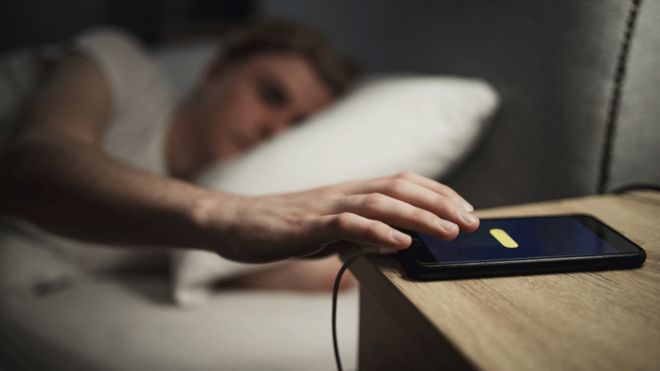
A person putting mobile beside the bedImage copyrightGETTY IMAGES
Image captionThe app works while people sleep
The research identified carrots, celery and oranges as having the highest number of cancer-fighting molecules.
The DreamLab app, which has now been downloaded 83,000 times, works while users sleep and has so far performed more than 10 million calculations.
One expert said there was a "long road ahead" to develop treatments.
The app uses an algorithm to measure the properties of more than 8,000 everyday foods against a comprehensive database, looking for molecules that have successfully tackled cancer in lab tests of cell cultures or animals.
Grapes, dill and cabbage also had high numbers of these anti-cancer molecules.
OrangesImage copyrightGETTY IMAGES
Image captionOranges are not the only fruit offering anti-cancer molecules, according to the study
The research also suggests existing anti-diabetic and anti-microbial drugs could play a role in anti-cancer therapy.
Lead researcher Dr Kirill Veselkov, from Imperial College London's department of surgery and cancer, said: "This is a groundbreaking moment for us.
"The next step is to use AI technologies to explore the impact that different combinations of drugs and food-based molecules could have on individuals."
Weilin Wu, Cancer Research UK's health information officer, said: "This intriguing study suggests we might be able to find leads for new cancer therapies among the naturally occurring chemicals that make up our food and drink.
"But even if this approach bears fruit, there's a long road ahead to develop them into cancer treatments and test whether they're effective in treating the disease.
"Your overall diet is much more important for reducing cancer risk than eating a particular type of food.
"There's good evidence that you can reduce your cancer risk by eating more foods high in fibre, like fruit and veg, and cutting down on processed and red meat, and high calorie foods and drink."
The app is a partnership between Imperial College London and the Vodafone Foundation. The findings have been published in Nature.

https://www.bbc.com/news/technology-48923407

Experts react to Alexa-NHS partnership


AI specialists discuss the ethics of making personal medical queries via Amazon's Alexa.

Amazon Alexa-NHS partnership splits expert opinion

Woman sneezingImage copyrightGETTY IMAGES
Worried about a lump? Got a nasty cough that won't budge? Many people Google queries about such symptoms daily - but now they can get NHS advice instantly by asking Amazon's Alexa.
And the government hopes it will reduce the demand on human doctors.
But the move has split opinion among artificial intelligence (AI) experts and data ethicists.
"The sensitive data holdings of a national healthcare provider like the NHS are a form of 'critical social infrastructure'," said Berlin-based tech expert Mathana Stender.
"Yet they've been handed to a foreign company that's both a defence contractor and targeted advertiser,"
NHS GP David Wrigley asked, among other things, whether the questions asked via Alexa would be encrypted and who would store any data relating to patient queries.
Amazon has said all data would be kept confidential.
The NHS has increasingly partnered with private companies to offer access to its services.
Notably, Babylon Health, Push Doctor and Now GP all allow video appointments with GPs to be made remotely.
Babylon Health, for example, says only patients and staff involved in service provision have access to patient medical records.
It adds that all data is encrypted and held in English data centres.
Amazon said multiple layers of authentication would protect the data from UK customers and that all information would be encrypted.
Some commentators felt that the service did not present obvious risks to users' privacy.
Areeq Chowdhury, at the Future Advocacy think tank, pointed out that Alexa already responded to health queries from users.
"Now the advice (which will be better and more accurate) will come from the NHS website," he tweeted.
New Scientist's deputy news editor Jacob Aron said the "fuss" over the partnership was "ridiculous".
"It's just a Google search you talk to, and at least people will get NHS [information]."
There was another issue at stake, however. Some pointed out that Amazon is known to have major ambitions in the healthcare industry.
During 2018 the firm took a number of steps in this direction - including pairing up with Omron Healthcare to allow a blood pressure monitor to be controlled via Alexa.
A doctor shows something on a tablet computer to a patientImage copyrightGETTY IMAGES
Image captionAmazon is developing technology it says can help doctors
It also announced software that could automatically analyse electronic health records for information that could be useful to doctors.
The tool will use AI to pick out important details from medical documents - including "hospital admission notes and a patient's medical history".
Some have asked whether the NHS-Alexa partnership will allow Amazon to gather yet more data on how patients raise medical concerns.
"Is Amazon training its algorithm... on NHS patients' queries?" asked data privacy campaigner Phil Booth.
Amazon said that it would not sell products or make product recommendations based on the data collected as part of the NHS partnership.
The firm also confirmed that it would not build a health profile of users who asked Alexa health-related questions.

https://www.bbc.com/news/technology-48937663?intlink_from_url=https://www.bbc.com/news/health&link_location=live-reporting-story