Pages

Showing posts with label Restless Leg Syndrome. Show all posts

Thursday, 25 July 2013

The Ultimate Exercise Plan for Restless Legs

April 1, 2013


You may not need drugs after all…

 
4069.jpg
If you have ever had throbbing, pins-and-needles, creepy-crawling or other uncomfortable sensations in your legs while sitting or lying down—especially if they are accompanied by a strong urge to move your legs—then chances are good that you have restless legs syndrome (RLS).
 
It’s an annoying condition that many people try to cope with on their own in its early stages. But most people with RLS suffer so much that they need more help and often turn to medications, such as ropinirole (Requip) and pramipexole (Mirapex). While these drugs may provide short-term relief, they can actually worsen symptoms in many people who use them long term.
 
So what’s the solution if you’d rather avoid medication?
 
Getting regular exercise has been shown to reduce the severity of symptoms by approximately 50%. But it’s crucial that you get the correct type of exercise—and in the correct amounts. For that reason, it’s wise to follow the simple exercise plan in this article, which is specially designed for people with RLS.
 

THE EXERCISE SOLUTION

 
With RLS, also known as Willis-Ekborn disease after the doctors who discovered it, the key is to not do too much of any one activity (sitting, standing, walking or even lying in one position) for too long.
 
Your fitness level will determine your tolerance for physical activity. Recognize your limits and avoid overexertion, which can trigger RLS. Also, don’t sit for more than two hours at a time—get up and walk even if you’re at a movie, in a meeting or traveling.
 
Research shows that the foundation of an effective RLS exercise plan is a combination of gentle lower-body resistance training (such as gentle lunges and knee bends) as well as moderate aerobic activity (such as walking, cycling or water aerobics).
 
Aim for 30 minutes at least three days a week—ideally, you should work up to 60 minutes each session. But to truly have the best odds of reducing your RLS symptoms, you also need to do the following exercises, which don’t take long to perform and are carefully selected for the condition.
 
Important: In some people, exercise can interfere with sleep, so be sure that your workout is at least two hours before bedtime. And stay away from high-impact activities, such as jogging, kickboxing and jumping jacks—these exercises can overtax the leg muscles.
 

WHAT WORKS FOR RLS

 
Leg stretches are particularly useful because people with RLS tend to have tight leg muscles, often due to long hours of sitting or standing. These tight muscles (even in the upper legs) limit mobility, increasing risk for RLS discomfort in the lower legs. In addition to walking and resistance training, do the following stretches two or three times a day…
 
Calf Stretch. What to do: Stand a little less than arm’s length from a wall. Put your palms against the wall, and step your right leg forward with your left leg behind you. Slowly bend your right knee, and press down with your left heel to stretch your left calf. Hold for 30 to 60 seconds. Repeat with the other leg.
 
Hamstring Stretch. What to do: Lie on the floor on your back, and position yourself near a doorframe. Put your left leg through the doorway, and raise your right leg as high as you comfortably can with your right heel resting against the doorframe. Gently straighten your right leg until you feel a stretch along the back of your right thigh. Hold for about 30 to 60 seconds. Switch legs and repeat.
 
Quadriceps Stretch. What to do: While standing near a wall in case you need support, raise your right leg and grasp your right ankle behind you. Gently pull your right heel up until you feel a stretch in the front of your right thigh. Hold for 30 to 60 seconds. Repeat with left leg.
 

FOR IMMEDIATE RELIEF

 
Exercises that can offer instant relief from an RLS attack…
 
Ankle Pumps. When your legs bother you, ankle pumps get the blood flowing. These exercises can be done while sitting or while lying on your back in bed or on a couch. What to do: Extend your legs straight in front of your body. Flex your ankles so that your toes point toward your upper body, then point your toes and feet away from your body. Do this 10 or 20 times, every other hour if necessary. If RLS wakes you up at night, do ankle pumps, and you may be able to get back to sleep quickly.
 
Walking. If ankle pumps don’t provide enough relief within a minute or two, get up and walk at a comfortable pace around the room. This gets your blood flowing even more than ankle pumps. Walking is also rhythmic, which is relaxing and may help you get back to sleep.
 
Source: Roger A. Herr, PT, a Seattle–based physical therapist and a director on the board of the American Physical Therapy Association. He has worked in a variety of acute and post-acute care settings in New York, Washington and California. To find a physical therapist near you, go to www.MoveForwardPT.com.
 

Saturday, 29 June 2013

Tumors Grow Up to 3 Times Faster When You Deprive Yourself of This

And that's not all... failing to meet this essential need can also dramatically weaken your immune system, make you feel hungry even after you've eaten, wreak havoc on your weight, and seriously impair your memory. But don't take this shortcut - it's linked to a nearly 4-fold increase in the risk of death...

Helpful Tips for Sleeping Better This Summer

June 27, 2013

Better Sleep

Story at-a-glance

  • Nearly 41 million US adults are sleeping just six hours or less each night, which recent research has linked to an increased risk of chronic inflammation and heart disease in women
  • Men with restless legs syndrome have a 40 percent higher risk of total mortality. According to the researchers, one of several potential mechanisms that might account for this increased mortality risk is disturbed sleep
  • Sleeping pills have been linked to a wide variety of health hazards, including a nearly four-fold increase in the risk of death, along with a 35 percent increased risk of cancer
  • Tips for better sleep are discussed, including the critical elements of your sleeping sanctuary, when to exercise to promote sleep, foods and beverages to avoid before bedtime, and the effect of electronic gadgets
  • Using EFT and/or increasing your melatonin can usually offer help when nothing else seems to work

By Dr. Mercola


If you’re like most Americans, you’re likely not getting enough sleep. Nearly 41 million US adults are sleeping just six hours or less each night, which recent research has linked to an increased risk of chronic inflammation and heart disease in women.1 
Over the course of the five-year long study,2 women who slept poorly—quantified as sleeping less than six hours per night—had 2.5 times higher increases in inflammation levels compared to men who slept poorly. As reported by the featured article:3
“Researchers speculated that the gender difference may be due to lower estrogen levels in the study's post-menopausal female subjects, whereas men were protected by higher levels of testosterone.”
But regardless of gender-based hormonal differences, summertime can be a time of year when sleep becomes harder to come by, courtesy of rising temperatures. This is just one of a whole host of factors that can have an adverse effect on your sleep. Restless legs syndrome is another ailment that can prevent you from getting sufficient amounts of shut-eye.  
Interestingly, a recent observational study4 found that men with restless legs syndrome have a whopping 40 percent higher risk of total mortality. This finding was independent of other known risk factors, including a variety of chronic diseases. As reported by MedPage Today:5
“The relationship between restless legs syndrome and all-cause mortality was stronger for men who had symptoms 15 or more times per month compared with those who had symptoms five to 14 times per month.”
According to the researchers, one (of several) potential mechanisms that might account for this increased mortality risk is disturbed sleep. Previous research has also found that people with chronic insomnia have a three times greater risk of dying from any cause.


Sleep Deprivation Takes a Serious Toll on Your Health...


You can have the healthiest diet on the planet, doing vegetable juicing and using fermented veggies, be as fit as an Olympic athlete, be emotionally balanced, but if you aren’t sleeping well it is just a matter of time before it will adversely, potentially seriously affect your health. 
Sleep deprivation is such a chronic condition these days that you might not even realize you suffer from it. Science has now established that a sleep deficit can have serious, far reaching effects on your health. For example, interrupted or impaired sleep can:
  • Dramatically weaken your immune system
  • Accelerate tumor growth—tumors grow two to three times faster in laboratory animals with severe sleep dysfunctions, primarily due to disrupted melatonin production. Melatonin inhibits the proliferation of a wide range of cancer cell types, as well as triggering cancer cell apoptosis (self destruction). The hormone also interferes with the new blood supply tumors require for their rapid growth (angiogenesis)
  • Cause a pre-diabetic state, making you feel hungry even if you've already eaten, which can wreak havoc on your weight
  • Seriously impair your memory; even a single night of poor sleep—meaning sleeping only 4 to 6 hours—can impact your ability to think clearly the next day. It’s also known to decrease your problem solving ability


What You Need to Know About Sleeping Pills 

While it may be tempting to look for a pill to quickly help you sleep, these will not address any of the underlying causes of insomnia. In fact, researchers have repeatedly shown that sleeping pills don’t work, but your brain is being tricked into thinking they do...  
In one meta-analytic study, they found that, on average, sleeping pills help people fall asleep approximately 10 minutes sooner. From a biomedical perspective, this is an insignificant improvement. On average, sleeping pills increase total sleep time by about 15-20 minutes. But here is the catch: This study also discovered that while most sleeping pills created poor, fragmented sleep, they also created amnesia, so upon waking, the participants could not recall how poorly they’d actually slept!  
Worse yet, sleeping pills have also been linked to a wide variety of health hazards, including a nearly four-fold increase in the risk of death, along with a 35 percent increased risk of cancer.  
Additionally, most people do not realize that over-the-counter (OTC) sleeping pills -- those containing Benadryl -- can have a half life of about 18 hours. So, if you take them every night, you're basically sedated much of the time. Not surprisingly, they're associated with cognitive deficits in the morning. Trust me, there are far better, safer and more effective ways to get a good night's sleep... 


Tips for High-Quality Shut-Eye from a Sleep Wellness Consultant

As previously discussed by Dr. Rubin Naiman, a leader in integrative medicine approaches to sleep and dreams, sleep is the outcome of an interaction between two variables, namely sleepiness and what he refers to as "noise.” This is any kind of stimulation that inhibits or disrupts sleep. In order to get a good night's sleep, you want your sleepiness level to be high, and the “noise” level to be low. Under normal conditions, your sleepiness should gradually increase throughout the day and evening, peaking just before you go to bed at night. However, if noise is conceptually greater than your level of sleepiness, you will not be able to fall asleep.  

 Total video Length: 1:02:37
Download Interview Transcript 
In a recent CNN article, 6 sleep wellness consultant Nancy Rothstein offered up six tips to improve your sleep, wisely starting off by addressing environmental “noise” in your bedroom (for the rest of her suggestions, please see the original article):7
  • Create a sleep sanctuary. This means removing items associated with entertainment, recreation, work and hobbies, and turning your bedroom into a single-purpose space—one for sleeping. Of utmost importance: Make sure your bedroom is cool, dark and quiet. These three factors can have a major impact on your sleep.
  • With regards to temperature, studies show that the optimal room temperature for sleep is quite cool, between 60 to 68 degrees Fahrenheit, so keep the temperature in your bedroom no higher than 70 degrees.
    As for light, even the tiniest bit of light in the room can disrupt your internal clock and your pineal gland's production of melatonin and serotonin, hormones involved in your body’s circadian rhythm of sleep and wakefulness. So close your bedroom door, get rid of night-lights, and most importantly, cover your windows. I recommend using blackout shades or heavy, opaque drapes. Also cover up your clock if it has a lit display. Alternatively, you could wear an eye mask to block out any stray light.
  • Turn off your gadgets well before bedtime. Again, the artificial glow from your TV, iPad, computer or smartphone can serve as a stimulus for keeping you awake well past your bedtime by disrupting melatonin production. I recommend turning off all electronic gadgets at least one hour before bed. As Rothstein suggests, that time is far better spent reading a good old fashioned book, practicing relaxation techniques or meditating.
  • Some people find the sound of white noise or nature sounds, such as the ocean or forest, to be soothing and sleep-promoting. An excellent relaxation/meditation option to listen to before bed is the Insight audio CD. Another favorite is the Sleep Harmony CD, which uses a combination of advanced vibrational technology and guided meditation to help you effortlessly fall into deep delta sleep within minutes. The CD works on the principle of "sleep wave entrainment" to assist your brain in gearing down for sleep.
  • Exercise to sleep better, but do it early! Exercising for at least 30 minutes per day can improve your sleep, but if you exercise too close to bedtime (generally within the three hours before), it may keep you awake instead.
  • Party-goers beware: alcohol tends to prevent good sleep... Summertime tends to spark party invitations, but as Rothstein warns, it would be wise to consider how a few drinks will affect your sleep pattern. Although alcohol will make you drowsy, the effect is short lived and you will often wake up several hours later, unable to fall back asleep. Alcohol can also keep you from entering the deeper stages of sleep, where your body does most of its healing.
  • The same applies to eating. Ideally, you’ll want to avoid eating or snacking at least three hours before bed. Especially troublesome are grains and sugars, as these will raise your blood sugar and delay sleep. Later, when your blood sugar drops, you may wake up and be unable to fall back asleep.

Two More Aces Up Your Sleeve When Sleep Becomes Elusive... 

My personal favorite fix for insomnia is the Emotional Freedom Techniques (EFT). Most people can learn the basics of this gentle tapping technique in a few minutes. EFT can help balance your body's bioenergy system and resolve some of the emotional stresses that are contributing to your insomnia at a very deep level. The results are typically long lasting and improvement is remarkably rapid. 
Another strategy that can help is to increase your melatonin. Ideally it is best to increase your levels naturally, by exposing yourself to bright sunlight during daytime hours (along with full spectrum fluorescent bulbs in the winter) followed by absolute complete darkness at night. If that isn't possible, you may want to consider a melatonin supplement. In scientific studies, melatonin has been shown to increase sleepiness, help you fall asleep more quickly and stay asleep, decrease restlessness, and reverse daytime fatigue. Melatonin is a completely natural substance, made by your body, and has many health benefits in addition to sleep.  
If you decide to give melatonin supplements a try, start with a very small dose, about an hour before bed—as little as 0.25 mg can be sufficient for some.8 Many end up taking too much right off the bat, which could end up having the reverse effect you’re looking for.  
Taking too much could also result in side effects9 such as drowsiness, confusion, headache, nightmares, and more. So, start with a tiny dose, and if after three nights you notice no improvement, take a little more. The tips discussed so far are among the most important for a restful night's sleep, but they are only the beginning. For more, please read my comprehensive sleep guide: 33 Secret's to a Good Night's Sleep.

Improving Your Sleep Hygiene Pays Off in Health Dividends  

There's convincing evidence showing that if you do not sleep enough, you're really jeopardizing your health. Everybody loses sleep here and there, and your body can adjust for temporary shortcomings. But if you develop a chronic pattern of sleeping less than five or six hours a night, then you're increasing your risk of a number of health conditions, including heart disease. 
To make your bedroom into a suitable sleep sanctuary, begin by making sure it’s pitch-black, cool, and quiet. Remember, even the tiniest bit of light can disrupt your pineal gland's production of melatonin and serotonin. For this reason, I highly recommend adding room-darkening blinds or drapes to your bedroom, or if this is not possible wearing an eye mask to block out any stray light.  
For even more helpful guidance on how to improve your sleep, please review my 33 Secrets to a Good Night's Sleep. If you're even slightly sleep deprived, I encourage you to implement some of these tips tonight, as high-quality sleep is one of the most important factors in your health and quality of life.
[-] Sources and References


http://articles.mercola.com/sites/articles/archive/2013/06/27/better-sleep-tips.aspx

Monday, 1 October 2012

The Mineral Deficiency that Can Keep You Up at Night


The Mineral Deficiency that Can Keep You Up at Night


 2971.jpg
You climb into bed longing for sleep, but just as you start to relax, your legs begin to twitch, tingle and ache. You feel an overwhelming urge to move your legs around to dispel the creepy-crawling sensation, but those kicks keep you awake into the wee hours. Night after night, the pattern repeats until you’re ready to jump out of your skin.
 
If this sounds depressingly familiar, you probably have restless legs syndrome (RLS), an aptly named neurological disorder that affects 10% of the US population, with women outnumbering men two-to-one. RLS has been linked to a wide variety of conditions, including pregnancy, diabetes, nerve damage, high blood pressure and varicose veins. But now a growing body of research suggests that a key component—or perhaps even the key component—of the disorder is insufficient iron in the brain.
 
This is not your garden-variety type of iron deficiency typically associated with anemia, in which the whole body is low in iron. Instead, said James R. Connor, PhD, director of the Center for Aging and Neurodegenerative Diseases at the Penn State Milton S. Hershey Medical Center, the RLS-related iron insufficiency affects the brain specifically. Here’s the deal…
 
Iron is carried in the bloodstream. Regular blood vessels throughout the body have porous spots that allow nutrients (including iron) to get out and do what they’re supposed to do to sustain the body’s tissues. However, blood vessels in the brain do not have such porous spots—that is part of a mechanism called the blood-brain barrier, which helps keep harmful substances from invading the body’s central command system. Instead, brain blood vessels are specially modified to serve as a nutrient reservoir for the brain to draw upon as needed.
 
People with RLS can’t seem to keep enough iron in that reservoir, Dr. Connor explained. The resulting iron deficiency in the brain interrupts production of dopamine, a neurotransmitter needed to produce smooth, purposeful muscle movement. “RLS symptoms get worse at night because that’s when iron levels drop naturally. It’s a physiological rhythm that we normally can handle when reservoir levels are OK. But when the iron reservoir is too low, RLS symptoms emerge,” he said.
 
If you have signs of RLS: Do not try to treat yourself with over-the-counter iron supplements, Dr. Connor cautioned. “Iron supplements aren’t absorbed very well. In order to get enough iron to affect your RLS, you may have to take high doses of iron tablets, which sometimes may make you very sick with constipation and stomach cramps,” he said.
 
Instead, see your physician for a blood test to check your iron levels and perhaps a brain MRI to look at the amount of iron in your brain. If your iron levels are indeed low, you may be treated with iron supplements or given iron intravenously—for some people, this appears to effectively “refill” the reservoir, Dr. Connor said.
 
Certain RLS patients also may benefit from medications that target dopamine activity, such as gabapentin (Horizant), ropinirole (Requip) or pramipexole (Mirapex). Your doctor also should review any other medications you are taking to determine whether they could be contributing to your problems. For instance, certain antidepressants, antihistamines and antinausea drugs can aggravate RLS symptoms. Switching or discontinuing such medications may help you get some restful RLS-free slumber at last.
 
Source: James R. Connor, PhD, is a university distinguished professor of neurosurgery and vice-chair for neurosurgical research at Penn State College of Medicine and director of the Center for Aging and Neurodegenerative Diseases at the Neuroscience Institute of the Penn State Milton S. Hershey Medical Center, both in Hershey. He is a leading researcher on the link between RLS and iron.
 

Listing Details


Publication
HealthyWoman from Bottom Line
Original publication date
September 23, 2012

http://www.bottomlinepublications.com/content/article/health-a-healing/the-mineral-deficiency-that-can-keep-you-up-at-night

Tuesday, 6 December 2011

5 Signs You May Have Restless Legs Syndrome

Home >> Health A-Z >> Sleep Condition Center >> Journey >> Restless Legs Syndrome >> 5 Signs You May Have Restless Legs Syndrome


What is restless legs syndrome?

rls-bed-woman
Restless legs syndrome (RLS) can be tricky to diagnose, largely because symptoms tend to be worse at night and less obvious in the doctor's office.

RLS can appear or get worse during pregnancy, and is more common in those with conditions such as rheumatoid arthritis, diabetes, or anemia. But it can strike people without those problems too.

If you think you might have RLS, read on to see the signs and symptoms that are used to diagnose the condition—which is treatable.


A strong urge to move your legs you may not be able to resist

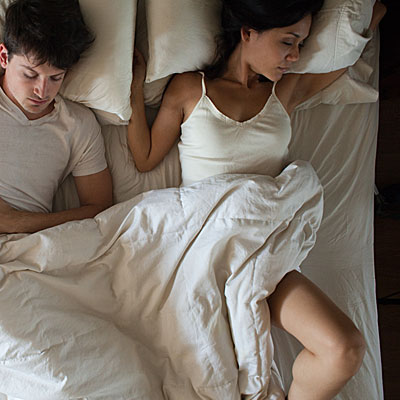
couple-bed-legPeople who feel this urge say their need to move their legs is often accompanied by uncomfortable sensations.

Some words used to describe these sensations include creeping, itching, pulling, creepy-crawly, tugging, or gnawing.

This is one of the criteria necessary for diagnosis, so if you don't have it you may not have restless legs syndrome.

Credit: Getty Images


Symptoms make it hard to fall asleep or stay asleep

insomnia-rls-bedA substantial number of people who have RLS also have periodic limb movements in sleep (PLMS). PLMS are repetitive movements that occur every 20 to 30 seconds on and off throughout the night and can cause partial awakenings that disrupt sleep.

If you feel like these symptoms or others make it hard to fall or stay asleep, you're not alone—it's often one of the chief complaints among people with restless legs syndrome.

It's not, however, one of the four criteria necessary for diagnosis. (Although doctors may use it to support a diagnosis.)


Symptoms get better when you move your legs

walk-across-bedIf the uncomfortable sensations go away when you move your legs, it's another sign of RLS.

The relief can be complete or only partial but generally starts very soon after starting an activity. Relief persists as long as the movement continues.

This is one of the criteria necessary for diagnosis.

Credit: Getty Images


Your symptoms start or get worse at rest

uncomfortable-bed-legsThe longer you are at rest, the greater the chance the symptoms will occur and the more severe they are likely to be.

This is one of the four criteria necessary for an RLS diagnosis.
  
Credit: Getty Images


Symptoms are worse in the evening, especially when lying down

midnight-clock-insomnia
Symptoms worsening in the evening is another one of the criteria necessary for an RLS diagnosis.

If your symptoms aren't worse at night, it may not be RLS. Some people with RLS, however, can have severe daytime symptoms too.


Credit: Getty Images


.


The Best Websites for Restless Legs Syndrome