Pages

Showing posts with label Cancer - Bowel. Show all posts

Tuesday, 17 May 2022

Cancer: The signs and symptoms to look out for (Image: EXPRESS.CO.UK)


https://www.express.co.uk/life-style/health/1611585/cancer-symptoms-blood-clots-first-clue-redness-swelling-warmth-pain


‘Poo in the post’ test could save your life

 Julie Platt draws readers’ attention to the NHS’s screening programme that picks up bowel cancer early even when there are no symptoms


·1-min read


Your article about Deborah James (From stigma to spotlight: Deborah James puts focus on bowel cancer, 13 May) rightly pointed out the importance of seeing a GP about worrying symptoms. However, many people have no symptoms at all until their cancer has reached an advanced stage. The article failed to mention the “poo in the post” test (the NHS’s bowel screening programme), which can detect early bowel cancers even in people without symptoms, as it did in my case. I had surgery at the beginning of the pandemic and am now free of cancer.

Anyone over the age of 60 is invited to participate, and this is gradually being expanded to include younger people. Fewer than three out of four eligible people currently take up this opportunity, for a variety of reasons, but the test has recently been made much simpler and takes less time to do than a lateral flow test. It sounds distasteful and embarrassing, but it can be a life-saver.
Julie Platt
Bath

‘Poo in the post’ test could save your life (yahoo.com)

Thursday, 27 February 2020

E. coli gut infection linked to bowel cancer

A common type of gut bacterium may increase a person's chance of developing bowel cancer, according to a study published in the journal Nature.

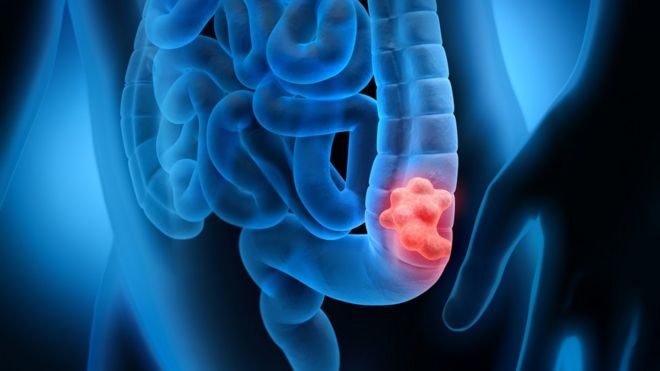
Cancer in the colonImage copyrightGETTY IMAGES
A common type of gut bacterium may increase a person's chance of developing bowel cancer, according to a study published in the journal Nature.
The bacterium is a type of E. coli infection, present in up to one in five people, scientists believe.
It releases a toxin which experts say can damage the cells that line the bowel, potentially turning some cells cancerous over time.
There are around 42,000 new cases of bowel cancer each year in the UK.
Experts do not yet know how many of these might be linked to the E. coli strain that makes the toxin colibactin.

How dangerous might it be?

The researchers suspect it may contribute to a minority of bowel cancer cases - one in 20 or five in every 100 - but more research is needed to confirm the link.
There is no routine test for the bacterium currently, and it is not clear yet that people who have it will be at heightened risk.
In some people it may live in the bowel and cause no issue.
It is not the first infection to be linked with cancer, however. HPV is a virus that causes cervical cancer and H pylori infection is associated with stomach cancer.

Is it the same as food poisoning?

No. This particular E. coli strain is not one of the ones linked to food poisoning outbreaks.
There are lots of different types of E. coli. Many are part of the normal gut flora - the trillions of bacteria that naturally live in the bowel.

What did the study find?

The team, from The Netherlands, the UK and the US, used miniature replicas of the human gut, grown in the lab, to test the effects of the toxin on cells.
They then compared the damage seen with more than 5,000 bowel cancer samples taken from patients and found identical patterns or "fingerprints" of DNA damage in around 5% of the samples.
A line

What are bowel cancer symptoms?

  • a persistent change in bowel habit - going more often, with looser stools and sometimes tummy pain
  • blood in the stools without other symptoms, such as piles
  • abdominal pain, discomfort or bloating always brought on by eating - sometimes resulting in a reduction in the amount of food eaten and weight loss
Most people with these symptoms do not have bowel cancer, but the NHS advice is to see your GP if you have one or more of the symptoms and they have persisted for more than four weeks.
Source: NHS UK
A line

How do the findings help us?

Experts say it may be possible to develop a more sensitive test to detect early bowel tumours using this knowledge about the toxin.
The findings may also offer a way to prevent some bowel cancers, by getting rid of the bacterium from the body before it can do any harm, using existing antibiotics.
One of the researchers, Prof Hans Clevers, from the Hubrecht Institute in The Netherlands, said: "Common antibiotics will kill these bacteria.
"This is the first time we've seen such a distinctive pattern of DNA damage in bowel cancer, which has been caused by a bacterium that lives in our gut."
He said there may be other gut bacteria that do the same.
Probiotic treatments that contain a similar strain of E. coli, called Nissle 1917, might also pose a risk potentially, he added - but these are not the same ones found in yoghurt drinks sold in supermarkets.
"Although it might sound scary, there's still lots left to understand about our how our gut bacteria affect our health, what we could do about it, and how much impact it has on bowel cancer risk," says Nicola Smith, senior health information Manager at Cancer Research UK, who funded the work.
"In the future, knowing what role bacteria in our gut plays could change the way we detect and prevent bowel cancer.
"But we do know that around half of bowel cancer cases can be prevented by not smoking, keeping a healthy weight and eating a balanced diet - so there's plenty of changes that you can make right now that will reduce your risk," she added.
Genevieve Edwards, chief executive at Bowel Cancer UK, said: "Although this research is at an early stage, it adds to the growing body of evidence about the role that bacteria and other microorganisms that live in our gut may play in bowel cancer development. "

https://www.bbc.com/news/health-51626946

Tuesday, 18 June 2019

Men who eat two portions of yoghurt are less likely to develop bowel cancer, major study finds

Men who have two portions of yoghurt a week could cut the risk of precancerous growths by a fifth, a study suggests.
A bowl of yoghurt and fruitScientists said that two bacteria commonly found in live yogurt, may lower the number of cancer causing chemicals in the gut
 CREDIT: GETTY
Research by the University of Washington found those eating plenty of it had a significantly lower chance of developing adenoma which can lead to bowel cancer.
The study, published in Gut, which tracked more than 32,000 men for 25 years, found that those consuming at least two portions of yoghurt a week had 19 per cent fewer growths - and 26 per cent fewer of the most high-risk type.
The study was observational, and could not demonstrate why the foodstuff might have such an impact.
But scientists said that Lactobacillus bulgaricus and Streptococcus thermophilus, two bacteria commonly found in live yogurt, may lower the number of cancer causing chemicals in the gut.
The anti-inflammatory properties might also reduce gut leakiness, which could also protect against disease, they said. The study tracked a total of 32,606 men and 55,743 women, all of whom had a lower bowel endoscopy, which enables medics to view the inside of their gut.
Every four years they provided detailed information on lifestyle and diet - including how much yoghurt they ate. During the study period, 5,811 pre-cancerous growths developed in the men, and 8,116 in the women.
While men who ate yoghurt had a far lower risk of developing the growths, called adenoma, no association was seen in women.
Katie Patrick, health information officer, from Cancer Research UK, said: “The colon is home to trillions of microbes and how the bacteria in our gut might affect bowel cancer risk is a fascinating area of research. Lots of things affect the types of bugs in our gut and our overall gut health, including the foods we eat.
“But men don’t need to fill their shopping trolleys with yoghurt because it’s too early to say from this study whether eating more yoghurt could reduce the risk of bowel cancer. However, there is good evidence that you can reduce your risk by eating more foods high in fibre, like wholegrain bread or brown rice, and cutting down on processed and red meat.”
Bowel cancer is the fourth most common cancer in the UK, with almost 42,000 diagnoses annually.

https://www.telegraph.co.uk/news/2019/06/18/men-eat-two-portions-yoghurt-less-likely-develop-bowel-cancer/

Thursday, 7 March 2019

COMBAT CANCER Hope for thousands of bowel cancer patients as HIIT exercise ‘STOPS growth of disease’


Exercise could help thousands of bowel cancer patients stop their disease returning


IT'S hard to ignore the fact exercise is good for you - helping with weight loss, heart health and preventing cancer.
But now scientists believe short, sharp bursts could actually help stop bowel cancer growing, offering hope to thousands of patients diagnosed every year.

 Exercise helps stop the growth of bowel cancer cells, experts have discovered


GETTY - CONTRIBUTOR
1
Exercise helps stop the growth of bowel cancer cells, experts have discovered

After a short session of high intensity interval training (HIIT), scientists found the rate at which cancer cells grew slowed right down.
The workout also helped reduce inflammation, tests showed.

Thousands could benefit

Around 42,000 people in the UK are diagnosed with bowel cancer every year.
It's the second deadliest cancer in the country, yet it can be cured if it's caught early enough.
Catch the disease at stage 1 and a patient has a 97 per cent chance of surviving five years or longer.
But, diagnose a patient at stage 4 and that chance plummets to just seven per cent.
That's why The Sun launched the No Time 2 Lose campaign last April, to raise awareness of the importance of early diagnosis - and urge everyone to brush up and learn the red-flag warning signs of the disease.
The new findings could prove significant for thousands of bowel cancer patients - helping them avoid a relapse and the return of their disease.

Exercise stops growth of cancer cells

James Devin, who led the research at The University of Queensland, said: "We have shown exercise may play a role in inhibiting the growth of colon cancer cells."
"After an acute bout of HIIT there were specific increases in inflammation immediately after exercise, which are hypothesised to be involved in reducing the number of cancer cells."
The findings, published in the Journal of Physiology, suggests one HIIT session can help.
And Mr Devin's team believe repeated workouts involving short, high energy bursts, "may contribute to the fight against the cancer".
Their findings reinforce the importance of doing regular exercise, and maintaining an active lifestyle.

HIIT could stop bowel cancer returning

Mr Devin's team worked with experts at the University of Waterloo in Canada.
They asked bowel cancer patients to complete either a single session of HIIT, or 12 sessions over four weeks.
Each volunteers gave blood samples immediately after their single session or four-week programme of training.

The signs of bowel cancer you need to know...

What are the red-flag signs of bowel cancer?

The five red-flag symptoms of bowel cancer include:
  • bleeding from the back passage, or blood in your poo
  • a change in your normal toilet habits - going more frequently for example
  • pain or a lump in your tummy
  • extreme tiredness
  • losing weight
Tumours in the bowel typically bleed, which can cause a shortage of red blood cells, known as anaemia. It can cause tiredness and sometimes breathlessness.
In some cases bowel cancer can block the bowel, this is known as a bowel obstruction.

Other signs of bowel cancer include:

  • gripping pains in the abdomen
  • feeling bloated
  • constipation and being unable to pass wind
  • being sick
  • feeling like you need to strain - like doing a number two - but after you've been to the loo
While these are all signs to watch out for, experts warn the most serious is noticing blood in your stools.
But, they warn it can prove tricky for doctors to diagnose the disease, because in most cases these symptoms will be a sign of a less serious disease.
Scientists then analysed the samples under the microscope to look at the growth of cancer cells.
Their findings show the benefit of exercise for bowel cancer patients.
Mr Devin added: "This suggests that a physically active lifestyle may be important in tackling human colorectal tumours."
Now, the team want to look at how these changes in growth happen, and learn more about the biomarkersin the blood that can affect cancer cell growth.

https://www.thesun.co.uk/news/8525250/bowel-cancer-exercise-hiit-stops-growth/

Wednesday, 23 January 2019

Taking an aspirin each day does more HARM than good for healthy middle-aged adults because it raises their risk of major internal bleeding

  • Aspirin, a blood thinner, is regularly given to healthy people in middle age
  • But a study says the harms of major internal bleeding outweigh the benefits
  • King's College London scientists reviewed 13 trials of 160,000 participants 

Aspirin, which is a blood thinner, is regularly given to healthy people in middle age, to lower the risk of heart problems
Healthy people who take a daily aspirin to prevent heart attacks in later life may be doing more harm than good, research suggests.
Aspirin - which is a blood thinner - has for decades been given to people diagnosed with heart disease to stop heart attacks and strokes.
But many healthy people in middle age also take the pills as an 'insurance policy' against heart problems.
A major new study, which includes data from more than 160,000 people, concludes the risk of major internal bleeding significantly outweighs the benefit of aspirin among those with no history of heart disease.
The review, led by experts at King's College London, reinforces growing evidence that aspirin should no longer be used for 'primary prevention' - the term for treatment of patients who have no symptoms of heart problems.
The researchers found among healthy people, use of aspirin saw risk of heart attack or a stroke drop 11 per cent.
But the risk of bleeding went up 43 per cent.
This means that 265 people would have to take aspirin for five years to prevent a single heart attack or stroke – but one in 210 would have a major bleed.
Study leader Dr Sean Zheng, academic clinical fellow in cardiology at King's College London, said: 'This study demonstrates that there is insufficient evidence to recommend routine aspirin use in the prevention of heart attacks, strokes and cardiovascular deaths in people without cardiovascular disease.' 

CAN TAKING ASPIRIN SLASH YOUR RISK OF CANCER? 

Taking just a quarter of an aspirin tablet a day could slash the risk of bowel cancer by a fifth, a major study concluded in March 2016.
Harvard scientists found middle-aged people who regularly took the painkillers were less likely to be diagnosed with cancer of any kind.
They found the cheap pills, which cost less than 2p per tablet, are particularly effective at warding off cancers of the digestive system.
The most dramatic impact was seen for bowel cancer, with people who took aspirin every day for six years seeing their risk drop by 19 per cent.
The experts, who tracked 136,000 people for 32 years, predicted that regular aspirin use in the US could prevent 30,000 tumours a year.
The team found the picture was more complicated for patients diabetes, who are at higher risk of heart disease and who are often prescribed aspirin.
Among these patients the risk of a heart attack or stroke also dropped 11 per cent - and the risk of bleeding went up 30 per cent.
Dr Zheng said: 'There has been more uncertainty surrounding what should be done in patients who are at higher risk of cardiovascular disease and in patients with diabetes.
'This study shows that while cardiovascular events may be reduced in these patients, these benefits are matched by an increased risk of major bleeding events.
'Aspirin use requires discussion between the patient and their physician, with the knowledge that any small potential cardiovascular benefits are weighed up against the real risk of severe bleeding.'
In the past low-dose aspirin, which is very cheap, was frequently prescribed for even healthy people in middle age to reduce heart disease.
Guidelines issued by several professional health bodies between 2005 and 2008 solidified this position, recommending routine use of aspirin for people aged 50 and older with type 2 diabetes or high blood pressure.
A decade ago a series of major studies started to reveal the risk of major bleeding, and guidelines were changed to remove the formal recommendation, but many doctors still prescribe the drugs.
Experts are also concerned many the 'worried well' who take the tablets without being aware of side-effects that can include internal bleeding.
Professor Jeremy Pearson associate medical director at the British Heart Foundation said: 'Current guidelines do not recommend aspirin for people who don't already have heart and circulatory diseases.
'This is because, while aspirin reduces these people's risk of heart attacks and strokes, any benefit is outweighed by an increased risk of bleeding.
'If you have a heart attack, your doctor will usually prescribe a daily aspirin to try and prevent a second attack. In this case, the reduced risk of a second life-threatening heart attack substantially outweighs the risk of side effects, such as bleeding.
'The risk of bleeding from aspirin is likely to differ between groups of people. Further research may well uncover subsets of people where benefits do outweigh risks, paving the way for personalised treatments.'
Professor Jane Armitage of the University of Oxford, said: 'The conclusion [in this paper] reinforces the message from those trials that, for healthy people, the small benefits of aspirin in preventing strokes and heart attacks are counter balanced by increases in the risk of serious bleeding.'
https://www.dailymail.co.uk/health/article-6619267/Daily-aspirin-does-harm-good-worried-well.html