Pages

Showing posts with label Beef. Show all posts

Monday, 29 October 2018

Curious Cook: Food, proteins and googly eyes on fish

My sister and her family recently came to stay in France, and one of their consistent comments was how good and “different” food tastes here – and were therefore curious about the “secret”.


Of course, there is no secret as such. For one, the food raised in France (and other parts of Europe) is different from food in Asia. By different, I mean the varieties of vegetables, fruits and animals here are distinct from other parts of the world. The preparation of the food is also often different, and I am also particularly fussy – for example, to get the right bangers for a barbecue, we made a return trip of around 100km to a butcher who sold sausages hand-crafted from pigs raised in the Cantal region.
There are, of course, several other items for which I would consider making such a long trip and top of the list would be good Malaysian durians – but sadly, there is no chance of that here as durians are still banned on flights.
This fussiness applies even to little things like salt. It is hard to believe but there are significant differences in the taste of salt. My personal preference is for Fleur De Sel De Guérande – if you are curious, try comparing a sample with ordinary salt side by side. The difference is usually due to the desiccants and/or flow-improvers in normal table salt.
French cheese Reblochon
French cheese Reblochon is made with raw, unpasteurised milk. Photo: The Star
France is largely agricultural and many regions are littered with remote farming communities where there is only one obscure road in and the same route out. Industrial farming is impossible and these communities mainly supply local markets with produce seldom contaminated by modern additives or processes used for mass production.
This is not always riskless – many fine French cheeses are made with “lait cru” or raw, unpasteurised milk and there was recently a recall of many tonnes of Reblochon de Savoie after some batches were found to be contaminated with E. coli. This outbreak had caused hemolytic-uremic syndrome in six out of seven affected children (though nobody died).
Statistically, this still makes eating Reblochon safer than crossing a road, so for that reason, such stories seldom bother me – though I would never offer young children cheese made with unpasteurised milk, just in case.
The right type of ingredients matter very significantly, especially in countries where there are few heavy spices to cover any deficiencies in food elements. For example, the closest to a French national dish might be boeuf bourguinon, a heady stew of beef, Provence herbs and red wine.
Boeuf bourguignon
Boeuf bourguignon is made with few ingredients, unlike a Malaysian beef curry (see main image, top), which is often heavily spiced. Photos: The Star
In theory, it should be very easy to make (as it is mostly boiling lumps of beef for hours in wine and herbs) but it took a year before getting it right. The main problems were the cuts of meat used and the wine selection, according to a professional cook. So changing the meat for a fresher tougher cut and using a lighter Cote du Rhone (and adjusting the balance of herbs) now results in a pretty good stew every time.
I would probably not bother to make boeuf bourguinon in tropical Asian countries. This is because most “beef” in many South-East Asian countries is actually water buffalo imported from India. The other issue may also be the freshness of meat in tropical climates. Meat decomposes and changes its flavour very quickly, especially at warm temperatures – this rapid decomposition is mainly due to aerobic bacteria breaking down meat proteins and spoiling the flavour.
Hence in the Far East, it would make much more sense to cook food with strong spices or flavours to counteract any possible issues with meat protein decomposition. And of course, this is what most people do.
fish
Check the eyes for freshness. Photo: The Star
Googly eyes
A funny story recently is the use of plastic googly eyes by a Kuwaiti fishmonger to cover the rotting eyes of old fish – a common way to test the freshness of fish is to check the decomposition of the eyes. The other is to check the redness underneath the gills. This indicates that consumers are acutely aware of the problems of protein decomposition.
Snack bars
This brings us round to the subject of proteins itself, especially in the modern diet. My daughter recently informed me that dietary protein is now such a fad that even confectionery manufacturers now offer protein-rich snack bars. This was a surprise to me, but a quick search proved she was right – you can get protein-rich Mars, Snickers and Bounty bars, for example. The Carnivore Diet is also an off-shoot of this protein fad. See “A modern food story – Part 1”.
Proteins
After ingestion, proteins are digested down into amino acids which are then released into the blood stream. Amino acids are extremely important as they are the building blocks of enzymes, antibodies, hormones, muscles and connective tissues such as collagen, without which the body simply cannot survive – and we cannot produce all the required amino acids so we require them in our diets. Humans need around 0.8g of protein per kilo of body weight.
One fact about proteins is they provide fewer digestible calories than carbohydrates and fat – as often stated before, not all calories from food are equal. This is because of the Thermic Effect of Food (TEF) which basically means that proteins take up five times more energy to digest compared to carbohydrates and fats. Hence, a piece of lean meat or soy protein delivers fewer calories than a fried doughnut of the same weight. This was reviewed in “The perils of dieting – Part 1”.
The TEF is also known as dietary-induced thermogenesis and appears to be the rationale behind many of the protein diet fads. Unlike dietary carbohydrates, which are chains of glucose molecules easily freed by enzymes (eg. amylase, galactose, sucrase, etc) into energy-giving glucose molecules, proteins are digested via a completely different pathway.
Proteins are more difficult to convert into energy for two reasons: (i) proteins contain nitrogen; and (ii) the digestive system needs to break down the peptide bonds holding together polypeptides. A string of amino acids is a polypeptide and proteins are either polypeptides or chains of polypeptides. Degradation of proteins is known as proteolysis and the first stage is denaturation of proteins in the extremely acidic environment of the stomach, plus the introduction of a stomach enzyme called pepsin. The deconstruction of proteins is further enhanced by the enzymes trypsin, chymotrypsin, carboxypeptidase A and B and elastase produced by the pancreas while passing into the intestines via the duodenum (where bicarbonate is introduced to raise pH to the level needed for the pancreatic enzymes to function efficiently).
After reducing proteins into amino acids, the amino acids are then passed into the intestinal cell walls and released into the bloodstream to be absorbed by other tissues.
Excess amino acids produced after digestion cannot be stored, and can then be converted into energy. These excess amino acids are subjected to processes called transamination and deamination, which remove the nitrogen molecules in amino acids, thereby reducing amino acids to carbon-based structures (such as pyruvate) which can be converted into glucose (energy) or stored as fat. The nitrogen is freed as ammonia, extracted from the bloodstream by the liver and passed for excretion by the kidneys as urea.
Due to the increase in urea production, anyone with chronic kidney diseases may be negatively affected by high protein diets. Healthy people generally have no issues with any amount of protein.
Although a high-protein diet may help weight loss due to the TEF of proteins, in many ways it is not significantly better than eating raw vegetables, which also have a high TEF. Also, a recent cohort study published in The Lancet (based on 432,179 participants) found that high-protein diets involving mainly animal proteins shortened lifespans (the reasons were not investigated). The study also suggested getting 50% to 55% of daily energy requirements from carbohydrates extended lifespans.
In summary, there is no compelling reason to pursue a high-protein diet but if you must do so, then consider a diet with a much higher proportion of non-animal proteins. There is even less sense in eating expensive sugary confections with added protein – if you investigate the protein content, much of it are by-products from other food processing. Examples are hydrolysed collagen, soy protein isolate, milk protein isolate, skimmed milk powder, whey protein, egg albumen, etc, all mixed with sugars and fats.

https://www.star2.com/food/2018/09/23/curious-cook-food-proteins-googly-eyes-on-fish/

Sunday, 23 September 2018

Curious Cook: Food, proteins and googly eyes on fish

My sister and her family recently came to stay in France, and one of their consistent comments was how good and “different” food tastes here – and were therefore curious about the “secret”.


Of course, there is no secret as such. For one, the food raised in France (and other parts of Europe) is different from food in Asia. By different, I mean the varieties of vegetables, fruits and animals here are distinct from other parts of the world. The preparation of the food is also often different, and I am also particularly fussy – for example, to get the right bangers for a barbecue, we made a return trip of around 100km to a butcher who sold sausages hand-crafted from pigs raised in the Cantal region.
There are, of course, several other items for which I would consider making such a long trip and top of the list would be good Malaysian durians – but sadly, there is no chance of that here as durians are still banned on flights.
This fussiness applies even to little things like salt. It is hard to believe but there are significant differences in the taste of salt. My personal preference is for Fleur De Sel De Guérande – if you are curious, try comparing a sample with ordinary salt side by side. The difference is usually due to the desiccants and/or flow-improvers in normal table salt.
French cheese Reblochon
French cheese Reblochon is made with raw, unpasteurised milk. Photo: The Star
France is largely agricultural and many regions are littered with remote farming communities where there is only one obscure road in and the same route out. Industrial farming is impossible and these communities mainly supply local markets with produce seldom contaminated by modern additives or processes used for mass production.
This is not always riskless – many fine French cheeses are made with “lait cru” or raw, unpasteurised milk and there was recently a recall of many tonnes of Reblochon de Savoie after some batches were found to be contaminated with E. coli. This outbreak had caused hemolytic-uremic syndrome in six out of seven affected children (though nobody died).
Statistically, this still makes eating Reblochon safer than crossing a road, so for that reason, such stories seldom bother me – though I would never offer young children cheese made with unpasteurised milk, just in case.
The right type of ingredients matter very significantly, especially in countries where there are few heavy spices to cover any deficiencies in food elements. For example, the closest to a French national dish might be boeuf bourguinon, a heady stew of beef, Provence herbs and red wine.
Boeuf bourguignon
Boeuf bourguignon is made with few ingredients, unlike a Malaysian beef curry (see main image, top), which is often heavily spiced. Photos: The Star
In theory, it should be very easy to make (as it is mostly boiling lumps of beef for hours in wine and herbs) but it took a year before getting it right. The main problems were the cuts of meat used and the wine selection, according to a professional cook. So changing the meat for a fresher tougher cut and using a lighter Cote du Rhone (and adjusting the balance of herbs) now results in a pretty good stew every time.
I would probably not bother to make boeuf bourguinon in tropical Asian countries. This is because most “beef” in many South-East Asian countries is actually water buffalo imported from India. The other issue may also be the freshness of meat in tropical climates. Meat decomposes and changes its flavour very quickly, especially at warm temperatures – this rapid decomposition is mainly due to aerobic bacteria breaking down meat proteins and spoiling the flavour.
Hence in the Far East, it would make much more sense to cook food with strong spices or flavours to counteract any possible issues with meat protein decomposition. And of course, this is what most people do.
fish
Check the eyes for freshness. Photo: The Star
Googly eyes
A funny story recently is the use of plastic googly eyes by a Kuwaiti fishmonger to cover the rotting eyes of old fish – a common way to test the freshness of fish is to check the decomposition of the eyes. The other is to check the redness underneath the gills. This indicates that consumers are acutely aware of the problems of protein decomposition.
Snack bars
This brings us round to the subject of proteins itself, especially in the modern diet. My daughter recently informed me that dietary protein is now such a fad that even confectionery manufacturers now offer protein-rich snack bars. This was a surprise to me, but a quick search proved she was right – you can get protein-rich Mars, Snickers and Bounty bars, for example. The Carnivore Diet is also an off-shoot of this protein fad. See “A modern food story – Part 1”.
Proteins
After ingestion, proteins are digested down into amino acids which are then released into the blood stream. Amino acids are extremely important as they are the building blocks of enzymes, antibodies, hormones, muscles and connective tissues such as collagen, without which the body simply cannot survive – and we cannot produce all the required amino acids so we require them in our diets. Humans need around 0.8g of protein per kilo of body weight.
One fact about proteins is they provide fewer digestible calories than carbohydrates and fat – as often stated before, not all calories from food are equal. This is because of the Thermic Effect of Food (TEF) which basically means that proteins take up five times more energy to digest compared to carbohydrates and fats. Hence, a piece of lean meat or soy protein delivers fewer calories than a fried doughnut of the same weight. This was reviewed in “The perils of dieting – Part 1”.
The TEF is also known as dietary-induced thermogenesis and appears to be the rationale behind many of the protein diet fads. Unlike dietary carbohydrates, which are chains of glucose molecules easily freed by enzymes (eg. amylase, galactose, sucrase, etc) into energy-giving glucose molecules, proteins are digested via a completely different pathway.
Proteins are more difficult to convert into energy for two reasons: (i) proteins contain nitrogen; and (ii) the digestive system needs to break down the peptide bonds holding together polypeptides. A string of amino acids is a polypeptide and proteins are either polypeptides or chains of polypeptides. Degradation of proteins is known as proteolysis and the first stage is denaturation of proteins in the extremely acidic environment of the stomach, plus the introduction of a stomach enzyme called pepsin. The deconstruction of proteins is further enhanced by the enzymes trypsin, chymotrypsin, carboxypeptidase A and B and elastase produced by the pancreas while passing into the intestines via the duodenum (where bicarbonate is introduced to raise pH to the level needed for the pancreatic enzymes to function efficiently).
After reducing proteins into amino acids, the amino acids are then passed into the intestinal cell walls and released into the bloodstream to be absorbed by other tissues.
Excess amino acids produced after digestion cannot be stored, and can then be converted into energy. These excess amino acids are subjected to processes called transamination and deamination, which remove the nitrogen molecules in amino acids, thereby reducing amino acids to carbon-based structures (such as pyruvate) which can be converted into glucose (energy) or stored as fat. The nitrogen is freed as ammonia, extracted from the bloodstream by the liver and passed for excretion by the kidneys as urea.
Due to the increase in urea production, anyone with chronic kidney diseases may be negatively affected by high protein diets. Healthy people generally have no issues with any amount of protein.
Although a high-protein diet may help weight loss due to the TEF of proteins, in many ways it is not significantly better than eating raw vegetables, which also have a high TEF. Also, a recent cohort study published in The Lancet (based on 432,179 participants) found that high-protein diets involving mainly animal proteins shortened lifespans (the reasons were not investigated). The study also suggested getting 50% to 55% of daily energy requirements from carbohydrates extended lifespans.
In summary, there is no compelling reason to pursue a high-protein diet but if you must do so, then consider a diet with a much higher proportion of non-animal proteins. There is even less sense in eating expensive sugary confections with added protein – if you investigate the protein content, much of it are by-products from other food processing. Examples are hydrolysed collagen, soy protein isolate, milk protein isolate, skimmed milk powder, whey protein, egg albumen, etc, all mixed with sugars and fats.

https://www.star2.com/food/2018/09/23/curious-cook-food-proteins-googly-eyes-on-fish/
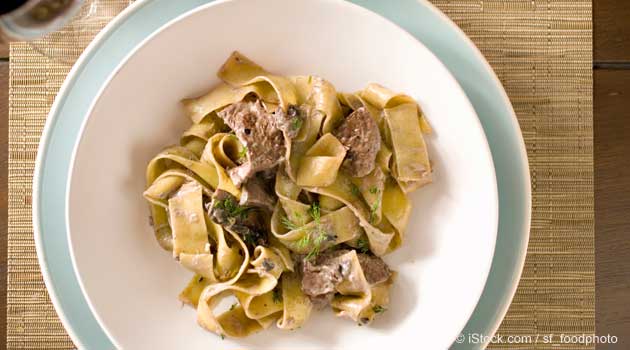
Saturday, 28 April 2018

Healthy Beef Stroganoff Recipe

Beef Stroganoff is a Russian dish that combines the trio of juicy beef, mouthwatering sauce, and fresh noodles. While this meal may look simple, it can please even the pickiest of taste buds. If you want to make Beef Stroganoff for family or friends, start with this healthy version adapted from Simply Organic.

Healthy Beef Stroganoff Recipe

  • Recipe From 
  • Date Published: 

Healthy Beef Stroganoff Recipe
Prep Time: 15 minutes Cook Time: 30 minutes
Ingredients
  • 2 packages Simply Organic Mushroom Sauce Mix
  • 1 cup sour cream
  • 8 ounces egg noodles (you may also substitute rice for the egg noodles)
Procedure
  1. In a large skillet, heat ¼ cup water on high and brown beef on each side.
  2. Add sliced mushrooms and sauté with beef for 3 to 5 minutes.
  3. Turn heat to low. Add 1 cup water, juice, and Mushroom Sauce Mix and stir. Blend in sour cream.
  4. Leave meat/sauce dish simmering on low heat and prepare egg noodles according to the directions on the package. Serve mixture over prepared noodles when ready.

Note: This dish is traditionally served over noodles, but it’s delicious without. You may also substitute the noodles for spaghetti squash or rice.

Flavors Abound With This Healthy Beef Stroganoff Recipe

There’s no doubt that the star of this dish is grass-fed beef. It contains vitamins, minerals, higher conjugated linoleic acid (CLA) levels, and a balanced ratio of essential omega-6 and omega-3 fatty acids. Ideally, grass-fed beef is what you should use in your family’s meals, not conventional grain-fed beef.
Grain-fed cows are fed grain and growth hormones and additives, a far cry from their usual diet of grass. What’s worse, these cows aren’t able to roam around pastures, unlike grass-fed cows. Instead, they’re kept in cramped living conditions, a potential breeding ground for diseases that could mean disaster for your health.
Want creamier dishes without the guilt? Use sour cream, since it’s lighter without skipping the flavor. However, most sour cream sold today is made from milk and cream tainted with rBGH, a growth hormone that was found to increase breast cancer risk. Use sour cream made from organic and unpasteurized raw milk instead. Even better, make your own sour cream from fresh, raw, and organic cream by combining it with a lacto-fermentation starter culture.  
Mushrooms not only provide additional flavor to this recipe, but health benefits too. They help manage your weight, boost your immune system, allow nerves to regenerate, and even destroy cancer cells. You can use any type of mushroom you have on hand, but make sure to clean them with a damp cloth before using to prevent mushroom poisoning.
https://recipes.mercola.com/beef-stroganoff-recipe.aspx

Tuesday, 29 August 2017

A tender moment – Part 2

The first thing to note is that although ageing does tenderise meat, not all tenderised beef necessarily tastes that great, especially if tenderisation is achieved by quick ageing tricks (or by pounding or mincing the meat as noted earlier).

A tender moment – Part 2
Aged beef given a quick turn in the pan. Photos: Chris Chan
After several experiments at home, I can confirm that the best tasting beef actually requires more than just tenderising – the flavours which make beef stand out can be absent if tenderisation is stimulated too quickly.
Also, the breed of cattle also has a very significant taste impact. So although the texture can be smooth and soft, without the correct balance of flavour compounds, beef which is tenderised quickly does not necessarily make a sensational dish, and may need help from a good gravy, for example.

Proteolysis, or why enzymes matter

The best beef for eating is undeniably dry-aged beef – that is, beef hung on a hook in a cool room for several weeks to dry. Alternatively, slabs of meat are cut and placed on racks in special coolers – sometimes the racks are made of salt to help extract moisture while dry-ageing.
This loss of moisture apparently concentrates flavours and the long wait while drying allows more time for the natural enzymes in beef to tenderise the meat by breaking down the muscle fibres gently.
Only the best beef is dry-aged as an even distribution of fat in the meat is required to prevent toughening – over 30% of the original weight of the meat is commonly lost during the drying process.
To promote tenderness, some producers also dust the beef with the spores of a psychrophilic (cold-loving) fungus called thamnidium elegans – the fungus adds further enzymes to the meat, which can further improve flavour.

beef
Prepared external proteases.

The side effect of the fungal and other bacterial action during dry-ageing is that the surface of the meat can turn green. Before sale, this unsightly greenish layer needs to be trimmed off, thereby increasing further the cost of such dry-aged beef.
Beef naturally contains endogenous (internally-present) enzymes which act as proteases to promote proteolysis – two particular families of enzymatic proteases are important for ageing, called calpains (including calpastatins) and cathepsins.
Both enzyme families are fascinating in their own right – apart from tenderising meat, they are also crucial for the survival of mammals!
The way they work is pretty complex (involving calcium activated subsystems, pH levels, temperatures, et cetera) but in summary, one can assume that certain members of the calpain family of enzymes degrade the proteins on the Z-lines of myofilaments (this unlinks the chained-up sarcomeres) while members of the cathepsin family degrade actin-myosin linkages and myosin itself in the thick myofilaments within the sarcomeres.
Adding to the complexity is research which has found that calpastatins within the calpain family can significantly impair proteolysis – it is feasible that enzymatic tenderisation cannot begin until other members of the calpain family can fragment the structure of calpastatins beforehand and this might also explain why certain cuts of meat can never tenderise adequately via proteolysis (due to innate high calpastatin content).
So in theory, if it is possible to stimulate proteolysis via the enzymatic activity of cathepsins and calpains (but not calpastatins), the end result should be tender beef.
This was quite an easy experiment to do at home – all one needs to know are the optimal temperatures for the endogenous protease enzymes. And some quick research established that the optimal temperature range for calpains is around 39-40°C and 49-50°C for cathepsins.

beef
Kiwi tenderised the beef, but gave it a weird flavour – a rich sauce rescued it.

At this point, I should stress that you should not try the following experiments at home, especially if you are living in Asia. You probably do not know this but most consumer beef in Asia actually comes from India, which is the world’s largest exporter of beef, beating Brazil, Australia and the United States in 2015 – in fact, beef is India’s largest agricultural export item in 2016, ahead of basmati rice, followed by spices and other kinds of rice.
India’s beef is derived mainly from the water buffalo, a wholly different breed of ungulate than European bovine stock – and therefore the following results may not apply.
Also, you should never cook raw meat at such low temperatures unless you have sufficient culinary expertise – there are just too many risks with bacterial and fungal contamination, even if you are careful.

Experiment 1: Accelerating proteolysis in fresh meat

The first proteolysis test was done using a simple sous vide (warm water bath) device – and a thick piece of rib-eye steak fresh from the local butcher was selected.
Note that the optimal proteolytic temperatures are also applicable for pathogenic bacteria, and therefore the surfaces of the meat were seared at high temperatures to kill off any surface germs and fungi before sealing in the sous vide bag. This searing was done as quickly as possible to kill the bacteria on the outside without cooking the meat.
The sous vide bag of beef was then immersed in water pre-heated to 39°C and left at that temperature for 60 minutes – this promotes proteolysis via calpains (and as it was rib-eye, there was not much calpastatin content in the meat). Then the temperature was raised to 49°C and then left for another hour to stimulate the action of cathepsins.
Finally, the temperature was raised to 54°C and the meat left to cook to medium rare for another 90 minutes. At the end, the meat was seasoned with more salt and pepper and seared quickly again in hot butter till a thin brown crust developed all around the steak.

beef
Beef aged for seven days.

This is not just to improve taste but also to kill off any surface bacteria missed during the start of the experiment.
The resulting meat was indeed very tender – but to be quite honest, it still lacked the flavour of really good aged beef and I had to whip up some accompanying girolle gravy to compensate for the lack of flavour depth, so it still eventually ended up as a tasty experiment for the family.
The obvious conclusion reached is that highly-accelerated proteolysis is not the solution to achieve the flavour of good aged beef although it can accomplish the target of tenderness.
As an aside, the official scale used to measure the tenderness of meat is the Warner-Braztler shear force method – as I do not have the equipment, objective results of this test are not available.
However, for comparison purposes, I had also cut a slice off from the original steak and fried it as a control texture sample. Everyone agreed that the untreated meat was significantly tougher in the mouth – so accelerated proteolysis via enzymatic processes does have a significant impact on texture, at least subjectively.
Since we may now have established a way to achieve tenderness in beef, flavour is now the major consideration, and so the next stop might appear to be lipolysis – the breakdown of fats (rather than proteins) via other endogenous enzymes (such as lipases) plus bacterial action. And perhaps also oxidation as well – both lipolysis by bacterial action and oxidation require time to take effect.
However, the optimal temperature of lipases appears to be between 37°C and 50°C, so the earlier sous vide experiment with protease stimulation would have also stimulated lipolysis via endogenous enzymes.
Therefore the difference in taste between quick proteolysis/lipolysis and proper ageing might appear to be mainly due to additional bacterial action and/or oxidation.
Regarding these factors, I was not very keen on promoting unknown bacterial growth in meats in an uncontrolled environment such as a refrigerator which is opened and closed many times a day (thereby exposing internal contents to external bacteria and fungi) – so this issue became a little problematic.
Also, lipolysis was already promoted in the first experiment and it had not helped the flavour much.

Experiments 2 & 3: External enzymatic proteases

At this point, my chemist daughter came to the rescue – her last birthday present to me was a comprehensive multi-part tome called Modernist Cuisine, which I love reading, and in there was a suggestion of how to age beef within a few days by the judicious use of fish sauce.
This provided an alternative route to lipolysis – as the introduction of external enzymes may be significant in the development of flavour (as seen by the use of thamnidium elegans mould during commercial beef ageing). And fortunately, I had brought over some fish sauce from London several months ago.
Fish sauce is particularly interesting because proteases are very widely used in the making of fish products – for example, fish is often commercially descaled these days using enzymes and fish meal is also derived from enzymes acting on waste fish products.

beef
Fish sauce-tenderised meat, after three days; darker fish sauce works better.

There is an interesting history about how fish sauce came about – and it seems that it was probably by accident when someone observed a fish caught in a rock pool … which had started digesting itself over time.
The first fish sauce in Europe was probably garum, which was allegedly derived from a fish called garos by the Greeks; garum was used as a cooking ingredient probably before the 7th century BC. The Romans loved using garum in their food as it was affordable and easily transportable, despite the rather strong odour.
Garum and other fish sauces were traditionally made by fermenting fish proteins in salty water using endogenous fish enzymes such as trypsin, chymotrypsin and cathepsins – a slow process which can take around three years.
As such, modern fish sauces are now made by applying exogenous (external) enzymes such as bromelain, ficin, papain or other commercially-produced enzyme concoctions such as Protamex, Protex 51FP and Neutrase – these enzymes can fully hydrolyse (ferment in water) fish sauce within a few short weeks.
It is therefore an interesting, very plausible idea to use these same enzymes to speed up ageing in beef. As another parallel side experiment, I decided to also tenderise and age beef using a more conventional proteolytic enzyme – and I have chosen actinidin from the kiwi fruit, mainly because there are no papayas (papain) or pineapples (bromelain) easily available here in rural France.
The experiments for producing aged beef at home then continued. Even though it was suggested in the Modernist Cuisine to use 3g of fish sauce to each 100g of rib-eye beef, an earlier experiment proved that this was too much with Limousin beef.
So I used 2ml of fish sauce plus 1ml of water for each 100g of beef, coating the mixture evenly over the meat and sealing it in a food bag. I also found that it works best with darker fish sauces (for unknown reasons).

Another bag was prepared using a blitzed-up peeled kiwi fruit, glazing another rib-eye steak with the kiwi paste before sealing it in another food bag. Both bags were left in the fridge for at least three days to allow the enzymes to work in a cool environment and also introduce an element of slow lipolytic ageing (hopefully).
The initial results were genuinely interesting – after extracting the fish sauce-treated meat from its bag, the steak was patted dry on kitchen paper, and seasoned with salt and pepper. The surfaces were then quickly seared over a hot pan to kill off any surface bacteria and the steak placed in a glass dish to cook slowly in an oven set at 100°C – the meat was monitored until the internal temperature reached 54°C.
This gave a chance for a final burst of proteolysis from both the internal and external enzymes. Another little fry in hot butter afterwards (just to add in some more Maillard reaction flavours) completed the experiment. There is no doubt that the fish sauce-treated steak was tenderised very nicely, despite only three days of treatment and it also tasted significantly better than the fresh meat cooked purely using endogenous enzymes via the sous vide method earlier.
However, due to having an extremely sensitive nose, I was also aware of an indistinct and very faint fishy odour – this was not noticed at all by anyone else, so it is probably just me.
Regardless, it was still definitely an improvement.
Next was the steak treated with kiwi fruit actinidin – which was washed, dried and then cooked exactly the same way as for the fish sauce-treated meat. The result was also very tender beef but it was unfortunately infused with a rather weird flavour, probably from other compounds in the kiwi fruit. So this method would appear to work only if the intent is to cook tender beef in strong-flavoured sauces – by itself, the meat tasted too weird for me.

Experiment 4: Home dry-ageing

Notwithstanding my earlier comment about the risks of bacterial growth while attempting to dry age beef in a home refrigerator, curiosity meant that I could not resist one last experiment to see if internal bacterial activity and oxidation were significant in the development of aged beef flavour.
So I sprinkled lots of salt on all sides of a rib-eye steak and left it exposed on a tray in the refrigerator for a week – the salt was meant to curtail bacterial activity on the surfaces of the meat so bacterial action would be confined only to the inside of the meat.
After seven days, the meat was taken out and prepared in exactly the same way as the first sous vide test – except that this beef was left to dry-age by itself for a week beforehand.
The tenderness of the extra dry-aged meat from this final test was again significantly improved although the meat flavour was only marginally better than the first experiment with fresh beef – apart from the fattiest parts of the steak, which seemed to have more improvement in taste.

beef
A hunk of fresh rib eye.

But overall, my subjective view is that it was not worth the effort (or the risk) to dry-age meat in such a way in the refrigerator – so if you have been thinking of specially making room to age beef in your fridge, then perhaps you now do not need to bother.

Summary of speed-ageing results (subjective observations)

All the experiments confirm that both endogenous and exogenous enzyme proteases do undoubtedly tenderise beef and the actions of the enzymes can also be significantly speeded up. However, accelerated meat flavour improvement appears to be a more complex matter and it may even be impossible with the meat of certain breeds of cattle due to genetics.
Overall, my subjective opinion is that the best result (with Limousin beef) was derived from using exogenous proteases from fish sauce to age the meat faster (while introducing new meaty flavours via external enzymes) – my daughter also said it compared well to aged beef from good London steak houses.
All the other experiments also worked well in terms of tenderising beef, although the use of kiwi fruit actinidin was the least successful due to the unwanted flavours introduced by other kiwi fruit compounds.
Regardless, all the experiments ended up with tender, enjoyable steaks – and they were considerably improved on the dinner plate by some homemade French forest mushroom gravy. If you need the recipe for the gravy, please let me know.

http://www.star2.com/food/food-news/2017/08/27/tender-moment-part-2/

A tender moment – Part 1

One somewhat odd disadvantage of living in rural France is, quite honestly, the extreme freshness of much of the produce. 
A tender moment – Part 1
A piece of raw ribeye steak. Photo: VisualHunt/YourBestDigs
Wherever possible, we like to get our food from local markets and organic stalls (or we sometimes pick the fruits directly from trees and bushes during the seasons) – this means great greens and fruits, though the downside is that we have to eat the stuff quickly before they go off due to the (mostly) untreated nature of the produce.
Not having a huge freezer means we cannot order a side of beef or lamb from a farmer – so this means weekly trips by car to get meats from the butcher in the next village.
Sometimes, I prefer walking the distance of 5.5km each way there and back with a chiller bag in the rucksack – the scenery is lovely and the 11km walk is often exhilarating (though one has to watch out for snakes in summer) while anticipating the taste of homemade pates, sausages, rillettes de porc and other stuff on arrival home.
The bummer is that the butcher gets his meat fresh from local farms and this means his beef is not really that aged.
Eating fresh beef is generally not terribly enjoyable as the muscle structure of beef tends to be tough, even for steak cuts like tenderloin, and therefore beef generally needs ageing to soften it – the ageing process also develops the delicious flavours of meat.
Most of the local beef here in my rural part of France is aged for only a couple of weeks or less before sale – and this explains why dishes based on local beef are often stews cooked for hours to soften the muscle tissues. This is quite regrettable as I usually dislike such overcooked meat.
A meat ageing cellar. Beef generally needs ageing to soften it – the ageing process also develops
the delicious flavours of meat. Photo: VisualHunt/Dottorpeni


There is of course very good aged beef available in France, but for me this involves a 50km trip to a big, sprawling town – and although I like beef, I do not enjoy doing a 100km round trip to pay three or four times the price for a piece of meat.
Also, I am not such an ardent, picky gourmet that making such a trip makes sense, especially if there is some scientific way to make fresh local beef taste better.

The breed matters

Having lived in London for many years, my preferred steaks there are rib-eyes and they tend to come from Angus cattle bred mostly in Scotland – they are succulent, flavourful with a good balance of fat and meat.
Travelling around Europe meant tasting awesome breeds like Chianina, Simmental and Charolais – all stunningly delicious meats, though the best beef in Europe might be the massive rib-eyes called chuletón from the Rubia Gallega cattle in the Basque region of Spain.
And then of course, there is the ubiquitous wagyu beef (derived from various breeds), originally from Kobe, Japan and now also other countries – very fine meat but perhaps a little too precious for me.
What defines good beef? Apart from breed, there is a very strong link between how long meat has been aged after slaughter and the taste. Photo: VisualHunt/BrownGuacamole

Clearly, the genetics of the various breeds matter very much and therefore good tasting beef is not only just about ageing.
So to clarify the situation, the aim of this investigation is to examine ways to maximise the best texture and flavour from any breed in the shortest possible time.
In this case, the breed available at my local butcher is Limousin supplied from farms close to the region – a good enough breed but perhaps not the finest in the world for dining. Better results may well be achieved if I had access to Chianina or Angus – but I do not.

A little aside about consumption

Although it might sound like a trifling first world problem quibbling about the taste of beef, in reality the simple life here is reasonably pleasant – and I am just curious about the biochemistry of how to make steaks better.
However, even here it can be seen that the global culture of consumerism seems very much based on keeping people profoundly but vaguely discontented.
The unstated insidious intent appears to be keeping people distractedly dissatisfied – wearing down our scepticism and resistance until we finally buy the glitzy products or unnecessary artifices marketed on TV, newspapers, magazines, the internet, et cetera.
Then we find that such goods are pointless (perhaps even somewhat unhealthy), can never fulfil our expectations – and then we feel even more disenchanted and need to buy something else to compensate.
Living in a remote area does help to quantify things as it is simple to use distance as a measure of marginal utility or desirability – thus far, it has never been worth travelling 50km to eat fried chicken or a burger, though I might eat fried chicken once every few months if there is a shop less than 100m from home.
The irony of course is that I would probably never want to live in such a place – but we are just talking abstract quantification here.
The same unsatisfactory situation is also true with nutrition – the constant bombardment of “health news” keeps people confused, anxious and desirous of “better nutrition” solutions, notwithstanding the probability that over 85% of such “news” is actually sponsored in one way or another by various factions of the food industry.
I suppose the idea is to keep people muddled enough to keep ingesting bad food while simultaneously persuading them to buy expensive “healthier” options. Either way people just end up consuming more – and that seems to be the only thing that matters.

Firstly, what is meat?

Returning to the subject, the desire for good meat got me looking into what defines good beef – and apart from breed, there is a very strong link between how long meat has been aged after slaughter and the price (and therefore by implication the taste).
So it makes sense to find out what happens when beef is left to age after slaughter and also to investigate if there are any scientific tricks to get the same tasty aged effect using the limited resources available in a rural setting. This soon got very fascinating indeed.
We need to start with understanding what meat really is – we all know it is muscle tissue of some kind and it would be useful to know about the types of muscles and how they work.
image: http://www1.star2.com/wp-content/uploads/2017/08/str2_curious130817_jg_5.jpg

Basic structure of skeletal muscle.
Muscle cells are known as myocytes – they range from several millimetres to over 10cm in length and between 10 to 100 micrometres in width. There are three kinds of muscles: smooth muscle, cardiac muscle and skeletal muscle – and each have very different functions.
Smooth muscle is usually managed autonomously; that is, without any conscious effort, and examples are the stomach and intestines. Cardiac muscle is another specialised muscle found in the myocardium of the heart – and it fortunately also functions autonomously as otherwise mammals would have to continuously think about making their hearts beat, even while sleeping.
The only muscles over which mammals can exert control are the skeletal muscles – which are the muscles mammals use to walk, run, chew, swim, climb trees, et cetera. They are also usually the animal muscle (meat) that humans generally prefer to eat so this is what we will focus on.
Muscles in almost all vertebrates are formed of myofibrils and sarcomeres. Myofibrils are strands of muscle fibres made up of alternate thin and thick filaments called myofilaments which are repeated as patterns of muscle tissue along the whole length of the muscle fibre.
The thin myofilaments are mostly made up of a protein called actin bound into little columns by another protein called nebulin. Integral to the thin filaments are also the proteins tropomyosin and a complex group of three proteins known as troponin – more on this a little later.
The thick myofilaments consist mainly of a protein called myosin which in turn is interlaced with another protein titin.
As mentioned, thin and thick strands of myofilaments overlap and alternate with each other along a single myofibril. Groups of myofibrils in turn are organised so that they all have their thin and thick sections of myofilaments aligned in the same direction – this gives rise to the pattern of light and dark bands seen in muscle tissue under a microscope.
Each sub-section between two dark bands (known as Z lines) is known as a sarcomere. There is also the M line, which is a ring of myomesin proteins encircling the middle sections of thick myofilaments.
Large groupings of myofibrils (with their thin and thick myofilaments) become known as muscle tissue or meat.
Skeletal muscles work due to changes in intracellular levels of calcium in the tissues – in short, muscles contract when the levels of calcium increase and muscles relax when the calcium levels drop.
How muscles contract starts with calcium binding to various proteins in the troponin group (troponin C, troponin T and troponin I) in the thin myofilaments – this then triggers three almost simultaneous reactions.
The first calcium reaction affects troponin C which then activates and changes the configuration of troponin I, making it ready to bind with actin.
The next reaction binds troponin T to tropomyosin, forming an interlocking troponin-tropomyosin structure – the tropomyosin protein is also bound to the myosin in the thick myofilament.
The last reaction finally binds the troponin I protein from the first reaction to actin in the thin myofilament which then connects with the troponin-tropomyosin structure.
The net effect is myosin proteins are induced to slide along actin proteins, and therefore the entire sarcomere contracts in size – this happens in the A zone and I band regions in the diagram (right).
The H zone is the anchor part of the sarcomere where there are only thick myofilaments – the myosin proteins in the H zone are mostly covered by actin during contraction.
Note both thin and thick myofilaments do not change in size – the sarcomere is shortened because of the lateral movement of the thick myofilaments through the thin myofilaments and the overall range of muscle contraction is multiplied by the number of sarcomeres in the strands of muscle tissue.
The contraction span of any sarcomere is the difference of the A bands and I bands narrowing from their original lengths. The titin protein attached to the thick myofilament is very stretchable, appears to provide additional elasticity to the sarcomere and probably also act as a guidance mechanism for the myosin – as an aside, titin in the largest protein in the human body consisting of 244 folded proteins.

The simple way

So we now know about muscle proteins and how they are organised in the meat we eat. One very simple suggestion to soften such meat therefore would be to use a meat hammer to disrupt the integrity of the sarcomeres as shattering the organised (and tough) protein configurations can only make meat more tender.
And this is exactly why cooks pound meat with jagged-edge mallets. For example, pieces of pork or veal to make schnitzels and chicken breast meat to make chicken steaks.


Grinding and mincing meat would also be another simple way to soften meat; for example, ground pork for meatballs or sausage fillings.
Therefore, at least two simple solutions exist (pounding and mincing) to tenderise meat very quickly. However, disrupting the configuration of meat proteins in such a violent manner also changes the texture emphatically so although I do often pound pieces of meat at home, this can be unsatisfactory after a while as the resulting meat often tastes a little rough.
Also, this pounding technique does not work for all cuts of meat, especially the finer beef cuts which can dry out and roughen during cooking when pounded beforehand.
However, this technique does work to some extent on tough cuts like rectus abdominus (flank), longissimus dorsi (chuck), superficial pectoral (brisket), et cetera – as long as the meat is cut initially into thin (around 1cm) slices. Pound hard and sensibly, as you need to disrupt the tough sarcomere structures significantly (but not to the point of destruction and mushiness) – and cook quickly.
Regardless, my opinion is that if time and conditions permit, many people would probably, and at least occasionally, prefer to eat properly aged beef steak. Please note that there are interesting techniques to considerably accelerate the ageing of meat – more on this later.

The ageing of beef

Traditionally, beef is aged by hanging the carcass in a cold room or resting the meat on a slab of salt in a chiller for between 28 to up to 459 days – yes, you can get served beef that has been aged over a year and a quarter in the United States, though in Europe the most extreme beef is usually only aged half a year or so.
Such severely aged beef is always from grain-fed cattle as it needs the extra fat marbling in the flesh to prevent drying out prematurely – and this is why commercial beef is usually aged in vacuum-sealed bags to retain the moisture (and minimise weight loss) of lesser quality meat.
Personally, I draw the aged beef line at around 55 to perhaps 70 days as beef older than this tends to freak out my taste buds in much the same way as well-hung game birds make me slightly nauseous – there is no need to dwell on the peculiar aspects of eating flesh that is significantly on the road to putrefaction, despite enthusiasts predicating about its “sensation overload”, “flavour complexity”, “chemical astringency”, et cetera.
Beef ages due to enzymatic activity on muscle fibres followed by the bacterial breakdown of proteins and fats. The main chemical processes involved are proteolysis, lipolysis, and oxidation.
Proteins are basically structures made up of amino acids and proteolysis is the decomposition of the elastic rope-like muscle fibre proteins into more basic amino acids and polypeptides (amino acids held together by peptide bonds).
Left alone, proteins take a long time to break down and therefore proteolysis needs to be catalysed by several enzymes (known as proteases) within the flesh itself – there will be much more about these interesting enzymes later.
Lipolysis is the term used to define the breaking down of fats into glycerol and free fatty acids and is initiated by other enzymes such as lipases within the meat – lipolysis is then further promoted by bacterial action.
The compounds formed by ageing eventually react with oxygen in air in a process called oxidation – this can add further taste complexities and aromas, though oxidation can degrade meaty flavour compounds such as 2-Methyl-3-Furanthiol (MFT) and also form carbonyls (eg. ketones, carboxylic acid) which tend to be rather icky-tasting molecules. As an aside, MFT is also produced commercially and used to enhance the meaty flavour of processed foods.

Part 2 reviews the science behind how to tenderise beef by ageing beef faster and also describes the results of a few experiments with beef at home.

http://www.star2.com/food/food-news/2017/08/13/tender-moment-part-1/