Pages

Showing posts with label Cholesterol Lowering. Show all posts

Tuesday, 16 August 2022

5 Ways to Lower Your Cholesterol Naturally

 Learn how to get your cholesterol under control naturally.


High cholesterol doesn't make the headlines that other health concerns do, but it's a hidden danger that affects millions of Americans. According to the Centers for Disease Control and Prevention, "Nearly 94 million U.S. adults age 20 or older have total cholesterol levels higher than 200 mg/dL. Twenty-eight million adults in the United States have total cholesterol levels higher than 240 mg/dL." High cholesterol often doesn't show signs, but a blood test can indicate if your levels are too high. If left untreated high cholesterol can lead to serious health issues like heart disease, stroke, diabetes and more. Eat This, Not That! Health spoke with  Sean Marchese, MS, RN, a registered nurse at The Mesothelioma Center with a background in oncology clinical trials and over 15 years of direct patient care experience who shares five ways to help naturally lower your cholesterol. As always, please consult with your physician for medical advice. Read on—and to ensure your health and the health of others, don't miss these Sure Signs You've Already Had COVID.

1

Improve Your Diet

woman choosing healthy apple instead of junk dessert as a food swap to cut calories
Shutterstock

Marchese tells us, "Many foods naturally lower cholesterol levels, and you can take steps to remove sources of cholesterol from your diet. Avoid saturated fats, such as red meats and full-fat dairy, and trans fats from oil, crackers, cookies and cakes. Soluble fiber reduces cholesterol absorption in the blood and is found in oatmeal, kidney beans, apples, and Brussels sprouts. Whey protein from dairy products has been shown to lower LDL and total cholesterol and may improve blood pressure. Food rich in omega-3 fatty acids, such as salmon, walnuts and flaxseed, don't directly affect cholesterol levels. Still, they contribute to healthy heart tissue and blood vessels." 


2

Reduce Alcohol Consumption

Sad woman drinking wine at kitchen.
Shutterstock

Marchese says, "Moderate alcohol use can contribute to higher HDL levels or "bad" cholesterol. Healthy adults should avoid alcohol as much as possible or aim for no more than one to two daily drinks. In addition to high cholesterol, recurrent alcohol use can lead to hypertension, heart failure and stroke." 


3

Quit Smoking

no smoking sign
Shutterstock

"Tobacco use can increase heart pressure and heart rate, compounding the adverse effects of atherosclerosis from high cholesterol levels," Marchese explains. "Quitting tobacco improved HDL cholesterol levels by improving blood circulation and lung function. A year after quitting, heart disease risk is cut in half for most ex-smokers." 


4

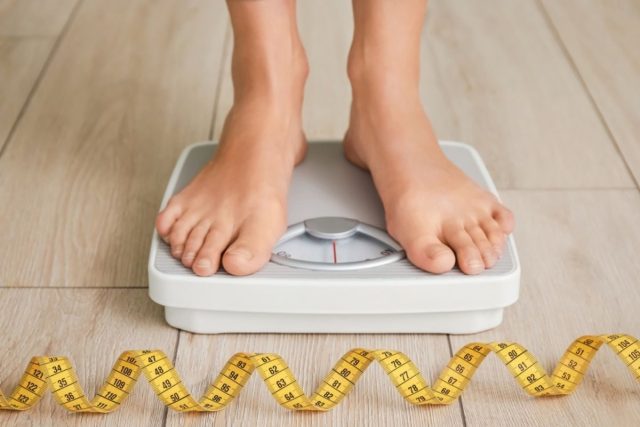
Lose Weight

weight fluctuates
Shutterstock

According to Marchese, "People who carry weight around their abdomen tend to have a higher ratio of visceral fat, which can adversely affect sensitive organs like the liver. Extra weight contributes to high cholesterol and increases the workload on arteries and blood vessels. Reducing sugary foods, incorporating healthy snacks, and finding ways to increase activity throughout the day are all great ways to improve weight loss." 


5

Increase Activity and Exercise

weight loss progress
Shutterstock

Marchese shares, "Physical activity raises the production of HDL in your bloodstream, which helps clear LDL and reduces atherosclerosis. The recommendation for healthy adults is about 30 minutes of moderate exercise five times per week or vigorous aerobics for 20 minutes three times per week. Try finding ways to incorporate more activity throughout your days, such as a walk during the afternoon, evening bike rides, sports or an active hobby like hiking or swimming."


5 Ways to Lower Your Cholesterol Naturally — Eat This Not That

Sunday, 31 October 2021

High cholesterol: Three walking-related symptoms ...

High cholesterol: Three walking-related symptoms warning your levels are dangerously high


High cholesterol is when a person has too much of a fatty substance known as cholesterol in their blood. Cholesterol can build up in your arteries which, over time, can cause a blockage. This may trigger a stroke or a heart attack. Early symptoms you may be at risk include any of these three walking-related signs.

"Achilles tendons are the most common sites of tendon xanthomas," explains a study published in the journal Lipids in Health and Disease.

Tendon xanthomas are cholesterol deposits in tendons.

They appear as slowly enlarging papules or subcutaneous nodules attached to tendons.

According to the study researchers, "Achilles tendon thickening is the early characteristic of Achilles tendon xanthomas".

High cholesterol: Signs in legs© Getty Images High cholesterol: Signs in legs

Tendons connect the muscles to the bones and are made up of a tough, fibrous material.

Tendons serve as tension bands which help the muscles and bones work together during movement.

The Achilles is the strongest of all tendons and is located at the back of the legs and connects the calf to the heel bone.

Tendon problems can arise from sudden injury or repetitive movements.

Having high cholesterol is known to put a person's tendons at risk.

Elevated cholesterol may cause issues like Achilles tendonitis, which is when your Achilles tendon becomes inflamed and irritated.

Symptoms include:

  • Pain climbing stairs
  • Pain in your heel after physical activity
  • Swelling in your heel
  • Weakness in your lower leg.

High cholesterol: Achilles tendon© Getty Images High cholesterol: Achilles tendon

Small lumps in the Achilles tendon are sometimes caused by high cholesterol levels, resulting in cholesterol deposits in the tendon itself, said Vascular Health Clinics

The health site continued: "Aside from treating cholesterol itself, treatment for xanthomas involves taking a biopsy of the lesion but leaving the nodules intact.

"Xanthoma of the Achilles tendon is a rather rare, interesting orthopaedic condition that has important ramifications in internal medicine and dermatology because the lesion is associated with a specific disturbance of lipid metabolism."

How to lower your cholesterol levels

A few small swaps can make a big difference to your cholesterol level, said the British Heart Foundation.

It advised simple methods to help naturally lower your levels which include:

  • Swapping butter to vegetable oil spreads like sunflower, olive or rapeseed oil spreads
  • Switching whole milk to skimmed milk
  • Using natural yoghurt instead of sour cream or double cream
  • Replacing regular mince with leaner, lower-fat options
  • Swapping red or processed meat for fish, turkey or chicken without the skin, or plant-based proteins such as lentils, soya or Quorn
  • Switch your crisps for unsalted nuts
  • Having reduced-fat cheese instead of regular cheese
  • Ordering less takeaways.

https://www.msn.com/en-gb/health/familyhealth/high-cholesterol-three-walking-related-symptoms-warning-your-levels-are-dangerously-high/ar-AAP0m7A?ocid=msedgntp

Friday, 6 August 2021

Eating a largely vegan diet made up of plant-based foods ...

 ... can slash the risk of heart disease by up to 52 per cent, new research suggests. 

https://247newsaroundtheworld.com/health-news/plant-based-diet-can-slash-the-risk-of-heart-disease-by-up-to-52-study-finds/


Eating a largely vegan diet made up of plant-based foods can slash the risk of heart disease by up to 52 per cent, new research suggests. 

A variety of fruit and vegetables, whole grains, low-fat dairy products, skinless fish and chicken, nuts and legumes are all key to staving off health problems later in life.

Conversely, researchers advise that young adults limit saturated fat, salt, red meat, sweets and sugary drinks to prevent heart attacks in middle-age.

While they didn’t look at the reason behind the link, previous research suggests plant-based diets can lower your blood pressure, improve cholesterol and help you lose weight – all risk factors for heart disease.  

Eating a largely vegan diet made up of plant-based foods can slash the risk of heart disease by up to 52 per cent, new research suggests (stock image)

Eating a largely vegan diet made up of plant-based foods can slash the risk of heart disease by up to 52 per cent, new research suggests (stock image) 

VEGETARIAN DIETS CAN LOWER YOUR CHOLESTEROL 

Plant-based diets really do lower cholesterol, according to a review of nearly 50 studies.

Vegetarians generally eat more greens, fruits and nuts which means they have a lower intake of saturated fat, researchers found.

These foods are naturally rich in components such as soluble fibre, soy protein, and plant sterols (a cholesterol found in plants), all of which lower cholesterol. 

The research, led by Dr Yoko Yokoyama, from Keio University in Fujisawa, found vegetarians had 29.2 milligrams less of total cholesterol per decilitre (one tenth of a litre) than meat-eaters. 

The long-term study, led by scientists at the University of Minnesota School of Public Health in Minneapolis, looked at the diet of some 5,000 people over a 30-year period and whether they developed heart disease. 

They were not told what to eat. Instead, the quality of their diet was assessed at the start of the study and then after seven years and 20 years based on the A Priori Diet Quality Score (APDQS).

The APDQS was made up of 46 food groups split into beneficial foods (such as fruits, vegetables, beans, nuts and whole grains); adverse foods (such as fried potatoes, high-fat red meat, salty snacks, pastries and soft drinks); and neutral foods (such as potatoes, refined grains, lean meats and shellfish). 

This was done based on their links to heart disease.

People who got higher scores ate a variety of beneficial foods that largely made up a plant-based diet, while those who scored lower ate more adverse foods.  

During 32 years of follow-up, researchers found that 289 people involved in the study developed heart disease (including heart attack, stroke, heart failure, heart-related chest pain or clogged arteries).

They also discovered that those who scored in the top 20 per cent on the long-term diet quality score (meaning they ate the most nutritionally rich plant foods and fewer adversely rated animal products) were 52 per cent less likely to develop heart disease.

Meanwhile, between year seven and 20 of the study when the ages of participants ranged from 25 to 50, those who improved their diet quality the most were 61 per cent less likely to develop heart disease, compared to those whose diet quality declined the most during that time. 

Researchers advise that young adults limit saturated fat, salt, red meat, sweets and sugary drinks to prevent heart attacks in middle-age (stock image)

Researchers advise that young adults limit saturated fat, salt, red meat, sweets and sugary drinks to prevent heart attacks in middle-age (stock image)

There were few vegetarians among the participants, so the study was not able to assess the possible benefits of a strict vegetarian diet, which excludes meat and fish.

‘A nutritionally rich, plant-centred diet is beneficial for cardiovascular health,’ lead author Yuni Choi said.

‘A plant-centred diet is not necessarily vegetarian. People can choose among plant foods that are as close to natural as possible, not highly processed. 

‘We think that individuals can include animal products in moderation from time to time, such as non-fried poultry, non-fried fish, eggs and low-fat dairy.’ 

Fellow author David E. Jacobs said: ‘As opposed to existing diet quality scores that are usually based on small numbers of food groups, APDQS is explicit in capturing the overall quality of diet using 46 individual food groups, describing the whole diet that the general population commonly consumes. 

‘Our scoring is very comprehensive, and it has many similarities with diets like the Dietary Guidelines for Americans Healthy Eating Index (from the U.S. Department of Agriculture’s Food and Nutrition Service), the DASH (Dietary Approaches to Stop Hypertension) diet and the Mediterranean diet.’

Meanwhile, a separate study published last month found that eating red and processed meat such as bacon, sausages and ham can significantly increase the risk of developing heart disease.

Analysing data from 13 different studies involving 1.4 million people allowed the team from the University of Oxford to examine the impact of meat on health.

They found that for every 50g per day of processed meat, such as bacon, ham and sausages eaten, the risk of coronary heart disease goes up by 18 per cent.

For unprocessed meat such as pork, lamb and beef, the risk increased by nine per cent over no red meat. There was no risk increase with poultry. 

The team say their study didn’t investigate the cause, but suggest it could be down to higher concentrations of saturated fat in red meat and salt in processed meat. 

The latest study has been published in the Journal of the American Heart Association.

WHAT SHOULD A BALANCED DIET LOOK LIKE?

Meals should be based on potatoes, bread, rice, pasta or other starchy carbohydrates, ideally wholegrain, according to the NHS

Meals should be based on potatoes, bread, rice, pasta or other starchy carbohydrates, ideally wholegrain, according to the NHS

• Eat at least 5 portions of a variety of fruit and vegetables every day. All fresh, frozen, dried and canned fruit and vegetables count

• Base meals on potatoes, bread, rice, pasta or other starchy carbohydrates, ideally wholegrain

• 30 grams of fibre a day: This is the same as eating all of the following: 5 portions of fruit and vegetables, 2 whole-wheat cereal biscuits, 2 thick slices of wholemeal bread and large baked potato with the skin on

• Have some dairy or dairy alternatives (such as soya drinks) choosing lower fat and lower sugar options

• Eat some beans, pulses, fish, eggs, meat and other proteins (including 2 portions of fish every week, one of which should be oily)

• Choose unsaturated oils and spreads and consuming in small amounts

• Drink 6-8 cups/glasses of water a day

• Adults should have less than 6g of salt and 20g of saturated fat for women or 30g for men a day

Source: NHS Eatwell Guide 

https://247newsaroundtheworld.com/health-news/plant-based-diet-can-slash-the-risk-of-heart-disease-by-up-to-52-study-finds/