Pages

Showing posts with label Energy. Show all posts

Thursday, 26 August 2021

Nuclear energy is anything but clean

 Nuclear energy is anything but clean

The Guardian 
 

Re your report (Nuclear storage plans for north of England stir up local opposition, 23 August), (see below for article), it is no surprise that ongoing discussions to choose locations for the dumping of nuclear waste are cloaked in secrecy.

© Provided by The Guardian Photograph: Paul Ellis/AFP/Getty Images

© Photograph: Paul Ellis/AFP/Getty Images The Wylfa Newydd nuclear power station on Anglesey, Wales. ‘There is no safe long-term solution for storing nuclear waste,’ says Ann Denise Lanes.

Over the last decade, the nuclear power industry has successfully rebranded an appallingly toxic energy industry as “zero carbon” and even “clean” (Zero-carbon electricity outstrips fossil fuels in Britain across 2019, 1 January 2020) by never mentioning the terrible legacy of nuclear waste. Nuclear energy is neither clean nor zero-carbon when you consider its complete fuel cycle, from uranium mining overseas to the energy-intensive production of fuel rods to the management of highly toxic radioactive waste products such as plutonium.

The nuclear lobby has done a very effective PR job in diverting attention away from everything other than the electricity feed into the National Grid. It knows that there is no safe long-term solution for storing nuclear waste – how could you guarantee safety from the most dangerous chemical element on the planet for 24,000 years (the half-life of plutonium)? The last thing this industry wants is an open discussion. It would reopen the debate on nuclear waste that it has, up to now, successfully buried in millions of pounds’ worth of rebranding. Hence the secrecy.

Ann Denise Lanes, Halton, Lancashire

https://www.msn.com/en-gb/news/world/nuclear-energy-is-anything-but-clean/ar-AANK4kQ?ocid=msedgntp


- - - - - - - -


Nuclear storage plans for north of England stir up local opposition

Communities react with shock to news they are being considered as locations for underground facility
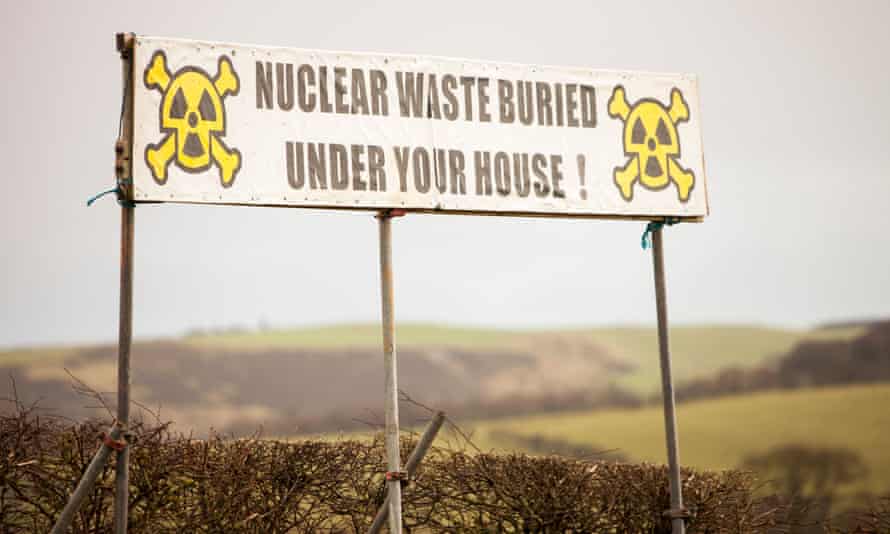
Roadside sign: ‘Nuclear waste buried under your house!’

A banner protesting against a proposal to build a nuclear waste facility in the Lake District. Photograph: Alamy


The long-running battle to build an underground nuclear waste facility in the north of England has run into fresh problems, as communities reacted with shock to the news that they were being considered as locations.

The north-east port town of Hartlepool is one of the sites in the frame as a potential site for a geological disposal facility (GDF), while a former gas terminal point at Theddlethorpe, near the Lincolnshire coast, is another. Cumbria, where much of the waste is stored above ground, is also being considered.

Victoria Atkins, a government minister and the MP for Louth and Horncastle, said she was “stunned” by the prospect that her constituency could host a GDF, claiming that the Conservative-controlled Lincolnshire county council’s engagement with the government’s radioactive waste management group had been kept hidden from her.


The facility is intended to deal with the long-running problem of nuclear waste storage by providing a safe deposit for approximately 750,000 cubic metres of high-activity waste hundreds of metres underground in areas thought to have suitable geology to securely isolate the radioactive material. The waste would be solidified, packaged and placed into deep subterranean vaults. The vaults would then be backfilled and the surrounding network of tunnels and chambers sealed.

The UK would be following the example of Finland, where a geological repository for high-level spent nuclear fuel is under construction at Olkiluoto. A handful of other countries are considering similar schemes in an attempt to tackle the long-term dilemma of radioactive waste management.

Between 70% and 75% of the UK’s high-activity radioactive waste, which would be designated for the GDF, is stored at the Sellafield facility in west Cumbria. The sources of the waste include power generation, military, medical and civil uses.

Existing international treaties prohibit countries from exporting the waste overseas, leading some scientists to argue for underground burial that, they say, would require no further human intervention once storage is complete.

Politicians first started talking about a GDF in the 1980s. This latest attempt would need a public consultation plus varying levels of approval, and would mean that, at the earliest, waste could be deposited there in the 2040s. It would resolve the long-term dilemma of radioactive waste storage “for a generation”, according to Prof Geraldine Thomas, a molecular pathologist at Imperial College London who also sits on the government’s radioactive waste management committee (RWM).

“People sometimes think storage will mean a lot more waste is going to accrue from new nuclear activity. But, actually, new nuclear developments are producing less and less waste. And we’ve got so much legacy waste that we need to get on and do something about it soon.”

Alongside job creation and investment promises, financial incentives worth £1m and £2.5m are on offer for communities that sign up to the engagement process, which has already led to nominations for two Cumbrian boroughs. Drop-in sessions are being held across Copeland and Allerdale by area-specific working groups that would help deliver the GDF.

“We try to stress as best we can that engagement does not commit communities to anything and they can always pull out at a later stage,” said Steve Reece, head of siting at the RWM. “We see it more as the beginning of a long journey.”

However, the proposals have stirred up strong local feeling among both community leaders and residents, and accusations of secrecy have been levelled at councils and the RWM in recent weeks.

In north-east England, the political fallout generated by news of the GDF “early stage” discussions triggered the resignation of Hartlepool council’s deputy leader, Mike Young, on Tuesday evening.

“We are making huge strides in Hartlepool and across Teesside and Darlington,” the Tees Valley mayor, Ben Houchen, said following the decision. “And the last thing we need as we sell our region to the world is to be known as the dumping ground for the UK’s nuclear waste.”

Cumbria county council, which resisted the last efforts to site a GDF locally in 2013, has declined to take part in either of the two existing working groups, saying its involvement would give the process “a credibility it doesn’t deserve”.

There is already considerable opposition from local groups. “The vast majority of people here are horrified by the GDF,” said Jane Bright, a Mablethorpe resident and spokesperson for the Guardians of the East Coast campaign. “I should think it’s no more welcome elsewhere. But there’s a lot of pride in this area and we’ll fight this for as long as it takes.”

Marianne Birkby, a Cumbrian resident and founder of the Radiation-Free Lakeland group, said: “We’re seen as the line of least resistance here. In Cumbria, we’ve been there before with this. Now people are trying to get their heads around it again, in the middle of a pandemic. This dump would essentially make us a sacrifice zone to the nuclear industry.”

https://www.theguardian.com/environment/2021/aug/23/nuclear-storage-plans-for-north-of-england-stir-up-local-opposition

Sunday, 8 May 2016

7 things you should do everyday to build up your energy

If you want to be super productive and have fabulous energy levels for the entire day, then you have to put your best foot forward when getting out of bed in the morning.
We all have super powers, whether we are conscious of them or not, and this formula will enable you to tune into yours and engineer a higher chance of success in all areas of your daily life.
7 things you should do everyday to build up your energy
Here's how to stay full of energy everyday. Photos: Shutterstock
You’ll be able to put an end to the chaotic, stimulant-driven mornings when you wake up exhausted and are immediately overwhelmed by the pressure of the daily tasks looming ahead of you.
Planning the perfect day starts with a perfect night’s sleep and nothing lets you sleep more deeply than knowing that tomorrow is all planned out.
Falling asleep thinking, “I’ve got tomorrow covered” is a different experience to trying to get some shut eye while tomorrow’s theme song is “Aiyo, so much to do!”.
Here are seven ways you can engineer your energy levels to last you the whole day:
1. Scheduling tomorrow’s events
There is nothing more likely to make you hide under the covers in the morning than waking up without a plan and having to make decisions. It is the all-time energy sapper.
Spend 15-20 minutes the night before organising your day so that when you wake up, you hit the ground running.
2. Get seven-plus hours of quality sleep (the hours between 11pm and 6am are sacred)
Sleep is the foundation of health and energy restoration. Following your circadian rhythm, and sleeping by 11pm is very important, as this is the time the liver works on healing and tissue regeneration.
If you want to wake up refreshed and full of energy, then turn off all electrical gadgets like phones and iPads at 10pm, and all lights at 10:30pm.
Getting enough sleep is an important part of keeping your energy levels high.
Training yourself to stay up after midnight is like living in another time zone. You wake up dazed, exhausted and disorientated, and stumble around looking for the nearest pot of coffee.
When we travel, we call this jet lag, but living in this self-induced state of perpetual jet lag not only affects your performance, it also leads to hormone depletion and rapid ageing.
According to the Dalai Lama, “Sleep is the best meditation”, and leads to longer life expectancy; decreased inflammation and lower stress levels; increased memory, creativity, attention span and focus; increase in muscle tone and size; lower body fat levels; better energy levels; decreased dependence on stimulants like caffeine; and a more positive outlook on life with lower risks of depression.
So, make sleep a priority: “Early to bed and early to rise, makes a man healthy, wealthy, and wise,” said former American president Benjamin Franklin.
3. Don’t check your email, social media or watch the news before 10am
Eighty percent of people between the ages of 18 and 44 check their smartphones within 15 minutes of waking up.
Checking the news or reading emails puts you in a reactive, as opposed to a proactive, state.
Social media and other notifications are databases for other people’s agendas; they’re distractions that get in the way of your own agenda and take up your time.
Any external information can affect the delicate development of your mood and energy levels, so be extremely disciplined and filter the sources and information that you are exposed to before 10am.
4. Get moving (20-30 minutes)
Shake off that sleep and boost circulation with some light to mid-intensity exercise.
Morning movement spikes your natural cortisol levels and floods your body with oxygen and the nutrients it needs to start your day.
Sometimes, the last thing you want to do is the best course of action, but 20 minutes of exercise will clean the brain fog, leaving you feeling fresh and ready to tackle your day.
5. Take a cold shower (3-5 minutes)
If we are looking at habits of highly successful people, then look no further than Tony Robbins. The highly successful motivator starts every morning by jumping into a 57°F (14°C) swimming pool!
Cold water immersion is the gold standard of wake-up calls. It floods the body with adrenalin, stimulating the sympathetic nervous system for a fight-or-flight response.
Now, we don’t all have an ice pool, but try blaring out your favourite pick-me-up theme song and jump into a cold shower for three minutes, and you’ll feel like the Wolf of Wall Street.
6. Download your mindset by programming it while you exercise
We already talked about building your physical energy levels up; now, it’s time to engineer and anchor your mood.
Time is precious, and even more so in the early morning, so use your exercise time to programme your mental approach to the day. It’s up to you to pick the right material to put you in the best mindset for each occasion, but don’t worry because you will have already picked this out the night before.
Personally, I love to laugh in the morning, and so, I watch a comedy series that lasts 20-25 minutes while I work out. (In the evening, I like to relax and be inspired, so I usually listen to spiritual podcasts or audio books while I chill out and focus on breathing and planning tomorrow’s schedule.)
Building habits like this is essential to successful living, and in no time at all, you’ll improve mentally and physically, and have benefited from listening to hundreds of books.
7. Fill the body with essential nutrients
There are various schools of thought on what’s the best fuel to start your day, so you’ll have to listen to your body and experiment to see what works best for you.
Personally, I prefer high-fat fuels like avocado with poached eggs or protein shakes with soaked nuts and coconut oil.
After working out with weights, you might want to add more lean protein to your cooked breakfast. (Tim Ferriss, author ofThe 4-Hour Body, recommends 30 grams of protein 30 minutes after waking up.)
The most important rule to weight and energy management is avoiding all sugars and starches until after 3pm, so no cereals, bagels or toast.
In conclusion, this morning routine will take you less than 60 minutes, but will change the way you approach your day, and eventually, your whole life.
We have known for many years how incorporating habits like exercise and meditation can improve your health, but scientists are now discovering their ability to actively change the fabric of your very being by switching on and off genes in your DNA!
So, set your alarms an hour early tomorrow, folks, and find out exactly what the best version of you looks and feels like.
Send us your before and after photos, and let us know how our advice has helped you personally! We love to hear and share inspiring stories.

Friday, 17 July 2015

6 Good Reasons to Eat a Banana Today

Bananas are not only rich in vitamins and fibre, but are also fat-free and cholesterol-free.


This post is on Healthwise


Source: By Fadhlina Jasni for Health Xchange, with expert input from the Tiong Bahru Community Health Centre.

Bananas can aid in digestion and in tackling gastrointestinal issues such as constipation.

Ever wondered what goodness is in a banana? Other than being rich in vitamin B6, bananas are a good source ofvitamin Cdietary fibre and manganese. Bananas are also fat-free, cholesterol-free and virtually sodium-free. So what do these mean for your health?

Ms Peggy Tan, Dietitian, Tiong Bahru Community Health Centre explains why bananas are good for you and when you should eat them.

Health benefits of bananas


Bananas are one of the best fruit sources of vitamin B6


Vitamin B6 from bananas is easily absorbed by your body and a medium-sized banana can provide about a quarter of your daily vitamin B6 needs.

Vitamin B6 helps your body:
  • produce red blood cells,
  • metabolise carbohydrates and fats, turning them into energy,
  • metabolise amino acids,
  • remove unwanted chemicals from your liver and kidneys, and
  • maintain a healthy nervous system.

Vitamin B6 is also good for pregnant women as it helps meet their baby’s development needs.

Bananas are respectable sources of vitamin C


You may not associate bananas with vitamin C but a medium-sized banana will provide about 10% of your daily vitamin C needs.

Vitamin C helps:
  • protect your body against cell and tissue damage,
  • your body absorb iron better,
  • your body produce collagen - the protein which holds your skin, bones and body together, and
  • support brain health by producing serotonin, a hormone that affects our sleep cycle, moods, and experiences of stress and pain.


Manganese in bananas is good for your skin


One medium-sized banana provides approximately 13% of your daily manganese needs. Manganese helps your body make collagen and protects your skin and other cells against free radical damage.

Potassium in bananas is good for your heart health and blood pressure


A medium-sized banana will provide around 320-400 mg of potassium, which meets about 10% of your daily potassium needs.

Potassium helps your body maintain a healthy heart and blood pressure. In addition, bananas are low in sodium. The low sodium and high potassium combination helps to control high blood pressure.

Bananas can aid digestion and help beat gastrointestinal issues


A medium banana will provide about 10-12% of your daily fibre needs. Singapore’s Health Promotion Board recommends a daily dietary fibre intake of 20g for women and 26g for men.

Soluble and insoluble fibres play an important role in your health. Soluble fibre helps your body control your blood sugar level and get rid of fatty substances such as cholesterol. Insoluble fibre adds weight and softness to stools, making it easier for you to have regular bowel movements.  This helps to keep your gut healthy and safe from harmful bacteria.

Bananas, especially newly-ripened ones, contain starch that does not digest (resistant starch) in your small intestine and is able to pass into the large intestine. Such bananas help you manage your weight better as you stay full for longer.

That said, bananas can help you beat gastrointestinal issues such as:

Bananas give you energy – minus the fats and cholesterol


Bananas contain three natural sugars – sucrose, fructose and glucose – giving you a fat and cholesterol-free source of energy. As such, bananas are ideal, especially for children and athletes, for breakfast, as a midday snack or before and after sports.

When is the best time to eat bananas?


The best time to eat bananas depends on your nutritional needs and preference.

Generally, the taste and nutritional value of bananas change as they ripen. Newly-ripened bananas tend to be less sweet than well ripened bananas because the starch hasn't fully broken down into simple sugars.

The upside to eating newly-ripened bananas is that you stay full for longer and enjoy the benefits of the resistant starch therein.

On the other hand, a well-ripened banana with some dark patches on the skin is easier to digest and may give you the energy boost you require before playing sports.

Can everyone eat bananas?


Some medical conditions can result in people having a high level of potassium in the blood. In that case, it will be wise to refrain from taking bananas.

And contrary to popular belief, a person with diabetes can eat bananas as long as the carbohydrate contents are accounted for.

 -----

Article contributed by the Tiong Bahru Community Health Centre.

Tiong Bahru Community Health Centre (CHC) strives to bring about convenient health services to the community. It is helmed by a team of experienced nurses and allied healthcare professionals to support and complement GPs in their management of patients with chronic conditions.

Main services include Digital Diabetic Retinopathy Photography, Diabetic Foot Screening, Nurse Counselling and Education, as well as Dietetic Services.

http://www.healthxchange.com.sg/healthyliving/DietandNutrition/Pages/6-Good-Reasons-to-Eat-a-Banana-Today.aspx

Go to Healthwise for more articles

Tuesday, 14 October 2014

Drink THIS First Thing in the Morning:

This post is on Healthwise

This daily trick can help you detoxify, improve your digestion and boost your metabolism & energy levels

by Mike Geary - Certified Nutrition Specialist
Author of the best seller: The Top 101 Foods that FIGHT Aging

You're bombarded with toxins in today's modern world... everywhere from the polluted air you breathe, the water you drink, the shampoos and other cosmetics that lather your body with chemicals, and of course, all of the chemical additives, pesticides, hormones, antibiotics and other harmful compounds in the food that you eat.

All of these TOXINS can have harmful effects on your body, harming your metabolism and hormones, impairing your digestive system, and zapping your energy levels.

If I could tell you ONE thing that you could do each morning right as you wake up to help your body eliminate some of these toxins, improve your digestion, stimulate your metabolism, and BOOST your energy, would you do it?

Of course you would... and it takes less than 1 minute!

Here's the trick...

Immediately upon waking each day, squeeze about 1/2 to 1 full lemon (depending on size of the lemon) into an 8 oz glass of warm or room temperature purified water.  This is gentler on your body first thing in the morning compared to ice cold water.  I've found that slicing the lemon into quarters before squeezing by hand is easier than squeezing halves.

Drink this at least 10 minutes before eating any food for the day.

Make sure to use fresh organic lemons to make this drink, and not bottled lemon juice.  You want to use organic lemons to avoid the pesticides that can accumulate.

3 Major benefits of this morning drink to your body, health, and energy:

According to a leading health publication, TheAlternativeDaily.com:

"The health promoting benefits of lemons are powerful. For centuries, it has been known that lemons contain powerful antibacterial, antiviral and immune boosting components. We know that lemons are a great digestive aid and liver cleanser. 

Lemons contain citric acid, magnesium, bioflavonoids, vitamin C, pectin, calcium and limonene, which supercharge our immunity so that the body can fight infection.

Lemons are considered one of the most alkalizing foods you can eat. This may seem untrue as they are acidic on their own. However, in the body, lemons are alkaline; the citric acid does not create acidity once it has been metabolized. 

The minerals in lemons are actually what helps to alkalize the blood.  Most people are too acidic (from eating too much sugar and grains), and drinking warm lemon water helps reduce overall acidity, drawing uric acid from the joints.

This reduces the pain and inflammation which many people feel. And the American Cancer Society recommends warm lemon water to encourage regular bowel movements."

Benefits that you can enjoy:

1. Improves your digestion:
Lemon juice helps your body improve digestion and stimulates bile production. Lemon juice can even be an aid for heartburn and indigestion.

2. Boosts your energy for the day:
Even just the scent of lemon juice has been shown to improve your mood and energy levels, and reduce anxiety.  Plus the detoxifying effect and alkalizing effect of fresh organic lemon juice can improve your energy through the removal of toxins from your body.

3. Helps you to lose fat:
Since lemon juice helps to improve your digestive system, aids in removal of toxins, and increases your energy levels, this all combines together to help you to lose body fat as well through improving your hormonal balance... Yet another reason to add warm lemon water to your daily morning routine!

That's a pretty simple trick, right?


Go to Healthwise for more articles

http://www.truthaboutabs.com/drink-this.html

Wednesday, 13 November 2013

A treatment worth its salt? - Salt Therapy

Published: Sunday November 10, 2013 MYT 12:00:00 AM                

by allie shah


Salt therapy is a homeopathic remedy meant to help respiratory problems.


It’s called salt therapy, and it has gained a foothold in Minnesota, US. Touted as an all-natural way to bring relief to those who suffer from allergies, flu or asthma, salt therapy treats patients by allowing them to inhale dry, microparticles of salt dispersed by a generator.
 
THE first thing you notice when you enter the Salt Cave is the floor: It crunches.

Your bare feet slide gingerly across the pebble-like floor covered with 4,000 pounds of Himalayan salt crystals. The walls around you are lined with pink and orange-hued bricks of salt.

As you slide into one of the zero-gravity chairs, you hear the sound of crashing waves streaming from overhead speakers. As you relax and your breathing slows and deepens, you inhale air pumped with pharmaceutical-grade salt.

After a few minutes, you touch your tongue to your lips and taste salt.

This total sensory experience is called salt therapy, a homeopathic remedy meant to help respiratory problems. The age-old alternative therapeutic remedy, sometimes called halotherapy or speleotherapy, is said to alleviate symptoms of asthma, allergies, anxiety and other ailments.

There are no US clinical studies examining the effectiveness of salt therapy, but its adherents swear by it.

Lori Danielson is one of them. Danielson, who suffers from allergies, is a regular at the cave in south Minneapolis.

“I get energy and more oxygen into my body. I’ve noticed my nasal passages clear up,” she said. “The biggest benefit is I know I can breathe.”

Co-owner Scott Wertkin said his Salt Cave – which opened a year ago in a former chiropractor’s office – is one of only 30 or 40 businesses in the US offering this treatment. Other centres have opened in New York, Florida, California and Chicago in recent years.

Although new here, salt therapy’s use in modern history dates back to 19th-century Poland.

In 1843, a physician named Dr Feliks Boczkowski noticed that workers at a salt mine, unlike other miners, did not have respiratory or lung problems. He attributed their healthy lungs to the air climate inside the salt mine.

Salt is known to have anti-bacterial and anti-inflammatory properties. Soon, spas opened in the salt caves, and today, the therapy is popular in Eastern Europe, Russia and Canada.

Wertkin became interested in salt caves when he and his wife were researching remedies for their son, Jack, now 13, who has asthma. They visited a salt room in Florida and were amazed at the difference it made for their son. They decided to open their own business after learning that Chicago was the closest city with a comparable salt room.

They sought to emulate the look of a real salt mine by transforming the chiropractor’s exam room into an otherworldly space.

Wertkin constructed the cave out of 12,000 pounds of rock salt shipped from a mine in Pakistan on the edge of the Himalayas. (The most popular salts used in salt therapy are Himalayan and Dead Sea salts.)

Wertkin compares the salt room’s effect on customers’ nasal passages to “a dry Neti pot”. He said more than 3,000 people have visited the Salt Cave, located in a tiny strip mall next to a yoga studio.

Does it work?

Doctors remain skeptical about the health benefits of inhaling dry salt particles.

“There is no science behind it,” said Dr Scott Davies, a pulmonologist.

Ingesting salt does have therapeutic properties. A 2006 study in the New England Journal of Medicine found that saline therapy was an effective and safe supplemental treatment for patients with cystic fibrosis.

But Dr Charlene McEvoy, another pulmonologist and head of the Asthma Center at HealthPartners, said there is a difference between sitting in a salt-covered room and ingesting a solution of salt and water directly.

She also cautioned that patients with conditions such as asthma should not replace their medications with salt therapy. “If by doing the salt therapy they couldn’t afford their medications, absolutely not. I have data on their inhalers. I know they help. Mortality for asthma has dropped significantly using our current medical treatment,” she said.

Dr Davies acknowledged there’s a history of “people using (salt) as a homeopathic remedy”, and said he knew of no harm that could come from sitting in a room full of salt. Rather than a medical treatment, Dr Davies said, he would put salt therapy in the same category as a spa treatment.

Maybe that’s a good comparison.

The last time Valerie Petit, another salt-therapy enthusiast, made a trip to the Salt Cave, she fell asleep. Petit said she goes to the cave mainly to unwind in the beach-like environment. “I don’t have any health issues,” she said. “I’m just doing it because it feels good.”

And even Dr McEvoy said there could be value in asthma patients doing anything that allows them to relax and slow down their breathing.

A 45-minute session of salt therapy costs US$30 (RM96). The cave also is used for groups doing yoga, meditation or story times for children.

Terri Peterson, a pharmacist, leads a breathing class once a month inside the cave. She said her sinuses open up, an effect that can last for a few days.

Eric Christopher, a member of Peterson’s class, said he’s been to the cave more than eight times since first reading about salt therapy in an alternative health newspaper. He occasionally will take an antihistamine for his allergies, but he believes the breathing classes in the salt cave have helped.

“I woke up having had a restful, deep sleep,” he said after a recent visit to the cave.

Christopher isn’t deterred by the lack of research on salt therapy.

“I let my own experience be my guide in that,” he said. – Star Tribune (Minneapolis)/McClatchy-Tribune Information Services

http://www.thestar.com.my/Lifestyle/Health/Alternatives/2013/11/10/A-treatment-worth-its-salt.aspx

Friday, 27 September 2013

The “King of Herbs” Improves Chronic Fatigue Symptoms

September 17, 2013

GinsengDespite what you may think, it’s not just about being tired all the time. In fact, exhaustion is only one symptom of Chronic Fatigue Syndrome (CFS). And getting a good night’s sleep or taking a nap doesn’t help.

CFS also makes it hard to concentrate on what you just read or remember how to add simple numbers. It can get so bad that just maintaining a “normal” life and relationships can be difficult.

Yet the condition remains a mystery. Doctors aren’t sure what causes it or how to fix it. The usual treatment is a combination of harsh drugs. But as usual, they don’t provide much relief. And the severe side effects—like kidney damage, stroke, and worsening depression—are hardly worth the risk.1

Your best bet? An ancient Chinese herb—one you might already know about—that research shows improves many of the symptoms.

It’s called the “King of Herbs” because it benefits so many systems in the body. It mainly works by increasing blood flow. That extra blood flow feeds the brain and improves mental capabilities.2

This 2,000 year old antioxidant gives you more energy and helps you think clearly…

Panax ginseng has been a staple in Chinese medicine for thousands of years. Now, this extract is practically mainstream here in the U.S. with over 6 million people regularly taking it.3

Ginseng is a potent antioxidant that can improve mood, memory, and mental functioning in CFS patients.4 This is a huge discovery for a condition with almost no real treatments.

Study participants with chronic fatigue took 400 mg of Panax ginseng once a day for eight days.
The result? These people felt calmer and were better at mental arithmetic. And the effects were practically immediate.5

Another study had even better results. The group experienced better overall mood and improvement in mental performance. They also had more energy. The study showed that ginseng can help with multiple symptoms, including fatigue which can be the most pervasive problem for CFS patients.6

But here’s the key… You need to take the right kind of ginseng. Make sure it’s panax ginseng.  The Chinese extract works better than American ginseng.

With a syndrome that causes so many symptoms, finding effective relief for even one of them may seem like a miracle. Panax ginseng safely reduces many CFS symptoms including pain, fatigue, and mental decline.

References:
1 http://health.nytimes.com/health/guides/disease/chronic-fatigue-syndrome/medications.html
2 http://www.ncbi.nlm.nih.gov/pubmed/20737519
3 http://www.nlm.nih.gov/medlineplus/druginfo/natural/1000.html
4 http://www.plosone.org/article/info%3Adoi%2F10.1371%2Fjournal.pone.0061271
5 http://www.ncbi.nlm.nih.gov/pubmed/20737519
6 http://www.plosone.org/article/info%3Adoi%2F10.1371%2Fjournal.pone.0061271
 

Related Articles:


http://institutefornaturalhealing.com/2013/09/the-king-of-herbs-improves-chronic-fatigue-symptoms

Thursday, 25 July 2013

9 Foods That Will Boost Your Energy And Make You Active

No date of article

Jogging And Being Active
Feeling low on energy? You might be lacking the essential minerals and vitamins. Here is a selection of top 9 foods for boosting your energy and being more active to get through your busy day.
 
Banana
 
An excellent post workout recovery food item, banana is a simple carbohydrate but an instant energy source. They are also an excellent source of potassium – reduced level of potassium in the body can result in physical weakness. The sugars found in banana can be digested quickly and converted right into energy for your body.
 
Lentils
 
Lentils must be a staple part of your daily diet. They’re rich in amino-acids, protein, minerals and vitamins, and can replace rice or pasta in almost any recipe. Lentils are also rich in fiber that keeps you at the peak of satiety and doesn’t allow glucose levels to rise to higher level. Give your lunch salad an energy boost by adding a cupful of cooked red kidney-beans or garbanzo beans.

Oatmeal
Oatmeal

Oatmeal is one of the primary energy boosting foods. Without butter and brown sugar, oatmeal is a good complex carbohydrate. It helps control your blood glucose levels and also keep your tummy fuller for a long time. Also, it has B vitamins that are known for improving the levels of body energy. Having said that, oatmeal would certainly add more energy to your day; the optimum time to eat oat meal is before 11-a.m.
 
Eggs
 
One of the food items that a lot of people undervalue as a major source of energy is eggs. Eggs are rich in protein, amino acids and omega-3 essential fatty acids, which are vital for muscle growth, a powerful immune system, brain power and equilibrium of fluids in the body. Eggs are also one of the top high energy foods because they contain more than 10 key nutrients that are essential for your body.
 
Walnuts
 
Walnuts are one of the best plant protein sources. They are usually regarded as “brain-food”, not just because of the wrinkled look of the shells, but also because of the higher concentration of omega-3 essential fats. A fistful of walnuts in your daily diet will certainly boost the energy levels. Walnuts are also a good source of fiber, bone-building calcium, and several other essential nutrients that your body requires in order to function effectively and have ample amount of energy.

Chocolate
Dark Chocolate
 
Sources of energy don’t have to be tasteless and lack luster as many energy sources taste really sweet. One such amazing energy source is dark chocolate. Dark chocolate is filled with heart-healthy anti-oxidants. Additionally, it consists of caffeine, which is a stimulant that helps keep your body alert and improve metabolism. If you go for dark chocolate as an energy source, then be sure to you buy organic dark chocolate, that’s free of dairy. At the same time, eat dark chocolate in moderation for best results.
 
Coconut Water
 
Coconut water isn’t a solid food; however, it’s one of the most inexpensive and valuable sources of energy. It is often known as “natural energy drink”. It’s full of vital vitamins and minerals, such as potassium along with lauric acid. The potassium supplies the body with the nutrients and electrolytes that replenish the body. Lauric acid is useful in accelerating a person’s metabolic process and providing an energy boost. Additionally, coconut water is low in sugar, fat as well as sodium content.

Yogurt
Yogurt

Yogurt is a yummy, filling treat that is now available in a range of flavors. For desserts, you should try eating low fat yogurt instead of something that’s high in sugar. Yogurt contains calcium, vitamin B-12 and protein; all of these are quite good for your overall body health. It’s also able to convert nutrients directly into energy.
 
Green Smoothies/Shakes
 
Get the energy packing power of leafy greens, yogurt bananas, apples and combine it with some other fruits you like, and now you have got a wake up call just in a glass. Kale and spinach are the most favorite for green smoothies as their mild flavor is either masked or complemented by the flavor of the fruits.

http://www.fitnea.com/9-foods-that-will-boost-your-energy-and-make-you-active/

Tuesday, 23 July 2013

Quick Way To More Energy

| Jul 22, 2013

quick-way-to-more-energy_300
If you’re sitting around feeling tired all the time, researchers at the University of Georgia have found a quick way to increase your personal energy by 20 percent and decrease your fatigue by 65 percent. And it only takes a few moments.

Get off the couch and do some low intensity exercise, say the scientists.

“Too often we believe that a quick workout will leave us worn out, especially when we are already feeling fatigued,” said researcher Tim Puetz, the lead author of the study. “However, we have shown that regular exercise can actually go a long way in increasing feelings of energy, particularly in sedentary individuals.”

“A lot of people are overworked and not sleeping enough,” says researcher Patrick O’Connor. “Exercise is a way for people to feel more energetic. There’s a scientific basis for it, and there are advantages to it compared to things like caffeine and energy drinks.”

According to this study, a slow, easy walk is enough to decrease your fatigue.

“Exercise traditionally has been associated with physical health, but we are quickly learning that exercise has a more holistic effect on the human body and includes effects on psychological health,” Puetz says. “What this means is that in every workout a single step is not just a step closer to a healthier body, but also to a healthier mind.”

http://easyhealthoptions.com/alternative-medicine/quick-way-to-more-energy/

Thursday, 11 July 2013

The Health Benefits of Pineapple

Thursday, August 9th, 2012               
Functional Foods, WEIGHT MANAGEMENT by for Bel Marra Health                

healthy foodPineapple is a favorite fruit of many people because it’s tangy, sweet and oh so delicious. But did you know that pineapple is an exceptional healthy food with a number of good health benefits? Many healthy food options, including fruits and vegetables, are functional foods and pineapple is not an exception.

Functional foods are consumed as part of a normal diet and are known to have physiological benefits and/or they reduce the risk of chronic disease.

Functional foods contain bioactive compounds which make them healthy food options. Eating a variety of healthy food, including lots of fresh fruits and vegetables will provide many health benefits when eaten as part of a regular diet.

Let’s take a closer look at pineapple to see what makes it such a healthy food choice…

Bromelain

Pineapples contain an enzyme called bromelain. This enzyme provides the digestive benefits of pineapple by helping with protein breakdown. In addition, bromelain is considered to have anti-inflammatory properties and is believed to help relieve pain that is often associated with osteoarthritis. Bromelain is found in the stem of the pineapple, not the fruit part of this healthy food.

It is therefore possible that taking a bromelain supplement in addition to eating pineapple with provide you with enhanced health benefits.

Vitamin C

In addition to bromelain, pineapples contain vitamin C. Vitamin C is an anti-oxidant that helps to prevent free radical damage. Additionally, Vitamin C helps to ensure that the immune system is functioning optimally.

Vitamin A and B Complex Vitamins

Pineapples are a good source of Vitamin A and beta-carotene which are both known to have anti-oxidant properties. Vitamin A is essential for healthy mucous membranes, skin, and vision.

Pineapples contain manganese which is essential for the maintenance of healthy bones. Additionally, manganese helps with energy production and anti-oxidant defenses. In addition to manganese, pineapples contain thiamin (Vitamin B1) which also helps with energy production.

Eating functional foods including a variety of fresh fruits and vegetables is not only delicious; it will help you support your overall health.

http://www.belmarrahealth.com/weight-management/the-health-benefits-of-pineapple/