Pages

Showing posts with label Lateral flow test. Show all posts

Monday, 10 January 2022

Do lateral flow tests work and why they aren't as accurate as PCRs

 If you live in London, the chances are by now, you currently have or know someone who has tested positive for Covid-19 in the last few weeks.


The first port of call if you’ve been exposed to someone who has Covid is to test with lateral flows tests (LFTs).

As we approach Christmas and we all want to keep both ourselves and others safe, lateral flows before meeting anyone, are key.

Read more: Fears London NHS will be 'overwhelmed’ as patients test Covid positive when in hospital for other care

But with some mixed reports about lateral flow tests consistently showing false negatives, how accurate are they? And are they as good at picking up Omicron? Here are some key questions answered.

© Kirsty O'Connor/PA Wire We've all gotten used to do lateral flow tests over the past 18 months

What is the difference between lateral flow tests and PCR tests?

Lateral flow tests provide results and tell people in 30 minutes if they have coronavirus by detecting proteins from the virus in the nose and throat samples. Scientists have mixed views on their accuracy.

PCR tests are, however, extremely accurate but take up to three days for results to come through. They detect the genetic material from a specific organism, specifically coronavirus, and are the best way to test if you have a current infection.

Lateral flow tests are designed to be taken if you don’t have any symptoms of coronavirus. As soon as you start showing any symptoms, you need to book a PCR test to get official results, all the while isolating.

Current advice states that if you test positive on a lateral flow you should follow up with a PCR test.

How accurate are they?

There are mixed opinions on lateral flow tests.

The UKHSA maintains they are a "vital tool" for uncovering hidden infections. But some scientists say they give people a false sense of security .

They are faster and cheaper than PCR tests - but may be less accurate.

One study by the Queen Mary University of London published in July found that lateral flow tests detected more than 95 per cent of the cases found by PCR and correctly identified 89 per cent of cases as negative.

But other studies suggest LFTs pick up just 58 per cent of asymptomatic cases.

In March 2021, the Royal College of Pathologists said positive results by LFTs should be confirmed by PCR tests and people should self-isolate before they receive their PCR result.

It can be too soon for a lateral flow test to pick up an infection.

This is because they can be less sensitive than PCR tests and require a higher viral load to record a positive result.

Because of this, it’s possible to get a false negative from a lateral flow test.

They often only identify people during their most infectious period (people are infectious two to three days before symptoms start to show and are most contagious in the first 10 days of catching the virus).

Therefore. the best way to use lateral flow tests effectively is to ensure you’re testing often and especially if you’re planning some meet ups with friends and family over the festive period.

Can they detect Omicron?

Last week, the Health Security Agency (HSA) said lateral flow tests are as likely to detect Omicron as other variants of coronavirus.

You, as the tester, won't of course know which strain you have got when doing the test.

PCR tests are still considered to be the most accurate tests when diagnosing coronavirus but should only be used by people who are showing symptoms.

How can you get hold of lateral flow tests?

The NHS has a searching tool which allows people to find their nearest pharmacies which have tests available to collect. It is: www.maps.test-and-trace.nhs.uk.

Alternatively, you can order a pack from Gov.uk to be delivered to your home. One pack can be ordered per day.

They can also be collected from community collection points or you can visit a testing point near you.

Got a health-related story you want to share? Get in touch lucy.williamson@reachplc.com

Source


Monday, 2 August 2021

UK self-confessed vaccine sceptic dies from COVID

 UK self-confessed vaccine sceptic until he caught COVID is dead, Matthew Keenan 'wished he had his jab' after he was hospitalised at Bradford

on July 27, 2021 at 1:30 PM


If only he could turn back time

Aself-confessed vaccine sceptic who said 'if he could turn back time he would' after he was admitted to hospital earlier this month with COVID has died with the virus at the age of 34.

Matthew Keenan told friends that he 'wished he had his jab' after he was hospitalised at Bradford Royal Infirmary and placed in an induced coma in a bid to save his life just two weeks ago.

Dr Leanne Cheyne, a respiratory consultant at the West Yorkshire hospital, shared a photo of him in an oxygen mask and hooked up to a ventilator as he fought for his life.

Urging others to 'grab a jab', she wrote:

Matthew has agreed for me to share his story. 34, footie coach & dad. Self-confessed vaccine skeptic until he caught COVID. If he could turn back time he would. Our sickest patients are unvaccinated and under 40. Matthew is fighting for his life.. save yours.

Life of the party

Mr Keenan, who was described as the 'life of the party', shared an image of his positive COVID lateral flow test on July 2. He said that the symptoms made him feel like he had been 'hit by a truck' after suffering from a fever and feeling 'freezing and red hot'.

The Liverpool fan added that the back pain left him feeling 'the most poorly I have ever been and I feel like it's getting worse'. He ended the post saying he was 'in bits' and that 'COVID is real'.

Tragically, it was confirmed on Monday that Mr Keenan had died with the virus. In a touching tribute, his friend of more than 20 years Billy Brown said the world lost 'the kindest man'

The 38-year-old added that 'grown men haven't stopped crying' since the news of Matthew's tragic death broke.

Mr Brown said:

Mr Keenan was a devoted dad, a fantastic friend, and an unbeatable coach. As he was getting more poorly, he said he wished he had gotten the jab. I can't believe he's gone, he was the most likeable lad I've ever met.

https://www.gentside.co.uk/news/wrong-claims-about-oxford-vaccine-helping-to-fuel-covid-spread-says-scientist_art7838.html


Tuesday, 27 April 2021

BBC: Covid: How do I get a lateral flow or PCR test?

People in England and Scotland are being encouraged to take rapid coronavirus tests regularly.

By Rachel Schraer

Health reporter

Published
Related Topics
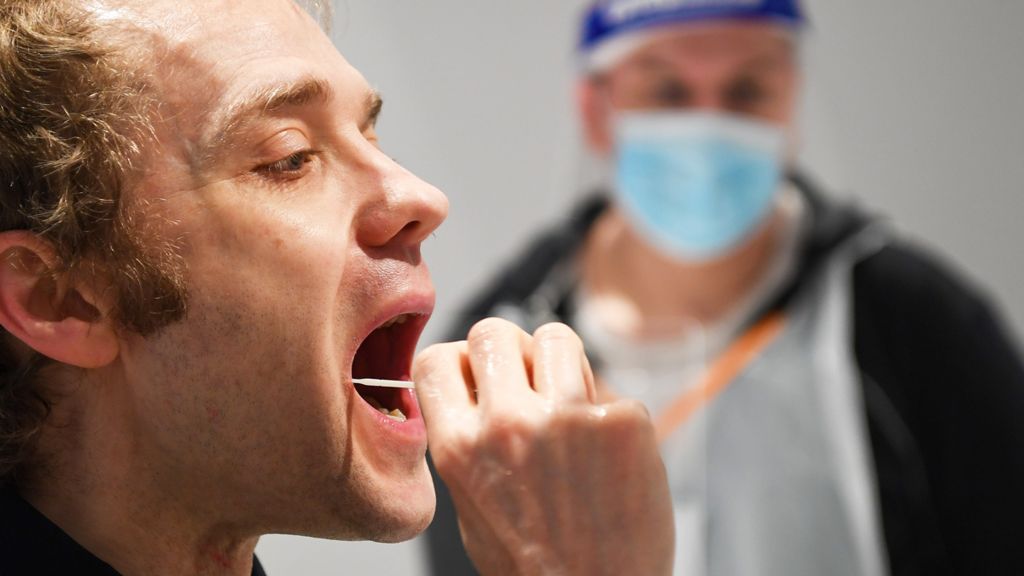
A man puts a swab in his mouthIMAGE COPYRIGHTGETTY IMAGES

People in England and Scotland are being encouraged to take rapid coronavirus tests regularly.

The UK government says regular testing could be an important tool for easing restrictions.

Why is testing being increased?

It's hoped the tests - known as lateral flow tests - can help stop individual cases from becoming outbreaks.

About one in three people have coronavirus without any symptoms.

How do I get a lateral flow test?

Anyone without symptoms in England can get free tests from testing sites, pharmacies or through the post (in packs of seven).

If you test at home, you are asked to report your results online or by calling 119.

Secondary school children are tested regularlyIMAGE COPYRIGHTGETTY IMAGES

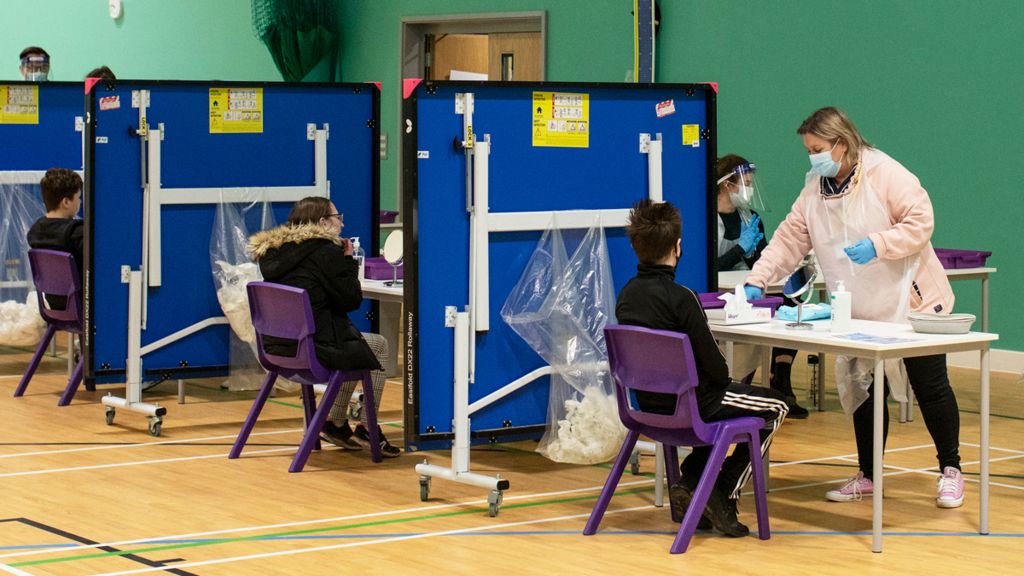
Regular lateral flow testing is already used for frontline NHS, care home and school staff - plus for secondary school pupils and in some workplaces.

Anyone in Scotland can also order lateral flow test kits online or collect them from local testing centres in the afternoon or early evening.

In addition, First Minister Nicola Sturgeon has said anyone visiting island communities from the mainland should take two lateral flow tests - the first three days before travel, and the second on the day of departure.

The gap between the first test and travel date will allow time to confirm any positive result with a PCR test - and determine whether or not people are safe to travel.

There is separate guidance for testing in Wales, and Northern Ireland.

How does the lateral flow test work?

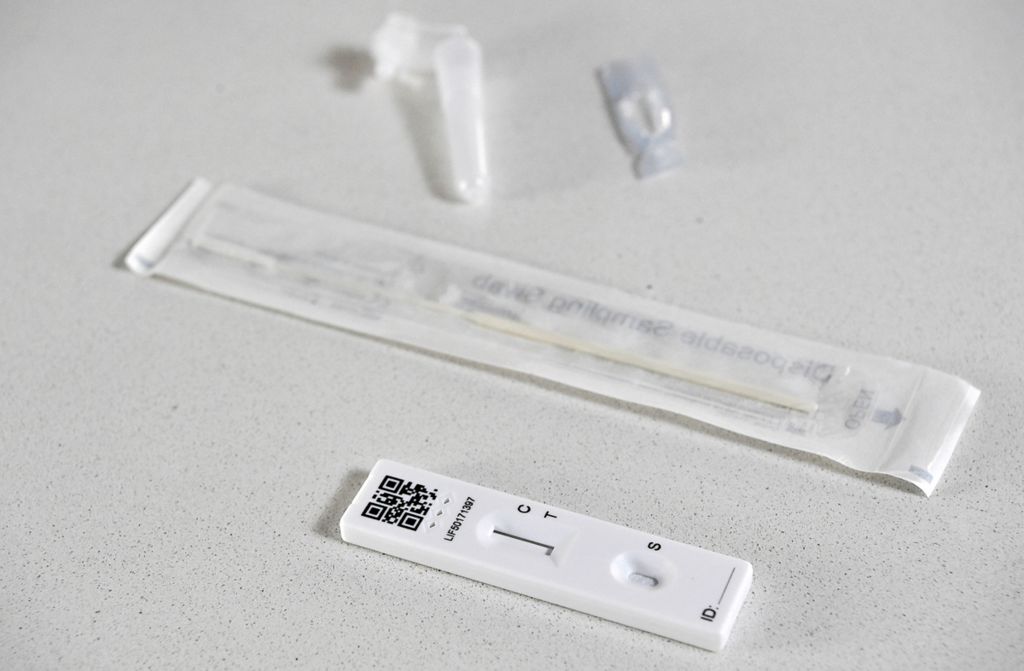
It involves swabbing your nose and/or throat, then dipping the swab in a fluid.

This is then dropped onto a plastic device - a bit like a pregnancy test.

A line appears on a paper strip to show the test has worked. A second line appears if you have the virus.

What if I test positive and need a PCR test?

If you get a positive result from a lateral flow test anywhere in the country, you and your household must self-isolate immediately.

You should get a PCR (polymerase chain reaction) test to confirm the result.

This can be booked online, or by phone - 119 in England, Wales or Northern Ireland, or 0300 303 2713 in Scotland.

PCR test swabs are sent to a lab for analysis, with the result in 24-48 hours.

Lateral flow test kit of partsIMAGE COPYRIGHTGETTY IMAGES
image captionLateral flow test kit of parts

How reliable are lateral flow tests?

Lateral flow tests are less sensitive than PCR tests, and can miss more cases, especially in people with mild infections.

However the government says that for every 1,000 lateral flow tests carried out, there was less than one false positive result.

False positives are equally rare for PCR tests.

But they can still cause problems. If lots of people get tested when there is very little virus in circulation, you might get more false positives than true positives, which can distort infection rates.

What if I have Covid symptoms?

  • You have Covid symptoms - a new continuous cough, high temperature, or change in sense of taste or smell
  • You test positive for Covid-19
  • You live with someone who has tested positive
  • You live with someone who has Covid symptoms (unless they have a negative test)
  • You arrive in the UK from a country other than the Republic of Ireland
  • You are contacted by NHS Test and Trace to say you have been in close contact with someone who has tested positive
Banner image reading 'more about coronavirus'

What do I need to know about the coronavirus?

Banner

More on this story

https://www.bbc.com/news/health-51943612