Pages

Showing posts with label Brain Health. Show all posts

Sunday, 13 April 2025

MUST READ - Choline: The underappreciated nutrient that's vital for our brains


The compound has been linked to improved cognitive performance and reduced anxiety – but are you getting enough of it?

Jessica Bradley  BBC  4 days ago

(Credit: Getty Images/ Serenity Strull/ BBC)


You may not have heard of choline before, but studies show that it's crucial for our health, at various stages of life.

Choline is neither a vitamin or a mineral – it's an organic compound that's vital to the healthy functioning of the human nervous system. Now there's emerging evidence that consuming more choline can have a wide range of powerful effects, from improving cognitive performance to protecting against neurodevelopmental disorders, including attention-deficit/hyperactivity disorder (ADHD) and dyslexia.

The nutrient also seems to play a significant role in human neurodevelopment. In one study, babies who whose mothers took choline supplements during pregnancy gave birth to infants with higher information processing speeds – a measure of healthy cognitive functioning.

Scientists say that choline is a wonder-nutrient, but that it has been hugely overlooked. So, where does choline come from – and are you getting enough of it?

A crucial nutrient

Every cell in our body contains choline, says Xinyin Jiang, professor of health and nutrition sciences at Brooklyn College in New York, US.

Choline is an "essential" nutrient, which means we need it for our health, but our bodies don't produce enough on their own. Instead, we need to get some of it from our diets. In this sense, it's similar to omega 3 fatty acids, although it's actually closely associated with B vitamins, says Emma Derbyshire, science writer and founder and CEO of the consultancy Nutritional Insight.


More like this:
How much protein do you need to get strong?
Collagen supplements: The secret to perfect skin, or marketing hype?


Choline can be found mostly in animal-based foods, including beef, eggs, fish, chicken and milk, but it's also in peanuts, kidney beans, mushrooms and cruciferous vegetables such as broccoli – although animal foods tend to contain more choline than plant-based sources.

We need choline for numerous functions in our bodies, including liver function. Not having enough can cause a number of problems.

"Choline helps fat transport out of the liver, and when a person is deficient, they can get a fatty liver," says Jiang.

Choline also helps the body to synthesise phospholipids, which are the main component of the cell membranes in our bodies. Being deficient in the nutrient can affect the expression of genes involved in the process of our cells multiplying. During the development of a foetus, choline deficiency can be particularly harmful because it inhibits cell proliferation in the brain.

Choline's role in the brain is crucial – in fact it's primarily a "brain nutrient", says Derbyshire. It's needed for our bodies to produce the neurotransmitter acetylcholine, which is a chemical that carries messages from your brain to your body through nerve cells. Acetylcholine plays a major role in brain nerve cells, which are needed for our memory, thinking and learning.

In one study involving almost 1,400 people aged 36 to 83, researchers found that people with a higher choline intake tended to have better memories, and that choline intake during midlife may help to protect our brains. Choline is commonly included as an ingredient in supplements taken as "nootropics" – a diverse group of substances which some people believe can enhance learning and memory.

On the other hand, choline deficiency has also been associated with neurodegenerative disorders such as Alzheimer's and Parkinson's disease.

Another way choline may affect the brain is our mental health. One study found that higher intake of choline was associated with lower levels of anxiety. In another study, having a higher dietary intake of choline was linked to a lower risk of depression.


Having an adequate choline intake can also come with a number of other benefits. A higher dietary intake of this nutrient .

Separately, research in mice has found that choline can help to lower the levels of homocysteine, an amino acid which can increase the risk of heart disease. High levels of homocysteine can also be linked to osteoporosis, and research has found that people with higher choline intakes from their diets tend to have a higher bone density – an indicator of strong, healthy bones with a lower risk of being fractured.

"Choline can potentially have an effect against bone loss," says Øyen Jannike, a researcher at the Institute of Marine Research in Norway, who has studied the link between choline and bone health.

This may partly be because of homocysteine, she says, but also because choline is an essential structure in our cell membranes.

The first 1000 days

It's well established that a child's first two years are critical for their development, and that the mother's diet during pregnancy and breastfeeding has an integral influence on this.

Studies show that choline is vitally important for a baby's development in the womb. In fact, babies are born with three times as much choline as their mothers, which Derbyshire says shows how important it is at this stage of life.


According to one study, people who eat eggs tend to have roughly
twice the choline intake of those who don’t (Credit: Getty Images)

Several studies have found that the supply of choline in the womb correlates to the cognitive outcome of the baby, and its benefits may continue for years as the child develops. In one study, pregnant women who had the highest dietary choline intake during the second trimester of pregnancy (from week 13 to week 28) went on to have children who scored higher on a test of short- and long-term memory at the age of seven.

Some research even suggests insufficient choline intake when a woman is pregnant could be linked ADHD behaviours in their offspring.


Are we getting enough choline?


In Europe, the European Food Safety Authority (EFSA) has set recommendations for choline intake: 400mg for adults, and 480mg and 520mg for pregnant and breastfeeding individuals, respectively.

In the US, the Institute of Medicine (IOM) first established adequate choline intake recommendations in 1998: 550mg per day for men and 425mg per day for women, or 450mg during pregnancy and 550mg while breastfeeding.

An egg has around 150mg of choline, while a chicken breast has around 72mg, and a handful of peanuts has around 24mg.

In 2017, the American Media Association (AMA) also advised that prenatal vitamin supplements should contain "evidence-based" amounts of choline.


"We're seeing a lot more ADHD and dyslexia in schools, and some is genetic, but it's also possible that, in utero, they're not getting key nutrients," Derbyshire says. "These very subtle neurodevelopment changes are occurring and impacting them later on. We're treating the aftermath now."

Jiang has studied the relationship between the supply of choline during pregnancy and breastfeeding, and brain development. "In animal findings, when the mum has more choline, the cognitive development of their offspring is better," she says. "We're starting to find similar results in human studies, although, not exactly the same."

Feeding the brain

A 2020 review of 38 animal and 16 human studies concluded that choline supplementation helps brain development. However, only animal studies currently show a strong link between choline and improved cognitive function. The paper doesn't define the ideal amount of supplementation, but says most human studies use supplements providing up to 930mg choline daily – an amount equivalent to the choline in roughly six chicken's eggs – with no adverse effects reported.

There may also be some people that require more choline than the recommended daily amounts, says Øyen – including post-menopausal women, for example, who have lower levels of oestrogen, and people with fatty liver disease.

We also know, Derbyshire says, that, due to the genetic differences from one person to another, some people may have higher requirements for choline. (Derbyshire has previously consulted for and advised The Meat Advisory Panel, Marlow Foods (Quorn), the Health Supplement Information Service and the British Egg Information Service, among other organisations).

Peanuts contain high levels of choline, with 61-66mg per 100g of peanut butter (Credit: Getty Images)


When we eat foods containing choline, it's very easily absorbed into our blood, says Jiang, which should go some way to ensuring we're consuming enough choline.

However, several studies show that many of us aren't getting enough. One study found that only 11% of American adults consume the recommended daily amount.

Eggs are one of the most potent dietary sources of choline, and there is some concern that those who choose to follow a vegan diet may not be getting enough of this nutrient – though there are many plant-based sources and choline supplements are widely available in developed countries.

One study found that people who eat eggs have almost twice the usual choline intake compared with those who don't, leading the researchers to conclude that consuming the daily adequate amount of choline was "extremely difficult" without eating eggs or taking a supplement.

But the EFSA's recommendation of 400mg of choline per day is achievable for most people if you plan your diet carefully, says Jiang. Some vegan sources of choline include tofu (28mg of choline per 100g), peanut butter (61-66mg per 100g) and soy beans (120mg per 100g).

Anyone concerned they're not getting enough choline can take a daily supplement, Øyen says. In the meantime, she adds, there needs to be more animal and human research to better understand the mechanisms behind some of choline's health benefits.

However "clinicians are becoming more aware of [choline]", says Derbyshire. While it often seems to be slightly overlooked, she is hopeful that choline will soon start to enjoy the limelight.

Thursday, 14 July 2022

How pets give your kids a brain boost - BBC

Choosing a pet starts with understanding how they fit into the home. Kelly Oakes explores what happens when animals join a family – and their profound impact on children's development.

By Kelly Oakes14th June 2022


(Image credit: Getty Images)

Pick up a book from a young child's bookshelf and you're more likely to find an animal protagonist than a human one. From very hungry caterpillars to great big humpback whales, children seem universally fascinated by animals. But while characters in a picture book are often far removed from reality, the pets many of us share a home with offer children a more realistic glimpse of the animal world – and a meaningful relationship that influences them in a whole host of other ways, too.

Understanding that relationship may not only help parents choose the right pet for their child, but also give them deeper insights into the factors that make for a truly successful bond.

For many people, pets are much-loved family members who provide support across many stages of life. They can help couples to cement their relationship, act as playmates for young children, and provide companionship for parents when children leave home. One study in the US found that 63% of households with a baby under 12 months old had a pet, and an Australian study found a 10% increase in pet ownership around the time the children start school.

Many parents intuitively feel that looking after an animal can offer children valuable lessons about caregiving, responsibility and empathy. "It's really important, especially for young kids, to learn that someone's perspective might be different from their own," says Megan Mueller, associate professor of human-animal interaction at Tufts University, US. "That's an easier lesson to learn, perhaps, with an animal than it is with, say, a sibling or a peer."

But claims about the beneficial impacts of pets on children go further, suggesting that pets can influence children's social skills, physical health, and even cognitive development, and that keeping them is associated with higher levels of empathy. For children with autism and their families, pet care may help reduce stress and create opportunities to form supportive bonds.

Other research shows that children gain from animals in-the-moment, too. In one pair of studies, children made fewer errors on an object categorisation task and needed fewer prompts in a memory task when there was a dog in the room. Research has even found that, for adults at least, the simple act of viewing our pets as family members improves our wellbeing – though headlines touting the wide-ranging benefits of pet ownership are not without criticism, since people often believe that their pets improve their health and happiness, even when objective measures don't show any difference.

A boy enjoys a session of dog-assisted therapy in France (Credit: Getty Images)

Interacting with pets – and with other people

So, are pets truly at the root of all these benefits, or do we just think they are? Hayley Christian, associate professor at the School of Population and Global Health at the University of Western Australia in Perth, is one of the researchers attempting to unravel cause from effect.

Using data from a longitudinal study of 4,000 children at ages five and seven, Christian and colleagues discovered that pet ownership was associated with fewer peer problems and more prosocial behaviour. In separate research they found that children aged 2 to 5 with a family dog were more active, spent less time on screens, and slept more on average, than those without a pet.

Crucially, it was the dog-facilitated physical activity – such as going on family dog walks – that made the difference.

Then, in a study published last year, they put these two pieces of the puzzle together. After controlling for factors such as socio-economic status, the researchers saw that children who regularly engaged in dog-related physical activity had better developmental outcomes.

"We can actually say that children having pets and interacting with them over time in early childhood does seem to cause these added benefits in terms of their social-emotional development," says Christian, who is also a senior research fellow at the Telethon Kids Institute.

That's not to say that every family should get a pet – or every child with a dog is better off than those without. Behavioural issues, complex medical needs and the financial burden of caring for an animal can all make life with a pet less than rosy. Families living in housing that is not pet-friendly face further barriers. "I don't think we're ever going to get to the point where we recommend that everyone with a kid gets a dog," says Mueller.

In fact, Mueller looked into whether the mental health of US teenagers with pets was better than their non pet-owning counterparts during the Covid-19 pandemic – and found that the animals appeared to make no difference. "My hypothesis is that Covid was a huge stressor and there probably isn't one thing that's enough to overcome it," she says.

It's also possible that the pandemic put a stop to one of the ways in which living with a dog can give us a boost. "We get the social benefits from interacting with the dog, but there's also this way in which animals can facilitate social interaction with other people," says Mueller. During lockdowns, teenagers might have stuck to their daily dog walks but avoided conversations with other dog walkers, losing out on small moments of social interaction.

A Ukrainian girl cuddles her pet at Warsaw train station. Children rank pets as some of the most important beings in their lives, research shows (Credit: Getty Images)

Building a strong relationship

When it comes to the positive influence of pets on children, the state of their relationship is key – not just living under the same roof. "Relationship quality seems to be a better predictor of some of these health outcomes than just whether or not you have a pet in the home," says Mueller.

Time spent with a pet is one factor. If your sibling has a hamster that lives in their room, you're unlikely to feel very attached to it, for example, compared to a family dog that you walk every day after school.

A child's age can also help determine how solid their relationship with a particular pet becomes. Children aged between six and 10 develop stronger bonds with animals that are more similar to humans, like cats and dogs, than with biologically far-removed species like birds and fish. But older children, aged between 11 and 14, report being just as attached to less closely-related species – including mice – as they are to their dogs or cats.

Family dynamics also play a part. The Australian longitudinal study saw that children without siblings can especially benefit from pets – perhaps because they sometimes act as a surrogate sibling. "Parents are more likely to allow their child to be independently mobile [for example, run an errand alone] if they went with a sibling or a friend," says Christian. "And guess what else? A dog."

Babies in households with a pet are better at recognising animal faces by the time they are 10 months old, research shows

Pets can even aid social interactions within households. In foster families, research suggests a pet can help facilitate close relationships between foster carers and children, as well as providing companionship in its own right.

When children get to know their pets, it opens them up to a deeper understanding of animals in the wider world. "They tend to learn from their pet, somehow, how to be more understanding, empathetic and responsive to animals in general," says John Bradshaw, former reader in companion animal behaviour at the University of Bristol, UK, and author of several books on cats and dogs.

One study in the UK found that children who had pets at home were more likely to have higher levels of belief about animals' minds, that is, thinking that animals have thoughts and feelings of their own.

"You can have all sorts of imaginary stories in your head about a lion, but until somebody takes you to Africa, you'll never meet one in the wild," he says. "But a dog or a cat is there and can teach you about what it's actually like to be an animal, that animals are not human, they have very special lives that belong to them and not to us."

Even young babies are watching and learning about the animals they live with. Research by Karinna Hurley and Lisa Oakes at the University of California, Davis, US, found that infants in households with a pet were better at recognising animal faces by the time they were 10 months old than those without.

What's more, a child's relationship with their pet could provide a much-needed link with nature. "To have a real living, breathing, slightly messy animal running around the house is a good way of making those connections," says Bradshaw.

A boy bonds with a dog at a hospital in Tokyo. Pets can benefit children's development in many different ways, studies show (Credit: Getty Images)

What do animals think of kids?

Remembering our pets' wild origins can give us an insight into how they see our families.

Dogs evolved to live alongside humans and have the potential to form very strong bonds with us. Cats, on the other hand, are solitary creatures at heart. Even so, they do seem to regard their human housemates as family. "Our cats greet us by raising their tails and rubbing around our legs – precisely what they do when meeting another cat they know well or consider a family member," writes Bradshaw in his book, The Animals Among Us.

But whether this kinship translates to children depends on a pet's own early life experiences.

Both cats and dogs have a brief window – for puppies this is between around eight and 16 weeks of age – where they learn about the sorts of people they might encounter in their lives. "We know that if puppies or kittens have not met children at all by the time they get to six months or so – depending on their underlying temperament – they can display really quite adverse reactions," says Bradshaw. "That suggests that they don't really recognise children as human, unless they've been introduced to them as part of the humanity package."

This makes perfect sense when you look at it from the animal's point of view, he says: "A baby is nothing like an adult human. It's much smaller, it can't stand up, it makes very different noises to an adult human, and it smells very different to an adult human."

Children rank pets as some of the most important beings in their lives – but pets can take time to get used to kids

Understanding how a pet sees the world is vital to making sure everyone gets along. If a cat urinates on a new cot or pram brought into the house, it's easy to jump to conclusions. "If you were not sympathetic to the way the cat thinks you might think, 'Oh, the cat's just getting cross because I'm going to have a baby, it must know'," says Bradshaw. "Of course, they don't know. It's very often the olfactory environment [the smell of the home] that's been churned up and the cat's lost its familiar points of reference."

Both cats and dogs rely heavily on their noses, so having lots of new smells in the house is like "coming home and finding that someone has painted your walls completely opposite colours," says Bradshaw. On the flip side, familiar scents can keep them happy. In one trial, Bradshaw and his colleagues put a t-shirt that had been worn by a dog's owner into their bed. "That familiar smell seemed to work wonders for the dog, they were much more relaxed," he says.

Not anthropomorphising our pets – meaning, expecting them to think and behave like humans – is especially important when it comes to a child's safety. "You can never be 100% sure how a dog is going to react in any one given situation," says Bradshaw. "There's all sorts of possible things which can trigger the dog into a different mode of behaviour, maybe one that the owner has never seen before."

Ultimately, each child-pet relationship is unique, with its own quirks, benefits, and pitfalls – and in some ways researchers are only just starting to understand what makes a child's relationship with their pet mutually beneficial. "The field is really moving towards looking at these more individual differences," says Mueller.

Meanwhile, children themselves rank pets as some of the most important beings in their lives, seeing their animal companions as a comfort and emotional support, as well as being infallible confidantes for a secret. Some of those benefits "are very difficult to quantify because they're very individual, and science deals in populations and big numbers," says Bradshaw. "Just because it's not very tangible and easily measured, it doesn't mean it's not real."

https://www.bbc.com/future/article/20220609-do-pets-help-childrens-development


FAMILY TREE

This article is part of Family Tree, a series of features that explore the issues and opportunities that families face all over the world. You might also be interested in other stories about children's behaviour and development:

Climb new branches of the Family Tree on BBC Worklife.


Monday, 27 June 2022

Lacking Vitamin D Can Lead to Dementia, Says New Study

 Lacking This Vitamin Can Lead to Dementia, Says New Study

Your brain needs healthy habits too.

FACT CHECKED BYEMILIA PALUSZEK

You know the healthy habits you need to adopt to protect your heart, but were you aware certain lifestyle changes can keep your brain healthy, reducing your risk of age-related disorders like dementia? They include diet, exercise, and according to a new study, making sure you're getting enough of this vitamin on a daily basis. Read on to find out more—and to ensure your health and the health of others, don't miss these Sure Signs You've Already Had COVID.

1

What The Study Found

vitamin d in the sun
Shutterstock

According to a new study published in the Journal of Clinical Nutrition, having a low vitamin D level is associated with smaller brain volume and an increased risk of dementia and stroke, and almost 20 percent of dementia cases could be prevented by keeping vitamin D level in a healthy range.

2

How the Study Was Conducted

Doctor examines MRI scan of head, neck and brain of patient
Shutterstock

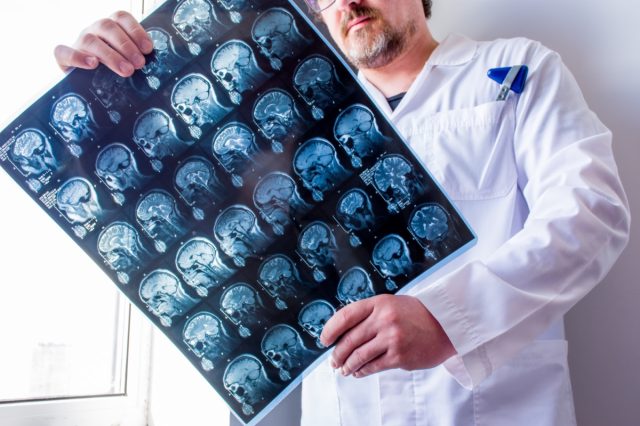
Researchers from the University of Australia analyzed health data from more than 290,000 people in the UK Biobank, comparing vitamin D levels with brain imaging that measured the size of gray matter, white matter, and the hippocampus, the part of the brain responsible for executive functions like memory.

The scientists found that participants who had a genetically higher level of vitamin D had a decreased dementia risk, with the odds of dementia decreasing with higher concentrations of the vitamin, up to 50 nmol/L, after which the benefits were less marked.

3

Vitamin D's Benefits Widely Recognized

happy woman stretching arms in sunshine
Shutterstock

Scientists have long known about vitamin D's importance to overall health, including the immune system and bones. But less research has been done on the vitamin's effect on the brain.

"Vitamin D is a hormone precursor that is increasingly recognized for widespread effects, including on brain health, but until now it has been very difficult to examine what would happen if we were able to prevent vitamin D deficiency," said Elina Hyppönen, the study's lead author. "Our study is the first to examine the effect of very low levels of vitamin D on the risks of dementia and stroke, using robust genetic analyses among a large population."

She added: "In some contexts, where vitamin D deficiency is relatively common, our findings have important implications for dementia risks. Indeed, in this UK population, we observed that up to 17 percent of dementia cases might have been avoided by boosting vitamin D levels to be within a normal range."

4

Low Levels of Vitamin D Common

dementia
Shutterstock

Both low levels of vitamin D and dementia are not uncommon in the U.S. It's estimated that 40% of Americans have insufficient levels of the vitamin. And about 5.8 million Americans suffer from Alzheimer's disease and dementia-related conditions, a number that's expected to increase as the population ages. 


"Dementia is a progressive and debilitating disease that can devastate individuals and families alike," said Hyppönen. "If we're able to change this reality through ensuring that none of us is severely vitamin D deficient, it would also have further benefits and we could change the health and well-being for thousands."

"Most of us are likely to be OK, but for anyone who for whatever reason may not receive enough vitamin D from the sun, modifications to diet may not be enough, and supplementation may well be needed."

5

What to Do About Your Vitamin D Level

Scientist examining a test-tube in a laboratory
iStock

It's a good idea to get your vitamin D level checked by your doctor annually. If your levels are low, they might recommend a supplement. According to the National Institutes of Health, adults are advised to get at least 600 IU of vitamin D each day, between food and supplements (although that number is somewhat controversial, and some doctors believe it should be higher). The NIH notes that the safe upper limit of vitamin D for adults is 4,000 IU a day.

And to protect your life and the lives of others, don't visit any of these 35 Places You're Most Likely to Catch COVID.

Michael Martin
Michael Martin is a New York City-based writer and editor whose health and lifestyle content has also been published on Beachbody and Openfit. A contributing writer for Eat This, Not That!, he has also been published in New York, Architectural Digest, Interview, and many others. Read more

Source: https://www.eatthis.com/news-lacking-vitamin-can-lead-to-dementia/

ALSO: https://healthticket.blogspot.com/2022/06/sure-signs-youre-lacking-vitamin-d-say.html