Pages

Showing posts with label The Sun. Show all posts

Monday, 27 April 2020

Lies won’t stop Covid-19


WASHINGTON-BASED military think tanks constantly warn of possible attacks by the wicked North Koreans who have a large arsenal of chemical and biological weapons and missiles to deliver to North America.
21 APR 2020 / 19:30 H.
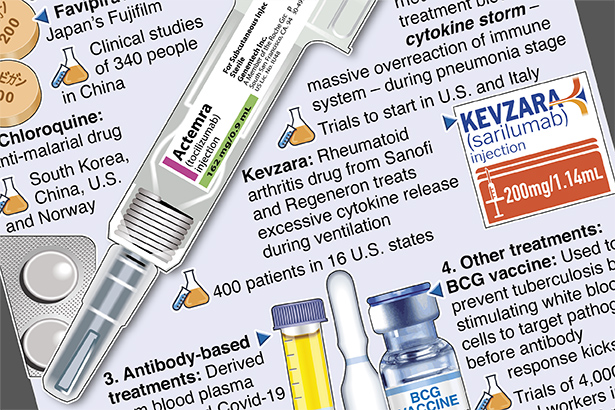
Quest for a drug to combat coronavirus
(Picture link: https://www.graphicnews.com/en/pages/40108/health-quest-for-c-19-drugs)

So do Britain, France, Russia, India, Pakistan, China, India and Israel. The US still has a very large, lethal arsenal of chemical and biological weapons.
I recently wrote of how the Bush administration supplied Iraq with feeder stocks to make anthrax, Q Fever and other biowarfare materials for use against Iranians.
And yet we have just seen from the Covid-19 scare how woefully unprepared the US is for a chemical/biological attack despite being a world leader in germ and chemical warfare.
As the bodies of Covid-19 victims pile up from New York to New Zealand, politicians are waging a furious blame game over the pandemic.
At first, President Donald Trump dismissed Covid-19 as a simple cold or flu and, in the best dictatorial tradition, scared into silence scientists and politicians who disagreed with him for over a month.
China’s General Secretary Xi Jinping, or high-level Communist Party officials, may have delayed information about the Wuhan virus for six days before news of the killer virus was revealed and a common party response agreed upon.
Covering up bad news is standard procedure in Communist and autocratic regimes.
That’s a major reason why the slow motion collapse of the Soviet Union’s economy went unknown to the Kremlin until too late.
In Trumpistan, none of the sycophants and yes-men around the president, except for the admirable Dr Fauci, dared contradict the Great White Father cum Physician cum Mussolini in the White House. Anyone who does quickly gets a “you’re fired”.
Many of Trump’s evangelical supporters in the Bible Belt view him as a semi-religious figure, a sort of holy man who can, in the best Old Testament Biblical tradition, stop or even cure plague and pestilence. That’s what Trump’s claim to be able to miraculously end the coronavirus plague by Easter was all about.
Next, fearing American voters would blame him for ineptitude and quackery for downplaying the crisis, Trump sought to lay blame on China and the World Health Organisation for the pandemic.
Flat-earth Midwestern Republicans believe the UN and anything that sounds international is satanic. This includes the bumbling, overly bureaucratic WHO which has indeed been too easy on China as the right-wing Republicans claim.
But this is the same UN-directed outfit that played a key role in repressing or even eradicating malaria, smallpox, Ebola, river blindness, bilharzia and other dreadful plagues of Africa and Asia. WHO has also had some success in fighting dengue and tsetse flies.
After studying the timeline of recent events in Wuhan, it appears to me that there was some confusion among Chinese medical authorities because of the unknown nature of the new virus.
It took them close to a week to evaluate the virus which was at first believed to be a virulent influenza.
Their confusion was minor compared to the muddled reaction of US political and medical authorities and Trump-supporting evangelical groups who each had their own beliefs (usually mistaken) about the new virus.
Trump was very successful at laying blame on China – just as the lethal 1918 flu epidemic that began in US Army camps and killed millions of people was successfully marketed to the public as the “Spanish flu”.
In an effort to come up with a snake-oil cure, Trump told Americans to take the anti-malaria drugs chloroquine and hydroxychloroquine.
French doctors warned these drugs could provoke serious, even lethal heart problems.
They were quite right. I took chloroquine while in the jungle in southern Africa while covering the fighting between South African (SADF) forces and East-Bloc backed African Congress forces.
I developed a mild but still very scary psychological problem and was sick as hell. Who wants to be psycho and paranoid in the deepest jungle?
One remarkable factor in this 21st century plague is how successful China appears to be so far in bottling up the Covid plague.
It may be the Chinese are fudging the facts as Republicans, who never lie, claim.
However, I think the key to China’s success has been the ubiquity of special Communist Party committees who ruthlessly and successfully managed the epidemic. Every Chinese factory, apartment building, school and organisation has its very own party official whose job is to spy and report on every person in their group.
Each member is graded and guided. “Good” party members received better apartments, school slots, factory jobs and retirement care based on their grade book.
The all-seeing party knows all, sees all, and can control just about everyone. That’s how China has so far bested this plague – though of course Trump will try to take the credit.

https://www.thesundaily.my/opinion/lies-wont-stop-covid-19

Tuesday, 14 January 2020

STATINS JAB NHS hospitals to trial life-saving heart treatment that ‘works better than statins’

HOSPITALS are to trial a life-saving heart treatment said to work better than statins.

https://www.thesun.co.uk/news/10732307/nhs-heart-treatment-jab-statins/

Ministers revealed that 40,000 Brits will get the twice-a-year jab of Inclisiran, which halves cholesterol in two weeks with no side-effects.
 40,000 Brits will receive the twice-a-year jab which is said to work better than statins
1
40,000 Brits will receive the twice-a-year jab which is said to work better than statinsCredit: Getty - Contributor
Statins cut bad fats by a third — but a fifth of patients complain of muscle pain and ditch them.
Inclisiran works by switching off genes in the liver that stop the body breaking down cholesterol.
Health Secretary Matt Hancock said it could save 30,000 lives in a decade if 300,000 take it every year.
The £60million trial will be funded by drug firm Novartis. If a success, ­officials say the jab could be available on the NHS next year.
Professor Sir Nilesh Samani, of the British Heart Foundation, said it could be “rapidly adopted” to “maximise” lives saved.

https://www.thesun.co.uk/news/10732307/nhs-heart-treatment-jab-statins/

Thursday, 9 January 2020

BUMPY RIDE Speed bumps are bad for our health and fuel air pollution, study warns

SPEED bumps are fuelling air pollution and making us sick, a study suggests.

The traffic-slowing ramps around schools and care homes also put the most vulnerable at risk.
 Researchers warn that brake dust caused by speed bumps could be harming our health
1
Researchers warn that brake dust caused by speed bumps could be harming our healthCredit: Alamy
Researchers warn that dust from brake pads may be as harmful to health as diesel exhaust fumes.
Braking releases toxic metal particles into the air and hitting a bump dislodges even more.
These are breathed in — potentially weakening lungs’ ability to fight infection and making coughs worse.
Scientists from King’s College London tested the impact of brake dust and diesel fumes on immune cells called macrophages.
Both reduced the cells’ ability to destroy bacteria and raised their production of a molecule linked to inflammation.
Researcher Dr Liza Selley said: "Diesel fumes and brake dust appear to be as bad as each other in terms of toxicity in macrophages.
"Macrophages protect the lung from microbes and infections and regulate inflammation, but we found that when they're exposed to brake dust they can no longer take up bacteria.
"Worryingly, this means that brake dust could be contributing to what I call 'London throat' - the constant froggy feeling and string of coughs and colds that city dwellers endure - and more serious infections like pneumonia or bronchitis which we already know to be influenced by diesel exhaust exposure."
The research was funded by the Medical Research Council and is published in the journal Metallomics.
https://www.thesun.co.uk/news/10702370/speed-bumps-are-bad-for-our-health-and-fuel-air-pollution-study-warns/

UN-TEA-LIEVABLE Drinking three cups of tea a week can help you live longer, study finds

DRINKING at least three cups of tea a week is linked to a longer, healthier life, scientists say.

Their study found green tea was the best but all those enjoying a regular cuppa benefit too.
 Researchers found drinking three cups of tea a week could be linked to a longer life
1
Researchers found drinking three cups of tea a week could be linked to a longer lifeCredit: Getty - Contributor
It is believed polyphenols in the brew protect against heart disease and raised blood pressure.
The researchers estimated 50-year-old regular tea drinkers had a 20 per cent lower risk of heart disease and stroke, and a 22 per cent lower risk of dying from either.
Their danger of death from any cause was also found to drop 15 per cent.
Brit favourite black tea was drunk by only eight per cent in the South East Asian study so the benefits were unclear.
The Chinese team suggests green tea is rich in polyphenols but black tea is fully fermented so may lose some of their effects.
In addition, black tea is often served with milk, which may counteract the favourable health effects.
Lead study author Dr Xinyan Wang, from the Chinese Academy of Medical Sciences in Beijing, said:
"Habitual tea consumption is associated with lower risks of cardiovascular disease and all-cause death.
"The favourable health effects are the most robust for green tea and for long-term habitual tea drinkers."
https://www.thesun.co.uk/news/10702634/drinking-tea-boosts-life-expectancy/

Thursday, 7 March 2019

Type 2 diabetes can be reversed by Low-calorie soups and shakes, research finds

Nearly five million people in the UK have diabetes, with 90 per cent of them suffering with the type 2 strain which is linked to poor diet and lack of exercise

A LOW-CALORIE diet of soups and shakes can reverse Type-2 diabetes.
More than a third of patients who followed the regime were found to be free of the illness after two years.
 The NHS is planning to trial the soup and shakes diet and may consider a national rollout if it's successful
GETTY - CONTRIBUTOR
1
The NHS is planning to trial the soup and shakes diet and may consider a national rollout if it's successful
The research showed 46 per cent of patients who took part were in remission after one year, the Daily Mail reported.
Those who managed to stay diabetes-free lost an average of 1st 9lb each — adding to growing evidence that the condition can be defeated with weight loss.
The NHS is planning to trial a fat-free soup and shakes diet with 5,000 participants. If successful it may be rolled out nationally.
Nearly five million Brits have diabetes with 90 per cent of them living with the type 2 strain — linked to poor diet and lack of exercise. It can lead to liver failure, strokes and blindness.
Newcastle University professor Roy Taylor co-led the study, which involved nearly 300 people in Tyneside and Scotland.
He said: “Type 2 diabetes is not a life sentence.
“We now know how people can return to normal despite developing this serious threat to health and happiness.
https://www.thesun.co.uk/news/8580176/diet-soup-shakes-reverse-type-2-diabetes/

Saturday, 21 October 2017

Japan scientists grow drugs in chicken eggs

JAPANESE researchers have genetically engineered hens whose eggs contain drugs that can fight serious diseases including cancer, in a bid to dramatically reduce the cost of treatment, a report said Monday.

Posted on 9 October 2017 - 02:26pm
If the scientists are able to safely produce "interferon beta", a type of protein used to treat illnesses including multiple sclerosis and hepatitis, by rearing the hens, the price of the drug – currently up to 100,000 yen (RM3758) for a few microgrammes – could fall significantly, said the English edition of the Yomiuri Shimbun.
Researchers at the National Institute of Advanced Industrial Science and Technology (AIST) in the Kansai region kicked off the process by introducing genes that produce interferon beta into cells which are precursors of chicken sperm, the newspaper reported.
They then used these cells to fertilise eggs and create hens which inherited those genes, meaning the birds were able to lay eggs containing the disease-fighting agent.
The scientists now have three hens whose eggs contain the drug, with the birds laying eggs almost daily, the report said.
The researchers plan to sell the drug to pharmaceutical companies, halving its price, so the firms can use it first as a research material, the newspaper said.
Consumers may have to wait a while, as Japan has strict regulations concerning the introduction of new or foreign pharmaceutical products, with screening processes that routinely take years to complete.
But the team hopes that the technological breakthrough will eventually help drive down the cost of the drug to 10% of its current price, the newspaper reported.
Officials at the institute could not be reached for comment. — AFP
http://www.thesundaily.my/news/2017/10/09/japan-scientists-grow-drugs-chicken-eggs

Friday, 20 October 2017

US scientists engineer corn to boost protein

US scientists have found a way to genetically engineer corn to produce an amino acid contained in meat, boosting the nutritional value of one of the world's most important crops.

Posted on 10 October 2017 - 03:20pm

Corn, a staple crop for much of the world, could become even more beneficial
with the addition of more nutrients. — AFP
The process involved inserting a bacterial gene that causes corn to make methionine, a crucial nutrient for the health of skin, nail and hair.
Researchers said the discovery could benefit millions of people in the developing world who depend on corn as a staple, and could reduce animal feed costs, according to the report in the Proceedings of the National Academy of Sciences, a peer-reviewed US journal.
"We improved the nutritional value of corn, the largest commodity crop grown on Earth," said co-author Thomas Leustek, professor in the Department of Plant Biology at Rutgers University.
"Most corn is used for animal feed, but it lacks methionine — a key amino acid — and we found an effective way to add it."
The sulfur in methionine "protects cells from pollutants, slows cell aging and is essential for absorbing selenium and zinc," the PNAS report said.
Already, industries spend billions adding synthetic methionine to field corn seed, which does not naturally contain this amino acid, in order to help livestock grow.
Co-author Joachim Messing, a professor who directs the Waksman Institute of Microbiology, said this is a "costly, energy-consuming process."
The new method involved inserting an E. coli bacterial gene into the corn plant's genome.
The E. coli enzyme caused methionine production in the plant's leaves, and methionine in corn kernels increased by 57, the study said.
The process did not affect plant growth.
Scientists fed the genetically engineered corn to chickens at Rutgers University and found it was nutritious for them, Messing said.
Leustek told AFP that "in principle, the technology could be quickly deployed, within a couple of years."
"The transgene that we developed can easily be inserted into commercial corn varieties," he said in an email.
"The major obstacle would be regulatory hurdles because it is a transgenic technology."
Food and animal feeds containing genetically modified organisms are highly controversial in the European Union, amid public suspicions that they carry a health risk.
A sweeping review in 2016 of the available scientific literature by the US National Academies of Science found no evidence that genetically modified crops are unsafe to eat.
Leustek said researchers also found that it might be possible to grow corn that contains this amino acid without using genetic engineering.
"For example, by feeding plants with different sources of sulfur nutrients as fertilizer," he said.
"Of course, this will require additional work and the outcome is not guaranteed. But our results strongly suggest that changes in use of fertilizers could also achieve the desired result." — AFP Relaxnews

Wednesday, 20 September 2017

Smoking changes lung cells, primes them to develop cancer

WASHINGTON: Chronic exposure to cigarette smoke can change lung cells over time, making them more vulnerable to disease and priming them to develop cancer, US researchers said Monday.
The report in the journal Cancer Cell is based on lab experiments on lung cells that were exposed to chronic cigarette smoke — the equivalent of a person smoking for 20 to 30 years.
After about 10 days, the cells began to change their gene expression, a process known as epigenetic change.
It took 10 months before these changes built up enough to boost the odds of cancer.
"When you're smoking, you are building up a substrate of epigenetic changes that we hypothesize are increasing your mathematics for developing lung cancer," said senior author Stephen Baylin, co–director of the Cancer Biology program at Johns Hopkins University.
"Because if you're not a smoker, your risk of lung cancer is very low."
These epigenetic abnormalities essentially turn off multiple genes which are needed to help protect normal cells from developing cancer.
Epigenetic changes do not alter, or mutate, the basic DNA sequence of the gene, suggesting that there is hope for people who want to quit smoking.
"This work suggests the possibility that unlike mutations, which are harder to reverse, if you stop smoking at a certain time and duration, then you have a chance to decrease your mathematics that might be due to the buildup of epigenetic changes," said first author Michelle Vaz, a postdoctoral researcher at Johns Hopkins University School of Medicine.
"The hypothesis is that there are potentially reversible changes that are contributing to a certain set of lung cancers." — AFP

http://www.thesundaily.my/news/2017/09/12/smoking-changes-lung-cells-primes-them-develop-cancer?

Thursday, 18 May 2017

Asthma: could diet have a role to play?

THE idea that diet could have a role to play in preventing the signs of asthma is starting to gain ground, with studies highlighting certain deficiencies in patients or warning against the consumption of certain foods. 


THE idea that diet could have a role to play in preventing the signs of asthma is starting to gain ground, with studies highlighting certain deficiencies in patients or warning against the consumption of certain foods. On World Asthma Day, May 2, Relaxnews spoke to Dr. Bertrand Delaisi, a pediatric pulmonologist at Clinique Marcel Sembat in Boulogne-Billancourt, France, for an overview of what's currently known on the subject.
The prevalence of asthma has increased considerably in recent decades, in parallel with changes in lifestyles and dietary habits, tending towards diets rich in carbohydrates and fat, and low in fiber.
As well as pollutants, allergens, passive smoking and air pollution, allergy specialists are increasingly interested in how diet can promote or modify the development of asthma on a physiopathological level.
Eating ham, cured sausage or smoked meats at least four times a week could aggravate the symptoms of asthma over time, concludes a study carried out by researchers at Inserm, the French National Institute of Health and Medical Research, published in January in the medical journal Thorax.
On the contrary, consuming fiber may influence the gut flora and could reduce inflammation in the bronchial tubes. A diet rich in fruit and vegetables and vitamin C - and especially vitamin D (calf's liver, soy, egg yolks) - could, therefore, help limit the risks of asthma, according to Dr. Bertrand Delaisi, a pediatric pulmonologist at Clinique Marcel Sembat in Boulogne-Billancourt, France.
The same goes for omega-3 fatty acids, present in oily fish and other foods (walnuts, canola oil), which can relieve inflammation, including in the respiratory airways. People whose diets are rich in omega-3 have a lower risk of suffering from asthma than those whose intake is limited. They could also be beneficial to people who already suffer from the condition.
Foods containing quercetin could reduce the frequency of asthma attacks, as this antioxidant flavonoid is an anti-inflammatory. Studies carried out in vitro found that quercetin inhibited the liberation of inflammatory substances by mast cells, which play a role in allergic reactions, mirroring certain anti-asthma medications. This antioxidant is found in onions, mustard oil, tea and apples.
An estimated 300 million people worldwide suffer from asthma. — AFP Relaxnews

http://www.thesundaily.my/news/2017/05/04/asthma-could-diet-have-role-play

Wednesday, 17 May 2017

Facts on chronic kidney disease

My uncle was a vibrant self-made man who made the most of his life, before kidney failure (­related to his diabetes) resulted in ­agonising regular dialysis sessions that he hated. However, it was not enough to save him.
Like me, there are many people out there who have lost a loved one to CKD, or perhaps know of someone who is suffering from this disease.
The public should be aware that the number of cases of CKD has been on a rise in Malaysia. According to the 22nd Report of the Malaysian Dialysis and Transplant Register (2014), there has been over
100% increase in the number of new dialysis patients in Malaysia over the past 10 years.
At the end of 2015, nearly 40,000 Malaysians required r­egular dialysis, with 90% of them requiring haemodialysis ­treatment three times a week.
Nephrology specialist Dr Wong Mun Hoe (top right, inset) from Pantai Hospital Klang, who is also a certified member of the Renal Board (Malaysia), sheds some light on this serious medical condition during an email interview.
What are the common causes of CKD? Who are the people at risk?
"According to the ­Malaysian ­Dialysis and Transplant ­Registry (MDTR), the most c­ommon cause of kidney failure among patients who are on dialysis is ­diabetes ­mellitus. This is ­followed by ­hypertension.
"Other causes ­include ­kidney stones, ­glomerulonephritis (acute inflammation of the kidney, typically caused by an immune response), ­polycystic kidney disease (numerous cysts growing in the kidneys), and drugs.
"People who are at risk of CKD include the elderly (above 65 years), and those with diabetes mellitus and hypertension."
What are the symptoms we should be looking for?
"Unfortunately, only kidney failure at its most severe form will present with symptoms.
"These include poor appetite, nausea, vomiting, difficulty breathing, leg swelling (usually both legs), and [fatigue].
"Most patients do not usually have these symptoms in early stages of CKD."

Is CKD reversible?
"The term, chronic ­kidney disease, ­denotes that this is a long-term problem and not ­reversible.
"CKD is ­classified into five stages – one being mild, and five being severe – and will require renal replacement therapy."

Do genetics play a part?
"Polycystic kidney disease (PKD), as a cause of CKD, has a genetic predisposition. Diagnosis is made using a specific criteria.
"The nephrologist will usually screen family members if one of them is found to have this condition."
It is said that those undergoing haemodialysis generally are living on borrowed time. Is this true, and if so, why?
"I would say the patients who undergo ­haemodialysis are given a second chance at life.
"Not ­everyone is ­suitable for ­haemodialysis, and the ­nephrologist has to evaluate each patient individually to determine the most suitable ­modality for ­renal replacement therapy (haemodialysis, ­peritoneal ­dialysis, kidney transplant or conservative therapy).
"Besides extending the life of an individual, we also take into account the quality of life of the patient after the initiation of dialysis."
How safe is a kidney transplant?
"Kidney transplant is the best option for renal replacement therapy, and provides best long-term survival.
"Malaysia has been performing kidney transplants since 1975. One cannot deny that there are risks (surgical, ­anaesthetic, rejection of donor kidney, infection, etc).
"However, the long-term ­benefits outweigh these risks as the patients have the opportunity to live a normal life.
"Safety is of paramount importance. ­Recipients of kidney ­transplant and donors are ­carefully evaluated to reduce the risks.
"Kidney transplants are offered in government ­hospitals as well as some private hospitals."
Do products sold in the market to detox the body add strain to our kidneys?
"If you ask any nephrologist, there is no such thing as a drug/product/supplement that can cure or reverse kidney failure.
"It is sad that people take advantage of those with CKD by offering them an alternative hope which is deceiving and futile.
"Kidneys age with time, and chronic diseases such as ­diabetes and hypertension or non-­prescription/prescription drugs can accelerate this process.
"Some of these unregulated compounds contain heavy metals, ­colouring, and preservatives which are ­harmful to the kidney and are not ­commonly tested until an adverse event has been reported.
"Common prescriptive drugs such as non-steroidal ­inflammatory drugs (NSAIDs) can also contribute to kidney damage."
What can we do to keep our kidneys functioning in a healthy manner?
"It is important to identify people who are at risk of kidney failure.
"Those aged above 65 years, have underlying diabetes mellitus, hypertension, or family history of kidney disease should be screened on a regular basis.
"Early treatment of CKD ensures longer survival of the kidneys.
"Avoid taking ­unnecessary supplements and abuse of NSAIDs.
"For those who are well, the general principles of healthy living including drinking plenty of water, a balanced diet and regular exercise will ensure that your kidneys continue to function in a healthy manner."
http://www.thesundaily.my/news/2017/04/20/facts-chronic-kidney-disease