Pages

Showing posts with label Cordyceps. Show all posts

Saturday, 5 October 2019

5 Medicinal Mushrooms That Fight Cancer

There is good evidence that mushrooms are among the most powerful functional food in a growing cancer-fighting and cancer-prevention arsenal.


March 19, 2019
Editor’s note: This post was originally published in March 2016. It has been updated and republished in March 2019.

Having secured a rich history in many ancient Asian healing practices, medicinal mushrooms have been prescribed and used for countless ailments for thousands of years. As modern medicine rediscovers these ancient superfoods, there is good evidence that mushrooms are among the most powerful functional food in a growing cancer-fighting and cancer-prevention arsenal.
Modern research confirms what many traditional healers have known for centuries – that mushrooms contain some of the most potent, yet safest medicinal ingredients found in nature. What’s more, most of these ingredients cause very few side effects – if at all – even at very high doses.
It is first important to differentiate between the anti-cancer medicinal mushrooms and the countless other common varieties. A quick visit to the local supermarket will reveal culinary mushrooms such as oyster, portabella, and others. Although these have their health benefits, the focus of this article will be on four of the more specialized and not typically commercially grown reishi, maitake, agaricus blazei murill, and turkey tail mushrooms.
It’s clear now that mushrooms are legitimate treatments in their own right for many health conditions, including diabetes, Alzheimer’s disease, and cancer.

Medicinal Mushrooms and Cancer

There are a few primary mechanisms that most of these functional, anti-cancer mushrooms share when assisting the body during cancer stages or in simple everyday prevention. First is their ability to enhance the body’s first line of defense against cancer − the immune system. When this system is weak or has failed, the mechanism for cancer has a better opportunity to manifest.
Next, some anti-cancer mushrooms exhibit direct antiviral and tumor shrinking abilities. As mentioned above, side effects are rare and mild but it is still important to talk with your healthcare provider before use.
It has been demonstrated that, in some cases, formulas containing multiple strains of different mushroom extracts often exhibit synergistic, complementary, and amplified effects. This is in stark contrast to many of the negative cumulative effects of chemotherapy drugs and radiation therapy methods commonly prescribed in hospitals today. As with research for many alternative treatments, the United States has been late to the party when it comes to medical research on the anti-cancer and overall health benefits of mushrooms.

Reishi Mushroom Benefits: The Mushroom of Immortality

Used for over 2000 years by sages and shamans and known in China as the “spirit plant” – also known as Mannentake, Ling Zhi or Ling Chi – Reishi relaxes and fortifies both mind and body. This fungus holds a very important place in the traditional medical systems of China, Japan, and Korea.
Ganoderma lucidum, or better known by its common name, reishi, it is one of the most well-known medicinal mushroom in Asian healing arts. The mushroom’s bioactive molecules and polysaccharides have been shown to better activate natural killer (NK) cells reducing cancer metastasis. NK cells are lymphocytes that perform immunosurveillance within the body, constantly on the lookout for “immuno-alerters” signaling tumor presence.
Reishi also has been shown to assist in slowing the growth (angiogenesis) of tumors as well as triggering programmed cell death in malignant cells. Currently, there is data to support the potential use of reishi as, at the very least, an adjunct therapy for colorectal cancer, lung cancer, prostate cancer, and breast cancer.

Studies have shown that Reishi helps to:

  • Counter free radicals and fight inflammation. Reishi has potent antioxidant and anti-inflammatory properties. In fact, Reishi compares very favorably to the synthetic anti-inflammatory drug prednisone, without the side effects. Also, Reishi may be able to counter our susceptibility to many aging-associated diseases, thanks to its powerful ability to fight free radicals and reduce cellular damage associated with oxidative stress.
  • Enhance immune system activity. Reishi enhances multiple aspects of the immune system in advanced stage cancer patients and lung cancer patients.
  • Fight cancer. Reishi ingredients are toxic to multiple cancer cell lines in culture – including leukemia, breast, ovarian, cervical, and lung cancer cells, among others. Evidence suggests Ganoderic acid is a potential anti-metastatic agent. Metastasis is the migration of cancer cells from their place of origin to other areas of the body.

Maitake Mushroom Benefits: The Dancing Mushroom

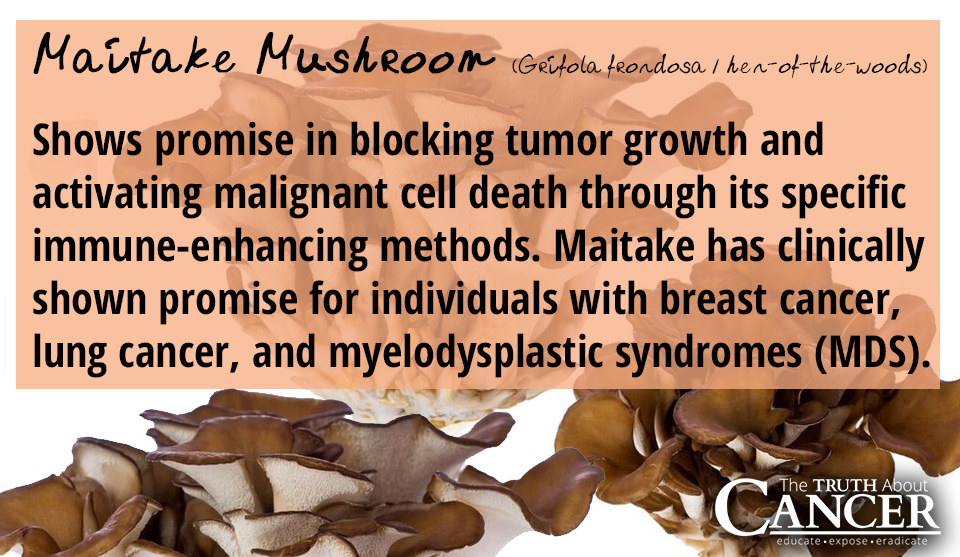
Maitake, like the reishi mushroom, also contains a broad-spectrum array of bioactive molecules. In studies, maitake has shown similar results as the reishi mushroom in stimulating NK cell activity in cancer patients. The mushroom also shows promise in blocking tumor growth and activating malignant cell death through its specific immune-enhancing methods. Maitake has clinically shown promise for individuals with breast cancer, lung cancer, and myelodysplastic syndromes (MDS).Maitake-Medicinal-Mushroom

Agaricus Blazei Murill: Tokyo’s Cancer Secret

This mushroom made perhaps the biggest splash when a study jointly conducted by the Medical Department of Tokyo University, The National Cancer Center Laboratory, and Tokyo College of Pharmacy showed a complete recovery in 90% of guinea pigs injected with cancer cells (180 sarcoma).
The pattern of other mushrooms was seen again as agaricus blazei murill activated macrophage and interferon immune activity leading to tumor shrinkage, a halt in metastasis, and reduction of future cancer occurrences. As an adjunct, agaricus blazei murill was shown to lessen the side effects in individuals undergoing chemotherapy for endometrial, cervical, and ovarian cancers.

Turkey Tail: The Natural Japanese Cancer Drug

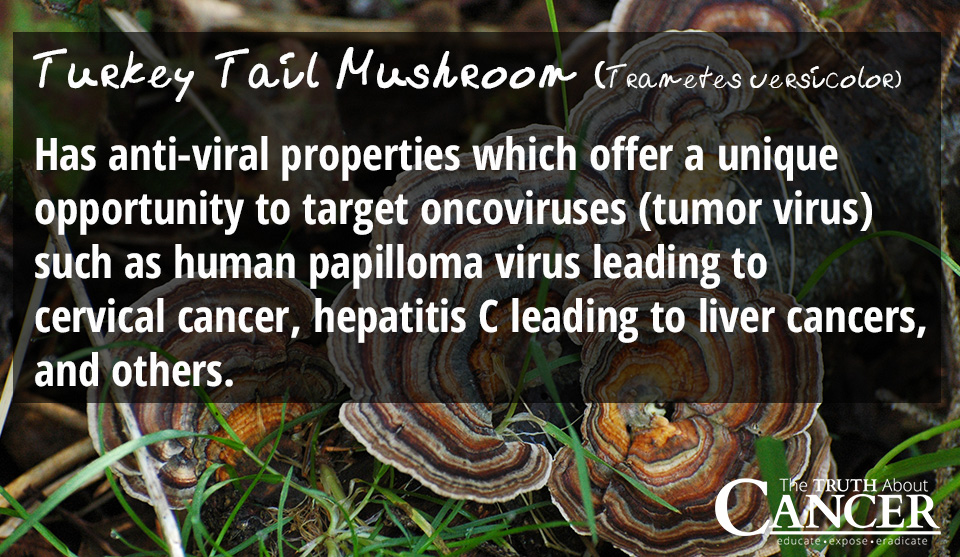
In 1976, a Japanese company patented certain extracts of this mushroom under the name PSK and later PSP. They have since become recognized cancer drugs in Japan. The anti-viral properties of the turkey tail mushroom offer a unique opportunity to target oncoviruses (tumor virus) such as hepatitis C leading to liver cancers, and others. For this mushroom, again studies are showing increased NK activity towards tumor detection and eradication.
It is important to note that drug companies cannot patent mushrooms. Due to this fact, funds typically won’t be allocated to study them unless they come from private institutions or government grants. However, this should be a positive as many studies only seek to isolate one part of a plant or mushroom to patent as a drug.
As mycologist (mushroom expert) Paul Stamets states,
Isolating one constituent from the others denatures and lessens the broad-spectrum potency of this natural, functional food.”
Turkey-Tail-Medicinal-Mushroom

Cordyceps: The Caterpillar Fungus

Cordyceps (Cordyceps sinensis) is also known as the Caterpillar Fungus and Dong Ching Xia Cao (Summer grass, winter worm), Cordyceps has long been a part of traditional Chinese and Tibetan medicine. An extremely rare combination of a mummified caterpillar and a fungus, it is found at very high altitudes in the Himalayas, on the Tibetan plateau, and other high-altitude locations around the world.
Cordyceps – both the mummified caterpillar and the fungus – contain many potent bioactive compounds, including cordyceptin, cordycepic acid, polysaccharides, and sterols.

Studies have shown that Cordyceps helps to:

  • Manage blood sugar levels in a healthy range. Emerging evidence indicates that the Cordyceps is likely to prove to useful in the management of diabetes.
  • Improve transplant success rates. Cordyceps protects the heart and lowered the rate of cardiac rejection in an animal model of heart transplantation. When given after kidney transplants, Cordyceps also reduced the rejection rate, improved kidney and liver function, boosted red blood cell production, and lowered infection rates in patients.
  • Strengthen the immune system. Cordyceps boosted production and activity of various components of the immune system in animal experiments.
  • Enhance antioxidant ability. Cordyceps raised levels and activity of innate enzymatic antioxidant systems in animal models.
  • Boost libido. Cordyceps boosts libido and sexual activity, along with restoring impaired reproductive function in animals as well as humans.
  • Improve exercise performance. Cordyceps made international headlines by helping Chinese runners break two world records by huge margins at the Asian Games in 1993. Cordyceps likely improves stamina because it stimulates production of ATP, one of the main sources of energy in our body’s cells. Cordyceps has also been shown to dilate the aorta – the main artery in the body that supplies oxygenated blood to the entire circulatory system – by 40%, greatly increasing blood flow and enhancing endurance.
  • Fight cancer. In laboratory experiments, Cordyceps was selectively toxic for cancer cells, without affecting normal, healthy cells. Bioactive ingredients in Cordyceps including cordyceptin attack and destroy mouth, bladder, prostate, breast, liver, lung, cervical, leukemia, and colorectal cancers as well as lymphoma, melanoma, and neuroblastoma in culture.

Medicinal Mushroom Supplementation: Choosing the Correct One for You

Mushrooms and mushroom supplements come in many different forms for health and wellness. These functional foods can be raw, powdered, liquid, and infused into other products. Each has their own sets of advantages and disadvantages.
  • Raw: Unlike consuming fruits and vegetables, raw mushrooms are not a superior form to consume if you’re looking to reap the health benefits from medicinal mushrooms discussed above. The polysaccharides, antioxidants, and metabolites can be better activated and concentrated using methods described below under the “liquid” category. It is for this reason that if you are experiencing a health crisis or simply looking to improve the functions of your mind and body, raw should not be your first choice.
  • Powdered: Like most other nutritional supplements, mushrooms also come in the powdered form as gel caps or loose. While the gel caps are preferred for daily convenience, the powder can be added to smoothies, juices, or sprinkled on food after it is cooked.
  • Liquid: If you are looking for rapid absorption into the digestive system, a liquid mushroom supplement form is a great choice. In addition, the liquid option offers perhaps the greatest versatility due to the fact that it can be added to coffee, tea, smoothies, soups, salad dressing, and just about anything else you can imagine. Regarding extraction methods, there are three methods used each focusing on distinct end results. Cold water extraction is used to extract extracellular metabolites. Hot water extraction is used to the extract the immune-stimulating polysaccharides. Ethanol/alcohol extraction is used to isolate antioxidants and smaller compounds that are more specific in their bio-activity.
  • Infused: This isn’t so much a category as it is a mere spin off of the liquid and powdered methods. Due to the popularity of mushrooms as a versatile and functional food, manufacturers are going the “value added” route by offering mushroom-infused versions of already existing products. For example, there has been a recent surge of popularity in the mushroom infused coffee bean market. A breakthrough method now allows the infusion of a mushroom strain directly into the whole coffee bean.

Labels & Production of Medicinal Mushrooms: What to Look For

Like most food and supplement production, it is now no longer a question that things must be organic. In addition, the “non-GMO” designation is also strongly considered for numerous reasons. Beyond that, mushrooms are good detoxifiers and accumulators of certain environmental particles and elements. Therefore, it is highly recommended to seek out growers and producers that follow strict methods and practices to ensure product purity.

Precautions: Clean Foods Equal Healthy People

Due to the makeup and properties of some mushrooms, there are dangers that consumers should be aware of. As I’ve covered in my docu-series, the concept of clean foods also applies to mushrooms due to our current environment. Of particular concern are heavy metals and radiation. Food and water contamination from heavy metals is a major problem. The soil and air has been affected by industry and pollution, and that directly impacts our food, water and physical bodies.
Certain mushrooms hyper-accumulate heavy metals which make them great environmental detoxifiers. However, for internal use, these same mushrooms should be laboratory cultivated to avoid toxins they’ve taken in.
There is no ignoring that Fukushima was perhaps the worst nuclear disaster in history. Certain mushrooms are known to hyper-accumulate radioactive particles. As with mushrooms that gather heavy metals from the environment, this is great news for cleanup purposes. For this same reason it is vital to choose mushroom supplements from cultures grown in controlled conditions.
A final note on safety: there are many species of mushrooms that are highly poisonous to humans. It is strongly advised that individuals do not wild gather mushrooms for consumption unless you have done extensive research. Regardless, for the reasons detailed in this article, it is still better if you leave your mushroom supplementation to professional, knowledgeable, and qualified producers who are using strict methods of extraction and preparation.

Did you know cancer has natural predators?

watch eastern medicine

Go here to discover how experts are eliminating cancer!

Article Summary

  • Some anti-cancer mushrooms exhibit direct antiviral and tumor shrinking abilities.
  • There is data to support the potential use of reishi as an adjunct therapy for colorectal cancer, lung cancer, prostate cancer, and breast cancer.
  • Maitake mushroom has clinically shown promise for individuals with breast cancer, lung cancer, and myelodysplastic syndromes (MDS).
  • Agaricus blazei murill mushroom made a big splash when a study showed a complete recovery in 90% of guinea pigs injected with cancer cells.
  • The anti-viral properties of the turkey tail mushroom target oncoviruses.
  • Studies have shown that Cordyceps helps to:
    • Manage blood sugar levels in a healthy range
    • Improve transplant success rates
    • Strengthen the immune system
    • Enhance antioxidant ability
    • Boost libido
    • Improve exercise performance
    • Fight cancer
  • Mushrooms can be consumed raw, powdered, liquid, and infused into other products.

[-] Sources and References

https://thetruthaboutcancer.com/medicinal-mushrooms-cancer/

Wednesday, 20 December 2017

Cordyceps and its role in sexual dysfunction

Priced at RM150,000 to RM200,000 (USD40,000 to USD50,000) per kg, the Cordyceps sinensis root is often mistaken for a mushroom, and has several nicknames such as “caterpillar fungus” and “Himalayan viagra”.

NOVEMBER 27, 2017

This is no cheap herb to get your hands on, and for a good reason.
Hailing all the way from the Himalayas, the Cordyceps herb can only be harvested during certain seasons of the year.
The root also boasts a variety of health benefits, including aiding in heart disease, energy levels and sexual dysfunction.
To find out more about Cordyceps, we speak to Eu Yan Sang senior nutritionist Kua Goh Yoke Lian to find out the origin of the herb and its benefits.
What is Cordyceps?
Cordyceps sinensis is actually a product of a parasitic fungus infecting moth caterpillars with its spores.
The fungus latches onto the caterpillar, then takes it over completely, killing the caterpillar in the process and mummifying it.
The entire caterpillar-shaped fungus is then collected, dried and preserved for medicinal purposes.
Is this still how it is made today?
Not necessarily. There are some forms of Cordyceps that are manufactured in the labs.
Although cultivated in a lab, this type of Cordyceps has a 99.6% similarity in its DNA to the natural Cordyceps. This is because it is cultured in a simulated natural habitat similar to the natural Cordyceps sinensis.
Is Cordyceps considered vegetarian?
It depends on your individual definition of vegetarianism.
Many people consider Cordyceps to be vegetarian as the caterpillar dies from the fungus infection, and not at the hands of humans.
However, those who are more devoted in staying away from meat may consider this to be non-vegetarian.
Also, Cordyceps can be manufactured in a lab and does not involve actual caterpillars in the process.
Are there many different types of Cordyceps?
There are many different species of Cordyceps, but the one associated with powerful health benefits and used in traditional Chinese medicine (TCM) is Cordyceps sinensis.

Cordyceps sinensis, caterpillar fungus, Himalayan viagra, cordyceps, traditional Chinese medicine, Star2.com
This pricey herb is actually a result of a parasitic fungus infecting moth caterpillars and taking their bodies over completely, killing and mummifying them in the process. — Handout

What are some of the benefits of Cordyceps?
Cordyceps has been used for a long time in TCM to treat a variety of ailments.
• Cardiovascular system: It enhances the circulation of the blood, regulates blood pressure, and also strengthens the heart muscles, which in turn improves the cardiac function.
It also aids in regulating the heart rhythm, ensuring regular blood flow by hindering the clotting of platelets.
The herb remarkably increases cardiac hypoxia tolerance.
• Lung tonic: It is associated with something called the lung meridian in TCM. It helps in strengthening this meridian.
• Boosts respiratory function: Studies show that it can alleviate respiratory ailments such as asthma, tuberculosis and chronic bronchitis by protecting the lungs.
It decreases the production of phlegm as well.
• Boosts immune system: The Cordyceps fungus increases the growth of immune cells and promotes antibody production in the body, enhancing its resistance to bacterial, virus, yeast and fungal infections.
It helps with post-cancer recovery too.
• Anti aging: The herb has anti-aging, anti-inflammatory and antioxidant properties, which help reduce weakness, stress and fatigue associated with aging, and boosts energy during over exertion.
• Combats sexual dysfunction: Cordyceps helps in boosting testosterone levels in men.
It also increases the energy levels and reproductive capabilities of both men and women.
• Kidney health: Associated with the kidney meridian, the herb strengthens the kidneys and other renal functions.
It also prevents excess toxins from accumulating in the body. It has a diuretic effect and thus, prevents kidney pain.
• Enhances energy levels, targets fatigue and exhaustion, and boosts exercise capacity: Awareness of this benefit was popularised by Chinese female athletes who obliterated three long-distance running world records during China’s Seventh National Games in 1993.
It takes care of oxygen utilisation by the cells and tissues of the body.
• Supports liver function: Studies show that it helps improve and restore liver function in cases of liver damage, such as from chronic hepatitis B and C infection.
What role does Cordyceps play in sexual dysfunction?
Cordyceps can effectively stimulate the secretion of DHEA from the adrenal cortex, which stimulates both men’s and women’s sexual function and energy.
Animal experiments show that Cordyceps can stimulate mouse MA-10 cells to produce progesterone, as well as significantly increasing testosterone, resulting in increased sperm formation.
For men, Cordyceps sinensis mycelium can effectively delay muscle fatigue, and promote and extend erectile capacity and endurance.
Generally, men feel a bigger impact than women in terms of sexual dysfunction when consuming Cordyceps.
How is Cordyceps typically consumed?
Cordyceps can be double-boiled to form a decoction, boiled into a tea, or consumed as a capsule.
It is usually recommended to be consumed once daily, using between four to eight grams of Cordyceps each time.
For a quicker option, there are also Cordyceps capsules and pre-packaged drinks with Cordyceps in them.

http://www.star2.com/health/2017/11/27/cordyceps-role-sexual-dysfunction/

Sunday, 20 March 2016

The Magic of Mushrooms

There is, perhaps, no other food source surrounded by such mystery and magic as mushrooms. In the videos above, leading mycologist Paul Stamets gives a glimpse into some of the roles medicinal mushrooms play in health, such as activating your immune system and potentially fighting cancer.


March 14, 2016

Story at-a-glance

  • Mushrooms are the fruit of mycelium, which is a cobweb-like cellular network within the soil
  • Long chain polysaccharides, particularly alpha and beta glucan molecules, in mushrooms are responsible for mushrooms' beneficial effect on your immune system
  • Reishi mushroom extract may help reduce obesity by modulating the composition of gut microbiota
By Dr. Mercola
There is, perhaps, no other food source surrounded by such mystery and magic as mushrooms. In the videos above, leading mycologist Paul Stamets gives a glimpse into some of the roles medicinal mushrooms play in health, such as activating your immune system and potentially fighting cancer.
Mushrooms may even help to save the world by:
  • Restoring habitat that's been devastated by pollution
  • Naturally fight flu viruses and other diseases
  • Killing ants, termites, and other insects without using pesticides
  • Creating sustainable fuel
Mushrooms are actually the fruit of mycelium, which is a "filamentous, cobweb-like cellular network." As Stamets explained:1
"The cobwebby mycelium exudes enormous suites of enzymes, antimicrobial agents, antiviral compounds, as it grows in the ground beneath our feet and in the forests around us. Mycelium is the cellular foundation of our food webs, creating the rich soils so necessary for life.
Mycelium is a digestive membrane that also destroys many environmental toxic wastes, and has spawned a new science -- called "Mycoremediation" … Partnering with mycelium improves environmental health -- outside and inside our body."
When mycelium produces its fruits, the resulting mushrooms last only a few days, which adds to the excitement for wild mushroom hunters.

Mushroom Hunting Is Not for the Faint Hearted


Writing in The New York Times, University of Cambridge professor Helen Macdonald explains some of the magic – and danger -- one may feel when out hunting for mushrooms:2
"When you collect edible fungi, your expertise in identification is all that keeps you from death or serious illness. There's a daredevil side to it, a sense of repeatedly staking your life against terrifying possibilities.
Today's vogue for wild foods, spurred in part by famous foraging chefs and a nostalgic desire to reconnect with the natural world, has resulted in some popular guides that feature a selection of edible and poisonous species.
Nick [emeritus professor of the history of science and amateur mycologist] thinks they are irresponsible, even dangerous. ''They don't explain the full range of things you might be running into,'' he warns.
Many toxic fungi closely resemble edible ones, and differentiating each from each requires careful examination, dogged determination and the inspection of spores stained and measured under a microscope slide."
Mushrooms are incredibly diverse in shape, color and texture, even among members of the same species. Adding to their mystery, of the 140,000 species of mushroom-forming fungi, science is familiar with only 10 percent, according to Stamets.

The Magic Mycellum


Mushrooms are nature's recycling system. If it weren't for mushrooms, we wouldn't have plants, because mushrooms (and their "parent" mycelium) break down rocks and organic matter, turning them into soil that provides the framework to nourish plants.
They even help to make it rain (watch the video above to find out how). When two compatible mycelia combine, the resulting mycelium occasionally forms fruiting bodies called mushrooms.
The mushrooms make spores, which fly away to make new mycelial colonies, and the lifecycle is complete. Mycelial mats can be too small to see or cover vast areas of ground.
Their extreme tenacity makes the soil spongy and able to support 30,000 times its weight. A single cubic inch of soil can contain 8 miles of mycelium cells. The largest living organism on Earth is a mycelium in Eastern Oregon that covers 2,200 acres, is one cell wall thick and 2,000 years old.
Stamets believes fungal mycelia and the intricate, branching network they form function as "the Earth's Internet," a complex communication highway that is sort of Mother Nature's neural net. In some ways, mycelia are "sentient" and seem to demonstrate learning.
If one pathway is broken, it develops an alternate path. According to Stamets, when you step on it, it knows you're there and "leaps up" in the aftermath of your footstep, trying to grab debris. The mycelia—not just the mushrooms—contain many of the healing agents for which mushrooms are revered.
Some supplements offer the added boon of including the mycelia of the mushroom for its added health benefits, including potentially enhancing energy production and focus.

Can Mushrooms Fight or Prevent Cancer?

About 100 species of mushrooms are being studied for their health-promoting benefits. Of those 100, about a half dozen really stand out for their ability to deliver a tremendous boost to your immune system, which might, in turn, help fight or prevent cancer.
Long chain polysaccharides, particularly alpha and beta glucan molecules, are primarily responsible for mushrooms' beneficial effect on your immune system. In one study, adding one or two servings of dried shiitake mushrooms was found to have a beneficial, modulating effect on immune system function.3
One particularly unique mushroom, Cordyceps, also called caterpillar fungus or Tochukasu, has anti-tumor properties. This parasitic mushroom is unique because, in the wild, it grows out of an insect host instead of a plant host. It has long been used within both traditional Chinese and Tibetan medicine.
Scientists at The University of Nottingham have been studying cordycepin, one of the active medicinal compounds found in these fungi, as a potential cancer drug.4 A protein extract from turkey tail mushrooms is also being used to boost cancer patients' immune function in countries including Japan.5 Mushrooms may also have direct anti-cancer effects. For instance:
  • In a Japanese animal study, mice suffering from sarcoma were given shiitake mushroom extract. Six of 10 mice had complete tumor regression, and with slightly higher concentrations all 10 mice showed complete tumor regression.6
  • The compound lentinan in shitake mushrooms has been found to increase the survival rate of cancer patients7
  • Extracts from maitake mushrooms, when combined with vitamin C, were shown to reduce the growth of bladder cancer cells by 90 percent, as well as kill them8
  • In Japan the top two forms of alternative medicine used by cancer patients are a mushroom called Agaricus subrufescens and shiitake mushroom extract 9
  • Ganoderic acid in Reishi mushrooms may be useful in treating lung cancer10

Reishi Mushrooms May Reduce Obesity by Modulating Gut Bacteria

Ganoderma lucidum is a medicinal mushroom commonly known as lingzhi in China and reishi in Japan. One of its more useful compounds is ganoderic acid (a triterpenoid), which is being used to treat lung cancer, leukemia and other cancers.11
However, it also shows promise for helping to reduce obesity. Mice fed an unhealthy diet reached 42 grams in weight after two months. However, when the mice were also fed a high dose of the mushroom extract, they only reached 35 grams. Levels of inflammation and insulin resistance were also reduced.12
It's thought the reishi mushroom extract reduces obesity in mice by modulating the composition of their gut microbiota. The mushroom acts as a form of prebiotics that encourages the growth of beneficial microbes. According to Stamets:13
"Mycelium's selection of bacteria, in the creation of guilds of microbes, is essential for the mycelium's survival. The mycelium chooses suites of bacteria that not only helps it digest food, and stave off predators, but also helps the plant communities that give rise to the ecosystems in which the mycelium resides, so fruits (mushrooms) can be produced.
This means that mycelium based products can aid digestion and help promote beneficial bacteria in our microbiomes … Of great interest is that we know now mushrooms are prebiotics for the microbiome — augmenting the growth of beneficial bacteria such as Acidophilus and Bifidobacterium.
Recent research now shows the consumption of Reishi and Turkey Tail mushrooms not only boost the immune system, but also balance the microbiome in favor of these beneficial bacteria, resulting in better digestion, and, amazingly, potential weight loss!"

Major Bioactive Components in Mushrooms

Most mushrooms are about 90 percent water by weight, but what makes up the remaining 10 percent is nothing short of amazing. Mushrooms contain protein, fiber and a small amount of fat, along with vitamins and minerals including potassium, calcium, phosphorus, magnesium, selenium and zinc.
They also contain many bioactive molecules, including terpenoids, steroids, phenols, and all of the essential amino acids (they're especially good sources of lysine and leucine). Mushrooms also contain polysaccharides, which have a variety of beneficial properties, including:
  • Anti-inflammatory
  • Hypoglycemic
  • Anti-ulcer
  • Anti-tumorigenic
  • Immuno-stimulating
It's easy to understand why mushrooms have been valued for their medicinal properties for centuries. In ancient Egypt, for instance, mushrooms were thought to bring long life, and today we know that this may be due to the many beneficial phytochemicals and other compounds they contain.
According to Herbal Medicine: Biomolecular and Clinical Aspects in regard to reishi mushrooms, for example:14 " … there are data that support its positive health benefits, including anticancer effects; blood glucose regulation; antioxidant, antibacterial, and antiviral effects; and protection against liver and gastric injury."
There are even antioxidants that are unique to mushrooms. One such antioxidant is ergothioneine, which scientists are now beginning to recognize as a 'master antioxidant.' Mushrooms also provide valuable nutrients than many are deficient in, including B vitamins like riboflavin, niacin and pantothenic acid.
One dietary analysis found that mushroom consumption was associated with better diet quality and improved nutrition.15 The beta-glucan in mushrooms even plays a role in fat metabolism and may help support healthy cholesterol levels. For more information, check out the infographic below.

mushrooms
Mushrooms are packed with numerous vitamins, minerals, and antioxidants that provide outstanding health benefits. Discover more about this emerging superfood.through this infographic. 

Choose Organic Mushrooms or Grow Your Own

Mushrooms are a wonderful, healthy addition to your diet but do make sure they're organically grown, as their flesh easily absorbs air and soil contaminants. Also, avoid picking mushrooms in the wild unless you are absolutely sure you know what you're picking.
There are a number of toxic mushrooms, and it's easy to get them confused unless you have a lot of experience and know what to look for. Growing your own is an excellent option and a far safer alternative to picking wild mushrooms.
http://articles.mercola.com/sites/articles/archive/2016/03/14/mushroom-healing-power.aspx

Click on Healthwise for more articles