Pages

Showing posts with label FDA Warning. Show all posts

Friday, 10 September 2021

Debunked Ivermectin sterility study only had sample size of 37 people

Claims that Ivermectin causes infertility in men that recently spread online were based on a flawed 2011 study from Nigeria that included only 37 subjects. 

todayuknews2 hours ago

A person wearing a lab coat and medical gloves is pictured holding a box containing a bottle of the drug in Cali, Colombia, on July 21, 2020.  LUIS ROBAYO/AFP/Getty

Viral claims that the drug Ivermectin causes infertility in 85 percent of men were based on the questionable conclusions of a 2011 study that included only 37 subjects.

Recent news articles and memes made the infertility claim based on a 2011 study conducted in Nigeria. The study focused on Ivermectin as a treatment for river blindness, a parasitic infection endemic to Africa and one of the conditions that the drug is approved to treat in humans. However, infertility is not a known side effect of Ivermectin, according to the Food and Drug Administration (FDA).

The infertility claim spread quickly due to Ivermectin increasingly being used by some as an unapproved, and likely ineffective, treatment for COVID-19. The 85 percent figure did not come from the Nigerian study itself, but rather from a different study that it references, although no record of the study could be found in the journal cited. The Nigerian study, which was conducted without a control group, also tested the drug’s possible effects on male fertility.

Out of the 385 men who were originally included in the Nigerian study, data from only 37 was ultimately investigated, with the remaining men excluded because their sperm counts that were already too low. Of the 37 men who had high enough sperm counts to be studied, it was found that their fertility was negatively impacted, although the effect was small in some subjects, and it was not clear whether it was a temporary effect.

There is little reason to believe that Ivermectin causes infertility in people. The Nigerian study was conducted on a small number of subjects, and questions have been raised over the methodology of the study and the peer-review process of the journal it was published in. Some research has suggested that the drug impacts the fertility of farm animals, but animal research often does not apply to humans.

There is also little reason to believe recent claims that Ivermectin is a “cure” or useful treatment for COVID-19. While a number of small studies have suggested that Ivermectin may have potential as a COVID-19 treatment, many other studies have shown that there is no benefit or have been inconclusive. Some of the studies that showed positive outcomes have been criticized by experts for poor design and other errors.

One large meta-analysis in July that was touted as evidence of Ivermectin’s effectiveness against COVID-19 was quickly retracted when it was discovered that fraudulent data was used. Without the fraudulent data, the analysis found that Ivermectin did not impact the survival of COVID-19 patients. Additional research is ongoing, but the available evidence does not support the assertion that Ivermectin is an effective treatment for COVID-19.

Although the drug is generally well-tolerated when used for approved conditions and at the appropriate doses, the FDA said last week it had “received multiple reports of patients who have required medical attention, including hospitalization, after self-medicating with ivermectin intended for livestock.”

The FDA warned consumers who may baselessly believe that Ivermectin is a COVID-19 cure that the drug should not be used off-label because it can cause a host of unpleasant side effects aside from infertility, even if it is not sourced from veterinary medicine.

“Even the levels of ivermectin for approved human uses can interact with other medications, like blood-thinners,” the FDA notice reads. “You can also overdose on ivermectin, which can cause nausea, vomiting, diarrhea, hypotension (low blood pressure), allergic reactions (itching and hives), dizziness, ataxia (problems with balance), seizures, coma and even death.”

Newsweek reached out to the FDA for comment.

https://todayuknews.com/world-news/debunked-ivermectin-sterility-study-only-had-sample-size-of-37-people/


Monday, 10 May 2021

Why You Should Not Use Ivermectin to Treat or Prevent COVID-19

COVID-19. We’ve been living with it for what sometimes seems like forever. Given the number of deaths that have occurred from the disease, it’s perhaps not surprising that some consumers are looking at unconventional treatments, not approved or authorized by the Food and Drug Administration (FDA). 

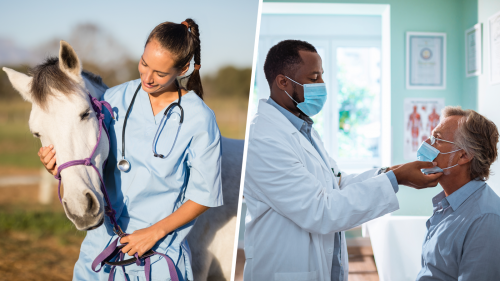
Combined image of a veterinarian inspecting a horse, and a doctor inspecting a patient.

Though this is understandable, please beware. The FDA’s job is to carefully evaluate the scientific data on a drug to be sure that it is both safe and effective for a particular use, and then to decide whether or not to approve it. Using any treatment for COVID-19 that’s not approved or authorized by the FDA, unless part of a clinical trial, can cause serious harm. 

There seems to be a growing interest in a drug called ivermectin to treat humans with COVID-19. Ivermectin is often used in the U.S. to treat or prevent parasites in animals.  The FDA has received multiple reports of patients who have required medical support and been hospitalized after self-medicating with ivermectin intended for horses.

Here’s What You Need to Know about Ivermectin

  • FDA has not approved ivermectin for use in treating or preventing COVID-19 in humans. Ivermectin tablets are approved at very specific doses for some parasitic worms, and there are topical (on the skin) formulations for head lice and skin conditions like rosacea. Ivermectin is not an anti-viral (a drug for treating viruses).
  • Taking large doses of this drug is dangerous and can cause serious harm. 
  • If you have a prescription for ivermectin for an FDA-approved use, get it from a legitimate source and take it exactly as prescribed. 
  • Never use medications intended for animals on yourself. Ivermectin preparations for animals are very different from those approved for humans. 

What is Ivermectin and How is it Used?

Ivermectin tablets are approved by the FDA to treat people with intestinal strongyloidiasis and onchocerciasis, two conditions caused by parasitic worms. In addition, some topical (on the skin) forms of ivermectin are approved to treat external parasites like head lice and for skin conditions such as rosacea. 

Some forms of ivermectin are used in animals to prevent heartworm disease and certain internal and external parasites. It’s important to note that these products are different from the ones for people, and safe when used as prescribed for animals, only.

When Can Taking Ivermectin Be Unsafe? 

The FDA has not reviewed data to support use of ivermectin in COVID-19 patients to treat or to prevent COVID-19; however, some initial research is underway. Taking a drug for an unapproved use can be very dangerous. This is true of ivermectin, too.

There’s a lot of misinformation around, and you may have heard that it’s okay to take large doses of ivermectin. That is wrong. 

Even the levels of ivermectin for approved uses can interact with other medications, like blood-thinners. You can also overdose on ivermectin, which can cause nausea, vomiting, diarrhea, hypotension (low blood pressure), allergic reactions (itching and hives), dizziness, ataxia (problems with balance), seizures, coma and even death. 

Ivermectin Products for Animals Are Different from Ivermectin Products for People

For one thing, animal drugs are often highly concentrated because they are used for large animals like horses and cows, which can weigh a lot more than we do—a ton or more. Such high doses can be highly toxic in humans. 

Moreover, FDA reviews drugs not just for safety and effectiveness of the active ingredients, but also for the inactive ingredients. Many inactive ingredients found in animal products aren’t evaluated for use in people. Or they are included in much greater quantity than those used in people. In some cases, we don’t know how those inactive ingredients will affect how ivermectin is absorbed in the human body.

Meanwhile, effective ways to limit the spread of COVID-19 continue to be to wear your mask, stay at least 6 feet from others who don’t live with you, wash hands frequently, and avoid crowds.


MUST READ:

Monday, 15 June 2020

US withdraws emergency use of hydroxychloroquine - Coronavirus:

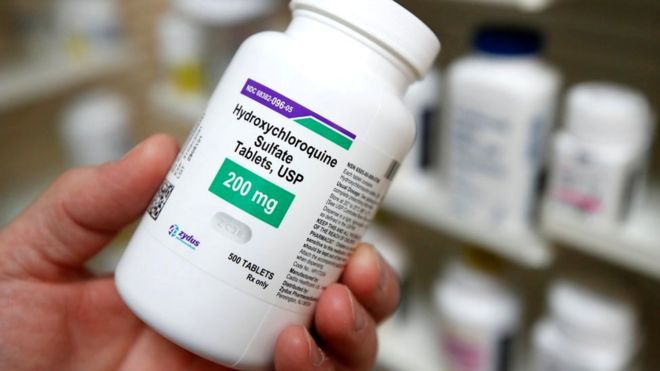
Emergency use of the anti-malaria drug hydroxychloroquine as a treatment for coronavirus has been withdrawn by the US Food and Drug Administration (FDA).


The drug hydroxychloroquineImage copyrightREUTERS
Image captionUS President Donald Trump said he had taken hydroxychloroquine for two weeks

The FDA said that new evidence from clinical trials meant that it was no longer reasonable to believe that the drug would produce an antiviral effect.
President Donald Trump later defended promoting the use of hydroxychloroquine as a treatment of Covid-19.
In March, the FDA granted the emergency use of the drug for some serious cases.
But on Monday, the agency said clinical studies had suggested that hydroxychloroquine was ineffective in treating the deadly virus and failed to prevent infection among those exposed to it.
Responding to the FDA's decision, Mr Trump said that he had previously taken the drug preventatively with no side effects.
"I took it and I felt good about taking it," he told reporters on Monday, adding: "I can't complain about it, I took it for two weeks, and I'm here, here we are."
The 74-year-old president said that many people had told him it had saved their lives.


Media captionPresident Trump said in May that he had taken the malaria drug hydroxychloroquine

In May, Mr Trump revealed that he was taking the drug after some people in the White House tested positive for coronavirus.
His comments about hydroxychloroquine became the subject of widespread speculation online and controversy within the scientific community about the potential benefits and harmful effects of the drug - along with the related drug, chloroquine.
Trials around the world were temporarily derailed when a study published in The Lancet claimed the drug increased fatalities and heart problems in some patients.
The results prompted the World Health Organization (WHO) and others to halt trials over safety concerns.
However, The Lancet subsequently retracted the study when it was found to have serious shortcomings and the WHO has resumed its trials.

More on this story


https://www.bbc.com/news/world-us-canada-53054476


Salmon

Why China's virus spike caused a salmon panic


Treatment drugs recommended so far:

Dexamethasone proves first life-saving drug - Coronavirus


Coronavirus: Protein treatment trial 'a breakthrough'


Monday, 3 September 2018

A High Blood Pressure Medication Is Being Recalled After a Potentially 'Life-Threatening' Labeling Mistake

A potentially “life-threatening” labeling mix-up spurred a nationwide recall of a high blood pressure medication, the Food and Drug Administration (FDA) announced.
By JAMIE DUCHARME 
August 29, 2018
TIME Health
Accord Healthcare is voluntarily recalling a single lot of 12.5-milligram hydrochlorothiazide tablets, after a pharmacy reported finding a 100-count bottle that actually contained spironolactone tablets, according to the FDA. The rest of the lot (PW05264) has been recalled due to the “potential mix-up of labeling,” but Accord says the remainder of its drugs are unaffected.


Both hydrochlorothiazide and spironolactone can be used to treat high blood pressure, but because spironolactone causes the body to flush out excess water and sodium and store potassium, the FDA warns that patients who mistakenly take it instead of hydrochlorothiazide could experience hyperkalemia, or elevated potassium levels. The effects of hyperkalemia, according to the FDA, range from “limited health consequences to life-threatening situations in certain individuals.”
No patients have reported adverse effects in connection with the recall, the FDA says. Those who are prescribed Accord’s hydrochlorothiazide tablets should make sure that the pills are a light orange color with a letter H on one side, and a number 1 on the other. Consumers are urged to report any drugs that do not match that description, or check with their pharmacist.


http://time.com/5381366/hydrochlorothiazide-recall/

Sunday, 11 September 2016

FDA Warns Women Against Results Of Ovarian Cancer Screening Tests

FDA issued a warning against the use of ovarian cancer screening tests such as the CA 125 test. The agency said that erroneous results may lead women to either forgo treatment or undergo unnecessary care. 

8 September 2016, 10:17 pm EDT
By Rhodi Lee Tech Times


FDA issued a warning against the use of ovarian cancer screening tests such as the CA 125 test. The agency said that erroneous results may lead women to either forgo treatment or undergo unnecessary care.  ( Heidi Blomster | Pixabay )

The U.S. Food and Drug Administration (FDA) has issued a warning on screening tests for ovarian cancer, saying women and their doctors should be cautious when making treatment decisions based on any test result because there is currently no proven method of screening ovarian cancer.

In a statement issued on Wednesday, Sept. 7, the agency said that doctors should not recommend the use of ovarian cancer screening tests because inaccurate results may cause women to either forgo crucial treatment or get unnecessary care.

The most widely used screening test in the market is the CA 125, which measures the amount of the protein CA 125 present in the blood.

Although certain cancers, which include ovarian cancer, may boost CA 125 levels in the blood, results of the test are far from foolproof since many non-cancerous conditions may also increase the level of the protein. Erroneous test results may lead healthy women to undergo unnecessary follow-up.

Findings of a 2015 study involving 200,000 women over a course of five years suggested that the test and another ovarian screening test, Abcodia's Risk of Ovarian Cancer Algorithm, or ROCA, can potentially reduce mortality from ovarian cancer by 20 percent and may further reduce it in the decade following cancer diagnosis.

Despite this, the FDA does not recommend any currently offered test to screen for the disease. In the case of CA 125 test, which is being used extensively for screening ovarian cancer, the American Cancer Society said that no major medical or professional organization has recommended the routine use of this test to screen for ovarian cancer.

The FDA in particular showed concern for those with increased risk for ovarian cancer who may opt out of taking necessary actions to reduce their likelihood of developing the disease because of results that do not show the presence of cancer.

"Do not recommend or use tests that claim to screen for ovarian cancer in the general population of women. Be aware that testing higher risk asymptomatic patients for ovarian cancer has no proven benefit and is not a substitute for preventive actions that may reduce their risk," the FDA advised physicians in its statement.

For women with increased risk for ovarian cancer, the FDA said clinicians should refer them to a genetic counselor, a gynecologic oncologist or other appropriate specialist.

The National Cancer Institute estimates that more than 22,000 women between 35 and 74 years old will be diagnosed with ovarian cancer this year.

Sunday, 4 September 2016

Antibacterial soaps banned in US amid claims they do 'more harm than good'

The Food and Drug Administration has washed its hands of the products, saying there is no scientific evidence that they are better than plain soap and water

Friday 2 September 2016 

Manufacturers had failed to show either the safety of ‘long-term daily use’ or that the products were ‘more effective than plain soap and water in preventing illness and the spread of certain infections’.
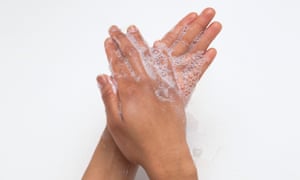
Manufacturers had failed to show either the safety of ‘long-term daily use’ or that the products were
‘more effective than plain soap and water in preventing illness and the spread of certain infections’.
Photograph: Andy Crawford/Getty Images/Dorling Kindersley
Antibacterial soaps were banned from the US market on Friday in a final ruling by the Food and Drug Administration, which said that manufacturers had failed to prove the cleansers were safe or more effective than normal products.
Dr Janet Woodcock, director of the FDA’s center for evaluation and research, said that certain antimicrobial soaps may not actually serve any health benefits at all.
“Consumers may think antibacterial washes are more effective at preventing the spread of germs, but we have no scientific evidence that they are any better than plain soap and water,” she said in a statement. “In fact, some data suggests that antibacterial ingredients may do more harm than good over the long term.”
Manufacturers had failed to show either the safety of “long-term daily use” or that the products were “more effective than plain soap and water in preventing illness and the spread of certain infections”.
The new federal rule applies to any soap or antiseptic product that has one or more of 19 chemical compounds, including triclocarbon, which is often found in bar soaps, and triclosan, often in liquid soaps. It does not affect alcohol-based hand sanitizers and wipes, which the FDA is still investigating, or certain healthcare products meant specifically for clinical settings. The FDA has given manufacturers a year to change their products or pull them off shelves.
The FDA first proposed a rule about the chemicals in 2013, following research that they might affect human hormones or change natural resistance to bacteria. The agency requested research from the producers to back up their health claims, but in the three years since has found that data lacking or their requests ignored.
Triclosan has been proven effective at killing bacteria if used at sustained length – far longer than the few seconds most people spend washing their hands – and was once only found in healthcare settings.
Recent studies have linked triclosan to a series of disruptions in human and animal health. A University of Chicago study released in July found that triclosan changed the microbiome inside human guts, and its researchers suggested that exposure could damage developing fetuses. A study from earlier this year found that overuse could also be contributing to antibiotic resistance, and a 2015 study found that antibacterial formulas were not more effective than soap and water.
Triclosan can be found in 93% of liquid soaps labeled “antibacterial” or “antimicrobial”, according to the FDA, though some companies, including Proctor & Gamble, have already begun phasing the chemical out of products. There are partial triclosan bans in the European Union and Minnesota, but the chemical remains common in toothpaste, as it is believed effective against the bacteria that cause gum disease.
People should still keep their hands clean, the FDA noted. “Washing with plain soap and running water remains one of the most important steps consumers can take to avoid getting sick and to prevent spreading germs to others,” the agency said. The Centers for Disease Control and Prevention recommends that if people need to use a hand sanitizer, it should have at least 60% alcohol.
Professor Patrick McNamara, who has published research on antimicrobial soaps, called the ruling “logical” because research shows “there is no added benefit to having these antimicrobial chemicals in soaps”.
He added that triclosan could play a part in driving antibiotic resistance, saying, “after these chemicals are used in our homes they go down the drain to wastewater treatment plants and eventually to the environment where they can select for antibiotic resistance genes”.
“In short, triclosan and triclocarbon present a risk towards propagation of antibiotic resistance,” he said. “Since they do not offer added benefits when washing hands, their use is not worth their environmental risk.
https://www.theguardian.com/science/2016/sep/02/antibacterial-soaps-banned-us-fda