Pages

Showing posts with label Microwave. Show all posts

Wednesday, 15 July 2020

Is it safe to microwave food?

There’s nothing risky about microwave radiation – but there is about heating up plastic.
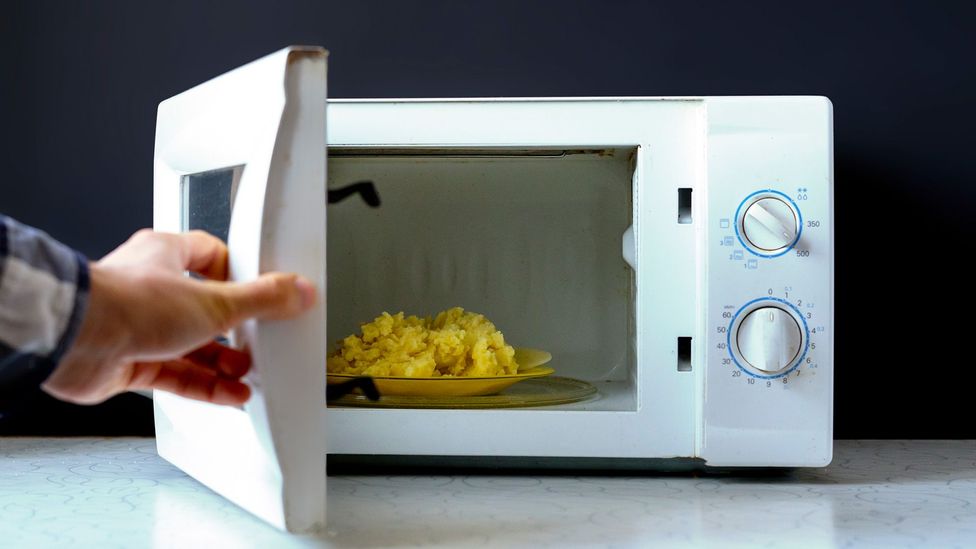
The radiation in microwaves is completely harmless (Credit: Getty Images)
By Jessica Brown15th July 2020
D
Despite being a kitchen workhorse for decades, few household items have been more divisive than the microwave. It’s hailed as a lifesaver for those who can’t, or won’t, cook, and portrayed by some chefs as singlehandedly dragging the art of cooking into the gutter.
But another debate lies beyond the culinary disputes – when is microwave cooking bad for you?
When used correctly, there’s nothing to worry about in terms of a microwave’s radiation, according to the World Health Organization. But other concerns are less clear – including whether microwaving food causes nutrient loss, or whether heating food in plastic can trigger hormone disruption.
Losing nutrients
Some research has shown that vegetables lose some of their nutritional value in the microwave.
For example, microwaving has been found to remove 97% of the flavonoids – plant compounds with anti-inflammatory benefits – in broccoli. That’s a third more damage than done by boiling. 
You might also like:
However, one 2019 study looking at the nutrient loss of broccoli in the microwave pointed out that previous studies varied the cooking time, temperature, and whether or not the broccoli was in water. It found that shorter cooking times (they microwaved the broccoli for one minute) didn’t compromise nutritional content. Steaming and microwaving could even increase content of most flavonoids, which are compounds linked to reduced risk of heart disease. “Under the cooking conditions used in this study, microwaving appeared to be a better way to preserve flavonoids than steaming,” the researchers wrote.
Yet they also found that microwaving with too much water (such as the amount you’d use to boil) caused a drop in flavonoids.

Some foods, such as peas, lose nutrients when microwaved or steamed, but others, like green beans, do not (Credit: Getty Images)


Lead researcher Xianli Wu, a scientist at the Beltsville Human Nutrition Research Center at the US Department of Agriculture, says there isn’t one agreed mechanism to explain why microwaving could increase flavonoid content. It could be that microwaving makes flavonoids easier to measure – perhaps by softening the plant tissue, making them easier to extract – rather than increasing their amount
But there’s no straightforward answer as to whether microwaving vegetables will retain more nutrients that any other method. That’s because each food is different in terms of the texture and nutrients they contain, according to Wu.
“Though in general microwaving is a preferred method, the optimum time will be different for different vegetables,” Wu says. “When considering commonly used domestic cooking methods, microwaving is a preferred cooking method, at least for many plant foods, but probably not for every plant food.”
In another study, researchers compared the content of phenolics (compounds associated with various health benefits) of various vegetables after being boiled, steamed and microwaved. Microwaving and steaming caused a loss in phenolic content in squash, peas and leeks, but not in spinach, peppers, broccoli or green beans. The researchers also tested for antioxidant activity.
For both measures, vegetables fared better in the microwave compared to being boiled.
“Moderate heat treatment might have been a useful tool in improving health properties of some vegetables,” the researchers write.
Heating plastic
We often microwave foods in plastic containers and wrapping, but some scientists warn of the risk of ingesting phthalates. When exposed to heat, these plastic additives can break down and leach into food.

When exposed to heat, plastic additives like phthalates can break down and leach into food (Credit: Getty Images)

“Some plastic isn’t designed for microwaves because it has polymers inside to make it soft and flexible, which melt at a lower temperature and may leach out during the microwave process if it goes beyond 100C (212F),” says Juming Tang, professor of food engineering at Washington State University.
In a 2011 study, researchers purchased more than 400 plastic containers designed to contain food, and found that the majority leaked chemical that disrupt hormones.
Phthalates are one of the most commonly used plasticisers, added to make plastic more flexible and often found in takeaway containers, plastic wrap and water bottles. They have been found to disrupt hormones and our metabolic system.  In children, phthalates can increase blood pressure and insulin resistance, which can increase the risk of metabolic disorders such as diabetes and hypertension. Exposure also has been linked to fertility issues, asthma and ADHD.
Phthalates are also potential disrupters of thyroid hormones, says Leonardo Trasande, professor of environmental medicine and population health at NYU School of Medicine in New York. Among other things, these hormones are crucial for babies’ brain development during pregnancy.  
Bisphenol (BPA) is also commonly used in plastic products, and studies have suggested it may also disrupts hormones. But research is limited, compared to the amount of studies looking at phthalates.
Phthalates are everywhere – even in toys and body lotions – and it’s still unclear just how much damage they do. But most experts agree that heating plastic with phthalates can increase exposure.

Phthalates have been found to disrupt hormones and our metabolic system (Credit: Getty Images)


“Microwaving mobilises contaminants,” says Rolf Halden, professor and director of the Biodesign Center for Environmental Health Engineering at Arizona State University. “This process is used in laboratories to extract pollutants from samples, prior to chemical analysis.”
And the potential risks don’t necessarily increase with how often an individual microwaves food in plastic containers, Trasande argues – as the relationship is non-linear between the amount of chemical exposure and risk of hormone disruption. 
“The old pedagogy was that the dose mediated poison. Now we understand from multiple studies that low level exposures are where the greatest component of effects happens, so there’s no safe level of exposure,” Trasande says.
It’s important to remember that, when heating food in a plastic container, exposure also can happen with plastic that doesn’t touch the food, such as a lid.
“Water rises as steam from the food, and then condenses on the underside of the lid, and the extracted chemicals from the lid then fall down into your food, contained in the condensation droplets,” Halden says.

To minimise risk, microwave food in a material that isn’t plastic, such as ceramic (Credit: Getty Images)

The best ways to minimise risk are to use other microwave-safe materials than plastic, such as ceramic. If you do use plastic containers, avoid any that are losing their shape, since old and damaged containers are more likely to leach chemicals. You can also check your container’s universal recycling symbol, often on the bottom of a product – those with a number 3 and the letters “V” or “PVC” include phthalates.
Heat risks
Even if you avoid plastics, there are other potential risks of heating food in the microwave – including uneven heating, and the high temperatures used.
First, consider using microwaves to reheat, rather than cook, food, as it may cook unevenly. “Depending on the portion of food that’s heated, there will be some parts that are hotter than others,” says Francisco Diez-Gonzalez, professor of food safety at the University of Georgia.
“Temperatures will be different in a cross-section of the food. It’s hard to achieve a completely uniform temperature, especially when talking about raw foods.”
But it’s important to note that reheating food comes with risks, too. Food must be heated until it is 82C (176F) throughout to kill any harmful bacteria – and because bacteria can still grow each time food cools back down, you shouldn’t reheat a meal more than once. (Read more about whether it’s safe to reheat food).

Microwaves should be used to reheat food, not cook it, but it’s better not to reheat the same meal more than once – especially rice (Credit: Getty Images)

The high temperatures of the microwave may also pose some risk. Generally speaking, higher temperatures aren’t a problem, but there is some research suggesting a risk linked to cooking some starchy foods in the microwave, including cereals and root vegetables.
When Betty Schwartz, professor of nutritional sciences  at theHebrew University of Jerusalem, saw her students heating jacket potatoes in the microwave on their lunchbreaks, she noticed small crystals inside their potatoes.
When she analysed them, she found they were high in the chemical acrylamide, which can be a natural by-product of cooking. Schwartz asked her students to boil their potatoes instead, and found that this didn’t create acrylamide, which she says forms in higher temperatures in the microwave.
This is a concern because animal studies have shown that acrylamide acts as a carcinogen because it interferes with cell’s DNA, but evidence in humans is limited. There is some research to suggest that microwaves are more favourable to the growth of acrylamide than other methods of cooking.
“At 100C (212F), there’s enough energy to alter the automatic joints between molecules to produce a molecule with much higher energy, which can react with DNA, which induces mutations," says Schwartz. "When you have many mutations it can produce cancer.” Animals studies have shown this to be the case with acrylamides.
One way around this is to soak the potatoes in water before putting them in the microwave.
Radiation safety
As for the radiation in microwaves, it is completely harmless. Microwaves use low frequency electromagnetic radiation – the same kind used in lightbulbs and radios. When you put food inside a microwave, it absorbs these microwaves, which makes water molecules in the food vibrate, causing friction that heats up the food.

The radiation in microwaves is completely harmless (Credit: Getty Images)

Humans absorb electromagnetic waves, too. But microwave ovens produce relatively low frequency waves and they are contained inside the microwave. Even if that weren’t the case, the waves are harmless, says Tang. (Of course, the heat in a microwave isn't harmless — so you should never put, say, a living creature inside of a microwave).
“Microwaves are part of the electromagnetic waves we’re exposed to daily. When you bake bread, you’re exposed to electromagnetic waves and infrared energy from the heating elements of the oven. Even people exchange radioactive waves between each other,” Tang says.
“If you’re eating crops grown from sunlight, you shouldn’t be concerned about food from a microwave.”
Unlike X-rays, microwaves don’t use ionising radiation, which means they don’t carry enough energy to detach electrons from atoms.

Microwaves don’t use ionising radiation, so there’s nothing unsafe about using them to heat food (Credit: Getty Images)

“You have to break chemical bonds to damage DNA. This is the chief way radiation kills – it mutates cells and causes cancer,” says Timothy Jorgensen, associate professor of radiation medicine at Georgetown University’s medical centre.
Concerns about microwave radiation were largely settled in the years after the microwave oven was first invented, Jorgenson says.
In particular, a lot of research was carried out by scientists at the Army Natick Research and Development Laboratories in Massachusetts, US, around the safety of microwaves, which went a long way to allaying concerns.
When it comes to cooking food in the microwave, there’s a lot to consider. Microwaves have long been deemed a safe kitchen appliance – but that comes with caveats, according to research. And in particular, experts are still raising concerns about how the plastic packaging we use in the microwave can disrupt our hormones, and, subsequently, affect our health.

Friday, 1 November 2019

“We Have No Reason to Believe 5G Is Safe” – Scientific American Blog Post

Wireless radiation has biological effects. Period. This is no longer a subject for debate when you look at PubMed and the peer-review literature

Collective Evolution collective-evolution.com
Published
  
on


IN BRIEF

  • The Facts:
    A recent blog post in Scientific American explains why 5G wireless technology may not be safe for human health. There are a number of publications that show clear cause for concern, and the industry has not even conducted any safety testing.
  • Reflect On:
    How are technologies like this, which have clear biological effects, allowed to rollout without any appropriate safety testing?

We’ve published a lot of information and articles about 5G technology, it’s important to keep this type of information flowing and to share it regularly because mainstream media as well as the communications technology industry continue to completely ignore it. Paul Bischoff, a tech journalist and privacy advocate, recently compiled data regarding telecom’s political contributions to influence policies that benefit their industry, it’s quite revealing. But they (the mainstream) cannot ignore the health concerns for much longer, as topics like 5G wireless radiation are going viral across the world. Its implications are already creating protests, doctors are already treating patients for symptoms (here is an example from Switzerland and here is an example from Canada) and a portion of the mainstream is finally catching on.

Wireless radiation has biological effects. Period. This is no longer a subject for debate when you look at PubMed and the peer-review literature. These effects are seen in all life forms; plants, animals, insects, microbes. In humans, we have clear evidence of cancer now: there is no question We have evidence of DNA damage, cardiomyopathy, which is the precursor of congestive heart failure, neuropsychiatric effects…5G is an untested application of a technology that we know is harmful; we know it from the science. In academics, this is called human subjects research. – Dr. Sharon Goldberg,  internal medicine physician & professor. (source)

Thousands of people showed up on the Swiss house of Parliament in Bern to protest the recent rollout there, a Belgian government minister has announced that Brussels is halting its 5G plans due to health effects. Many countries already have severe restrictions and bans on 3 and 4g wireless technology.  Take France for example, they passed a law in 2015 banning WiFi from all nursery schools. In addition to that, the law states that Wi-Fi must be turned off in all elementary schools when it’s not in use. A wired connection, if possible, is preferred.
One recent example of mainstream awareness is an article published in the blog section of Scientific American titled “We Have No Reason to Believe 5G is Safe” written by Joel M. Moskowitz.
It’s great to see such a publication at least mention the health concerns of this type of technology, it shows how awareness continues to be created, after all, the frequencies utilized in crowd control weapons, ones that physically impact our biology, form the basis of the new 5G network that’s been rolling out. U.S., Russian, and Chinese defense agencies have been active in developing weapons that rely on the capability of this electromagnetic technology to create burning sensations on the skin, for crowd control. The waves are Millimetre waves, also used by the U.S. Army in crowd dispersal guns called Active Denial Systems, these are the same waves employed by 5g technology. Here you can find a lecture from Dr. Ben-Ishai of the Department of Physics at Hebrew University. He goes through how human sweat ducts act like a number of helical antennas when exposed to these wavelengths that are put out by the devices that employ 5G technology.
But it’s not just 5g, wireless and electromagnetic radiation in general has serious biological effects. Moskowitz points out: 
The chairman of the Federal Communications Commission (FCC) recently announced through a press release that the commission will soon reaffirm the radio frequency radiation (RFR) exposure limits that the FCC adopted in the late 1990s. These limits are based upon a behavioral change in rats exposed to microwave radiation and were designed to protect us from short-term heating risks due to RFR exposure. Yet, since the FCC adopted these limits based largely on research from the 1980s, the preponderance of peer-reviewed research, more than 500 studies, have found harmful biologic or health effects from exposure to RFR at intensities too low to cause significant heating.

Citing this large body of research, more than 240 scientists who have published peer-reviewed research on the biologic and health effects of nonionizing electromagnetic fields (EMF) signed the International EMF Scientist Appeal, which calls for stronger exposure limits. The appeal makes the following assertions:

“Numerous recent scientific publications have shown that EMF affects living organisms at levels well below most international and national guidelines. Effects include increased cancer risk, cellular stress, increase in harmful free radicals, genetic damages, structural and functional changes of the reproductive system, learning and memory deficits, neurological disorders, and negative impacts on general well-being in humans. Damage goes well beyond the human race, as there is growing evidence of harmful effects to both plant and animal life.”

The scientists who signed this appeal arguably constitute the majority of experts on the effects of nonionizing radiation. They have published more than 2,000 papers and letters on EMF in professional journals.

Others are getting in on the activism. Frank Clegg for example, is the former President Of Microsoft Canada. He recently released an insider’s view educational video regarding the health and safety concerns of 5G and wireless technologies. You can watch that video here.  He also recently joined the board of the Environmental Health Trust, where this video comes from. There, you will find some of the latest science on 5G wireless technology and its health impacts, among other technologies as well. So if you want to see more science, that’s a great place to start.
I also like to point to people towards a fairly recent publication write up by Dr. Martin L. Pall, PhD and Professor Emeritus of Biochemistry and Basic Medical Sciences at Washington State University, says the following in his report “5G: Great risk for EU, U.S. and International Health! Compelling Evidence for Eight Distinct Types of Great Harm Caused by Electromagnetic Field(EMF) Exposures and the Mechanism that Causes Them”:
“Putting in tens of millions of 5G antennae without a single biological test of safety has got to be about the stupidest idea anyone has had in the history of the world.”

No Safety Testing

It’s no secret that our federal health regulatory agencies are completely corrupt. There are many examples of this one can pull from, be it from the FDA, FCC or CDC. One of the best would be the SPIDER papers. A group called the CDC Scientists Preserving Integrity, Diligence and Ethics in Research, or CDC SPIDER, put a list of complaints in a letter to the CDC Chief of Staff and provided a copy of the letter to the public watchdog organization U.S. Right to Know (USRTK). It’s quite revealing.
This is why it’s no surprise when Moskowitz points out that the fact that no safety studies have been conducted by the FDA.

Without conducting a formal risk assessment or a systematic review of the research on RFR health effects, the FDA recently reaffirmed the FCC’s 1996 exposure limits in a letter to the FCC, stating that the agency had “concluded that no changes to the current standards are warranted at this time,” and that “NTP’s experimental findings should not be applied to human cell phone usage.” The letter stated that “the available scientific evidence to date does not support adverse health effects in humans due to exposures at or under the current limits.”

The latest cellular technology, 5G, will employ millimeter waves for the first time in addition to microwaves that have been in use for older cellular technologies, 2G through 4G. Given limited reach, 5G will require cell antennas every 100 to 200 meters, exposing many people to millimeter wave radiation.

5G will not replace 4G; it will accompany 4G for the near future and possibly over the long term. If there are synergistic effects from simultaneous exposures to multiple types of RFR, our overall risk of harm from RFR may increase substantially. Cancer is not the only risk as there is considerable evidence that RFR causes neurological disorders and reproductive harm, likely due to oxidative stress.

As a society, should we invest hundreds of billions of dollars deploying 5G, a cellular technology that requires the installation of 800,000 or more new cell antenna sites in the U.S. close to where we live, work and play?

Instead, we should support the recommendations of the 250 scientists and medical doctors who signed the 5G Appeal that calls for an immediate moratorium on the deployment of 5G and demand that our government fund the research needed to adopt biologically based exposure limits that protect our health and safety.

Despite this article, there is still backlash and mainstream articles that are encouraging us to not really be concerned.  One example also comes from a blog post by Scientific American, titled “Don’t Fall Prey To Scaremongering About 5G.”
There is clear cause for concern, so articles like this are confusing, but there is no doubt the industry will use its influence over mainstream media to sway the perception of people when it comes to 5G, just like it did when cigarettes were first introduced.
Why not just put the answers to rest by conducting more safety testing?

What Can You Do?

 You could purchase some EMF protective clothing and bedding, or you could even paint your home with EMF protective paint. You can unplug your computer when not in use, turn off your cell phone, and unplug all your electronic devices before you go to sleep. You could have a wired internet connection, which is actually much faster than any wireless connection. You can live a healthy lifestyle, and you can use mind-body healing techniques to help you. Utilizing mind-body techniques, the power of consciousness and nutrition is probably the best way to stay harm free from radiation exposure. We’ve been exposed to it for a long time and it’s looking like it could be one of multiple factors contributing to several disease rates that seem to be on the rise exponentially. Do not move forward in fear, simply move forward in awareness. The world is waking up, and that’s an encouraging thought.
Years ago many actions taken by governments and corporations went unnoticed. We are no doubt making things difficult for them so let’s keep moving forward.
https://www.collective-evolution.com/2019/10/29/we-have-no-reason-to-believe-5g-is-safe-scientific-american-blog-post/

Tuesday, 20 June 2017

Boil Your Unpeeled Carrots for Maximum Nutrition

Carrots provide the most nutrients, such as beta-carotene, which converts in your body to vitamin A, when they're left whole and boiled, experts say. Purple, red, yellow and white varieties, being developed for more nutrition, may soon appear in a market near you.

June 19, 2017

carrots-nutrition

Story at-a-glance

  • One of the best examples of how crucial it is to cook carrots correctly is that it boosts their cancer-fighting capabilities by 25 percent due to a compound called falcarinol
  • Carrots contain high amounts of carotenoids, which are converted into vitamin A in your body, helping improve your eyesight and more
  • Scientists say carrots release the most nutrients when they’re boiled whole, without being peeled, shredded or grated first
  • Most people identify them as being orange, but they actually come in a variety of colors, such as purple, red, yellow, white and even black

By Dr. Mercola
There are astonishing arrays of vegetables in the world of every shape and color, each representing an amazing commodity. It's incredible that you can put seeds in the ground, give them adequate sunlight and water, and in a matter of weeks or a few months, you have instant food, which your body needs to thrive.
Vegetables contain vitamins, minerals, nutrients and phytonutrients, such as antioxidants, sulforaphane, isothiocyanates, anthocyanins, carotenoids and a host of other beneficial compounds to provide energy, help your body fight disease, increase your immune function and perform a myriad of other tasks.
Carrots, one of the sweetest vegetables, are also one of the most popular plant-based foods. They're unique for several reasons, but perhaps one of their most important calling cards is beta-carotene, which can't be manufactured in your body, so it needs to come from your diet. In the days of the Romans and Greeks, carrots were believed to be an aphrodisiac, which may be why they purportedly were used more as a "medicine" than a food.
Here's another interesting factoid: Daily Mail reports that the first carrots weren't the orange we're used to seeing today, but were developed to have an orange color as a political tribute to the Dutch House of Orange.
Many of the earliest Dutch citizens were involved in agriculture, and many were known to grow carrots, Tested.com1 reveals, but up to the late 1500s carrots were usually purple, green, white and even black. In the 17th century, when the Dutch republic was formed, carrots with high amounts of orange-hued beta-carotene were cultivated, and they caught on.

Nutrients in Carrots

If you've noticed that "carotene" sounds like "carrot," there's a reason. The word came from Nobel prize-winning scientist German scientist Richard Kuhn,2 who crystallized the carotene compound from carrot roots. Beta-carotene is just one of more than 600 carotenoids, responsible for the pigment in colorful foods like dark leafy greenstomatoes, egg yolks, fruits and salmon (the most healthy option being wild-caught Alaskan salmon).
Carrots contain higher levels of beta-carotene than any other vegetable or fruit. The reason that's significant is because beta-carotene gives (some) carrots their distinctive orange color, but also converts in your body to vitamin A, which is very good for your vision. You may have heard your mother say eating your carrots would be good for your eyesight, and it happens to be true.
Numerous minerals "up" the health aspects of carrots, such as calcium, phosphorus and magnesium, to help build strong bones and a healthy nervous system.
Calcium is essential for healthy heart muscles; phosphorus is helpful for softening skin and strengthening teeth, hair and bones, while magnesium plays a role in absorbing nutrients, mental development and fat digestion. Carrot consumption is also good for body-beneficial potassium, vitamins C and B6, copper, thiamine and folic acid. Fiber is another benefit, which helps move food through your system for easier elimination and better health overall.

How to Extract the Most Nutrition From Your Carrots

Most people assume eating carrots raw is the way to get the most nutrition,3 but science reveals that's not always the case. It turns out that cooking carrots whole, skin intact, without chopping, slicing, grating, shredding or peeling them, is the best way to obtain the most nutrients when they're eaten (although you should scrub them first to remove surface dirt).
Once they're cooked, they can be chopped in the manner you desire. Just before serving, add a little olive or coconut oil and butter for the highest nutrition, experts say.
Researchers also maintain that boiling carrots in their unchopped state makes them taste better. Nearly 100 volunteers took the taste test, and 80 percent of them came to that conclusion. Independent nutritionist Carrie Ruxton wondered if the same benefits might come from vegetables belonging to the carrot family with a similar size and texture, such as parsnips.
In 2013, Dr. Kirsten Brandt found in an animal study that when rats were fed carrots or isolated falcarinol, they were a third less likely to develop full-scale tumors than the others. More recently, Brandt and colleague Ahlam Rashed, from Newcastle University's School of Agriculture, Food and Rural Development, concluded from another study4 that carrots boiled before being cut contained 25 percent more falcarinol, and as a result, 25 percent more cancer-fighting capabilities, than those chopped beforehand. Daily Mail reported:
"Cut carrots have a higher surface area in contact with the water, resulting in greater loss of nutrients compared with boiling them whole. The heat softens the cell walls in the vegetable, allowing vitamins and falcarinol to leach out. Dr. Brandt said: 'The great thing about this is it's a simple way for people to increase their uptake of a compound we know is good for you. All you need is a bigger saucepan.'"5

Different Veggies Require Different Preparation Methods

Different preparation methods are used on different veggies to get the most nutrition. Rodale's Organic Life asserts:
"Cooking vegetables helps to soften their tough fibrous exteriors and loosen up all the nutritional good stuff that lies inside. In fact, some vegetables, such as tomatoes, are actually more healthful if you eat them cooked, because the process of cooking them boosts their level of the potent antioxidant lycopene.
The only problem is, not all cooking methods are the same. Some boost nutrient content; some take it away. Some add unwanted fat, while others add the crucial amount for your body to absorb all the nutrients in vegetables."6
Broccoli is best steamed for three or four minutes to release the maximum amount of its most beneficial nutrient — sulforaphane — in a process that eliminates epithiospecifier protein, which is heat sensitive and destroys the sulfur. Steaming it briefly also retains the enzyme myrosinase, the agent that converts glucoraphanin to sulforaphane. Further, boiling your broccoli (or microwaving it) eliminates the desirable myrosinase.

Safe Cooking Options to Retain Nutrients

What are some other healthy ways to cook veggies? Griddles or frying pans are one way — if it's stainless steel, titanium, ceramic, glass or enamel. When you use nontoxic pots and pans, most vegetables not only retain the valuable, good-for-you compounds but also make it easy to observe in the process. Rodale's Organic Life7 lists several common methods of preparing veggies, starting with baking:
"Baking, or roasting, is hit or miss. Based on the study results, bake your artichokes, asparagus, broccoli and peppers, all of which retained their antioxidant values, but not your carrots, Brussels sprouts, leeks, cauliflower, peas, zucchini, onions, beans, celery, beets and garlic, which all saw decreases in nutrient levels.
Where baking really shines is with green beans, eggplant, corn, Swiss chard and spinach, all of which saw their antioxidant levels increase after baking. Toss a handful of those veggies into your next casserole."8
  • Steaming — Some scientists say tossing veggies with a little oil, such as coconut or avocado oil, used after the heating is finished, helps boost nutrient absorption.
  • Sautéing — For some reason, studies don't seem to recommend sautéing, but it's interesting to note that this is the preferred method used by The George Mateljan Foundation, a not-for-profit dedicated to helping people cook and eat for optimal health. In fact, the site notes that it "produces a much richer flavor."9
  • Boiling — It only makes sense that if you cover your veggies with water and boil them, many if not most of the nutrition will dissipate. Peas, cauliflower and zucchini, in particular, lose much of what they offer. If you must boil your vegetables, save the nutrient-rich water to use for soup or sauce. Carrots, as previously mentioned, are an exception to this rule.
  • Frying — This cooking method is, not surprisingly, the one that fails the test in terms of retaining antioxidants and other nutritive advantages in cooked food. Frying is said to be responsible for food losing between 5 percent and 50 percent of each vegetable's nutrients.

Caveats (Like Carcinogens) to Circumvent When Cooking

Another important caveat: When you want to eat something healthy on one hand and nontoxic on the other, make sure your griddle, skillet, roaster, saucepan or any other tool you use for heating does not have a nonstick chemical coating. It's a toxin looking for a place to happen.
These nonstick options, used since the 1940s, may make cooking convenient, but the bits that peel off over time eventually get into your food and into your system, as well as release toxic fumes when heated to high temperatures. The American Cancer Society notes:
"Perfluorooctanoic acid (PFOA), also known as C8, is another man-made chemical (known as fluorotelomers) … (with) the potential to be a health concern because it can stay in the environment and in the human body for long periods of time. Studies have found that it is present worldwide at very low levels in just about everyone's blood."10
Additionally, many food manufacturers recommend microwaving for convenience, even packaging foods in plastic bags or containers that can be popped into the microwave for "no muss and no fuss." But there are many problems and potential problems with microwave use: Vital nutrients might be lost, antibodies degraded, protein chemistry altered and white blood cells impaired due to thermic effects. Microwaving may also have detrimental effects on your heart.
The second problem is that many people use plastic in microwaves, which may cause chemicals they contain to leach into your food. That's not all: There are two other things to pay attention to regarding the oils you use for cooking, as some have much higher smoke points than others. While olive oil is a great oil to use in salads and other foods, for instance, it's not good for cooking. Coconut oil and butter are much safer fats to use that are also very healthy for you.
The second thing to watch is the temperatures you use when you cook. Be aware that when the heat is too high, it can destroy nutrients and even create the formation of harmful (aka carcinogenic) substances. As in everything else, especially nowadays, it seems, when it comes to the foods you eat, researching as much as possible is only prudent.

Carrot Color Makes a Difference

As mentioned earlier, carrots once came in a rainbow of colors and weren't cultivated to be orange until much later. Adventurous gardeners and horticulturalists are getting into their roots, though, so to speak, and resurrecting carrot colors that are every bit as nutritious, just in different ways. You may have seen some of these colors showing up at local farmers markets, if not in your neighborhood grocery store.
In the cultivation process, scientists have also been exploring ways to breed more nutrients into these many-colored carrots, while at the same time attempting to get consumers more interested.
There have been eye rolls, however, says Philipp Simon, plant geneticist in the horticulture department at the USDA's College of Agricultural & Life Sciences in the University of Wisconsin. He and his team are looking to develop carrot varieties that are unusual in hue but still acceptable to people used to buying orange, while still tasting good and offering health benefits. Healthland,11 Time's food segment, lists the nutritional aspects different carrot hues offer:
  • Red — Lycopene and beta-carotene pigment, linked to a lower risk of certain cancers, including prostate cancer
  • Yellow — Xanthophylls and lutein are associated with cancer prevention and eye health
  • Orange — Beta and alpha carotene pigment provide vitamin A
  • White — Mild, with high fiber content
  • Purple — Anthocyanin, beta and alpha carotenes may provide extra vitamin A for heart disease protection; have a sweeter and sometimes "peppery" flavor
Healthland adds:
"Thanks to Simon's efforts, carrots today have about 75 percent more beta-carotene (a pigment used by the body to make vitamin A) than the carrots available 25 years ago. His team at the University of Wisconsin partners with USDA's Agricultural Research Service, which supports scientists working on ways to improve Americans' nutritional intake."12
http://articles.mercola.com/sites/articles/archive/2017/06/19/carrots-nutrition.aspx