Pages

Showing posts with label Root Canal Treatment. Show all posts

Saturday, 26 March 2022

In Defence of the Maligned Root Canal

 Root canals are safe and effective, and by eliminating bacteria from the infected roots of teeth, prevent infection from spreading into the jaw and beyond.


Over the course of my thirty-five-plus years of practicing dentistry, I have been asked many questions concerning the safety of various dental agents and materials, most notably silver fillings and fluoride. Undoubtedly, the internet has provided the masses with a plethora of sound information at their fingertips. Conversely, accompanied by its social media counterpart, it has become the primary gateway to the spread of misinformation and conspiracy theories. Dentistry, being an evidence-based profession, is not immune to the dissemination of pseudoscientific claims promoting alternative treatments “not taught in dental school.” Typically advocated by so-called “Holistic” and “Biological” dentists, these therapies fly in the face of conventional dentistry.  

Perhaps the most egregious claim made by some of these practitioners is regarding root canal treatments. While representing only a minority, these dentists argue against the use of conventional endodontic therapy, opting instead for extraction and replacement by implants. Others advocate extracting asymptomatic root canal-treated teeth. Not only is this approach scientifically unfounded, but it also violates a dentist’s Hippocratic oath to “do no harm.”  

The Maligned Root Canal, So Misunderstood 

So what exactly is a root canal, a term that strikes fear in the heart of so many? Some people think it involves removing the roots of teeth, but most have no clue. Many have heard horror stories from friends about how painful they are, but like many other myths attributed to dentistry, this is generally false. 

Essentially the teeth that are visible in our mouths are just the tip of the iceberg, for lurking far beneath the gum line anchoring them into jaw bone are the roots. Typically, front teeth have a single root, while the ones further back have two or three. Filling the hollow inner chamber of teeth and traveling down through the roots via canal systems is the spongy pulp, comprising a tooth’s blood and nerve supply. It allows us to sense temperature, or let us know when a dentist's freezing hasn't taken effect!

When a pulp gets inflamed, often due to a deep cavity or trauma, a tooth can become sensitive and if irreversibly harmed, extremely painful. Left untreated the pulp can die, becoming necrotic with bacteria potentially exiting the end of roots into the jaw causing a dental abscess. A root canal treatment removes the diseased pulp from the tooth, disinfects, and then seals the hollowed-out canal spaces most typically with a biocompatible thermoplastic material called gutta-percha. When performed by a skilled practitioner, root canals have a success rate of 95%, are generally painless, and when feasible much preferable to extraction. 

The Price is Not Right 

Recently, when not discussing the pandemic, some patients have asked me about the safety of root canal treatment. Typically they may have read something on the internet or heard through a friend that root canals are dangerous. 

Where does this misinformation originate? Back in the 1920s, dentist Dr. Weston Price conducted some poorly designed studies based in large part on the previously developed “focal infection theory” asserting that asymptomatic root canal treated teeth leak bacteria and their toxins into the body, causing a variety of chronic systemic diseases such as cancer, heart disease, and arthritis. 

Despite well-designed studies conducted in the 1930s discrediting his findings, Price’s theory gained popularity over the following decades resulting in the needless extractions of countless healthy teeth in order to treat or prevent various systemic illnesses. 

Only in the early 1950, ’s did the paradigm shift back to the endodontic treatment of restorable teeth with non-vital pulps. Upon reviewing Price’s work from the 1920s, a 1951 article in the Journal of the American Dental Association contradicted his research noting it “lacked many aspects of modern scientific research, including the absence of proper control groups and induction of excessive doses of bacteria.” 

To date, there is no valid, scientific evidence supporting Dr. Price’s research linking endodontic treatment to disease elsewhere in the body.

“Notflix” 

Further contributing to the dissemination of misinformation concerning root canal therapy was a 2019 documentary “Root Cause” carried by Netflix. In it, the Australian filmmaker, seeking to find the cause of his own chronic health problems, alleged that serious illnesses are caused by asymptomatic infections inside root canals whose bacteria can travel throughout the body via “meridian lines.”  

Shortly following its release, upon concerns raised by various dental associations that its content could “harm the viewing public by spreading misinformation about safe medical treatments like root canals”, Netflix removed the content from its platform. 

My Tooth Sense 

Each year worldwide millions of root canals are performed, saving people the unnecessary trauma of losing their teeth. 

I find it truly perplexing and disturbing that some members of my profession continue clinging to the long-ago debunked theory advocating extraction of restorable teeth rather than saving them with endodontic therapy. 

Root canals are safe and effective, and by eliminating bacteria from the infected roots of teeth, prevent infection from spreading into the jaw and beyond. 

Furthermore, I find advising patients to extract asymptomatic endodontically treated teeth only to replace them with costly implant-supported crowns, unconscionable. 

My advice to anyone told to do so is to consider finding another dentist. And that’s the tooth and nothing but the tooth!


Dr. Mark Grossman is a practicing dentist and likes to take a bite out of nonsense when it comes to dental issues.

Thursday, 30 May 2013

How safe are root canals?

Thursday, May 30, 2013 by: Elisha McFarland

disease
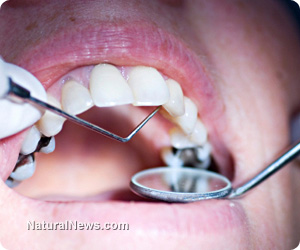
(NaturalNews) Almost 60 million root canals are performed a year (1), on individuals who are mistakenly informed that it is a safe and harmless procedure. While your teeth may look and feel fine after the procedure, the reality is that it is impossible for all of the bacteria to be removed from the tooth. After a root canal, the healthy bacteria changes to highly toxic anaerobic bacteria that will continue to thrive inside and around the tooth and periodontal ligament causing numerous potentially long term health problems. (1)

Dr. Weston Price


Dr. Weston Price was a brilliant dentist and researcher who studied the relationship between nutrition, dental and physical health. He was the head of research for the dental association for 14 years. In their studies, Dr. Price and the Mayo Clinic discovered that bacterial growth in root canals could be transferred to animals to recreate the same diseases of the human donor. Their tests proved successful in 80 to 100 percent of the animals. In particular, heart disease could be transferred 100 percent of the time (1, 2).

It's shocking to know that as far back as 1908 Dr. Price and the Mayo Clinic found that bacteria and the toxins from root canals could enter the bloodstream and thus travel to any point in the body and create disease to that particular tissue or organ. (1, 2). Price went on to discover that numerous degenerative diseases have their origin in root canal procedures, the most frequent are circulatory and heart disease. Although his research was buried and hidden from the public in the 1920s, Dr. George Meinig would discover his work 70 years later and bring it to the forefront through his book, Root Canal Cover Up.

Basic tooth anatomy


A tooth has multiple layers, the first is the enamel, the second layer is the dentin and the inner core is the pulp. Tiny fibers come out of the tooth and intertwine with fibers coming out of the bone, and they unite to form the periodontal ligament. This ligament is also an incubator for billions of bacteria to multiply. (1) The dentin layer is not solid, but is actually comprised of tiny dentinal tubules, that if stretched would be approximately three miles long, per tooth. This is another excellent place for bacteria to hide and develop. In fact when Weston Price did his research, this is exactly where he found anaerobic bacteria in the thousands of teeth he tested. (2) Since it is impossible to sterilize these accessory canals, it becomes a haven for bacteria to grow and develop. As bacteria multiply and create infection, it will oftentimes extend down into the jawbone where it creates cavitations - areas of necrotic tissue in the jawbone itself.

Chronic disease linked to root canals


According to Dr. George Meinig, (one of the founders of the American Association of Endodontists) and author of Root Canal Cover Up, a high percentage of chronic illness can originate from root canals, the most frequent being circulatory and heart disease. The next common diseases include those affecting the joints, such as arthritis and rheumatism; this is followed by diseases that affect the brain and nervous system such as ALS and MS.

Conclusion


It is important to do your own research before any surgical procedure and treatment plan. A root canal is a surgical procedure. The decision on whether to have a root canal or remove the tooth is best made between you, your doctor and your biological dentist. Establishing an appropriate pre- and post-procedure protocol can expedite your recovery process.

Sources for this article include:

1 http://terfinfo.com/Files/Root%20Canal%20News%20Release_2.pdf

2 http://www.westonaprice.org/dentistry/root-canal-dangers

Beyond Amalgam: The Hidden Health Hazard Posed by Jawbone Cavitations by Susan Stockton, MA, foreword by Christopher John Hussar, DDS, DO

Root Canal Cover Up by George Meinig, D.D.S.

Uninformed Consent: The Hidden Dangers in Dental Care by Hal A. Huggins, D.D.S., M.S. and Thomas E. Levy M.D., J.D.

About the author:
After sixteen years of struggling with MCS, Elisha has come out on the other side with a renewed zest for life and the desire to educate others about wholistic and healthy life choices. During that time she received the following degrees and designations, Doctor of Naturopathy, Master Herbalist, Diploma in Clinical Homeopathy, Bachelor of Science in Holistic Nutrition, Certified Wholistic Rejuvenist and EFT-ADV. You can visit her website at www.myhealthmaven.com.

Sunday, 19 February 2012

97% of Terminal Cancer Patients Previously Had This Dental Procedure...

Posted By Dr. Mercola | February 18 2012 | 215,006 views


Download Transcript
Visit the Mercola Video Library

Story at-a-glance

  • During a root canal, there is no way to sterilize your tooth; after the root canal, dangerous bacteria hide out in the tooth and are unreachable with antibiotics
  • Root-canaled and filled teeth harbor bacteria that morph into very toxic forms, which then can migrate to other tissues in your body and cause serious medical conditions, including diseases of your heart, kidneys, bones, and brain
  • There is no other medical practice that permits leaving a dead body part inside your body, because it triggers your immune system to attack
  • If you have a diseased tooth, or if you’ve already had a root canal, I highly recommend consulting a biological dentist about have
Do you have a chronic degenerative disease? If so, have you been told, "It's all in your head?"

Well, that might not be that far from the truth… the root cause of your illness may be in your mouth.

There is a common dental procedure that nearly every dentist will tell you is completely safe, despite the fact that scientists have been warning of its dangers for more than 100 years.

Every day in the United States alone, 41,000 of these dental procedures are performed on patients who believe they are safely and permanently fixing their problem.

What is this dental procedure?

The root canal.

More than 25 million root canals are performed every year in this country.

Root-canaled teeth are essentially "dead" teeth that can become silent incubators for highly toxic anaerobic bacteria that can, under certain conditions, make their way into your bloodstream to cause a number of serious medical conditions—many not appearing until decades later.

Most of these toxic teeth feel and look fine for many years, which make their role in systemic disease even harder to trace back.

Sadly, the vast majority of dentists are oblivious to the serious potential health risks they are exposing their patients to, risks that persist for the rest of their patients' lives.The American Dental Association claims root canals have been proven safe, but they have NO published data or actual research to substantiate this claim.

Fortunately, I had some early mentors like Dr. Tom Stone and Dr. Douglas Cook, who educated me on this issue nearly 20 years ago. Were it not for a brilliant pioneering dentist who, more than a century ago, made the connection between root-canaled teeth and disease, this underlying cause of disease may have remained hidden to this day. The dentist's name was Weston Price—regarded by many as the greatest dentist of all time.

Weston A. Price: World's Greatest Dentist

Most dentists would be doing an enormous service to public health if they familiarized themselves with the work of Dr. Weston Pricei. Unfortunately, his work continues to be discounted and suppressed by medical and dental professionals alike.

Dr. Price was a dentist and researcher who traveled the world to study the teeth, bones, and diets of native populations living without the "benefit" of modern food. Around the year 1900, Price had been treating persistent root canal infections and became suspicious that root-canaled teeth always remained infected, in spite of treatments. Then one day, he recommended to a woman, wheelchair bound for six years, to have her root canal tooth extracted, even though it appeared to be fine.

She agreed, so he extracted her tooth and then implanted it under the skin of a rabbit. The rabbit amazingly developed the same crippling arthritis as the woman and died from the infection 10 days later. But the woman, now free of the toxic tooth, immediately recovered from her arthritis and could now walk without even the assistance of a cane.

Price discovered that it's mechanically impossible to sterilize a root-canaled (e.g. root-filled) tooth.

He then went on to show that many chronic degenerative diseases originate from root-filled teeth—the most frequent being heart and circulatory diseases. He actually found 16 different causative bacterial agents for these conditions. But there were also strong correlations between root-filled teeth and diseases of the joints, brain and nervous system. Dr. Price went on to write two groundbreaking books in 1922 detailing his research into the link between dental pathology and chronic illness. Unfortunately, his work was deliberately buried for 70 years, until finally one endodontist named George Meinig recognized the importance of Price's work and sought to expose the truth.

Dr. Meinig Advances the Work of Dr. Price


Dr. Meinig, a native of Chicago, was a captain in the U.S. Army during World War II before moving to Hollywood to become a dentist for the stars. He eventually became one of the founding members of the American Association of Endodontists (root canal specialists).

In the 1990s, he spent 18 months immersed in Dr. Price's research. In June of 1993, Dr. Meinig published the book Root Canal Cover-Up, which continues to be the most comprehensive reference on this topic today. You can order your copy directly from the Price-Pottenger Foundationii.

What Dentists Don't Know About the Anatomy of Your Teeth

Your teeth are made of the hardest substances in your body.

In the middle of each tooth is the pulp chamber, a soft living inner structure that houses blood vessels and nerves. Surrounding the pulp chamber is the dentin, which is made of living cells that secrete a hard mineral substance. The outermost and hardest layer of your tooth is the white enamel, which encases the dentin.

The roots of each tooth descend into your jawbone and are held in place by the periodontal ligament. In dental school, dentists are taught that each tooth has one to four major canals. However, there are accessory canals that are never mentioned. Literally miles of them!

Just as your body has large blood vessels that branch down into very small capillaries, each of your teeth has a maze of very tiny tubules that, if stretched out, would extend for three miles. Weston Price identified as many as 75 separate accessory canals in a single central incisor (front tooth). For a more detailed explanation, refer to an article by Hal Huggins, DDS, MS, on the Weston A. Price Foundation website.iii(These images are borrowed from the Huggins article.)

Microscopic organisms regularly move in and around these tubules, like gophers in underground tunnels.

When a dentist performs a root canal, he or she hollows out the tooth, then fills the hollow chamber with a substance (called guttapercha), which cuts off the tooth from its blood supply, so fluid can no longer circulate through the tooth. But the maze of tiny tubules remains. And bacteria, cut off from their food supply, hide out in these tunnels where they are remarkably safe from antibiotics and your own body's immune defenses.

The Root Cause of Much Disease


Under the stresses of oxygen and nutrient deprivation, these formerly friendly organisms morph into stronger, more virulent anaerobes that produce a variety of potent toxins. What were once ordinary, friendly oral bacteria mutate into highly toxic pathogens lurking in the tubules of the dead tooth, just awaiting an opportunity to spread.

No amount of sterilization has been found effective in reaching these tubules—and just about every single root-canaled tooth has been found colonized by these bacteria, especially around the apex and in the periodontal ligament. Oftentimes, the infection extends down into the jawbone where it creates cavitations—areas of necrotic tissue in the jawbone itself.

Cavitations are areas of unhealed bone, often accompanied by pockets of infected tissue and gangrene. Sometimes they form after a tooth extraction (such as a wisdom tooth extraction), but they can also follow a root canal. According to Weston Price Foundation, in the records of 5,000 surgical cavitation cleanings, only two were found healed.

And all of this occurs with few, if any, accompanying symptoms. So you may have an abscessed dead tooth and not know it. This focal infection in the immediate area of the root-canaled tooth is bad enough, but the damage doesn't stop there.

Root Canals Can Lead to Heart, Kidney, Bone, and Brain Disease


As long as your immune system remains strong, any bacteria that stray away from the infected tooth are captured and destroyed. But once your immune system is weakened by something like an accident or illness or other trauma, your immune system may be unable to keep the infection in check.

These bacteria can migrate out into surrounding tissues by hitching a ride into your blood stream, where they are transported to new locations to set up camp. The new location can be any organ or gland or tissue.

Dr. Price was able to transfer diseases harbored by humans to rabbits, by implanting fragments of root-canaled teeth, as mentioned above. He found that root canal fragments from a person who had suffered a heart attack, when implanted into a rabbit, would cause a heart attack in the rabbit within a few weeks.
He discovered he could transfer heart disease to the rabbit 100 percent of the time! Other diseases were more than 80 percent transferable by this method. Nearly every chronic degenerative disease has been linked with root canals, including:
  • Heart disease
  • Kidney disease
  • Arthritis, joint, and rheumatic diseases
  • Neurological diseases (including ALS and MS)
  • Autoimmune diseases (Lupus and more)
There may also be a cancer connection. Dr. Robert Jones, a researcher of therelationship between root canals and breast cancer, found an extremely high correlation between root canals and breast cancer.iv He claims to have found the following correlations in a five-year study of 300 breast cancer cases:
  • 93 percent of women with breast cancer had root canals
  • 7 percent had other oral pathology
  • Tumors, in the majority of cases, occurred on the same side of the body as the root canal(s) or other oral pathology
Dr. Jones claims that toxins from the bacteria in an infected tooth or jawbone are able to inhibit the proteins that suppress tumor development. A German physician reported similar findings. Dr. Josef Issels reported that, in his 40 years of treating "terminal" cancer patients, 97 percent of his cancer patients had root canals. If these physicians are correct, the cure for cancer may be as simple as having a tooth pulled, then rebuilding your immune system.

Good Bugs Gone Bad


How are these mutant oral bacteria connected with heart disease or arthritis? The ADA and the AAE claim it's a "myth" that the bacteria found in and around root-canaled teeth can cause diseasev. But they base that on the misguided assumption that the bacteria in these diseased teeth are the SAME as normal bacteria in your mouth—and that's clearly not the case.

Today, bacteria can be identified using DNA analysis, whether they're dead or alive, from their telltale DNA signatures.

In a continuation of Dr. Price's work, the Toxic Element Research Foundation (TERF) used DNA analysis to examine root-canaled teeth, and they found bacterial contamination in 100 percent of the samples tested. They identified 42 different species of anaerobic bacteria in 43 root canal samples. In cavitations, 67 different bacteria were identified among the 85 samples tested, with individual samples housing between 19 to 53 types of bacteria each. The bacteria they found included the following types:
  • Capnocytophagaochraceavi
  • Fusobacteriumnucleatumvii
  • Gemellamorbillorum viii
  • Leptotrichiabuccalis
  • Porphyromonasgingivalis ix
Are these just benign, ordinary mouth bugs? Absolutely not. Four can affect your heart, three can affect your nerves, two can affect your kidneys, two can affect your brain, and one can infect your sinus cavities… so they are anything BUT friendly! (If you want see just how unfriendly they can be, I invite you to investigate the footnotes.)

Approximately 400 percent more bacteria were found in the blood surrounding the root canal tooth than were found in the tooth itself, suggesting the tooth is the incubatorand the periodontal ligament is the food supply. The bone surrounding root-canaled teeth was found even HIGHER in bacterial count… not surprising, since bone is virtual buffet of bacterial nutrients.

Since When is Leaving A Dead Body Part IN Your Body a Good Idea?


There is no other medical procedure that involves allowing a dead body part to remain in your body. When your appendix dies, it's removed. If you get frostbite or gangrene on a finger or toe, it is amputated. If a baby dies in utero, the body typically initiates a miscarriage.

Your immune system doesn't care for dead substances, and just the presence of dead tissue can cause your system to launch an attack, which is another reason to avoid root canals—they leave behind a dead tooth.

Infection, plus the autoimmune rejection reaction, causes more bacteria to collect around the dead tissue. In the case of a root canal, bacteria are given the opportunity to flush into your blood stream every time you bite down.

Why Dentists Cling to the Belief Root Canals are Safe


The ADA rejects Dr. Price's evidence, claiming root canals are safe, yet they offer no published data or actual research to substantiate their claim. American Heart Association recommends a dose of antibiotics before many routine dental procedures to prevent infective endocarditis (IE) if you have certain heart conditions that predispose you to this type of infection.  
So, on the one hand, the ADA acknowledges oral bacteria can make their way from your mouth to your heart and cause a life-threatening infection.

But at the same time, the industry vehemently denies any possibility that these same bacteria—toxic strains KNOWN to be pathogenic to humans—can hide out in your dead root-canaled tooth to be released into your blood stream every time you chew, where they can damage your health in a multitude of ways.

Is this really that large of a leap? Could there be another reason so many dentists, as well as the ADA and the AAE, refuse to admit root canals are dangerous? Well, yes, as a matter of fact, there is. Root canals are the most profitable procedure in dentistry.x

What You Need to Know to AVOID a Root Canal


I strongly recommend never getting a root canal. Risking your health to preserve a tooth simply doesn't make sense. Unfortunately, there are many people who've already have one. If you have, you should seriously consider having the tooth removed, even if it looks and feels fine. Remember, as soon as your immune system is compromised, your risk of of developing a serious medical problem increases—and assaults on your immune system are far too frequent in today's world.

If you have a tooth removed, there are a few options available to you.
  1. Partial denture: This is a removable denture, often just called a "partial." It's the simplest and least expensive option.
  2. Bridge: This is a more permanent fixture resembling a real tooth but is a bit more involved and expensive to build.
  3. Implant: This is a permanent artificial tooth, typically titanium, implanted in your gums and jaw. There are some problems with these due to reactions to the metals used. Zirconium is a newer implant material that shows promise for fewer complications.
But just pulling the tooth and inserting some sort of artificial replacement isn't enough.

Dentists are taught to remove the tooth but leave your periodontal ligament. But as you now know, this ligament can serve as a breeding ground for deadly bacteria. Most experts who've studied this recommend removing the ligament, along with one millimeter of the bony socket, in order to drastically reduce your risk of developing an infection from the bacterially infected tissues left behind.

I strongly recommend consulting a biological dentist because they are uniquely trained to do these extractions properly and safely, as well as being adept at removing mercury fillings, if necessary. Their approach to dental care is far more holistic and considers the impact on your entire body—not JUST your mouth.

If you need to find a biological dentist in your area, I recommend visiting toxicteeth.orgxi, a resource sponsored by Consumers for Dental Choice. This organization, championed by Charlie Brown, is a highly reputable organization that has fought to protect and educate consumers so that they can make better-informed decisions about their dental care. The organization also heads up the Campaign for Mercury-Free Dentistry.
References:


Source: Video Transcript

Related Links:


e_cid=20120218_DNL_art_1
.