Pages

Showing posts with label Palm Oil. Show all posts

Saturday, 26 March 2022

What is modified palm oil?

There is no genetic modification involved here, rather the term refers to altering the molecular structure of the naturally occurring fats in palm oil to produce fats with the desired melting point, consistency and mouthfeel.

This is a term you will see on the ingredients list of numerous products ranging from margarine and shortening to chocolate bars. I’ve been repeatedly asked about the presence of modified palm oil in Nutella, the popular chocolate hazelnut spread. Let’s squash one misconception right away. There is no genetic modification involved here, rather the term refers to altering the molecular structure of the naturally occurring fats in palm oil to produce fats with the desired melting point, consistency and mouthfeel.  

First, we need to tackle a bit of chemistry and then a touch of history. A comb with three teeth serves as an analogy for the molecular structure of fats. The teeth represent fatty acids that are attached to a backbone of three carbon atoms, which is a molecule called glycerol. (In chemical parlance this “comb” is a “triglyceride”.) The fatty acids can be “saturated,” meaning that they are composed of a chain of carbon atoms linked by single bonds, “monounsaturated,” in which there is one double bond in the chain or “polyunsaturated” in which multiple double bonds are present. In each case, the number of carbon atoms in the chain can also vary.  

Now for the history. When saturated fats, such as those found in butter and shortening, were first linked with cardiovascular disease back in the 1950s, the food industry took steps to give consumers a means to reduce their intake. 

An obvious approach was to replace some of the animal-derived saturated fats with vegetable fats that were mostly unsaturated and were deemed to be heart-healthy. 

The problem, though, was that these fats were too “liquidy” for most applications. However, “partial hydrogenation,” achieved by passing hydrogen gas into the vegetable oils, converted some of the unsaturated fats into the saturated variety and produced a consistency and mouthfeel similar to butter. 

A problem, only recognized later, was that hydrogenation also produced some “trans fats” as a side product. When these were linked to heart disease, the industry geared up to find a way to produce vegetable fats with the desired consistency without resorting to hydrogenation. Another way to “modify” the vegetable oils had to be found. 

Palm oil is the most widely produced vegetable oil in the world, derived from the fruit of the oil palm, distinct from palm kernel oil which is extracted from the fruit’s kernel. Palm kernel oil is composed of roughly 80% saturated fats, while palm oil is composed of 50% saturates, 40% monounsaturates and 10% polyunsaturates. It is the high unsaturated content of palm oil that is responsible for its low melting point and fluidity.  

The challenge then was to replace one or two of the polyunsaturated “teeth” in the “comb” with saturated fatty acids. The basic idea was to first dissociate the fatty acids from the glycerol backbone and then allow them to recombine with the glycerol in a process known as “interesterification” hoping that the recombination would result is a formation of novel “combs,” including some in which the middle “tooth” is the monounsaturated oleic acid, and the other two “teeth” are saturated palmitic or stearic acids. Such an arrangement was expected to have the right consistency for food applications. Enzymes (lipases) can catalyze both the disassociation and recombination reactions, as can some simple chemicals such as sodium methoxide. Indeed, some of the desired product was formed and various “fractionating” methods were developed to separate out this desirable component. Presto, food chemists had produced “modified palm oil” that was capable of replacing partially hydrogenated fats. 

Of course, this modified oil still contains some saturated fatty acids, but less than butter. In any case, current scientific opinion is that saturated fats are not quite as villainous as once believed. When it comes to Nutella, I’d be more concerned about the sugar content (58%) than the inclusion of modified palm oil.


@JoeSchwarcz

https://www.mcgill.ca/oss/article/health-and-nutrition-you-asked/what-modified-palm-oil

Thursday, 11 November 2021

Cancer: Fatty Acid Found In Palm Oil May Increase Risk Of Skin And Mouth Cancer

 A study has found that when palmitic acid was supplemented into the diet of mice, mouth and skin cancers were more likely to spread. Palmitic acid, or palm oil has remained a controversial substance however this latest study shines a light on how it could be one of the main causes for the increase in cancer diagnosis seen of late.  


Metastasis – or the spread – of cancer remains the main cause of death in cancer patients and the vast majority of people with metastatic cancer can only be treated, but not cured.

As most are aware, food can have a major impact on cancer with fatty acids being the building blocks of fat in the body.

Unfortunately, metastasis is often promoted by fatty acids in one’s diet further warning what you put in your mouth can have a devastating health impact.

Newly published findings, led by researchers at IRB Barcelona, Spain, reveal that one such fatty acid commonly found in palm oil, called palmitic acid, promotes metastasis in oral carcinomas and melanoma skin cancer in mice.

“There is something very special about palmitic acid that makes it an extremely potent promoter of metastasis,” said Prof Salvador Aznar-Benitah, of the Institute for Research in Biomedicine (IRB), Barcelona.

“I think it is too early to determine which type of diet could be consumed by patients with metastatic cancer that would slow down the metastatic process.”

The study suggested that exposure to palmitic acid caused changes to the function of genes in cancer cells that allowed them to sense fatty acids and consume them more efficiently.

The presence of palmitic acid also appeared to send cancer cells into a “regenerative state” allowing them to form signalling networks beyond the tumour, which is known to be a crucial step towards spreading.


Prof Greg Hannon, director of the Cancer Research UK Cambridge Institute, said: “This is a rigorous and comprehensive study that suggests that exposure to a major constituent of palm oil durably changes the behaviour of cancer cells, making them more prone to progress from local to potentially lethal metastatic disease.

“Given the prevalence of palm oil as an ingredient in processed foods, this study provides strong motivation for further study on how dietary choices influence the risk of tumour progression.”

Helen Rippon, chief executive at Worldwide Cancer Research, added: “This discovery is a huge breakthrough in our understanding of how diet and cancer are linked and, perhaps more importantly, how we can use this knowledge to start new cures for cancer.

Metastasis is estimated to be responsible for 90 percent of all cancer deaths – that’s around nine million deaths a year globally.

“Learning more about what makes cancer spread and – importantly – how to stop it is the way forward to reduce these numbers.”

https://vervetimes.com/cancer-fatty-acid-found-in-palm-oil-may-increase-risk-of-skin-and-mouth-cancer-2/

Wednesday, 10 November 2021

Fatty acid found in palm oil linked to spread of cancer

Study on mice found palmitic acid promoted metastasis in mouth and skin cancers

 Science correspondent

Wed 10 Nov 2021 17.31 GMT

https://www.theguardian.com/society/2021/nov/10/fatty-acid-found-in-palm-oil-linked-to-spread-of-cancer

 Scientists have shown how a fatty acid found in palm oil can encourage the spread of cancer, in work that could pave the way for new treatments.

The study, on mice, found that palmitic acid promoted metastasis in mouth and skin cancers. In future, this process could be targeted with drugs or carefully designed eating plans, but the team behind the work cautioned against patients putting themselves on diets in the absence of clinical trials.

“There is something very special about palmitic acid that makes it an extremely potent promoter of metastasis,” said Prof Salvador Aznar-Benitah, of the Institute for Research in Biomedicine (IRB), Barcelona. “I think it is too early to determine which type of diet could be consumed by patients with metastatic cancer that would slow down the metastatic process.”

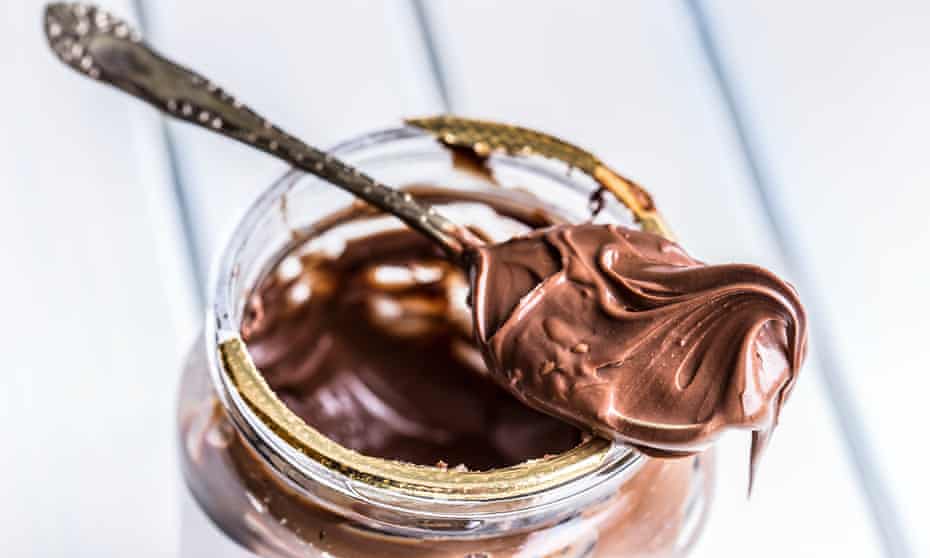
Chocolate spread in spoon. A jar of hazelnut chocolate spread.Chocolate spread in spoon. A jar of hazelnut chocolate spread.

Chocolate spread – The team behind the work cautioned against patients putting themselves on diets in the absence of clinical trials. Photograph: MarianVejcik/Getty Images/iStockphoto

The study adds to emerging evidence that diet can be used to enhance existing cancer treatments because certain nutrients are disproportionately relied on by tumour cells, or are required at critical stages such as metastasis.

The study built on previous work by the same team showing that, within a tumour, just a small subset of cells have the capacity to spread by travelling out of the tumour, reaching other organs and colonising them. These specialised cancer cells appeared to rely particularly heavily on fatty acids and the latest work narrowed this down to palmitic acid, which is found in palm oil – but also in a wide variety of foods such as butter and olive oil.

The study, published in Nature, found that when palmitic acid was supplemented into the diet of mice, mouth and skin cancers were more likely to spread. Other fatty acids called oleic acid and linoleic acid – omega-9 and omega-6 fats found in foods such as olive oil and flaxseeds – did not show the same effect. Neither of the fatty acids tested increased the risk of developing cancer in the first place.

The study suggested that exposure to palmitic acid caused changes to the function of genes in cancer cells that allowed them to sense fatty acids and consume them more efficiently. The presence of palmitic acid also appeared to send cancer cells into a “regenerative state” allowing them to form signalling networks beyond the tumour, which is known to be a crucial step towards spreading.

Metastasis of cancer remains the main cause of death in cancer patients and the vast majority of people with metastatic cancer can only be treated, but not cured.

By understanding what cancer cells need to make this leap, the scientists also identified ways to block the process and are planning a clinical trial of proteins that interfere with the tumour response to palmitic acid.

“That is a much more realistic approach in terms of a real therapy, that doesn’t depend on whether a patient likes Nutella or pizza,” said Aznar-Benitah. “Playing with diets is so complicated.”

Prof Greg Hannon, director of the Cancer Research UK Cambridge Institute, said: “This is a rigorous and comprehensive study that suggests that exposure to a major constituent of palm oil durably changes the behaviour of cancer cells, making them more prone to progress from local to potentially lethal metastatic disease. Given the prevalence of palm oil as an ingredient in processed foods, this study provides strong motivation for further study on how dietary choices influence the risk of tumour progression.”

Helen Rippon, chief executive at Worldwide Cancer Research, said: “This discovery is a huge breakthrough in our understanding of how diet and cancer are linked and, perhaps more importantly, how we can use this knowledge to start new cures for cancer. Metastasis is estimated to be responsible for 90% of all cancer deaths – that’s around 9 million deaths a year globally. Learning more about what makes cancer spread and – importantly – how to stop it is the way forward to reduce these numbers.”


Monday, 14 September 2020

Yes, sustainably sourced palm oil does exist - MUST READ

RECENTLY, Italian scientist Roberto Gatti made headlines in Malaysia when he proclaimed that there is “no such thing as sustainable palm oil”. The only problem is that Mr Gatti is wrong.
Monday, 14 Sep 2020
LETTERS
Photo: Reuters
Today, the palm oil industry is a vital, global agricultural player. While it occupies less than 0.5% of total land area under agriculture today, it accounts for 37% of all the oils and fats produced in the world and continues, in spite of the Covid-19 calamity, to secure jobs for well over five million people globally, most of whom are smallholder farmers who depend on this crop for their livelihood.
Is everything perfect and rosy? Absolutely not. The oil palm, like all agricultural crops, requires land. And this is where the dilemma arises. In this context, we must acknowledge that the oil palm has contributed towards large tracks of deforestation, even though over the last 25 years it has accounted for less than 5% of global deforestation.
Boycotting palm oil and replacing it with alternate vegetable oils is, of course, a decision people or big brands are free to make. However, the price for such an action will be high, as it has been proven beyond doubt that replacing palm oil with any alternative vegetable oil will result in using up to 10 times more land to produce the same quantity of oil.
The International Union for the Conservation of nature and the World Wide Fund for Nature have recognised this and support the production and use of sustainable palm oil to prevent greater impacts on the environment and biodiversity.
Studies show that commodities such as beef, soy, maize, poultry, timber production and more account for over 90% of the world’s deforestation today, and are still in the infancy when it comes to providing consumers with a supply chain that does not come from recently deforested land. Palm oil, however, has such a scheme in place already, where buyers can be assured of no deforestation, no new peat land development and no exploitation of workers. It is called the Principles and Criteria, which is set by the Roundtable on Sustainable Palm Oil – and it is a standard that I can state with supreme confidence that goes beyond any similar sustainability standard in the world today.
The aspirations remain high, and today we have Malaysian Sustainable Palm Oil (MSPO) and Indonesian Sustainable Palm Oil (ISPO) certification schemes, providing an amazing platform to raise the floor of the many instead of just focusing on raising the ceiling of the few.
DATUK CARL BEK-NIELSEN
Chief executive director, United Plantations Bhd and co-chair of the Roundtable on Sustainable Palm Oil (RSPO)

https://www.thestar.com.my/opinion/letters/2020/09/14/yes-sustainably-sourced-palm-oil-does-exist

Tuesday, 12 November 2019

Researchers identify a way to stop cancer from spreading

A new study suggests the spread of cancer is tied to dietary fatty acids, including from palm oil, and that blocking a key receptor can prevent it.

7th December 2016

Blog post image

Metastasis, the spreading of cancer cells to other parts of the body, is the main cause of cancer-related death. 

New research has identified the cells responsible for this process in oral tumors, and also a promising way to stop it. The key lies in the cells’ ability to absorb dietary fatty acids—particularly palmitic acid, a major component in palm oil. Metastasis-initiating cells have high levels of the fatty acid receptor CD36 and seem to rely on certain fatty acids to thrive. 

Blocking the CD36 receptor prevented human oral cancer transplanted into mice from spreading, and a similar effect was found in melanoma and breast cancer cells. Senior author Salvador Aznar Benitah of IRB Barcelona tells us more about these promising findings.


nature_aznar_pascual_irbbarcelona_02
Salvador Aznar Benitah and first author Gloria Pascual. Courtesy of IRB Barcelona.


ResearchGate: How did you discover these metastasis-initiating cells?


Salvador Aznar Benitah: This has been an interesting process. Originally, the aim of the project was not at all related to metastasis. We wanted to study whether cancer stem cells that weren’t dividing were responsible for tumor relapse after chemotherapy. We did observe these cells, but when we analyzed their molecular features, it was clear that they expressed very high levels of genes previously shown to induce or support metastasis. They also expressed many genes involved in fatty acid metabolism. In a sense, the cells and their molecular characteristics lead us to studying their role in metastasis, rather than the other way around.

RG: How were you able to stop the spread of cancer?

Benitah: We show by different means that blocking the activity of the fatty acid receptor CD36 has a very strong anti-metastatic effect. We hypothesize that metastatic cells rely so much on the availability of certain fatty acids, that they cannot cope without them. However, we still do not know the precise mechanism of why blocking CD36 results in such a strong effect on metastasis. We are working now to figure that out.

RG: What role does the consumption of fat play in the metastasis of cancer? Does the type of fat matter?

Benitah: The preclinical models in which we transplanted human tumor cells into mice indicate that a high fat diet potently boosts the metastatic potential of the tumors. In particular, we identified palmitic acid, a major component in palm oil, as a main player in this effect. Other fatty acids might also do it, while others might even be protective against metastasis. Very interesting questions arise from these results, and we are actively studying these. One important question would be to determine whether lowering the amount of fatty acids in the diet of patients with metastatic tumors could reduce the incidence of metastasis, or their aggressiveness. Careful experiments will need to be done in order to determine these things in patients.

RG: What do your findings mean for our understanding of cancer?

Benitah: I think this is an important and exciting first step. Now that we have been able to identify these cells responsible for metastasis, we can study their behavior in much more detail. Also, it opens the possibility of a new anti-metastatic therapy based on blocking the ability of these cells to uptake fatty acids. We are working hard to be able to try this.

RG: What would a drug based on this approach mean for our treatment of cancer?

Benitah: We are already developing a blocking antibody against CD36 together with MRCT, a UK-based non-profit company, that we hope to test in clinical trials in patients as soon as possible. We hope that this treatment, combined with the treatments already available for patients with these aggressive forms of cancer, may result in better clinical responses, and a better quality of life.

RG: When do you hope to begin clinical trials of this antibody in humans?

Benitah: It is very hard at this stage to know when we could start the clinical trials, but if everything goes alright we hope to start them within the next 5 years. This would be indeed very good news.


Featured image: Breast cancer cells. Courtesy of the National Cancer Institute and Cecil Fox.


Sunday, 14 January 2018

Must Read: DANGERS OF HIGHLY REFINED COOKING OILS

“Vegetable” oil makes you exceedingly vulnerable to cancer. Every mouthful of vegetable oil you consume takes you one step closer to a deadly (and irreversible) outcome. David Gillespie

Image result for vegetable oils


by Yeong Sek Yee
Highly refined cooking oils (sometimes referred to as “plastic fats”) go through 3 main refining procedures. These are neutralization, bleaching, and deodorization and then the final light golden colour oil is usually called NBD Palm Oil (or Soya, Corn, etc) Nowadays it is just referred to as refined palm (or soya, corn) oil or refined vegetable oil.
Below is a brief description of the 3 procedures in getting the oils out of seeds, nuts, pericarps, etc and onto the supermarket shelves.
NEUTRALIZATION (sometimes referred to as refining):
Once extracted, the oil ‘needs’ to be refined, which involves the treatment of the crude oil with a lye solution to reduce the free fatty acid (FFA) content to 0.05 percent. This is done primarily to prevent spoilage—to help the oil last an eternity on the grocer’s shelf. In addition, other impurities in the oil, such as gums, phosphatides, pigments, and other oxidation products, which would ‘impair’ the taste, odor, shelf life, and other ‘desired’ properties of the oil are likewise removed. This degumming and neutralization process is accomplished by means of phosphoric acid and more lye.

BLEACHING
The now ‘neutral’ oil is mixed with bleaching earth (a type of clay) and activated carbon to give the oil a lighter color. Final purification is accomplished using filters, presses, and polishing filters. After this, the oil is pumped into storage tanks.
DEODORIZATION
All edible oils and fats contain certain compounds that give the particular oil its identifiable taste and smell. In all commercial oils, these compounds are removed to make the oil as neutral tasting as possible. This process is called deodorization, and because of the high temperatures involved, it is extremely damaging to the oil.
Refined, bleached oil from refining is first transferred to a de-aerator operating under a vacuum for removal of any air in the oil. 
The oil then passes through a series of heaters, where the temperature is raised high enough for efficient steam distillation and deodorization—upwards of 200°C (450°F). 
At these temperatures, the fundamental structure of many oils is changed into a different form of fatty acid through a process called isomerization. 
These new forms are not beneficial to the human body. The high heat also causes a small amount of trans fatty acids to be formed. 
Finally, steam is blown through the oil to vaporize those components of the oil that actually give it any lingering odor or taste. The fully deodorized, tasteless, and refined oil then passes through a cooler and polishing filter basket for removal of any fine suspension before being finally pumped to the storage tank.
THE FINAL PRODUCT
What’s left is oil that is virtually colorless, odorless, and tasteless, which can last for years in a bottle with no danger of spoilage
On the other hand, it has no connection with the beneficial oil that was originally contained in the seed or nut

It is now a ‘plastic fat,’ fundamentally changed in structure, that offers no benefits to the human body—a plastic fat that is actually quite harmful. 
In addition, all of the beneficial phyto-chemicals (such as the lignans, which are an integral part of the oil complex and play a key anti-cancer role) have been removed.
With the chemicals used in the refining process, can you visualize what would happen to your body when you consume refined oils on a regular basis such as fried foods like goreng pisang, fried kueh teow, fried chicken, etc? 
In some cases, the already toxic oils is re-used again and again and sometimes plastic straws, plastic bags are added to the frying oil to make the final product “ crispy” for a longer period.
For cancer patients, we strongly recommend that you use cold-pressed oils (such as coconut, olive, flaxseed, etc) where the oil is extracted without the use of heat or chemicals.
FURTHER REFERENCES:
If you would like to read more about the benefits (or dangers) of fats and oils we recommend the following texts:
FATS THAT HEAL, FATS THAT KILL by Udo Eramus who has a PhD in Nutrition. The book exposes the manufacturing processes that turn healing fats into killing fats and explains the effects of these damaged fats on human health.
TOXIC OIL…WHY VEGETABLE OIL WILL KILL YOU by David Gillespie, a lawyer who decided to research thoroughly on “vegetable oils” after his family was faced with some health issues. His opening statement in the book will stun you:
“Vegetable” oil makes you exceedingly vulnerable to cancer. Every mouthful of vegetable oil you consume takes you one step closer to a deadly (and irreversible) outcome. 
You are eating “vegetable oil” because it is cheaper to make food with oils that are chemically extracted/ refined from plant seeds.
http://www.cacare.com/the-dangers-of-highly-refined-cooking-oils