Pages

Showing posts with label Purine. Show all posts

Thursday, 9 February 2017

Combat the Silent Dangers of High Uric Acid

People frequently associate high uric acid levels with gout, yet many symptom-free individuals have elevated uric acid for years before getting their first gout attack.2

February 2017
By Michael Downey
IMAGE TAG 
Elevated blood levels of uric acid are present in about 21% of Americans.1
People frequently associate high uric acid levels with gout, yet many symptom-free individuals have elevated uric acid for years before getting their first gout attack.2
Gout is not the only manifestation of elevated uric acid blood levels. When uric acid levels are higher than optimal, there’s also an increased risk of coronary artery disease, cerebrovascular disease, and early mortality.3-6
Excess uric acid can be caused by aging, adverse lifestyle habits, hypertension, diabetes, kidney problems, and obesity7,8—which alone increases risk of elevated uric acid almost three-fold.9
While mainstream medicine offers drugs that reduce uric acid levels, they are primarily restricted to those who have already been diagnosed with gout.10,11
Fortunately, scientists have found a plant extract that safely delivers uric acid-reducing effects.8
In this article, you will learn about a tannin-rich fruit that was shown in a controlled human trial to safely reduce uric acid to healthy target levels in 88.8% of study subjects.8

How Excess Uric Acid Occurs
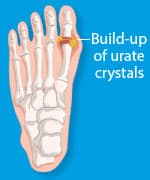
Image with Caption
Foot with Gout
Excess levels of organic compounds known as purines break down into uric acid—a waste product excreted through urine. When excess levels of uric acid build up in the blood, a person is diagnosed with hyperuricemia.12,13
Two factors cause hyperuricemia:
  • A sufficient amount of purines are naturally made by the body to serve functions in DNA, RNA, and neurotransmission. When too much purine comes from dietary choices such as meats, poultry, seafood, and beer, just about all of these dietary purines are converted to uric acid.14
  • In about 90% of hyperuricemia cases, under urinary excretion is the primary cause, with excess uric acid production accounting for just 10%.15
About 5% to 8% of adult males have asymptomatic hyperuricemia.8,16,17 Uric acid levels above 8.6 mg/dL in men or 7.1 mg/dL in women are classified as hyperuricemia (although some laboratories and research groups use different limits).18,19
A long-term buildup of uric acid results in solid deposits of a salt called monosodium urate monohydrate—forming needlelike crystals in the joints, soft tissue, and organs throughout the body.13
Affecting millions of Americans, this can lead to the arthritic inflammation behind painful attacks of gout and other diseases related to high uric acid.1,20-22 When the serum uric acid level exceeds 9.0 mg/dL, the probability of developing clinical gout is 6 times higher.8,16,17
Aside from pain so excruciating that some sufferers cringe at the thought of putting a sheet over their foot at night, gout is associated with higher risks of cardiovascular disease and mortality.1,23,24
Gout is best known for causing pain focused in the big toe. However, gout can also attack the:2
  • Instep,
  • Ankle,
  • Heel,
  • Knee,
  • Achilles tendon,
  • Wrist,
  • Finger, and
  • Elbow.
A recent study found that 52% of individuals with asymptomatic hyperuricemia and 68% of gout patients also have knee osteoarthritis.25
A gout attack can be triggered at any time by a range of factors, including alcohol, certain medicines, other illnesses, or stress.1,26,27 Those whose uric acid is increasing due to age and other factors need to take action to reduce these levels long before they suffer their first gout attack—to help prevent damage to joints, soft tissue, and organs, or even the onset of cardiovascular or kidney disease.
WHAT YOU NEED TO KNOW
Uric Acid Reduction

Natural Treatment for Uric Acid Reduction

  • Long associated only with the risk of gout, elevated uric acid levels themselves can damage cartilage and promote kidney, coronary artery, and cerebrovascular diseases.
  • But drugs that reduce uric acid levels are primarily reserved for patients with full-blown gout—so hyperuricemic individuals are tragically left without options.
  • Even if they were made available, these drugs themselves involve adverse effect risks that including breathing difficulties, unusual bleeding, and liver problems.
  • A tannin-rich fruit extract appears to inhibit xanthine oxidase, an enzyme involved in uric acid synthesis. Nearly nine out of ten volunteers with elevated uric acid levels who took 500 mg of T. bellerica twice-daily achieved the target level of serum uric acid of under 6 mg/dL, without side effects.

Problems with Uric Acid-Lowering Drugs

Scientists have long sought alternative interventions that would effectively inhibit excess uric acid levels. This investigation has been driven by the fact that drug options that reduce those levels are primarily prescribed only for those whose hyperuricemia has progressed for years to eventually become diagnosed gout.11
For example, the manufacturer of the uric acid-reducing drug febuxostat stipulates that this potentially risky drug is “…used to lower blood uric acid levels in adults with gout” and that “… it is not for the treatment of high uric acid without a history of gout.”10 Even if these drugs were freely available to hyperuricemic individuals, however, there would be a need for a safer intervention.
One of the most common side effects of the gout medication febuxostat is liver problems. But the drug’s manufacturer advises that, “A small number of heart attacks, strokes, and heart-related deaths were seen in clinical studies.” Other common adverse effects include nausea, rash, and—ironically—joint pain and gout flares.10
Two other drug options, allopurinol and probenecid, have been linked to side effects ranging from skin rash to breathing difficulties and unusual bleeding.28,29 And it was recently found that allopurinol does not always decrease serum uric acid—which is the whole point of taking it and enduring adverse risks.30 Incredibly, some gout medicines can precipitate gout symptoms.13
The drug colchicine is often prescribed for treatment of gout. It has been sold as a low-cost generic since the 19th century in the US—far predating the establishment of the FDA, which in 2009 granted one firm a three-year marketing monopoly on colchicine for the prevention of acute gout flares in return for the firm’s agreement to conduct studies on effectiveness, safety, and dosage. As a result of the government-mandated monopoly, colchicine’s price skyrocketed from nine cents a pill to almost $5 a pill.35
Aside from its cost, colchicine is associated with nausea, abdominal pain, diarrhea, generalized weakness, and even vascular and kidney damage.36

A Natural Alternative for Hyperuricemic Individuals

An enzyme called xanthine oxidase is involved in the body’s production of uric acid.
A natural agent with the power to safely inhibit production of xanthine oxidase would mark a big advance in the quest to reverse high uric acid levels without side effects.
A tree fruit extract has been studied for its ability to inhibit uric acid production in humans.8 An extract of the Terminalia bellerica fruit is rapidly emerging as a natural uric acid lowering nutrient.
The fruit of the Terminalia bellerica tree has been used in Ayurvedic medicine for many years, mainly for removal of kidney stones and decreasing inflammation. The extract being studied is derived from this edible tree fruit that contains 15% tannins.
Research suggested that the bioactive compounds in this Terminalia bellerica fruit provide anti-inflammatory effects, possibly due to inhibition of inducible nitric oxide synthase (iNOS). Researchers have reported this extract’s effectiveness against painful or burning urination, urine discharge, and bleeding in the kidney, and its ability to help remove blocked kidney and urine stones.8,31
Scientists found that this extract, with its potent tannin content, also appeared to inhibit xanthine oxidase—which in turn should decrease uric acid levels.8 The real challenge, however, was whether Terminalia bellerica would prove, in a controlled setting, to be effective in humans who are already hyperuricemic.
HOW URIC ACID LEVELS BECOME TOO HIGH IN SOME INDIVIDUALS

SIDEBAR IMAGE ALT TEXT
The body receives purines from two sources. First, it synthesizes its own purines, which are important for the synthesis of nucleic acids, the building blocks of DNA and RNA as well as for neurotransmission. Second, purines come from dietary choices such as meats, poultry, seafood, and beer.
Since the body produces all the purines it needs, purines from food sources result in excess amounts that are converted to uric acid.14 Lifestyle habits can play a role.
Excess uric acid is usually eliminated via urine. However, some individuals have impaired uric acid excretion, which accounts for about 90% of all hyperuricemic cases.15

Reversing Elevated Uric Acid Levels in Humans

IMAGE TAG 
To determine the efficacy and safety of this fruit extract in hyperuricemic humans, scientists designed the most rigorous type of study—a long-term, randomized, double-blind, placebo-controlled human clinical trial, the kind that the FDA mandates before it approves new drugs.
This clinical trial involved an active arm of volunteers that received different doses of the fruits of two different species of the Terminalia tree, an arm that received a uric acid-lowering drug (febuxostat) and a similar group that received an inactive placebo.8
A total of 110 volunteers with hyperuricemia were divided into five groups and evaluated periodically over 24 weeks. Scientists assessed their uric acid levels, other health indicators, and side effects before treatment started and again at four weeks, eight weeks, 12 weeks, 16 weeks, 20 weeks, and 24 weeks of therapy.8 So both efficacy and safety were evaluated at six points during the 24 week-study.
Every visit, patients were questioned about possible adverse effects. At the outset and again at 24 weeks, a lab analysis assessed hematological, hepatic, and renal biochemical parameters. Each participant received a contact number to report any potentially adverse event and to access medical help.8
The five groups of hyperuricemia patients received treatment as follows:8
  • Group 1: Terminalia chebula—one 500 mg capsule twice daily after food,
  • Group 2: Terminalia bellerica—one 500 mg capsule twice daily after food,
  • Group 3: Terminalia bellerica—one 250 mg capsule twice daily after food,
  • Group 4: Febuxostat (Uloric)—one 40 mg tablet in the morning after food,
  • plus an identical placebo capsule in the evening after food, and
  • Group 5: Placebo capsules—one capsule twice daily after food.
The study team analyzed the data to directly measure the effectiveness and safety of the two Terminalia extracts relative to each other, the drug, and the placebo. They paid particular attention to the percentage of patients in each group whose uric acid levels were reduced to the healthy target of below 6.0 mg/dL.8
LIFESTYLE FACTORS THAT AFFECT URIC ACID LEVELS

SIDEBAR IMAGE ALT TEXT

A few lifestyle tips that can help prevent hyperuricemia include:

  • Avoid excessive alcohol. Drinking too much alcohol can interfere with the removal of uric acid from the body, and underexcretion is the primary way these levels accumulate.
  • Limit dietary purines. This includes red meats, pork, lamb, and seafood.
  • Maintain a healthy weight. Increased adiposity is associated with increased uric acid levels and gout risk.
  • Optimize kidney health. Since underexcretion causes 90% of hyperuricemia cases, improving and maintaining kidney function is important.
  • Optimize thyroid function. Hypothyroidism is associated with the excess uric acid levels that lead to gout.
  • Lower lead levels in your body. Chronic lead exposure is linked to some cases of gout.
  • Minimize use of prescription diuretics. Medications that increase urine flow are associated with excess uric acid and development of gout. Talk to your doctor if you’re at increased risk for gout and discuss alternatives to diuretics.
  • Treat sleep apnea. A study found that sleep apnea is an independent risk factor for high uric acid and gout.34

Results of Human Study

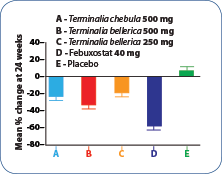
Researchers found an average reduction in uric acid levels at all six visits for all treatment groups except the placebo group, in which uric acid increased over 24 weeks.8
For the treatment groups, uric acid decreased over 24 weeks by an average of:8
  • 16.02% in the 500 mg Terminalia chebula group,
  • 27.59% in the 500 mg Terminalia bellerica group,
  • 14.05% in the 250 mg Terminalia bellerica group, and
  • 48.79% in the 40 mg febuxostat drug group.
And the percentage of volunteers who attained the uric acid target of 6 mg/dL or less was:8
  • 11.76% in the 250 mg Terminalia bellerica group,
  • 22.2% in the 500 mg Terminalia chebula group,
  • 88.8% in the 500 mg Terminalia bellerica group,
  • and
  • 100% in the 40 mg febuxostat drug group.
Researchers were impressed that almost nine out of ten volunteers who took 500 mg of T. bellerica twice daily achieved the target level. All 10 volunteers taking febuxostat did so, but this drug has known and potentially lethal side effects that are difficult to identify in 24 weeks—yet early adverse effects were observed even in this short period.8
All hematological and biochemical parameters were within normal limits at the outset, but of the 18 volunteers on febuxostat, two completed the study with elevated total bilirubin and one complained of nausea and vomiting. (Bilirubin is the yellow byproduct of heme breakdown, and elevated levels can indicate certain diseases.) Also, one subject in the T. chebula group had mild gastrointestinal intolerance.8
Most significantly, not one volunteer taking T. bellerica had any adverse effect at all,8 which is in line with prior research showing no toxicity in rats given massive doses of T. bellerica, ranging from 300 mg to 5,000 mg per kilogram of body weight.32,33
These findings demonstrate that 500 mg of Terminalia bellerica twice daily significantly reduces uric acid levels without the long-term risks of febuxostat therapy.
Critically, this natural extract is available without prescription to gout sufferers and anyone wishing to lower uric acid levels before gout develops. By contrast, the febuxostat manufacturer stipulates that this risky drug “…is not for the treatment of high uric acid without a history of gout.”10
MEAN PERCENTAGE CHANGE IN SERUM URIC ACID LEVELS BY TREATMENT AGENT
SIDEBAR IMAGE ALT TEXT
Scientists conducted a well-designed, 24-week, randomized, double blind, placebo-controlled, parallel-group study to assess the efficacy and safety profile of Terminalia bellerica in reducing high uric acid levels.8 Twice-daily dosages of 500 mg of T. bellerica reduced serum uric acid levels by a mean of 27.59%—allowing 88.8% of those with hyperuricemia to attain the target uric acid level of 6 mg/dL,8 without any of the side effects observed in gout patients taking febuxostat.10 The manufacturer of febuxostat does not endorse its use in hyperuricemia patients who have not yet progressed to having gout.10

Summary

High levels of uric acid can damage joints, soft tissue, and organs, and boost the risk of kidney, coronary artery, and cerebrovascular diseases.
Drug options to reduce uric acid levels are primarily reserved for those with full-blown gout—leaving hyperuricemic individuals without easy options.
Uric acid-lowering drugs involve risks of adverse effects, including liver problems, breathing difficulties, vomiting, and unusual bleeding.
Terminalia bellerica is a tannin-rich extract that appears to inhibit xanthine oxidase, an enzyme involved in uric acid synthesis.
In volunteers with elevated uric acid levels, twice-daily capsules of 500 mg of T. bellerica enabled nearly nine out of 10 people taking the extract to achieve the target level of serum uric acid of under 6 mg/dL, with no adverse side effects.
Life Extension®’s comprehensive blood test panels include uric acid measurement. Feel free to call Life Extension at 1-800-544-4440 if you need a reminder of what your last uric acid reading was. We retain blood test results of our customers back to year 2012, which is an important benefit to having your blood tests done utilizing our low-cost program that allows you to have blood draws performed at your convenience, with quick turnaround, wellness advisor input, and free access to prior results.
If you have any questions on the scientific content of this article, please call a Life Extension® Wellness Specialist at 1-866-864-3027.
http://www.lifeextension.com/Magazine/2017/2/Combat-the-Silent-Dangers-of-High-Uric-Acid/Page-01          

Friday, 14 October 2016

MUST READ: Fructose: This Addictive Commonly Used Food Feeds Cancer Cells, Triggers Weight Gain, and Promotes Premature Aging

Death by sugar may not be an overstatement—evidence is mounting that sugar is THE MAJOR FACTOR causing obesity and chronic disease.


Story at-a-glance

  • One of the primary sources of calories for Americans is sugar—specifically high fructose corn syrup in soda and processed foods. Because of advances in food processing technology in the 1970s, fructose derived from corn has become very cheap and is widely used in the majority of processed foods for increased sales.
  • Sugar takes a devastating toll on your health. In fact, excessive sugar consumption may be the largest factor underlying obesity and chronic disease in America
  • Your body metabolizes fructose much differently from glucose; the entire burden of metabolizing fructose falls on your liver, where excess fructose is quickly converted into fat, which explains the weight gain and abdominal obesity experienced by so many Westerners
  • Fructose is the primary cause of non-alcoholic fatty liver and elevates uric acid, which raises your blood pressure, stresses your kidneys, and leads to the chronic, low-level inflammation that is at the core of most chronic diseases; metabolically speaking, fructose is alcohol “without the buzz”
  • It would be wise for most people to limit their daily fructose consumption to less than 25 grams per day; a table showing the fructose content of many foods is provided, especially if you show signs of insulin resistance such as being overweight, have high blood pressure, high cholesterol, or diabetes
April 20, 2010


Is sugar a sweet old friend that is secretly plotting your demise?
There is a vast sea of research suggesting that it is. Science has now shown us, beyond any shadow of a doubt, that sugar in your food, in all its myriad of forms, is taking a devastating toll on your health.
The single largest source of calories for Americans comes from sugar—specifically high fructose corn syrup. Just take a look at the sugar consumption trends of the past 300 years:1
  • In 1700, the average person consumed about 4 pounds of sugar per year.
  • In 1800, the average person consumed about 18 pounds of sugar per year.
  • In 1900, individual consumption had risen to 90 pounds of sugar per year.
  • In 2009, more than 50 percent of all Americans consume one-half pound of sugar PER DAY—translating to a whopping 180 pounds of sugar per year!
Sugar is loaded into your soft drinks, fruit juices, sports drinks, and hidden in almost all processed foods—from bologna to pretzels to Worcestershire sauce to cheese spread. And now most infant formula has the sugar equivalent of one can of Coca-Cola, so babies are being metabolically poisoned from day one of taking formula.
No wonder there is an obesity epidemic in this country.
Today, 32 percent of Americans are obese and an additional one-third is overweight. Compare that to 1890, when a survey of white males in their fifties revealed an obesity rate of just 3.4 percent. In 1975, the obesity rate in America had reached 15 percent, and since then it has doubled.
Carrying excess weight increases your risk for deadly conditions such as heart disease, kidney disease, and diabetes.
In 1893, there were fewer than three cases of diabetes per 100,000 people in the United States. Today, diabetes strikes almost 8,000 out of every 100,000 people.1
You don't have to be a physician or a scientist to notice America's expanding waistline. All you have to do is stroll through a shopping mall or a schoolyard, or perhaps glance in the mirror.

Sugars 101 -- Basics of How to Avoid Confusion on This Important Topic

It is easy to become confused by the various sugars and sweeteners. So here is a basic overview:
  • Dextrose, fructose, and glucose are all monosaccharides, known as simple sugars. The primary difference between them is how your body metabolizes them. Glucose and dextrose are essentially the same sugar. However, food manufacturers usually use the term "dextrose" in their ingredient list.
  • The simple sugars can combine to form more complex sugars, like the disaccharide sucrose (table sugar), which is half glucose and half fructose.
  • High fructose corn syrup (HFCS) is 55 percent fructose and 45 percent glucose.
  • Ethanol (drinking alcohol) is not a sugar, although beer and wine contain residual sugars and starches, in addition to alcohol.
  • Sugar alcohols like xylitol, glycerol, sorbitol, maltitol, mannitol, and erythritol are neither sugars nor alcohols but are becoming increasingly popular as sweeteners. They are incompletely absorbed from your small intestine, for the most part, so they provide fewer calories than sugar but often cause problems with bloating, diarrhea, and flatulence.
  • Sucralose (Splenda) is NOT a sugar, despite its sugar-like name and deceptive marketing slogan, "made from sugar." It's a chlorinated artificial sweetener in line with aspartame and saccharin, with detrimental health effects to match.
  • Agave syrup, falsely advertised as "natural," is typically HIGHLY processed and is usually 80 percent fructose. The end product does not even remotely resemble the original agave plant.
  • Honey is about 53 percent fructose2, but is completely natural in its raw form and has many health benefits when used in moderation, including as many antioxidants as spinach.
  • Stevia is a highly sweet herb derived from the leaf of the South American stevia plant, which is completely safe (in its natural form). Lo han (or luohanguo) is another natural sweetener, but derived from a fruit.

All Sugars Are Not Equal

Glucose is the form of energy you were designed to run on. Every cell in your body, every bacterium—and in fact, every living thing on the Earth—uses glucose for energy.
But in this country, sucrose is no longer the sugar of choice. It's now fructose.
If your diet was like that of people a century ago, you'd consume about 15 grams per day—a far cry from the 73 grams per day the typical person gets from sweetened drinks. In vegetables and fruits, it's mixed in with vitamins, minerals, enzymes, and beneficial phytonutrients, all which moderate the negative metabolic effects. Amazingly, 25 percent of people actually consume more than 130 grams of fructose per day.
Making matters worse, all of the fiber has been removed from processed foods, so there is essentially no nutritive value at all. And the very products most people rely on to lose weight—the low-fat diet foods—are often the ones highest in fructose.
It isn't that fructose itself is bad—it is the MASSIVE DOSES you're exposed to that make it dangerous.
There are two overall reasons fructose is so damaging:
  1. Your body metabolizes fructose in a much different way from glucose. The entire burden of metabolizing fructose falls on your liver.
  2. People are consuming fructose in enormous quantities, which has made the negative effects much more profound.
The explosion of soda consumption is the major cause of this.
Today, 55 percent of sweeteners used in food and beverage manufacturing are made from corn, and the number one source of calories in America is soda, in the form of high fructose corn syrup.
Food and beverage manufacturers began switching their sweeteners from sucrose to corn syrup in the 1970s when they discovered that HFCS was not only far cheaper to make, but is also about 20 percent sweeter than conventional table sugar that has sucrose.
HFCS contains the same two sugars as sucrose but is more metabolically risky to you, due to its chemical form.
The fructose and the glucose are not bound together in HFCS, as they are in table sugar, so your body doesn't have to break it down. Therefore, the fructose is absorbed immediately, going straight to your liver.

Too Much Fructose Creates a Metabolic Disaster in Your Body

Dr. Robert Lustig, Professor of Pediatrics in the Division of Endocrinology at the University of California, San Francisco, has been a pioneer in decoding sugar metabolism. His work has highlighted some major differences in how different sugars are broken down and used by the human body.
I highly recommend watching Lustig's lecture in its entirety if you want to learn how fructose is ruining your health biochemically.
As I mentioned earlier, after eating fructose, most of the metabolic burden rests on your liver. This is NOT the case with glucose, of which your liver breaks down only 20 percent. Nearly every cell in your body utilizes glucose, so it's normally "burned up" immediately after consumption.
So where does all of this fructose go, once you consume it?
Onto your thighs. It is turned into FAT (VLDL and triglycerides), which means more fat deposits throughout your body.

Eating Fructose Is Far Worse Than Eating Fat

However, the physiological problems of fructose metabolism extend well beyond a couple of pant sizes:
  • Fructose elevates uric acid, which decreases nitric oxide, raises angiotensin, and causes your smooth muscle cells to contract, thereby raising your blood pressure and potentially damaging your kidneys.1

    Increased uric acid also leads to chronic, low-level inflammation, which has far-reaching consequences for your health. For example, chronically inflamed blood vessels lead to heart attacks and strokes; also, a good deal of evidence exists that some cancers are caused by chronic inflammation. (See the next section for more about uric acid.)
  • Fructose tricks your body into gaining weight by fooling your metabolism—it turns off your body's appetite-control system. Fructose does not appropriately stimulate insulin, which in turn does not suppress ghrelin (the "hunger hormone") and doesn't stimulate leptin (the "satiety hormone"), which together result in you eating more and developing insulin resistance.2
  • Fructose rapidly leads to weight gain and abdominal obesity ("beer belly"), decreased HDL, increased LDL, elevated triglycerides, elevated blood sugar, and high blood pressure—i.e., classic metabolic syndrome.
  • Fructose metabolism is very similar to ethanol metabolism, which has a multitude of toxic effects, including NAFLD (non-alcoholic fatty liver disease). It's alcohol without the buzz.
These changes are not seen when humans or animals eat starch (or glucose), suggesting that fructose is a "bad carbohydrate" when consumed in excess of 25 grams per day. It is probably the one factor responsible for the partial success of many "low-carb" diets.
One of the more recent findings that surprised researchers is that glucose actually accelerates fructose absorption, making the potential health risks from HFCS even more profound.1
You can now see why fructose is the number one contributing factor to the current obesity epidemic.

Is Uric Acid the New Cholesterol?

By now you are probably aware of the childhood obesity epidemic in America—but did you know about childhood hypertension?
Until recently, children were rarely diagnosed with high blood pressure, and when they were, it was usually due to a tumor or a vascular kidney disease.
In 2004, a study showed hypertension among children is four times higher than predicted: 4.5 percent of American children have high blood pressure. Among overweight children, the rate is 10 percent. It is thought that obesity is to blame for about 50 percent of hypertension cases in adolescents today.
Even more startling is that 90 percent of adolescents who have high blood pressure have elevated uric acid levels.
This has led researchers to ask: what does uric acid have to do with obesity and high blood pressure?
In his book, The Sugar Fix: The High-Fructose Fallout That is Making You Fat and Sick, Dr. Robert J. Johnson makes a compelling argument for a previously unrecognized connection between excess sugar consumption and high uric acid levels. However, he promotes artificial sweeteners as an alternative to sugar and makes other recommendations that I don't agree with.
Dr. Johnson is a conventional physician who has not accepted large parts of natural medicine. However, he is one of the leading researchers defining the extent of fructose toxicity. He has spent many years of his life dedicating himself to uncover this mystery.
There are more than 3,500 articles to date showing a strong relationship between uric acid and obesity, heart disease, hypertension, stroke, kidney disease, and other conditions. In fact, a number of studies have confirmed that people with elevated serum uric acid are at risk for high blood pressure, even if they otherwise appear to be perfectly healthy.
Uric acid levels among Americans have risen significantly since the early half of the 20th century. In the 1920s, average uric acid levels were about 3.5 ml/dl. By 1980, average uric acid levels had climbed into the range of 6.0 to 6.5 ml/dl and are probably much higher now.

How Does Your Body Produce Uric Acid?

It's a byproduct of cellular breakdown. As cells die off, DNA and RNA degrade into chemicals called purines. Purines are further broken down into uric acid.
Fructose increases uric acid through a complex process that causes cells to burn up their ATP rapidly, leading to "cell shock" and increased cell death. After eating excessive amounts of fructose, cells become starved of energy and enter a state of shock, just as if they have lost their blood supply. Massive cellular die-off leads to increased uric acid levels.
And cells that are depleted of energy become inflamed and more susceptible to damage from oxidative stress. Fat cells actually become "sickly," bloating up with excessive amounts of fat.
There is a simple, inexpensive blood test for determining your uric acid level, which I recommend you have done as part of your routine health checkups. Your level should be between 3.0 and 5.5 mg/dl, optimally.
There is little doubt in my mind that your uric acid level is a more potent predictor of cardiovascular and overall health than your total cholesterol level is. Yet virtually no one is screening for this.
Now that you know the truth, you don't have to be left out in the cold, as this is a simple and relatively inexpensive test that you can get at any doctor's office. Odds are very good your doctor is clueless about the significance of elevated uric acid levels, so it will not likely be productive to engage in a discussion with him unless he is truly an open-minded truth seeker.
Merely get your uric acid level, and if it is over 5 then eliminate as much fructose as you can (also eliminate all beer), and retest your level in a few weeks.

Sugar Sensitization Makes the Problem Even WORSE!

There is yet another problem with sugar—a self-perpetuating one.
According to Dr. Johnson, sugar activates its own pathways in your body—those metabolic pathways become "upregulated." In other words, the more sugar you eat, the more effective your body is in absorbing it; and the more you absorb, the more damage you'll do.
You become "sensitized" to sugar as time goes by, and more sensitive to its toxic effects as well.
The flip side is, when people are given even a brief sugar holiday, sugar sensitization rapidly decreases and those metabolic pathways become "downregulated." Research tells us that even two weeks without consuming sugar will cause your body to be less reactive to it.
Try it for yourself! Take a two-week sugar sabbatical and see how different you feel.

Are Fruits Good or Bad for You?

Keep in mind that fruits also contain fructose, although an ameliorating factor is that whole fruits also contain vitamins and other antioxidants that reduce the hazardous effects of fructose.
Juices, on the other hand, are nearly as detrimental as soda, because a glass of juice is loaded with fructose, and a lot of the antioxidants are lost.
It is important to remember that fructose alone isn't evil, as fruits are certainly beneficial. But when you consume high levels of fructose, it will absolutely devastate your biochemistry and physiology. Remember the AVERAGE fructose dose is 70 grams per day, exceeding the recommend limit by 300 percent.
So please BE CAREFUL with your fruit consumption. You simply MUST understand that because HFCS is so darn cheap, it is added to virtually every processed food. Even if you consumed no soda or fruit, it is very easy to exceed 25 grams of hidden fructose in your diet.
If you are a raw food advocate, have a pristine diet, and exercise very well, then you could be the exception that could exceed this limit and stay healthy.
Dr. Johnson has a handy chart shown below, which you can use to estimate how much fructose you're getting in your diet. Remember, you are also likely getting additional fructose if you consume any packaged foods at all, since it is hidden in nearly all of them.
FruitServing SizeGrams of Fructose
Limes1 medium0
Lemons1 medium0.6
Cranberries1 cup0.7
Passion fruit1 medium0.9
Prune1 medium1.2
Apricot1 medium1.3
Guava2 medium2.2
Date (Deglet Noor style)1 medium2.6
Cantaloupe1/8 of med. melon2.8
Raspberries1 cup3.0
Clementine1 medium3.4
Kiwifruit1 medium3.4
Blackberries1 cup3.5
Star fruit1 medium3.6
Cherries, sweet103.8
Strawberries1 cup3.8
Cherries, sour1 cup4.0
Pineapple1 slice
(3.5" x .75")
4.0
Grapefruit, pink or red1/2 medium4.3
FruitServing SizeGrams of Fructose
Boysenberries1 cup4.6
Tangerine/mandarin orange1 medium4.8
Nectarine1 medium5.4
Peach1 medium5.9
Orange (navel)1 medium6.1
Papaya1/2 medium6.3
Honeydew1/8 of med. melon6.7
Banana1 medium7.1
Blueberries1 cup7.4
Date (Medjool)1 medium7.7
Apple (composite)1 medium9.5
Persimmon1 medium10.6
Watermelon1/16 med. melon11.3
Pear1 medium11.8
Raisins1/4 cup12.3

http://articles.mercola.com/sites/articles/archive/2010/04/20/sugar-dangers.aspx