for eMaxHealth
  A healthy gut (gastrointestional) environment is essential for good health,
and pistachios might just be the nuts for the job. Here’s what the authors of a
new study have discovered about why pistachios may be nuts for your gut.
A healthy gut (gastrointestional) environment is essential for good health,
and pistachios might just be the nuts for the job. Here’s what the authors of a
new study have discovered about why pistachios may be nuts for your gut.What’s special about pistachios?
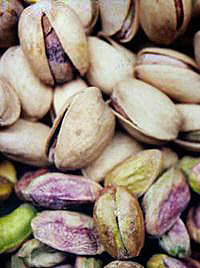
If you like pistachios, you already know what’s special about these nuts for you. Besides tasting good, you may also know that one ounce of pistachios (49 kernels) provides 160 calories, 3 grams of fiber, 6 grams of protein, 6.8 grams of healthy fat (monounsaturated), and about 18% of your daily requirement for vitamin B6, copper, and manganese.
Pistachios are not only good food for you to eat, however; they also serve as a meal for the beneficial bacteria that live in your gut. In this latter role, the fiber and phytochemicals in pistachios stay in the gut and are used by the bacteria for growth and to modify the gut environment.
According to Volker Mai, PhD, the lead author of the new study and assistant professor at the University of Florida’s Institute of Food and Agricultural Sciences, this is great news for the gut. “Modifying microbiota [gut microbial environment] towards a ‘beneficial’ composition is a promising approach for supporting intestinal health, with potential effects on overall health, and it appears that pistachios may play a role in this modification.”
Here’s why he made this claim. Mai and his team enrolled 16 healthy individuals in a study in which they were randomly assigned to eat an American-style, pre-planned diet that included either 0, 1.5, or 3 ounces of pistachios or almonds daily. (The calories were adjusted to avoid weight loss or gain.)
Throughout the study, the researchers collected and analyzed stool samples of the participants to identify the bacteria. Specifically, they looked for two groups of bacteria that help break down food, so-called “beneficial bacteria”—lactic acid bacteria and Bifidobacteria.
After 19 days of the study, the authors observed the following:
- Volunteers who ate up to 3 ounces of pistachios daily had higher levels of various bacteria in the gut.
- Pistachio eaters also had an increase in potentially beneficial bacteria that produce butyrates, which are important as food for cells that line the colon and so play an important role in maintaining intestinal health.
- The difference in gut microbes was stronger in people who ate pistachios compared with those who ate almonds
- Although both almonds and pistachios improved the gut environment, pistachios provided more benefit.
Studies of pistachios
A number of studies have uncovered health benefits associated with eating pistachios. For example:
- A University of Texas MD Anderson Cancer Center study reported that a diet containing pistachios may help reduce the risk of lung cancer
- A Turkish study found that pistachio intake significantly reduced triglyceride levels while increasing antioxidant activity
- A study in the American Journal of Clinical Nutrition revealed that daily consumption of pistachios was associated with improved cholesterol levels
- Pistachios have also been credited with helping lower “bad” low-density lipoprotein (LDL) cholesterol
In this latest study, which was presented at the 2012 Experimental Biology meeting, the authors concluded that although their work is preliminary, it is “a promising sign that increasing consumption of nuts, specifically pistachios, provides a novel means to modify the number of the gut’s ‘healthy’ microbiota, with potential health benefits.”
And that’s why pistachios may be the nuts for your gut.
SOURCES:
Alturfan AA et al. Consumption of pistachio nuts beneficially affected blood lipis and total antioxidant activity in rats fed a high-cholesterol diet. Folia Biol Praha 2009; 55(4): 132-36
Gebauer SK et al. Effects of pistachios on cardiovascular disease risk factors and potential mechanisms of action: a dose-response study. Am J Clin Nutr 2008 Sep; 88(3): 651-59
Ukhanova M et al. Human gut microbiota changes after consumption of almonds or pistachios. Presented at 2012 Experimental Biology meeting in San Diego, April 23, 2012
Image: Wikimedia Commons
http://www.emaxhealth.com/1275/why-pistachios-may-be-nuts-your-gut