One of the highlights of each Annie Appleseed conference is the Patient Panel, featuring three cancer patients who tell their stories.
(This is the second of two articles about the 2019 Annie Appleseed cancer conference in West Palm Beach, Florida.)
One of the highlights of each Annie Appleseed conference is the Patient Panel, featuring three cancer patients who tell their stories. The moderator, Julie Chiappetta, summarized her own story of healing from cancer 19 years ago.
Back in 2000 when Julie was first diagnosed with aggressive breast cancer, at a time when she was under stress from a high-paying job, doctors told her she needed serious conventional therapy. “You’ll die unless you do as we say,” they claimed, but she just said no.
Instead, she took a couple of months off to find out what she was dealing with and what she could do. She decided she needed to become the Chief Executive Officer of her own body, which was also stressed out from running in races.
After investigating her options, she decided to make some radical changes. She threw out her microwave and carpeting and made many other improvements to start over with a clean slate, and she was careful not to slip back into the way she had lived that made her sick.
Her plan included “rest, alkalinity, eliminating sugar and white food, and sticking with it.” She cautioned women to avoid mammograms because they’re only 40 percent accurate and they emit radiation that causes cancer.
She quoted cancer researcher Dr. Samuel Epstein, M.D., who said, “It’s a sobering fact that over a period of 10 years a premenopausal woman undergoing annual regular mammography receives almost half of the radiation that was measurable from a mile away from the Hiroshima epicenter.”
The seven wonders that cured Bettina’s cancer
The first panelist Ms. Chiappetta introduced was 52-year-old Bettina Tammaro from Denmark. She’s a teacher, a coach, and an adventure hobbyist.
When Ms. Tammaro was diagnosed with lymphoma in 2001, doctors talked her into surgery and radiation. In 2012 the lymphoma reappeared, but she said “no” to conventional treatments and decided to choose the natural way instead.
She told the audience, “Going alternative was like walking the plank and taking the jump into the deep blue sea.” She discovered a well-known video called “Cancer Is Curable Now,” and applied the following “seven wonders.”
- An alkaline eating plan plus nutritional supplements including vitamins A, C, B12, magnesium, selenium, dried herbs, and seaweed
- A lot of physical exercise
- Restorative sleep, because the immune system’s ranger cells can’t work when you’re tired
- Detoxification through rebounding on a mini-trampoline, infrared heat, massage, and intermittent fasting
- Passion for life, including a survival island adventure and volunteer work in Africa.
- Attending to the mind/body/soul connection through spirituality, forgiveness, and stress management
- Balance
Bettina said she’s an enthusiastic outdoor adventurer, and she urged the cancer patients in the audience to “be brave enough to do crazy things! Do the free things. Take off your shoes. Do breathing exercises. Hug a tree.”
She said she enjoys jumping into the ocean, spends lots of time in nature, and loves the woods so much that she actually does hug trees.
The next panelist, Ryan Sternagel, has never had cancer. But as a husband and father he had agonizing decisions to make in 2013 when, a month before his son’s first birthday, his wife felt a lump in the baby’s back.
Ryder had stopped growing at six months and couldn’t handle solid foods. The health crisis was a cancerous growth coming out of his spine and metastasizing to his bones. The diagnosis was neuroblastoma. To make matters worse, the hospital gave him a staph infection from a port, requiring antibiotics at the same time the child received chemotherapy.
Normally chemo is an elective treatment, but the government regards it as mandatory for children with cancer — even in cases when they’re old enough to say they don’t want it and their parents agree that chemo shouldn’t be given. Unless parents want to go on the lam, the child is going to get chemo whether the parents like it or not.
Accused of child abuse
Even though the Sternagels were reluctantly cooperating with the poisonous chemotherapy treatments, they were also giving Ryder so many alternative therapies that they were reported to “child protective services” for “medical neglect” and possible “child abuse.” They were cleared of these accusations because there was no proof that the alternative therapies were harmful.
Instead of defying the authorities, the Sternagels took a smart middle course by cooperating just enough to avoid trouble while taking serious steps to mitigate the poisonous damage of the chemo.
Their experience proved you CAN stay healthy in the hospital. In Ryder’s hospital room, for example, they had a juicer and a water filter, and they put lots of supplements in the juice. They also had a rice cooker. One nurse remarked, “So you’re making his feeds?” They were! They gave Ryder about 50 supplements, some with food, some without. The Sternagels had spent hours researching on PubMed, the vast database of almost every medical journal article published.
The doctor had told them their son needed four rounds of chemo to meet a certain goal. The Sternagels replied, “If we can get there in two rounds, will you let us stop?” The doctor said, “That’ll never happen.” It happened.
But even when the proof was in front of his eyes, the doctor still insisted that Ryder had to finish all four rounds. And that’s not all. After the first four rounds, the doctor said another four rounds were required. At that point, the Sternagels pulled up stakes and moved to Utah, where they would start with a new team of doctors.
Ryder made so much progress that the new doctors agreed to a “wait and see” approach. It soon became obvious that no more chemo was needed, so Ryder never received any more.
The Sternagels built a house in the woods outside Park City, Utah, using only natural, non-toxic materials, and everyone in the house is safe from the harmful, cancer-causing effects of electromagnetic frequencies (EMFs), which are difficult to avoid in technologically advanced countries, especially in urban areas.
Ryder is still doing fine.
Advice from a cancer survivor: Lose the anger
The last panelist to tell his story about overcoming cancer was Ryan Luelf. Married for 19 years with three children, ages 7, 9, and 18, he said he was turning 39. He gave this advice to other patients who are struggling with cancer:
“Stop being angry. Stop being pissed off about what happened years ago. Remember, life flows downstream. Don’t paddle against the current. Toss the oars aside, and get in the flow.
“Tune into your own infinite intelligence to find your own path, and then share it with others to help them find theirs. Drop out of your head into a deeper place within you. Get deep! Don’t live out of your ego or else you’ll miss the present moment. The present moment is all we have, and it’s always all we have.
“Don’t be lost in thoughts about the future or the past. Be in ‘the now.’ Bring all your awareness about what you’re doing.”
In 2015 Ryan began suffering from night sweats and swollen lymph nodes in his neck. Then he came down with horrible headaches. He found out he had stage four non-Hodgkins lymphoma with metastasis from the liver to the bone marrow.
That very instant, he decided he was going to live, period. He had a wife and children who needed him. He said, “NOTHING is more powerful than deciding what your destiny is.”
Patient has the guts to contradict his arrogant doctor!
Ryan’s doctor told him, “This cancer will kill you. You’ll do chemo, but it could kill you in the first two weeks. If you don’t do chemo, you’ll be dead in two or three months.”
This is how he replied to that doctor: “That’s not going to work for me.” He told the cancer patients in the audience, “Don’t make an agreement with a human being’s opinion. Instead, form an opinion that will serve you well, and believe it.”
Ryan never thought he would die from the cancer, but he knew it was possible, and he was at peace with it. His wife, on the other hand, was stressed out. Instead of ignoring the elephant in the living room, he told his wife, “It’s time to talk about the possibility that I might die and face it and deal with it.”
They had long talks. He got his financial affairs in order to make sure his family was provided for. Going through this process wasn’t a sign of defeat but an honorable and respectful course of action.
One day his wife looked him in the eye and told him, “If you die, the kids and I will be okay.” He felt relieved when his wife gave him permission to die, which gave him permission to be fully alive and in the present.
Needing $30,000 for his alternative treatment plan in a Tijuana cancer clinic, Ryan rolled up his sleeves and raised it by not being afraid to ask others for help. Based on his experience, he’s developed a reasonably priced fundraising course which is for sale to cancer patients and others on the website
FreelyFunded.com. When he set up a crowdfunding website, 800 people donated, enabling him to get the treatment he needed.
Just for the heck of it, and with his wife’s permission, he decided to do something wild. He sold their house, bought an RV, and took off on an adventure traveling the U.S. Now he’s ready to settle down and buy a house in Tulsa.
Remarkable benefits of a juice fast
Using colloquial, PG-13 language, cancer coach Jill Schneider described her journey to healing from malignant cervical cancer back in the 1970s.
Her doctors wanted to hustle her onto the operating table for a hysterectomy, but she refused. Instead, she experienced profound healing in a jungle in Venezuela and in the mountains of Peru.
She took herbs from a doctor of Chinese medicine and purified her blood by going on a brown rice diet for ten days. Then she added vegetables to the brown rice plus nuts, seeds, and beans. She hiked in the mountains and felt wonderful. She actually forgot that she had a cancer diagnosis.
When she ran out of money, she came back to America — and her tests were normal.
Jill advises cancer patients first to address the physical causes: dehydration, exhaustion, and malnutrition. “Fix those first before you do anything. It’s a great start. Malnutrition is fixed by juicing. Everyone should do a juice fast. Fasting is holy. The kitchen is the holiest place in my house.”
At retreats she does massage and promotes relaxation and sleep. She said, “We need the sugar from fruit for our brain. You have to clean out your colon. Clean it out. Get that s–t out! Usually people lose about a pound a day during a fast. If you have digestive problems, stop eating!
“Start with a three to five day fast. You’re going to feel like s–t the first few days, but don’t be afraid of it. Accept it. Enjoy it. Watch comedies. Try to laugh your *ss off during the first few days. Break the fast with salad, watermelon, and avocado. You’re going to get your youth back and your mojo back!”
The conference ended with presentations about cannabis, also known as “medical marijuana.” Also lumped into this category is CBD oil from hemp, although it isn’t marijuana and has no psychoactive effect. In marijuana it’s the compound called THC that causes the high.
Although THC and CBD have medicinal value, not only for cancer but also for pain management and other health problems, the problem is that they are difficult to dose. How much should you take? Nobody can say for sure, according to the presenters at this conference.
There’s almost no chance your physician has any idea how much is the right amount. For those who want to try these remedies, the best advice is to “go slow and start low,” only using as much as you need to feel better instead of getting yourself so zonked (in the case of THC product) that you’re out of it.
Sometimes CBD oil is enough. In other cases, a combination of CBD and THC have been found to be helpful. The good news for patients looking for pain relief or recovery from cancer without getting high is that CBD oil mitigates the psychoactive effect of THC.
Here’s the magic ratio: if you take four parts CBD to one part THC, you’ll get the medicinal benefits of both substances without the mind-altering effect. Using THC and CBD together in this way can even help cigarette smokers and opioid addicts quit their addictions.
For cancer patients who want to use this remedy, micro-dosing is perhaps the best approach because it keeps the cost down and can be done on a long-term basis if desired.
Despite the obvious medicinal benefits of cannabis, including no significant bad side effects, the disadvantages are considerable: nobody knows for sure how much is necessary or how long you should take it, and the monthly cost can be prohibitive, depending on how much is used.
What’s more, legality is still an issue in many places. CBD oil has significant medical benefits without the legal issues surrounding mind-altering THC/cannabis.
No such thing as a free lunch, right? Wrong!
Keynote speaker Dr. Mary Hardy, M.D., suggested an option that, for many, might make more sense than cannabis: medicinal mushrooms. She said, “Medicinal mushrooms are as close to a free lunch as you can get: medicinal benefits without side effects.”
Dr. Hardy mentioned several mushrooms she likes, including Reishi (Ganoderma), Coriolus (Turkey Tail), Shiitake, and a mushroom extract called AHCC. It has been said that whether you have a disease or not, everybody should be on two medicinal mushrooms — reishi and cordyceps — because of their wide-ranging medical benefits for various organs and the immune system.
Several reputable companies sell these mushroom extracts, including Mushroom Wisdom, Fungi Perfecti, and Mushroom Science.
https://www.cancerdefeated.com/the-7-wonders-that-cured-bettinas-cancer/
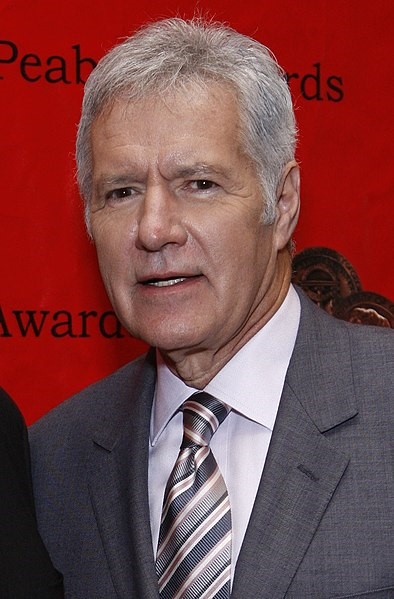 If you’re a fan of the TV show Jeopardy, you probably know that host Alex Trebek is fighting for his life.


