New US dietary guidelines remove the daily cholesterol limit of 300mg, allowing egg lovers to consume this versatile protein with no guilt. APRIL 7, 2018
For the first time in decades, the latest US Dietary Guidelines no longer recommend that we limit our intake of cholesterol to 300mg a day, allowing more eggs. — TNS
For the first time in decades, the latest Dietary Guidelines for Americans no longer recommend that we limit our intake of cholesterol to 300mg a day. (One egg yolk contains about 180mg of cholesterol.)
Instead, these experts tell us to limit saturated fat (eggs are low in this type of fat) and “eat as little dietary cholesterol as possible while consuming a healthy eating pattern”.
In other words, heart health appears to depend less on whether we eat eggs or not and more on the company they keep.
There’s a big difference, for example, between a breakfast of eggs, wholegrain toast, low fat yoghurt and fruit, and one that features eggs, sausage, biscuits and gravy.
Eggs have long scored the highest of all protein foods in quality and digestibility.
Each egg contains all the essential amino acids to build every type of protein our bodies need.
One amino acid is leucine – a powerful stimulant for building muscle tissue.
And eggs are cheap (cheep cheep) compared to most other sources of protein.
Besides protein, eggs are packed with 13 essential nutrients (meaning they are absolutely needed for our bodies to function).
According to the Egg Nutrition Center, eggs are one of very few foods that contain vitamin D naturally.
And these compact nutrition powerhouses also provide choline, a nutrient involved with brain development during pregnancy, plus memory and mood functions as we get older.
And here’s a surprise: Don’t toss the yolks. That’s where most of the nutrients in eggs reside, including vitamin D, choline and antioxidant substances.
Also, more than 40% of the protein in eggs is found in the yolk.
By the way, the colour of the egg does not change the nutrition of this food. Different hens lay different-coloured eggs.
The colour of the yolk, however, depends on the amount of orange and yellow plant pigments in the hen’s diet. – The Monterey County Herald/Tribune News Service
This is both a tragedy and an embarrassment for the Heart Association. Assuming the 52-year-old president was following the badly flawed AHA dietary guidelines, maybe this is the wake-up call they need to come clean with what the science really says for preventing heart attacks.
November 29, 2017
Story at-a-glance
John Warner, cardiologist and president of the American Heart Association (AHA), recently suffered a heart attack in the middle of a health conference at the age of 52
In all likelihood, Warner followed AHA recommendations, many of which can actually worsen or cause heart disease
AHA supports ample grain consumption and recommends eating harmful fats such as canola, corn, soybean and sunflower oil, both of which are known to cause and/or contribute to cardiovascular problems
Good heart health starts with your diet — what you eat and when you eat. A powerful treatment for heart disease is to work your way up to an intermittent fasting schedule where you’re fasting for 20 hours a day
When you do eat, make sure you eat real food, and consider a cyclical ketogenic diet, high in healthy fats, low in net carbs with moderate protein. Once you’re comfortable with this intermittent fasting schedule, start doing a monthly water only fast, working your way up to multiple days
By Dr. Mercola
In the health paradox of the year, 52-year-old cardiologist John Warner, president of the American Heart Association (AHA), recently suffered a heart attack in the middle of a health conference.1,2 In a statement, the association reported Warner was in stable condition after having a stent placed to open a blocked artery. Part of Warner’s speech at the Scientific Sessions conference in Anaheim, California, centered around his own family’s struggle with heart disease.
"After my son was born and we were introducing him to his extended family, I realized something very disturbing: There were no old men on either side of my family. None. All the branches of our family tree cut short by cardiovascular disease," Warner said in his speech.3
“Together we can make sure old men and old women are regulars at family reunions, that people live long enough and healthy enough to enjoy walks and fishing trips with their grandchildren and maybe even their great-grandchildren. In other words, I look forward to a future where … children grow up surrounded by so many healthy, beloved, elderly relatives that they couldn't imagine life any other way.”
The AHA’s CEO, Nancy Brown, said in a statement:4 “John wanted to reinforce that this incident underscores the important message that he left us with in his presidential address … that much progress has been made, but much remains to be done.”
Many AHA Recommendations Worsen Heart Health
In all likelihood, Warner followed AHA recommendations, many of which are actually recipes for heart disease disaster. Of the foods scientifically proven to cause heart disease and clogged arteries, excess sugar and industrially processed omega-6 vegetable oils, found in nearly all processed foods, compete for space at the top the list. And what kinds of foods does the AHA recommend to protect your heart?
Not only does it support ample grain consumption, it also recommends eating harmful fats such as canola, corn, soybean and sunflower oil.5 “Blends or combinations of these oils, often sold under the name ‘vegetable oil,’ and cooking sprays made from these oils are also good choices,” the AHA says. Meanwhile, the association still insists saturated fats are to be avoided.
Just this past summer the AHA shocked health experts around the world by sending out a worldwide advisory6 saying saturated fats such as butter and coconut oil should be avoided to cut your risk of heart disease, and that replacing these fats with margarine and vegetable oil might cut your heart disease risk by as much as 30 percent. Overall, the AHA recommends limiting your daily saturated fat intake to 6 percent of daily calories or less.7
This is as backward as it gets, and if Warner was following this long-outdated advice, it’s no wonder he suffered a heart attack. In fact, it is to be expected. As noted by American science writer Gary Taubes in his extensive rebuttal to the AHA’s advisory,8 with this document, the AHA reveals its longstanding prejudice — and the method by which it reaches its flawed conclusions.
In short, the AHA simply excluded any and all contrary evidence. After this methodical cherry-picking, they were left with just four clinical trials published in the 1960s and early ‘70s — the eras when the low-fat myth was born and grew to take hold. The problem is nutritional science has made significant strides since then, and a number of significant studies have firmly disproven the hypothesis that saturated fat causes heart disease, finding no association whatsoever.
In related news, the AHA recently issued new guidelines on blood pressure,9 moving the goal post for heart health yet again. Now you’re considered hypertensive if your blood pressure is above 130 over 80. Previous guidelines started hypertension at 140 over 90. This means an estimated 30 million Americans will qualify for the designation of having high blood pressure, and of those, an estimated 1 in 5 are likely to receive the recommendation to take blood pressure medication.
Flawed Fat Recommendations Have Been Followed With Disastrous Consequences
Since the 1950s, when vegetable oils began being promoted over saturated fats like butter, Americans have dutifully followed this advice, dramatically increasing consumption of vegetable oil. Soybean oil, for example, has risen by 600 percent while butter, tallow and lard consumption has been halved. We’ve also dramatically increased sugar consumption, which has also been implicated as a primary contributor to heart disease and other chronic health problems.10
While following this advice, Americans have gotten fatter and sicker. Heart disease rates have not improved even though people have been following the AHA’s “heart healthy diet.” Common sense tells us if the AHA’s advice hasn’t worked in the last 65 years, it’s not likely to start working now. Modern research is just now starting to reveal what actually happens at the molecular level when you consume vegetable oil and margarine, and it’s not good.
For example, Dr. Sanjoy Ghosh,11 a biologist at the University of British Columbia, has shown your mitochondria cannot easily use polyunsaturated fatty acids (PUFAs) for fuel due to the fats’ unique molecular structure. Other researchers have shown the PUFA linoleic acid hinders mitochondrial function and can even cause cell death.12
PUFAs are also not readily stored in subcutaneous fat. Instead, PUFAs tend to get deposited in your liver, where they contribute to fatty liver disease, and in your arteries, where they contribute to atherosclerosis.
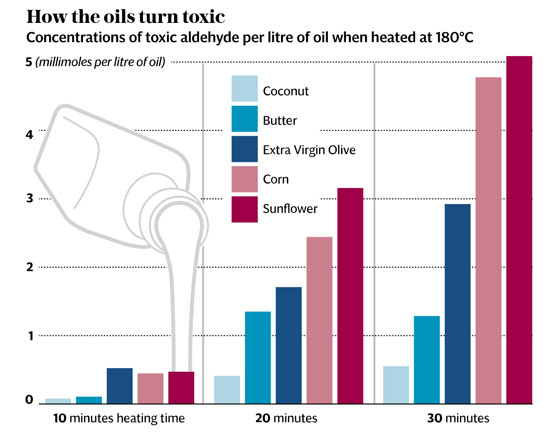
According to Frances Sladek,13 Ph.D., a toxicologist and professor of cell biology at UC Riverside, PUFAs behave like a toxin that builds up in tissues because your body cannot easily rid itself of it. Making matters worse, when vegetable oils like sunflower oil and corn oil are heated, cancer-causing chemicals like cyclic aldehydes are also produced.14
Other research confirms such findings by linking fried foods to an increased risk of death. For example, eating fried potatoes more than twice a week has been shown to double a person’s risk of death compared to never eating fried potatoes.15 Animal and human research has also found vegetable oils promote:
According to Dr. Cate Shanahan,21 a family physician and author of “Deep Nutrition: Why Your Genes Need Traditional Food,” the idea that PUFAs are healthier than saturated fats falls flat when you enter the field of biochemistry, because it’s “biochemically implausible.” In other words, the molecular structure of PUFA is such that it’s far more prone to react with oxygen, and these reactions disrupt cellular activity and cause inflammation.22 Oxidative stress and inflammation, in turn, are hallmarks not only of heart disease and heart attacks but of most chronic diseases.23,24
“[T]he folks at the AHA claim saturated fat is pro-inflammatory and causes arterial plaque and heart attacks — but there is no biochemically plausible explanation for their argument,” she told me in an emailed rebuttal to the AHA advisory.“Saturated fat is very stable, and will not react with oxygen the way PUFA fat does, not until the fundamental laws of the universe are altered.
Our bodies do need some PUFA fat, but we need it to come from food like walnuts and salmon or gently processed (as in cold pressed, unrefined) oils like flax and artisanal grapeseed, not from vegetable oils because these are refined, bleached and deodorized, and the PUFA fats are molecularly mangled into toxins our body cannot use.”
Open Letter to AHA President
In an open letter to AHA president Warner, Dr. William Davis, a New York cardiologist and author of The New York Times best seller “Wheat Belly, Lose the Wheat, Lose the Weight, and Find Your Path Back to Health,” writes, in part:
“If you ignore the nonsense that AHA policy dictates, you can absolutely gain control over cardiovascular risk. But you will NOT find the answers in any AHA policy. I learned these lessons practicing as an interventional cardiologist, then abandoning this ridiculous way of managing coronary disease to devote my efforts to early detection and prevention.
So, I thought I would articulate some of these thoughts in an open letter to Dr. Warner as he recovers from his procedure … Dr. Warner — … There are a number of reasons why someone like you — deeply-entrenched in the conventional world of heart disease management and what passes for prevention — highlights the miserable failure that the modern coronary care paradigm represents:
1) We are trapped by the outdated but profitable lipid hypothesis … 2) We know from abundant data that small oxidation- and glycation-prone LDL particles are highly atherogenic … are potent triggers of the inflammation cascade … and are triggered to abundant degrees in some genotypes upon consumption of the amylopectin A of grains …
[Y]es, the food that the American Heart Association advises to fill the diet with — and sugars … I am hoping that, now that this disease has touched you personally, your eyes will be opened to the corrupt and absurd policies of conventional coronary care and the American Heart Association.”
The Magic Pill Myth Needs to End
Davis goes on to note that heart disease is a multifactorial problem that cannot be solved with a pill.
“Thinking that a statin drug … [is] sufficient to prevent coronary events is absurd and overly-simplistic, like thinking that taking Aricept for dementia will stop the disease — of course, it does no such thing,” he writes, adding, “There are no drugs to ‘treat’ many of the contributors to coronary atherogenesis.But there are many non-drug strategies to identify, then correct, such causes.”
Nondrug prevention strategies suggested by Davis include:
•Avoiding any and all dietary factors that provoke insulin resistance, glycation and formation of small, dense LDL particles. Importantly, this would include avoiding the harmful fats recommended by the AHA such as margarine and processed vegetable oils, and keeping your total daily fructose consumption below 25 grams per day.
•Optimizing your vitamin D level.
•Optimizing your omega-3 fat intake: An omega-3 index of 10 percent or greater is associated with “dramatic reduction in cardiovascular events,” Davis notes. Indeed, a 2010 analysis25 found that while diets higher in omega-6 fats (found in ample amounts in vegetable oils) and lower in omega-3s increased the risk of nonfatal myocardial infarction and death from heart disease by 13 percent; a mixed diet of both omega-3 and omega-6 fats reduced these risks by 22 percent.
Meanwhile, the AHA recommends higher intakes of omega-6, saying26 “Aggregate data from randomized trials, case-control and cohort studies, and long-term animal feeding experiments indicate that the consumption of at least 5 percent to 10 percent of energy from omega-6 PUFAs reduces the risk of coronary heart disease relative to lower intakes.
The data also suggest that higher intakes appear to be safe and may be even more beneficial.”This statement runs counter to a large body of research suggesting the converse — specifically, that reducing omega-6 fats and increasing omega-3 is better for your heart.
•Addressing your thyroid function.
•Optimizing your gut microbiome to address dysbiosis caused by excess sugar, chlorinated and fluoridated water, and exposure to antibiotics, pesticides and common heartburn drugs.
Stent Placement No Better Than Placebo
Research also does not support the routine procedure of coronary artery angioplasty and stent placement. In fact, recent research suggests up to 50 percent of all stent placements may be unnecessary.27 Moreover, the effectiveness of this procedure is right on par with placebo. In a recent study published in The Lancet, researchers from Imperial College London investigated the difference between patients who had received a stent for stable angina and those who underwent a placebo intervention.28
In the short video above, lead author and interventional cardiologist Dr. Rasha Al-Lamee, describes the study and its results. Two hundred participants with severe single vessel blockage were recruited from five sites across the U.K.29 During the initial six weeks, all patients underwent an exercise test followed by intensive medical treatment.
At that point, they were randomly assigned to two groups. The first underwent a percutaneous intervention (PCI) during which coronary angioplasty was performed and a stent was placed. The second group also underwent a PCI procedure with an angiogram but without a balloon angioplasty or stent placement.30
For the following six weeks, neither the patient nor the physician knew if the patient received the stent. At the conclusion of the six weeks, patients again underwent an exercise test and were questioned about their symptoms. The researchers found both groups experienced nearly identical improvements in exercise tolerance and no difference in reported improvements of their symptoms.31 From the data, Al-Lamee commented:32
“Surprisingly, even though the stents improved blood supply, they didn’t provide more relief of symptoms compared to drug treatments, at least in this patient group. It seems that the link between opening a narrowing coronary artery and improving symptoms is not as simple as everyone had hoped.”
In this interview, Dr. Thomas Cowan, family physician, founding member of the Weston A. Price Foundation and author of “Human Heart, Cosmic Heart: A Doctor’s Quest to Understand, Treat and Prevent Cardiovascular Disease,” reveals how your heart and circulatory system works. This understanding may go a long way toward changing the way you understand heart disease.
He makes a strong case for heart disease being rooted in mitochondrial dysfunction and believes plaque formation alone cannot explain a heart attack."[Conventionally], it's all about the plaque," Cowan says. "My point in the book is that it's NOT about the plaque." The conventional view is that your heart functions like a pump — a pressure propulsion system caused by the muscular contraction of the ventricles.
Cowan explains that your heart is actually better described as a hydraulic ram — a vortex-creating machine — where the primary mover of blood is the interaction occurring between the negatively charged vessel walls and the positively charged water in your blood. Importantly, the following three natural energies result in a separation of charges that improve blood flow:
1.Sunlight charges up your blood vessels, which increases the flow of blood. When the sun's rays penetrate your skin, it causes a massive increase of nitric oxide that acts as a vasodilator. As much as 60 percent of your blood can be shunted to the surface of your skin through the action of nitric oxide.
This helps absorb solar radiation, which then causes the water in your blood to capture the energy and become structured. This is a key component for a healthy heart. The ideal is to be exposed to the sun while grounding, meaning walking barefoot. This forms a biological circuit that makes it work even better.
2.Negative ions from the Earth, also known as earthing or grounding. This also charges up your blood vessels, creates a separation of charges, creates more positive ions and allows the blood to flow upward, against gravity.
3.The field effect or touch from another living being, such as laying on of hands.
A Healthy Heart Is the Result of a Healthy Lifestyle
As noted by Cowan, "The best thing is to be, more or less, with shorts or naked on the beach, with the saltwater, which acts as an electrical conductor, holding hands with somebody you love. That's how you structure the water [in your blood vessels]." Sun exposure, grounding and skin-to-skin contact are three heart disease prevention strategies that, ideally, everyone should be doing, and it doesn't get a whole lot easier or less expensive than this.
That said, your heart health is really dependent on your diet — what you eat and when you eat. In my view, the best treatment for heart disease is to work your way up to an intermittent fasting schedule where you’re fasting for 20 hours a day. When you do eat, make sure you eat real food, and consider a cyclical ketogenic diet, high in healthy fats, low in net carbs with moderate protein.
Once you’re comfortable with this intermittent fasting schedule, start doing a monthly five-day water fast. This really is the most powerful metabolic intervention I know of, and I feel it’s one of the healthiest things I now do for my own health. Senescent cells, which have stopped replicating, play a distinct role in aging and disease. Once replication stops, these cells need to be removed from your body, or else they start clogging it up, causing severe inflammation and immune dysfunction.
Fasting very effectively gets rid of senescent cells — a process known as autophagy. Fasting also stimulates the production of stem cells, which help with regeneration and healing.
While a five-day fast may sound intimidating, if you’re used to 20-hour daily intermittent fasting for a month before starting your five-day fast, then the hunger that typically strikes on the second day of fasting is dramatically reduced and will typically not be at all bothersome. Fasting is also a powerful remedy for insulin resistance, which is a major underlying factor of heart disease.
Last but not least, the following exercise, which requires only two to three minutes, three times a day, is a super-simple way to boost your heart health. It prompts your body to release nitric oxide, which will help relax your blood vessels and improve your blood pressure.
Now Available: ‘Fat for Fuel Ketogenic Cookbook’
I believe “Fat for Fuel” is one of the most important books I’ve ever written because it represents my worthy contribution to our understanding about preventing and healing disease. With all the information I packed into “Fat for Fuel,” it still didn’t provide the total picture. Although the book provides you with what changes are necessary and why to make them, you still need to know how to implement dietary changes and strategies.
That’s why I created a comprehensive companion tool, the “Fat for Fuel Ketogenic Cookbook: Recipes and Ketogenic Keys to Health from a World-Class Doctor and an Internationally Renowned Chef,” with celebrity chef Pete Evans. When you order today, you’ll receive three valuable bonuses:
✔Bonus Chapter: Due to spacing considerations, this chapter was excluded from the book but can be yours today!
✔Discount Coupon: A Mercola discount coupon good on your next order.
✔Recipe Sneak Peek: An SMS exclusive with instant access to five recipes from the book.
For the past four decades, the U.S. government has warned that eating cholesterol-rich foods such as eggs would raise your LDL cholesterol (inappropriately referred to as "bad" cholesterol) and promote heart disease. May 03, 2017
Story at-a-glance-
A 40-year-old previously unpublished trial shows that while replacing saturated fat with vegetable oil lowered total cholesterol by 14 percent, for every 30 point drop in total cholesterol there was a 22 percent increased chance of death
Many other trials have also found that replacing saturated fats with vegetable oils increase mortality risk from all causes, including coronary heart disease and cardiovascular disease
Processed vegetable oils contribute to devastating attacks to your health and attacks your brain in several ways, thereby contributing to and worsening neurologic disorders
By Dr. Mercola
For the past four decades, the U.S. government has warned that eating cholesterol-rich foods such as eggs would raise your LDL cholesterol (inappropriately referred to as "bad" cholesterol) and promote heart disease.
Alas, decades' worth of research utterly failed to demonstrate this correlation, and the 2015-2020 Dietary Guidelines for Americans1,2,3,4,5 finally addressed this scientific shortcoming, announcing "cholesterol is not considered a nutrient of concern for overconsumption."6
This is good news, since dietary cholesterol plays an important role in brain health and memory formation, and is indispensable for the building of cells and the production of stress and sex hormones, as well as vitamin D. (When sunlight strikes your bare skin, the cholesterol in your skin is converted into vitamin D.)
Unfortunately, the dietary guidelines still cling to outdated misinformation about saturated fat, wrongly accusing it of raising LDL and contributing to heart disease. Here, science has shown that saturated fat only raises the safe, fluffy LDL particles. It also increases HDL, which is beneficial for your heart.
The guidelines became and are still confusing because the basic premise was wrong. Dietary fat is indeed associated with heart disease, but it's the processed vegetable oils, which are loaded with trans fats and oxidized omega-6 fats, that are the problem, not saturated fats.
The introduction of industrialized, highly processed and frequently heated omega-6 vegetable oils distorted the vitally important omega 6-to-3 ratio, causing metabolic catastrophes. The problem was further exacerbated by replacing saturated fat with refined carbohydrates, which were incorrectly viewed as a healthier option, thanks to misinformation created and spread by the sugar industry.
Impairs Electrical Storage Potential of Your Cells
Nutrition and biochemistry are clearly important to your health, but so is your body's electrical system. All our membranes are made of fats that are insulators and connected through a conductor. This arrangement sets up a biological capacitor to store electrons — but only if the fats are healthy.
If you consume damaged fats, or worse, heated and hydrogenated oils, the fatty acids in the cell membrane essentially become nonfunctional and unable to store body voltage, thus increasing the risk for disease. This is one of many reasons why it is so vital to eat healthy fats.
Unpublished Research Undermines Decades of Dietary Advice
Ancel Keys was one of the most prominent nutritional researchers of the mid-20th century. He gained enormous professional and influential prominence and his views were widely adopted by professional and public health organizations. His research formed the foundation for all of the low-fat recommendations that followed. Interestingly, some of his own follow-up research actually undermined his hypotheses on cholesterol and saturated fat, but these findings were never published.
Had they been, the cholesterol and low-fat myths might never have gained the same kind of traction. The four decades' old study in question was unearthed by Dr. Christopher E. Ramsden, who specializes in digging up and reevaluating lost studies that challenge mainstream health advice.7,8,9,10,11,12,13,14,15,16
Keys, who was largely funded by the sugar industry, is believed to have been responsible for suppressing this damning study, as it doesn't support his original hypothesis. Only parts of the trial's results were ever published, leaving out the controversial finding that replacing saturated fats with vegetable oil had no benefit on mortality. As reported by Scientific American:17
"Ramsden, of the National Institutes of Health, unearthed raw data from a 40-year-old study, which challenges the dogma that eating vegetable fats instead of animal fats is good for the heart. The study, the largest gold-standard experiment testing that idea, found the opposite …
Although the study is more than just another entry in the long-running nutrition wars — it is more rigorous than the vast majority of research on the topic — Ramsden makes no claims that it settles the question. Instead, he said, his discovery and analysis of long-lost data underline how the failure to publish the results of clinical trials can undermine truth."
Saturated Fat Vindicated in Largest Most Rigorous Trial of Its Kind
The study,18 conducted from 1968 to 1973, included 9,423 participants between the ages of 20 and 97, making it the largest trial of its kind. The participants were also residents of state mental hospitals and a nursing home, making it one of the most rigorously detailed studies as the meals of every person were carefully logged.
On the average, each patient was followed for about 15 months. Participants were randomly assigned to one of two groups, receiving either:
A then-standard diet containing 18.5 percent saturated fat from animal fats such as milk, cheese, beef and shortening, and 5 percent unsaturated fat, based on total calories
A diet in which 50 percent of the saturated fats were replaced with vegetable oil (a mainstay in today's processed foods) and corn oil margarine (total 9 percent saturated fat and 13 percent unsaturated fat)
After analyzing the data, Ramsden and his team found that vegetable oils lowered total cholesterol levels by an average of 14 percent after one year. However, this lower cholesterol did not result in improved health and longevity, which is the conventional belief. Instead, the research showed that the lower the cholesterol, the higher the risk of dying!
For every 30 point drop in total cholesterol there was a 22 percent increased chance of death. In the 65 and older category, those who received vegetable oil experienced roughly 15 percent more deaths compared to seniors in the saturated fat group. The vegetable oil also did not result in fewer cases of atherosclerosis or heart attacks.
On the contrary, autopsies revealed both groups had similar levels of arterial plaque, but 41 percent of the vegetable oil group showed signs of at least one heart attack compared to just 22 percent of those in the saturated fat group. According to the authors:
"Available evidence from randomized controlled trials shows that replacement of saturated fat in the diet with linoleic acid [vegetable oil] effectively lowers serum cholesterol but does not support the hypothesis that this translates to a lower risk of death from coronary heart disease or all causes."
Why Vegetable Oils Are so Bad for Your Health
Later this year I will post my interview with Dr. Cate Shanahan, author of "Deep Nutrition: Why Your Genes Need Traditional Food,"19 in which she delves into the profound harms done by processed vegetable oils in the modern diet. To learn more, keep your eyes open for that interview.
According to Shanahan, vegetable oil is your brain's worst enemy, attacking it "at seven distinct vulnerability points using seven distinct strategies. All seven strategies are at work in causing autism and other childhood neurologic disorders." This includes:
Promoting gut inflammation and leaky gut. This inflammation often causes heartburn, which can serve as a red flag. Unfortunately, many misattribute heartburn to spicy foods rather than the more significant culprit, namely vegetable oils
Disrupting the regulation of blood flow through the arteries in your brain and depleting your brain of antioxidants
Turning your immune system against you by affecting your white blood cells (immune system cells), causing disease and nerve degenerating reactions
Attacking the nerve cellular architecture. "Vegetable oils cause an overload of oxidative reactions inside the cell, leading to the accumulation of intracellular trash. When this affects our white matter, we lose our mobility. When it affects our gray matter, we lose our personalities and our connections to the world," Shanahan explains in her book20
Impairing brain development through mutagenic effects on DNA and altered epigenetic expression
Other reasons why vegetable oils cause heart disease and other health problems include the following:
Omega-6 polyunsaturated fats, when taken in large amounts, cannot be burned for fuel. Instead, they're incorporated into your cellular and mitochondrial membranes, where they are highly susceptible to oxidative damage. As a result, your metabolic machinery is damaged. Vegetable oils made from genetically engineered (GE) crops (as most are) have additional health risks, as they tend to be loaded with toxic herbicide residues like Roundup.
While your body needs some omega-6, most get far too much of it compared to omega-3, and this lopsided ratio can also have adverse health consequences.
When heated, vegetable oils tend to oxidize. According to Dr. Fred Kummerow,21 who has researched lipids and heart disease for eight decades, oxidized cholesterol is the real culprit that causes heart disease. By triggering inflammation, it promotes the clogging of arteries and associated cardiovascular problems, including heart attacks.
Many Studies Have Debunked the Saturated Fat Myth
Several other studies have also demonstrated that replacing saturated fats with vegetable oils is a bad idea. While the benefits for cardiovascular mortality and risk-factor reduction have been mixed, none of these trials showed that restricting saturated fats reduced total mortality:
Recovered data from the Sydney Diet Heart Study: In 2013, Ramsden's team analyzed four trials looking at the effects of replacing saturated fats with vegetable oils. Replacing saturated fats with linoleic acid-rich vegetable oils increased mortality risk from all causes, including coronary heart disease and cardiovascular disease22
The Oslo Study (1968): A study of 412 men, aged 30-64 years, found eating a diet low in saturated fats and high in polyunsaturated fats had no influence on rates of sudden death23
L.A. Veterans Study (1969): A study of 850 elderly men that lasted for six years is widely used to support the diet-heart hypothesis. No significant difference was found in rates of sudden death or heart attack among men eating a mostly animal-foods diet and those eating a high-vegetable oil diet. However, more non-cardiac deaths, including from cancer, were seen in the vegetable oil group24
London Soybean Oil Trial (1968): This study of nearly 400 men that lasted for two to seven years found no difference in heart attack rate between men following a diet low in saturated fats and high in soybean oil and those following an ordinary diet25
The U.S. Multiple Risk Factor Intervention Trial (MRFIT): Sponsored by the National Heart, Lung and Blood Institute, this is another study that is highly misleading. It compared mortality rates and eating habits of over 12,000 men, and the finding that was widely publicized was that people who ate a low saturated fat and low-cholesterol diet had a marginal reduction in coronary heart disease. However, their mortality from all causes was actually higher26
A 2013 editorial published in the BMJ described how the avoidance of saturated fat actually promotes poor health in a number of ways. As stated by the author, Dr. Aseem Malhotra, an interventional cardiology specialist registrar at Croydon University Hospital in London:27
"The mantra that saturated fat must be removed to reduce the risk of cardiovascular disease has dominated dietary advice and guidelines for almost four decades. Yet scientific evidence shows that this advice has, paradoxically, increased our cardiovascular risk ...
The aspect of dietary saturated fat that is believed to have the greatest influence on cardiovascular risk is elevated concentrations of low density lipoprotein (LDL) cholesterol. Yet the reduction in LDL cholesterol from reducing saturated fat intake seems to be specific to large, buoyant (type A) LDL particles, when in fact it is the small, dense (type B) particles (responsive to carbohydrate intake) that are implicated in cardiovascular disease.
Indeed, recent prospective cohort studies have not supported any significant association between saturated fat intake and cardiovascular risk. Instead, saturated fat has been found to be protective."
A 2014 meta-analysis published in the Annals of Internal Medicine (which included data from 76 studies and more than a half-million people) found that those who consume higher amounts of saturated fat have no more heart disease than those who consume less. Moreover, those who ate higher amounts of unsaturated fat, including both (healthy) olive oil and (unhealthy) corn oil — both of which are recommended over saturated fats — did not have lower incidence of heart disease28
A 2015 meta-analysis published in the BMJ also failed to find an association between high levels of saturated fat in the diet and heart disease. Nor did they find an association between saturated fat consumption and other life-threatening diseases like stroke or type 2 diabetes29
"One would expect that the more you lowered cholesterol, the better the outcome. But in this case the opposite association was found. The greater degree of cholesterol-lowering was associated with a higher, rather than a lower, risk of death."In summary, industrially processed, highly refined vegetable oils do not reduce your risk of dying from heart disease. Put another way, saturated fats do not increase your risk of dying from heart disease either. Moreover, reducing cholesterol is not necessarily a sign of improved health; it may actually increase your risk of death. As noted by Ramsden:30
Statins Revisited
The cholesterol myth has been a boon to the pharmaceutical industry, as cholesterol-lowering statins — often prescribed as a primary prevention against heart attack and stroke related to high cholesterol — have become one of the most frequently used drugs on the market. In 2012, nearly 28 percent of American adults over the age of 40 reported using a statin.31
Updated cholesterol treatment guidelines issued by the American College of Cardiology and the American Heart Association (AHA) in 2013 made another 9.3 million Americans eligible candidates for the drug. However, researchers have repeatedly warned the cardiovascular risk calculator32 used may be overestimating your risk by anywhere from 75 to 150 percent.33 This means even healthy people at low risk for heart problems are being turned to statins.
What's worse, the guideline also removed the recommendation to use the lowest drug dose possible. Instead, the sole focus is on statin-only treatment at higher dosages. The guidelines also ignore the density of the lipoproteins (the LDL and HDL). Large fluffy LDL particles are not harmful. Only small dense LDL particles can potentially cause problems as they can squeeze through the lining of your arteries. If they oxidize, they can cause damage and inflammation.
This means you could potentially have an LDL level of 190 but still be at low risk as long as your LDLs are large, and your HDL-to-total cholesterol ratio is above 24 percent. As mentioned earlier, saturated fat not only increases your HDL, it also increases large, fluffy LDLs, which is what you want.
Two Leading Cholesterol Guidelines Differ in Their Recommendations
Now, researchers have revisited the cholesterol guidelines, noting there are significant differences between the two leading guidelines in the U.S.34 In 2016, the U.S. Preventive Services Task Force (USPSTF) released its own cholesterol treatment guidelines, which suggests statins should not be used unless the patient has at least one other risk factor (such as high blood pressure, diabetes or smoking) in addition to having a 10 percent risk on the cardiovascular risk calculator.
Under these guidelines, an estimated 17.1 million Americans are candidates for a statin, compared to the 26.4 million covered by the American College of Cardiology/AHA guidelines. The differences between the two guidelines have caused a great deal of debate among experts.
Which one's better? As Michael Pencina, a professor of biostatistics and bioinformatics at the Duke Clinical Research Institute and lead author of the study told CNN:35 "There's generally confusion on who should be getting statins. I don't think we have the perfect guideline yet."
In my view, the number needed to treat offers compelling clues to the overall uselessness of statins. According to an analysis by the USPSTF, published last year:36
100 people need to take a statin as a primary preventive for five years in order for one or two people to avoid a heart attack, and none will actually live longer
250 people need to take a statin for up to six years in order to prevent a single death from any cause
A 2015 report37 published in the Expert Review of Clinical Pharmacology concluded that "statistical deception created the appearance that statins are safe and effective in primary and secondary prevention of cardiovascular disease."
By using relative risk reduction, the trivial benefits of statins are amplified. If you look at absolute risk, statin drugs benefit a mere 1 percent of the population. As noted by the USPSTF, this report found that out of 100 people treated with the drugs, one person will have one less heart attack.
Statins Do Not Reduce Mortality, and Can Seriously Harm Your Health
Other studies38 have also found that statins provide no reduction in mortality when used preventatively — even in at-risk groups. This strongly suggests statins have even less of a benefit among those already at low risk of heart disease. Recent research39 has also confirmed that high cholesterol is not linked with heart disease in the elderly, prompting the researchers to conclude that reducing cholesterol levels with statin drugs is "a waste of time."
Indeed, Stephanie Seneff, Ph.D. and senior scientist at MIT, believes heart disease is a cholesterol deficiency problem, which is essentially the converse of the conventional paradigm. Still, her hypothesis appears to be supported by studies showing people with higher levels of cholesterol actually live longer than those with lower levels.
Aside from being a "waste of time" and not doing anything to reduce mortality, statins also carry with them a list of over 200 side effects and clinical challenges, including:40,41
Increased risk of diabetes (there are several mechanisms for this, including increasing insulin resistance and raising your blood sugar)
Acute liver disease
Muscle pain, tenderness or weakness
Rhabdomyolysis (a condition involving the death of muscle fibers),
Acute kidney failure
Chronic liver dysfunction
Reduced ketone production.42 Ketones are water-soluble fat nutrients important for tissue health.
They're also important molecular signaling molecules
Depletes your body of essential vitamins, minerals and nutrients, including CoQ10 and vitamin K2, both of which are important for cardiovascular and heart health
Importantly, statins are a Category X medication, meaning they cause serious birth defects, so they should NEVER be used by a pregnant woman or women planning a pregnancy
Increased risk of cancer. Long-term statin use (10 years or longer) more than doubles women's risk of two major types of breast cancer: invasive ductal carcinoma and invasive lobular carcinoma43
Nerve damage. Research has shown statin treatment lasting longer than two years causes "definite damage to peripheral nerves"44
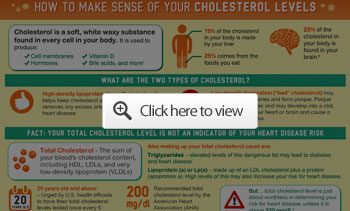
Making Sense of Your Cholesterol Levels and Assessing Your Heart Disease Risk
Embed this infographic on your website:
Click on the code area and press CTRL + C (for Windows) / CMD + C (for Macintosh) to copy the code
As a general rule, cholesterol-lowering drugs are not required or prudent for the majority of people — especially if both high cholesterol and longevity run in your family. Also keep in mind that your overall cholesterol level says very little about your risk for heart disease.
For more information about cholesterol and what the different levels mean, take a look at the infographic above. As for evaluating your heart disease risk, the following tests will provide you with a far more accurate picture than your total cholesterol or LDL level alone:
HDL/Cholesterol ratio
HDL percentage is a very potent heart disease risk factor. Just divide your HDL level by your total cholesterol. That percentage should ideally be above 24 percent
Triglyceride/HDL ratio
You can also do the same thing with your triglycerides and HDL ratio. That percentage should be below 2
Large LDL particles are not harmful. Only small dense LDL particles can potentially be a problem, as they can squeeze through the lining of your arteries. If they oxidize, they can cause damage and inflammation.
Some groups, such as the National Lipid Association, are now starting to shift the focus toward LDL particle number instead of total and LDL cholesterol, in order to better assess your heart disease risk.
Once you know your particle size numbers, you and your doctor can develop a more customized program to help manage your risk
Your fasting insulin level
Any meal or snack high in carbohydrates like fructose and refined grains generates a rapid rise in blood glucose and then insulin to compensate for the rise in blood sugar.
The insulin released from eating too many carbs promotes fat accumulation and makes it more difficult for your body to shed excess weight. Excess fat, particularly around your belly, is one of the major contributors to heart disease
Your fasting blood sugar level
Studies have shown that people with a fasting blood sugar level of 100-125 mg/dl had a nearly 300 percent increased higher risk of having coronary heart disease than people with a level below 79 mg/dl
Your iron level
Iron can be a very potent oxidative stress, so if you have excess iron levels you can damage your blood vessels and increase your risk of heart disease. Ideally, you should monitor your ferritin levels and make sure they are not much above 80 ng/ml.
The simplest way to lower them if they are elevated is to donate your blood. If that is not possible you can have a therapeutic phlebotomy and that will effectively eliminate the excess iron from your body