(CNN)In 2018, infectious disease experts at the University of Hong Kong came across an unusual patient.
The 56-year-old man, who had undergone a liver transplant, was showing abnormal liver functions with no obvious cause.
Updated 1136 GMT (1936 HKT) May 8, 2020
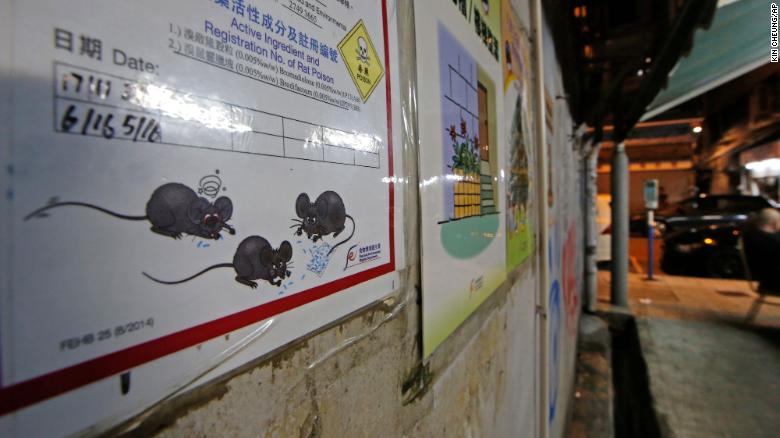 |
| A notice of rat poison in an alley in Hong Kong in November 2018. |
Tests found that his immune system was responding to hepatitis E -- but they couldn't actually find the human strain of the hepatitis E virus (HEV) in his blood.
Hepatitis E is a liver disease that can also cause fever, jaundice and an enlarged liver. The virus comes in four species, which circulate in different animals; at the time, only one of these four was known to infect humans.
With tests for that human strain of HEV negative, the researchers redesigned the diagnostic test, ran it again -- and found, for the first time in history, rat hepatitis E in a human.

"Suddenly, we have a virus that can jump from street rats to humans," said Dr. Siddharth Sridhar, a microbiologist and one of the HKU researchers who made the discovery. It was such an unusual and unprecedented infection that the team wondered if it was a "one-off incident, one patient who was in the wrong place at the wrong time."
But then it happened again. And again.
Since that first study, 10 more Hong Kong residents have tested positive with rat hepatitis E, also known as rat HEV. The most recent case came a week ago; a 61-year-old man with abnormal liver function tested positive on April 30. And there might be hundreds more infected undiagnosed people out there, said Sridhar.
 |
| The housing estate where the 56-year-old rat hepatitis E patient lived in Hong Kong. Signs of a rat infestation were found here after he was confirmed infected in 2018. |
The human strain of hepatitis E is typically transmitted through fecal contamination of drinking water, according to the World Health Organization.
But the rat strain poses a new mystery: nobody knows exactly how these people are getting infected. In the two years since the discovery, researchers have yet to identify the exact route of transmission from rats to humans. They have theories -- maybe the patients drank contaminated water like the usual human strain, or handled contaminated objects -- but nothing's been definitively proven.
The 61-year-old recent patient has authorities particularly stumped; there were no rats or rat excrement in his home, nobody else in his household has shown symptoms, and he has no recent travel history.
"Based on the available epidemiological information, the source and the route of infection could not be determined," said Hong Kong's Centre for Health Protection (CHP) in a statement on April 30. The man is still in the hospital, and the CHP's investigation is ongoing.
What we know, and don't know
The research team and city authorities have been trying to better understand this new health threat since 2018.
They've made some progress. Their diagnostic tests have been refined and improved. They've spread awareness among the health care sector so doctors know to test for rat HEV, and launched public awareness campaigns.
Scientists are testing rat populations citywide to try to identify clusters before they can jump to humans, which has provided data on how many rodents in the city carry rat HEV and which areas have the most rats.
 |
| Hong Kong officials place rat traps in an effort to determine whether rats contributed to a 2003 pneumonia outbreak. |
But there is still much that remains unknown. They don't know how long this virus' incubation period is -- meaning how long it takes for patients to get sick after exposure. They're still trying to find a treatment, as the medication used to treat the human variant of hepatitis E has had mixed results on patients with rat HEV.
And, of course, the biggest unknown that continues to vex scientists is the how.
Not knowing how the virus jumps from rats to humans makes it very difficult to prevent further infections -- or even to make sense of all the data researchers have collected. For instance, people who live in rat-infested areas should theoretically be at higher risk, yet some infected patients come from neighborhoods with low rat numbers.
"What we know is the rats in Hong Kong carry the virus, and we test the humans and find the virus. But how exactly it jumps between them -- whether the rats contaminate our food, or there's another animal involved, we don't know," said Sridhar. "That's the missing link."
One solution could be to just get rid of all the rats in Hong Kong, but rat eradication is a long, complicated feat that isn't very feasible. It would require reducing places they can shelter as well as their access to food, with measures like preventing food from being discarded in back alleys.
For now, all authorities can do is urge people to take preventative measures, like washing their hands before eating, storing food properly or in the fridge, and keeping the household clean and disinfected with minimal nesting places for rodents.
This could be happening everywhere
This likely isn't just a Hong Kong problem, or even a recent one, experts say. Rat HEV could be infecting people in New York or Paris, and we just don't know it -- because nobody is testing for it.
"My feeling is, this has been going on for a long time," said Sridhar. "2017, 2018 is definitely not the first time it's happened in the world."
Within Hong Kong, the 11 confirmed cases are likely just the tip of the iceberg, he added. Doctors were able to test them for rat HEV because they sought medical attention for symptoms, or were receiving checkups because of pre-existing conditions or transplants.
But there may be hundreds of infected cases in the community, who don't fall in these categories and haven't been diagnosed, he said.
Many people with hepatitis E only experience mild symptoms, and in some cases don't even know they're infected or go to the hospital.
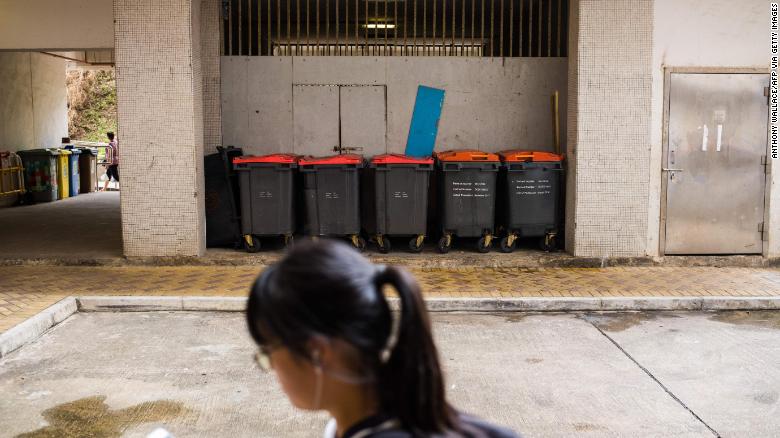 |
| A girl walks past large trash bins at housing estate where the 2018 rat hepatitis patient lived. A rat infestation was found in the estate. |
But the virus can have serious health consequences, particularly for patients with weakened immunity. Young, healthy people with no pre-existing conditions may be able to recover on their own -- but for vulnerable populations, it could cause chronic hepatitis that patients can't shake off, as well as long-term liver damage and tissue scarring.
Apart from the 11 cases in Hong Kong, only one other case has been confirmed globally -- a man in Canada, who had previously traveled to Africa. He went to the hospital after experiencing hives, nausea, severe jaundice and an inflamed liver, and tested positive for rat HEV, according to a report in February 2019.
The only reason authorities caught this case was because they used a broad type of test that detects many strands of hepatitis E virus, said researchers in the report, which was published in the Journal of Infectious Diseases. Otherwise, "the diagnosis might have been missed," the report said.
This is the problem -- most countries aren't testing for rat HEV, so there's a good chance they're just missing diagnoses, said Sridhar.
It takes a specialized test, like the one HKU designed, to specifically look for rat HEV in humans. It's not a difficult test to make, but it hasn't been adopted widely because nobody thought until recently that rat HEV was even a threat to humans.
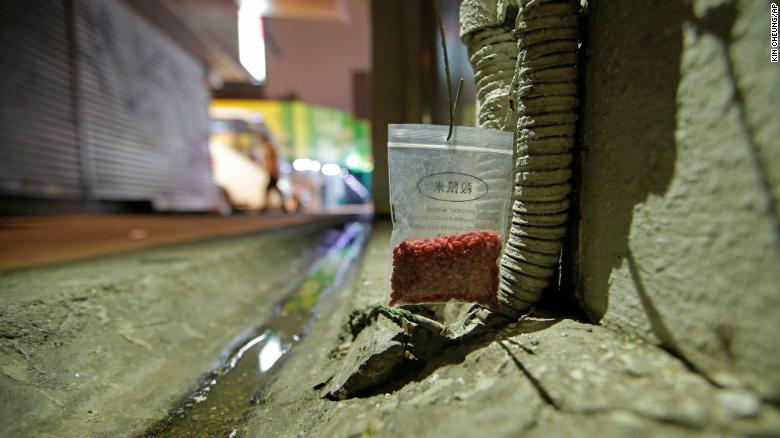 |
| A bag of rat poison in an alley in Hong Kong, in November 2018. |
For instance, in Europe a "lack of awareness by physicians and poorly standardized diagnostics led to under reporting" in hepatitis E cases, said Cornelia Adlhoch of the European Centre for Disease Prevention and Control (ECDC) and Sally Baylis of Germany's Paul-Ehrlich-Institut, in a letter published this March in the journal Hepatology.
Only last year did the ECDC finally develop guidelines for how to collect data and report information on hepatitis E, said the letter -- but these new guidelines focused on the human variant and didn't include rat HEV, leaving what Sridhar calls "a blind spot in our diagnostics."
This blind spot, and the possibility that the virus is infecting people globally without any control measures, place some of society's most vulnerable people at risk -- the elderly, HIV-affected communities, those with pre-existing conditions, and more.
"This should not be happening," said Sridhar. "We need ongoing vigilance in the public to control this unusual infection. I really hope that public health authorities take the first step and look at how much their populations are actually being exposed to rat hepatitis E."
https://edition.cnn.com/2020/05/08/health/hong-kong-rat-hepatitis-intl-hnk-scn/index.html


