Pages

Showing posts with label Cooking Oils. Show all posts

Sunday, 14 January 2018

Must Read: DANGERS OF HIGHLY REFINED COOKING OILS

“Vegetable” oil makes you exceedingly vulnerable to cancer. Every mouthful of vegetable oil you consume takes you one step closer to a deadly (and irreversible) outcome. David Gillespie

Image result for vegetable oils


by Yeong Sek Yee
Highly refined cooking oils (sometimes referred to as “plastic fats”) go through 3 main refining procedures. These are neutralization, bleaching, and deodorization and then the final light golden colour oil is usually called NBD Palm Oil (or Soya, Corn, etc) Nowadays it is just referred to as refined palm (or soya, corn) oil or refined vegetable oil.
Below is a brief description of the 3 procedures in getting the oils out of seeds, nuts, pericarps, etc and onto the supermarket shelves.
NEUTRALIZATION (sometimes referred to as refining):
Once extracted, the oil ‘needs’ to be refined, which involves the treatment of the crude oil with a lye solution to reduce the free fatty acid (FFA) content to 0.05 percent. This is done primarily to prevent spoilage—to help the oil last an eternity on the grocer’s shelf. In addition, other impurities in the oil, such as gums, phosphatides, pigments, and other oxidation products, which would ‘impair’ the taste, odor, shelf life, and other ‘desired’ properties of the oil are likewise removed. This degumming and neutralization process is accomplished by means of phosphoric acid and more lye.

BLEACHING
The now ‘neutral’ oil is mixed with bleaching earth (a type of clay) and activated carbon to give the oil a lighter color. Final purification is accomplished using filters, presses, and polishing filters. After this, the oil is pumped into storage tanks.
DEODORIZATION
All edible oils and fats contain certain compounds that give the particular oil its identifiable taste and smell. In all commercial oils, these compounds are removed to make the oil as neutral tasting as possible. This process is called deodorization, and because of the high temperatures involved, it is extremely damaging to the oil.
Refined, bleached oil from refining is first transferred to a de-aerator operating under a vacuum for removal of any air in the oil. 
The oil then passes through a series of heaters, where the temperature is raised high enough for efficient steam distillation and deodorization—upwards of 200°C (450°F). 
At these temperatures, the fundamental structure of many oils is changed into a different form of fatty acid through a process called isomerization. 
These new forms are not beneficial to the human body. The high heat also causes a small amount of trans fatty acids to be formed. 
Finally, steam is blown through the oil to vaporize those components of the oil that actually give it any lingering odor or taste. The fully deodorized, tasteless, and refined oil then passes through a cooler and polishing filter basket for removal of any fine suspension before being finally pumped to the storage tank.
THE FINAL PRODUCT
What’s left is oil that is virtually colorless, odorless, and tasteless, which can last for years in a bottle with no danger of spoilage
On the other hand, it has no connection with the beneficial oil that was originally contained in the seed or nut

It is now a ‘plastic fat,’ fundamentally changed in structure, that offers no benefits to the human body—a plastic fat that is actually quite harmful. 
In addition, all of the beneficial phyto-chemicals (such as the lignans, which are an integral part of the oil complex and play a key anti-cancer role) have been removed.
With the chemicals used in the refining process, can you visualize what would happen to your body when you consume refined oils on a regular basis such as fried foods like goreng pisang, fried kueh teow, fried chicken, etc? 
In some cases, the already toxic oils is re-used again and again and sometimes plastic straws, plastic bags are added to the frying oil to make the final product “ crispy” for a longer period.
For cancer patients, we strongly recommend that you use cold-pressed oils (such as coconut, olive, flaxseed, etc) where the oil is extracted without the use of heat or chemicals.
FURTHER REFERENCES:
If you would like to read more about the benefits (or dangers) of fats and oils we recommend the following texts:
FATS THAT HEAL, FATS THAT KILL by Udo Eramus who has a PhD in Nutrition. The book exposes the manufacturing processes that turn healing fats into killing fats and explains the effects of these damaged fats on human health.
TOXIC OIL…WHY VEGETABLE OIL WILL KILL YOU by David Gillespie, a lawyer who decided to research thoroughly on “vegetable oils” after his family was faced with some health issues. His opening statement in the book will stun you:
“Vegetable” oil makes you exceedingly vulnerable to cancer. Every mouthful of vegetable oil you consume takes you one step closer to a deadly (and irreversible) outcome. 
You are eating “vegetable oil” because it is cheaper to make food with oils that are chemically extracted/ refined from plant seeds.
http://www.cacare.com/the-dangers-of-highly-refined-cooking-oils

Thursday, 20 March 2014

Saturated, but necessary

Sunday March 2, 2014

BY TAN SHIOW CHIN

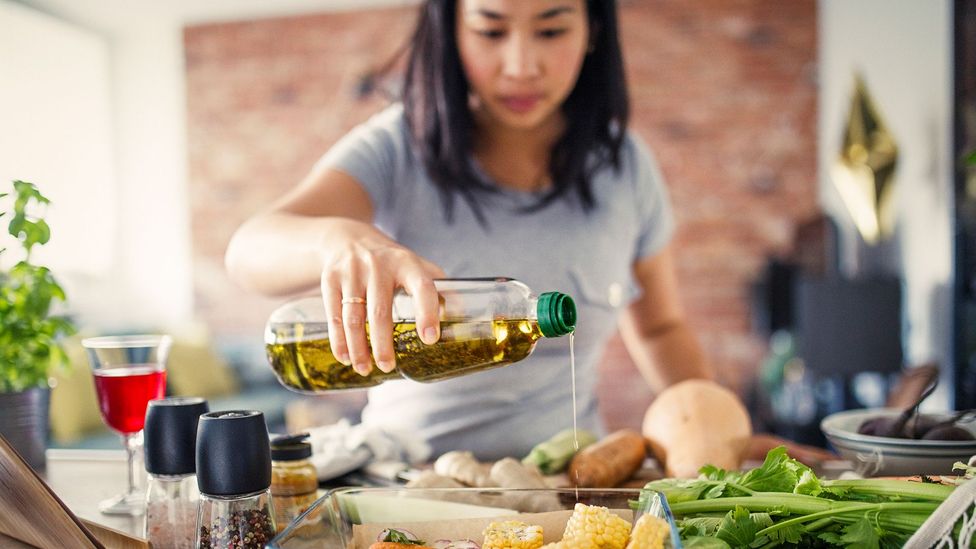
Around one-third to half of our fat intake comes from the cooking oil used to cook our foods. – Filepic

Saturated fat is often seen as public enemy number one in the war against cholesterol, but it may be less fearsome than it seems.
COMMON knowledge says that eating saturated fat raises your cholesterol levels. And as we also know, high cholesterol levels are a risk factor for coronary artery disease and stroke.
However, not all saturated fats are created equal.
International Medical University nutrition and dietetics associate professor Dr Tony Ng Kock Wai says that people need to get the record straight about saturated fats.
Fats, he explains, are made up of a glycerol backbone and three fatty acids, which are the components that actually cause concern.
“The fatty acids that raise serum cholesterol are limited to four types. The saturated fatty acid types are lauric acid, myristic acid and palmitic acid.
“So, these three saturated fatty acids raise cholesterol; all the other saturated fatty acids do not.”
In fact, Assoc Prof Ng says that if we were to take away all saturated fats from our diet, and only consumed a diet of proteins, carbohydrates, polyunsaturated fats and monounsaturated fats, we would get sick in a matter of weeks.
“Why? Because we are victims to oxidative stress.
“Unsaturated fats are susceptible to attack by reactive oxygen species. The antioxidants in our body tend to counter this effect, but the bad always wins.
“So, in the end, we grow old, we die of old age, we have chronic diseases. Therefore, we need saturated fats to be in there to balance things. Too much of anything is never good,” he explains.
And then there is the fourth type of fatty acid that raises our cholesterol – trans-fat. This, according to Assoc Prof Ng, is the worst type of fat to have in the diet.
“They are not saturated, but they have the trans configuration. They are really bad because they raise blood lipid levels and they raise lipoprotein(a), which is a risk factor (for cardiovascular disease),” he says.
Trans-fat is deemed so harmful that the United States Food and Drug Administration is moving towards banning the use of partially-hydrogenated vegetable cooking oils, which are the main source of trans-fat in our diets.
Fat fear
The fear of saturated fats started in the early 1950s when American physiologist Dr Ancel Keys reported the results of what came to be known as the Seven Countries Study.
According to Assoc Prof Ng, Dr Keys’ study purportedly showed that the intake of saturated fats was directly related to serum cholesterol levels, and thus, to the increased risk of dying from cardiovascular disease.
“And then came this phobia of saturated fats and cholesterol, and this lasted one generation – 50 years or more,” he says.
“But in fact, we do not have to fear saturated fats or dietary cholesterol.”
He points to a meta-analysis of 21 studies done by Children’s Hospital Oakland Research Institute, California, United States, researcher Dr Patty W. Siri-Tarino and colleagues, looking at the association between saturated fat intake and cardiovascular disease.
International Medical University School of Health Sciences Division of Nutrition and Detetics Associate Professor Dr Tony Ng Kock Wai.
According to Assoc Prof Ng, palm oil actually has a neutral effect on serum cholesterol. – YAP CHEE HONG/The Star
Published in the American Journal of Clinical Nutrition in 2010, the comparative study found no association between dietary saturated fat and increased risk of cardiovascular disease.
”Saturated fat intake, in fact, lowered the risk of stroke by some 19%,” says Assoc Prof Ng, adding this is a powerful paper as it is a summary of several clinical trials.
He points out that while saturated fats do raise low-density lipoprotein (LDL, or “bad”) cholesterol, they also raise the high-density lipoprotein (HDL, or “good”) cholesterol.
Conversely, polyunsaturated fats do decrease LDL-cholesterol, but they also decrease HDL-cholesterol.
The key, he says, is to keep to the recommended dietary guidelines of keeping fat consumption to less than 10% of your total daily calorie intake.
“The message is, we do not need to fear dietary cholesterol unless we’re having a very high dietary intake, meaning more than 400mg per day.
“We have to remember that the main source of body cholesterol comes from our liver.
“Our liver manufactures 1,000mg of cholesterol a day, and we need cholesterol or we will die,” he says, adding that cholesterol is essential to many bodily functions.
The effects of palm oil
The main source of fats in our diet comes from the oils we use to cook.
“It forms one-third to half of our dietary fat,” says Assoc Prof Ng. “So, choose your cooking oil wisely, I would say.”
The nutritionist, who spoke on Palm Oil as a Major Fat in the Diet: Nutritional and Health Issues at the 2013 MPOB International Palm Oil Congress in November, shares that palm oil is actually the most stable of the cooking oils available.
This means that it can withstand the very high temperatures of deep frying for longer periods of time, compared to unsaturated vegetable oils, which degrade more easily under similar conditions.
Many people fear to use palm oil, as it contains one of the highest saturated fat content among vegetable oils.
However, Assoc Prof Ng points out that research has shown that palm oil does not exhibit quite the cholesterol-raising effects expected from its high saturated fat content.
In a study in Maastricht, the Netherlands, 40 healthy male volunteers were fed a controlled diet where their usual sources of saturated fat – typically animal fats and partially-hydrogenated vegetable oils – were replaced with palm oil.
The 1992 paper published in the British Journal of Nutrition reported that the participants showed no change in their total cholesterol or LDL-cholesterol levels during the trial.
However, their HDL-cholesterol and apolipoprotein A1 levels had increased, while their apolipoprotein B levels had decreased, providing a protective effect against coronary artery disease.
Meanwhile, a 1997 Chinese study comparing the effects of four diets, enriched with palm oil, soyabean oil, peanut oil and lard respectively, in 120 healthy males, found that the palm oil-enriched diet showed the most decrease in total cholesterol and LDL-cholesterol levels.
The same study, published in the Journal of Nutrition, also compared diets enriched with palm oil and peanut oil, in participants with high cholesterol levels.
Those consuming the palm oil-enriched diet showed significant reduction in their total cholesterol and LDL-cholesterol levels, while no changes were seen in the peanut oil-enriched diet, which approximated the volunteers’ usual intake.
This, Assoc Prof Ng concludes, indicates that palm oil is neutral, i.e. it does not raise cholesterol levels, in healthy humans.
Research has suggested that the reason behind this might be the specific distribution of palmitic acid in the palm oil molecule.
Over 90% of the palmitic acid chains sit in position one and three on the molecule’s glycerol backbone, with only 9% occupying the middle position.
“This unique positioning apparently prevents cholesterol raising in the blood, and this has been demonstrated in rabbits,” he says.
The theory behind this is that pancreatic lipase, which is the main enzyme that helps us digest fats, preferentially cuts off the fatty acid chains at positions one and three.
These palmitic acid chains then form calcium compounds and are excreted in the faeces, resulting in their being less well-absorbed, compared to other fatty acids.
However, the story changes when it comes to overweight, and otherwise, unhealthy people.
In such people, the LDL-cholesterol receptors on their cells, which help capture and clear LDL-cholesterol from the bloodstream, become less active, causing an increase in blood LDL-cholesterol levels.
Another factor, he adds, is genetic. People with a certain type of gene, coding for their apolipoprotein E, are prone to having higher levels of blood LDL-cholesterol.
Such people need to be more wary over the overall fat, as well as saturated fat, content of their diets.
http://www.thestar.com.my/Lifestyle/Health/2014/03/02/Saturated-but-necessary/

Thursday, 6 February 2014

What oil to use for cooking?

Sunday January 26, 2014

BY TAN SHIOW CHIN


Unsaturated cooking oils are deemed the best for our health, but this is not always true.
THE usage of oil in cooking has gotten a really bad reputation in recent decades. Healthcare professionals are constantly telling us to steam, braise, grill, bake, etc, rather than fry.
But this is hardly surprising, considering the concurrent rise in waistlines, cholesterol levels, blood pressure and heart disease over the past several years.
However, the truth is, we cannot do completely without oil, which is basically a form of fat, in our daily diet. A certain amount of fat is crucial to our nutrition, and this includes both saturated and unsaturated fats.
The primary reason for this is the fact that four essential vitamins – A, D, E and K – are only soluble in fat, thus, requiring it as an agent to enter our body’s digestive system.
Fat is also a powerhouse when it comes to providing us with energy, supplying almost twice the amount of calories per gram that carbohydrates do.
And this remains an important nutritional fact to consider when supplying food aid to the many malnourished communities around the world.
However, for the rest of us office-bound, sedentary people, who have much lower energy needs, but still eat like we do hard physical labour, this is a very bad thing, as the unused excess energy just gets stored in fat deposits around our body.
This is especially so as our body preferentially sources energy from carbohydrates, instead of fats and proteins.
This means that when given a choice, our body will break down carbohydrates first for energy, then only fats, which are less efficient to burn than carbohydrates, followed by proteins as a last resort when malnourished.
In addition, fat plays a far more important role in our food than many of us – other than cooking aficionados – might realise.
The usage of fat affects flavour, texture, appearance, and even, how full we feel, i.e. satiety. (See Food and fat)
But one of the most important functions of fat, in the form of oil, is its ability to be heated up to high temperatures without breaking down and transferring this heat to the food immersed in it. This allows food to be cooked quickly, contributes flavour, and helps in forming that delicious crunchy surface of deep-fried foods.
However, when it comes to cooking, not all edible oils are created equally.
Although the general understanding is that unsaturated vegetable oils are healthier than their saturated counterparts and animal oils, which are naturally high in saturated fats, this rule-of-thumb might not be as clear-cut as it seems.
Too much trans fat
In November, the United States Food and Drug Administration (FDA) announced its preliminary determination that partially-hydrogenated cooking oils are no longer “generally recognised as safe” for use in food.
This is because such oils are the main source of artificial trans fats in our diet.
According to the US Institute of Medicine, not only do trans fats have no known function, other than the generic role of energy source, but they also increase the levels of low-density lipoprotein (LDL, also known as “bad”) cholesterol in our bodies. And a rise in LDL cholesterol, as we know, leads to more atherosclerosis and increased risk of heart disease.
In addition, some studies have suggested that, in comparison to their naturally-occurring siblings, artificial trans fats are actually more harmful to humans.
So, what exactly are partially-hydrogenated cooking oils?
Most vegetable oils consist of polyunsaturated fatty acids – the so-called “healthier” type of fat.
However, before they reach our supermarket shelves, these oils typically undergo a chemical process called hydrogenation, which results in the final partially-hydrogenated version.
The advantages of foods cooked with partially-hydrogenated oils is that they stay fresh longer, with a resultant longer shelf life, and have a more desirable texture; hence, their popularity within the food industry.
Partially-hydrogenated oils are also more stable when used at the high temperatures required for commercial frying, and can be reused more times than unsaturated oils.
The disadvantage, however, is that the process of partial hydrogenation also causes the creation of trans fats – a side effect deleterious enough to human health that the FDA is considering subjecting the usage of such oils to strict pre-market regulation and approval.
Suitable for reuse?
Whether it is in fastfood outlets, kopitiams or roadside stalls, cooking oil is usually reused as many times as possible.
Naturally, there are limitations to the number of times the oil can be reused, dependant on the type that it is.
According to the Food and Agriculture Organisation (FAO), an important requirement of a cooking oil is that it remains stable under the “very abusive” conditions of deep frying, i.e. high temperatures and moisture.
The high temperature causes the cooking oil to polymerise, resulting in a viscous oil that is readily absorbed by foods and produces a greasy product.
Meanwhile, the high moisture content encourages the breakdown of fatty acids during heating, resulting in a poor-quality oil that starts to breakdown at subsequently lower temperatures, and becomes progressively darker in colour and more acrid in flavour and smell.
Needless to say, whatever nutritional values the oil might have diminishes under such circumstances, says Malaysian Palm Oil Board (MPOB) senior research officer Dr Azmil Haizam Ahmad Tarmizi.
The more unsaturated the cooking oil, the more vulnerable it is to these changes, which accumulate the more times the oil is reused.
Under such heavy usage, saturated oils like palm oil are actually more stable and able to withstand such changes.
ipl ayam 11 ... Nasi Lemak Ayam Kampung's worker Kak Chik deep frying the chicken in vegetable oil
Saturated oils like palm oil can withstand the harsh conditions of deep-frying better than unsaturated vegetable oils, which break down more easily and lose their nutritional value under such circumstances.
Nutrition-wise, Dr Azmil, who recently spoke at the 2013 MPOB International Palm Oil Congress on Novel Frying Approaches for Enhanced Food Quality, has found that palm oil also retains around half the amount of its original vitamin E, even after 24 hours of continuous frying. Palm oil contains the highest amount of tocotrienol – one of the two forms of vitamin E, found in nature.
Research has indicated that tocotrienols potentially have many health benefits, including lowering total and LDL cholesterol levels, protecting our nerve cells from damage and death during incidents like stroke and brain trauma, and helping to heal fatty liver disease.
Dr Azmil adds that palm oil is also cheaper than other alternative oils like genetically-modified high-oleic sunflower oil, making it a more economical option for the food industry.
So, at the end of the day, it is not just about reducing the amount of oil and fat that we consume, but also about choosing the appropriate type of oil that we do use in order to best protect our health and the health of those that we cook for.
http://www.thestar.com.my/Lifestyle/Health/Nutrition/2014/01/26/What-oil-to-use-for-cooking/

Friday, 8 November 2013

Taiwan tycoon grilled over food scandal

POSTED: 07 Nov 2013 19:05

The head of a leading Taiwanese food company has been questioned in a widening food scandal involving several major cooking oil retailers, prosecutors said Thursday.


TAIPEI: The head of a leading Taiwanese food company has been questioned in a widening food scandal involving several major cooking oil retailers, prosecutors said Thursday.

Wei Yin-chun is chairman of Wei Chuan Foods Corp, the Taiwanese unit of Ting Hsin International Group which owns the Master Kong instant noodle brand.

He was released on bail of NT$10 million (US$340,000) following an overnight interrogation on suspicion of fraud and violating the food safety law, prosecutors said.

Wei and five company executives are being investigated after a supplier that makes Wei Chuan-brand cooking oil was accused of using adulterated oil obtained from Changchi Foodstuff Co, which is at the centre of the growing scandal.

Wei has insisted that his company was unaware until recently that the oil purchased from Changchi contained the banned colouring agent copper chlorophyllin.

The Taiwanese-owned Ting Hsin International Group apologised on Tuesday after its Taiwan units were ordered to recall tens of thousands of bottles of cooking oil tainted with copper chlorophyllin.

The agent can legally be added to some processed foods, but is banned from use in cooking oil.
Ting Hsin was fined NT$3 million for failing to provide health officials with the list of adulterated oil items during their recent check of a plant.

It will face an additional fine of NT$300 million if it is found to have known beforehand that the oil from Changchi was laced with the banned agent.

Wei has said that all the oil used by Master Kong to produce instant noodles in China was palm oil from Malaysia. Master Kong is the biggest instant noodle brand in China, selling hundreds of thousands of packets a year.

The Changchi food scandal surfaced last month, after it was found to have adulterated olive oil with cheap cottonseed oil and the banned colouring agent for many years.

Changchi chairman Kao Chen-li has been charged with violating the food safety law and making huge illegal profits through false labelling.
 

http://www.channelnewsasia.com/news/asiapacific/taiwan-tycoon-grilled/878406.html

Sunday, 27 October 2013

Palm Oil - First-hand encounters

First-hand encounters

Published: Thursday October 24, 2013 MYT 12:00:00 AM
Updated: Thursday October 24, 2013 MYT 9:39:26 AM

by natalie heng

Datuk Carl Bek-Nielsen, the CEO of United Plantations, takes French journalists on a tour of Jenderata Estate, located in Teluk Intan, Perak.
 
MPOC recently hosted French and Belgian journalists on an educational tour. The Star went along for the ride.


LAST month, a small group of journalists from France and Belgium visited Malaysia.

The visit came courtesy of the Malaysian Palm Oil Council, which represents the interests of stakeholders from the local palm oil industry. The trip was, in part, a response to a wave of anti-palm oil sentiment, which has been gaining traction since the early 2000s.

The journalists spent their time here meeting farmers, academics, institutions and NGOs in the peninsula and in Sabah, to hear Malaysia’s side of the story. The Star went along for the ride. This is a diary account featuring highlights from the trip.

Day 1

Our journey begins in a wood-panelled chamber, where the Bek-Nielsens are entertaining a bevy of French journalists.

A steady stream of questions and answers are being thrown back and forth, giving the hired translator a run for his money.

It’s been just a few weeks since the French prime minister’s visit to Malaysia, where Jean-Marc Ayrault reiterated assurances that products containing palm oil imported into France would not be taxed.

However, the pulse of anti-palm oil sentiment abroad has prompted the Malaysian Palm Oil Council to reach out in an attempt to ensure both sides of the story are at least heard, if not written about.

United Plantation’s Jenderata Estate, at Teluk Intan in Perak, is our first stop in the council’s five-day tour.

Some of the questions are innocent enough. The journalists are curious about the working conditions of estate workers and ask why labour is dominated by foreign workers. Vice-chairman and chief executive officer of United Plantations Datuk Carl Bek-Nielen responds by saying that ageing farmer populations are a problem the world over.
We check out the palm oil mill at Jenderata Estate, which is run by United Plantations, one of the oldest oil palm players in Malaysia.
We check out the palm oil mill at Jenderata Estate, which is run by United Plantations, one of the oldest oil palm players in Malaysia.

As for working conditions, a tour around the estate past neat rows of employee housing (many decorated with a homely array of plants and flower pots), a school, a hospital, places of worship, and even – of all things – a Danish bakery, seem to answer the question.

Granted, United Plantations is one of Malaysia’s oldest, largest and probably best-run plantation companies – however most of the big players run things according to similar standards, he says.

It isn’t long before the discussion moves on to the “hot” topics: deforestation, native customary rights, orangutans – the sort of stuff that make attention-grabbing headlines.

There is no skirting the issue. Any form of agriculture can cause deforestation.

“It would be a lie to say no,” says Bek-Nielsen. “But do not obfuscate palm oil as the main cause of deforestation.”

Around 13.6 million hectares of forest have been cleared per year over the past two decades according to the Food and Agricultural of the United Nations, he points out.

“However, oil palm has been responsible for 14.5 million hectares worth of planting, in the past 150 years.”

Bek-Nielsen’s brother Martin, who is an executive director of the company, also acknowledges there are companies that violate the law. However, such incidents are common elsewhere rather than in Malaysia, he says.

But the real issue isn’t whether palm oil is good or bad, but how to address challenges of how to grow it sustainably.

One journalist brings up the Malaysian Sustainable Palm Oil standard, a mandatory national scheme soon to be introduced. Why develop a new scheme, when we have the Roundtable on Sustainable Palm Oil (RSPO)?

The topic also leads to more questions about RSPO. If companies are subscribing to the principles of RSPO, shouldn’t there be transparency, why is it that companies often keep buyer information confidential?

The questions seem to strike a nerve. Perhaps these are the questions the Bek-Nielsens have been waiting for.

“First of all, the RSPO is a voluntary scheme,” Martin points out. “A lot of companies have invested millions to be compliant with its certification criteria.”

However, despite assurances that there would be a market for RSPO palm oil, when the scheme was mooted about 10 years ago, the demand for RSPO has simply not materialised. “Initial RSPO premiums per tonne were supposed to be US$40 (RM120) to US$50 (RM150) per tonne.

“Today, however, the premium has dropped to just US$4 (RM12) per tonne.”

As far as the oil palm growers are concerned, a lack of demand for RSPO products by manufacturers and consumers sends a bad message. Why spend millions investing, if no one is going to follow through?

In three to four years, Martin says, all plantations in Malaysia are expected to be capable of supplying segregated oil to the market, for traceability and chain-of-custody purposes.

“However, it all boils down to whether the manufacturers are willing to pay for segregated oil,” says Martin.

“They always say the supply chain is not ready, and that getting it ready could cost millions. But at the end of the day, if it’s sustainable palm oil they are interested in, they will have to bite the bullet.”

Bek-Nielsen adds: “I am all for someone picking up their product and being concerned about whether its ingredients have been sourced sustainably.

“However, non-discriminatory blanket statements coming from the anti-palm oil lobby has a self defeating impact, because it penalises those who are investing in sustainable practices and trying to make the industry better.”


Palm oil and the orang-utans
 
Volunteers teaching baby orangutan orphans how to climb, at the Sepilok Orang-utan Rehabilitation Centre in Sandakan.
 
Day 2 (Part I)

THE day after our visit to United Plantations, which included a tour of the estate’s plantation, palm oil mill and biogas plant, we fly to orangutan country to meet the charismatic animals in person. Only two are hanging around the platform when we arrive at the Sepilok Orang-utan Rehabilitation Centre in Sandakan, Sabah.

This is a good thing. It means the rehabilitation programme is working, our guide tells us.

There are around 50 orangutans in the forest, where they belong. It’s usually the curious juveniles that return to snack on bananas and other goodies left out on the viewing platform; veterinarian and assistant manager for the Sabah Wildlife Department’s Wildlife Rescue Unit Diana Ramirez recognises the one staring curiously out at the deck of tourists.

Ramirez, originally from Mexico, has been working here for three years.

Apparently we just missed a big event – the release of a 20-year-old male rescued two and a half months ago.

Sabah Wildlife Department¿s Wildlife Rescue Unit assistant manager Diana Ramirez being interviewed by French journalists at the Sepilok Orang-utan Rehabilitation Centre in Sandakan.
‘Whilst the pictures of scorched trees and orangutans lying burned on the ground may have applied a decade ago, things are very different today,’ says Sabah Wildlife Department’s Wildlife Rescue Unit assistant manager Diana Ramirez.

“He was found near the Gomantong caves in Kinabatang, severely injured. We had to bring him back to perform surgery on him,” she says.

His release earlier in the week was a big deal. The injuries he suffered were from natural causes, maybe a fight with another male.

In fact, most of the orangutans Ramirez’ unit rescues these days are victims of floods, loss of habitat due to forest clearance for general development purposes, or because someone has made a call when one wanders onto an orchard.

“There has actually been a decline in the orangutans brought into our sanctuary,” Ramirez says.

The kind of images that go viral – scorched babies due to forest clearance by burning, to make way for oil palm plantations, are simply not the norm. Even confiscations of orangutans as pets by the Sabah Willdife Department have become rare.

When asked about her perspective on common anti-palm oil rhetoric centred around orangutan habitat destruction, Ramirez says some people are alarmists.

“For us, it’s about keeping a balance. In Sabah, especially, its economy is based on agriculture.

However, whilst the pictures of scorched trees and orangutans lying burned on the ground may have applied a decade ago, things are very different today.”

This, she says, is due to stricter wildlife laws, and Sabah’s zero burning policy.

“This stuff might still be happening in other countries, but certainly not here. But even then, it is reducing.”

After we are done at the public viewing platform, we move to a smaller, restricted area, surrounded by a pond. On the far side of that is a series of suspended ropes, volunteers wearing face masks are teaching baby orangutan orphans how to climb.

Elis Tambing (right) has been a wildlife ranger with the Sabah Wildlife Department since 1987. As a native Sabahan, he offers his thoughts on the impact that palm oil has had on development in the state.
Elis Tambing has been a wildlife ranger with the Sabah Wildlife Department since 1987.
 
‘My grandfather was traditionally a hunter, maybe it is God’s will that I am doing the work I do now,’ he says.

I get chatting with wildlife ranger Elis Tambing, who has been working with the Sabah Willdife Department since 1987. He is 48 years old and of Dusun descent.

“My grandfather was traditionally a hunter, maybe it was God’s will that I am doing the work I do now,” he jokes.

One argument often thrown out in defence against the anti-palm oil lobby, is that boycotting palm oil won’t just hurt major growers, but smallholders.

I wonder what Elis, a native Sabahan, makes of this.

From his point of view, he tells me the palm oil industry has been instrumental in bringing development to rural folk.

“Back in the day, most villagers survived on subsistence farming,” he says.

“Poverty was common, and the only way to the nearest town was by boat.

“One advantage of the industry was the infrastructure it brought with it. It gave us roads, so people could move around more easily.”

Elis remembers the government began opening the land up for rubber plantations back in the 70s.

In the 90s, oil palm was pushed by the Federal Land Consolidation and Rehabilitation Authority and the Federal Land Development Authority, as a new source of economic development.

“All my uncles and cousins were given small, 15ha plots of land with which to plant oil palm.”

Today, Elis estimates that 60% of his family’s livelihoods are tied up with the industry.

Most are smallholders; some of his cousins have joined the big palm oil companies in search of long term career prospects, as estate managers.

“So yes, this industry is very important,” he says.


The value of standing forest

‘The Sabah Forestry Department requires RM100mil per year to manage four million hectares of forest. What we are earning right now is barely enough to keep us going,’ says Frederick Kugan, deputy director of Forestry from Sabah state’s Forest Sector Planning Division.

Day 2 (Part II)

AFTER our trip to the Sepilok Orang-utan Rehabilitation Centre, we have lunch.

Appetites satiated, we then meet with Frederick Kugan, deputy director of Forestry from Sabah state’s Forest Sector Planning Division.

The session takes place at the Rainforest Discovery Centre, a state-run educational centre located within the Kabili-Sepilok Forest Reserve. It is equipped with a series of bridges that offer visitors a vantage point over the rainforest canopy. The views are breathtaking.

Before we get to have a look around, however, Kugan delivers his presentation, followed by a Q&A.

A forester by profession, Kugan joined the Sabah Forestry Department in 1987, the same year as Elis Tambing.

One of the first things he brings up during his presentation is a subject NGOs usually gloss over.

Marc Ancrenaz is the scientific director at Hutan, an NGO running a conservation programme for orangutans in the Kinabatang area. He sat in on a presentation delivered by the Sabah Forestry Department, during a recent tour organised by the Malaysian Palm Oil Council for visiting journalists from France and Belgium.
‘Now Sabah is already developed, and has already achieved a good balance, in terms of agriculture, forest and timber,’ says Marc Ancrenaz, the scientific director at Hutan, an NGO running a conservation programme for orangutans in the Kinabatang area.

“The Sabah Forestry Department requires RM100mil per year to manage four million hectares of forest,” he says. “What we are earning right now is barely enough to keep us going.”

As a country develops, people tend to place a lot of value on economics. To put things into perspective, you can get 50 times the economic value per hectare of oil palm than standing forests.

“It’s a desperate situation in some ways. If we don’t find a way to develop and increase incomes, then pressure on protected areas also increases,” he says.
Sabah currently has about 1.3 million hectares of protected forests, including Protected Forest Reserves, State Parks and Wildlife & Bird Sanctuaries.

“About 59% of the state is currently under forest cover, 53% of which comes under forest reserves and parks.”

Now, any new degazettement of forest land in the state must correspond with an equivalent replacement of forest land elsewhere.

Today, most of Sabah’s forests have in the past, undergone some form of human cultivation, or been logged over.

But that doesn’t mean that biodiversity in them is low, warns Kugan.

One of the best competing alternative land uses to oil palm in fact, in terms of economic value, is certified timber production forest, he says.

The only problem is, certified timber, such as that under the Forest Stewardship Council or Malaysian Timber Certification Council (MTCC) schemes, no longer fetch a premium price in international markets – a problem eerily resonant with what we heard about RSPO premiums the day before.
Marc Ancrenaz, who is sitting in on the meeting, has something to contribute.

“Now Sabah is already developed, and has already achieved a good balance, in terms of agriculture, forest and timber,” he says.

A Frenchman living in Malaysia, Ancrenaz is the scientific director at Hutan, an NGO running a conservation programme for orangutans in the Kinabatang area.

He agrees that the way forward is certification – both for timber and oil palm.

“Is the RSPO completely reliable?” asks one journalist.

“No,” he replies. “It could be better in terms of traceability and enforcement, but it’s definitely a good start.”

For Ancrenaz, it makes a lot more sense to work with the palm oil industry than against it. Instead of criticising the industry from afar, he is working here on the ground, where the problem takes on a whole new light.

“Boycotting is not the proper way to deal with the problem, because bringing the palm oil industry down will not do anything to solve any of the (economic) problems in the long term.”

“Policymakers in Sabah have accepted sustainable forest management, and recognise its importance in other sectors, especially tourism. They have opened their minds to exploring other potential sources of income,” he says.

Interestingly, quite a few of the French journalists seemed unaware of the state’s attempts to initiate alternative financing mechanisms, to improve the value of standing forests. Most of those efforts are still premature, and some look more promising than others.

Kugan’s mention of the state’s involvement in initiatives such as the Malua BioBank and the United Nations Programme on Reducing Emissions from Deforestation and Forest Degradation (UN-REDD Programme) stimulates a fresh flurry of questions, more out of curiosity, it seems, than the topic of palm oil.

It also seemed to come as a surprise that human-wildlife conflict these days stems mostly from human-elephant conflict.

In comparison, orangutans rarely come into the picture, in that sense.

“The orangutan population in Sabah is pretty much stabilised.

“In the past, 70% of orangutans were found outside of protected areas, but today, it’s the other way around, and 70% are found inside protected areas.”

http://www.thestar.com.my/News/Environment/2013/10/24/The-value-of-standing-forest.aspx


Final stop

The French journalists got a chance to chat with Plantation Industries and Commodities Minister Datuk Seri Douglas Uggah Embas (left) and Malaysian Palm Oil Council CEO Tan Sri Dr Yusof Basiron (back row, right) during their five-day educational tour.

Day 3

UPON our return from Sabah, the schedule is packed. During the remaining two days, we squeeze in a meeting with the MPOC, dinner with Minister of Plantation Industries and Commodities Datuk Seri Douglas Uggah Embas, a morning session with the Malaysia Trade Development Corporation, and an afternoon session with Pemandu, the outfit charged with implementing Malaysia’s Economic Transformation Programme.

A short recovery period is available during the two-hour van journey which brings us up to Sabak Bernam, a district on the outskirts of Selangor.

The time is 6pm, and we are waiting in front of a religious school, finally free, once again, from the hectic rush of the city.

The French journalists are taking pictures with a gaggle of giggling schools girls, their male counterparts watching shyly from a fishing spot at the storm drain.

It’s a picturesque slice of rural life, interrupted when our guy pulls up in a black Toyota Hilux.

Ahmad Sidek emerges from the jeep, clad in flashy red sneakers with bright yellow soles indicating for us to follow him.

The 57-year-old farmer’s family used to plant cocoa and coconut, before he, like thousands of other smallholders in the 90s, decided to switch to oil palm.

As our van tails him along a narrow gravel road, I notice his number plate, which spells out IM4U – the acronym for the government’s much publicised 1Malaysia for Youth slogan.

Curious, I later ask about it. Ahmad Sidek replies he bid RM2,000 for it. Small luxuries, we soon discover, are something this farmer can afford.

It’s been a long day, and we only have a few hours to ask him questions and rush all the way to KLIA so journalists can check in for their 11.30pm flight.

Ahmad Sidek has been a farmer all his life. He gives an audience to some French journalists at his small oil palm plantation in Sabak Bernam, Selangor.
Ahmad Sidek has been a farmer all his life. Here he is being interviewed by some French journalists at his small oil palm plantation in Sabak Bernam, Selangor.

The light is fading as we gather around the entrance to his small oil palm estate, and so begins the interview process of converting questions: from French to English, and from English to Malay; with the answers to be translated back again.

Ahmad Sidek’s estate is 14.21ha, the French journalists are told.

About 4ha are planted with banana, to generate temporary income during replanting – but the rest is covered in oil palm.

His earnings vary, depending on market prices. When prices were good, he made about RM17,000 a month. At the moment, however, a tonne of fresh fruit bunch (FFB) fetches about RM400.

He sells the 35 odd tonnes of FFB produced per month to the nearest palm oil trading company, and employs five workers.

There are plenty of questions and little time. We breeze through them, but there is not a lot of time to dwell on anything.

French journalists visit an oil palm smallholder in Sabak Bernam, in the outskirts of Selangor.
French journalists got to see oil palm cultivation first hand during their visit to palm oil estates, such
as Ahmad Sidek’s in Sabak Bernam, Selangor.

For example, when asked if he intends to get RSPO-certified, he says yes. However, when asked whether there is any demand for RSPO-certified crops by the local palm oil trading company, he replies that no, there isn’t.

Some journalists wanted to know why he made the switch to oil palm in the first place. Well, that’s what all the research and investment was going into, he explains. It made sense to go into a crop that was getting so much support.

Would he encourage his children (of which he has four) to take over from him? He says personally, yes.

“Well, they can choose for themselves.

“It’s up to them whether they want to have a hectic city life, and maybe earn RM5,000 a month, or have a more quiet life here, and earn up to RM17,000 a month.”

Having said that, compared to most, Ahmad Sidek admits that he has it pretty good.

His high yields are, at least in part, thanks to access to good advice, and new planting materials and fertilisers.

He’s been running demo plots for the Malaysian Palm Oil Board since the 90s.

In comparison, most of his friends – other smallholders – bring in about 15 tonnes of FFB per hectare.

Any fluctuations in market prices are likely to have a greater impact on them than on him.

After the journalists wrap up their questions, everyone gets ready themselves for the mad dash to the airport.

There is time for one last group photo, before we say our goodbyes.
The trip has ended.

A French video-journalist taking some footage of Ahmad Sidek's oil palm estate in Sabak Bernam, Selangor.
 
I guess the take-home point from this last pit stop along the tour was meant to be that palm oil can serve to elevate rural folk into a higher income bracket.

The contribution of palm oil to the Malaysian economy is tremendous. Last year’s exports were worth RM71bil.

Smallholders make up 40%, or two out of the 5.1 million hectares of land cultivated with oil palm in Malaysia.

However, even if we ended the tour with a story that sticks out from the ordinary, Ahmad Sidek’s perspective still lends insight into how the livelihoods of many rural folk are tied up with the industry.

Somehow, I get the feeling that the visiting journalists won’t have encountered anything particularly life-changing during the trip.

However, coming along for the ride made me realise that experiencing things on the ground is a far cry from nursing judgements based on facts and stats on a piece of paper.

Whether we were equipped with rose-tinted glasses or not, there is no doubt that the trip offered us more than the black-and-white image portrayed by anti-palm oil lobbyists.

In reality, the impact of palm oil – be it good or bad – is far more nuanced than that.

http://www.thestar.com.my/News/Environment/2013/10/24/Final-stop.aspx