Pages

Showing posts with label Food - Contaminated. Show all posts

Tuesday, 16 January 2018

Salmonella scare sparks recall of 12,000,000 boxes of baby milk in 83 countries

A salmonella scare at a French dairy giant has led to a recall of 12 million boxes of baby milk products across 83 countries. The company Lactalis first recalled products from 30 countries in December, but company president Emmanuel Besnier confirmed the problem was worse than first thought.
Salmonella scare sparks recall of 12,000,000 boxes of baby milk in 83 countries
Adam SmithSunday 14 Jan 2018 5:46 pm

There have been an estimated 35 babies diagnosed with salmonella in France, one in Spain and a possible case in Greece in recent weeks. Besnier said: ‘There are complaints and there will be an investigation with which we will fully collaborate. We never thought to act otherwise.’ 
Besnier’s grandfather created Lactalis in 1933 and it has grown into a multinational company worth over 17 billion euros with factories in 47 countries. The giant multinational corporation has factories in 47 countries 
12 million boxes of powdered milk in 83 countries affected by samonella outbreak
(Picture: Getty) 
He said: ‘We must take account the scale of this operation: more than 12 million boxes are affected, distributors know that everything has to be removed from the shelves.’
The contaminated products are all from the Lactalis factory in Craon, north-west France, where a salmonella bacteria discovery was made public in December. French investigative newspaper Le Canard Enchaine revealed state inspectors had not detected salmonella in September and gave the factory a clean bill of health, despite the company’s own scientists finding traces in August.


- - - - - - - - - - 

Recall of French baby milk products extended to 83 countries
PARIS — The head of French dairy company Lactalis says that a recall of baby milk products because of a salmonella scare has been extended to 83 countries from around 30.
In an interview with French weekly Le Journal du Dimanche, the president of Lactalis, Emmanuel Besnier, said that more than 12 million boxes of infant milk products are now concerned. They represent all lots from the Lactalis factory in Craon, northwest France, where the salmonella bacteria was discovered in December.
The move comes after Besnier met Friday with France's economy minister — and a bungled recall operation whose responsibility remains unclear.
The paper said 35 babies were diagnosed with salmonella in France, one in Spain and a possible case in Greece.
https://www.cbsnews.com/news/recall-of-french-baby-milk-products-extended-to-83-countries/

Wednesday, 28 June 2017

Faecal bacteria found in ice from three major UK coffee chains


BBC Watchdog investigation of iced water samples from Caffè Nero, Starbucks and Costa Coffee found faecal coliform bacteria

Coffee in a takeaway cup
All three coffee chains have responded to the findings, saying they are taking steps in the matter. Photograph: Yui Mok/PA
Ice from three major coffee chains in the UK has been found to contain faecal bacteria.
An undercover investigation revealed that iced water obtained from high street outlets Caffè Nero, Starbucks and Costa Coffee all contained faecal coliform bacteria, with a positive test found for seven out of 10 samples from Costa and three out of 10 samples from the other two chains.
All three chains have responded to the findings by the BBC’s Watchdog programme, saying that they are taking steps in the matter.
Rob Kingsley, an expert in food-borne pathogens and a research leader at Quadram Institute Bioscience said the findings were extremely concerning. 
“Coliforms are an indicator of faecal contamination which means that essentially anything which is in faeces could be in that ice,” he said, meaning other, more dangerous bacteria could be present. “It is an indicator that somewhere there has been some kind of breakdown in hygiene or the source of the water used for this ice.” 
Asked whether the public should give iced drinks a wide berth, Kingsley demurred but added “I would certainly think twice about eating something which may contain faecal contamination at that level, where it is detectable.”
It is not the first food outlet to be shown to have high levels of such bacteria in its ice: last year the BBC programme Rip Off Britain found high levels of faecal bacteria in ice from a KFC restaurant in Birmingham, prompting the chain to launch an investigation. However, ice from a handful of coffee shops tested at the same time, including Costa and Caffè Nero, was not found to be cause for concern. 
“This time we have tested 10 coffee shops of the three different chains, so we tested more places,” said Margarita Gomez Escalada, a microbiologist and senior lecturer at Leeds Beckett University who carried out the analysis for both BBCprogrammes.
Gomez Escalada said that it was most likely that ice was contaminated by being touched by unclean hands, but added that ice machines and ice buckets might have compounded the issue if they were not properly cleaned.
“The levels allowed by law of bacteria in tap water are super low, so we would find say maybe 10 microorganisms per millilitre – we found hundreds per millilitre,” she added.
The analysis, said Gomez Escalada, looked at both the total bacteria count, and the faecal bacteria count. While some samples showed high levels of total bacteria but not faecal bacteria, some showed high levels of both.
“The fact that we have found so many bacteria, it just increases the risk [of getting sick],” she said. “Some of the bacteria we identified were actually what we call opportunistic pathogens, which are bacteria that to healthy people do not often cause disease, but they cause disease to people [whose] immunity is reduced.” 
Gomez Escalada admitted that other pathogens might also have been present in the samples, but would not have been picked up in the analysis.
But Tony Lewis, head of policy at the Chartered Institute of Environmental Health who has seen the BBC’s findings urged caution, pointing out that the sample size for the investigation was small.
“Given that there are tens of thousands of coffee shops around the UK, we have to put this into context,” he said. “The samples that the BBC have got indicate a problem, or problems, in respect to the Costa and the Caffè Nero and the Starbucks that they sampled – but at the end of the day the public should not panic about this. You can’t generalise from the small sample size that we have got here.”
Lewis added that, of all the bacteria found in the samples, some would have been “good bacteria”, but he added that some species were associated with disease.
“Yes, the overall levels [of bacteria] in some instances are high, the numbers of the pathogens – they shouldn’t be there at all,” he said. “We would not expect to see pathogens present –f we would not expect to see faecal coliforms present.”
But Lewis said that the public should not give up their iced coffees. “It is not something to panic over,” he said, adding that the companies take hygiene seriously and have taken action, and environmental health had been notified. “The public should be reassured, this will have been dealt with.”
Gomez Escalada said that the issue of ice needs to be tackled, pointing out that while microbial levels in water are carefully controlled, ice is often overlooked. “No one looks at the ice,” she said.
https://www.theguardian.com/world/2017/jun/28/faecal-bacteria-found-ice-three-major-uk-chains-caffe-nero-starbucks-costa-coffee

Wednesday, 8 January 2014

Meat pumped with pond water in south China

SHANGHAI Mon Jan 6, 2014 1:52am EST


Jan 6 (Reuters) - China has held seven people in southern Guangdong province for injecting dirty pond water into lamb meat to swell its weight and raise its price, state television reported in the latest food scandal to hit the world's second largest economy.
The suspects slaughtered up to 100 sheep per day at an illegal warehouse, pumping bacteria-ridden water into the meat before it was sold at markets, food stalls and restaurants in major cities such as Guangzhou and Foshan, China Central Television (CCTV) said in a three-minute report.
China has been hit by a number of food safety scandals, from deadly chemical-laced dairy products to recycled "gutter oil" used for cooking.
Last week, Wal-Mart Stores Inc, the world's largest retailer, apologised after a Chinese supplier of donkey meat snacks was found to have mixed fox meat into the product.
Authorities raided the illegal lamb meat abattoir in Guangdong at the end of December, finding around 30 carcasses injected with water, 335 live sheep, forged inspection stamps, and equipment to inject water into the meat, the report showed.
Each sheep was pumped with up to six kilograms of water just after being slaughtered, to add extra weight.
Close to 40 percent of Chinese think food safety is a "very big problem," the Pew Research Centre said in a 2013 report. This has weighed on Chinese firms, from milk powder makers to meat producers, boosting international rivals.
Late in December, China said it would tighten milk powder rules in a move to boost confidence in domestic producers and allay long-standing fears around food safety in its $12.4 billion infant formula market.

KFC parent Yum Brands Inc, McDonald's Corp, French grocery chain Carrefour SA and other global firms have been caught up in food safety scares in China.

Friday, 27 December 2013

The Danger Growing in Your Fridge


 December 15, 2013


Answers to Common Questions About Mold and Food

4435.jpgWhen you see greenish spots on the surface of cottage cheese or a patch of fuzzy nastiness on a tomato, you know that you're dealing with mold. But a lot of people don't know about mold in food—including hidden mold. Here are answers to the common questions…

If I eat something moldy by mistake, how dangerous is it?

Some food molds can trigger sinusitis, asthma and allergies. Mold also can cause, in susceptible people, a host of less serious but uncomfortable symptoms, including cramps, headaches and nausea.

The people who are most at risk are those with compromised immunity due to chronic illnesses (especially of the lungs), organ transplants, treatment with chemotherapy, etc.
 
What about the moldy yogurt scare earlier this year? Is yogurt more likely to have mold?

In September, there was a recall of a popular brand of yogurt after the FDA received reports that the yogurt had mold that might have been causing cramps, diarrhea and other symptoms.

In general, if you or someone in your family has an illness that suppresses the immune system or you take medications that have a similar effect, be particularly careful with yogurt that contains fruit.

Some fruits contain naturally occurring yeasts (a type of mold) that thrive in yogurt. Even if the fruit doesn't contain these yeasts, the combination of "sugaryness" and yogurt's soft texture creates an environment for other mold spores. It can grow overnight. Signs of mold include a swelled container…off colors or flavors…fermented or mildewy smell…and/or black or green spots.

Are any food molds deadly?

Some mold species produce poisonous substances called mycotoxins. The most dangerous of these is aflatoxin. It's typically found in grains and peanuts, mainly in developing parts of the world. With repeated exposure, it can cause liver cancer as well as a severe form of fungal hepatitis. It's rare in the US because manufacturers test for it constantly.

Important: If you buy a bag of peanuts and notice a moldy smell…blackened areas on any of the nuts…or a very foul taste, throw it away. You don't want to take chances with aflatoxin.

If I cut off the moldy part, can I still eat a food?

No one likes to throw away food that has a few spots. It's tempting to just skim or trim off small areas of mold. In general, I don't recommend that.

Molds are filamentous organisms. They have long, threadlike structures beneath the part that you can see on the surface. The threads grow rapidly, particularly in soft foods with a high liquid content. That's why it is much better to assume that the mold has spread throughout a container even if you can't see it. The same goes for bread. If a slice of bread has mold, throw out the entire loaf.
 
Exception: It's safe to trim the mold from hard foods, such as cheddar cheese. Cut off at least one inch around (and below) the mold spot. Be sure to keep the knife out of the mold so that it doesn't contaminate the rest of the food.

But some cheeses are supposed to be moldy. Can these cheeses grow harmful molds on them?
Some molds taste delicious. The white coating on Brie cheese, for example, is a surface mold. Other cheeses, particularly the blue-veined varieties, such as Roquefort and Gorgonzola, are laced all the way through with mold. These cheeses are highly protected by their specific culture, and as long as they are refrigerated and sealed, they will keep without growing anything harmful for many months. But the cheese may develop a sharp, almost alcoholic, taste.

I have had honey in my cabinet for years. Why doesn't that get moldy?

Foods such as honey that have a 50% or higher sugar content do not have enough water to grow most molds. Very salty foods, such as some preserved meats, also are unlikely to grow mold.

What's the best way to keep mold from growing on food?

Many people think refrigeration is the best way to deter mold, but that's actually the opposite of what you should do in many cases. Instead, store fresh foods in the same environment that they were in when you bought them. If you bought berries from the refrigerator case at the supermarket, keep them in the refrigerator at home. If you bought tomatoes at room temperature, keep them on the counter.

Exposing foods to different temperatures—and changing levels of humidity—can encourage mold growth. Also important: Buy whole, fresh produce whenever possible. The risk for mold is much higher in precut foods.

Is it true that one bad apple can spoil the bunch?

When you buy produce by the box or in large bags, you often will find at least one moldy item, usually somewhere in the middle. If you don't get rid of it quickly, the mold will spread.

What to do: When you come home with a bulk container such as a bag of oranges, dump it out. Spread out the produce, and inspect each piece. Look for discolored or mushy areas. Throw out the bad ones.
 
Important: Berries are particularly susceptible to mold because they have a soft skin, plenty of moisture and contain sugar. Homegrown berries are less likely to get moldy than supermarket varieties because they're fresher. You might want to buy berries from a farmers' market—and buy only as much as you'll use in the next few days.

Sometimes I see mold on the door seal of my refrigerator. Could that spread to the food inside?

Yes. Mold that grows inside the grooves of the refrigerator door seal could eventually migrate to the inside of the refrigerator. Wash the seal and the inside of the fridge with a mild bleach solution.

Also, wash the inside of crisper drawers if any moldy produce has been in them. (If gaskets on food-storage containers have mold, wash those, too.)

If food in your fridge seems to get moldy quickly, check the internal temperature of the refrigerator with a thermometer. The ideal temperature is between 35˚F and 38˚F.

If adjusting the temperature setting doesn't help, you might need to repair or replace your refrigerator. If the door seal has gone bad, or if the air inside isn't circulating the way that it's supposed to, you might notice that your refrigerator is "sweating." The increased moisture is ideal for mold growth.

Source: C. Leigh Broadhurst, PhD, research scientist at a government agriculture research lab and research associate in the department of environmental and civil engineering at University of Maryland, College Park. She is author of Natural Relief from Asthma: Breathe Freely, Naturally (Alive).

http://www.bottomlinepublications.com/content/article/health-a-healing/the-danger-growing-in-your-fridge

Monday, 26 August 2013

GMOs ... behind Fronterra botulism scare in NZ?

GMOs in water supply may be behind Fronterra botulism scare in New Zealand

Sunday, August 25, 2013 by: Jonathan Benson, staff writer

water supply (NaturalNews) The world's largest dairy exporter, New Zealand, is struggling to maintain its prized reputation as a global leader in high-quality dairy production following a recent botulism scare involving whey protein manufactured by the country's largest dairy conglomerate. New expert analysis of the situation has revealed that the contamination event was most likely caused by pollution from genetically-modified organisms (GMOs) in the water and animal food supply and not an isolated dirty pipe as is being widely reported.

Fonterra, the dairy company whose products have been implicated in the scare, had early on discovered that several batches of whey protein concentrate produced at its facility in Hautapu were contaminated with Clostridium botulinum, a bacterium that the company believed had come from an old pipe at the plant. But, as recently reported by New Zealand's Stuff.co.nz, this explanation appears to be invalid, as Clostridium botulinum has to come from somewhere and does not just appear randomly without a source.

According to Frank Rowson, a veterinarian and farm consultant who recently spoke with the media about the situation, this source is most likely Fonterra's own farms, where animals are routinely fed rations containing GM soy, corn and other unnatural materials. Not only are these transgenic grains problematic for animal health, contributing to the formation of Clostridium botulinum and other harmful pathogens in their manure, but the chemicals, like Monsanto's Roundup (glyphosate), that they are sprayed with also run-off into the soil and groundwater, causing further problems.

"This disease originates in contaminated feed and animal manure, and research all over the world ... shows that GM feeds and the use of increased amounts of glyphosate herbicides increases the prevalence of this disease in pigs, poultry and dairy cattle, and the neurotoxin that causes the disease will pass through the food chain into milk," says Rowson. "The most likely source is on farm or in silage and grains or soy mixed in rations, all of which have glyphosate which stimulates growth of Clostridia and other pathogenic bacteria and fungi."

GMOs, Roundup responsible for contaminating at least 870 tons of food products


Reports indicate that Rowson had already agreed to meet with executives from both Fonterra and the anti-GMO group, GE Free NZ, in a few weeks to discuss the threat of glyphosate contamination in the food supply. But since news of the contamination scare has now gone public, Rowson says officials have decided they also want to meet to discuss this important issue, and to come up with potential mitigatory solutions to resolve it.

As far as the dirty pipe story is concerned, Rowson says it is definitely possible that bacteria became lodged inside a pipe and festered with dirt to create a toxic sludge. But the bacteria still had to come from a source on the farm, the most likely explanation of which would be animals that ate contaminated food or drank contaminated water. And this all links back, of course, to the use of GMO-supplemented animal feed, a practice that has to end for the preservation of New Zealand's lucrative dairy industry.

"The dirty pipe would be contaminated by product from cows or water supply and the organism would multiply in the dirt in the pipe," explains Rowson about how the contamination may have occurred. "That's what gets into the pipes, otherwise, I hope it is not in their water."

According to The National Business Review, at least 870 tons of consumer products distributed all across the globe were affected by the recent botulism scare, as they may contain Fonterra's contaminated whey protein concentrate or its derivatives. Many of these products include ready-made infant formulas and other meal replacement products designed for children, a fact that Fonterra has been open and honest about in its ongoing investigation.

Sources for this article include:

http://www.stuff.co.nz
http://www.nbr.co.nz
http://www.gmanetwork.com

http://www.naturalnews.com/041780_GMOs_water_supply_Fronterra.html

Wednesday, 14 August 2013

The Unsavory Aspects of Farmed Shrimp

Disturbing News May Make You Think Twice About Eating This Seafood

The latest research shows this seafood favorite may be wildly contaminated. Even though less than 2% is inspected, it makes up over 25% of all seafood rejected for contamination. Don't eat it unless it comes from these locations...

14 August 2013

Shrimp

Story at-a-glance

  • Farmed shrimp tends to be far more contaminated than wild-caught shrimp. Despite that fact, less than two percent of shrimp imported into the US gets inspected by US regulatory agencies
  • Farmed shrimp can contain a wide variety of contaminants, including hazardous drugs, chemical residues from cleaning agents, pathogens like Salmonella and E.coli, along with other contaminants like mouse and rat hair
  • Imported shrimp accounts for 26 to 35 percent of all shipments of imported seafood that get rejected due to filth
  • The joint NOAA/FDA Gulf seafood testing program claims majority of seafood samples have no detectable residues of oil or Corexit. But other scientists have raised concerns that the residue limits established are too high
  • When farmed in non-native waters, shrimp are raised in underwater pens built along the coastlines, where native mangrove forests are frequently sacrificed to make room for them


By Dr. Mercola


For the past several years, I’ve increasingly recommended avoiding most seafood due to widespread contamination, primarily by mercury, PCBs and other environmental pollutants. 
Shrimp, however, due to their small size, have generally been considered to be one of the safer kinds of seafood. But a recent article1 may make you think twice about eating shrimp, unless you know it’s wild-caught from a clean source. 
A major part of the problem is farmed shrimp which, like farmed fish, tends to be far more contaminated than its wild-caught counterparts. Aquatic farms of all kinds also pose grave dangers to ecological systems. Another problem is lack of inspection and oversight of imported seafood. 
According to the featured article:
“90 percent of the shrimp we eat has been imported, but less than two percent of that gets inspected by US regulatory agencies. What's the big deal?
Imported shrimp, more than any other seafood, has been found to be contaminated with banned chemicals, pesticides... and it skirts food-safety authorities only to wind up on your plate. The number one reason for all that: the dirty conditions in which farmed shrimp are raised.” 

What You Need to Know About Farmed Shrimp

As a result of declining seafood stocks of all types, aquatic farms of various kinds have become big business. Unfortunately, aquatic farming has turned loose all sorts of environmental hazards, all of which ultimately threaten your health.

The featured article highlights several disturbing facts about farmed shrimp:
  1. Contamination is rampant. Farmed shrimp can contain a wide variety of contaminants, including chemical residues from cleaning agents, pathogens like Salmonella and E.coli, along with other contaminants like mouse and rat hair. According to Food and Water Watch, imported shrimp “accounts for 26 to 35 percent of all shipments of imported seafood that get rejected due to filth.”
  2. Another concern relates to chemicals purposefully used on shrimp. Back in 2009, scientists discovered that 4-hexylresorcinol, a preservative used to prevent discoloration in shrimp and other shellfish, acts as a xenoestrogens and can increase the risk of breast cancer in women and reduce sperm counts in men. Xenoestrogens have been associated to a number of human health effects.
    A toxicology study2 by the University of Surrey School of Biological Sciences showed that 260 mg/kg of 4-hexylresorcinol was lethal to all cats used in the study, and they also found it was carcinogenic in both the 13-week and two-year long studies. It also caused a high incidence of nephropathy (an autoimmune disease that affects your kidneys) in mice.
    While astaxanthin is one of the most profoundly effective antioxidants, farmed shrimp have very little to no astaxanthin and are given synthetic astaxanthin,3 to provide the right color because astaxanthin-deficiency in shrimp produces specimens that look blue rather than pink.

    In fact, so-called “blue shrimp syndrome” was a persistent and alarming problem of earlier shrimp farms. It is important to know that synthetic astaxanthin is made from petrochemicals that are not approved for human consumption.
  3. Shrimp-packing plants are filthy. As reported by Rodale:
  4. “A report published in the November 2012 issue of Bloomberg magazine4 revealed some truly disgusting facts about the conditions in which shrimp are packaged and shipped.

    At one particular facility in Vietnam, the magazine's reporters found processing-plant floors littered with garbage, flies buzzing around, and shrimp that wasn't being stored at proper temperatures.
    The shrimp itself was packed in ice made from local tap water, which public health authorities warned should be boiled before using due to microbial contamination, potentially exposing the shrimp (and eaters) to more bacterial contamination.

    According to
    Bloomberg, FDA inspectors have rejected 1,380 loads of seafood from Vietnam since 2007 for filth and salmonella, including 81 from the plant the reporters visited.”
  5. Imported shrimp may contain hazardous antibiotics. Scientists from Texas Tech University's Institute of Environmental and Human Health recently tested 30 shrimp samples for the presence of three classes of antibiotics. The shrimp were obtained from US grocery stores. Two samples of farm-raised shrimp imported from India and Thailand tested positive for nitrofuranzone.5
  6. This drug can promote overgrowth of fungi, and has been found to cause breast cancer in female rats when given orally in high doses. Disturbingly, the shrimp were found to contain levels 28 and 29 times higher than allowable limits set by the FDA.
    The antibiotic chloramphenical was also detected in some shrimp samples. Chloramephenical is banned in food production in the US due to potentially severe side effects, including aplastic anemia and leukemia. Shrimp may also be contaminated with penicillin, which can trigger allergic reactions in susceptible individuals who might never suspect shrimp as a potential source.
  7. Domestic shrimp may be tainted with oil and/or Corexit. The 2010 BP oil spill temporarily closed down shrimp fishing in the Gulf of Mexico, but the fact that shrimp fishing has resumed does not mean the shrimp are 100 percent safe to eat. The National Oceanic and Atmospheric Administration (NOAA) now oversees the Gulf seafood testing program,6 along with the FDA and Gulf states, to prevent tainted seafood from reaching the marketplace. NOAA and FDA developed a chemical test to detect oil and the oil dispersant Corexit in seafood, and claim that over 99 percent of samples have no detectable residue.
  8. However, as reported by the featured article, scientists from the Natural Resources Defense Council (NRDC) have raised concerns about the residue limits used, warning that they’re not low enough to protect pregnant women and their unborn children.
  9. Non-native shrimp farms contribute to climate change. How’s that, you might ask? When farmed in non-native waters, shrimp are raised in underwater pens built along the coastlines, where native mangrove forests are frequently sacrificed to make room for them.
  10. Mangroves serve many important functions in the environment, including providing a buffer against hurricanes and flooding, absorbing carbon dioxide (mangroves absorb more carbon dioxide than rainforests), and serve as the native habitat for a variety of fish, including snapper, tilapia, sea bass, oysters and crab. According to the featured article, as much as 80 percent of mangroves in the top five shrimp-farm areas (Thailand, Ecuador, Indonesia, China, Mexico and Vietnam) have been destroyed as a result of non-native shrimp farming    

If from a Clean Source, Shrimp Are an Excellent Food 

Barring contamination, shrimp, just like fish, can be an excellent nutritious food. The trick is finding wild shrimp harvested from the cleanest cold-water sources possible. For example, shrimp7 are a good source of: 
Tryptophan (an essential amino acid) Vitamin B12Healthful fats, including omega-3, saturated fat and cholesterol
Selenium ProteinAstaxanthin

Monterey Bay Aquarium Seafood Watch8 rates various seafood sources based on sustainability and other parameters. While some of their “Best Choice” shrimp9 include farmed shrimp, which I cannot in good conscience recommend, some of the wild-caught shrimp on their good-to-best list include:10
  • Northern shrimp, caught in US/Canadian Atlantic
  • Pink shrimp from Oregon
  • Wild-caught rock shrimp from the US
  • Spot prawns from British Columbia (Canadian Pacific)
  • California coonstripe shrimp (caught using submerged pots. To determine this, talk to your fishmonger or the fishery in question)

Buying Local Increases Food Safety and Food Security 

Ideally, you’ll want to buy wild-caught seafood. However, with environmental tragedies like the BP oil spill in the Gulf, and the still-leaking nuclear plant in Fukushima, Japan,11 not to mention the general pollution in waterways across the globe, merely being “wild-caught” is certainly not a guarantee of safety. If you want to eat seafood, I strongly suggest taking the extra step or two to determine how, and from where it was procured. If at all possible, get your seafood from a source that can guarantee its purity through independent lab testing.  
I believe that if you choose wisely, the health benefits of fish and other seafood can still outweigh the potential risks from contamination. 
Disease in farm animals is one of the biggest sources of epidemics in humans, and fish farms are the aquatic version of a confined animal feeding operation (CAFO), which is why I simply cannot recommend farmed seafood of any kind. Just like their land-based cattle and chicken farms, aquatic CAFOs are a breeding ground for disease and toxic waste, and produce food animals of inferior quality. Due to the dramatically increased disease risk—a natural side effect of crowding—these animals are further contaminated with drugs. 
Remember that farmed shrimp are also given synthetic astaxanthin12 made from petrochemicals. When you eat wild shrimp, you get the benefit of natural astaxanthin, but not so with farmed shrimp... In the latter case, you end up eating a chemical that is not even approved for human consumption!  
In all, the ramifications of our large-scale, mass-producing, chemical-dependent food system are incredibly vast, which is why I urge you to become more curious about your food: Where, and how was it raised, grown, or manufactured? These things do matter; for your health, and the health and future of our planet. When it comes to seafood, whether we’re talking about fish or shrimp, there’s no doubt that aquatic farms are responsible for environmental damage of massive proportions while simultaneously producing inferior food animals, which is why, as a general rule, I recommend avoiding them.
[-] Sources and References


http://articles.mercola.com/sites/articles/archive/2013/08/14/farmed-shrimp.aspx?

Monday, 3 June 2013

Busted: TGI Fridays sold rubbing alcohol as high-end scotch

Saturday, June 01, 2013 by: J. D. Heyes

rubbing alcohol

(NaturalNews) Superstorm Sandy took a huge toll in New Jersey last October when she blew through the state's eastern shores, wiping out scores of houses and businesses. Restaurant chain TGI Fridays continued to exact a toll on New Jersey customers by shortchanging them at the bar.

A statewide investigation has found that the restaurant chain, along with other bars, has been cheating customers by substituting premium brands of alcohol with cheap replacements.

According to Britain's Daily Mail:

At one bar, a mixture that included rubbing alcohol and caramel coloring was sold as scotch. In another, premium liquor bottles were refilled with water - and apparently not even clean water at that.

The mark-up for booze just got higher


Recently, state investigators provided those and other details that emerged from a series of raids conducted in the days prior, as part of a year-long investigation dubbed Operation Swill. In all, 29 Jersey bars and restaurants - among them 13 TGI Fridays - were allegedly found to have been substituting the cheap alcohol for premium brands - while charging for the higher-end liquor.

More from the Mail:

As part of Operation Swill, investigators collected 1,000 open bottles of vodka, gin, rum, scotch, whiskey and tequila from the wells of the bars, state Attorney General Jeffrey Chiesa said. "This alleged scheme is a dishonest ruse to increase profits and is a slap in the face of the consumer," Chiesa said.

And how - considering that rubbing alcohol should not be consumed at all, and the mark-up on liquor at most establishments is already high.

State officials have given the offending restaurants and bars a week to turn over records to help investigators determine how many customers were overcharged, and by how much. In addition, these establishments must provide investigators with the names of employees who worked during the offending periods when samples were taken covertly earlier this year as part of the investigation.

According to the Mail, TGI Fridays in the following cities were busted: East Hanover; Clifton; West Orange; Springfield; Linden; Piscataway; North Brunswick; Old Bridge; Hazlet; Marlboro; Freehold; East Windsor; and Hamilton.

Officials from the state's Division of Alcoholic Beverage Control would not say which bar used the rubbing alcohol or the dirty water or water not from the tap. But they did say no health issues have been reported thus far.

The TGI Fridays chain said it was also conducting its own investigation and is working with the franchisee who owns all 13 restaurants cited, The Briad Group.

'We're shocked!'


"We consider the alleged actions detailed by the New Jersey Division of Alcoholic Beverage Control to be very disturbing," said Ricky Richardson, president of Fridays USA. "If accurate, they would represent a violation of our company's values and our extensive bar and beverage standards which are designed to deliver the highest guest experience in our restaurants. We have zero tolerance for actions that undermine the trust of our guests and call into question the reputation we have built up over the past 48 years."

Continuing, he said, "Although this is isolated to one group of franchised restaurants, I want to reiterate to all of our guests that we remain committed to delivering the 'In Here, It's Always Friday' experience to every guest in every restaurant. That's always been and will continue to be our focus and promise to our guests."

The Briad Group also issued its own statement, saying it "takes great pride in the quality of food and drink" served at its franchises and was therefore surprised by the state's findings.

"We want every assurance possible that our guests can continue to feel confident in the great food and drink they order at our T.G.I. Friday's restaurants," said company president Rick Barbrick, in an emailed statement to the Mail.

Sources for this article include:

http://www.dailymail.co.uk
http://abcnews.go.com
http://www.usatoday.com

http://www.naturalnews.com/040586_TGI_Fridays_rubbing_alcohol_counterfeit_drinks.html

South Korea joins Japanese ban on U.S. wheat imports after shocking GMO contamination announcement by USDA

Sunday, June 02, 2013
by Mike Adams, the Health Ranger
Editor of NaturalNews.com (See all articles...)

wheat

(NaturalNews) News about the GMO contamination of U.S. wheat crops seems to be spreading faster than the GMOs themselves. On Friday, South Korea joined Japan in announcing a halt on imports of U.S. wheat due to the USDA's recent announcement that commercial wheat grown in the USA is contaminated with Monsanto's genetically engineered wheat.

Some Americans may still not realize this, but GMOs are outlawed or shunned nearly everywhere around the world. Only in the USA have GMOs managed to avoid being labeled or outlawed -- and that's primarily due to Monsanto's financial influence over lawmakers.

Monsanto shares plummeted 4 percent on Friday following the announcement by South Korea. This is completely in line with predictions made here at Natural News, where I said earlier in the week, before Japan and South Korea announced their wheat boycotts:

All wheat produced in the United States will now be heavily scrutinized -- and possibly even rejected -- by other nations that traditionally import U.S. wheat. This obviously has enormous economic implications for U.S. farmers and agriculture.

How much of the U.S. wheat supply is now contaminated with GMOs?


"...the mysterious appearance of the Monsanto wheat has raised questions about how the strain traveled there and whether it is lurking in the commercial wheat crop," reports the Washington Post.

WashPo goes on to report that Monsanto, "is still testing strains of gene-altered wheat in Hawaii and North Dakota."

In truth, nobody knows how much of the wheat is contaminated. Every more shockingly, food companies don't bother testing wheat for GMOs, either!

Until now, that is. All of a sudden, food importers all around the world are wondering whether they are inadvertently buying U.S. wheat that's contaminated with GMOs. Consumers, too, are asking the question, "Have I been eating GMO wheat without even knowing it?" These Monsanto wheat experiments, after all, have been taking place since 1998.

Is Monsanto lurking in your Wheaties?

U.S. farmers suddenly seeing the economic damage that Monsanto can do


The real issue in all this, however, is an economic issue. Suddenly U.S. farmers are seeing the kind of economic destruction that can be caused by Monsanto's genetic engineering experiments.

Thanks to Monsanto and the USDA -- which approved the open-field experiments -- every U.S. farmer who grows wheat is now at high risk of losing enormous sums of money on a food crop that's increasingly being rejected around the world. This means Monsanto is pushing U.S. farmers toward bankruptcy while harming America's exports and GDP. Monsanto has become a force of economic destruction in America.

Will Monsanto reimburse all these farmers who suffer an economic loss? Not without being sued, of course. Perhaps it's time for a nationwide class-action lawsuit against Monsanto, supported by all commercial farmers who hope to be able to protect their crops from market-crushing GMO contamination.

Nobody wants GMOs except Monsanto!


Consumers don't want GMOs, farmers don't want GMOs, foreign nations don't want GMOs and food companies don't want to deal with the hassle of GMOs either. The only entity that still wants GMO in America is the very company making money off GMO: Monsanto.


http://www.naturalnews.com/040604_GMO_contamination_wheat_South_Korea.html

Japan halts imports of U.S. wheat after USDA's shock finding of genetic pollution from GMOs

Friday, May 31, 2013
by Mike Adams, the Health Ranger
Editor of NaturalNews.com (See all articles...)
 
wheat

(NaturalNews) It has already begun: Japan has just cancelled a large contract to purchase U.S. wheat. "We will refrain from buying western white and feed wheat effective today," Toru Hisadome, a Japanese farm ministry official in charge of wheat trading, told Reuters.

As many readers well know, I predicted precisely this scenario just yesterday in a Natural News article warning about the consequences of genetic pollution. There, I wrote, "All wheat produced in the United States will now be heavily scrutinized -- and possibly even rejected -- by other nations that traditionally import U.S. wheat. This obviously has enormous economic implications for U.S. farmers and agriculture."

Now we're already seeing the result: the ditching of U.S. wheat by world nations that want nothing to do with GMOs.

Monsanto is a ticking time bomb for U.S. agriculture


This proves, without any question, that Monsanto's genetic experiments which "escaped" into commercial wheat fields are now going to devastate U.S. wheat farmers. Expect the floor to drop out on wheat prices, and watch for a huge backlash against the USDA by U.S. farmers who stand to lose hundreds of millions of dollars on this.

As the USDA has now admitted, Monsanto's GMO experiments from 1998 - 2005 were held in open wheat fields. The genetically engineered wheat escaped and found its way into commercial wheat fields in Oregon (and possibly 15 other states), causing self-replicating genetic pollution that now taints the entire U.S. wheat industry.

"Asian consumers are keenly sensitive to gene-altered food, with few countries allowing imports of such cereals for human consumption," writes Reuters. It continues:

Asia imports more than 40 million tonnes of wheat annually, almost a third of the global trade of 140-150 million tonnes. The bulk of the region's supplies come from the United States, the world's biggest exporter, and Australia, the No. 2 supplier.

Another incredible Monsanto achievement: the genetic contamination of the U.S. wheat supply


Nice job, Monsanto. You've managed to spew your genetic pollution across the fields of innocent U.S. farmers who are now going to lose huge sums of money due to the reject of U.S. wheat by all the other world nations that refuse to feed their populations GMO.

And a big thumbs up to the USDA, too, for screwing U.S. farmers by green-lighting open-field GMO experiments that we all warned were going to result in runaway genetic pollution. The USDA, of course, is the official cheerleading squad for Monsanto's criminal "science" that we all know is a total fraud. How do these scientists now suggest this self-replicating genetic pollution be put back into the black box from which it emerged?

It can't be done, of course. So now the entire future of the U.S. wheat supply is at risk thanks to Monsanto and the USDA. Nice one, folks. Score another victory for the scumbag destroyers in Washington D.C. and the greed-driven executives at our favorite corporation, Monsanto.

And remember: Genetically modified wheat is only the beginning. Monsanto has no doubt unleashed genetic pollution across many other crops as well. We're now living in an age where Monsanto is essentially ejaculating its patented seed across all the farms of America, then claiming to "own" the contaminated crops. What a wonderful image of corporate responsibility and service to humankind. I can't wait to see what other U.S. crops will be rejected by world nations due to Monsanto's genetic pollution.

Sources for this story include:
http://www.reuters.com/article/2013/05/30/us-wheat-asia-idUSL3N0EB1JC...


http://www.naturalnews.com/040572_Japan_GE_wheat_genetic_pollution.html

Tuesday, 21 May 2013

6 Disgusting Facts about Shrimp

FARMED SHRIMP

Shrimp may be your favorite seafood—until you read this.  


By Emily Main 
farmed-shrimp
Mmm...shrimp with a side of antibiotics,
 cockroaches and dead fish. 

Shrimp is the most popular seafood in the United States, but here's an unsettling fact that might keep you from ordering your next shrimp cocktail: 90 percent of the shrimp we eat has been imported, but less than 2 percent of that gets inspected by U.S. regulatory agencies.

What's the big deal? Imported shrimp, more than any other seafood, has been found to be contaminated with banned chemicals, pesticides, and even cockroaches, and it skirts food-safety authorities only to wind up on your plate. The number one reason for all that: the dirty conditions in which farmed shrimp are raised.

#1: It's filthy.

Banned antibiotics aren't the only unwanted sides you get with imported shrimp. Previous tests have found penicillin, an antibiotic that, while legal, could trigger allergic reactions in unsuspecting shrimp-lovers.

"Imported farmed shrimp comes with a whole bevy of contaminants: antibiotics, residues from chemicals used to clean pens, filth like mouse hair, rat hair, and pieces of insects," says Marianne Cufone, director of the fish program at the nonprofit Food and Water Watch. And that list doesn't include Salmonella and E. coli, both of which have been detected in imported shrimp.

In fact, imported shrimp is so dirty that it accounts for 26 to 35 percent of all shipments of imported seafood that get rejected due to filth, according to Food & Water Watch.

#2: Shrimp-packing plants are filthy, too.

A report published in the November 2012 issue of Bloomberg magazine revealed some truly disgusting facts about the conditions in which shrimp are packaged and shipped.

At one particular facility in Vietnam, the magazine's reporters found processing-plant floors littered with garbage, flies buzzing around, and shrimp that wasn't being stored at proper temperatures.

The shrimp itself was packed in ice made from local tap water, which public health authorities warned should be boiled before using due to microbial contamination, potentially exposing the shrimp (and eaters) to more bacterial contamination.

According to Bloomberg, FDA inspectors have rejected 1,380 loads of seafood from Vietnam since 2007 for filth and salmonella, including 81 from the plant the reporters visited.

#3: It's full of cancer-causing chemicals.

 According to a 2011 Government Accountability Office report, the Food and Drug Administration (FDA) tested just 0.1 percent of imported seafood for chemical residues.

Here's what the agency missed in that untested 99.9 percent: banned antibiotics that have the potential to cause cancer.

Recently, ABC News recruited scientists from Texas Tech University's Institute of Environmental and Human Health to test 30 samples of shrimp purchased from grocery stores for the presence of three classes of antibiotics.

Two samples of farm-raised (as opposed to wild) shrimp from India and Thailand tested positive for nitrofuranzone, an antibiotic that's a known carcinogen, at levels 28 and 29 times higher than those allowed by the FDA. Another antibiotic, chloramphenical, was detected at levels 150 times the legal limit. It's been banned in food production in the U.S. because of possible severe side effects such as aplastic anemia and leukemia.

One exposure to imported shrimp isn't likely to harm you, says study author Todd Anderson, PhD, professor of environmental toxicology. "It's the potential for chronic exposure that we're most concerned about."

#4: It's exacerbating climate change.

More often than not, these nonnative shrimp are raised in farms, rather than being caught wild.

Shrimp farms, essentially huge underwater pens, are built along coastlines, and to make room for them, shrimp farmers have to destroy native mangrove forests that provide a buffer against hurricanes and flooding.

Scientists from the U.S. Department of Agriculture have found that mangrove forests absorb and trap more climate-changing carbon dioxide than any other ecosystem on the planet, including rainforests.

Yet, over the past 50 years, anywhere from 5 to 80 percent of the mangrove forests in Thailand, Ecuador, Indonesia, China, Mexico, and Vietnam (the five leading shrimp-farming countries) have been destroyed to make room for more coastal shrimp farms.

#5: It's making the rest of the seafood menu a lot smaller.

  Those mangrove forests do more than just trap carbon dioxide. They provide vital habitats for other commercial seafood species that are important to local economies, including snapper, wild tilapia, sea bass, oysters, and crabs. According to Food & Water Watch, roughly 70 percent of commercially valuable seafood species in Ecuador, Honduras, and Mexico and 33 percent in Southeast Asia are dependent on mangrove forests, and for each acre destroyed, 675 pounds of commercial fish are lost.

#6: It's not domestic.

By this point, you're probably thinking that imported shrimp may be disgusting, but domestic shrimp is tainted with oil. The U.S. wild shrimp market did take a serious hit after the 2010 BP oil spill shut down dozens of shrimp fisheries in the Gulf of Mexico for a year. The shrimp populations there are still recovering, but money has been flowing into a seafood-testing program overseen by the National Oceanic and Atmospheric Administration, which is partnering with the FDA and testing not just for oil but also for residues of Corexit, the chemical dispersant used during the spill.

One concern: Scientists from the Natural Resources Defense Council, another environmental nonprofit, have criticized the residue limits for oil and Corexit that the government is using, suggesting that they're not low enough to protect pregnant women and their unborn children. If you are pregnant, you always have the option of U.S. shrimp from the Pacific Northwest.

http://www.rodalenews.com/farmed-shrimp?cm_mmc=TheDailyFixNL-_-1291392-_-05142013-_-6_Disgusting_Facts_about_Shrimp_title

Wednesday, 8 May 2013

What You Need to Know About Farmed Fish

December 02, 2008 

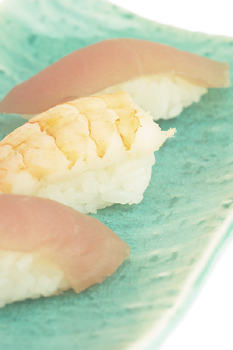
fish, sushi
Declining ocean fish stocks have led to a rapid growth in fish farming. But if you think farmed fish are the answer, you might want to take a second look at its effects.

Carnivorous farmed fish are fed on high levels of fish meal and fish oil. In fact, they require a fish biomass input greater than the fish biomass produced. For the 10 species of fish most commonly farmed, an average of nearly two kilograms of wild fish is required for every one kilogram of fish raised.

Unfortunately, there is an increase in the production trend of carnivorous fish (such as salmon or shrimp) rather than herbivorous or filter feeder fish. Small pelagic fish, such as herring, sardines and anchovies, mainly provide the fish meal and fish oils used for aquaculture feed, increasing pressures on wild fish.

Numbers of popular species such as cod have plummeted; in the Mediterranean, 12 species of shark are commercially extinct. Swordfish in that area, which should grow as thick as a telephone pole, now must be caught as juveniles and eaten when no bigger than a baseball bat. The fish in the seas surrounding Africa and Asia are also in steep decline.

The fact that global fish supplies are dwindling dramatically is deeply concerning on a number of levels. 

In 2003, it was found that the number of large fish, including tuna, marlin, swordfish, sharks, cod and halibut, in the world’s oceans had dropped by 90 percent in just 50 years. This means that only 10 percent of all large fish are left in the ocean.

One of the saddest commentaries I’ve heard on this issue is from Sergi Tudela, a Spanish marine biologist with the World Wildlife Fund, who speaks of the disappearance of giant bluefin tuna (which are prized for making sushi). He says:

"My big fear is that it may be too late. I have a very graphic image in my mind. It is of the migration of so many buffalo in the American West in the early 19th century. It was the same with bluefin tuna in the Mediterranean, a migration of a massive number of animals. 

And now we are witnessing the same phenomenon happening to giant bluefin tuna that we saw happen with America's buffalo. We are witnessing this, right now, right before our eyes."

Why are Fish Disappearing?

Part of the problem has to do with irresponsible fishing practices, such as trawling, which essentially scoops up everything within range from the ocean floor -- only about 5% of the contents are used, while the other 95% is dumped, dead, back into the ocean. Another problem is that fisheries are simply taking too many fish.

Studies show it takes industrial fisheries only 10 to 15 years to diminish any new fish community they encounter to one-tenth of its original size.

Much of the fish caught nowadays (about one-third) are actually not used for human food at all, but are ground up to be used as agricultural or aquacultural feed.

The solution that seems obvious would be to supplement wild fishing with “sustainable” farmed fish.

But that is a massive misconception.

Farm-raised fish are fed great quantities of fish meal, which comes from wild-caught fish. As the Organic Consumers Association pointed out, for the 10 species of fish most commonly farmed, it takes 1.9 kg of wild fish to produce 1 kg of farm-raised fish.

So instead of taking pressure off of the wild fish supplies, farmed fish are actually adding to it. And there are other problems with fish farms as well, problems that are contributing to the degradation of marine ecosystems. An article in the Los Angeles Times several years ago said it well:

“Fish wastes and uneaten feed smother the sea floor beneath these farms, generating bacteria that consume oxygen vital to shellfish and other bottom-dwelling sea creatures. Disease and parasites, which would normally exist in relatively low levels in fish scattered around the oceans, can run rampant in densely packed fish farms.

Pesticides fed to the fish and toxic copper sulfate used to keep nets free of algae are building up in sea-floor sediments. Antibiotics have created resistant strains of disease that infect both wild and domesticated fish.

Clouds of sea lice, incubated by captive fish on farms, swarm wild salmon as they swim past on their migration to the ocean.”

• Disease and parasites? 
• Dangerous amounts of waste? 
• Resistant strains of disease? 

This sounds a lot like filthy, land-based factory farms to me. And, in fact, experts have begun to call fish farms nothing more than factory farms at sea.

What Else is Lurking in Farm-Raised Fish?

If the environmental concerns alone aren’t enough to make you want to steer clear of farm-raised fish, perhaps the health concerns will be.

Studies have consistently found levels of PCBs, dioxins, toxaphene and dieldrin, as well as mercury, to be higher in farm-raised fish than wild fish. Further, farm-raised fish, like factory-farmed meat, is pumped full of antibiotics, hormones and even chemicals to change their color (such as to make salmon appear pink).

Sadly, contamination of our oceans and waterways is so great that toxic pollutants have been found in wild fish as well, and this is why I don’t advise eating any fish, whether farm-raised or wild-caught, unless you can verify its purity.

What options do you have, then, to get the health benefits of the omega-3 fats in fish, without exposing yourself to pollutants or contributing to the decline of the fish population?

There are two ways. The first is to track down a source of wild fish that is free from toxins, and which is sustainably harvested. After years of research I found one such company, Vital Choice, which offers safe salmon that has less than .1ppm of mercury and no harmful levels of other toxins. Vital Choice works closely with a native Alaskan tribe to ensure the salmon are sustainably harvested during their migration.

The second option is to get your omega-3 fat from an alternative source like krill oil. Not only are krill (small, shrimp-like creatures) a superior source of omega-3, but they are one of the most easily renewable food resources available, making them an excellent nutritional source from an environmental perspective.

Though I know many of you enjoy fish for the flavor and the health benefits, if you can’t confirm that it’s from a clean, sustainable source, I believe the risks from eating it -- both to your health and the environment -- vastly outweigh the benefits.

[+] Sources and References

http://articles.mercola.com/sites/articles/archive/2008/12/02/what-you-need-to-know-about-farmed-fish.aspx

Also read on this Healthwise blog: