December 03, 2014
This post is on Healthwise
Story at-a-glance
- Triclosan, an antibacterial chemical used in a wide variety of consumer products, has many potentially harmful effects, especially for children
- Triclosan can alter hormone regulation and may interfere with fetal development. An increased cancer risk has also been suggested
- Triclosan was found in 100 percent of urine samples taken from pregnant women in Brooklyn, NY
By Dr. Mercola
Washing your hands is at the top of the list when it comes to effective contagious disease prevention, but many still make the mistake of assuming you have to use antibacterial soap to get the job done right.
The same goes for other household cleaning. Routinely disinfecting your body and surroundings may actually cause far more harm than good in the long run.
Not only does it promote the development of
drug-resistant bacteria, but antibacterial compounds such as
triclosan have also been linked to a number or harmful health effects, especially in young children.
For example, research has shown that triclosan can alter hormone regulation and may interfere with fetal development in pregnant women.
This is a potentially serious concern, as researchers recently discovered traces of triclosan in 100 percent of all urine samples collected from pregnant women
1,2, 3, 4 (all of whom were residents of Brooklyn, New York).
Triclosan was also found in 51 percent of cord blood samples. Yet another antibacterial compound, triclocarban, was detected in 87 percent of urine samples, and 23 percent of the cord blood samples.
A second study
5 found the presence of triclosan in nearly 75 percent of doctors and nurses tested. Considering the hazards, I strongly recommend ditching antibacterial soaps and any other product containing triclosan, such as triclosan-containing toothpaste.
6
Warm water and a mild soap is really all you need to scrub off the germs. Even the US Food and Drug Administration (FDA) has stated
7 that "there is currently no evidence that [antibacterial soaps] are any more effective at preventing illness than washing with plain soap and water."
The Many Health Hazards of Triclosan
As noted in the featured article in
The Atlantic,
8 the reasons for avoiding triclosan are far from few... This antibacterial ingredient has been linked to:
- Allergies
- Thyroid dysfunction
- Endocrine disruption
- Weight gain
- Inflammatory responses
Most recently, triclosan was found to aggravate the growth of liver and kidney tumors, which came as a surprise to the researchers. According to one of the authors:
9
“We aren't saying that triclosan causes cancer. We're just saying that with constant exposure, this environmental agent, which is extremely ubiquitous, can promote development of tumors. If one can avoid it, I would avoid it."
In another interview he clarified by saying:
10
"If you have a damaged cell that's been attacked by a mutagen, triclosan promotes the development of the tumor. The compound also causes inflammation, which means that all the ingredients necessary for developing cancer are present.”
Personally, I believe there’s plenty of evidence suggesting triclosan is an unnecessary hazard that is best avoided, especially if you have children, due to its adverse effects on the endocrine system.
Triclosan Can Wreak Havoc on Hormone Function
Endocrine-disrupting chemicals are a serious concern, as they can promote a wide variety of health problems, including: breast, ovarian, prostate, and testicular cancer, preterm and low birth weight babies, precocious puberty in girls, and undescended testicles in boys.
According to Thomas Zoeller, a biology professor at the University of Massachusetts Amherst who specializes in how chemicals affect the endocrine system, triclosan is one of the top 10 endocrine-disrupting chemicals used on a regular basis by most Americans. Hence, removing triclosan from the market could have a substantial impact on public health.
As noted by Professor Caren Helbing Ph.D. at the University of Victoria in Canada, the chemical structure of triclosan is similar to both thyroid hormones and polychlorinated biphenyls (PCBs). This similarity allows it to attach to your hormone receptors.
Helbing’s research shows that tadpoles exposed to triclosan suffered stunted development and leg deformations. The metamorphic process these frogs undergo is mediated by thyroid hormones.
Her findings were published in the
Journal of Aquatic Toxicology11 in 2006, which concluded that:
“Exposure to low levels of triclosan disrupts thyroid hormone-associated gene expression and can alter the rate of thyroid hormone-mediated postembryonic anuran development.”
Triclosan has also been found in community water supplies. There, it breaks down forming certain forms of dioxin, which are toxic to aquatic life and humans alike.
Are You Brushing Your Teeth with Triclosan?
Besides hand soaps and products specifically marketed as antibacterial, triclosan can also be found in a number of other household and personal care products, including cutting boards, toys, acne cream, and even toothpaste.
At present, Colgate Total is the only triclosan-containing toothpaste sold in the US, but it’s a best-seller—chances are you have a tube in your bathroom right now. If you do, consider this: if triclosan can cause serious health problems when used topically, using it in your mouth is likely even worse, as chemicals are readily absorbed into your oral tissues.
Colgate claims its product is safe,
12 of course, citing a Cochrane Review
13 as supporting evidence. But the review in question actually focused on the Colgate Total’s effectiveness in fighting bleeding gums and inflammation;
not its long-term safety... Cochrane analyzed more than 30 studies published between 1990 and 2012, and found “moderate quality evidence” that Colgate Total is more effective than other toothpastes with respect to reducing gum bleeding and inflammation. However, the authors, Philip Riley and Thomas Lamont, specifically noted that the studies did
not allow them to assess any long-term side effects.
14
40 Years of Regulatory Inaction...
A number of other countries have regulations for triclosan, but the US does not. Back in 1978, the FDA said it could not make a ruling on the safety of triclosan due to insufficient evidence. In 2010, the National Resources Defense Council filed a lawsuit against the FDA over the matter. In response to growing concerns, Minnesota recently passed legislation banning the chemical in products sold within its state lines.
The state-imposed ban will not take effect until January 2017, however. There’s still no FDA ruling on triclosan, but the FDA has promised it will address the matter in 2016. However, as recently revealed by Bloomberg,
15, 16 the FDA knew, or should have reasonably suspected, that there are safety problems:
“Colgate’s Total application included 35 pages summarizing toxicology studies on triclosan, which the FDA withheld from view. The agency released the pages17 earlier this year in response to a lawsuit over a Freedom of Information Act request... The pages show how even with one of the US’s most stringent regulatory processes -- FDA approval of a new drug -- the government relies on company-backed science to show products are safe and effective.
The recently released pages, taken alongside new research on triclosan, raise questions about whether the agency did appropriate due diligence in approving Total 17 years ago, and whether its approval should stand in light of new research... Among the pages were studies showing fetal bone malformations in mice and rats. Colgate said the findings weren’t relevant. Viewed through the prism of today’s science, such malformations look more like a signal that triclosan is disrupting the endocrine system and throwing off hormonal functioning...
Colgate’s application materials also show that the FDA asked questions about the thoroughness of cancer studies, which are partly addressed in recently released documents... ‘We have created a system where we are testing these chemicals out on the human population. I love the idea they are all safe,’ [biology professor Thomas] Zoeller said. ‘But when we have studies on animals that suggest otherwise, I think we’re taking a huge risk.’”
Proper Hand Washing Techniques
Hand washing is a simple way to reduce your exposure to potentially disease-causing germs and reduce your chances of getting sick. While not the only factor, it can drastically reduce the germs that get access to your body, especially when you do it at key times, such as before eating or touching your mouth, eyes, and nose, and after using the restroom or visiting public areas. You do NOT need antibacterial soap however, and this has actually been scientifically verified.
Hand washing needs to be done correctly, however, in order to be truly effective for disease control. Simply rinsing your hands with water, or giving a quick scrub with soap, is not enough to remove germs. In one recent study,
18 only five percent of people washed their hands in a way that would actually kill infection and illness-causing germs. So, to make sure you’re actually removing the germs when you wash your hands, follow these guidelines:
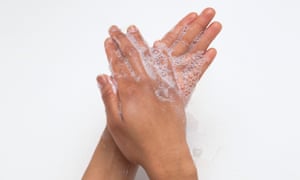
- Use warm, running water and a mild soap (avoid antibacterial soap)
- Work up a good lather, all the way up to your wrists, scrubbing for at least 15 or 20 seconds (most people only wash for about 6 seconds)
- Make sure you cover all surfaces, including the backs of your hands, wrists, between your fingers, and around and below your fingernails
- Rinse thoroughly under running water
- In public places, use a paper towel to open the door as a protection from germs that the handles may harbor
Keep in mind that your skin is your primary barrier against germs, so obsessive-compulsive washing, especially in dry environments that typically exist for most in the winter months when the heat is on, can actually increase your risk of getting sick by drying out your skin. So keep a balance—avoid washing your hands to the point of irritating your skin, as dry, cracked areas are a perfect entryway for germs.
Keeping Yourself and Your Home Clean, Safely
I strongly encourage you to ditch all of your chemical disinfectants, including your antibacterial soaps, laundry detergents, and bath and kitchen cleansers, in favor of more natural alternatives. No study has shown that a vigorous program of home disinfection leads to a reduction of illness in a family. They have, however, shown that disinfectants can cause harm. Ideally, it’s best to limit your use of soap on your body as it removes the sebum, which contains beneficial fats designed to protect your skin from infection. Using soap will remove not only dirt but also these useful fats.
For those times when you need to do a bit of cleansing, one of the best non-toxic disinfectants is a mild soap and warm water. You can use this for washing your hands, your body, and for other household cleansing. Another all-purpose cleanser that works great for kitchen counters, cutting boards, and bathrooms is 3% hydrogen peroxide and vinegar. Simply put each liquid into a separate spray bottle, then spray the surface with one, followed by the other.
In tests run at Virginia Polytechnic Institute and State University, pairing the two mists killed virtually all Salmonella, Shigella, and E. coli bacteria on heavily contaminated food and surfaces when used in this fashion, making this spray combination more effective at killing these potentially lethal bacteria than chlorine bleach or any commercially available kitchen cleaner. The best results came from using one mist right after the other -- it is 10 times more effective than using either spray by itself and more effective than mixing the vinegar and hydrogen peroxide in one sprayer.
Coconut oil also has potent disinfectant properties, and can be used to disinfect wooden cutting boards. Sunlight is another powerful disinfectant, and drying your laundry in the sun is one of the best ways to save energy and wind up with fresh, clean linens and clothing. Truly, there’s no need to expose your family to dangerous chemical disinfectants. As an added bonus aside from the health benefits, using this type of natural homemade cleanser is much less expensive than commercial varieties.
http://articles.mercola.com/sites/articles/archive/2014/12/03/triclosan-antibacterial-soap.aspx
Go to Healthwise for more articles