Pages

Showing posts with label Stinging Nettle. Show all posts

Sunday, 20 December 2015

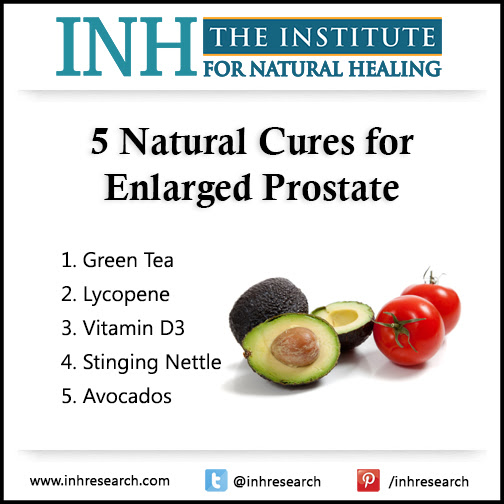
5 Natural Cures for Enlarged Prostate

Make no mistake, the size of your prostate can have a major impact on your quality of life.

4 December 2015

Make no mistake, the size of your prostate can have a major impact on your quality of life.
This gland is about the size of a walnut when a man is in his 20s. By the time he’s in his 40s, it may have grown larger, about the size of an apricot. By age 60, a prostate may be the size of a lemon.
An enlarged prostate pushes on the urethra. This makes it hard to urinate. Your bladder can then swell and become painful, leading to kidney damage. Not to mention embarrassing dribbling, loss of sleep because of all the late-night bathroom trips… And those are just the minor effects.
Benign prostate hypertrophy (BPH) can lead to prostate cancer. More than 200,000 North American men develop it each year. And 15% of them die.
But you can avoid the embarrassment, discomfort, and risk of BPH with these five natural solutions:
1. Green Tea: It's loaded with polyphenols. These plant compounds deter cell damage with their antioxidant activity. In other words, they mop up destructive free radicals.
EGCG is the polyphenol unique to green tea. It doesn’t just prevent inflammation that can lead to BPH. It also kills prostate cancer cells.
To get the highest concentration, choose matcha green tea. It has 137 times more than China Green Tips green tea. Or find a supplement that delivers at least 600 mg per serving.
2. Lycopene: Research shows this antioxidant-rich carotenoid from yellow and red plants lowers prostate-specific antigen (PSA) scores in men with BPH.
PSA is a marker for BPH. This means the higher your PSA, the more likely you are to have an enlarged prostate.
To get the most protection, you need 15 mg of lycopene a day. One medium tomato contains about 4 mg. So you may want to also add a quality supplement.
3. Vitamin D3: In one study, men with prostate cancer were given either 4,000 IU of vitamin D3 a day or a placebo. After 60 days, prostate tumors improved in men taking the vitamin. Scientists believe this is because D3 lowers inflammation.
If you’re fair-skinned, being outside in the sun with shorts and a tank top for 10 minutes a day will give you all the vitamin D you need. Darker-skinned people need a bit more exposure. If that’s not an option—especially this time of year—a whole-food supplement will do the trick. We recommend 5,000 IUs a day.
4. Stinging nettle: In addition to taming allergies, stinging nettle is widely used to treat prostate disorders. The herb has been shown to alleviate decreased urinary flow and post urination dripping.
You can find tea preparations of stinging nettle, but it’s most effective when taken as a supplement made from the roots of the plant. Look for one with .8% beta sitosterol. It’s a plant sterol responsible for stinging nettle’s prostate-curing effects.
5. Avocados: They're rich in beta sitosterol. As are pumpkin seeds and pecans. These foods are also great sources of healthy, inflammation-fighting monounsaturated fats. That makes them a double defense against a growing prostate—they fight the causes and the symptoms of BPH.
Try a few of these, and your prostate health will improve. Or try them all for even better results. You’ll save yourself from the discomfort and embarrassment of BPH­—and lower your chances of deadly prostate cancer.


This post is on Healthwise

Saturday, 12 July 2014

5 Natural Ways to Ease Your Allergies

Healthwise

March 28, 2014 


It’s a fact…
Allergy meds—even if they didn’t have dangerous side effects—won’t ever work. They don’t get to the root of the problem. Allergies are a sign your body is attacking itself. And it’s usually in several different ways.
Don’t live at the mercy of your allergies. And don’t depend on OTC medicines to fix what’s actually wrong. Here are five natural ways to ease your allergies.
Treating your allergies before your body goes into attack mode makes more sense. Here are five ways to defend your body as allergy season kicks off.
1. Quercetin: This antioxidant lowers inflammation. Quercetin also stops immune cells from releasing histamines. They cause the inflammation that leads to allergic reactions.1 And taking it doesn’t make you drowsy or cause memory gaps like some allergy medications.2
You’ll find it in apples, citrus fruits, onions, and tea. You can also take it as supplement in pill form or as a liquid extract for temporary relief of allergy symptoms.
2. Beta Glucans: They’re a type of sugar that comes from cell walls of yeast, algae, fungi, and plants. Beta glucans activate your macrophages.3 These are the immune cells that fight off germs and tell other cells to help defend your body. But not all beta glucans work the same.
One study on beta 1, 3/1, 6 glucan found that it reduces total allergy symptoms by 28 percent. And any symptoms subjects still experienced were over 50 percent less severe.4 But unless you feel like eating brewer’s yeast all day long, your best bet is to get it as a supplement.
3. Vitamin D3: The sunshine vitamin fights off bacteria that cause your allergies in the first place. Taking just 4,000 IU of vitamin D3 can improve your allergy symptoms by 30 percent in just a week. And if you stick with it, you could see a 70 percent improvement after four months.5
You can get vitamin D3 from being out in the sun. Eating wild-caught salmon and mushrooms will also provide you with it. But for allergies, find a 4,000 IU supplement that comes from a quality, natural source. You shouldn’t have any trouble finding a good one online, so leave the drugstore vitamins on the shelf.
4. Probiotics: Your gut is one of your body’s best defenses against invading bacteria. Just look at H. pylori. Roughly 70 percent of people with autoimmune symptoms—like allergies—have it.Probiotics can prevent these bacteria from turning your immune system against itself. And if you already have the infection, probiotics can help ease the inflammation.7
You can support your gut by eating synbiotics. These contain the good bacteria that help fight off harmful germs. But it also contains the food that fuels the good bacteria. Asparagus, onions, and artichokes are symbiotic foods. You can also take a probiotic supplement. Just make sure to find one that gives you at least 1 billion live colony forming units (CFUs) per serving.
5. Stinging Nettle: Despite its strange name, stinging nettle stops your body from producing the histamine that causes inflammation. It also interferes with the way your body sends and receives pain signals.8
Stinging nettle isn’t something you can eat on its own—or even add to a dish. But you can find its extract as a supplement. It’s also available as a tea. It’s a satisfying way to help ease your allergy symptoms while getting the antioxidant benefits from the tea.
Don’t just treat your allergy symptoms when they pop up. By that point, your body is on the attack and you’re feeling miserable. Stop them from coming on the first place. These natural solutions will help keep you from tissue to tissue, and without having to take dangerous allergy drugs.
References:
1 http://umm.edu/health/medical/altmed/supplement/quercetin
2 http://www.ncbi.nlm.nih.gov/pubmed/11056414
3 http://www.lef.org/magazine/mag2009/dec2009_The-Immune-Enhancing-Benefits-of-Beta-Glucans_01.htm
4 http://onlinelibrary.wiley.com/doi/10.1002/fsn3.11/abstract
5 http://www.annallergy.org/article/S1081-1206(14)00012-X/abstract
6 http://www.medicinenet.com/helicobacter_pylori/article.htm
7 http://www.worldgastroenterology.org/assets/downloads/en/pdf/guidelines/19_probiotics_prebiotics.pdf
8 http://umm.edu/health/medical/altmed/herb/stinging-nettle

5-natural-ways-to-ease-your-allergies