The alkaline diet has become a trend among celebrities like Gwyneth Paltrow and Jennifer Aniston as a way to lose weight, boost energy, and prevent disease.
But like most things that sound too good to be true, the alkaline diet is a prime example. Experts say there is no scientific evidence behind the idea that alkaline foods are healthier than acidic ones.
"It is not based on anything besides anecdotal evidence at this time," says Tracy Lockwood Beckerman, a registered dietitian in New York City.
The alkaline diet is pseudoscience
The idea behind the alkaline diet is that the foods you eat can change your blood pH level and thus change your health.
All you have to do is avoid foods that the diet categorizes as acidic, limit neutral foods, and focus on more alkaline foods. The alkaline diet categorizes foods according to pH as follows:
Acidic: Meat, fish, dairy, eggs, grains, alcohol
Neutral: Natural fats, starches, sugars
Alkaline: Fruits, nuts, legumes, vegetables
And while the foods you eat can affect the pH of your urine, this is not the same as changing your blood pH. Your blood pH level stays close to neutral at around 7.4, and you cannot shift your overall blood pH through your diet, as the alkaline diet suggests, says Beckerman.
"That's because our body is sharp and has built-in mechanisms to keep pH levels in check."
Moreover, alkaline diet proponents say that acidic foods leave behind an "acid ash" in the body, which may promote diseases like osteoporosis. Since then, several studies have shown that this assumption is not true.
The alkaline diet makes dangerous claims about cancer
In 2013, Victoria Beckham tweeted a picture of an alkaline cookbook, setting off a widespread diet trend that ended up influencing scores of celebrities including Kate Hudson, Gweneth Paltrow, and Tom Brady.
The founder of the alkaline diet, Robert Young, made the false claim that the diet aids in cancer treatment. As a result, some cancer patients have turned to the alkaline diet for treatment and found no relief.
Moreover, the American Institute for Cancer Research also rejects claims that eating acidic foods can lower the body's pH and promote cancer.
Just about the only health condition that an alkaline diet might help is kidney stones. Throughout the 20th century, researchers conducted numerous studies on pH levels in food and their effect on the kidneys. They discovered that eating more alkaline foods can helpprevent kidney stones.
The alkaline diet can lead to nutritional deficiencies
Any time you cut food groups out of your diet, you need to be cautious, Beckerman says. "It could be setting you up for nutritional deficiencies if you don't prioritize your food choices."
For example, the alkaline diet cuts out some healthy food options such as eggs and fish while encouraging followers to adhere to strict diet rules. Without careful planning, an alkaline diet can cause muscle loss from a lack of protein and improper nutrition overall.
However, there is anecdotal evidence that the diet has helped people lose weight, stay healthy, and feel better. But this has nothing to do with consuming alkaline foods and everything to do with switching to the plant-based and whole-food options that the diet promotes.
If healthy, plant-based eating is your goal, there are other diets out there with the science to back their health benefits, like vegetarianism or veganism.
The father of the alkaline diet, Robert O Young, is hailed as an inspiration by one of the UK's most popular food writers, Natasha Corrett, but he faces a jail sentence for practising medicine without a licence.
By Dr Giles Yeo and Tristan QuinnSan Diego
19 January 2017
One patient who believed he could cure her cancer, British army officer Naima Houder-Mohammed, paid thousands of dollars for his alkaline treatment, which consisted mainly of intravenous infusions of baking soda.
In May 2009 Naima Houder-Mohammed was commissioned as a captain in the British army. The following year, tragedy struck. Naima was diagnosed with breast cancer.
She received treatment and was declared cancer-free. But in 2012, while training with the army skiing team, it was discovered the cancer had returned. Her condition was so serious she was offered end-of-life care.
"She refused to accept that this was the end," recalls her friend and former fellow officer, Afzal Amin.
"Naima was a fighter. She fought to get through selection for Sandhurst. She fought through Sandhurst and she fought her way through her life in everything she dealt with - army skiing or whatever it may have been. And this for her was another fight in that long list of victories."
As her medical options were limited, Naima did what many of us would do - she turned to the internet for a solution.
She came across Dr Robert O Young, an American alternative health writer selling a message of hope for cancer patients online.
Naima began an email correspondence with him, which reveals how pseudo-science can be used to manipulate the vulnerable.
Young is the author of a series of books called the pH Miracle, which has sold more than four million copies around the world.
These books lay out his "alkaline approach" to food and health which has influenced many others, including the work of the British clean-eating guru Natasha Corrett, whose Honestly Healthy brand promotes her take on an alkaline diet.
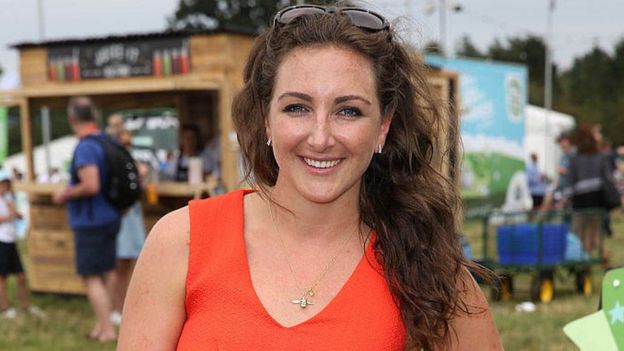
Natasha Corrett
Image copyrightGETTY IMAGES
In the introduction to her book Honestly Healthy Cleanse, the food writer says acidity in the body causes "dis-ease", which can show itself in "everyday discomforts" like acne, dry skin and bloating, "to much more serious illnesses, such as cancer, diabetes, heart disease and obesity"
She says Young "discovered that eating a plant-based diet free from processed foods can help to cure terminal diseases in the body"
She adds that his work is not recognised by the medical industry, "perhaps because giant pharmaceutical organisations wouldn't be able to make money out of doctors prescribing vegetables"
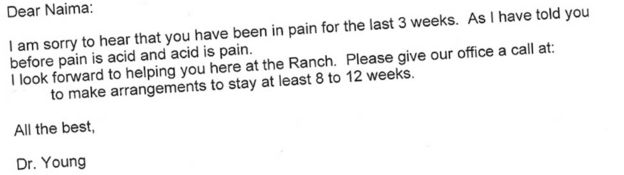
In one email Young sent to Naima in July 2012, he told her "there is a great need for a daily regime focused on… hyper-perfusing the blood with alkalinity". He went on: "I would suggest your healing program is going to take at least 8 - 12 weeks. It will not be easy but you will be in a controlled environment that will give you the care you need."
Naima set about raising the money she would need - in one email Young mentioned a figure of $3,000 (£2,440) per day.
Naima's family used their savings, ran fund-raising events and managed to pull together tens of thousands of pounds with the help of a charity so that Naima could be treated by Young.
But the treatment did not have the outcome she was hoping for.
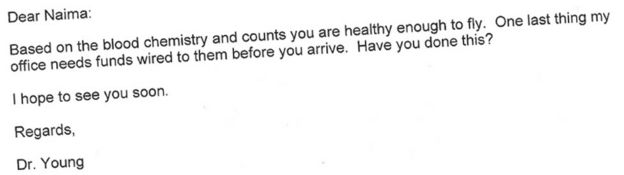
Image captionEmail from Robert O Young to Naima Houder-Mohammed
On one recent sun-kissed Californian morning, we drove up into the hills outside San Diego to visit Young. As we turned off Paradise Mountain Road, the parched golden grass eventually gave way to groves of avocado trees and we entered a millionaire's paradise known as the "pH Miracle Ranch".
The front door, preposterously set behind a moat, is reached by walking across some stone slabs.
As Young welcomed us into the ranch, our eyes were drawn to an empty spherical fish-tank built into the wall that separated the living area from the kitchen.
Noting our interest, he began to share his alkaline view of the world, starting with what he calls the fish-bowl metaphor. "If the fish is sick - what would you do? Treat the fish or change the water?"
He went on: "The human body in its perfect state of health is alkaline in its design."
The pH of our blood is 7.4, which is slightly alkaline, so Young is broadly correct - although different compartments of our bodies, such as our stomach, function at very different pHs.
But then Young's "alkaline living" vision becomes complete fantasy. Young believes that in order to maintain the pH of our blood, we have to eat "alkaline" foods.
The main problem with this view is that it doesn't appear to take into account the stomach, which functions at a pH of about 1.5 and is the most acidic compartment in the body. Thus, everything we consume, regardless of its starting pH, becomes acidic before passing into the intestines.
Also, the categorisation of foods into alkaline or acidic does not appear to follow any consistent rules, with certain citrus fruits (full of citric acid) considered to be alkaline, for instance.
However, Young's view that alkalinity is good and acidity is bad goes beyond food. He told us: "All sickness and disease can be prevented by managing the delicate pH balance of the fluids of the body."
He believes that when your blood becomes acidic, something weird happens, and your blood cells transform into bacteria - a phenomenon he calls pleomorphism - thereby resulting in a diseased state.
This, frankly wild, view goes against all current scientific understanding.
When we put this to him, he simply disagreed, saying: "Germs are nothing more than the biological transformation of animal, human or plant matter. They're born out of that."
This is post-truth.
Image captionDr Giles Yeo with Robert O Young at the "pH Miracle Ranch"
The biggest problem is that because Young believes that disease emerges from acidity, then by extension disease can be reversed with alkalinity - echoing his fish-bowl metaphor that you don't treat the disease, but you change the environment.
When Young said Naima would be cared for in a controlled environment, he meant the pH Miracle Ranch, which has a large area set aside as a "clinic" to treat cancer.
Young told us he uses the term "cancerous" as an adjective to describe a state of acidity.
Since 2005 he has brought more than 80 terminally ill patients to stay at his ranch for months at a time. Treatment has included intravenous infusions of an alkaline solution of sodium bicarbonate - the same Arm and Hammer stuff you stick in your fridge to absorb smells.
This was the "healing programme" that was being sold to Naima.
There is no doubting the impact of Young's message. In an email, Naima wrote to him: "I'll be pronounced text book perfect in a few months."
According to her friend Afzal Amin: "Naima was supremely confident that, with her willpower and this therapy, she would be healed. That was the overriding emotion in her that yes, I am going to better."
We put it to Young that someone like Naima, in a terminally ill state, who was desperate for a cure, would buy anything, try anything to help get better.
He responded: "But I wasn't selling her anything… I didn't force her to come here, it was her decision."
Yet, in one email Young insisted on Naima paying for her treatment, before she stepped on to the plane.
All in all, Naima and her family paid Young more than $77,000 (£62,700) for the treatment.
Young told us: "The doctors need to be paid and the people that are doing the massages need to be paid and the colonics, but I gave her the best price to make sure that those people were paid."
There is no evidence whatsoever that infusing an alkaline solution into your bloodstream will do anything against cancer. When we raised this with Young, he said: "These things need to be studied."
After about three months at Young's facility, her condition worsened and she was taken to hospital. Naima was brought back to the UK and died with her family. She was 27.
Afzal Amin told us: "They feel utterly betrayed. It's just horrific that somebody could exploit people for money. This is I think for them the most disturbing element, that for something as cheap as money he was just able to destroy people's lives."
Find out more
Dr Giles Yeo presents Horizon's Clean Eating - The Dirty Truth, produced by Tristan Quinn, on BBC Two at 21:00 GMT, Thursday 19 January
Young's activities at the pH Miracle Ranch have not gone unnoticed by the authorities.
In 2011 the Medical Board of California began an undercover investigation after concerns were raised by a woman treated there.
Investigators were able to establish the prognosis of 15 cancer patients treated at the ranch - none of them outlived it.
One patient, Genia Vanderhaeghen, died from congestive heart failure - fluid around the heart - while being treated. Young told us he was "out of town" at the time.
According to an invoice we obtained, she had been given 33 intravenous sodium bicarbonate drips, each charged at $550 (£448), over 31 days. Some were administered by Young himself.
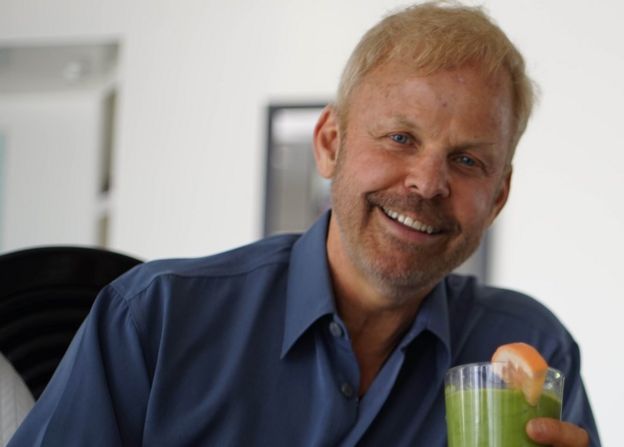
Image captionRobert O Young
Last year Young was convicted of two charges of practising medicine without a license, and now faces up to three years in prison.
In court it was revealed that he is not a medical doctor and bought his PhD from a diploma mill.
We asked him if he felt remorse for what he had done. He said: "I don't have remorse because of the thousands if not millions of people that have been helped through the [alkaline diet] programme."
We asked Natasha Corrett to comment on the influence of Robert Young on Honestly Healthy. She told us: "We believe that our bodies should be fuelled with healthy and nutritious ingredients but we also believe that life is about having things in moderation."
Update, October 2018: Robert O Young was sentenced to three years and eight months in prison in 2017 for practicing medicine without a license.
An alkaline diet based on vegetables and fruits creates a less-than-optimal environment for cancer proliferation, while at the same time strengthens the immune function and supports healthy cells in the body through improved nutrition.
In the 1930's, an interesting natural cancer treatment was proposed as a simple, effective answer to cancer – almost any cancer. This treatment approach is not well known because it is considered alternative or experimental - or even dangerous[i] - by the medical and scientific community and hence has been referenced primarily in obscure publications outside the mainstream press.
This treatment approach is called alkaline therapy or pH therapy, and is based in part on observations of cultures without significant incidence of cancer[ii] and in part on scientific observations of and experimentation with cellular metabolism.[iii]
The principles of pH therapy are very simple. The metabolism of cancer cells has a very narrow pH tolerance for cellular proliferation (mitosis), which is between 6.5 and 7.5. As such, if you can interfere with cancer cell metabolism by either lowering or raising the internal cancer cell pH, you can theoretically stop cancer progression.[iv]
While lowering cancer cell pH (increasing acidity) is effective against cancer cell mitosis in the lab, increasing acid levels in the live body of a cancer patient puts stress on normal cells and causes a lot of pain. So the proposed alkaline therapy for people is a "high pH therapy" and has been developed to normalize the intracellular pH of the cancer patient's body through elimination of latent acidosis, while increasing the pH of cancer cells to a range above 7.5. According to published research, it is at that pH they revert to a normal cellular apoptosis cycle (programed cell death).[v]
Ideally, this approach begins with an alkaline diet. There is general agreement amongst natural healers and medical professionals alike, that changing a cancer patient's diet is extremely helpful when someone is confronted with a cancer diagnosis. In a previous article, I outlined the six steps that every cancer patient should take to provide the best chance to heal from and prevent future recurrences of cancer using alkaline diet principles.[vi]
The alkaline diet, which is primarily plant-based and avoids sugar, dairy, wheat and other high-gluten grains as well as an excess consumption of fruits, while emphasizing fresh vegetables and vegetable juices along with cruciferous vegetables and greens, changes the body's intracellular pH to come close to the ideal blood pH of 7.3/7.41 - a key metabolic accomplishment on the path to longevity whether you have cancer or not!
An alkaline diet based on vegetables and fruits creates a less-than-optimal environment for cancer proliferation, while at the same time strengthens the immune function and supports healthy cells in the body through improved nutrition.
The second step is to use some nutritional mechanism to move the internal cancer cell pH from the optimal mitosis range of pH 6.5 to 7.5, to above 8, which shortens the life of the cancer cell. As described by its proponents, alkaline therapy neutralizes the acid waste of the cancer which causes so much pain, interferes with the anaerobic fermentation of glucose that starts the self-feeding acidic cancer wasting cycle called cachexia and in time, can induce remission. If this theory of alkaline therapy holds true, it should be possible to address cancer without chemotherapy, radiation or surgery and use alkaline therapy as a primary cancer treatment.
This bold statement comes from a somewhat abstruse body of research. In the 1880's, Louis Pasteur published his work on cellular aerobic respiration and glycolysis. In 1931, Otto Warburg won the Nobel Prize for his work on the metabolism of tumors and the respiration of cells, which was later summarized in his 1956 paper, On the Origin of Cancer Cells. His work on cancer expanded upon Pasteur's findings and described respiratory insufficiency and a cellular metabolism of glucose fermentation as the primary trigger for cancer progression[vii].
Warburg's conclusions on cancer were much discussed in scientific circles, as they are academically elegant, but were not accepted by most members of the scientific community engaged in cancer research. Most cancer researchers in the late 1950's believed that the anaerobic metabolism of cancer cells and their accompanying output of lactic acid was a side effect or an adjunct effect of cancer, not a cause. Cancer research since the 1960's has focused primarily on genetic aberrations as causative for cancer, and has ignored the body of research on cancer pH and its implications for therapeutic approaches.[viii]
Warburg's work was a catalyst for yet another research effort on the nature of cancer cells, beginning in the 1930's. A. Keith Brewer, PhD (physicist) performed experiments on the relationship between energized, oxygenated cell membrane and elemental uptake, vs. cellular membranes in an unenergized state such as cancer cells exhibit. He wrote a number of papers discussing the cellular mechanisms of cancer cells and the changes in metabolism induced or indicated by the lack of or presence of oxygen in combination with other elements, particularly potassium and calcium. He noted that cancer cells share one characteristic no matter what type of cancer: they have lost their pH control mechanism.
Brewer's summary conclusion regarding cancer was that by changing the pH of cancer cells to alkaline (above 7.5), they will cease to function as they need an acidic, anaerobic environment to thrive. In other words, he proposed that cancer cells will die if they can be pushed into an alkaline, oxygenated state.[ix]
Brewer's work cites areas in the world where cancer incidents are very low. These areas contain concentrations of alkalizing minerals in the soil and water, which are greater than in other parts of the world. For example, the Hunza of northern Pakistan and the Hopi Indians of the American West share both similar soil and water conditions and diet. The alkaline elemental minerals of cesium chloride, germanium and rubidium are heavily present in the soil and water. Ingestion of these elements is correspondingly high. These peoples also live in similar high, dry climates and grow apricot orchards, traditionally eating the fresh or dried fruit and the seeds each day.
It should be noted that apricot seeds are the source of the controversial cancer treatment Laetrile or B-17/Amygdalin.[x]Apricot seeds contain trace amounts of cyanide, which has long been identified as a potential chemotherapeutic agent against cancer proliferation.[xi] Other similarities in the diet include a low consumption of dairy products, meat and wheat, as these foodstuffs are difficult to farm in high, arid climates and a correspondingly greater consumption of millet, buckwheat, nuts, dried fruits and berries in their traditional diets, all of which contain a similar enhanced (though sill minute) concentration of cyanide.
This is all very interesting, but what does it really mean for cancer patients who wish to avoid the pain of cancer and the typical course of treatment using surgery, chemotherapy and radiation? What are the conditions that will force cancer cells to change their pH?
Conventional chemotherapeutic agents such as Cytoxan usually cause more damage to normal cells than to cancer cells, because cancer cells have a very thick, unenergized cellular membrane that essentially protects them from absorbing many drugs. Normal cells have no such protection.
Conversely, cancer cells have no way to normalize their internal pH, where normal cells are relatively unaffected by high concentrations of alkalizing minerals. However cancer cells take up primarily two elements: glucose and potassium.
In practical application, then, it is necessary to find a way to guide alkalizing elements - such as cesium, germanium or rubidium - into cancer cells, without impacting normal cells. It turns out this can be done using a transport agent that penetrates the bone/blood barriers, then relying on the normal uptake of alkalizing elements that follow the potassium pathway. Cancer cells appear to have preferential uptake of cesium chloride in particular, but also take up germanium, rubidium, selenium, etc. all through the potassium pathway.
There is a compound that is frequently applied to the skin by arthritis sufferers for relief of inflammation, used in brain surgery to relieve intracranial pressure and topically used in sports medicine and veterinary medicine,[xii] also for reducing inflammation. This compound is called DMSO and it is formed in the slurry created from soaking wood chips in water that is a bi-product of the paper making industry.
Folklore has it that workers in the paper making industry were observed to have their hands in water continuously, but they never developed arthritis and had rapidly healing skin and strong nails. Experimentation with DMSO as a medical treatment began in the 1800's and continues to the present day. DMSO is medically approved in the United States only for the treatment of interstitial cystitis, a type of inflammation of the bladder.[xiii]
The reason DMSO is so interesting to cancer patients is that, in addition to its anti-inflammatory properties, it is a "carrier agent." It penetrates the brain/blood barrier and carries with it whatever drug or mineral is mixed with.
There is now some interest in the cancer industry in potentially using DMSO to carry chemotherapeutic agents into cancer cells and get beyond their protective membrane. However, for the purposes of changing the alkalinity of cancer cells using cesium chloride, germanium, rubidium and other alkalizing minerals, DMSO and its ingestible form, MSM, are an effective medium. Essentially these agents carry the minerals into all areas of the body including the brain, organs and bone marrow, where they can be used with other nutrients in ordinary cellular metabolism.
Using topically applied and ingested alkaline minerals to change cancer cell pH is not a new idea. Controlled experiments and the personal use of this method have been ongoing since the mid-1900s. However, it is important to note that the only FDA approved clinical trial did not have outstanding results.[xiv] About 50% of the participants died – though if you read the study results in detail you will discover that they had been pronounced terminal before the trial began and some of them never even took one treatment. Others had side effects ranging from leg cramps to heart arrhythmia. A careful read will lead you to believe that perhaps they were given too strong a dose in too short a period of time.[xv]
From this research and subsequent studies, it is now understood that alkaline minerals look to normal cells and to cancer cells like potassium. All cells require potassium to function. The reason cancer cells take up these alkaline minerals is their resemblance to potassium.
Functionally, however, these minerals cannot take the place of potassium in cellular metabolism. While substituting alkaline minerals for potassium creates exactly the desired result in cancer cells – increased alkalinity - when normal cells replace potassium with other minerals over the long term the consequences can be quite serious as it causes electrolyte imbalance, manifested as heart arrhythmia and leg cramps.[xvi]
The remedy to this condition of electrolyte imbalance, caused by replacement of potassium in healthy cells with other alkaline minerals during pH therapy, is simple in practical application. Alkaline minerals are ingested or applied to the skin only during the day. Then before sleep, the user must take potassium chloride supplementation along with other electrolytes such as magnesium and calcium if needed. Monitoring of potassium blood levels every two weeks by a doctor is critical if a cancer patient decides to incorporate alkaline therapy into their cancer regime.
When properly balanced, the side effects of using alkaline minerals are greatly if not completely remediated by electrolyte rebalancing. Despite the "fear, fire, foe" tone of Mssrs. Wiens et al in the article cited above[xvii] there is no risk of dying of a heart attack (or leg cramp), unless the patient ignores the proper method using alkaline minerals and is not working in consultation with an experienced specialist. A caution: electrolyte rebalancing cannot be properly implemented by casual methods such as drinking sports drinks, particularly since commercial products are generally full of sugar and artificial substances. Electrolyte rebalancing must be carefully applied using specific doses of supplements, based on your personal blood composition, in consultation with a nutrition expert or endocrinologist.
My personal experience with pH therapy has been nothing short of spectacular. I have seen stage four, terminal cancer patients recover using alkalizing minerals. There are patients who report untreatable cancers, such as nasal or fully metastasized breast cancers, which after a very persistent course of tiny doses over several years, eventually disappeared altogether. Patients who have never had chemotherapy or radiation often experience rapid remission after changing to an alkaline diet and incorporating the use of alkaline minerals into their regime.
However pH therapy using alkaline minerals requires quite a bit of knowledge (do your homework!) and is greatly enhanced with the support of a mineral provider or cancer coach who has the experience to guide you through the process. Many mineral providers sell minerals, but do not have the ability to assist the users. Therefore, it is critical to seek a mineral provider who can provide references to extensive information and is available to help you work through the rough spots – and there will be some!
It is my direct personal experience that cancer can be controlled using alkaline minerals. There are thousands of people who have had similar positive experiences. Does it work for everyone? No. However if high pH therapy is properly applied, it works for a very respectable percentage of cancer sufferers – estimated at upwards of an 80% response rate by providers. Significant when compared to traditional therapies.
This finding is why I started The Cancer Alternative Foundation - to help cancer patients feel comfortable using effective, natural therapies like pH therapy as part of their overall treatment strategy. The Foundation simply researches and vets the claims of various alternative offerings for cancer – and there are more than 400! To date, we have concluded that high pH therapy is one of the most effective alternatives, particularly for later stage cancers.
However alkaline therapy outcomes (as well as those for other sound alternatives) have yet to be documented in a systematic way, such that the medical community could reliably understand the positive impact that incorporating it into cancer treatment could make to hundreds of thousands of cancer sufferers. Collecting outcomes is a current project at The Cancer Alternative Foundation and should prove invaluable to cancer patients and their doctors and care givers alike.[xviii]
If nothing else, it is my contention that alkaline therapy could be used in a supporting role to conventional treatment, which will only improve the long-term outcome for patients. It is my hope that this promising and effective natural approach to cancer becomes more accepted by mainstream cancer care providers - as well as those enlightened individuals seeking a natural alternative, who are willing to close their eyes and jump.
An alkaline approach to cancer can only help them to enjoy their future – as in having one!
Nancy Elizabeth Shaw is a strategist, meta-analyst and Founder of The Cancer Alternative Foundation. Contact information: www.thecanceralternative.org/contact_us.
[i] Cassileth, Barrie R. et al, Herb-Drug Interaction in Oncology, pp. 158-159; Memorial Sloan-Kettering Cancer Center, People's Medical Publishing House, Shelton, CT 2010
[ii] Clark, J., Hunza in the Himalayas, National Geographic, 72, 38-45; 1963
[iii] Brewer, A. Keith and Passwater, R. Physics of the Cell Membrane V. Mechanisms involved in cancer; American Lab, 1975,-
8, 37-45
[iv] Brewer, A. Keith PhD, Cancer, Its Nature and a Proposed Treatment, 1997; Brewer Science Library; https://www.mwt.net/~drbrewer/brew_art.htm
[vii] Warburg, Otto, On the Origin of Cancer Cells, Science, February 1956, Vol. 123, No. 3191
[viii] Witting, Rainer and Coy, Johannes, The Role of Glucose Metabolism and Glucose-Associated Signaling in Cancer; Perspectives in Medicinal Chemistry, 2007; 1:64-82. Pp. 2; cited PubMed, https://www.ncbi.nlm.nih.gov/pmc/articles/PMC2754915
[ix]Cancer: The Mechanism Involved and a High pH Therapy, 1978 papers of A. Keith Brewer, Ph.D. & co-authors, Copyright A. Keith Brewer Foundation, 325 N. Central Ave., Richland Center, Wis, 53581.
[x] Griffin, G. Edward, World Without Cancer: The Story of Vitamin B17, American Media, Westlake, CA 1974
[xi] Fatma Akinci Yildirim and M. Atilla Askin: Variability of amygdalin content in seeds of sweet and bitter apricot cultivars in Turkey. African Journal of Biotechnology Vol. 9(39), pp. 6522-6524, 27 September, 2010; Available online at https://www.academicjournals.org/AJB; DOI: 10.5897/AJB10.884; 600 mg. of bitter apricot seeds contain up to 1.8 mg of cyanide, where the sweet kernels contain up to .9 mg. of cyanide.