Pages

Showing posts with label Proteinuria. Show all posts

Monday, 16 June 2014

Deadly Beverages That Everybody Seems To Drink

If you wonder why so many people are overweight and suffer diabetes, high blood pressure and kidney problems, scientists in Japan say much of the blame is linked to what we drink. Two studies show what shouldn’t be in your glass.

 | May 30, 2014


Deadly Beverages That Everybody Seems To Drink
If you wonder why so many people are overweight and suffer diabetes, high blood pressure and kidney problems, scientists in Japan say much of the blame is linked to what we drink. Two studies show what shouldn’t be in your glass.
The first study shows that consuming two or more soft drinks like Coke or Pepsi every day is associated with protein in your urine (proteinuria), a sign of kidney malfunction.
The second study demonstrates that the high fructose corn syrup in soft drinks leads the kidneys to reabsorb too much salt. That can contribute to high blood pressure as well as diabetes, obesity and kidney failure.
The healthiest beverage is still water. Or a paleo beverage like tea.
What’s in your glass?

Saturday, 18 January 2014

10 Common Habits That Damage the Kidneys


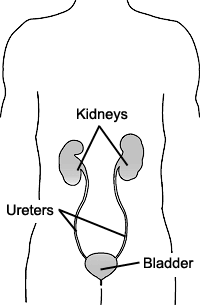
Drawing of an outline of a body with the kidneys, ureters, and bladder labeled. 

10 Common Habits That Damage the Kidneys

Kidney disease is one of the costliest illnesses in the world 
and managing kidney disease is very expensive.

Each year, lots of people die of kidney disease all over the world, and 
the number of people suffering from chronic renal failure, and need dialysis or kidney transplantation to stay alive keep increasing.

Statistics have it that, worldwide, millions of patients are waiting for kidney transplants, but only a few thousands will receive transplants because of 
shortage of suitable organ donors.

Patients usually feel surprised when they are diagnosed with Kidney Failure.

Experts have found the explanation from your daily life habits.

Here are the top habits which lead to your kidney failure:
 

1.
 Not emptying your bladder early:
   

10 Common Habits That Damage the Kidneys
  
Maintaining a full bladder for a long time is a quick way of causing bladder damage. That the urine stays in the bladder for a long time can cause the bacteria breeding in urine to multiply quickly. Once the urine refluxes back to ureter and kidneys, the bacteria can result in kidney infections, then urinary tract infection, and then nephritis, even Uremia.

So, no matter how busy you are, remember to drink a lot of water and urinate regularly. Once you form the habit of holding back urine, it will ultimately damage your kidneys.

2.
 Not drinking enough water:
  
      10 Common Habits That Damage the Kidneys

The main functions of the kidneys are to regulate erythrocyte balances and 
eliminate metabolic wastes in urine. If we do not drink enough water, the blood will be concentrated and the blood flow to the kidney will not be adequate, thus the function of eliminating toxins in from blood will be impaired.

3.
 Taking too much salt:
  
       10 Common Habits That Damage the Kidneys 
95% sodium we consume through food is metabolized by the kidneys. exceeding the salt intake will make the kidneys work harder to excrete the excess salt and can lead to decreased kidney function. This excess sodium will cause water retention, causing edema. Edema usually elevates blood pressure and increases the risk of developing kidney disease. The daily salt intake should be controlled within 6g per day.

4.
 Not treating common infections quickly and properly:
  
10 Common Habits That Damage the Kidneys   
Common infections, such as pharyngitis, tonsillitis, common cold etc, usually triggers or aggravates kidney damage. They do this by causing an acute attack of acute glomerulonephritis or chronic nephritis. So, you will see that people who get kidney disease for the first time or whose illness condition becomes worse usually present in hospitals with a history of cold or sore throat.

If after having cold, symptoms like blood in urine, swelling, headache, nausea, vomiting, fatigue, poor appetite appear, you should consult your doctor immediately, to assess your kidney functions, and start treatment if compromised.

5.
 Eating too much meat:


cid:_2_068C35E0068C3330000689E148257BB8 
Eating too much meat and protein can increase the metabolic load of the kidney. For those suffering from proteinuria, meat consumption too may aggravate protein leakage, worsening renal pathological lesion.
  
It is suggested that protein intake should be 0.8g/kg per day. This means that a person with 50 kg should consume 40g of protein per day. Meat consumption per day should be limited within 300g.

6.
 Not eating enough:
  
   
10 Common Habits That Damage the Kidneys 
This is equally as dangerous as eating too much, both of them will lead damages to your digestive organs where is full of mucosal tissues. Mucosal tissues relates closely to your immune system. This is why many kidney failure patients are diagnosed with ��utoimmune kidney damages��

7.
 Painkiller abuse:
  
  10 Common Habits That Damage the Kidneys

The use of analgesics for a prolonged duration may reduce the flow blood and greatly affect kidney function. In addition, patients with analgesic-induced renal failure are more likely to suffer from bladder cancer.
 
Use analgesics only when it�� absolutely necessary, learn to rest instead of taking to the bottles. If you have been on pain killers for a long term, it�� about time you had a test to access you renal function done.

8. Missing your drugs:
 
10 Common Habits That Damage the Kidneys

Hypertension and diabetes have been shown to precipitate or accelerate kidney damage, so if you are diagnosed as having any of these disease don�� live your life in denial, USE YOUR DRUGS.
  
This will ultimately help control your condition while also helping to preserve your kidneys.

9. Drinking too much alcohol:
 

    cid:_2_068C64C8068C625C000689E148257BB8

Drinking alcohol without limitation may cause the deposition of uric acid in renal tubules, causing tubular obstruction and increasing risks of kidney failure.

10. Not resting enough:
  
In our society, hypertension as a severe threat to life is largely due to stress. A common symptom of stress is insomnia. Blood pressure may increase by an average of 2-5mg/Hg because of insomnia. Chronically elevated blood pressure can cause damage to kidney capillaries giving rise to kidney problems. Thus, we need to develop a good attitude to life and strike a good balance between work and rest to protect your kidneys and live a healthy life.

At the early stage of kidney diseases, there are usually no the special symptoms, so lots of patients are not diagnosed until the acute attack appears or the illness condition develops into the late stage. So you should endeavor to do kidney function test from time to time to assess how healthy your kidneys are.

Never ignore the soreness of waist, swelling of the feet, changes in urine color or volume, increase in night urination, palor, high blood pressure and other such symptoms. 
 
Once found, you should go and see your doctor immediately.

Sunday, 17 March 2013

Bloody urine

Steve Yap

Posted on 28 November 2011 - 11:44am
            
More than 20,000 Malaysians are currently on dialysis and each year, thousands of new patients are going for dialysis.

Nephrotic syndrome may be confirmed by checking for symptoms such as proteinuria and hematuria as well as physical signs like edema (swelling) and anemia (pale looking).

The level of creatinine in the blood shows whether a person’s kidneys are removing waste products efficiently or not. Having too much creatinine is a sign that a person is suffering from kidney damage.

According to the US National Kidney Disease Education Programme, chronic kidney disease is deemed to be present when the estimated glomerular filtration rate (eGFR) is less than 60 millilitres per minute.

Proteinuria (protein in blood) is a sign of chronic kidney disease, which can result from diabetes, high blood pressure, and inflammation disorders in kidneys.

Large amounts of protein in the urine may cause it to look foamy while urinating. While protein is being removed from the body, blood no longer soaks up enough fluid, so edema (swelling in the hands, feet, abdomen, and/or face) results. More than 10% of the population may have stage one kidney disease, defined as the presence of urine microalbuminuria or a low eGFR.

Lower haemoglobin level, higher serum uric acid level, self-reported history of nocturia, and family history of kidney disease are independent risk factors for ESRD.

The US National Institute of Health claims that proteinuria is the best predictor of progressive kidney failure in diabetic patients.

Laboratory testing may be the only economically feasible way to test for proteinuria, before extensive kidney damage occurs.

The urine microalbumin test evaluates urine for the presence of a protein called albumin. A grossly elevated microalbumin level is the first sign of kidney damage.

Arterial hypertension facilitates kidney stone formation and fibrosis and scarring of the renal glomeruli (FSGS), which cause asymptomatic proteinuria or nephrotic syndrome with or without renal insufficiency.

The most common signs of glomerulo-sclerosis are proteinuria leading to renal failure.

Hematuria (blood in urine) may be linked to strenuous exercise, kidney stones, enlarged prostate, kidney injury, kidney infection or drugs such as aspirin, penicillin and heparin.

Besides lower back pain and anaemia, there are no obvious physical symptoms of this disorder. Unless the blood is fresh, early stage hematuria is difficult to detect visually.

Hyperuricemia (serum urate concentration >6.8 mg/dl) is also an independent predictor of renal disease. The medical issue may not be with the amount of uric acid produced by the body but more specifically the inability of kidneys in excreting it.


Complementary treatment covers some or all of these dietary and lifestyle changes:

>> Lower intake of high-fructose beverages, sweet fruits or their juices since they are linked to elevated uric acid and kidney disease;

>> Increase intake of nutrient-dense, antioxidant-rich berries, citric fruits and vegetables since these are inversely related to both systolic and diastolic blood pressure;

>> Avoid or reduce intake of meat or meat products and alcohol since these are positively associated with arterial blood pressure and renal damage;

>> Restrict salt intake;

>> Raise intake of potassium-rich food such as sengkuang, ubi kayu leaves, banana and tomato. A high-potassium/low-sodium diet can normalise blood pressure in patients having ‘essential’ hypertension;

>> Get seven hours of sleep at night because inadequate sleep has been found to be a risk factor for hypertension;

>> Use moderate amounts of easy-to-digest plant protein such as soy isolate for beverages and soups instead of animal/poultry protein which stress renal functions;

>> Eat small amounts of fatty fish two to three times/week for its rich omega-3 fatty acids to suppress inflammation; and

>> Avoid pro-inflammatory omega-6 fats from corn, sunflower or soy although they are from plant sources. Use medium-chain triglycerides such as virgin coconut oil for cooking and salad dressings.


Nutraceuticals, to be administered by a licensed nutritional therapist, can include the following:

>> Potassium citrate to lower blood pressure in patients with essential hypertension;

>> Fish oil containing high EPA and DHA to lower hypertension and to lower cholesterol, triglycerides and fibrinogen;

>> L-arginine to lower arterial hypertension and to enhance physical endurance;

>> Magnesium citrate to normalise blood pressure; and

>> Blueberry extracts, green tea polyphenols, vitamin D3 and carnosine to raise stem cell production.

http://www.thesundaily.my/news/221859

Saturday, 23 June 2012

Bloody urine

GLOBALLY, the incidence of end-stage renal disease (ESRD) has increased some 400% over the past 20 years (US Renal Data System, 2006).

More than 20,000 Malaysians are currently on dialysis and each year, thousands of new patients are going for dialysis.

Nephrotic syndrome may be confirmed by checking for symptoms such as proteinuria and hematuria as well as physical signs like edema (swelling) and anemia (pale looking).

The level of creatinine in the blood shows whether a person’s kidneys are removing waste products efficiently or not. Having too much creatinine is a sign that a person is suffering from kidney damage.

According to the US National Kidney Disease Education Programme, chronic kidney disease is deemed to be present when the estimated glomerular filtration rate (eGFR) is less than 60 millilitres per minute.

Proteinuria (protein in blood) is a sign of chronic kidney disease, which can result from diabetes, high blood pressure, and inflammation disorders in kidneys.

Large amounts of protein in the urine may cause it to look foamy while urinating. While protein is being removed from the body, blood no longer soaks up enough fluid, so edema (swelling in the hands, feet, abdomen, and/or face) results. More than 10% of the population may have stage one kidney disease, defined as the presence of urine microalbuminuria or a low eGFR.

Lower haemoglobin level, higher serum uric acid level, self-reported history of nocturia, and family history of kidney disease are independent risk factors for ESRD.

The US National Institute of Health claims that proteinuria is the best predictor of progressive kidney failure in diabetic patients.

Laboratory testing may be the only economically feasible way to test for proteinuria, before extensive kidney damage occurs.

The urine microalbumin test evaluates urine for the presence of a protein called albumin. A grossly elevated microalbumin level is the first sign of kidney damage.

Arterial hypertension facilitates kidney stone formation and fibrosis and scarring of the renal glomeruli (FSGS), which cause asymptomatic proteinuria or nephrotic syndrome with or without renal insufficiency.

The most common signs of glomerulo-sclerosis are proteinuria leading to renal failure.

Hematuria (blood in urine) may be linked to strenuous exercise, kidney stones, enlarged prostate, kidney injury, kidney infection or drugs such as aspirin, penicillin and heparin.

Besides lower back pain and anaemia, there are no obvious physical symptoms of this disorder. Unless the blood is fresh, early stage hematuria is difficult to detect visually.

Hyperuricemia (serum urate concentration >6.8 mg/dl) is also an independent predictor of renal disease. The medical issue may not be with the amount of uric acid produced by the body but more specifically the inability of kidneys in excreting it.

Complementary treatment covers some or all of these dietary and lifestyle changes:

>> Lower intake of high-fructose beverages, sweet fruits or their juices since they are linked to elevated uric acid and kidney disease;

>> Increase intake of nutrient-dense, antioxidant-rich berries, citric fruits and vegetables since these are inversely related to both systolic and diastolic blood pressure;

>> Avoid or reduce intake of meat or meat products and alcohol since these are positively associated with arterial blood pressure and renal damage;

>> Restrict salt intake;

>> Raise intake of potassium-rich food such as sengkuang, ubi kayu leaves, banana and tomato. A high-potassium/low-sodium diet can normalise blood pressure in patients having ‘essential’ hypertension;

>> Get seven hours of sleep at night because inadequate sleep has been found to be a risk factor for hypertension;

>> Use moderate amounts of easy-to-digest plant protein such as soy isolate for beverages and soups instead of animal/poultry protein which stress renal functions;

>> Eat small amounts of fatty fish two to three times/week for its rich omega-3 fatty acids to suppress inflammation; and

>> Avoid pro-inflammatory omega-6 fats from corn, sunflower or soy although they are from plant sources. Use medium-chain triglycerides such as virgin coconut oil for cooking and salad dressings.
Nutraceuticals, to be administered by a licensed nutritional therapist, can include the following:

>> Potassium citrate to lower blood pressure in patients with essential hypertension;

>> Fish oil containing high EPA and DHA to lower hypertension and to lower cholesterol, triglycerides and fibrinogen;

>> L-arginine to lower arterial hypertension and to enhance physical endurance;

>> Magnesium citrate to normalise blood pressure; and

>> Blueberry extracts, green tea polyphenols, vitamin D3 and carnosine to raise stem cell production.

http://www.thesundaily.my/news/221859