Pages

Showing posts with label CNN. Show all posts

Saturday, 30 July 2022

This doctor reversed heart disease. Now he wants to do it for Alzheimer's

Updated 0704 GMT (1504 HKT) July 30, 2022


 https://edition.cnn.com/2022/07/30/health/dean-ornish-lifestyle-study-alzheimers-wellness/index.html
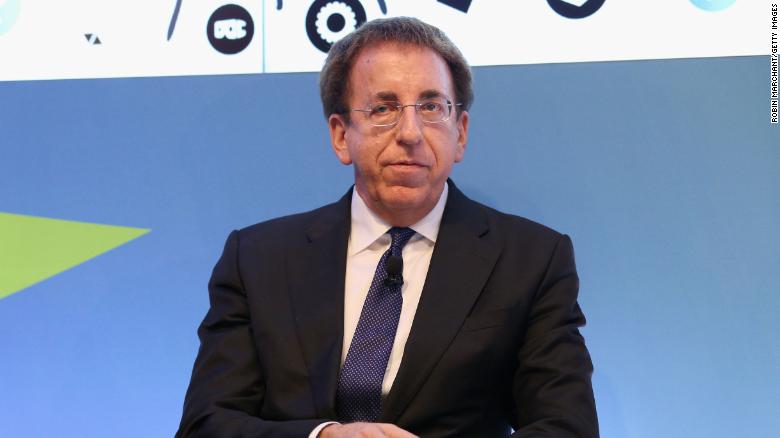
Dr. Dean Ornish says intense lifestyle changes may be able to slow or reverse cognitive decline.

(CNN)In 1990, internal medicine specialist Dr. Dean Ornish did what no other doctor had been able to do: He published results of a randomized clinical trial that used advanced imagery scans to show coronary artery disease could be reversed with nothing more than diet, exercise, stress reduction and social support.

"I think our unique contribution has been to use these very high-tech, expensive, state-of-the-art scientific measures to prove how powerful these very low-tech and low-cost interventions can be," said Ornish, a professor of medicine at the University of California, San Francisco.
    Today, Ornish is trying to do for the brain what he did for the heart. At his nonprofit Preventive Medicine Research Institute in California, he's using the same four lifestyle interventions to see if early-stage Alzheimer's can be "slowed, stopped or even reversed" without the use of drugs, devices or surgeries.
      "What's good for your heart is good for your brain and vice versa," Ornish said. "Prior studies have shown moderate changes in lifestyle can slow the rate of progression of dementia and Alzheimer's. So, my hypothesis is that more intense lifestyle changes could stop or even reverse the decline."

      Aggressive lifestyle changes

      The original study on heart disease was small -- 28 people were in the experimental group Ornish then followed for five years. Some skeptics criticized the program for its small sample size and said there was no way people could remain on the program's stringent plant-based diet without supervision.
      In the Ornish meal plan, no more than 10% of one's daily calories can come from fat. To accomplish that, all animal products besides egg whites and one cup of nonfat milk or yogurt each day are banned. Whole grains, fruits, vegetables and legumes are the basis of the diet, along with a few nuts and seeds. Refined carbohydrates, oils and excessive caffeine are avoided, but up to two cups a day of green tea are allowed.
      "It's low-fat, but that's just a small part of the overall diet," Ornish said. "It's essentially a vegan diet, low in fat and sugar, eating foods as close as possible to nature."
      Ornish's program includes  walking or other aerobic exercise.
      The program also includes an hour a day of yoga-based stress management using stretching, breathing, meditation and relaxation techniques. Strength training and walking or other aerobic exercise are required for 30 minutes a day or an hour three times a week. Smoking is not allowed.
      "There are also support groups," Ornish told CNN, "not just helping people stay on the diet but creating a safe environment where people can let down their emotional defenses and talk openly and authentically about what's really going on in their lives, warts and all.
      "That was the part that surprised me the most -- these support groups are really intimate," he added. "Sharing things like 'I may look like the perfect father, but my kids are on heroin,' or whatever. Even by Zoom, they're getting to the same level of intimacy within one or two sessions because there's such a hunger for that."
      Ornish calls that part of his program "Love More." He answers skeptics who wonder why intimacy is such an integral part of a plan to reverse disease by pointing to studies on people who are lonely, depressed or isolated.
      Those people are "three to 10 times more likely to get sick and die prematurely from pretty much everything" when compared with people who say they have a sense of love, connection and community, Ornish maintained.
      "Why? In part because you're more likely to smoke, overeat, stop exercising and other unhealthy things when you're feeling lonely and depressed," Ornish said.

      Impact on other chronic diseases

      By 1993, insurance giant Mutual of Omaha began reimbursing policyholders for the cost of Ornish's program, making it the first alternative therapy besides chiropractic to win insurance reimbursement. Medicare began covering lifestyle interventions for heart disease in 2006.
      "And in October 2021 Medicare agreed to cover my reversing heart disease program when it's done via Zoom, which is really a game changer," Ornish said. "Now we can reach people at home, in rural areas and food deserts wherever they live, which will help reduce health inequities and health disparities."
      In the last two decades, Ornish's research has shown the same four-part program can lower blood sugars and heart disease risk for patients with diabetes, reduce prostate cancer cell growth, improve depression within 12 weeks, reduce "bad cholesterol" by an average of 40%, and more.
      "With all this interest in personalized medicine, just how is it that these same lifestyle changes stop, and often reverse, the progression of such a wide spectrum of the most common and costly chronic diseases?" Ornish asked.
      "Because they all share the same underlying biological mechanisms: chronic inflammation, oxidative stress, changes in the microbiome, changes in gene expression, overstimulation of the sympathetic nervous system, changes in immune function and so on," he said.
      "And in turn, each one of these is directly influenced by what we eat, how we respond to stress, how much exercise we get and how much love and support we have," Ornish said.
      Those lifestyle improvements likely change the body at a cellular level, he said. A 2008 study found the Ornish program affected some 500 genes in the body via epigenetics, chemical reactions that can activate or dismantle how a gene is expressed.
      "After just three months on the Ornish lifestyle program, the research found a number of genes that regulate or prevent disease are turned on, and genes that cause many of the mechanisms that cause all these different conditions are turned off," Ornish said.
      "You're not technically changing your genes, but you're changing the expression of those genes with chemical switches, turning them on or off," he said. "So, that means it's no longer all in our genes, making us victims of our genetic fate. We're not victims. There's a lot we can do."
      Ornish lifestyle interventions have also been shown to lengthen telomeres, the tips of chromosomes that control longevity and shorten as we age. Ornish did a 2013 pilot study with UC San Francisco biochemist Elizabeth Blackburn, who won the 2009 Nobel Prize in physiology or medicine for her work on telomeres.
      "We found that telomerase, the enzyme that repairs and lengthens telomeres, increased by 30% after just three months on the program," Ornish said. "Then we found that people who had been on the program for five years had telomeres that were about 10% longer, a sign that aging is being reversed on the cellular level."
      Will these same lifestyle interventions be enough to slow or even reverse cognitive decline in Alzheimer's and other dementias? Time will tell. Ornish's study is still underway, and while preliminary results appear promising, all the data must be gathered, analyzed and peer-reviewed before an outcome can be reported.
      Get CNN Health's weekly newsletter

      Sign up here to get The Results Are In with Dr. Sanjay Gupta every Tuesday from the CNN Health team.

        "But I believe that it's not one diet and lifestyle intervention for heart disease, another for diabetes or prostate cancer, and yet a different one for Alzheimer's. It's really the same for all these different conditions," Ornish told CNN.
        "To reverse the disease, you need to follow the interventions nearly 100%. If you're just trying to prevent disease, then the more you change, the more you improve. But what matters most is your overall way of eating, living and loving so that we can all die young as old as possible."

        https://edition.cnn.com/2022/07/30/health/dean-ornish-lifestyle-study-alzheimers-wellness/index.html

        Thursday, 28 July 2022

        Monkeypox: WHO chief advises men who have sex with men to reduce partners to limit exposure to monkeypox

         By John Bonifield, CNN

        Updated 0901 GMT (1701 HKT) July 28, 2022


        https://edition.cnn.com/2022/07/27/health/who-monkeypox-msm-sex-partners/index.html

        (CNN)The vast majority of cases in the growing monkeypox outbreak are among men who have sex with men, according to the World Health Organization. WHO Director-General Tedros Adhanom Ghebreyesus advised members of this community Wednesday to limit their exposure to the virus by reducing their number of sex partners and reconsidering sex with new partners.

        "This is an outbreak that can be stopped if countries, communities and individuals inform themselves, take the risk seriously and take the steps needed to stop transmission and protect vulnerable groups. The best way to do that is to reduce the risk of exposure. That means making safe choices for yourself and others.
        "For men who have sex with men, this includes, for the moment, reducing your number of sexual partners, reconsidering sex with new partners and exchanging contact details with any new partners to enable followup, if needed," Tedros said at a briefing.
          While Tedros said the focus for all countries must be on engaging and empowering communities of men who have sex with men to reduce the risk of infection and transmission, he also cautioned nations to safeguard human rights.
            "The stigma and discrimination can be as dangerous as any virus," he said.
            Monkeypox isn't considered a sexually transmitted disease, but most people who have gotten it in the US recently report some level of sexual activity, Dr. Demetre Daskalakis, a US Centers for Disease Control and Prevention official working on the monkeypox response, told CNN this month. That can include penetrative encounters as well as oral sex.
            The virus spreads primarily though skin-on-skin physical contact, but it can also be transmitted by touching objects like sheets or towels that may have been used by somebody with monkeypox, as well as through close face-to-face interactions like kissing.
            Researchers are investigating whether the virus can be spread by someone who has no symptoms or through semen, vaginal fluids and fecal matter, according to the CDC.
            The CDC says that wearing a condom may help, but alone, it probably will not protect against the spread of monkeypox. However, the agency still emphasizes that condoms can prevent other sexually transmitted infections.
            Tedros' comments about reducing sex partners are among the strongest yet on the matter. Other WHO communications haven't been characterized so sharply.
            "Reducing your number of sexual partners may reduce your risk," one WHO flyer reads.
            "How can I protect myself?" another says. "To catch monkeypox, you need skin-to-skin contact, including during sex, with someone infectious or their contaminated belongings. To reduce the risk of contracting monkeypox: practice safer sex, keep your hands clean."
            "Remember that close physical contact, including sex, may increase your risk of exposure. Having multiple and frequent sexual contacts, including with anonymous partners, may put you more at risk of infection of monkeypox. To protect yourself practice safer sex," third WHO flyer advises.
            Health officials in the US have also advised reducing sex partners but used softer language.
            "Avoid skin-to-skin contact, including intimate contact, with people who have a rash that looks like monkeypox. Other harm reduction actions include minimizing sexual activity with multiple or anonymous sexual partners," CDC Director Dr. Rochelle Walensky said in mid-July.
            Daskalakis advised last week, "In line with our harm reduction guidance, thinking about reducing your number of partners, potentially trying to avoid anonymous contacts ends up being smart from the perspective of decreasing the risk of exposure."
            The CDC also says people might want to reduce skin contact as much as possible by having sex with clothes on or after covering areas where the rash is present. If they choose to have sex with someone who has monkeypox or who might have been exposed to it, they should talk about the virus ahead of time.
            Another thing people can do to protect themselves is avoid close face-to-face contact like kissing with those who are clearly infected.
            Scientists are still studying how monkeypox is spreading in this outbreak, but they say people don't seem to be getting sick after, say, walking past someone or giving them a hug and brushing over a lesion on their skin.
            Get CNN Health's weekly newsletter

            Sign up here to get The Results Are In with Dr. Sanjay Gupta every Tuesday from the CNN Health team.

              "If it's a hug that doesn't necessarily include a shirt, there's a theoretical risk of transmission there, but that's not what we're hearing in terms of what's happening with our cases, so it's lower risk. I can't say zero risk," Daskalakis said.
              Rather, it's longer contact that seems to be responsible for most cases now. "If you were to ask me how long 'long' is, I can't answer that question, but it seems as if it's possible that this is not being transmitted by a light brush," Daskalaskis said. "Realistically speaking, skin-on-skin contact of any variety theoretically can transmit monkeypox, but what we're seeing is, you kind of have to work at it a bit."
              https://edition.cnn.com/2022/07/27/health/who-monkeypox-msm-sex-partners/index.html

              Wednesday, 20 July 2022

              This Hong Kong farm is using fish and blue lights to grow basil the size of your face

               (CNN)Hong Kong has more skyscrapers than any other city, so it's not surprising that just 0.6% of its land is farmed. The city currently produces less than 2% of the fresh vegetables eaten there — but one agritech startup wants to change that.

              Updated 0657 GMT (1457 HKT) July 20, 2022


              Inside Hong Kong's high-tech vertical farm
              Inside Hong Kong's high-tech vertical farm 00:58

              (CNN)Hong Kong has more skyscrapers than any other city, so it's not surprising that just 0.6% of its land is farmed. The city currently produces less than 2% of the fresh vegetables eaten there — but one agritech startup wants to change that.

              In a 20,000-square-foot industrial warehouse in Hong Kong's Tai Po district, Farm66 grows plants on stacked shelves under LED lights. Protected from pests and pollution, this indoor farm uses no soil and minimal water says Gordon Tam, co-founder and CEO of Farm66. What's more, the controlled environment allows the company to direct the shape and size of the plants.
              Making effective use of limited space, indoor farms in urban areas could help to reduce transport-related carbon emissions and improve food security in cities that rely on imports, says Tam — an issue that was thrust into the spotlight when supermarket shelves emptied during the pandemic.
              So far, the company has raised more than $4 million in Series A funding, says Tam, with backers including the Alibaba Entrepreneurs Fund and startup accelerator ParticleX.
                Now, Tam is looking to scale up production of his smart farming technology, as well as exploring ways to grow crops in extreme environments — including outer space.

                A homegrown startup

                Founded in 2013, Farm66 was an early pioneer in vertical farming.
                  In its patented aquaponics system, fish tanks are placed below shelves filled with leafy green herbs and vegetables. The plants filter water for the carp that live in the tanks, and the fish are fed leftovers — imperfect vegetables that can't be sold. Fish waste provides natural fertilizer for the plants, differentiating Farm 66's system from hydroponic systems, which typically use chemical fertilizers, says Tam.
                  Using different wavelengths of light, Farm66 can control the shape and size of the plants, enabling it to grow larger produce — like this giant basil leaf.
                  Smart sensors monitor environmental conditions, including temperature and humidity, and the LEDs that illuminate the shelves use different light wavelengths to control plant growth.
                  "A blue light can increase the size of the leaf," says Tam. "The red (light) makes the leaf smaller, but the stem will be taller."
                  For some plants, like lettuce, a large leaf is desirable, whereas for tomatoes or strawberries, smaller leaves help direct more energy and nutrients into the fruit, says Tam. The company has experimented with different growing conditions to produce a variety of plant sizes — including a batch of basil with leaves so large they could cover a person's face.

                  A growing opportunity

                  Hong Kong's agriculture sector wasn't always so small, says Lam Hon-ming, a professor of life sciences at The Chinese University of Hong Kong.
                  In the 1960s, over 25% of Hong Kong's land was farmed for rice, fruit and vegetables, and until the 1970s, the territory produced around 50% of its own food, says Lam. But as the city grew, urban development displaced farmland, and low, seasonal income from farming further disincentivized local food production, he adds.
                  Indoor, vertical farms could solve these problems. By controlling the environment, farmers could grow plants more quickly and increase the number of harvests, says Lam.
                  Farm66's indoor vertical farm uses an aquaponics system, where fish waste is used to fertilize the plants, and the plants filter the water for the fish tanks at the base of the tower.
                  He points to similar-sized cities with limited space such as Singapore — which produced 14% of its fresh vegetables in 2019 — to demonstrate what Hong Kong could do if it embraced vertical farming systems. Other startups in the city are also pursuing space-saving farming solutions: Grow Green, founded in 2016, has developed smart hydroponic planting systems for home gardeners, and Farmacy, founded in 2018, supplies refrigerator-like "mobile farms" to local shops and restaurants.
                  And while Hong Kong is short on space, it has a growing number of vacant industrial warehouses, with more than one million square meters unused in 2020, according to government reports. These warehouses would be "ideal" for vertical farms, says Lam.

                  From city limits to outer space

                  Farm66 is currently operating at less than 30% of its capacity, producing around two tons of vegetables a month, which it supplies to a handful of supermarkets and hotels, says Tam.
                  Farm66 is now focusing on research and development, such as robots to help automate tasks like harvesting. Credit: CNN / Dan Hodge
                  The high setup costs for indoor, vertical farms is still a barrier, he says, which makes turning a profit difficult. Tam declined to share the company's revenue but said that less than a third comes from vegetable sales. Instead, the company is shifting its focus to research and innovation, and is developing ways to make indoor farming more affordable.
                  The company has developed prototype robots to help automate tasks like harvesting and planting, which Tam says will enter mass production later this year. By establishing partnerships with factories in Mainland China to manufacture the robots at scale, Tam believes he can cut costs for future urban farmers.
                  Other Farm66 innovations include mini farms for homes, schools and businesses, which have sensors to monitor and automate plant care.
                  Tam designed a conceptual "space farm" for an exhibition at the Hong Kong Design Center in 2022. He says the rotating hydroponics system could be a solution in zero gravity environments.
                    But Tam's boldest vision is a literal moonshot. He has designed the Future Green Tunnel, a conceptual rotating hydroponics system for zero-gravity environments, and is adapting indoor farming technology to grow plants in space.
                    Whether on Earth or in space, Tam hopes that indoor farming will flourish — and produce "high quality, safe vegetables for our next generation."


                    This Hong Kong farm is using fish and blue lights to grow basil the size of your face - CNN