Pages

Showing posts with label CanSino. Show all posts

Monday, 3 May 2021

15 Apr 21 How China passed up a vaccine opportunity and fell behind - Bloomberg

  • Moderna, Pfizer cornered the mRNA technology for their shots
  •  
    China’s leading shots are less effective; use older techniques
 Updated on 

The call came early in the Covid-19 pandemic. Drew Weissman, an infectious diseases professor at the University of Pennsylvania and an expert in messenger RNA, received a query from a Chinese company interested in using the new technology to make a vaccine against the coronavirus.

mRNA, which effectively turns the body’s cells into tiny vaccine-making factories, has since become the breakout star of the Covid era, underpinning shots made by Moderna Inc. and the Pfizer Inc./BioNTech SE partnership which have been among the most effective in fighting the disease. Before Covid hit, though, the experimental science had yet to receive regulatory approval for use against any illness -- let alone against the mysterious respiratory infection.

“They wanted to develop my technology in their company in China,” said Weissman, a leader in the field because of his work with research partner Katalin Karikó on discovering mRNA’s disease-fighting potential. “I told them I was interested.”

Then, nothing happened.

“I never heard from them again,” Weissman said.

It was one of the missed opportunities that have disadvantaged the country’s Covid vaccine push and left Chinese companies playing catch-up on a technology set to revolutionize everything from flu shots to oncology drugs.

As the coronavirus spread globally last year, New York-based Pfizer raced to partner with Germany’s BioNTech, an mRNA frontrunner that had hired Kariko as a senior vice president. Massachusetts-based Moderna, meanwhile, had $2.5 billion in funding from the U.S. government.

China Setback

By contrast, several Chinese companies focused on older technologies that have proved far less potent. At a conference on April 10, the head of the Chinese Center for Disease Control and Prevention, George Fu Gao, said Chinese vaccines “don’t have very high protection rates,” local media reported.

As the comments caused a stir on social media, Gao backtracked, telling Communist Party-backed newspaper Global Times that he was just referring to ways to improve vaccine efficiency. But no amount of damage control can obscure the fact that no Made-in-China mRNA vaccines have been approved yet.

For more, read: Are China’s Covid Shots Less Effective? Experts Size Up Sinovac

That’s a setback for President Xi Jinping’s ambition to make the country a healthcare innovation powerhouse. mRNA’s effectiveness with Covid vaccines is opening up a new frontier for the technology, with researchers looking at ways to use it to fight cancer, tuberculosis and many other diseases, according to Surbhi Gupta, a healthcare and life sciences analyst with consultancy Frost & Sullivan.

“mRNA technology has the potential to be a game changer,” she said.

For decades, vaccines have been made using inactive versions of viruses, but mRNA shots use genetic material to instruct the body to create the spike protein the coronavirus uses to enter cells. That in turn trains the body to fight potential infection.


Inside the packaging plant of the Beijing Biological Products Institute Co. in Beijing in December 2020.

Photographer: Zhang Yuwei/Xinhua News Agency/Getty Images

Old-school Chinese-made Covid vaccines now in use from Sinovac Biotech Ltd. and China National Biotec Group Co. rely on particles from inactivated viruses and have protection rates much lower than the mRNA vaccines’ more than 90% effectiveness in preventing infections.

Sinovac’s vaccine has an efficacy rate of a little over 50% in protecting against symptomatic Covid-19, according to studies conducted in Brazil, just meeting the minimum threshold required by global drug regulators.

State-owned China National Biotec, a unit of Sinopharm Group Co., has said its two inactivated vaccines are 73% and 79% effective in preventing symptomatic Covid but has not published data to support that assertion. Sinopharm’s Hong Kong-listed shares jumped on Thursday, a day after the company said that there had been no severe side effects related to its inactivated-virus vaccines.

Meanwhile, China’s CanSino Biologics Inc. has produced a viral-vector vaccine which, like those made by AstraZeneca Plc’s and Johnson & Johnson, uses a genetically modified virus to fight off infection. The Tianjin-based company has reported 66% efficacy in preventing symptomatic Covid-19 in its final stage trial.

A New Generation of Vaccines Is Coming, Some With No Needles

China’s government has pushed aggressively to close the gap with the West and become an alternative pharmaceutical and biotech power. It allowed controversial treatments with stem cells and gene therapy, despite concerns elsewhere about safety and efficacy. Yet China didn’t make mRNA vaccines a priority.

“Before Covid, a lot of people still had reservations” about the technology, said Lusong Luo, senior vice president at BeiGene Ltd., a Beijing-based biotech pioneer and leading producer of oncology drugs. “It’s new, it’s at the cutting edge.”

When Sinovac began working on a vaccine, it focused on a familiar method in order to develop a shot quickly, after efforts at exploring other alternatives didn’t yield promising results.

“For us the strategy is really to use the more mature platform and technology to solve the problem,” CEO Yin Weidong told Bloomberg News in an interview last May.

Now, with the success seen by Pfizer and Moderna, Chinese companies are jumping into the fray -- but their efforts will take time to pay off. China may not have mRNA vaccines until the end of 2021, according to Feng Duojia, president of the China Association of Vaccines, China Global Television Network reported on April 11.
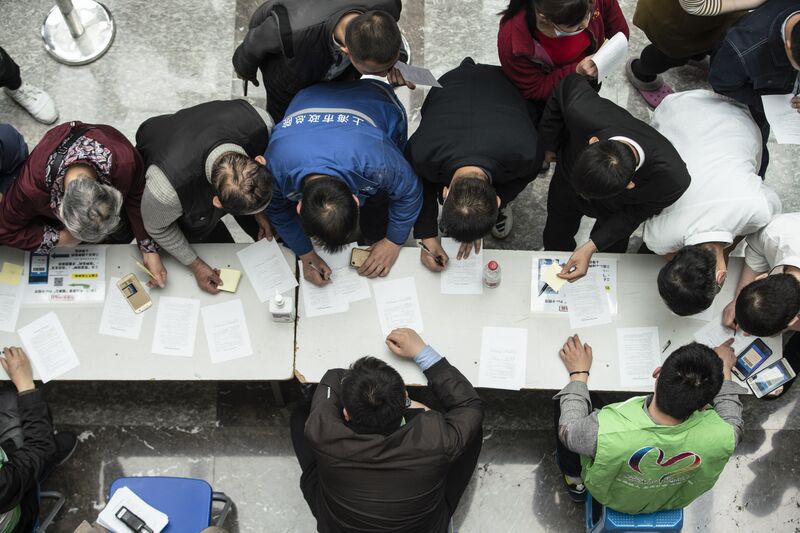
Residents Get Vaccinated In Shanghai As WHO Says China’s Covid Shots Are Safe But Need More Data


People fill out consent forms at a Covid-19 vaccination center in Shanghai on April 3.

Photographer: Qilai Shen/Bloomberg

For more, read: China’s Bid to Ramp Up Vaccinations Hindered by Supply Shortages

BeiGene in January announced an agreement to cooperate with Strand Therapeutics Inc. of Cambridge, Massachusetts on an mRNA treatment for tumors. “Now people realize that mRNA vaccines really work, it will be a lot easier,” Luo said.

China’s Walvax Biotechnology Co. began construction in December on a facility to make mRNA vaccines, while CanSino struck a deal in May last year with Vancouver-based Precision NanoSystems Inc. to develop an mRNA vaccine. Contract manufacturer WuXi Biologics Cayman Inc. has said it is devoting over $100 million to mRNA-related vaccines, biologics discovery, development and manufacturing.

While China has largely contained the spread of the coronavirus within its borders, more effective vaccinations and a wider take-up among its population would enable the country to reopen sooner, reducing the need for quarantines and lockdowns. China risks losing the edge gained by stamping out the virus if its inoculation drive is less effective than places where mRNA shots are the backbone of rollouts.

In Israel, where nearly 60% of the population has received the Pfizer/BioNTech vaccine, Covid cases, hospitalizations and deaths are plunging. As more adults get their shots in the U.S., which also relies largely on mRNA vaccines, President Joe Biden has predicted Americans will be celebrating July 4th with backyard barbecues once again.

The Best and Worst Places to Be as Global Vaccinations Take Off
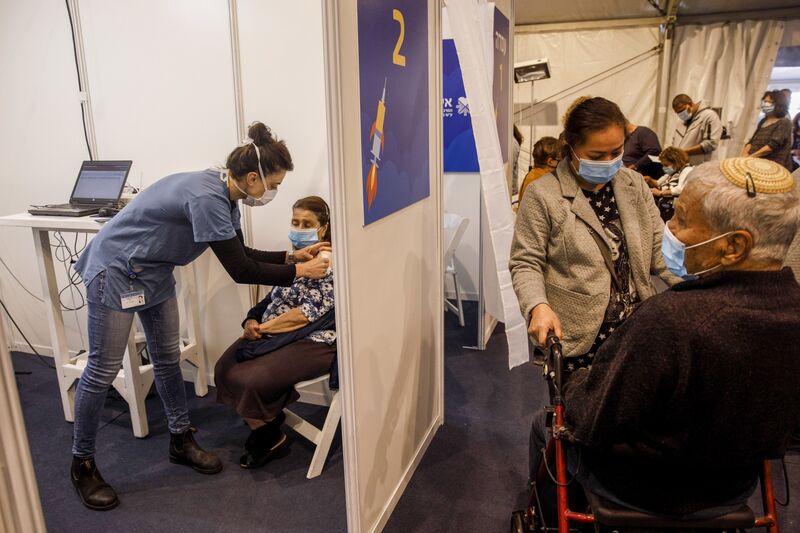
Vaccination Center as Israel Forges Nationwide Covid Effort


A nurse administers a dose of the Pfizer-BioNTech Covid-19 vaccine at a mass vaccination center at Rabin Square in Tel Aviv earlier in January.

Photographer: Kobi Wolf/Bloomberg

China isn’t the only country that missed the boat with mRNA. While companies in Japan, India and Australia are significant players in fighting diseases like flu and polio, no company in the Asia-Pacific region now makes mRNA shots. “Basically, mRNA was put in the ‘too-hard’ basket for many years,” said Nigel McMillan, Program Director for Infectious Diseases & Immunology at Griffith University in Southport, Australia.

In March this year, Takeda Pharmaceutical Co., Moderna’s local partner for Japanese trials of its Covid vaccine, signed a deal with New Jersey-based Anima Biotech on mRNA treatments for Huntington’s and other neurological diseases. Another big Japanese drug maker, Daiichi Sankyo Co., announced on March 22 the start of an early-stage trial of its own mRNA Covid vaccine.

In Thailand, Bangkok-based Chulalongkorn University has enlisted Penn’s mRNA pioneer Weissman to help it develop mRNA capability.

As they try to catch up, Chinese developers and others in Asia can take advantage of the lower barriers to entry for mRNA vaccine and drug development. In addition to the market leaders Moderna and BioNTech, there are other Western startups that invested in mRNA and are ready to license their technology.

Making mRNA vaccines and drugs also doesn’t require large capital expenditures on expensive bioreactors and other equipment, said Archa Fox, an associate Professor at the University of Western Australia’s School of Human Sciences and School of Molecular Sciences.

That bodes well for China’s ability to recover from not focusing on mRNA sooner, according to Weissman.

“They are going to hire the best scientists they can find,” he said. “Anybody can get in the game if they’ve got good people and money.”

— With assistance by Dong Lyu

(Updates with added details)
Source:

Other reads:

https://healthticket.blogspot.com/2022/05/chinas-bet-on-homegrown-mrna-vaccines.html

https://healthticket.blogspot.com/2022/04/chinas-biggest-covid-failure-is-not.html

https://arisechina.blogspot.com/2022/01/china-has-rejected-worlds-top-mrna.html

https://arisechina.blogspot.com/2022/01/china-rushes-to-develop-mrna-covid-19.html

https://healthticket.blogspot.com/2021/05/15-apr-21-how-china-passed-up-vaccine.html

https://healthticket.blogspot.com/2021/05/top-chinese-official-admits-vaccines.html


Wednesday, 14 April 2021

The 5 Covid-19 Vaccines In Malaysia's National Vaccination Programme

Quick facts from Malaysia's National Covid-19 Immunisation Programme Handbook on the Covid-19 vaccines that will be used in our national vaccination plan which is expected to start rolling out on February 26

By Tania Jayatilaka


February 17, 2021
An official shows a vial of Russia's Sputnik V vaccine against the coronavirus (Covid-19) in the Medical Center of the Hungarian Armed Forces in Budapest on February 12, 2021. - Hungary on February 12 became the first EU nation to start using Russia's Sputnik V vaccine against the coronavirus, the country's chief medical officer said. (Photo by Zsolt SZIGETVARY / various sources / AFP)

A vial of Russia's Sputnik V vaccine (Photo: Zsolt Szigetvary/various sources/ AFP)


On February 16, 2021, Malaysia's National Covid-19 Immunisation Programme Handbook (which can be downloaded at www.vaksincovid.gov.my) was launched in a virtual ceremony by Prime Minister Tan Sri Muhyiddin Yassin, who also mentioned that the first batch of Pfizer-BioNTech Covid-19 vaccines were expected to arrive in Malaysia earlier than expected on February 21, 2021.

The handbook, which was published by the Covid-19 Vaccine Supply Access Guarantee Special Committee (JKJAV), offers key information about the government's Covid-19 immunisation strategy, which groups will be vaccinated first, how to register for the programme and what the public should know about the five varieties of Covid-19 vaccines purchased for this plan. According to the handbook, the government aims for at least 80 per cent of Malaysia's adult population to be vaccinated by February 2022 to reduce the spread of this virus.
 
From dosage to efficacy rates, here's what the National Covid-19 Immunisation Programme Handbook says about the five vaccines that will soon arrive in Malaysia.


1/5
Pfizer-BioNTech

Photo: Oli Scarff/AFP

Country of origin: US

Total no. of doses ordered: 32 million

Type: Pfizer-BioNTech is a messenger RNA or mRNA vaccine which instructs the body's cells to produce a protein that triggers an immune response. A Covid-19 mRNA vaccine teaches our cells to produce a 'spike protein' which is found on the surface of the coronavirus. The body's immune system then recognises this protein and develops an antibody to protect against it. Unlike traditional vaccines, this type contains only synthetic components, not a live virus.

Pfizer-BioNTech boasts an efficacy of 95 per cent and must be administered in two doses. However, storage and logistics for this particular vaccine are costly as the doses must be kept in a special cold environment with a temperature of -75°C.

See also: Where To Get Tested For Covid-19 In Kuala Lumpur & Petaling Jaya


2/5
AstraZeneca

Photo: Justin Tallis/AFP

Country of origin: UK

Total no. of doses ordered: 12.8 million

Type: The AstraZeneca vaccine is a viral vector vaccine, jointly produced by UK-based pharmaceutical company AstraZeneca and Oxford University. It uses a modified virus to deliver a small portion of the virus' genetic code to the body's cells, teaching them to produce the spike protein found in the coronavirus and build an immune response to it. This vaccine must also be administered in two doses and has an efficacy rate of 62 per cent to 90 per cent.

See also: What These Alumni Of Top International Schools In Malaysia Have Done To Fight Covid-19


3/5
Sinovac


Photo: Wang Zhao/AFP

Country of origin: China

Total no. of doses ordered: 12 million

Type: The Sinovac vaccine is an inactivated vaccine, which means it uses killed virus particles to trigger the body's immune response to a virus. Suitable for those with weak immune systems, Sinovac's vaccine has an efficacy of 50.4 per cent to 91.25 per cent, and is currently being used in China, Hong Kong, Indonesia, Brazil, Cambodia, Turkey and Chile.

Related: Travelling During Covid-19: What You Should Know


4/5
CanSino Biologics


Country of origin: China

Total no. of doses ordered: 3.5 million

Type: Chinese pharmaceutical company CanSino Biologics co-developed this vaccine with the Beijing Institute of Biotechnology and the Academy of Military Medical Sciences. It's currently in use in China, Mexico and Pakistan. The CanSinoBIO vaccine is also a viral vector vaccine and the only vaccine among the five listed in the handbook that can be administered in one shot. It has a 65.7 per cent efficacy rate.


5/5
Sputnik V


Country of origin: Russia

Total no. of doses ordered: 6.4 million

Type: A viral vector vaccine by Russia's Gamaleya Research Institute, the Sputnik V shot is administered in two doses around 21 days apart. It boasts an efficacy of 91.6 per cent and is being used in Russia, South Korea, Brazil, Argentina and Belarus. Like the AstraZeneca, Sinovac and CanSinoBIO vaccines, the Sputnik V vaccine can be stored in standard refrigerators at temperatures of -2°C to -8°C, making them easier and cheaper to transport compared to the Pfizer vaccine.

Related: Dr Amalina Bakri On Lessons From The Covid-19 Frontline

https://my.asiatatler.com/life/vaccines-in-malaysias-covid-vaccination-programme-pfizer-astrazeneca-sinovac-cansinobio-sputnik-v


Monday, 8 February 2021

CanSino: How a Chinese firm jumped to the front of the coronavirus vaccine race

CanSino is vaulting into the global spotlight as connections on both sides of the Pacific make it one of the front-runners

A technician works at a manufacturing facility of Chinese vaccine maker CanSino Biologics in Tianjin, China November 20, 2018. PHOTO BY STRINGER/REUTERS FILES

When a group of Chinese scientists gathered over barbecue and beer in a Toronto backyard a decade ago, talk drifted to their homeland’s vaccines, which had long lagged the developed world on quality and safety. Four of them decided to act.

They left top positions at global pharmaceutical companies in Canada to set up a biotechnology firm half a world away in Tianjin, China, hoping to produce vaccines on par with Western countries. Now, that company, CanSino Biologics Inc., is vaulting into the global spotlight as connections on both sides of the Pacific make it one of the front-runners in the race for a coronavirus vaccine.

CanSino’s Chinese-born chief executive officer, Yu Xuefeng, formerly a senior executive at drugmaker Sanofi’s Canadian vaccine operations, has maintained relationships in Canada and China even as geopolitical disagreements polarize both countries. Yu has boosted his firm’s scientific prowess by tying up with the Canadian government’s largest research organization. At home, he’s worked with a prominent Chinese military scientist, first on an Ebola vaccine and now on CanSino’s experimental coronavirus shot.

In May, CanSino became the first globally to publish a full scientific study on its early human trials, an important step because it allows researchers worldwide to assess a vaccine’s potential.

The company — which is yet to generate revenue and logged a US$22 million loss last year — has so far kept up with, and occasionally even outpaced, Western pharmaceutical giants with the speed of its initial coronavirus vaccine trials. The research is still too nascent to know if the shot from CanSino, or indeed any company, will provide the magic bullet countries are seeking to open up while the pandemic rages. But CanSino’s inroads show China’s young biotechnology industry is becoming a global contender, and a powerful tool for President Xi Jinping.

CanSino “deserves credit for the speed with which they pushed the vaccine through pre-clinical studies and human testing,” said Wang Ruizhe, a pharmaceutical industry analyst at Capital Securities Corp. in Shanghai. “It tells you something about their ability to mobilize and leverage the resources that it takes to get all these done. The resources required here are substantial.”

A spokesperson for the Chinese company, citing media reports in May, said Canadian Prime Minister Justin Trudeau is supportive of the Canadian researchers working on clinical trials for a coronavirus vaccine with CanSino.

China’s pharmaceutical industry has been dogged by safety incidents and quality scandals. But in recent years, parts of it have grown more advanced as hundreds of Chinese scientists trained in the West have come home.

Called hai gui, or “sea turtles,” these returnees have capitalized on relationships and expertise gained in countries like the U.S. and Canada, and created new companies. CanSino’s CEO Yu — 57, who has a doctorate from Canada’s McGill University in microbiology and was the head of vaccine development and production at Sanofi Pasteur in Canada — belongs to this new breed of executives.

In the prospectus for CanSino’s 2019 public offering in Hong Kong, Yu described the difficult choices he and his colleagues made in forging their new path back home in China.

“Most of our families stayed in Canada, and we could only see them a few times a year,” he wrote. “When you think about your young kids and teenagers growing up without dads, when you know your wife had to shovel out of 10 inches of deep snow early morning in -20°C wind chill all by herself —those were the tough moments.”

Both Sides

The name CanSino represents the Chinese characters for health, hope and promises, while in English it’s a combination of Canada and China. Besides Yu, other top officials at the firm have Canadian connections. Chief Scientific Officer Zhu Tao was also a senior scientist at Sanofi Pasteur in Canada. The company’s success has relied on threading the needle between both nations.

In February 2014, about five years after returning to China, Yu licensed a technology from the National Research Council of Canada called HEK 293 cell lines, which is required to produce large quantities of a vaccine reliably. That science went on to partly underpin CanSino’s viral vector technology.

An advanced way to make a vaccine, a viral vector is a genetically modified virus that is no longer harmful to humans, but can serve as a vehicle to carry the genes of another germ to prepare the immune system for attack. Few Chinese companies had that technology in 2014, when a Chinese army researcher called Chen Wei began looking for viral vector expertise to produce a vaccine amid Africa’s Ebola outbreak.

Ebola Vaccine

A major general in China’s People’s Liberation Army, Chen headed the Institute of Biotechnology at the country’s Academy of Military Medical Sciences. She went on to work with CanSino to develop an Ebola vaccine that in 2017 was approved in China for emergency use and national stockpiling.

Chen has star status in China. In a nationalistic movie called Wolf Warrior II, the character of a scientist who develops a vaccine against a deadly African virus is believed to be modelled on her. She developed a therapy used by Chinese health workers during the SARS outbreak of 2003.

Chen is also known for a singular dedication to her work. In a 2004 interview with state-run CCTV, she said she presented her findings on the SARS therapy to Beijing’s municipal authorities after dosing her four-year-old son with it for two months because she was so sure about her research.

CanSino’s long-running relationship with Chen paid off again this year. CanSino and her team raced through pre-clinical studies on the coronavirus vaccine — called Ad5-nCoV. They secured Beijing’s help on everything from isolating virus strains to animal testing. Chen and the institute couldn’t be reached for comment.

Mixed Results

The team started human clinical trials in Wuhan, the Chinese city where the coronavirus first emerged, on March 16. Massachusetts-based Moderna Inc., seen as one of the best contenders to produce an American vaccine, started its tests in the U.S. the same day. Less than a month later, CanSino began the second phase of wide-scale human trials. On May 22, when it published a study in the medical journal the Lancet, the results were mixed: The shot appeared to be safe and generated some immune response, but there were shortcomings.

Viral vector technology can have limitations when some people already have pre-existing immunity to the vector virus used to create the vaccine. This was the case for the adenovirus — a genetically-altered cold-causing virus — which CanSino used for its vaccine. Many of those with pre-existing adenovirus immunity showed diminished response to its coronavirus shot in the Lancet study.

‘In the Game’

For upcoming trials in Canada, CanSino has added a booster shot for some participants to attempt to address the lacklustre response from those with pre-existing immunity to the adenovirus vector, according to a person with knowledge of its trial design who didn’t want to be named discussing information that’s not public.

“CanSino is in the game and it’s about where the other so-called leaders are,” said William Haseltine, a former Harvard University HIV researcher. “Whether anybody will cross the finish line where we ever can see safety data that we would like to see is unknown.”

CanSino is in the game and it's about where the other so-called leaders are

Final-stage trials could yet stymie CanSino’s outsized ambitions. Its Ebola vaccine was approved on an emergency basis after two stages of human testing, but the company never completed the final phase as the epidemic petered out in Africa. CanSino doesn’t generate much revenue because most of its products, including two late-stage meningitis vaccines, are still in development.

The company has received some funding from Beijing for the coronavirus vaccine, although the amount isn’t large, the person familiar with its trials said.

Phase III

CanSino’s founders’ ties with Canada are once again proving fortuitous as it looks to conduct Phase III tests on its vaccine. Still, there could be challenges in conducting the sizable studies required in the final stages if new coronavirus infections continue to taper in Canada. China has largely stamped out its outbreak.

Researchers at Dalhousie University’s Canadian Center for Vaccinology, who are leading the clinical trials, have said they hope to start Phase III studies of the CanSino shot as early as this fall. Canada’s National Research Council said if the vaccine candidate is approved by authorities there, it has the option to produce doses of the vaccine for emergency pandemic use in Canada. (CanSino is responsible for funding its own trials, Health Canada, the government’s health agency, said in an email.)

Meanwhile, China’s reputation in Canada — already damaged by Beijing’s reaction to the arrest of Huawei Technologies Co.’s chief financial officer in Vancouver — has been dealt a further blow by the pandemic and perceptions China hid the virus initially. That could fuel more scrutiny of CanSino and its vaccine in Canada.

Other companies are also racing ahead. Moderna is set to test its vaccine among 30,000 people in the U.S. in July, while an early-stage trial of a Pfizer Inc. and BioNtech SE shot showed it’s safe and prompted patients to produce antibodies against the coronavirus. A vaccine co-developed by the University of Oxford and AstraZeneca Plc also started the final stage of human testing in Brazil in June.

At home, state-run vaccine developer China National Biotec Group Co. has secured approval from health authorities in the U.A.E. to conduct Phase III testing for the two shots it developed against the coronavirus. Beijing-based Sinovac Biotech Ltd. has inked a deal to do final tests in Brazil, too. The outcome for all of these companies — and CanSino — will only be known once this ultimate stage of scientific studies is complete.”

The viral vector CanSino is using is a relatively safe approach compared to other techniques but it’s hard to make a call on efficacy for now,” said Wang, the Shanghai-based analyst. “There’s no shortage of histories where promising efforts made it to the last stage of testing only to see things fall apart.”

Bloomberg.com

https://financialpost.com/news/fp-street/how-a-chinese-firm-jumped-to-the-front-of-the-virus-vaccine-race

Saturday, 6 February 2021

China approves Sinovac Biotech COVID-19 vaccine for general public use

 BEIJING (Reuters) - Sinovac Biotech said on Saturday that its unit’s COVID-19 vaccine has been approved for use by the general public by China’s medical products regulator.

FILE PHOTO: A worker performs a quality check in the packaging facility of Chinese vaccine maker Sinovac Biotech, developing an experimental coronavirus disease (COVID-19) vaccine, during a government-organized media tour in Beijing, China, September 24, 2020. REUTERS/Thomas Peter/File Photo


FEBRUARY 6, 2021

It marks the second vaccine approved for public use in China, after one developed by a Beijing institute affiliated with state-owned China National Pharmaceutical Group (Sinopharm) was approved in December.

Both vaccines, as well as a third candidate from Sinopharm, have already been used in China’s vaccination program which has administered over 31 million doses, mainly targeting groups at higher infection risk. A fourth candidate from CanSino Biologics is being used among military personnel.

Indonesia, Turkey, Brazil, Chile, Colombia, Uruguay, and Laos have granted emergency authorisation for the CoronaVac vaccine developed by Sinovac Life Sciences, Sinovac said in a news release.

Approval of the two-dose regimen by China’s National Medical Products Administration is based on results from two months of late-stage clinical trials overseas, from which the final analysis data has not yet been obtained, Sinovac said.

Its Beijing-based unit Sinovac Life Sciences is expected to be able to produce over 1 billion doses per year in the form of bulk ingredient by February, it said.

Sinovac is also expanding its capacity to fill vaccine into vials and syringes, which currently lags its vaccine manufacturing capacity. It has also outsourced filling and finishing procedures to overseas partners.

China plans to provide 10 million vaccine doses to COVAX, a World Health Organization-backed global vaccine-sharing initiative that Sinovac, Sinopharm and CanSino have applied to join, the foreign ministry has said.

A Phase I and II trial in China showed the vaccine could safely trigger immune response for older participants and it is also being tested in participants aged three to 17.

Sinovac cautioned, however, that data for the protection rate among people aged 60 and above was “limited”.

“When the relevant institutions ... use this vaccine, the necessity of inoculating this product should be evaluated in consideration of the health status and exposure risk of this age group,” it added.

VARIED EFFICACY RATES

Sinovac’s vaccine is being tested in Phase III clinical trials in countries including Brazil, Turkey and Indonesia, where varied efficacy readings had been released separately, without sufficient details made available to public.

The vaccine was found 50.65% effective against COVID-19 disease in the Brazil trial which had recruited 12,396 medical workers older than 18 as of December 16 and recorded 253 cases, Sinovac said in a statement on Friday.

The success rate from the Turkey trial was 91.25%, local researchers said, based on a preliminary analysis of 29 cases. There was a 65.3% efficacy rate in the Indonesia trial.

Brazil’s more rampant epidemic, and the trial’s focus on medical workers, are among factors which Sinovac believe may have lowered the efficacy rate seen in data from there, a person familiar with the matter told Reuters last month.

The Brazil trial also found the vaccine was 83.7% effective against the disease that requires medical treatment, and 100% effective against hospitalization, severe cases and death in the same trial, Sinovac said on Friday.

The protection rate was nearly 70% based on observation of a smaller sub-group in the Brazil trial, in which participants received the two doses at a three-week interval rather than two weeks apart for most participants, Sinovac said last month.

https://www.reuters.com/article/us-health-coronavirus-vaccine-sinovac-idUSKBN2A60AY