A few days ago we told you probiotics may help you prevent high blood pressure. It could be one of the easiest things you do to help protect your heart.
But the benefits of probiotics go way beyond heart health… It’s a long list of perks—from a whiter smile to easing allergies.
Getting enough probiotics isn’t always easy. Most people rely on yogurts. They don’t provide nearly enough and are usually loaded with sugar. This deletes all the benefits anyway. Some people take supplements. It’s a good idea. But fermented foods are another option. Lucky for us, their rising popularity is making them easier to find.
Here are our top five probiotic-packed fermented foods:
1. Kimchi: This popular Korean dish uses fermented Chinese cabbage as its base. But it gets mixed with probiotic-feeding foods like garlic and onion. This means more potent germs. It also comes with a lot of heat from hot pepper flakes. But studies show that kimchi can help obese subjects lower their blood pressure, shed body fat, and even stabilize blood sugar.1
Another study found that men who ate kimchi helped lower LDL cholesterol. And the more they ate, the lower their numbers dropped.2 This fiery food is also rich in vitamins A, B, and C. But most important of all, experts claim it has 1,000 times the amount of probiotics you’ll find in most yogurts.3
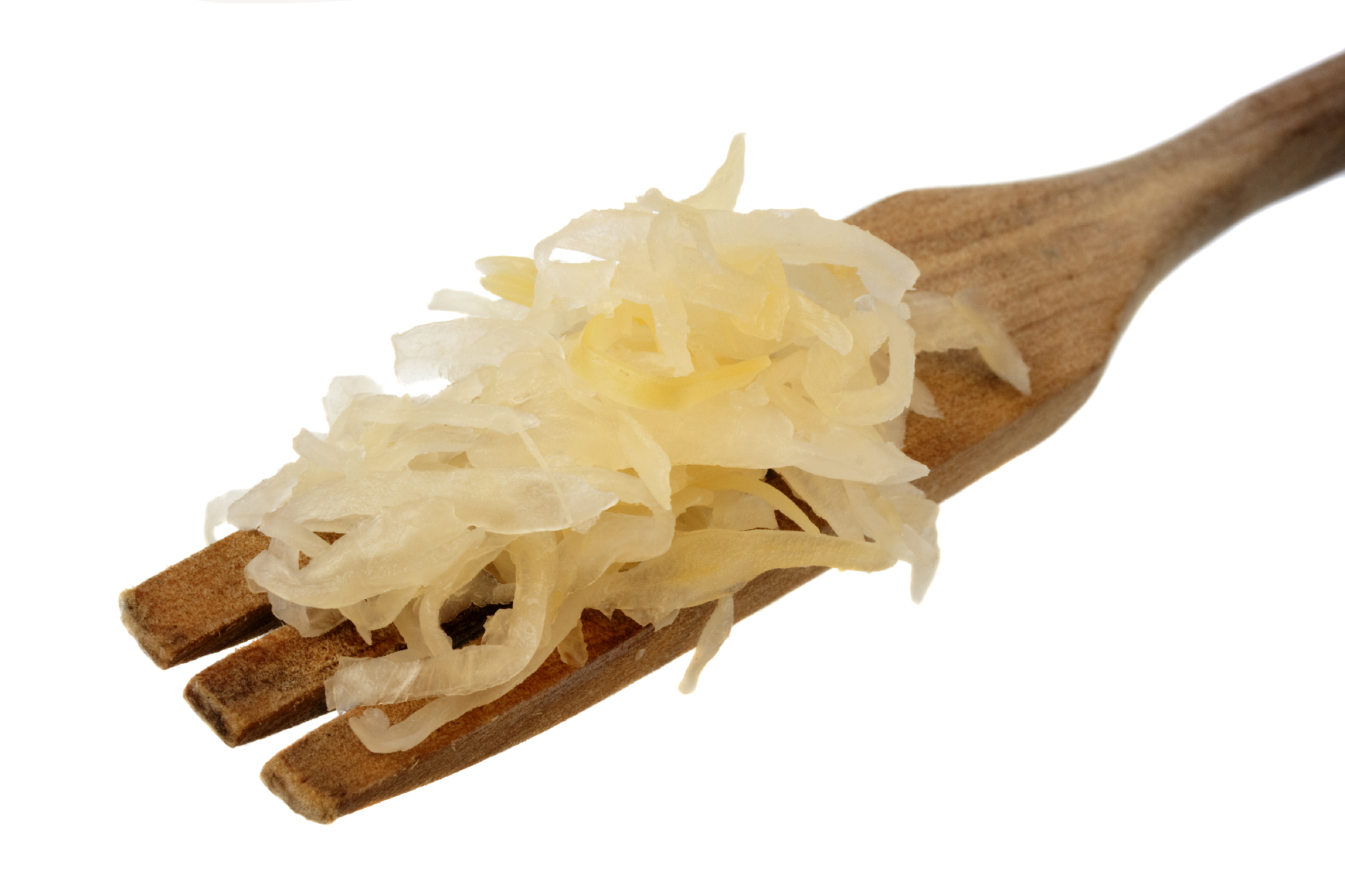
2. Sauerkraut: Think of it as kimchi’s helpful—but less exciting—cousin. It might not have the added flavor and benefit of ingredients like garlic and onion… But sauerkraut may be just as valuable as kimchi when it comes to supporting your health. It may even help reduce breast cancer risk. That’s because it’s rich in glucosinolates. These are potent anti-cancer enzymes.
A study of Polish women found that their breast cancer risk nearly triples after immigrating to America. Researchers found that the women living in Poland were 72% less likely to develop breast cancer. And the key difference in their diet was eating about four-times more sauerkraut each week.4
3. Kombucha: This one may be the strangest of them all… Kombucha is a type of fermented tea. It comes from a “mother” strain of bacteria that brewers use to make batch after batch. And it may remind you of beer. It has a light carbonation and a foamy head…even a small amount of alcohol from the fermentation process. But it also comes with serious health benefits.
Researchers found that Kombucha’s antioxidant power was just as effective as the prescription drug omeprazole in healing ulcers in mice.5 Another study revealed that Kombucha is a strong detoxifier. It helped boost the immune systems of rats exposed to lead acetate.6 Making this one on your own can be difficult—even dangerous. But you can find raw, organic Kombucha teas in most health food stores.
4. Miso: This seasoning is a staple of Japanese cooking. You’ve probably come across miso soup before. This is the product of fermenting barley, brown rice, or soybeans with koji. It’s a fungus that also goes by the name aspergillus oryzae. Koji has an antimicrobial and antibacterial effect. It has potential to be a safer, natural alternative to the antibiotics commonly found in chicken feed.7 But more important, miso contains dipicolinic acid (DA). It binds to heavy metals and helps carry them out of your body.8 Try to find a probiotic miso paste that comes from rice or another grain and soy-free source.
5. Kefir: It’s a beverage that comes from fermenting goat, cow, sheep, or nut milk and mixing it with live bacteria. Kefir looks like a cross between milk and yogurt. And the taste takes some getting used to… It’s a little bit like sour milk with a squeeze of lemon juice. But the benefits make kefir worth trying.
It may help support liver, gallbladder, and heart health. It may even boost blood and oxygen supply to your brain.9 Some research suggests that kefir may help prevent cancer. It does this by acting as an antioxidant. Kefir also helps slow down the enzyme activity that converts pro-carcinogenic compounds to carcinogens.10 You can make your own… But most grocers now carry at least one variety. Always go with the plain version with no added flavoring.
It may take you a while to warm up to fermented foods… Kefir definitely isn’t for everybody. But they all offer probiotic support. They also come with important health benefits. But start slow. Try adding some sauerkraut to your dinner. There are also some nice-tasting Kombucha products that won’t overpower you.
References:
1http://www.ncbi.nlm.nih.gov/pubmed/21745625
2http://www.nydailynews.com/life-style/health/kimchi-cholesterol-lowering-superfood-study-article-1.1279677
3http://www.foxnews.com/health/2014/04/27/health-benefits-kimchi/
4http://www.medpagetoday.com/HematologyOncology/BreastCancer/2035
5http://www.ncbi.nlm.nih.gov/pubmed/21776478
6http://www.ncbi.nlm.nih.gov/pubmed/14631833?dopt=Citation
7http://docsdrive.com/pdfs/ansinet/ijps/2006/1-3.pdf
8http://nourishedmagazine.com.au/blog/articles/mysterious-marvellous-miso
9http://www.probiotic.org/Kefir.htm
10http://www.ncbi.nlm.nih.gov/pmc/articles/PMC3833126/
1http://www.ncbi.nlm.nih.gov/pubmed/21745625
2http://www.nydailynews.com/life-style/health/kimchi-cholesterol-lowering-superfood-study-article-1.1279677
3http://www.foxnews.com/health/2014/04/27/health-benefits-kimchi/
4http://www.medpagetoday.com/HematologyOncology/BreastCancer/2035
5http://www.ncbi.nlm.nih.gov/pubmed/21776478
6http://www.ncbi.nlm.nih.gov/pubmed/14631833?dopt=Citation
7http://docsdrive.com/pdfs/ansinet/ijps/2006/1-3.pdf
8http://nourishedmagazine.com.au/blog/articles/mysterious-marvellous-miso
9http://www.probiotic.org/Kefir.htm
10http://www.ncbi.nlm.nih.gov/pmc/articles/PMC3833126/

