Pages

Showing posts with label Curry. Show all posts

Monday, 23 December 2019

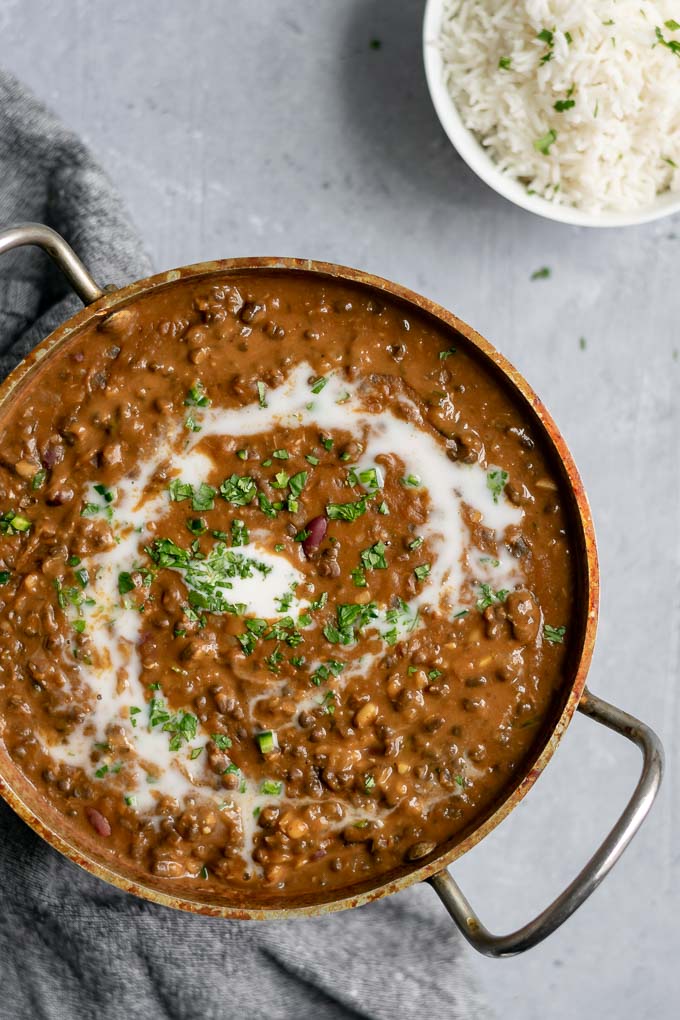
Indian VEGAN DAL MAKHANI

Dal makhani is an urad dal and kidney bean butter curry and this vegan version of the popular Indian dish is absolutely mouth watering and delicious!

 BY 

vegan dal makhani with a swirl of coconut milk and garnished with cilantro served with a bowl of basmati rice
Dal Makhani (pronounced makh-nee) is probably everyone’s favorite dal. It’s creamy and rich, with a silky almost luscious texture to the gravy. It hits those perfect savory notes, bursting with Indian spices and balanced with just enough of the sweet leaning ones.
Dal translates to pulses (and typically refers to lentils) while makhani means with butter. But while this dish is essentially named “lentils with butter,” we all know and love it specifically as the Punjabi dish of urad dal with kidney beans cooked in a creamy rich tomatoey gravy.
As the name might suggest, this dish is not the most vegan friendly of restaurant dals. Traditional recipes often stick an entire stick of butter (that’s 8 tablespoons, if anyone is counting) in a recipe such as this, and after that will still add a bit of cream. And that doesn’t even include the oil or butter used to fry a tadka.
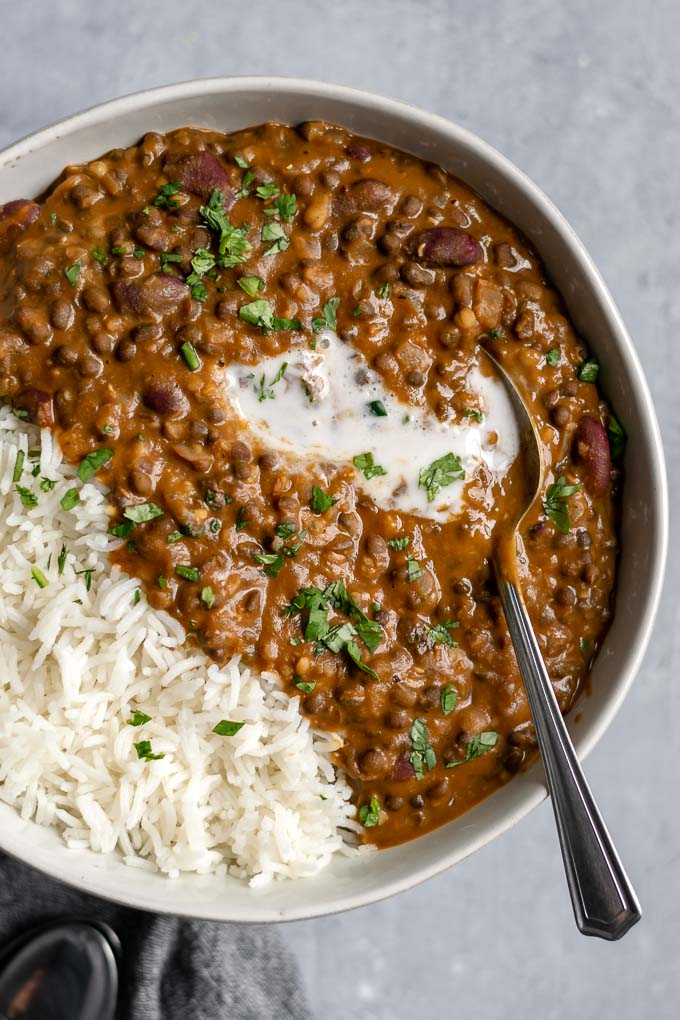
Now home cooked recipes are likely to decrease the amount of butter or cream, but they are still laden with it, making this dish one of those you probably want to make on your own if you want to avoid dairy.
And thankfully, the vegan version of this dish is just as delicious–if not more! It has the richness without alllllll that butter. It’s made creamy with coconut milk (though if you needed to avoid coconut for any reason you could use a thick cashew cream), and the rich flavors come from the carefully chosen spices and pulses used in the recipe.
First we have whole urad dal, also commonly known as black gram. You want to be sure you have the whole bean, which has a black skin. If the beans are white, that means they have been peeled and split (which means faster cooking time, no need to soak prior, etc).
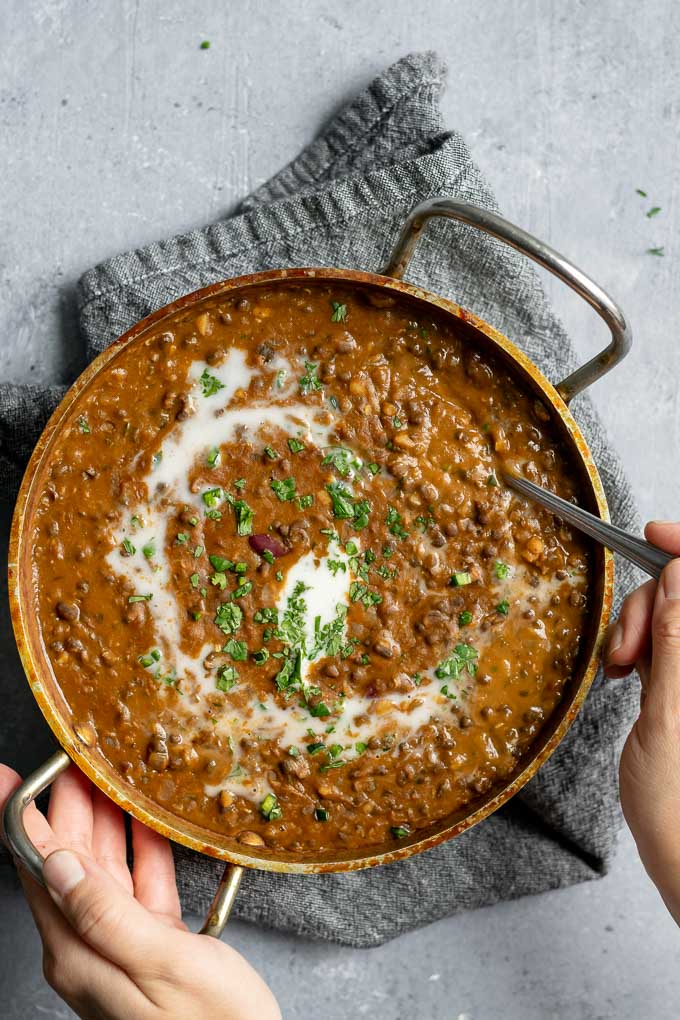
Urad dal is the star of this dish. I have on occasion made a similar recipe with black beluga lentils when out of urad dal, and while the results are very flavorful and good, they certainly aren’t 100% the same and it’s not the traditional dish.
The black gram lentils create a thick and luscious texture when cooked in water. They’re a little sticky and really unique, and worth the little bit of extra time to make a dal with them (and by that I just mean you’ll want to soak your lentils for at least 6 hours before cooking! You can do it). Especially when you consider what nutritional powerhouses those little lentils are.
Urad dal is paired with red kidney beans (called rajma) in dal makhani. These buttery red beans provide a nice textural counterpoint in the dish, and help the creamy gravy turn a beautiful red color. While you can cook them from the dried bean alongside the dal, I personally find it super easy to just crack open a can of the beans.
The lentils (and beans if you’re making them from scratch) are cooked separately then added into the tadka once fully cooked. Now the tadka refers to a cooking technique of tempering spices in oil before adding to a dish. Cooking the spices in oil releases flavor, as the flavor molecules of spices tend to be oil soluble.
You only want to cook whole spices in oil as ground spices will burn quickly. To keep this recipe easy and more accessible I use pre-ground and store bought garam masala, along with ground coriander seed, ground turmeric, and cayenne (because spicy Indian food is better). We add these ground spices after the liquid so that they do not burn.
Once the whole spices are toasty and fragrant, we add the minced garlic, ginger, and chiles so they have a chance to release some of their best flavors before the onion gets added. The onion is cooked until soft and golden. Together this makes up the tadka.
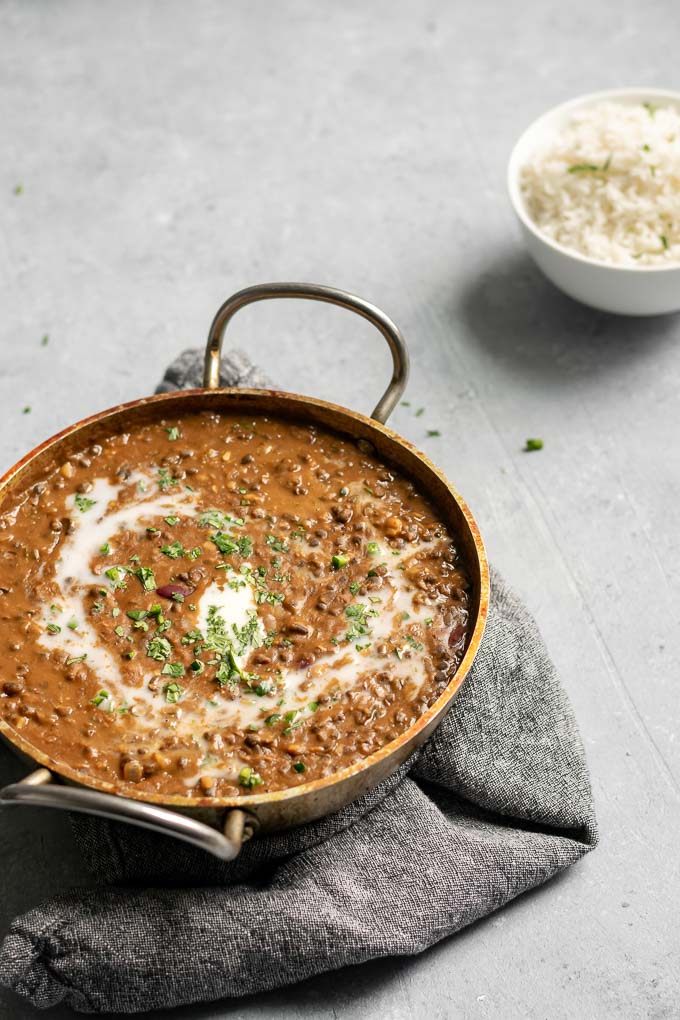
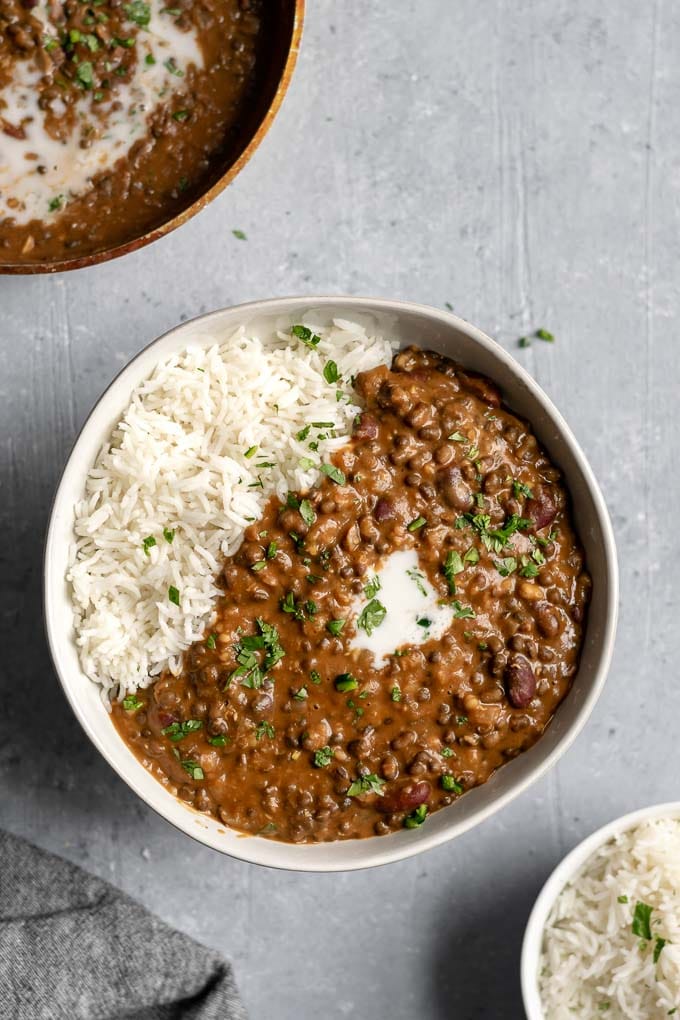
vegan dal makhani with a swirl of coconut milk and garnished with cilantro served with a bowl of basmati rice
To the tadka we add tomato puree (also known as strained tomatoes), the leftover cooking water from the lentils + a little extra water to make a total of 1 1/2 cups liquid, salt, the ground spices, and crush in some fenugreek leaves (kasoori methi). If you don’t have the kasoori methi, still make the dish, just know it would be better and more authentic with the fenugreek in it! It’s real good 😛 .
This cooks a bit to infuse the spices into the sauce, then add the lentils and beans, bring it to a simmer and let it cook away (covered!) for a half hour over super low heat. I let it cook for a full 30 minutes because this brings out the best flavor.
Dal makhani is one of those dishes that tastes best when simmered for long periods of time over low heat, and will definitely taste somehow magically even better the next day! But in 30 minutes you will have a deliciously richly flavored stew.
At the very end we add the cream, in this case coconut cream. You can scoop it out from the top of a separated can of coconut milk. But if all you have is well combined coconut milk then just use the creamy milk and it’ll be great still.
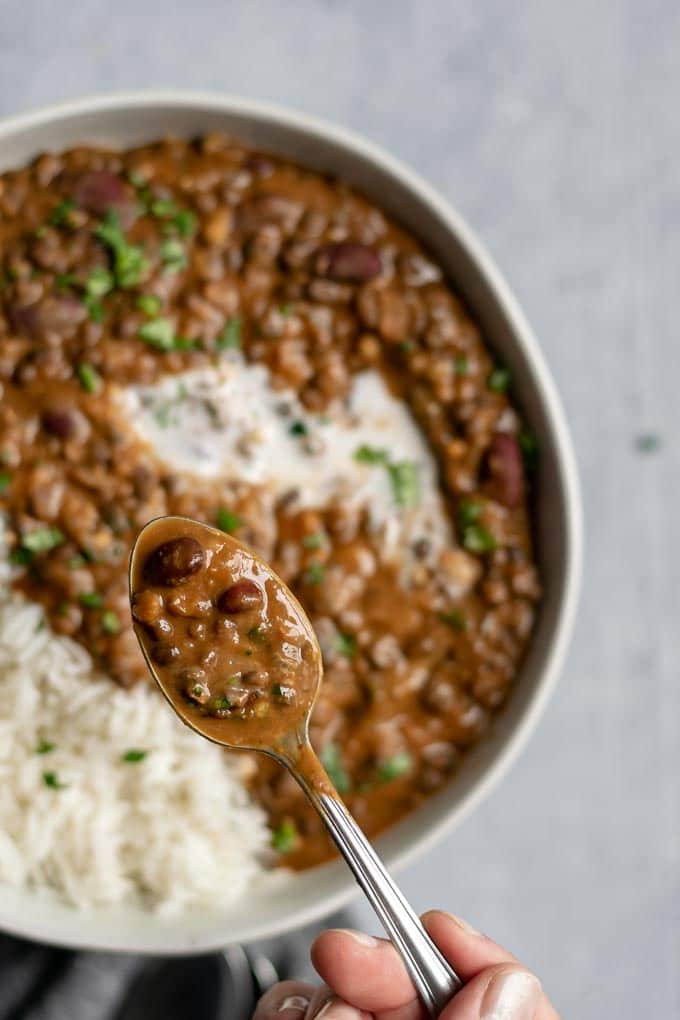
Add water if you need to thin the dal at any point and serve it with fresh cilantro and basmati rice. You can even make some restaurant style naan for an INSANELY delicious and satisfying meal. Feel free to browse through my other Indian recipes for more tasty curries if you want to make a feast!
I love love love dal makhani and I am so glad that this recipe is easily made vegan. Whether you are a diehard dal makhani lover or have never eaten the dish, you really should try it! It’s just insanely good and really like no other dal or lentil soup!
https://www.thecuriouschickpea.com/vegan-dal-makhani/

The Great Indian Curry Hack

As a broke immigrant college student, I was heartbroken by US Indian food. So I learned how to make my own with ingredients I could find.

Niranjana Iyer

Jul 10 2019


Photo by Jason Leung on Unsplash


Over the years, I’ve shared my recipe with non-Indian friends, and they’ve always been astounded how easy it is. Is it authentic? they ask, and I reply that I make Indian dishes using it for my mom, who has never complained. Authenticity has its place in cooking, yes, but it’s not at the top of my list when it comes to recipes. I want to feed people I love food they enjoy. My friends and family take second helpings of what I make, and that’s good enough for me.


The Great Indian Curry Base Recipe

This curry base is great with chickpeas, kidney beans, black-eyed peas, firm tofu, paneer, and vegetables that don’t lose their shape after an intense boil. This sauce happens to be vegan, but you can substitute the cooking oil with ghee if you are vegetarian. Caveat: this base does not go well with sweet vegetables like carrots or corn. It does not like vegetables that turn mushy when cooked. No zucchini! And absolutely no lentils. Daal is an entirely different beast.
  • 1 medium onion
  • 4 cloves garlic and 1/2 inch piece of ginger — or, 2 tbsp ginger-garlic paste
  • 1 Serrano or Indian green chile
  • 3 medium tomatoes
  • 1/2 tablespoon cumin seeds
  • 1/2 teaspoon turmeric powder
  • 1 teaspoon coriander powder
  • 1 teaspoon cumin powder
  • 1 teaspoon Garam Masala powder
  • Salt to taste
  • Cooking oil
  • Garnish
  • Cilantro — a fistful
  • One lemon
  1. Finely chop or slice the onion.
  2. Mince the garlic and the ginger. (Or use ginger-garlic paste, but fresh is waaaay better.)
  3. Finely chop the chile of your choice.
  4. Dice the tomatoes. You can also puree them if you like a smoother sauce.
  5. Heat 2–3 tbsp vegetable oil in a wok or heavy pot.
  6. Add the cumin seeds, and when they sizzle and wiggle about, add the onions. Cook on medium heat till the onions are done. This step takes long and is boring, but don’t skip it, or the raw onion smell will linger in the dish long after you’re done cooking.
  7. Add the ginger, garlic, and chili. I toss in the seeds and innards of the chili because I like living on the edge. Stir and cook for a few minutes.
  8. Add the coriander powder, cumin powder, and turmeric powder. I don’t know what the turmeric adds to the flavor, but it gives the dish a nice color and prevents cancer. Also, it’s not an Indian meal till your best tea-towel has acquired a turmeric stain.
  9. The base should smell strong but good. If it smells onion-y, keep cooking.
  10. Now add the tomato. If the tomatoes are not flavorful, add half a tsp sugar to the pot — it’ll balance out with the heat and tart. Add salt to taste — 2 tsp or more.
  11. Cook on medium heat till the tomatoes disintegrate completely. If it’s very dry and looks like it might burn, moisten with a tiny splash of water (I use a spray bottle to mist it). You want to have an intensely-flavored reddish-brown paste when you are done.
That is it. You can scale all quantities up or down. The above amounts make 1 cup (8 oz), but I usually make a big batch and freeze it. Remember, you can tinker with every ingredient in this recipe — make it according to the intensity of your spices, the potency of the chili/e, and your personal taste.
When you are ready to make your Indian meal, throw 1 cup of the base into a heavy-bottomed pot, and add 1 cup of water. Toss in 1.5 cups of whatever cooked legume or parboiled vegetable you’re planning to use. (Use your intuition — if you’ve chosen a vegetable that cooks fast, you don’t need to parboil it.) Bring it all to a boil, then turn down the heat and simmer for 5–10 minutes. The sauce should reduce so it’s thick but liquid. Stir occasionally so nothing sticks to the bottom of the pot.
Just before you turn off the heat, add the garam masala. You add it late in the game to preserve the aroma of the spices in the masala.
Turn off the heat and squeeze in half a lemon. Garnish with a fistful of chopped cilantro. Please don’t skip this last step. Serve with rice, Indian breads and tortillas, and what the hell, ciabatta. This recipe serves 4.
Once you’ve mastered the basic recipe, you can add different spices each time you make it, and vary the garnishes, so everything you make does not taste the same. Add a bay leaf, a clove or two, a pod of cardamom, or a few grinds of your pepper mill. If you want to be fancy, add 1 tsp Amchur (dry unripe mango powder that adds a lovely tartness to lighten stodgy chickpeas and potatoes), or ½ tsp Kashmiri Chili powder (it’s less spicy than regular chili powder and a vibrant, brilliant red). If you are very brave, you can add a pinch of asafetida. I’ve squirted in Sriracha when I’m feeling adventurous. Add all spices at the spice stage (step 8).
Serving suggestions: Grate in some fresh ginger if you’ve made kidney beans. Mix in some minced red onion for potatoes. Extra lemon. Add some beaten yogurt to the sauce before serving to make the dish milder. Go forth and explore!


https://medium.com/tenderlymag/the-great-indian-curry-hack-8ff87031fc1c

Friday, 21 December 2012

Top Five Foods for Optimum Health

Consumers today know that it is healthier—and far more cost-efficient—to prevent the development of chronic conditions in the first place rather than treating them as they come. Along with physical activity, a healthy diet is one of the most powerful weapons in this fight. The vitamins, minerals, antioxidants, beneficial fats and other substances in certain foods and drinks can help maintain optimal function for the human body.

Certain items in the kitchen may be more nutrient-packed than others. Here are five of the most beneficial.

1. Flaxseed: More Than Five Millennia of Wisdom

For at least the last two decades, American health enthusiasts have been interested in the health benefits of flaxseed. However, this food has been consumed in Europe and Asia since 5,000 B.C. This comes as no surprise, considering that flaxseed contains plenty of potassium, protein and fiber, which is essential for digestive health.

Flaxseed has also drawn attention from scientists because it is a source of omega-3 essential fatty acids. Specifically, flaxseed has alpha-linolenic acid (ALA), which the body converts to eicosapentaenoic acid (EPA) and docosahexaenoic acid (DHA). Both EPA and DHA have been linked to improvements in blood pressure and atherosclerosis, as well as reductions in risk of heart attack and stroke.

Other potentially beneficial substances found in flaxseed are lignans, which some studies suggest may improve cholesterol metabolism and cancer risk, according to the Journal of Clinical Endocrinology & Metabolism.

Flaxseed is usually available in whole, ground and oil form. According to the Mayo Clinic, flaxseed oil contains omega-3s, but none of the fiber. Furthermore, it may be more beneficial for individuals to consume ground flaxseed rather than whole because the latter is less efficiently digested.

People who buy raw, whole flaxseed can run it through a coffee grinder and store the powder in an airtight container. Ground flaxseed can easily be added to breakfast cereal, mayonnaise, mustard, yogurt and flour for baked goods.

2. Red Wine: A Toast To Your Health

Both health enthusiasts and connoisseurs alike may be familiar with the concept of the French Paradox, a phenomenon in which people who consume rich French cuisine tend not to develop as many cardiovascular problems as expected. People have speculated that this was the result of the consumption of red wine.

Because of the intrigue surrounding this observation, scientists have approached the potential benefits of red wine carefully—and they are coming back with promising results, particularly in studies surrounding the compound resveratrol. According to the Mayo Clinic, this substance may protect the blood vessels, reduce levels of unhealthy cholesterol and prevent dangerous blood clots.

“Resveratrol has potential as a therapy for diverse diseases such as type 2 diabetes, Alzheimer’s disease and heart disease,” said researcher Jay Chung, M.D., Ph.D., chief of the Laboratory of Obesity and Aging Research at the National Heart, Lung, and Blood Institute (NHLBI). “However, before researchers can transform resveratrol into a safe and effective medicine, they need to know exactly what it targets in cells.”

It has not always been clear whether the alcohol or other substances in red wine were responsible for the beverage’s cardiovascular benefits, according to a study published in the European Heart Journal. However, experiments on non-alcoholic red and white wine revealed that red varieties may be more healthy.

Chung himself led a study that demonstrated how resveratrol affects a specific process within cells that is associated with energy metabolism.

More research is needed to verify the health benefits of resveratrol. In the meantime, medical experts remind people that red wine should only be consumed in moderation. According to the NHLBI, that means no more than one drink for women and two drinks for men a day. (For red wine, one drink is the equivalent of five ounces.)

3. Curry: The Spice That Turns Down the Heat

People who enjoy more of a kick to their food may pep up their dishes with curry powder, which contains various spices, such as turmeric. Studies show that not only are some of these spices tasty, but that they also confer various health benefits.

In general, research reveals that curcumin, a substance found in turmeric, has anti-inflammatory properties, according to the University of Michigan Health System. For this reason, curry can help people who have problems with chronic pain, and may even have an impact on the risk of cancer.

These properties may also be important for individuals with weight management problems, a condition that often increases inflammation and risk of type 2 diabetes. In one experiment, conducted by scientists from Columbia University Medical Center, researchers fed turmeric to a group of obese mice. They observed that these animals had lower blood glucose levels and greater tolerance for insulin. Also, the mice had small but significant improvements in body weight.

In addition to tempering inflammation, research also suggests that turmeric may have other influences on the immune system. Scientists from Oregon State University noted in a lab study that turmeric causes a modest increase in the levels of a cathelicidin antimicrobial peptide, a protein in the immune system. Therefore, the spice may help the body fight infection.

Other studies on curcumin show that the substance can decrease the production of proteins that are associated with arthritis. Furthermore, curcumin may have an impact on the process in which bone tissue breaks down, suggesting that it may provide some protection against osteoporosis.

4. Green Tea: A Brew To Boost Your Well-Being

For thousands of years, people in Asia drank green tea to support good health. Today, research shows that there is a good deal of truth to this practice. In general, green tea contains several health compounds that have been linked to mental clarity, weight management, optimal cholesterol levels and the prevention of several malignant diseases.

In 2010, research published in Cancer Prevention Research demonstrated that mice that consumed green tea had more protection against the harmful effects of ultraviolet radiation. Laboratory tests showed that this was likely because green tea boosted the DNA repair process in these animals and improved responses in the immune system.

Green tea’s effects on the immune system may also help people manage rheumatoid arthritis, as published in the Journal of Nutrition in 2008.

More recently, a study that appeared in a 2011 issue of Obesity touched upon scientists’ interest in epigallocatechin-3-gallate (EGCG), a compound found in green tea. For this research, two groups of mice ate a high-fat diet. Animals in one arm of the experiment also received EGCG. Results showed that these animals tended to gain weight more slowly and absorb less fat, compared to mice in the other arm.

Another study published in Molecular Nutrition & Food Research evaluated the effects of EGCG on neurological health. For the experiment, scientists found that the compound increases the production of neural progenitor cells in the brains of mice, which led to improvements in the animals’ performance on tests of memory and spatial learning.

5. Yogurt: A Well-Balanced Snack

Most people are familiar with cravings in between meals. The hazard here is that too much snacking can lead to problems with weight and metabolism, particularly if the foods eaten are heavy on empty calories. The trick is picking the right foods.

Yogurt is an excellent option, especially if it’s been fortified to provide essential nutrients, such as calcium and vitamin D. For those who need to watch their weight, plain Greek yogurt may be the best choice. Compared to American varieties, Greek yogurt has more protein, which promotes feelings of satiety. Furthermore, Greek yogurt is less likely to contain added sugar.

Recently, research presented at the American Heart Association’s High Blood Pressure Research 2012 Scientific Sessions suggested that yogurt consumption may be linked to improvements in hypertension. This conclusion is based on data collected from more than 2,000 individuals over the course of 15 years. An analysis showed that when subjects’ ate the equivalent of six ounces of yogurt every three days, they were 31 percent less likely to develop high blood pressure.

Yogurt’s vitamin D content may be important in the fight against deficiencies in the nutrient.

According to doctors from Johns Hopkins University, low levels of vitamin D may lead to problems with the immune system, bone growth and metabolism. They suggest a diet that includes yogurt and other foods can prevent these issues.

And no conversation about yogurt is complete without mentioning probiotics, those beneficial strains of microorganisms that benefit the digestive system and other aspects of health. However, yogurt is a less effective delivery system for probiotics compared to supplements that are specially designed to protect the probiotics from the environmental harshness of the digestive tract.

Source: http://www.wholehealthinsider.com/general-health/top-five-foods-for-optimum-health/

Thursday, 29 March 2012

Eating Curry is Key to a Healthy Heart

Good news for curry fans - spicy dish is key to a healthy heart

By Daily Mail Reporter
PUBLISHED: 08:08 GMT, 28 March 2012 | UPDATED: 08:08 GMT, 28 March 2012


Good new for curry fans - tucking into a spicy dish could be the key to a healthy heart.

Researchers found that the compounds that give cayennes, jalapenos and other chilli peppers their heat can lower high blood pressure and reduce blood cholesterol.

They said the chillies have great potential in protecting against heart disease, which is the number one cause of death in the developed world.

The study, from the Chinese University of Hong Kong, focused on a family of substances known as 'capsaicinoids' - the part of the chilli that gives them their 'kick.'

Study author Dr Zhen-Yu Chen said: 'Our research has reinforced and expanded knowledge about how these substances in chilies work in improving heart health.

'We now have a clearer and more detailed portrait of their innermost effects on genes and other mechanisms that influence cholesterol and the health of blood vessels. It is among the first research to provide that information.'

In the study they gave two groups of hamsters high-cholesterol diets, before giving one group food with varying amounts of capsaicinoids while giving the other control group food with no capsaicinoids. The scientists then analysed the effects.

They found the spicy substances lowered levels of 'bad' cholesterol by reducing accumulation of cholesterol in the body and increasing its breakdown and excretion.

They also blocked the action of a gene that makes arteries contract, restricting the flow of blood to the heart and other organs. By blocking it, the muscles relaxed and widened allowing more blood to flow.

'We concluded that capsaicinoids were beneficial in improving a range of factors related to heart and blood vessel health,' said Dr Chen.

'But we certainly do not recommend that people start consuming chilies to an excess. A good diet is a matter of balance. And remember, chilies are no substitute for the prescription medications proven to be beneficial. They may be a nice supplement, however, for people who find the hot flavour pleasant.'

WHY ARE CHILLIS SPICY?

Ever wondered why chilli peppers are so mind-blowingly hot? It's all down to their ultra-effective defense system developed in the ongoing war between plants and animals.

When humans bite down on chillis they crush the seeds the plants want to spread with their molar teeth. The peppers extract their revenge by releasing a mouth-burning mix of chemicals called capsinoids.

Birds swallow the seeds whole and eventually pass them out the other end away from the original plant. They are therefore rewarded with the flesh of the chilli and left unscathed by the encounter.


http://www.dailymail.co.uk/health/article-2121443/Chillis-Good-news-curry-fans--spicy-dish-key-healthy-heart.html