Pages

Showing posts with label Salmonella. Show all posts

Tuesday, 8 October 2019

Why There Is Chlorine on Your Chicken

Chicken that comes from concentrated animal feeding operations (CAFOs) is often washed in a strong chlorine or other antimicrobial solution to remove contaminants. The UK has banned chlorine-washed chicken from being imported, but their plan to exit...

Analysis by Dr. Joseph MercolaFact Checked
October 01, 2019

STORY AT-A-GLANCE

  • In the U.S., most poultry that comes from concentrated animal feeding operations (CAFOs) is washed in a strong chlorine or other antimicrobial solution as a way to kill pathogens
  • The EU has banned U.S. chicken imports since 1997 due to the practice of chlorine washing
  • The U.K.’s plan to exit from the EU has opened the issue for debate, as the countries will have the option to reconsider their current laws, including whether or not to accept “chlorine chicken” from the U.S.
  • The U.S. government offered to pay up to $93,257 (£75,000) for an organization to gather up prominent British journalists and take them on tours of U.S. chicken farms
  • Chlorine washing may not remove bacteria as expected, but simply renders it unable to be detected by standard testing
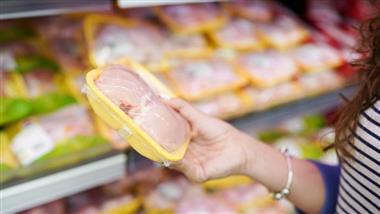
chlorine washed chicken

In the U.S., most poultry that comes from concentrated animal feeding operations (CAFOs) is washed in a strong chlorine or other antimicrobial solution as a way to kill pathogens.1 The chlorine rinses or sprays are intended to act as antimicrobials that reduce Salmonella and other common causes of foodborne illness.
The EU, however, does not use chlorine washes on its chicken and wants no part of America’s “chlorinated chicken” either — it has banned U.S. chicken imports since 1997 due to the practice of chlorine washing. The concern isn’t necessarily due to the chlorine wash itself, but to the fact that it may allow for poor sanitation and dirty poultry to enter the food supply.
“The real fear is that heavily soiled birds may not be sufficiently disinfected, and that relying on chlorine washing could lead to poorer hygiene standards overall,” wrote food safety expert Simon Dawson of Cardiff Metropolitan University.
However, the U.K.’s plan to exit from the EU has opened up the issue for debate, as the countries will have the option to reconsider their current laws, including whether or not to accept “chlorine chicken” from the U.S.

US May Pay to Influence British Media Over Chicken

The U.S. government offered to pay up to $93,257 (£75,000) for an organization to gather up prominent British journalists and take them on tours of U.S. chicken farms. The goal is to create a favorable spin on the U.S. chicken industry as a whole, including the practice of chlorine washing. In a tender (a British term for a contract bid) seen by BuzzFeed News, it’s stated that the purpose of the press tour is to alleviate misconceptions about U.S. farming:2
“The misconceptions include animal welfare standards, GMOs and labeling, and the use of antibiotics in livestock production … Media stories about ‘industrial scale’ U.S. agriculture, usually focused on so-called ‘chlorinated chickens’, are negative, misleading, and often inaccurate.
… Participants will explore small, medium, and large farms representing various certification standards (organic, natural, conventional), research institutions supporting science-based agricultural practices, government agencies that focus on ensuring food is nutritious and safe, and other relevant institutions connected to U.S. farming.
… The locations should be carefully chosen to be geographically and culturally diverse and reflect the breadth of choice the U.S. consumer has when making food decisions.”
The tender also cited a British survey that found “only 1% of British consumers would buy American meat over British meat.”3 As it stands, the EU allows only water to decontaminate meat, which means imports of chlorine-washed chicken aren’t allowed. The ban was put in place based on precautionary measures, according to Dawson, who wrote:4
“When the ban was introduced, officials were keen that food manufacturers should focus on overall hygiene rather than relying on a single chemical decontamination step to eliminate microorganisms. It was also believed that the chemical decontamination step could encourage antibiotic resistance.”

CAFO Chicken Softens Up the World

Sir Ian Boyd, chief scientific adviser at the Department for Environment, Food and Rural Affairs (Defra), gave the green light to chlorinated chicken in an interview with Sky News, stating there were no health concerns from eating such meat:5
"From a health perspective there really isn't a problem with chlorinated chicken. The issue is about production processes and animal welfare, and that is a values-based choice that people need to make. My view is that we need to be allowed to make that choice.”
A briefing from the Centre for Food Policy called Boyd’s statement misleading. One of the briefing’s co-authors, Tim Lang, professor of food policy at City University, stated, “For the chief scientist at Defra to say what he did is not accidental.”6
“Professor Boyd’s statement may be an early sign that Westminster is trying to soften up the public for lower-standard food imports from the U.S.,” he added. “They are very keen to have a ‘trophy’ trade deal post-Brexit and the lowering of U.K. food safety and animal welfare standards is at stake. We cannot accept what is sure to lead to an unprecedented and radical decline in food quality standards.”7

Chlorine Washes May Not Remove Bacteria

Research published in mBio raised serious concerns over the use of chlorine washing, revealing that it may not remove bacteria as expected.8 The study involved spinach contaminated with listeria and salmonella, which was subjected to chlorine washing.
After the treatment, the bacteria were not killed but rather entered a “viable but non-culturable state (VBNC),” meaning they could still cause food poisoning but couldn’t be picked up by standard testing. “These data show that VBNC foodborne pathogens can both be generated and avoid detection by industrial practices while potentially retaining the ability to cause disease,” the study noted.9
Further, in a compliance guidelines released by the USDA’s Food Safety and Inspection Service (FSIS), it’s explained that chlorine rinses and sprays have the potential to make contamination worse instead of better, depending on the force of the water pressure used and the direction of the spray:
“When applying water rinses and sprays, establishments should consider the water pressure applied. Some studies have found that elevated spray pressure may force bacteria into muscle or skin rather than washing it off.
… Rinses or sprays should be designed, installed, and calibrated to remove incidental contamination. When not properly designed or implemented, rinses or sprays may not effectively remove contamination and may even spread contamination from one part of the carcasses to another part or even to adjacent carcasses.”
Aside from the notion that chlorine washes are simply a way to perpetuate unsanitary and inhumane conditions on poultry farms, the use of chlorine washes, and chilling poultry in chlorinated water, can lead to residual disinfection byproducts (DBPs) in the poultry.
DBPs are highly toxic and can be carcinogenic. While studies suggest poultry chilled in chlorinated water likely contributes only 0.3% to 1% of daily exposure to DBPs,10 it’s still a contaminant you’re better off avoiding.

Rates of Food Poisoning Higher in US

The British have a right to be concerned about opening their refrigerators to U.S. food, considering an analysis by Sustain revealed rates of foodborne illness in the U.S. are significantly higher than in the U.K. They found that, annually, 14.7% of the U.S. population suffers from foodborne illness, compared to 1.5% in the U.K.11
Kath Dalmeny, chief executive of Sustain, said in a news release, “Our analysis shows that if we accept imported meat without robust standards, we may also import increased food poisoning and possibly even deaths. The U.S. is demanding we drop our food standards for trade, but our research shows cheap U.S. meat will come at a cost to our health and economy."12
Indeed, chicken is easily one of the most contaminated foods in the U.S. and also has a weak nutritional profile compared to other protein sources, including pasture-raised chicken.
One study by the USDA Agricultural Research Service (ARS) found that chicken samples gathered at the end of production after having been cut into parts, as you would purchase in the grocery store, had an astonishing positive rate of 26.2% contamination with salmonella.13 Many people are not aware that chicken is responsible for an alarming number of cases of foodborne illness every year.
According to U.S. CDC statistics, there were 5,760 reported foodborne outbreaks between 2009 and 2015, resulting in 100,939 illnesses, 5,699 hospitalizations and 145 deaths.14 Of these, chicken was responsible for the most outbreak-associated illnesses — 3,114 illnesses in total (12%).
Salmonella contamination is of particular concern, as data suggests multidrug-resistant salmonella has become particularly prevalent. And raw chicken has become a notorious carrier of salmonella, campylobacter, clostridium perfringens and listeria bacteria.15 Even a significant number of urinary tract infections may be caused by contaminated chicken.16

Inspection Standards Not Being Met

A June 2018 FSIS report found that the extent of salmonella contamination in U.S. chicken parts is largely unknown because 35% of large chicken-slaughter facilities in the U.S. are not meeting FSIS inspection standards.17
Perhaps in response, in November 2018 FSIS for the first time publically published chicken producers and their rankings on salmonella safety standards, which are updated each week as new samples are tested.
The rankings range from category 1 to 3. Category 1 describes facilities that had less than 50% of the maximum allowable salmonella during the testing window. Category 2 describes facilities that had more than 50% (but still within the maximum allowed), while category 3 is the worst — facilities that exceeded the maximum level of salmonella.18
If you look at the FSIS rankings,19 what you’ll notice is the frequency of category 2 and 3 on the list. A category 3 ranking isn’t grounds for immediate suspension, either. Instead, FSIS notifies facilities if they don’t meet standards and at that point decides whether further action is needed.

Don’t Buy Raw CAFO Chicken

As recently as the 1920s, chickens were raised primarily for their eggs — not their meat. Back then, chicken meat was expensive, not considered very tasty and only available seasonally, as chickens were typically slaughtered in the fall after they were no longer needed for laying eggs.
Unfortunately, it's virtually impossible to mass-produce clean, safe, optimally nutritious foods at rock-bottom prices, chicken included, which is why most people are better off avoiding CAFO chicken — whether it came from the U.S. or elsewhere. If you can’t imagine giving up chicken, finding a local grass fed farmer raising chickens on pasture is the safest, and healthiest, route to go.
There are farmers using poultry-centered regenerative agriculture systems, in which tall grasses and trees protect the birds from predators instead of cages — in addition to optimizing soil temperature and moisture content, extracting excess nutrients that the chickens deposit, bringing up valuable minerals from below the soil surface and being a high-value perennial crop.
It’s the opposite of CAFOs — regenerating the land instead of destroying it, raising chickens humanely instead of cruelly and producing nutritionally superior, safe food. You might even consider raising your own backyard chickens. You can also try leaving all CAFO chicken at the store and opting for another chicken-produced food instead: eggs, particularly organic pastured varieties.
While chicken is advertised as a healthy source of protein, due to contamination concerns, stick with only non-CAFO pastured chicken or eggs. Whole eggs are an excellent source of protein, healthy fats (omega-3) and antioxidants, including choline, along with vitamins A, D, E and K.
Pastured eggs can provide you with much of the nutrition that CAFO chickens cannot, without the risks of contamination (and no chlorine washing required).
https://articles.mercola.com/sites/articles/archive/2019/10/01/chlorine-washed-chicken.aspx

Monday, 16 April 2018

Massive 200 Million Egg Recall for Salmonella Includes Walmart, Waffle House

More than 200 million eggs have been recalled this weekend over fears of salmonella from eggs produced by Rose Acre Farms of Seymour, Indiana.


Eggs
Eggs
According to a statement from the FDA, Rose Acre Farms is recalling the eggs after officials traced multiple illnesses back to eggs produced at the company’s facility in North Carolina. 22 people have reportedly been sickened with salmonella, but nobody has reportedly died.

Affected eggs were sold under multiple brand names, including Country Daybreak, Coburn Farms, Crystal Farms, Sunshine Farms, and Glenview. Eggs affected by the recall were sold to grocery stores and restaurants in Colorado, Florida, New Jersey, New York, North Carolina, Pennsylvania, South Carolina, Virginia, and West Virginia. Some the eggs were sold at Walmart and in Food Lion grocery stores, and some of the eggs were reportedly sold to Waffle House. Click here to see a full list of eggs affected by the recall.

Anybody in possession of affected eggs should not eat them, and should throw them away or return them for a refund.

In healthy adults, salmonella can cause fever, diarrhea, nausea, and abdominal pain, but salmonella infections can be fatal in young children or elderly people, or in people with weakened immune systems. Salmonella contamination can be a concern in many foods from dog food to fresh herbs, and it’s been the source of some of the biggest food recalls.

http://www.msn.com/en-my/foodanddrink/foodnews/massive-200-million-egg-recall-for-salmonella-includes-walmart-waffle-house/

Tuesday, 16 January 2018

Salmonella scare sparks recall of 12,000,000 boxes of baby milk in 83 countries

A salmonella scare at a French dairy giant has led to a recall of 12 million boxes of baby milk products across 83 countries. The company Lactalis first recalled products from 30 countries in December, but company president Emmanuel Besnier confirmed the problem was worse than first thought.
Salmonella scare sparks recall of 12,000,000 boxes of baby milk in 83 countries
Adam SmithSunday 14 Jan 2018 5:46 pm

There have been an estimated 35 babies diagnosed with salmonella in France, one in Spain and a possible case in Greece in recent weeks. Besnier said: ‘There are complaints and there will be an investigation with which we will fully collaborate. We never thought to act otherwise.’ 
Besnier’s grandfather created Lactalis in 1933 and it has grown into a multinational company worth over 17 billion euros with factories in 47 countries. The giant multinational corporation has factories in 47 countries 
12 million boxes of powdered milk in 83 countries affected by samonella outbreak
(Picture: Getty) 
He said: ‘We must take account the scale of this operation: more than 12 million boxes are affected, distributors know that everything has to be removed from the shelves.’
The contaminated products are all from the Lactalis factory in Craon, north-west France, where a salmonella bacteria discovery was made public in December. French investigative newspaper Le Canard Enchaine revealed state inspectors had not detected salmonella in September and gave the factory a clean bill of health, despite the company’s own scientists finding traces in August.


- - - - - - - - - - 

Recall of French baby milk products extended to 83 countries
PARIS — The head of French dairy company Lactalis says that a recall of baby milk products because of a salmonella scare has been extended to 83 countries from around 30.
In an interview with French weekly Le Journal du Dimanche, the president of Lactalis, Emmanuel Besnier, said that more than 12 million boxes of infant milk products are now concerned. They represent all lots from the Lactalis factory in Craon, northwest France, where the salmonella bacteria was discovered in December.
The move comes after Besnier met Friday with France's economy minister — and a bungled recall operation whose responsibility remains unclear.
The paper said 35 babies were diagnosed with salmonella in France, one in Spain and a possible case in Greece.
https://www.cbsnews.com/news/recall-of-french-baby-milk-products-extended-to-83-countries/

Wednesday, 13 January 2016

Exposing the Fraud of Grocery Store Organic Eggs

Believe it or not, there's a factory farm takeover of the egg industry underway, with large CAFOs now controlling 80 percent of the organic egg market. But don't despair, this scorecard show's you exactly which egg producers are pulling the wool over your eyes...

11 January 2016

Story at-a-glance

  • Authentic organic pastured eggs are healthy sources of complete proteins and other nutrients that support good eyesight, memory development, and cardiovascular health. They’re also less likely to carry salmonella
  • A new report and scorecard by the Cornucopia Institute ranks 136 egg producers according to 28 organic criteria
  • About 25 percent of raw chicken sold in American supermarkets are contaminated with salmonella. To minimize health risks, keep a designated cutting board for meats, and avoid washing your chicken

This post is on Healthwise


By Dr. Mercola
When raised the way nature intended, both chickens and their eggs are healthy sources of high-quality nutrients that many are deficient in — especially high-quality protein and healthy fat.
Eggs contain complete proteins, meaning they provide the eight essential amino acids, essential to the building, maintenance and repair of your skin, internal organs, muscles, and more.
They also contain carotenoids such as lutein and zeaxanthin, which are important for good eyesight, and choline, which is needed for the normal development of memory, as well as betaine, tryptophan and tyrosine, all of which are important for the prevention of cardiovascular disease.
Cholesterol is also important for health, and contrary to popular belief, the cholesterol in eggs will not adversely affect your cholesterol levels.1
However, to reap all the benefits chicken and eggs have to offer, it's important to realize that not all chickens and eggs are the same. It all depends on how they were raised. I strongly advise sticking with free-range organic varieties.
Not only is the nutritional profile of eggs and chickens raised in concentrated animal feeding operations (CAFOs) inferior to their pastured, free-ranging counterparts, they're also far more likely to be contaminated with salmonella.

Organic Egg Scorecard Cuts Through Confusion and Misleading Labels

While there's no way to guarantee 100 percent safety all the time, the benefits of free-range poultry are becoming more well-recognized, and reduced disease risk is definitely part of that benefits package.
As reported by The Guardian,2 sale of cage-free and organic eggs is on the rise, and five U.S. states now ban caged hens. Unfortunately, loopholes abound, allowing CAFO-raised chickens and eggs to masquerade as "free-range" and "organic."
Both consumers and corporate customers, such as McDonald's, Nestle, and General Mills, are now demanding egg producers convert to cage-free methods. It's worth noting that "cage-free" still does not mean the chickens were raised under ideal conditions.
They're not raised in cages, but they may still not have access to the outdoors. So there are still significant differences even between "cage-free" and "free range" (or "pastured") eggs. With so many loopholes and lack of transparency, it can be very confusing to sort through it all.
The Cornucopia Institute addressed these issues in a recent egg report. According to Mark Kastel, co-founder of the Cornucopia Institute, there's a factory farm takeover of the egg industry underway, with large CAFOs now controlling 80 percent of the organic egg market.
Yet less than 9 percent of hens raised in the U.S. are raised without cages.3The organic label simply means the hens have been raised on organic feed. It is not an indication that they've been humanely or sustainably raised.
"For this report, we have visited or surveilled, via aerial photography/satellite imagery, a large percentage of certified egg production in the United States, and surveyed all name-brand and private-label industry marketers," the Cornucopia Institute writes.
And, according to Mark A. Kastel, The Cornucopia Institute's co-director and senior farm policy analyst: "It's obvious that a high percentage of the organic eggs on the market are illegal and should, at best, be labeled 'produced with organic feed,' rather than bearing the USDA-certified organic logo."
The Cornucopia Institute's report and scorecard, which took six years to produce, ranks 136 egg producers according to 28 organic criteria. According to the Cornucopia Institute:
"'Scrambled Eggs: Separating Factory Farm Egg Production from Authentic Organic Agriculture,'4 will empower consumers and wholesale buyers who want to invest their food dollars to protect hard-working family farmers that are in danger of being forced off the land by a landslide of eggs from factory farms ...
[As] consumers have become concerned about the humane treatment of animals, and are also seeking out eggs that are superior in flavor and nutrition, a number of national marketers have found success in distributing 'pasture'-produced eggs.
'There is a fair bit of overreach and the exploitation of this term is well covered in our report,' Kastel explained. 'The organic egg scorecard enables concerned consumers to select authentic brands delivering the very best quality eggs regardless of the hyperbole on the label' ..."
Should you find the organic egg brand you've been buying is a sham and feel betrayed, take action by putting the pressure on USDA Secretary Vilsack to replace the current management at The National Organic Program. You can do so by signing the Cornucopia Institute's proxy letter.

CAFOs Are Hotbeds for Salmonella

As noted by Reveal News in their "Farm to Fork: Uncovering hazards in our food systems" series,5 Americans eat about 85 pounds of chicken per person each year, and about 25 percent of raw chicken sold in American supermarkets are contaminated with salmonella.
About 1 million Americans are sickened and some 380 die from salmonella infection each year, and contaminated chicken and eggs are among the most common sources of this foodborne illness.
Today, we also have antibiotic-resistant strains of salmonella to contend with, which makes potential contamination even more worrisome. It's important to realize that even chicken that passes all federal food safety requirements may still be hazardous to your health.
As reported by Reveal News:6
"There's no mandate to control [salmonella] on the farms or hatcheries that raise chickens for slaughter. Limited testing is required only at the final step: the slaughterhouse.
By that time, chickens already can be carrying the bacteria in their guts, its natural habitat. Or it can be on their feathers, feet or skin from their feces. It can spread from carcass to carcass during processing. While processors try to clean the bacteria off the skin and meat with chemicals, some often escapes removal ...
Chickens can get salmonella from the breeding flocks that produce them. The chicks can pick it up at hatcheries, grow houses or pastures on farms where they fatten up. Any measures that producers take to control salmonella in those places are entirely voluntary."

Beware: U.S. Rules Allow the Sale of Salmonella-Contaminated Chicken

Surprising as it may seem, it's perfectly legal to sell salmonella-contaminated chicken meat. The federal salmonella standard allows 7.5 percent of whole chickens tested in the processing plant to be contaminated.
What's more, the standards make no distinction between the more harmless strains of salmonella, and those that are the most dangerous, including drug-resistant strains. Essentially, the food safety rules include the general assumption that you will handle and cook it properly to kill off any and all harmful bacteria.
However, cross-contamination can easily occur while the raw chicken is prepared, spreading to other foods via contaminated cutting boards, countertops, or utensils, so caution is always recommended when handling raw chicken. You can find official guidance on the proper handling and cooking of raw chicken on the U.S. Department of Agriculture's (USDA) Website.7
Keeping a designated cutting board for meats and one for other produce is a basic step that will help cut down on the risk of cross contamination. Also avoid washing your chicken, as this actually increases your risk of food poisoning by spreading bacteria around your kitchen sink and neighboring surfaces.


So Far, Efforts to Implement Stronger Salmonella Standards Have Failed

In 2015 legislation was introduced that would require meats contaminated with bacteria resistant to certain antibiotics to be recalled by the USDA. The Center for Science in the Public Interest also petitioned the USDA to declare four specific strains of antibiotic-resistant salmonella as "adulterants," which would require the meat to be recalled when detected.
So far, nothing has come of these efforts, largely due to the strong opposition from the industry, which claims prices would have to be raised if salmonella were to be labeled an adulterant. According to Ashley Peterson, senior vice president for science and technology for the National Chicken Council, such a move might end up wiping out about one-third of the U.S. chicken supply.8 That tells you something about the scope of the salmonella problem!
Unfortunately, since salmonella regulations do not cover hatcheries and farms, buying local backyard chickens is not a guarantee of safety either. There are even instances of salmonella disease occurring from contact with live chickens.
For guidance on protecting yourself from illness from backyard poultry, see the Centers for Disease and Prevention's (CDC) Website.9 One key is to be vigilant about hand washing. That said, free-ranging chickens and their eggs do tend to be safer than CAFO varieties.
For example, tests done in England found that more than 23 percent of farms with caged hens tested positive for salmonella, compared to just 4.4 percent in organic flocks, and 6.5 percent in free-range flocks. The highest prevalence of salmonella occurred in facilities holding 30,000 birds or more.

Backyard Chickens Gaining in Popularity

While factory farms may be fighting to monopolize the organic egg market, smaller backyard operations are also gaining a foothold. As noted in a recent article by Food Navigator-USA,10 the egg industry is undergoing a "renaissance" with many small-scale pasture-raised eggs now finding their way into mainstream grocery stores.
According to Betsy and Bryan Babcock, owners of Handsome Brook Farms, pasture-raised eggs are among the fastest growing segments in grocery dairy cases.
Superior taste is driving much of this growth. If you've ever tasted a fresh pasture-raised egg, with its creamy bright-orange egg yolk, you know exactly what I'm referring to. (Dull, pale yellow yolks are a sure sign you're getting eggs form caged hens that are not allowed to forage for their natural diet.)
Pastured eggs are also more nutritious, according to tests performed by Penn State's College of Agricultural Sciences in 2010. Compared to CAFO eggs, pastured eggs had twice the amount of vitamin E and omega-3, a far better omega-3 to omega-6 ratio, and 38 percent more vitamin A.
The Bay Journal11 also recently wrote about the resurgence in backyard chicken farming, and the establishment of the "Animal Welfare Approved" label, which signals that the operation has documented high standards of care for both animals and environment. 

Are You Ready to Try Your Hand at Raising Your Own Chickens?


In the video above, Joel Salatin gives a virtual tour of his Polyface farm in Virginia. As you can see, raising chickens in your backyard may be easier than you thought. If you are interested in the possibility of raising a few chickens yourself, a good place to begin is by asking yourself a few questions.
I also recommend visiting Joel's Polyface Farm Website for more details on raising chickens. Also be sure to look through the CDC's guidance on protecting yourself from illness from live poultry:12
  1. Can I dedicate some time each day? You can expect to devote about 10 minutes a day, an hour per month, and a few hours twice a year to the care and maintenance of your brood.
  2. Do I have enough space? They will need a minimum of 10 square feet per bird to roam, preferably more. The more foraging they can do, the healthier and happier they'll be and the better their eggs will be.
  3. What are the chicken regulations in my town? You will want to research this before jumping in because some places have zoning restrictions and even noise regulations (which especially apply if you have a rooster).
  4. Are my neighbors on board with the idea? It's a good idea to see if they have any concerns early on. When they learn they might be the recipients of occasional farm-fresh eggs, they might be more agreeable.
  5. Can I afford a flock? There are plenty of benefits to growing your own eggs, but saving money isn't one of them. There are significant upfront costs to getting a coop set up, plus ongoing expenses for supplies.

Healthier and Safer Chicken and Egg Sources

Besides raising your own chickens and eggs, your next best option is to source them locally, either from an organic farm or farmers market. Fortunately, finding organic pastured eggs locally is far easier than finding raw milk, as virtually every rural area has individuals with chickens.
Farmers markets are a great way to meet the people who produce your food. With face-to-face contact, you can get your questions answered and know exactly what you're buying. Better yet, visit the farm and ask for a tour. To locate a free-range pasture farm, try asking your local health food store, or check out the following organizations:
Weston Price Foundation13 has local chapters in most states, and many of them are connected with buying clubs in which you can easily purchase organic foods, including grass fed raw dairy products like milk and butter.
Local Harvest — This Web site will help you find farmers' markets, family farms, and other sources of sustainably grown food in your area where you can buy produce, grass-fed meats, and many other goodies.
Farmers' Markets — A national listing of farmers' markets.
Eat Well Guide: Wholesome Food from Healthy Animals — The Eat Well Guide is a free online directory of sustainably raised meat, poultry, dairy, and eggs from farms, stores, restaurants, inns, and hotels, and online outlets in the United States and Canada.
Community Involved in Sustaining Agriculture (CISA) — CISA is dedicated to sustaining agriculture and promoting the products of small farms.
FoodRoutes — The FoodRoutes "Find Good Food" map can help you connect with local farmers to find the freshest, tastiest food possible. On their interactive map, you can find a listing for local farmers, CSAs, and markets near you.
The Cornucopia Institute maintains web-based tools rating all certified organic brands of eggs, dairy products, and other commodities, based on their ethical sourcing and authentic farming practices separating CAFO "organic" production from authentic organic practices.

http://articles.mercola.com/sites/articles/archive/2016/01/12/organic-egg-grocery-store-fraud.aspx?

This post is on Healthwise

Other posts on this health blog:

http://healthticket.blogspot.my/2016/01/why-do-americans-refrigerate-eggs.html

http://healthticket.blogspot.my/2015/12/how-to-create-layered-landscape-for.html

http://healthticket.blogspot.my/2015/10/to-wash-or-not-to-wash-chicken.html

http://healthticket.blogspot.com/2015/07/curious-cook-vanishing-taste-of-chicken.html

http://healthticket.blogspot.com/2015/07/curious-cook-story-of-superchicken.html

http://healthticket.blogspot.my/2015/04/the-truth-about-eggs.html

http://healthticket.blogspot.my/2013/04/the-health-rangers-guide-to-raising.html

http://healthticket.blogspot.my/2013/04/oregano-for-healthier-chickens.html

http://healthticket.blogspot.com/2012/11/chicken-soup-is-medicine-doctors-confirm.html

http://healthticket.blogspot.my/2011/12/8-foods-to-boost-fertility-for-couples.html

http://healthticket.blogspot.com/2011/08/5-new-ways-to-stop-salmonella-in-eggs.html