Pages

Showing posts with label Epstein Barr Virus. Show all posts

Tuesday, 5 November 2019

CELERY JUICE: MIRACLE JUICE

ALL ABOUT CELERY JUICE



Teeming with powerful anti-inflammatory properties...

Celery juice is teeming with powerful anti-inflammatory properties. This means it’s highly beneficial for people who suffer from chronic and mystery illnesses, including conditions labeled “autoimmune.”  Hashimoto’s thyroiditis, rheumatoid arthritis (RA), fibromyalgia, myalgic encephalomyelitis/chronic fatigue syndrome (ME/CFS), Lyme disease, migraines, vertigo, celiac disease, irritable bowel syndrome (IBS), diabetes, psoriasis, eczema, acne, lupus, Guillain-Barré syndrome, sarcoidosis, Raynaud’s syndrome, Ménière’s disease, gastroesophageal reflux disease (GERD), gout, bursitis, bloating, intestinal cramping, distention, acid reflux, vertigo, constipation, restless leg syndrome, tingles, numbness—all of these symptoms and illnesses are mysteries to medical communities, even though they have names. Their true causes are not yet known by medical research and science.
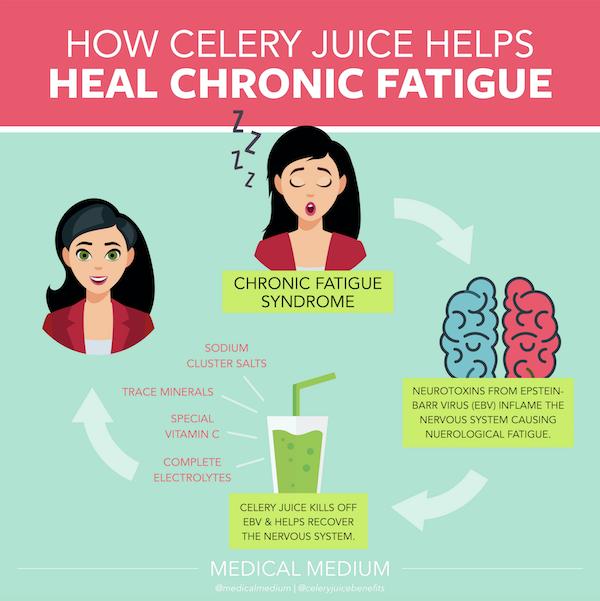
Celery is perfect for reversing inflammation, because it starves the pathogens, including unproductive bacteria and viruses such as Epstein-Barr (EBV), that create it.  
As I reveal in my book, Thyroid Healing: The Truth behind Hashimoto’s, Graves’, Insomnia, Hypothyroidism, Thyroid Nodules & Epstein-Barr, EBV is the actual cause of Hashimoto’s thyroiditis and many other diseases that medical communities call autoimmune. 
THE WONDERS OF CELERY’S MINERAL SALTS
Celery is able to starve pathogens, plus it contains a multitude of undiscovered mineral salts that act together as an antiseptic. When these powerful mineral salts make contact with viruses such as Epstein-Barr, HHV-6, and shingles; bacteria such as Streptococcus; and other pathogens—troublemakers responsible for chronic illness—the salts begin to break down the pathogens’ cell membranes, eventually killing and destroying them.

If you’re worried that the sodium in celery is a problem because you’ve heard that “salt is salt,” know that the sodium in celery is not just salt or the basic mineral sodium. Medical research and science have not yet discovered the different varieties of sodium in celery, nor how beneficial they are. Celery’s naturally occurring sodium actually helps stabilize blood pressure, bringing it down when it’s too high and up when it’s too low. Further, it won’t dehydrate your organs—instead, it clings to toxic, dangerous salts from poor-quality foods and helps draw them out of your body while replacing them with undiscovered cluster salts.

These subgroups of sodium bond together as one and are infused with celery’s other critical chemical compounds and information that’s highly active in healing the body. Science has not yet deconstructed or studied these cluster salts. 

Eventually, research will reveal that these cluster salts work symbiotically and systematically to flush out toxins, dead pathogens such as viruses and bacteria, and pathogenic neurotoxins and debris from every crevice of the body.

Neurotoxins, by the way, are created by viruses such as EBV feeding on toxic heavy metals, including mercury and aluminum. Medical science and research are not yet aware that viruses feed on certain fuel, let alone that they produce neurotoxins as waste. 

Neurotoxins create neurological symptoms, including burning skin, twitches, tremors, spasms, cold hands and feet, balance issues, vertigo, erratic heartbeat, insomnia, and body jerks, that confound doctors.

Now that you know that pathogens like EBV are responsible for chronic illness, you can understand just how critical the antiseptic function of celery’s cluster salts truly is. 

Your white blood cells use these cluster salts as both shield and weapon to go after viruses and unproductive bacteria—and that translates to relief from the numerous symptoms and conditions they cause.

Your body is loyal to you. It’s doing it’s very best to help you be whole and healed.


MORE ON CELERY’S MAGNIFICENT MINERAL SALTS
Mineral salts are critical for our bodies to function optimally. They keep your kidneys and adrenals functioning and raise your gut’s hydrochloric acid so your body can break down and assimilate what you eat—while they balance your pH as well as cleanse and repair your stomach, the rest of your digestive tract, and, most importantly, your liver. They also allow information to travel throughout your body so it can keep itself in balance no matter what’s occurring.

The mineral salts specifically in celery are instrumental in the electricity that governs the body—they’re building blocks for neurotransmitter chemicals, they ignite electrical impulse activity, and they support neuron function. A brain with weak electrical impulses and weak neurotransmitters shuts down and goes into “low battery” mode—which makes celery juice, a battery charger for the brain, an answer to stop this from happening. Mineral salts keep the heart pumping and create the neurotransmitters needed to take information from point A to point B, that is, from neuron to neuron. (Picture a thought as a boat and mineral salts as the ocean: if the ocean dries up, the boat can’t go anywhere.)

That celery’s mineral salts are such an important support for the central nervous system means they are extremely healing for people who are struggling with depression, anxiety, brain fog, confusion, bipolar disorder, memory loss, Alzheimer’s disease, obsessive-compulsive disorder (OCD), attention-deficit/hyperactivity disorder (ADHD), and posttraumatic stress disorder (PTSD), as well as people who have difficulty with focus and concentration.

Celery can really enhance the ability of supplemental GABA, glycine, and magnesium L-threonate to be absorbed by the brain and aid in neurotransmitter performance for sleep support. Celery also improves methylation, that is, the proper absorption and utilization of hundreds of nutrients, including B12 and zinc. 

The electrolytes in celery hydrate on a deep cellular level, lessening your chances of suffering from migraines, anxiety, panic attacks, and more. Celery also stabilizes and supports the adrenal glands, offers stress assistance, and repairs damaged cells inside the liver.

And since celery’s mineral salts are antibacterial, they kill bacteria such as strep, and that encourages a healthy environment for “good” bacteria. Low-grade strep infections are often the actual cause of urinary tract infections (UTIs), chronic sinus infections, acne, IBS, and small intestinal bacterial overgrowth (SIBO), though at this time medical communities aren’t aware that strep infections are involved in these conditions. Now you know that celery juice and its antibacterial properties can help heal all of these conditions, too.

If you suffer from a thyroid condition, take note: celery has the ability to cleanse the thyroid of toxins and bolster production of the thyroid hormone T3. For more on the unknown true cause of thyroid problems like Hashimoto’s thyroiditis, Graves’ disease, thyroid nodules, cysts and tumors, enlarged thyroid, parathyroid disease, and much more, refer to Thyroid Healing.



CELERY JUICE AND AUTOIMMUNE DISEASE
Celery’s ability to break down and flush out viruses is life-changing news for anybody who has been told they have an autoimmune disease. Pathogens such as viruses, including EBV and shingles, are the true cause of the inflammation that’s mistakenly considered an autoimmune condition. Medical communities just aren’t aware of the real cause yet.

The prevailing autoimmune theory is that the immune system is mistaking a part of the body for an invader and has begun attacking it, causing inflammation. This belief developed because by the 1950s, the medical world had become frustrated with not having an explanation for why conditions such as Hashimoto’s, Graves’, lupus, RA, Crohn’s disease, celiac, ulcerative colitis, and multiple sclerosis (MS) were leaving people ailing or even crippled. Close observation of some patients’ blood work revealed the presence of antibodies. A theory took off that the body had become confused and created antibodies to attack itself. It’s vital to remember that this was just one out of dozens of theories—it was never a definitive answer. The whole premise was an unproven hypothesis that the medical establishment came up with because they didn’t have the real answers for people’s suffering. So they pointed the blame at people’s bodies, which took the blame off of medical research and science, and unfortunately, the theory has stuck and become law.

The autoimmune theory is not true. It’s critical to know what’s really happening with autoimmune issues: antibodies are present because your body is fighting a pathogen that scientific testing can’t detect yet. For example, in the case of Hashimoto’s, if antibodies are present, it’s because your body is going after the Epstein-Barr virus. It’s not that your body created antibodies that are attacking your thyroid gland. You can learn more about this in Thyroid Healing.

Again, contrary to current thinking, the body does not attack itself or turn against you. Your body only goes after pathogens, and only two factors cause inflammation: injury and invasion. Pathogens cause both. They’re invaders—foreign bodies in your body—and can also be injurers, sometimes damaging tissue in their travels through your system. (It doesn’t always take both factors to cause inflammation; for example, if you break your leg and it swells up, that’s solely an injury. It does always take at least one of these two causes.)

Sadly, the popular, incorrect autoimmune theory holds people responsible for their sickness. It leads people to believe that their body has betrayed them, turned against them, let them down. When you’re leaving the doctor’s office after being told that your body is attacking itself or attacking a specific organ, it can be emotionally damaging, and that belief itself hinders your immune system. 

Your body is loyal to you. It’s doing it’s very best to help you be whole and healed. It loves you unconditionally. Your own immune system will never harm you, it only works for you. Knowing this truth can kick-start the healing process for someone who previously believed their body was against them.

The autoimmune confusion is one of the greatest mistakes in modern medicine. It’s a prime example of why more than 250 million people in the U.S. alone are living with or suffering from mystery symptoms and conditions with no real relief.

Which brings us back to why celery juice is such a big deal. As celery ushers pathogens out, your body will be much better able to handle whatever life throws your way.



CELERY JUICE AND BALANCING YOUR BODY’S PH
Why is it so beneficial that celery juice strengthens hydrochloric acid in your gut? Because hydrochloric acid is critical to digestion and to keeping your digestive system alkaline.

Although we can hear the word “acid” and think “bad,” gastric acids, including hydrochloric acid, are critical, helpful acids, not to be confused with having an acidic digestive system, which is detrimental to health.

When you eat, food quickly travels down to your stomach to be digested with the help of hydrochloric acid. Although science hasn’t discovered this yet, hydrochloric acid isn’t just one acid—it’s actually a complex blend of seven acids. If hydrochloric acid levels are out of balance or low, your food won’t be sufficiently digested in your stomach. That means the food won’t break down enough for your cells to access the nutrients, and instead the food will just sit there and rot, causing bad acids to develop.


PREVENTING AMMONIA PERMEABILITY, A MAJOR UNKNOWN CAUSE OF ILL HEALTH
This gut rot, or putrefaction, creates ammonia gas, which has the ability to float, ghost-like, out of your digestive tract and directly into your bloodstream. It can also cross into organs such as your liver and brain. This is what I call ammonia permeability.

Millions of people walk around with digestive health problems, and one of the contributing factors is ammonia permeability, along with underlying sluggish liver issues. (The truth about ammonia permeability hasn’t yet been discovered. Similar though mistaken concepts are often referred to as “leaky gut syndrome” or “intestinal permeability.”)

Another condition that worsens low hydrochloric acid and creates ammonia permeability is a sluggish, stagnant, fatty liver. Underlying liver conditions are extremely common. Medical communities don’t yet know how prevalent they really are or what’s behind these issues in the first place. A sluggish, stagnant, fatty liver causes lower bile production, which means the body can’t break down and disperse fats easily, and that also contributes to gut rot, causing even more ammonia permeability. It is vital to understand how to support your liver as almost everyone today has a sluggish liver which is at the core of countless symptoms, illnesses and premature aging and death. Thankfully, there are simple ways to support your liver’s health. I share these in detail in my book, Liver Rescue.

Here’s where our heroic celery juice comes in: It effectively rebuilds the stomach’s complex balance and supply of hydrochloric acid. It also strengthens the digestive system by helping to heal the liver, which leads to an increase in bile production, easing constipation and bloat. Plus by lowering levels of pathogens such as bacteria and viruses and invaders such as fungus and mold, it leads to strengthened intestinal linings. Celery juice is one of the most profound ways, if not the most profound way, to restore digestive health. It is that powerful.



CELERY JUICE FOR BODY AND EMOTIONS
We tend to hold a lot of fear in our guts. Nervousness causes those sensations we know as tummy flips or butterflies in the stomach, and anxiety can run deep through the nervous system, putting our guts in knots. By restoring the entire digestive system, celery juice puts our minds and hearts at ease, too. Use it for its calming effects when you are feeling frightened, panicky, shocked, fretful, nervous, threatened, unsure, afraid, or defensive.

I could go on and on about the benefits of celery juice for all manner of ills—mental, physical, spiritual, emotional. Celery juice is alkalizing, enzyme-rich, electrolyte-enhancing, liver-repairing, blood-sugar-balancing, antiseptic, and more.

Don’t let the simplicity of humble celery mask it’s strength—it’s often the simplest of measures in life that gracefully work wonders in the most complex situations. Celery juice truly is a miracle juice. It’s one of the greatest healing tonics of all time.

https://www.celeryjuice.com/celery-juice-101


Benefits of Celery Juice

Amazing benefits of Celery Juice...

  • Critical for healing chronic acid reflux
  • Fights autoimmune disease, including Hashimoto’s, Lyme disease, lupus, rheumatoid arthritis, and every other autoimmune condition
  • Incredible for constipation and all digestive issues
  • Helps restore the adrenals
  • Contains mineral salts that are critical for the central nervous system
  • Helpful for depression, anxiety, brain fog, confusion, bipolar disorder, memory loss, Alzheimer’s disease, obsessive-compulsive disorder (OCD), attention-deficit/hyperactivity disorder (ADHD), and posttraumatic stress disorder (PTSD), poor focus and concentration
  • Important for skin conditions such as acne, eczema and psoriasis
  • Flushes toxins and pathogenic byproduct from the body
  • Helps stabilize blood pressure
  • Helps eradicate strep bacteria
  • Fights Epstein-Barr and Shingles viruses
  • Brings down toxic liver heat
  • The ultimate gallbladder rehabilitator
  • Eliminates mucus
  • Restores bile production and potency
  • Celery’s natural sodium draws toxic salts out of the body
  • Powerful weapon against SIBO
  • Inhibits viruses, bacteria, and fungus
  • Enhances the immune system
  • Helps repair damaged ligaments & bones
  • Highly anti-inflammatory
  • Powerful way to alkalize the gut
  • Celery juice raises hydrochloric acid 
  • Supports and calms the central nervous system
  • Helps the liver produce bile 
  • Has mineral salts are instrumental in the electricity that governs the body
  • Contains the building blocks for neurotransmitter chemicals
  • Helps heal and prevent gut rot 
  • Helps repair damaged cells inside the liver
  • Cleanses the thyroid of viral byproduct
  • Bolsters production of thyroid hormone T3
  • Helps improve kidney function
  • Helpful for healing allergies
  • Powerful tool for brain health
  • Helps heal Crohn’s, Colitis and IBS
  • Offers stress assistance
  • Strengthens digestion
  • Celery juice blended with papaya is an amazing gut tonic
  • Helps heal addictions
  • Improves methylation
  • Helps prevent gum recession
  • Provides essential mineral salts
  • Helps restless leg syndrome
  • Counteracts acidosis
  • Helps heal POTS
  • Hydrates on a cellular level
  • Helpful healing tool for every symptom and condition
  • Celery juice’s undiscovered mineral salts break down pathogens’ cell membranes, killing and destroying them
  • The cluster salts in celery are used by your white blood cells as both shield and weapon to go after viruses and unproductive bacteria
  • Helps to heal the liver
  • Enhances electrolytes
  • Has undiscovered mineral salts that act together as an antiseptic in the body
https://www.celeryjuice.com/celery-juice-benefits-medical-medium

Friday, 13 October 2017

High-fat diet could increase risk of multiple sclerosis relapse in kids

Research in the United States has found that a high-fat diet may increase the risk of children with multiple sclerosis (MS) experiencing a relapse, whereas a diet rich in vegetables could lower it.

Children and young people with multiple sclerosis could be at a higher risk of a relapse if they eat a
high-fat diet suggests new research. Image: unzelkorn/shutterstock.com via AFP Relaxnews

 / 04:09 PM October 11, 2017

The study analyzed the diets of 219 children and young people from 11 children’s MS centers across the U.S. to look at the potential effect of diet on children with the condition, as they are already at a higher risk of experiencing relapses than adults.

Each of the participants had been diagnosed before the age of 18 and had had either the relapsing-remitting form of MS or clinically isolated syndrome (which describes the first episode of neurological symptoms associated with the disease) for less than four years.

The researchers asked participants to complete a questionnaire on the quantity and frequency of specific foods and drinks that they had consumed over a one-week period.

They also tracked their neurological health until the next relapse occurred, with participants followed on average for just under two years.

The results showed that for every 10 percent increase in calorie intake that came from fat, there was an associated 56 percent increased risk of a relapse.

Saturated fat appeared to have an even greater effect, with every 10 percent increase in calories from this type of “bad” fat associated with tripling the risk of a relapse.

However, the results also suggested that diet could help in managing the condition, with the team finding that each additional cup of vegetables appeared to halve the risk of relapse, and independent of fat consumption.

The findings also held true even after vitamin D levels, a potential risk factor for MS, were taken into account and other influencing factors such as age, gender, race, ethnicity, duration of disease, weight (BMI) and drug treatment.

No association was found between other nutrients in the children’s diet, such as sugar, iron, fruit and fiber, and risk of relapse.

Several genetic and environmental factors have already been found to be linked to an increased risk of MS, including previous infection with Epstein Barr virus, exposure to cigarette smoke and low vitamin D levels.

However, the role of diet has been so far been largely unexplored. The researchers suggest that a high fat diet could increase the risk of relapse as fat boosts cell metabolism, including the release of inflammatory chemicals, and also influences the gut microbiome and its associated immunity.

Animal fat, a source of saturated fat and often linked to a high calorie intake, is already thought to be a factor in various long term inflammatory conditions.

The study is also an observational one, meaning no firm conclusions can be drawn about cause and effect, though the researchers believe that their findings do provide some early evidence to suggest that making dietary recommendations to patients with MS could have some benefits. For example, it has already been suggested that fish oil may be particularly beneficial for those with MS. However, more research is now needed, including looking at the effects of long-term diet.
The findings can be found published online in the Journal of Neurology Neurosurgery & Psychiatry.

 http://lifestyle.inquirer.net/275527/high-fat-diet-increase-risk-multiple-sclerosis-relapse-kids/

Monday, 6 February 2017

Dissecting nasal pharyngeal cancer

Nasal pharyngeal carcinoma (NPC) is a form of nose cancer situated at the back of the nasal airway.


The Globocan project in 2012 reported that NPC is the third most frequent cancer among males in Malaysia and the fifth overall commonest cancer for both genders in Malaysia.
Males outnumber females by two to one, and the cancer has a bimodal age distribution, first peaking at adolescence, and then at the fifth to sixth decade of life.
It is common among Asians, especially those of Chinese descent.
How does it occur?
The human nose starts with the nostrils, the openings that can be seen from the outside. As we travel further inside to the back of the nose, we reach the nasopharynx, which connects to the back of the mouth and throat below.
The epithelial cells in the nasopharynx contribute to the formation of NPC.
Like all cancers, the cause of NPC is often multifactorial, i.e. a combination of factors contributing to cell abnormality and formation of cancer cells.
For simplicity’s sake , the causes of NPC can be classified into the following, though it is not an exhaustive list:
• Genetics – As mentioned above, NPC is common among the Chinese, even after migration to other nations.
It is common among first-degree relatives of affected patients, and among those with A2 HLA genetic haptotypes.
Research is still ongoing, especially in Asia, to identify the genes involved in NPC.
• Viral – Recent literature suggests that the Epstein Bar virus (EBV) has a contributory role in NPC.
University Kebangsaan Malaysia Medical Centre (UKMMC) Ear, Nose and Throat (ENT) Department head and consultant head and neck surgeon Associate Professor Dr Mohd Razif Mohamad Yunus says that a large number of the world’s population are EBV positive and asymptomatic.
Not all people with EBV develop NPC, but a large population of patients with NPC are positive for EBV.
There are still a small population of NPC positive patients with no evidence of EBV infection, although this is rare.
This is supported by a 2004 New England Journal of Medicine article based on research conducted in Taiwan, which revealed that EBV DNA was detected in the blood of 94 out of 99 patients with NPC.
There was no EBV DNA detected in all 40 patients with no NPC used as controls and patients cured of NPC.
• Environmental – Air pollution, smoking, incense and wood burning contribute indirectly to NPC.
Many studies have associated a link between cigarette smoking to NPC, but no reliable study has distinguished the difference in effect (if any) of pipe smoking, cigars, and lately, electronic cigarettes (vaping), in comparison to cigarette smoking in NPC.
Salted fish also contains nitrosamines that have been shown to have a link to NPC occurrence.
Many studies have found a link between cigarette smoking and NPC. — Reuters
Many studies have found a link between cigarette smoking and NPC. Photo: Reuters
How does it present?
NPC may present with different symptoms.
Some may have a one-sided neck swelling as the only sign or symptom. Many will dismiss it and only seek medical attention when the swelling does not shrink, even with first-line antibiotic therapy.
The neck swelling is the spread of the tumour to the surrounding neck lymph nodes, drain lymph from the nose.
Others may have nasal symptoms such as bleeding (can be one sided or both) and nose blockage (if the mass has grown to a sufficiently large enough size to partially obstruct the nasal airways).
Ear pain and buzzing are also possible as NPC often develops in the area where the tympanic tube that equilibrates air in our ears opens up at the back of the nose.
Fast-growing tumours may invade the base of the skull towards the brain, resulting in an intracranial extension. In such cases, the patient may suffer from headaches and some may even have a clear discharge from their nostrils.
This occurs when the tumour has breached the outer layer covering the brain known as the dura, and eventually results in the leakage of clear fluid surrounding the brain known as cerebrospinal fluid (CSF), into the nose or ears.
These aggressive tumours may also compress the nerves in the brain and result in weakness of eye movement, as well as loss of hearing and smell.
UKMMC senior consultant ENT surgeon Prof Datuk Dr Balwant Singh Gendeh says these varied and unspecific symptoms often contribute to a delay in diagnosis in such patients, as they can be misleading.
If the patient’s neck swelling does not resolve with first and second line antimicrobials for a presumed lymph node infection, medical practitioners should have a strong suspicion of malignancy (either NPC or lymphoma) or chronic infection such as tuberculosis.
At this juncture, if symptoms and patient history is suggestive of NPC, a referral to an ENT specialist should be made.
Before that, the medical practitioner may request blood tests to check the blood count.
The ENT specialist will perform a thorough head and neck examination followed by nasal endoscopy, which is simply a visual examination of the back of the nose looking for the source of bleeding or any suspicious mass.
If there is a mass, a small tissue sample will be obtained and sent to the lab for microscopic examination and confirmation of diagnosis. This can be done in a controlled setting in the outpatient clinic or in the operation theatre if there is a tendency of uncontrolled bleeding.
An EBV DNA test or blood test can also be carried out.
Patients with neck swellings will be subjected to fine needle aspiration of the neck swelling. It is a straightforward outpatient procedure whereby a small needle is introduced into the neck swelling to obtain cellular samples for confirmation of diagnosis under the microscope.
If diagnosis is confirmed, the patient will be subjected to imaging tests – either a contrasted computed tomography (CT scan) or magnetic resonance imaging (MRI) of the head and neck to properly determine the spread of the cancer.
The ENT specialist may also request for a chest radiograph (x-ray) and abdominal ultrasound to rule out any spread of the disease.
These imaging tests will contribute to the staging of the disease and ultimately help direct treatment options.
A baseline hearing assessment can be done for hearing loss secondary to treatment and assessing the presence of concurrent ear infection.
Treatment options
Yes, there are treatment options for NPC.
Radiotherapy and chemotherapy are the treatment of choice in NPC. Radiotherapy alone may be used for early stage I and II diseases, while combined chemo-radiotherapy (CCRT) is often used for stage III and IV disease.
UKMMC consultant ENT surgeon Assoc Prof Dr Salina Husain notes that radiotherapy may cause damage to surrounding structures or structures in between the beam and the tumour.
This may result in scarring of surrounding tissue and patients may also experience trismus, which is difficulty in opening the jaw fully.
However, she adds that the benefit of CCRT often outweighs the risk in terms of survival, while side effects can be managed with lifestyle measures.
Technologies such as three-dimensional conformal radiotherapy and intensity modulated radiotherapy (IMRT) offer a higher dose and more focused delivery of radio-waves to the tumour in order to minimise damage to surrounding structures of the head and neck.
This is preferred in recurrent disease and is only available in select healthcare centres in Malaysia.
A referral to the dental surgeon will be required for a dental assessment as some patients may require extraction of teeth prior to CCRT and the management of good oral hygiene during treatment.
Chemotherapy can be given together or after radiotherapy treatment.
Chemotherapy plays an important role in improving local control of the disease and treating distant spread of the cancer.
Surgery is only indicated if there is disease spread to the neck, or in the case of recurrent or persistent NPC, in the nose.
Assoc Prof Mohd Razif says, “The ENT surgeon may have to perform a neck dissection to identify and remove swellings in the form of affected lymph nodes in the neck on either one or both sides of the neck.
“This is done if there is no spread of the NPC to other body sites and when there is a hope for cure.”
Surgery to remove the back of the nose or nasopharyngectomy will be performed if there is recurrence or persistent NPC after CCRT.
Surgery to remove the back of the nose, or nasopharyngectomy, will be performed if there is recurrent or persistent NPC after combined chemo-radiotherapy treatment. — AFP
Surgery to remove the back of the nose, or nasopharyngectomy, will be performed if
there is recurrent or persistent NPC after combined chemo-radiotherapy treatment.
Photo: AFP
Prof Gendeh says, “Recent advances favours a minimally-invasive approach to a nasopharyngectomy by using endoscopic surgery that may allow access to the base of skull for better clearance of tumour in tertiary referral centres.
“If the centre lacks the facilities for a minimally-invasive approach, then the traditional open nasopharyngectomy may be perform- ed.”
He adds: “Ultimately, the decision for surgery should take into account the extent of tumour spread, tumour aggression, disease control, chances for cure and the patient’s wishes and expectations.”
Brachytherapy is a form of sealed radiation from a substance placed next to the affected area.
Gold grains or iodine seeds have been used to deliver high doses of radiation to the NPC site with less radiation to the surrounding structures.
Such stereostatic treatment has shown promising results in initial trials, but studies on larger population and long term effects are still ongoing.
The role of screening and surveillance
The early detection of NPC allows for early diagnosis and treatment.
The golden rule that prevention is better than cure still holds true.
However, there is a conundrum as screening tests should be proven to reduce morbidity and mortality, besides being socially and ethically acceptable.
A screening review conducted by the Health Ministry in 2011 in its Health Technology Assessment Report involved a systematic review and randomised control trial for testing the effectiveness and cost efficiency of screening for NPC among children and adults.
It involved four population-based studies from China, and among its findings was that there is insufficient evidence to recommend a population-based NPC screening programme as a public health policy in Malaysia as yet.
This is in line with Singapore’s policy that does not recommend mass screening of the general population with EBV blood tests in its 2010 Clinical Practice Guidelines.
“As a general guidance, individuals with first-degree relatives diagnosed with NPC should regularly visit their ENT doctor for a surveillance endoscopy to allow for early detection of the disease.
“However, this is merely precautionary and there has yet to be a guideline in Malaysia for the surveillance of NPC,” adds Assoc Prof Mohd Razif.
Several Asian countries recommend screening for all high risk family members aged over 30.
The journey of a patient with NPC will involve the family physician, ENT specialist, radiologist, oncologist, dental surgeon and occupational therapist, as well as the support of their loved ones.
One might lose the scent of a rose with NPC, but with early detection and newer treatment modalities, one might not lose the sight of the beauty of a rose.

Dr Hardip Singh Gendeh is a medical officer at the UKMMC Department of Otorhinolaryngology – Head & Neck Surgery in Kuala Lumpur. For further information, e-mail starhealth@thestar.com.my.

http://www.star2.com/health/wellness/2017/01/22/dissecting-nasal-pharyngeal-cancer/

Sunday, 29 June 2014

When the heart hurts

Healthwise

12 May 2014 


ATHEROSCLEROSIS (hardening and narrowing of the arteries) is mainly an inflammatory disorder that is the usual cause of heart attacks, strokes, and peripheral vascular disease – what together are called cardiovascular disease.
Based on today's medical ­research, the key to ­understanding cardiovascular disease is to ­appreciate the roles inflammation plays in ­promoting this No.1 killer in the world.
Gum disease
The by-products of ­bacterial from periodontal (gum) disease such as ­lipopolysaccharides can lead to chronic low-grade ­inflammation and an increased arterial plaque accumulation.
Research studies have shown that periodontal ­pathogens could cause local ­infection and ­systemic (whole body) ­inflammation as ­evidenced by elevated blood ­markers such as ­hs-CRP and IL-6.
The J Endod (2009) reported that chronic dental ­infections could raise one's risk of heart attack.
Periodontitis (inflamed gum) promotes endothelial (artery wall) dysfunction even in people without cardiovascular risk factors since such a condition reduces nitric ­oxide needed for arterial health.
Furthermore, our body's ­antioxidant scavengers such as glutathione peroxidase, ­catalase and SOD are reduced.
H. Pylori infection
Besides promoting a significant percentage of gastric cancer, this bacterium living in both the stomach wall and in the gum can cause endothelial dysfunction.
The principal source of this infection is raw, uncooked fish and from cooked food contaminated with the ­bacterium.
Hepatitis
The viruses that cause chronic inflammation in the liver can set the stage for systemic low-grade inflammation that adversely affect arterial health.
Vaccination is one way to ­prevent these liver disorders. Herbs and nutrients beneficial to liver ­include licorice root containing ­glycyrrhizin, ­silybum, schisandra, ­cordyceps, alpha lipoic acid, artichoke, and L-cysteine.
Hepatitis A is an acute ­condition spread by a virus from an infected person's ­faeces to someone's food chain or cooking utensils.
Besides sex, hepatitis B may be transmitted through sweat coming into contact with the damaged skin of another ­person while ­sharing ­household items can even transmit hepatitis C.
Excessive drinking can lead to alcoholic hepatitis,­ eventually to fatty liver and then ­cirrhosis ­(hardening of the liver).
Epstein Barr virus (EBV)
The only symptoms from this viral infection may be chronic fatigue syndrome, nasal or lymph node tumour/cancer.
The incidence of nasal cancer in Malaysia is now one of the highest in the world with EBV ­infection believed to be a major contributing factor while inappropriate dietary habits help the virus knock out our immune defence.
The dietary aspects include over-consumption of salted or preserved food as well as excessive sugar intake which lowers our general immunity against all infections.
Fungal infection
Systemic ­fungal over-growth (candidiasis) is widespread in countries with warm and humid climates such as ours.
A large percentage of sore throats may be fungal-based rather than an ­infection.
Fortunately, nature has its own remedies in the form of herbs, spices, and oils that possess anti-­fungal ­properties.
Among them are ­oregano, garlic, cloves, ­turmeric, ­spearmint, virgin coconut oil, and palm seed oil.
Allergies and skin ­disorders
All forms of allergy including sinusitis and skin disorders such as eczema and psoriasis provoke reactions from our immune defence, resulting in chronic inflammation which adversely affect our arterial health.
This means that if you suffer from skin disorders or from asthma, and these ­conditions aren't adequately treated, the chances are high that the health of your heart arteries will be affected.
Chronic sinusitis and ­allergies stringly provoke our ­immune defence leading to ­production of a wide variety of ­inflammatory chemicals which can damage our arterial wall.
To treat chronic ­inflammation naturally, we need to look at dietary or lifestyle modifications and the use of nutraceuticals under the direction of a licensed nutritional therapist.
Regular sleep patterns of seven to eight hours per night and exer­cising to keep weight down are known to be ­beneficial to the heart.
Our body adipose tissues (fat cells) are also a major producer of inflammatory chemicals.
If you have a BMI of 27 and above, you will face an uphill battle with chronic inflammation.
Consuming excess ­refined carbohydrates and not ­exercising adequately may lead to insulin resistance, which is a strong predictor of cardiovascular disease.
Excess use of cooking oils rich in pro-inflammatory omega-6 or consumption of deep-fried food containing trans-fat or advanced glycated end-products (AGEs) ­promote atherosclerosis.
EPA/DHA can reduce ­periodontal disease by 20% while reducing inflammation by up to 50%.
CoQ-10 and vitamins D3 and E levels tend to be low in people with gum disease.
Adequate intake of folate-rich dark green leafy ­vegetables can reduce ­gingival bleeding. Ascorbic acid ­enhances gum healing and lowers risk of gingivitis.
Fermented soy such as natto is rich in the ­biologically active form of vitamin K2, which is also an anti-­inflammatory nutrient since it lowers the blood marker IL-6.
Using virgin coconut oil can lower ­incidence of viral and fungal infections. Foods rich in L-lysine including soy isolate can reduce viral ­replication in those affected.

Friday, 30 May 2014

When the heart hurts

ATHEROSCLEROSIS (hardening and narrowing of the arteries) is mainly an inflammatory disorder that is the usual cause of heart attacks, strokes, and peripheral vascular disease – what together are called cardiovascular disease.

12 May 2014 

Steve Yap

ATHEROSCLEROSIS (hardening and narrowing of the arteries) is mainly an inflammatory disorder that is the usual cause of heart attacks, strokes, and peripheral vascular disease – what together are called cardiovascular disease.
Based on today's medical ­research, the key to ­understanding cardiovascular disease is to ­appreciate the roles inflammation plays in ­promoting this No.1 killer in the world.
Gum disease
The by-products of ­bacterial from periodontal (gum) disease such as ­lipopolysaccharides can lead to chronic low-grade ­inflammation and an increased arterial plaque accumulation.
Research studies have shown that periodontal ­pathogens could cause local ­infection and ­systemic (whole body) ­inflammation as ­evidenced by elevated blood ­markers such as ­hs-CRP and IL-6.
The J Endod (2009) reported that chronic dental ­infections could raise one's risk of heart attack.
Periodontitis (inflamed gum) promotes endothelial (artery wall) dysfunction even in people without cardiovascular risk factors since such a condition reduces nitric ­oxide needed for arterial health.
Furthermore, our body's ­antioxidant scavengers such as glutathione peroxidase, ­catalase and SOD are reduced.
H. Pylori infection
Besides promoting a significant percentage of gastric cancer, this bacterium living in both the stomach wall and in the gum can cause endothelial dysfunction.
The principal source of this infection is raw, uncooked fish and from cooked food contaminated with the ­bacterium.
Hepatitis
The viruses that cause chronic inflammation in the liver can set the stage for systemic low-grade inflammation that adversely affect arterial health.
Vaccination is one way to ­prevent these liver disorders. Herbs and nutrients beneficial to liver ­include licorice root containing ­glycyrrhizin, ­silybum, schisandra, ­cordyceps, alpha lipoic acid, artichoke, and L-cysteine.
Hepatitis A is an acute ­condition spread by a virus from an infected person's ­faeces to someone's food chain or cooking utensils.
Besides sex, hepatitis B may be transmitted through sweat coming into contact with the damaged skin of another ­person while ­sharing ­household items can even transmit hepatitis C.
Excessive drinking can lead to alcoholic hepatitis,­ eventually to fatty liver and then ­cirrhosis ­(hardening of the liver).
Epstein Barr virus (EBV)
The only symptoms from this viral infection may be chronic fatigue syndrome, nasal or lymph node tumour/cancer.
The incidence of nasal cancer in Malaysia is now one of the highest in the world with EBV ­infection believed to be a major contributing factor while inappropriate dietary habits help the virus knock out our immune defence.
The dietary aspects include over-consumption of salted or preserved food as well as excessive sugar intake which lowers our general immunity against all infections.
Fungal infection
Systemic ­fungal over-growth (candidiasis) is widespread in countries with warm and humid climates such as ours.
A large percentage of sore throats may be fungal-based rather than an ­infection.
Fortunately, nature has its own remedies in the form of herbs, spices, and oils that possess anti-­fungal ­properties.
Among them are ­oregano, garlic, cloves, ­turmeric, ­spearmint, virgin coconut oil, and palm seed oil.
Allergies and skin ­disorders
All forms of allergy including sinusitis and skin disorders such as eczema and psoriasis provoke reactions from our immune defence, resulting in chronic inflammation which adversely affect our arterial health.
This means that if you suffer from skin disorders or from asthma, and these ­conditions aren't adequately treated, the chances are high that the health of your heart arteries will be affected.
Chronic sinusitis and ­allergies stringly provoke our ­immune defence leading to ­production of a wide variety of ­inflammatory chemicals which can damage our arterial wall.
To treat chronic ­inflammation naturally, we need to look at dietary or lifestyle modifications and the use of nutraceuticals under the direction of a licensed nutritional therapist.
Regular sleep patterns of seven to eight hours per night and exer­cising to keep weight down are known to be ­beneficial to the heart.
Our body adipose tissues (fat cells) are also a major producer of inflammatory chemicals.
If you have a BMI of 27 and above, you will face an uphill battle with chronic inflammation.
Consuming excess ­refined carbohydrates and not ­exercising adequately may lead to insulin resistance, which is a strong predictor of cardiovascular disease.
Excess use of cooking oils rich in pro-inflammatory omega-6 or consumption of deep-fried food containing trans-fat or advanced glycated end-products (AGEs) ­promote atherosclerosis.
EPA/DHA can reduce ­periodontal disease by 20% while reducing inflammation by up to 50%.
CoQ-10 and vitamins D3 and E levels tend to be low in people with gum disease.
Adequate intake of folate-rich dark green leafy ­vegetables can reduce ­gingival bleeding. Ascorbic acid ­enhances gum healing and lowers risk of gingivitis.
Fermented soy such as natto is rich in the ­biologically active form of vitamin K2, which is also an anti-­inflammatory nutrient since it lowers the blood marker IL-6.
Using virgin coconut oil can lower ­incidence of viral and fungal infections. Foods rich in L-lysine including soy isolate can reduce viral ­replication in those affected.
http://www.thesundaily.my/news/1043547