Pages

Showing posts with label Estrogen. Show all posts

Wednesday, 27 November 2019

Five Common Mistakes That Steal Testosterone


It’s one of the first—and most upsetting—casualties of aging… Testosterone levels start to drop as men get older. And it doesn’t wait until retirement. It can start as early as your 30s.
INH Research

You may already know the natural ways to help boost your testosterone to optimal levels… But if you’re falling for these easy traps, your efforts could be a waste of time… We think they deserve a #FridayFive. Here are five common mistakes that steal testosterone.
But age isn’t the only threat. There are some common—and sneaky—factors that drain this hormone from you no matter how old you are.
Here are five common mistakes that steal testosterone:
1. Going Low-Fat: You know all the myths about eating fat… But heart health and a slim waistline aren’t the only reasons to add more of it to each meal. Research shows that it only takes six weeks of reducing fat intake to lower your testosterone levels. Just dropping from 40% to 25% fat a day means around 15% less T.
So if you have been one of the millions of people in the U.S. afraid to touch fat, your testosterone levels could be suffering. Try adding avocados, coconut oil, and grass-fed butter to your meals. These clean fats will help set the table for healthy, natural production.
2. Skipping Sleep: It isn’t always easy to get a good night’s sleep… But if it’s happening more than a night or two a week, it could put your hormones in jeopardy. Just one full week of getting five or less hours of sleep each night can drop T levels by up to 15%.1 And that’s only one week. If you’re making a habit of burning the midnight oil—or have sleep problems you need to address—the damage could be even worse over time. Trying natural sleep aids will help you fall asleep easier—and keep your testosterone levels from sinking.
3. Drinking Too Much Alcohol: A glass of red wine with dinner can be good for your heart and help boost your health. But if you’re having more than two drinks a day, you’re helping your body convert testosterone into estrogen.2 That’s the female sex hormone. It’s true that men need this hormone in small amounts… But when it comes from sacrificing testosterone, it can put out your fire fast.
If you’re a beer drinker, it only gets worse… The hops in beer are estrogenic. They may even help women avoid hot flashes during menopause.3 Your best bet is to limit your alcohol to a glass of wine. If you prefer to sip the hard stuff instead, limit it to a drink or two on the weekends. This helps prevent inflammation and spares testosterone.
4. Over-Exercising: Health Watch readers know that less is more when it comes to exercise. But spending less time in the gym—and turning up the intensity—doesn’t just help keep your heart in top shape. A study at the University of British Columbia found that long-distance runners had at least 20% less testosterone.4 But it’s not just about running less. It’s about greater intensity.
Another study reveals that high-intensity interval training causes bigger testosterone spikes after workouts that normal running.5 It may not be as easy as a jog… But high-intensity interval training (HIIT) can cut your gym time in half—and brings your T levels to where they need to be to fight aging.
5. Eating Soy: It not only lowers your sperm count,6 eating soy depletes your testosterone. It may even prevent your body from being able to make more of it over time. One study found that taking a soy protein supplement led to a 19% drop in serum levels of this hormone in only two weeks.7 But avoiding soy isn’t always easy. That’s because it’s a popular filler ingredient in processed foods. It’s a cheap way to help foods—especially powders—emulsify. That’s why many protein supplements contain soy even though it isn’t being used as a protein source. But even “healthy” foods aren’t immune. Most of the salad dressings you’ll find—even the organic ones—use soybean oil as their base. Always make sure to read the labels on the foods and health products you buy to avoid this testosterone killer.
You don’t need dangerous hormone therapy or an expensive doctor’s prescription to start reclaiming your youthful vigor. There are natural ways to do it. But you need to protect any gains you make. Fixing these simple mistakes is the first step to reigniting your fire—no matter how low the candle may be burning.
Testosterone levels decline about 1% a year after age 30. This is just one more symptom of what we call “Male Aging Syndrome.” Most men think problems like lack of energy or libido are a natural consequence of getting older… when it may actually be an easy to fix chemical imbalance! See the four ways you can break free of Male Aging Syndrome here.
References:
1http://www.uchospitals.edu/news/2011/20110531-sleep.html
2http://www.fammed.wisc.edu/sites/default/files//webfm-uploads/documents/outreach/im/handout_testosterone.pdf
3http://www.ncbi.nlm.nih.gov/pubmed/20167461
4http://www.ncbi.nlm.nih.gov/pmc/articles/PMC1724199/
5http://www.ncbi.nlm.nih.gov/pubmed/23310924
6http://www.ncbi.nlm.nih.gov/pubmed/18650557
7http://cebp.aacrjournals.org/content/16/12/2796.full
https://www.institutefornaturalhealing.com/2014/10/five-common-mistakes-that-steal-testosterone/

Tuesday, 20 March 2018

Essential oils linked to abnormal breast development in boys

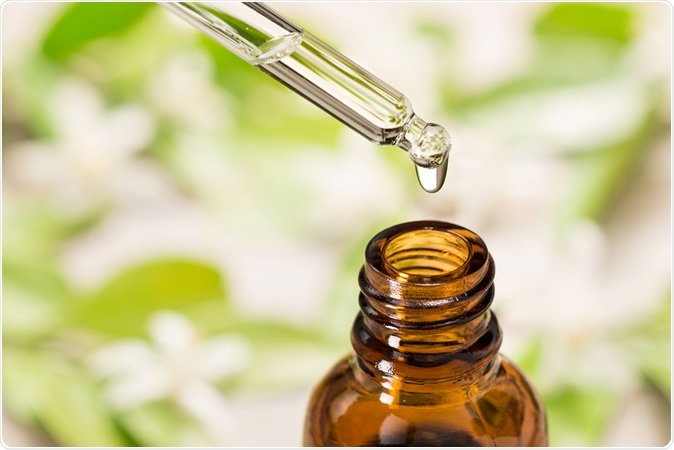
A new study has found that essential oils such as lavender and tea tree oils are connected to development of abnormal breast development in young boys. They researchers found eight different chemicals present in these oils that can interfere with hormonal development in boys. The study results are to be presented today (19th of March 2018) at ENDO 2018, the Endocrine Society's 100th annual meeting in Chicago.
March 19, 2018
Image Credit: AmyLv / Shutterstock
Breast development in males is termed as gynaecomastia and this is a condition which has been associated with certain disease conditions and also as a side effect of certain drugs or medications. In many there may be no cause. In general gynecomastia is a rare condition.
The American study now has found that chemicals present in the essential oils can help increase the estrogen or female hormones in the boys and suppress the testosterone or male hormone. This reaction of course is different in different persons.
People use these essential oils directly as well as in daily use products such as lotions, moisturizers, creams, soaps, shampoos, hair styling products etc. Some of these are also used as part of alternative medical procedures. According to J. Tyler Ramsey from the National Institute of Environmental Health Sciences (NIEHS), in North Carolina, who led this new research, use of these oils in any form needs to be with caution among boys. He called these oils “endocrine disruptors” or agents that can alter the hormonal make up and create problems. He said that most of these oils are generally perceived to be safe. He said that there were quite a few reported cases of male gynecomastia after these oils were used over the skin. The symptoms came down once the oils were stopped.
Dr Kenneth Korach, a co-author in this study, has shown in his earlier work that lavender and tea tree oils can affect male characteristics development and puberty and growth among males. This new study looked at the chemicals within these oils. They narrowed it down to eight chemicals out of the hundreds present in these oils. Four of these chemicals are present in both oils. These four are eucalyptol, 4-terpineol, dipentene/limonene and alpha-terpineol. The other four including linalyl acetate, linalool, alpha-terpinene and gamma-terpinene, were in either of the oils.
The team then isolated the chemicals and tested them on human cells within the laboratories. They noted that these chemicals successfully increased estrogen levels and reduced testosterone levels in varying degrees. Ramsey said, these two oils need further study. These eight chemicals are also found in 65 other essential oils he said. These too need thorough investigation before boys are exposed to them.
The U.S. Food and Drug Administration (FDA) approves of the labels on essential oils as GRAS (generally recognized as safe) with usage as directed. This new study from the NIEHS shows that their use maybe with caution especially among pre-pubescent boys.

https://www.news-medical.net/news/20180319/Essential-oils-linked-to-abnormal-breast-development-in-boys.aspx


 - - - - - - -


More evidence essential oils 'make male breasts develop'

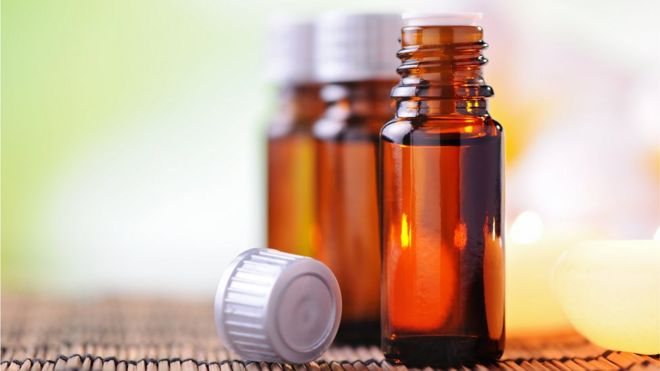
Essential oils in bottlesImage copyrightGETTY IMAGES
A suspected link between abnormal breast growth in young boys and the use of lavender and tea tree oils has been given new weight, after a study found eight chemicals contained in the oils interfere with hormones.
Gynaecomastia is rare, and there is often no obvious cause.
But there have been a number of cases linked to use of these essential oils.
The American study found that key chemicals in the oils boost oestrogen and inhibit testosterone.
Not everyone will have the same reaction to an essential oil.
The plant-derived oils are found in a number of products such as soaps, lotions, shampoos and hair-styling products. They're also popular as alternative cleaning products and medical treatments.
Lead researcher J. Tyler Ramsey from the National Institute of Environmental Health Sciences (NIEHS), in North Carolina, suggested caution when using the oils.
"Our society deems essential oils as safe. However, they possess a diverse amount of chemicals and should be used with caution because some of these chemicals are potential endocrine disruptors."
A growing number of reported cases of male gynaecomastia have coincided with topical exposure to the oils.
After they stopped using the products, the symptoms subsided.
A previous study by Dr Kenneth Korach - who was also co-investigator for this study - found that lavender and tea tree oil had properties that competed with or hindered the hormones that control male characteristics, which could affect puberty and growth.
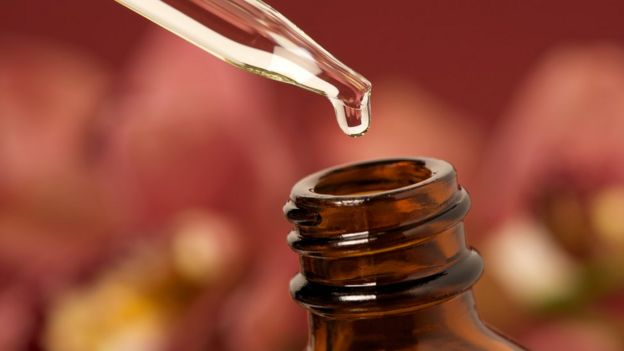
Essential oil dripping in bottleImage copyrightGETTY IMAGES
The new study looked at eight key chemicals from the hundreds that make up the oils. Four of the tested chemicals appear in both oils and the others were in either oil.
They were tested on human cancer cells in the laboratory to measure the changes.
The researchers found all eight demonstrated varying degrees of promoting oestrogen and/or inhibiting testosterone properties.
"Lavender oil and tea tree oil pose potential environmental health concerns and should be investigated further," said Mr Ramsey.
Many of the chemicals tested appear in at least 65 other essential oils, which is of concern, he added.
Presentational grey line

Essential oil guidelines

  • Precautions should be observed when using essential oils since they are highly concentrated
  • Do not apply undiluted essential oils directly to the skin
  • Never use undiluted oils on children under the age of three
  • If you are pregnant you should seek the advice of your doctor, midwife before using essential oils
  • When used appropriately, essential oils and aromatherapy products are safe for all the family
  • Source: Aromatherapy Trade Council
Presentational grey line
Prof Ieuan Hughes, emeritus professor of paediatrics at the University of Cambridge said the findings "have confirmed why an individual using such oils containing these chemicals may develop breast tissue".
"The anti-male hormone effects are rather unexpected and it is not possible to comment further without the data.
"Of course, not everyone exposing themselves to such oils has adverse effects, so it is possible there are particular individuals who may be more sensitive to the effects of the chemicals, or perhaps are using the products in excess.
He said attention should be given to better regulation of these products.
Prof Hughes added: "Clearly, the longer-term effects of such exposure are unknown."
Dr Rod Mitchell, honorary consultant paediatric endocrinologist at the Queens Medical Research Institute in Edinburgh said the study "is important in establishing a possible mechanism for the suggested link between gynaecomastia and exposure to lavender and tea tree oils".
"However, there are important factors that must be taken into account when interpreting these results. The tests are conducted in cancer cells, which may not represent the situation in normal breast tissue.
"The concentration (dose) to which the cells are exposed may not be equivalent to exposure in humans. There is a complex relationship between oestrogen, testosterone and other hormones in the body, that cannot be replicated in these experiments."
He called for further larger studies.
"At present, there is insufficient evidence to support the concept that exposure to lavender and tea tree oil containing products cause gynaecomastia in children, and further epidemiological and experimental studies are required."
The study results will be presented on 19 March at the Endocrine Society's annual meeting in Chicago.

http://www.bbc.com/news/health-43429933

Wednesday, 24 May 2017

Resveratrol for breast cancer prevention and treatment

Breast cancer is the most common cause of cancer-related deaths among women. Therefore, it’s incredibly important that we do as much as possible to prevent it.
Fortunately, adding protective dietary compounds to your daily eating routine is one of the best prevention methods there is.
Woman drinking red wine
Resveratrol is one such protective compound…
Resveratrol is a phytoestrogen compound that occurs naturally in foods and beverages like red wine, dark chocolate, cocoa, blueberries, cranberries, peanuts and pistachios.
Researchers have established that the hormone estrogen plays a large role in the initiation, growth and spread of breast cancer cells. And its effects on hormones are just one of the prevention mechanisms resveratrol provides…
You see, resveratrol binds to estrogen receptors and provides unique anti-estrogen activity, which inhibits tumor transformation and cell growth.
On top of this, resveratrol has other anti-tumor capabilities, along with potent antioxidant and anti-inflammatory properties that influence several mediators involved in all stages of cancer development — initiation, promotion and progression.
In terms of breast cancer treatment, one of the major challenges is a worrying phenomenon known as multidrug resistance, where a person is resistant to medications and their treatment becomes difficult, or sometimes even impossible.
This is another area that resveratrol compounds shine…
Resveratrol reduces drug oxidation metabolism to protect cells from being exposed to further carcinogens. And it also helps modulate the expression of estrogen and regulate the cell cycle — all of which appear to reverse multidrug resistance.
It’s been shown that resveratrol’s effects are dose-dependent, which means it’s important to ensure you get enough in your diet to experience the health benefits.
One issue that can limit resveratrol’s effectiveness is its low bioavailability — in other words, your body doesn’t absorb all of the compound when you consume it.
You can increase the bioavailability by combining resveratrol with other compounds such as piperine (found in black pepper), quercetin (found along with resveratrol in red wine and in foods like tomato, apples and kale), tea polyphenols and curcumin (found in turmeric).
Keeping this in mind, great ways to incorporate resveratrol into your daily diet include:
  • Enjoying a glass of red wine (just one)
  • Consuming a quarter to half a cup of blueberries or cranberries with a cup of green tea
  • Adding peanuts or pistachios to a turmeric-rich curry that includes kale, broccoli and tomato (3 quercetin-rich foods)
  • Enjoying a few squares of dark chocolate with an Earl grey tea
If you have a hard time getting enough resveratrol from food, or if your appetite is low as a result of chemotherapy, resveratrol supplements are also available.
Optimal doses have not been established, but common oral dosages are 500 milligrams taken twice daily.
Sources:
  1. Alamolhodaei NS, et al. Resveratrol as MDR reversion molecule in breast cancer: An overview. — Food and Chemical Toxicology. 2017;103:223-232.
  2. Johnson JJ, et al. Enhancing the bioavailability of resveratrol by combining it with piperine. — Molecular Nutrition & Food Research. 2011;55(8):1169-1176.
  3. Singh CK, et al. Resveratrol-based combinatorial strategies for cancer management. — Annals of the New York Academy of Sciences. 2013;1290(1):113-121.

https://easyhealthoptions.com/resveratrol-breast-cancer-prevention-treatment/

Friday, 20 January 2017

The Top 5 High Estrogen Foods to Avoid


Published on 11 Sep 2014
Dr. Josh Axe

In this video, I’m going to walk you through the five top foods to avoid that are highest in estrogen. High estrogen foods can be really harmful to your health by destroying your hormone balance. A lot of these foods with too much estrogen today can lead to health issues like hypothyroidism, autoimmune disease, chronic fatigue, and ovarian cancer. So, eliminate the following foods from your diet, and add more fruits and vegetables to naturally decrease estrogen in your body.

Foods to avoid:
1.) Soy
2.) Sugar
3.) Conventional meat
4.) Conventional dairy
5.) BPA plastic and Teflon Pans

If you want to start detoxing your body of estrogen, consume more cruciferous vegetables like broccoli, cauliflower, kale, collard greens, and brussels sprouts. Also milk thistle and dandelion supplements are great to support your body in the detox from estrogen as well.

For more on balancing your hormones: http://draxe.com/10-ways-balance-horm...

https://www.youtube.com/watch?v=w8W9kTQgXQ0

Monday, 16 January 2017

Processed Soy Products: Health Food or Heath Risk?


Published on 13 Oct 2016
Cardiologist and best-selling author Dr. Steven Gundry reveals the truth about soy products.


https://www.youtube.com/watch?v=kg3IDHrHUp4

Monday, 31 October 2016

The Link Between Birth Control Pills and Depression

Birth control pills are among the most popular forms of contraception in the US, but new research highlights their risks to women's mental health. Artificially manipulating your sex hormones with the synthetic hormones in hormonal contraception could have serious adverse effects, including depression.

October 20, 2016 


Birth Control Pills

Story at-a-glance

  • Women who used hormonal birth control had a 40 percent increased risk of developing depression after six months compared to women who did not
  • The risk of developing depression after hormonal contraception use was greatest among adolescents
  • The use of hormonal birth control was also associated with subsequent use of antidepressant drugs
By Dr. Mercola
Birth control pills are the most popular form of contraception among U.S. women. They're taken by 16 percent of this population, while just over 7 percent use long-acting reversible forms of contraception, such as a hormonal intrauterine device or implant.
What these pills, devices and implants have in common is that they're forms of hormonal birth control — that is, they contain or release synthetic forms of hormones, such as estrogen and progestin (a form of progesterone), which work to prevent pregnancy in various ways.  
The problem is that these sex hormones also affect mood and other biological processes and artificially manipulating them can lead to many unintended consequences in your body, some of them uncomfortable and some quite serious, including altering your mental health.

Birth Control Pills Linked to Depression

Researchers from the University of Copenhagen in Denmark analyzed data from more than 1 million women over a period of 14 years. None of the women, who were between 15 and 34 years of age, had been diagnosed with depression at the start of the study.1
However, the analysis showed that women who used hormonal birth control had a 40 percent increased risk of developing depression after six months compared to women who did not. The risk was greatest among adolescents.
The use of hormonal birth control was also associated with subsequent use of antidepressant drugs. Certain types of hormonal contraception had varying risks. Specifically, the use of:
  • Progestin-only pills led to a 1.3-fold higher rate of antidepressant use
  • Combined birth control pills led to a 1.2 higher rate
  • Transdermal patch led to a 2-fold increased risk
  • Vaginal ring led to a 1.5-fold increased risk

Anecdotal Reports Suggest Hormonal Contraceptives Lead to Mood Changes

Lead study supervisor, Dr. Øjvind Lidegaard, a professor at the University of Copenhagen in Denmark, told CNN:2
"We have known for decades that women's sex hormones estrogen and progesterone have an influence on many women's mood.
Therefore, it is not very surprising that also external artificial hormones acting in the same way and on the same centers as the natural hormones might also influence women's mood or even be responsible for depression development."
Despite this knowledge, many health care professionals are reluctant to suggest that the risks of hormonal birth control may be too steep for some women, especially those with a history of depression.
While scientific validation has yielded some conflicting results, one report in the Oxford Medical Case Reports journal detailed two cases of women with a history of depression who developed depressive symptoms after treatment with hormonal contraceptives (the combined oral contraceptive pill, progestin-only pill and combined contraceptive vaginal ring).3

Case Reports Detail Onset of Depressive Symptoms After Use of Hormonal Contraceptives

In one case, a 31-year-old woman experienced gradual improvement of her depressive symptoms after she stopped using the vaginal ring. However, "a sudden and acute worsening occurred" shortly after she started using a combined birth control pill.
About a month later, she again experienced a worsening of symptoms "almost simultaneously with the initiation of treatment with combined contraceptive vaginal ring." The researchers noted:4
"HC [Hormonal contraception] was again interrupted, with a subsequent clear improvement in depressive symptoms. The patient remained stable without depression for the following [six] months."
In the second case, a 33-year-old woman developed depressive symptoms shortly after starting a progestin-only birth control pill. Her symptoms disappeared completely within one week of stopping the pill. The researchers concluded:5
"Caution should be used when starting up treatment with HC in women diagnosed with depression, since it might in some cases lead to worsening of the depressive symptoms.
Likewise, attention should be paid to the pre-existing use of HC in women who develop depression, as discontinuation of HC might in some cases be sufficient to treat the depression."

Hormonal Contraceptives Are Linked to Glaucoma and Other Health Risks

Women who used oral contraceptives for longer than three years were more than twice as likely to have been diagnosed with glaucoma, a leading cause of vision loss and blindness, according to one study.6
The results were so striking that the researchers recommended women taking the pill for three or more years be screened for glaucoma and followed closely by an ophthalmologist.
It might seem unusual that contraceptives could affect your vision, but it's important to understand that there are body-wide repercussions of artificially manipulating your hormones.
Most birth control pills, patches, vaginal rings and implants contain a combination of the derivatives of the hormones estrogen and progestin. They work by mimicking these hormones in your body to fool your reproductive system into producing the following effects:
  • Preventing your ovaries from releasing eggs
  • Thickening your cervical mucus to help block sperm from fertilizing an egg
  • Thinning the lining of your uterus, which makes it difficult for an egg to implant, should it become fertilized
However, your reproductive system does not exist in a bubble. It is connected to all of your other bodily systems, and therefore hormonal contraception is capable of altering much more than your reproductive status.
According to one report by the U.S. Centers for Disease Control and Prevention (CDC), 30 percent of women who have used the pill and nearly half of women using other hormonal contraception methods stopped their use due to "dissatisfaction," which was most often caused by side effects.7 Potential health risks include:
Cancer: Women who take birth control pills increase their risk of cervical and breast cancers, and possibly liver cancer as well.
Thinner bones:Women who take birth control pills have lower bone mineral density (BMD) than women who have never used oral contraceptives.
Heart disease:Long-term use of birth control pills may increase plaque artery buildups in your body that may raise your risk of heart disease.
Fatal blood clots: Birth control pills increase your risk of blood clots and subsequent stroke.
Impaired muscle gains: Oral contraceptive use may impair muscle gains from resistance exercise training in women.
Long-term sexual dysfunction: The pill may interfere with a protein that keeps testosterone unavailable, leading to long-term sexual dysfunction including decreased desire and arousal.
Migraines
Weight gain and mood changes
Yeast overgrowth and infection

The Pill May Be a Libido Killer

About 15 percent of women taking oral contraceptives report a decrease in libido, likely because they lower levels of sex hormones, including testosterone.8 One study also found seven times the amount of the libido-killing sex hormone binding globulin (SHBG) was present in women who took oral contraceptives compared to women who never used the pill.
Even though SHBG levels declined in women who had stopped taking the pill, they still remained three to four times higher than they were in women with no history of using oral contraceptives, which suggests oral contraceptives may kill a woman's libido for the long-term. Researchers concluded:9
"Long-term sexual, metabolic, and mental health consequences might result as a consequence of chronic SHBG elevation [in women who take, or have taken, oral contraceptives]."

Synthetic Hormones in Drinking Water May Be Increasing Cancer Rates in Men

It's not only women who are at risk from synthetic hormones contained in hormonal contraceptives. An analysis of data from 100 countries found oral contraceptive use is associated with prostate cancer, which may be due to exposure to synthetic estrogens excreted by women that end up in the drinking water supply.10
While it's been argued that only a small amount of additional estrogen is excreted by a woman using this form of contraception, this "small amount" is compounded by millions of women, many of whom use the pill for long periods of time. Also, synthetic estrogen and progestin does not biodegrade rapidly and is far harder to remove through conventional water purification systems, resulting in greater accumulation in the environment.
While this study did not prove cause and effect — that is, it did not prove that environmental estrogen from women's oral contraceptive use causes prostate cancer in men — it did find a significant association between the two that deserves further investigation, especially in light of estrogen's well-established role in a wide range of cancers and the prevalence of hormonal contraceptive use.

Non-Hormonal Methods of Contraception

Women and men looking for reversible non-hormonal options of contraception may be surprised to learn that there are many options. Conventional health care providers typically steer patients toward the popular hormonal options, but they are far from the only ones.
Barrier methods, which work by preventing the man's sperm from reaching the woman's egg, include the diaphragm, cervical cap, sponge and male and female condoms. None of these are foolproof, which is why many couples use them in combination with fertility awareness-based methods.
Fertility awareness involves knowing when a woman's fertile period occurs each month, and then avoiding sexual intercourse during (and just prior to) this time (or using a barrier method if you do).
When used consistently and correctly, fertility awareness is highly effective at preventing pregnancy; fewer than 1 to 5 women out of 100 will become pregnant using fertility awareness in this manner.11 In order to track fertility, a number of methods can be used by women, including tracking basal body temperature, mucus production, saliva indicators and cervical position.
Many women use a combination of methods, and there are also commercially available ovulation monitors that can be used in conjunction with the other methods. Ninety-nine percent of U.S. women of reproductive age have used at least one contraceptive method at some point in their lifetime, with 88 percent choosing hormonal options.12
However, you may be relieved to learn that you don't have to subject yourself to the risks of hormonal contraception, or learn to live with the side effects, in order to take control of your reproductive health. An experienced holistic health care provider can help you choose the best non-hormonal contraception options for you.

You Might Also Like


http://articles.mercola.com/sites/articles/archive/2016/10/20/birth-control-pills-depression.aspx