Pages

Showing posts with label Norway. Show all posts

Wednesday, 1 August 2018

The $300 Million Plan to Farm Salmon in the Middle of the Ocean

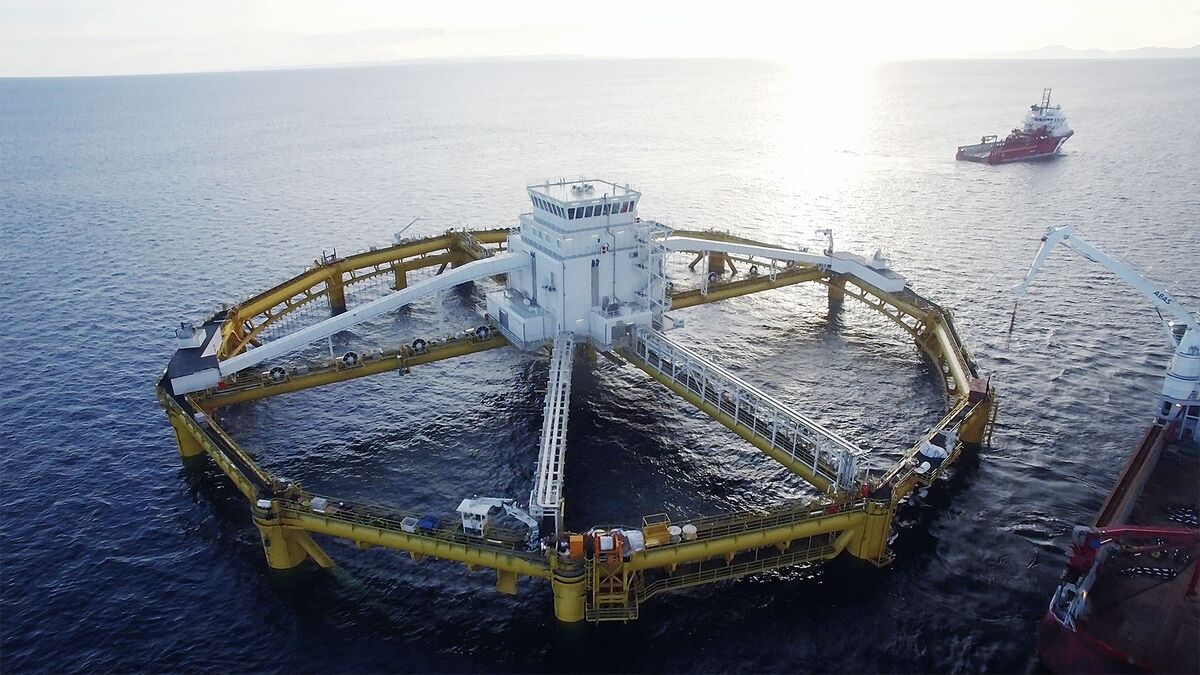
The semi-submersible Ocean Farm 1 off the coast of Norway can hold 1.5 million fish.

July 30, 2018

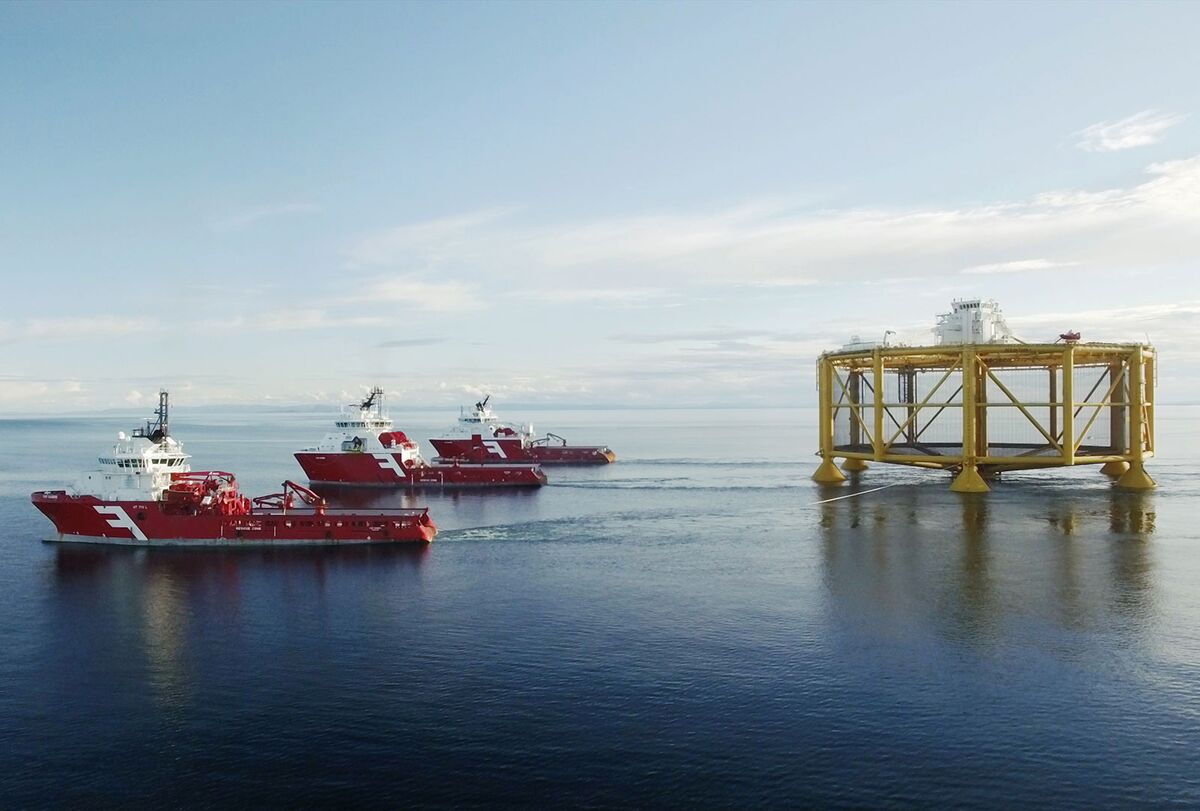
Towing the Ocean Farm 1 into the Norwegian Sea.
 SOURCE: SALMAR

Three miles off Norway’s rugged coast, 1.5 million salmon swim in a 220-foot-high, football-field-long mass of floating mesh-wire frames and nets. This is Ocean Farm 1, the world’s first deep-sea aquaculture project, designed by leading salmon farmer SalMar ASA. The company paid China Shipbuilding Industry Corp. $300 million upfront for six facilities that offer more space than conventional shoreline farms (large nets in sheltered waters) while diffusing fish waste, allowing them to be packed in tighter.

Ocean Farm 1
SOURCE: SALMAR


How It Works

Oxygen sensors and high-definition cameras monitor the salmon for, among other things, growth and signs of illness. Midway through Ocean Farm 1’s yearlong trial run, SalMar says it’s seen strong growth and low mortality rates.


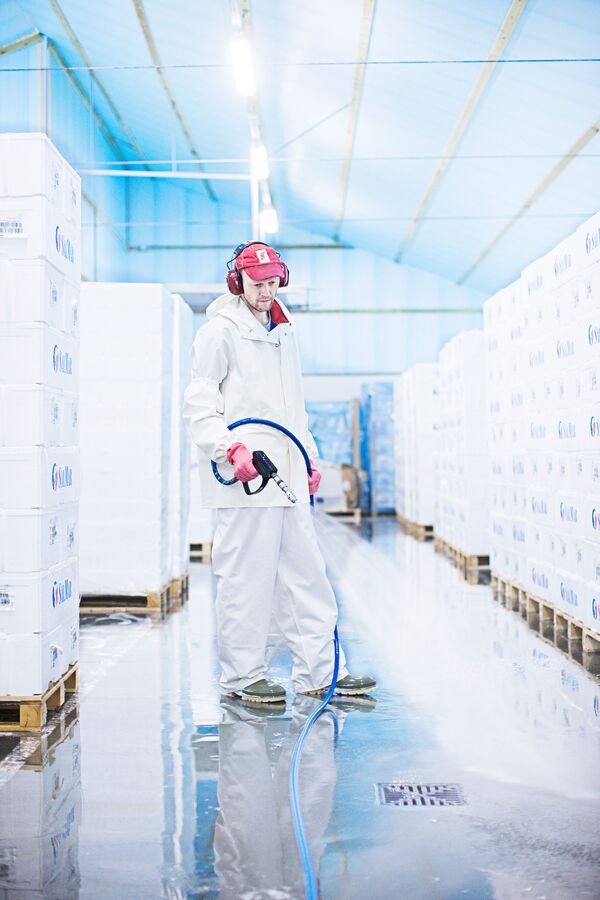
A SalMar employee cleaning the distribution center.
SOURCE: SALMAR


Sixteen movable, submerged valves disperse food at set times and allow fish to live at depths of up to 180 feet, rather than clustering them near the surface, as in other farms.


Next Steps

SalMar plans to harvest the farm’s first generation of salmon in the second half of the year and says that if the development phase is successful, it’ll be possible to establish fish farming anywhere in the open sea. The company says OF1 can withstand devastating waves, on the order of 50 feet.

One drawback: Packing so many fish so closely together heightens the risk of widespread disease if even a few get sick. It also forces the salmon to stay in much deeper water with less oxygen than they’re used to, which limits their growth, according to Tim Dempster, a marine ecologist and professor of biosciences at the University of Melbourne.

https://www.bloomberg.com/news/articles/2018-07-30/this-300-million-deepwater-platform-houses-1-5-million-salmon

Sunday, 29 April 2018

Salmon - Disguised as Healthy, Is This One of the World's Most Toxic Foods?

It should be one of the healthiest foods you can eat, but in recent tests it showed up about 5 times more toxic than any other food tested. Please be ultra-careful.


An Inside Look Into the Fish Industry Reveals Disturbing Facts That Could Threaten Your Health

April 30, 2016


Story at-a-glance

  • Salmon farming is a disaster both for the environment and for human health, and tests show farmed salmon is about five times more toxic than any other food tested
  • In animal feeding studies, mice fed farmed salmon developed obesity and diabetes — effects researchers believe are related to toxic exposures
  • Besides pesticides and antibiotics used in fish farming, the most significant source of toxic exposure is the dry pellet feed, which contains dioxins, PCBs, and other toxic pollutants

By Dr. Mercola
Nicolas Daniel’s documentary “Fillet-Oh-Fish” takes a critical look at the fish industry, featuring exclusive footage from fish farms and factories across the globe. Many still have a rather romanticized view of fishing, but when it comes to large-scale food production, the picture is actually rather grim.
Today’s fisheries are faced with a range of severe problems, from overfishing to chemical pollution and genetic mutation from toxic exposures. As noted by the producers of the film, “through intensive farming and global pollution, the flesh of the fish we eat has turned into a deadly chemical cocktail.”1
Despite that, the fish business is booming, in part due to efforts to keep the dirty underbelly of modern fisheries from public sight.
Aquaculture promotes itself as a sustainable solution to overfishing. But in reality, fish farms actually cause more problems than they solve. There’s really little difference, in terms of environmental pollution, between land-based feedlots and water-based ones.

Farmed Salmon — One of the Most Toxic Foods in the World?

The film starts off in Norway, looking at the chemicals used in fish farms. Kurt Oddekalv is a respected Norwegian environmental activist, and he believes salmon farming is a disaster both for the environment and for human health.
Below the salmon farms dotted across the Norwegian fjords, there’s a layer of waste some 15 meters high, teeming with bacteria, drugs, and pesticides. In short, the entire sea floor has been destroyed, and since the farms are located in open water, the pollution from these farms is in no way contained.
A salmon farm can hold upwards of 2 million salmon in a relatively small amount of space. These crowded conditions result in disease, which spreads rapidly among the stressed salmon.
According to Oddekalv, sea lice, Pancreas Disease(PD)2 and Infectious Salmon Anemia Virus (ISA) have spread all across Norway, yet consumers are not informed of these fish pandemics, and sale of these diseased fish continue unabated.
A number of dangerous pesticides are used in an effort to stave off disease-causing pests, one of which is known to have neurotoxic effects. Fish has always been considered a health food, but according to Oddekalv, today’s farmed salmon is one of the most toxicfoods in the world!
Toxicology researcher Jerome Ruzzin has confirmed Oddekalv’s claims. He’s tested a number of different food groups sold in Norway for toxins, and indeed, farmed salmon contains the greatest amount of toxins of them all, and by an incredibly large margin.
Overall, farmed salmon is five times more toxic than any other food product tested. In animal feeding studies, mice fed farmed salmon grew obese, with thick layers of fat around their internal organs. They also developed diabetes.
Ruzzin notes that a theory gaining traction is that rising rates of obesity is related to the increasing number of toxins and pollutants we’re exposed to through our environment and food. In light of his own studies, Ruzzin has stopped eating farmed salmon.

Genetic Mutations and Other Crazy Facts

Besides keeping pests like sea lice in check, the pesticides used also affect the fish’s DNA, causing genetic mutations. Disturbing examples of deformed cod are shown in the film.
What’s even more disturbing is that, according to Oddekalv, about 50 percent of farmed cod are deformed in this fashion, and female cod that escape from farms are known to mate with wild cod, spreading the genetic mutations and deformities into the wild population.
Farmed salmon suffer less visible but equally disturbing mutations. The flesh of the farmed salmon is “brittle,” and breaks apart when bent — a highly abnormal feature.
The nutritional content is also wildly abnormal. Wild salmon contains about 5 to 7 percent fat, whereas the farmed variety can contain anywhere from 14.5 to 34 percent.
Many toxins accumulate most readily in fat, which means even when raised in similarly contaminated conditions, farmed salmon will contain far more toxins than wild.
Shockingly, research reveals that the most significant source of toxic exposure is not actually the pesticides or the antibiotics, but the dry pellet feed! Pollutants found in the fish feed include dioxins, PCBs, and a number of different drugs and chemicals.

What Makes the Fish Feed so Toxic?

So what’s wrong with the fish feed? Why is it so toxic? In one Norwegian fish pellet plant, the main ingredient turns out to be eel, used for their high protein and fat content, and other fatty fish from the Baltic Sea.
That’s where the problem begins, as the Baltic is highly polluted. Some of the fish used have toxic levels of pollutants, which then simply get incorporated into the feed pellets.
In Sweden, fish mongers are now required to warn patrons about the potential toxicity of Baltic fish. According to government recommendations, you should not eat fatty fish like herring more than once a week, and if you’re pregnant, fish from the Baltic should be avoided altogether.
Swedish Greenpeace activist Jan Isakson reveals some of the sources of all this pollution. Just outside of Stockholm, there’s a massive paper mill on the bank of the Baltic that generates toxic dioxins.
Nine other industrialized countries surrounding the Baltic Sea also dump their toxic waste into this closed body of water. Dioxins bind to fat, which is why herring, eel, and salmon are particularly vulnerable, and end up accumulating higher amounts than other fish.
As a result of being deemed unfit for human consumption, some of these fatty fish are now primarily used as fish food. In this way, toxicity in the farmed salmon is allowed to build up even higher than in the wild.

One of the Best Kept and Most Dangerous Secrets of the Fish Industry

But there’s yet another problem, and it stems from the manufacturing process of the pellets. The fatty fish are first cooked, resulting in two separate products: protein meal and oil. While the oil has high levels of dioxins and PCBs, the protein powder further adds to the toxicity of the end product.
To the protein powder, they add an “antioxidant” called ethoxyquin. According to the filmmaker, this is one of the best kept secrets of the fish food industry. Ethoxyquin was developed by Monsanto in the 1950s — as a pesticide. Its use is strictly regulated, so why is it being added to fish pellets?
A couple of years ago, a Swiss anti-fraud laboratory was surprised to find extremely high levels of ethoxyquin in farmed fish — some 10 to 20 times higher than the 50 mcg per kilo allowed in food in the European Union — and that discovery began to unravel the secret. Ethoxyquin was designed for use on fruits and vegetables, but the fish feed industry discovered another novel use for it — they add it to the feed to prevent the fats from oxidizing and going rancid.
However, the fish feed manufacturers never informed health authorities of their use of the chemical. As a result, the EU strictly regulates ethoxyquin levels in fruits, vegetables, and meat — there are even standards for kangaroos and reptiles — but not for the fish people consume. What’s more, the effects of this chemical on human health have never been established.
The one and only study ever done on ethoxyquin and human health was a thesis by Victoria Bohne, Ph.D. a former researcher in Norway who made a number of disturbing discoveries, including the fact that ethoxyquin can cross the blood brain barrier, and may have carcinogenic effects. Bohne, as many other researchers who have made unpopular findings, was pressured to leave her research job after attempts were made to falsify and downplay her findings.
Others have linked the secret use of ethoxyquin in Norwegian fish farming, and the lack of scientific investigation into its effects, to the Norwegian Minister of Fisheries and Coastal Affairs, Lisbeth Berg-Hansen, who also happens to be a major shareholder in a commercial salmon farm, and has held many high-ranking positions within the fishing industry.

The Rise of Panga Exploited Fish Consumption

In France, fish consumption has more than doubled in the past five decades, now surpassing consumption of both beef and chicken. To meet demand, fish is being imported from around the globe. Rarely will you find a fish caught off the coast of France. Nearly half of all fish sold in France is raised in fish farms. Lesser known and less expensive species have also been brought to market.
Panga, which is now one of the 10 most consumed fish in France, was relatively unknown a decade ago. Its low price has also made panga a top seller in the school system. The questions asked in the film are, how can this farmed fish be sold at such low prices, and what’s actually in these fish that children are now eating on a regular basis?
The investigation begins in southern Vietnam, where panga is part of the culinary tradition. However, behind this cultural image, there’s a more disturbing reality. Over the past 15 years, panga exports have become a major source of income for the region. In fact, 95 percent of the global production of panga comes from southern Vietnam, and this success has resulted in both environmental and human exploitation.
Farmed panga grow twice to four times as fast compared to those in the wild, allowing them to reach adult size in about six months. The fish are then harvested and processed, which includes washing the fillets in big vats filled with water and polyphosphates — chemical additives that facilitate freezing.
The chemical also allows the fish to soak up water, which artificially increases their weight. After this process, the fish lack both taste and odor, and will take on the flavor of whatever spices you add to it during cooking.

Environmental Pollution Poses Risks

Many panga farms are plagued with disease, courtesy of the polluted waters in which they’re raised. Mekong River, where many panga farms are located, is one of the most heavily polluted rivers in the world. In 2009, the World Wide Fund for Nature placed panga on their “red” list of products that pose a danger to environmental and human health.
Millions of Vietnamese households dump their waste directly into the Mekong River each day. Pesticides used in rice cultivation also migrate into this waterway. Green algae and bacteria release toxins into the water and reduce oxygen levels in the water, which adds further stress on the fish’s immune systems, making them more prone to disease.
To address disease, farmers add industrial quantities of drugs into their fish ponds, including a wide array of antibiotics. The side effect is drug resistance, which forces the farmers to keep increasing the dosages. The panga are not the only thing affected by this strategy, of course. Antibiotics spread through the river systems, are absorbed into the fish’s tissues and excreted through feces, which redistributes the drugs into the environment — and to those who eat the fish.

Are You Eating Fish, or Fish Waste?

Fish can be one of the healthiest foods you can eat, but in the industrial age you have to be ultra careful about choosing the right type of fish. If you needed another reason to avoid processed foods, watch this film to the end, where it describes how fish waste has become a “highly valued commodity” used in processed foods. At less than 15 cents per kilo, these fish heads and tails, and what little meat is left over after filleting, is a real profit maker.
Virtually nothing actually goes to waste anymore. Fish skins are recycled for use in the cosmetics industry. The remainder of the fish waste is washed and ground into a pulp, which is then used in prepared meals and pet food.
Since food manufacturers are not required to tell you their products contain fish pulp rather than actual fish fillet meat, this product offers a high profit margin for food manufacturers. One tipoff: if the product’s list of ingredients includes a fish without specifying that it’s made with fillet of fish, it’s usually made with fish waste pulp.
Fish fraud is also commonplace. Investigations have shown that 1 in 3 fish labels are false or misleading. Typically, an inexpensive fish is mislabeled as a more expensive one. Some farmed fish are also passed off as wild. Since traceability is more complex in the processed food industry, due to the mixing of ingredients, that’s where most of the fish fraud occurs. It’s somewhat more difficult to pass off fillets of fish as another species, although that also occurs.

Best Seafood Options: Wild Alaskan Salmon, Sardines and Anchovies

It’s become quite clear that fish farms are not a viable solution to overfishing. If anything, they’re making matters worse, destroying the marine ecosystem at a far more rapid clip to boot ... So what’s the answer? Unfortunately, the vast majority of fish — even when wild caught — is too contaminated to eat on a frequent basis. Most major waterways in the world are contaminated with mercury, heavy metals, and chemicals like dioxins, PCBs, and other agricultural chemicals that wind up in the environment.
This is why, as a general rule, I no longer recommend getting your omega-3 requirements from fish. However, I do make two exceptions. One is authentic, wild-caught Alaskan sockeye salmon; the nutritional benefits of which I believe still outweigh any potential contamination.
The risk of sockeye accumulating high amounts of mercury and other toxins is reduced because of its short life cycle, which is only about three years. Additionally, bioaccumulation of toxins is also reduced by the fact that it doesn't feed on other, already contaminated, fish.
Alaskan salmon is not allowed to be farmed, and is therefore always wild-caught. My favorite brand is Vital Choice Wild Seafood and Organics, which offers a nice variety of high-quality salmon products that test high for omega-3 fats and low for contaminants. Canned salmon labeled "Alaskan salmon" is a less expensive alternative to salmon fillets. 
The second exception is smaller fish with short life cycles, which also tend to be better alternatives in terms of fat content, such as sardines and anchovies, so it's a win-win situation — lower contamination risk and higher nutritional value. A general guideline is that the closer to the bottom of the food chain the fish is, the less contamination it will have accumulated. Just make sure they’re not from the Baltic Sea.
Other good choices include herring and fish roe (caviar), which is full of important phospholipids that nourish mitochondrial membranes.
https://articles.mercola.com/sites/articles/archive/2016/04/30/salmon-fish-farming.aspx?

Tuesday, 9 July 2013

Norway Issues Health Dangers of Farmed Salmon

Norway Issues Warnings About Health Dangers of Farmed Salmon

July 09, 2013

Story at-a-glance

  • A Norwegian researcher has raised serious concerns about high levels of contaminants in farm-raised salmon
  • She claims the type of contaminants detected in farmed salmon have a negative effect on brain development and is associated with autism, ADD / ADHD and reduced IQ. They can also affect your immune system and metabolism
  • The Norwegian Health Department has issued new official recommendations to women of childbearing age or who are pregnant, suggesting they limit farmed salmon to a maximum of two meals per week due to potential toxicity
  • Four major grocery chains in Norway are threatening to ban farmed salmon from their stores unless the farmed salmon industry agrees to change their production to closed pens and guarantees that the fish are safe to eat

            
Visit the Mercola Video Library
 

By Dr. Mercola

Environmental experts have warned about the unsustainability of fish farms for over a decade, yet nothing has been done to address such concerns. This is an important issue for me as I consume most of my protein as salmon. I purchase mine from Vital Choice, which is certified wild caught from Alaska.

Most people don't realize seafood labeled as 'Alaskan' cannot be farmed.  Alaska is incredible at protecting their brand when it comes to seafood, and do an excellent job to ensure quality and sustainability.  If you don't see the 'Alaska' label or a logo from the Marine Stewardship Council - the seafood you are buying is likely farmed.

Instead of addressing these issues, government agencies and environmental organizations around the world have consistently chosen to ignore predictions of disaster, both to the environment and human health, to protect instead the profitability of this burgeoning industry. 
Biologist Alexandra Morton, featured in the documentary film Salmon Confidential, has posted a number of recent developments with regards to farmed salmon and human health on her blog.1 
During the first two weeks of June, reports of farmed salmon toxicity spread through Norwegian news, and on June 16, the Norwegian Health Department actually went on the record warning against eating too much farmed salmon:2
"We have reviewed the Scientific Committee report again and looked at the recommendations that were there and how this was discussed in the report of the National Nutrition Council in 2011.
There, they discussed all research related to toxicology and health effects thoroughly, and we have based our evaluations on their report. They did not provide this clarification. Now we see that there is a need for clarifications to pregnant women and young women."
The new, official recommendation to Norwegian women of childbearing age or who are pregnant is to limit consumption of fatty fish such as salmon to a maximum of two such meals per week.

Farmed Salmon—An Environmental and Nutritional Nightmare

Alexandra Morton was one of the first biologists to discover that wild salmon in British Columbia were testing positive for dangerous European salmon viruses associated with salmon farming worldwide—a finding that the Canadian government has since fought to suppress.  
The revelations of health hazards discussed in the Norwegian media came as a surprise even to her, seeing how Norway is the “motherland” of salmon farming; the entire industry originating from Norsk Hydro, which is the country’s largest public company.
“The salmon feedlot industry in British Columbia is 98 percent Norwegian-owned, and one of the companies is largely owned by the Norwegian government itself, Cermaq,” Morton explains.
On June 19, media reports stated that "Russia fears that Norwegian salmon is unsafe and is critical of Norwegian food security."

And the Norwegian National TV2’s website recently reported that the country’s four major grocery chains are threatening to ban farmed salmon from their stores unless the farmed salmon industry agrees to “change their production to closed pens and guarantees that the fish are safe to eat.” According to TV2:
“Norwegians spend 130 Billions [Norwegian] kroners each year on food. Four big food chain stores: Rema 1000, ICA. Norgesgruppen and Coop, more or less control most of the food retail market. According to ICA’s managing director, it gives them the power to make demands to their suppliers for ICA in Norway, Sweden, and The Netherlands...
ICA demands that the salmon farming industry becomes environmentally sustainable within three years. Prototypes of closed, recirculated fish farms have been developed, but the fish farming industry has shown very little interest in investing in these.”
In response to these threats, the Environmental Association in Bergen, which is leading the campaign for sustainable fish farming, received a letter from a law firm hired by the national fish farming industry (FHL), threatening to sue the organization for urging the food chains to stop selling farmed fish...

Why Farmed Salmon May Be Hazardous to Your Health

As explained by Morton in the video above, Dr. Anne-Lise Birch Monsen at the University of Bergen, Norway, has raised serious concerns about high levels of contaminants in farm-raised salmon. The contaminants in question originate in wild salmon, courtesy of environmental pollution. These toxic contaminants bind to the fat molecules in wild fish, and when these fish are ground up for use in fish meal together with added high-fat fish oils, these molecules can enter your body where they bind to your cells.  
While this can certainly cause health problems for you, it can also pose a very serious threat to the health of your unborn children. As explained by Morton, when you give birth, your body dumps up to 90 percent of the accumulated toxins in your body into the body of your first-born child. More toxins are later expelled through your breast milk. This is why it’s so critical to avoid toxic exposures throughout childhood and early adulthood, to prevent damage to future generations as well as your own life cycle... 
According to Dr. Monsen:3
"I do not recommend pregnant women, children or young people eat farmed salmon. It is uncertain in both the amount of toxins salmon contain, and how these drugs affect children, adolescents and pregnant women... The type of contaminants that have been detected in farmed salmon have a negative effect on brain development and is associated with autism, ADD / ADHD and reduced IQ. We also know that they can affect other organ systems in the body's immune system and metabolism."
As reported by Alexandra Morton, a large European study involving about 8,000 newborns found that pregnant women with high levels of toxins in their bodies tend to give birth to children with lower birth weight, which in and of itself may have an adverse on the child’s health.

Omega-3 Levels in Farmed Salmon Is Nearly Half of That in Wild Salmon

Another Norwegian article reveals that levels of critical omega-3 fats have been reduced by about 50 percent in farmed salmon, compared to wild salmon, due to increasing amounts of grain feed. One article4 refers to farmed salmon as “swimming corncobs.” Furthermore:
"[T]he Norwegian food production’s four Norwegian feed producers now have an exemption to use 19 different genetically modified ingredients in their feed. Genetic modification (GM) is very controversial, and completely excluded in Norwegian agriculture," the article states.
The following chart from the Pure Salmon Campaign’s website,5 reveals the nutritional differences between farmed and wild salmon, according to USDA data. While farmed salmon is much fattier than wild salmon, it contains FAR LESS healthful omega-3 fats, and less protein. 
Omegan chart
Image credit: PureSalmon.org (link: www.puresalmon.org/human_health.html )

Norway Lobbied to Raise Allowable Toxin Levels in Salmon Feed...

In 2006, Russia banned Norwegian farmed salmon, claiming it contained excessive amounts of lead and cadmium (originating from the feed). The Norwegian Food Safety Authority (FSA) rejected the accusations, but Dr. Claudette Bethune, a researcher at the National Institute of Nutrition and Seafood Research (NIFES) spoke out6 saying that “given the amount of research, there is no way Norway can be so sure its salmon is completely safe.” She also told the media that the FSA’s recommendations on how much salmon is safe to eat actually exceeded the level set by the World Health Organization (WHO) for poison ingestion. 
Despite that, and in the midst of all these rising concerns over the past several years, a June 17 story in the Norwegian media7 revealed that Norway lobbied the EU to raise the permissible level of toxins in salmon feed, which has now been granted. A translation reads:
"After yesterday’s debate on the danger of eating farmed salmon due to high levels harmful pollutants, it was revealed Norwegian authorities have lobbied in EU to allow more toxin level in salmon. According to Aftenposten’s report, Norway has for years tried to get the EU to allow 10 times more toxin [Endosulfan—a bioaccumulative toxin] in salmon than previously allowed. Now, Norway has received approval in the EU.
The consultation document from the FSA shows that there are economic reasons why Norway is eager to raise the limit.'The limit value for the concentration of endosulfan in feed for salmonids is of great economic importance for the aquaculture industry in the short and longer term,' stated the letter. Endosulfan was previously forbidden to use in feed for all salmonids, but research has shown that fish can withstand poison through better feed than by being exposed to it in the water."
As explained by Morton, Endosulfan is a toxic pesticide known to attack the nervous system, and can increase the risk of autism and cause birth defects to the male human reproductive system. Further complicating the situation and raising new questions about safety is the fact that, in April of this year, the EU also made it official that pigs and chickens can be used in farmed salmon feed! Since when do salmon eat a diet of grains, pork and poultry? Just what kind of fish do you end up with when they’re given this kind of diet?

Farmed Fish Pose a Number of Health Hazards to Your Health

It’s important to realize that farm raised fish of ALL species can spell disaster for your health in a number of ways. Just like you need an optimal diet to be healthy, all other animals need their optimal diet as well. And fish were never meant to eat corn, grains, or poultry and pork for that matter. In addition to this unnatural diet, farmed fish of all species are also given a concoction of vitamins, antibiotics, and depending on the fish, synthetic pigments to make up for the lack of natural flesh coloration due to the altered diet.

Without it, the flesh of caged salmon, for example, would be an unappetizing, pale gray. The fish are also fed pesticides, along with compounds such as toxic copper sulfate, which is frequently used to keep nets free of algae.  
Not only do you ingest these drugs and chemicals when you eat the fish, but these toxins also build up in sea-floor sediments. In this way, industrial fish farming raises many of the same environmental concerns about chemicals and pollutants that are associated with feedlot cattle and factory chicken farms. In addition, fish waste and uneaten feed further litter the sea floor beneath these farms, generating bacteria that consume oxygen vital to shellfish and other bottom-dwelling sea creatures. 
Studies have also consistently found levels of PCBs, dioxins, toxaphene and dieldrin, as well as mercury, to be higher in farm-raised fish than wild fish. The reason for this, as discussed above, is because wild fish are caught and ground up into fish meal to be fed to the farmed fish, which concentrates any contamination found in each individual wild fish... Sadly, even wild-caught fish have already reached such toxic levels that it's impossible to recommend eating them with a clear conscience anymore.  
For example, according to a US Geological Survey study, mercury contamination was detected in EVERY fish sampled in nearly 300 streams across the United States. More than a quarter of these fish contained mercury at levels exceeding the EPA criterion for the protection of human health. So, when you consider the fact that factory farmed fish typically are even MORE toxic than wild-caught fish and also contain an assortment of antibiotics and pesticides, avoiding them becomes a no-brainer – at least if you're concerned about your health. 
To learn more about the differences between farmed salmon and wild salmon, specifically, please see my interview with Randy Hartnell, founder-president of Vital Choice Wild Seafood and Organics. I'm a huge fan of their wild sockeye salmon, and beside a fish dinner at a restaurant here or there, Vital Choice salmon is about the only type of fish I eat. Wild Alaskan salmon from Vital Choice is well over 75 percent of my current choice of protein when I’m not travelling. 

Buying Local Increases Food Safety and Food Security 

Morton recommends buying local foods and wild fish. I couldn’t agree more. It’s worth keeping in mind that disease in farm animals is one of the primary sources of epidemics in humans. Therefore, the health of food animals is really paramount. Fish farms are the aquatic version of a confined animal feeding operation (CAFO), and just like their land-based cattle and chicken farms, aquatic CAFOs are a breeding ground for disease and toxic waste, and produce food animals of inferior quality.

Due to the dramatically increased disease risk—a natural side effect of crowding—these animals are further contaminated with drugs, and in the case of salmon, synthetic astaxanthin, which is made from petrochemicals that are not approved for human consumption as it has well-documented toxicities. 
The industry will tell you the world needs inexpensive food, and inevitably, they insist that such foods can only be created using the latest technology and artificial means. The latest example of this craziness is the creation of what amounts to a vegetarian fish diet designed for carnivorous fish.8 Instead of fishmeal, the protein in this feed comes from bacteria, yeast or algae instead. This way, fish farms will not need to use valuable wild fish to feed farmed fish, and this, they claim, will help alleviate world hunger...  
Nevermind the fact that by altering a fish’s diet in such a drastic way, you’re undoubtedly altering its nutritional content as well. 
At present, industry profits are being prioritized over the health of the people and unborn children, and cheap foods are being produced at the expense of our environment and, potentially, the very lives of our descendants. The ramifications of our large-scale, mass-producing, chemical-dependent food system are incredibly vast, which is why I urge you to become more curious about your food. Where and how was it raised, grown, or manufactured? These things do matter; for your health, and the health and future of our planet.

[-] Sources and References


Source:  http://articles.mercola.com/sites/articles/archive/2013/07/09/farmed-salmon-dangers.aspx?