(CNN)The vast majority of cases in the growing monkeypox outbreak are among men who have sex with men, according to the World Health Organization. WHO Director-General Tedros Adhanom Ghebreyesus advised members of this community Wednesday to limit their exposure to the virus by reducing their number of sex partners and reconsidering sex with new partners.
"This is an outbreak that can be stopped if countries, communities and individuals inform themselves, take the risk seriously and take the steps needed to stop transmission and protect vulnerable groups. The best way to do that is to reduce the risk of exposure. That means making safe choices for yourself and others.
"For men who have sex with men, this includes, for the moment, reducing your number of sexual partners, reconsidering sex with new partners and exchanging contact details with any new partners to enable followup, if needed," Tedros said at a briefing.
While Tedros said the focus for all countries must be on engaging and empowering communities of men who have sex with men to reduce the risk of infection and transmission, he also cautioned nations to safeguard human rights.
"The stigma and discrimination can be as dangerous as any virus," he said.
Monkeypox isn't considered a sexually transmitted disease, but most people who have gotten it in the US recently report some level of sexual activity, Dr. Demetre Daskalakis, a US Centers for Disease Control and Prevention official working on the monkeypox response, told CNN this month. That can include penetrative encounters as well as oral sex.
The virus spreads primarily though skin-on-skin physical contact, but it can also be transmitted by touching objects like sheets or towels that may have been used by somebody with monkeypox, as well as through close face-to-face interactions like kissing.
Researchers are investigating whether the virus can be spread by someone who has no symptoms or through semen, vaginal fluids and fecal matter, according to the CDC.
The CDC says that wearing a condom may help, but alone, it probably will not protect against the spread of monkeypox. However, the agency still emphasizes that condoms can prevent other sexually transmitted infections.
Tedros' comments about reducing sex partners are among the strongest yet on the matter. Other WHO communications haven't been characterized so sharply.
"Reducing your number of sexual partners may reduce your risk," one WHO flyer reads.
"How can I protect myself?" another says. "To catch monkeypox, you need skin-to-skin contact, including during sex, with someone infectious or their contaminated belongings. To reduce the risk of contracting monkeypox: practice safer sex, keep your hands clean."
"Remember that close physical contact, including sex, may increase your risk of exposure. Having multiple and frequent sexual contacts, including with anonymous partners, may put you more at risk of infection of monkeypox. To protect yourself practice safer sex,"a third WHO flyer advises.
Health officials in the US have also advised reducing sex partners but used softer language.
"Avoid skin-to-skin contact, including intimate contact, with people who have a rash that looks like monkeypox. Other harm reduction actions include minimizing sexual activity with multiple or anonymous sexual partners," CDC Director Dr. Rochelle Walensky said in mid-July.
Daskalakis advised last week, "In line with our harm reduction guidance, thinking about reducing your number of partners, potentially trying to avoid anonymous contacts ends up being smart from the perspective of decreasing the risk of exposure."
The CDC also says people might want to reduce skin contact as much as possible by having sex with clothes on or after covering areas where the rash is present. If they choose to have sex with someone who has monkeypox or who might have been exposed to it, they should talk about the virus ahead of time.
Another thing people can do to protect themselves is avoid close face-to-face contact like kissing with those who are clearly infected.
Scientists are still studying how monkeypox is spreading in this outbreak, but they say people don't seem to be getting sick after, say, walking past someone or giving them a hug and brushing over a lesion on their skin.
"If it's a hug that doesn't necessarily include a shirt, there's a theoretical risk of transmission there, but that's not what we're hearing in terms of what's happening with our cases, so it's lower risk. I can't say zero risk," Daskalakis said.
Rather, it's longer contact that seems to be responsible for most cases now. "If you were to ask me how long 'long' is, I can't answer that question, but it seems as if it's possible that this is not being transmitted by a light brush," Daskalaskis said. "Realistically speaking, skin-on-skin contact of any variety theoretically can transmit monkeypox, but what we're seeing is, you kind of have to work at it a bit."
The WHO declared monkeypox a global health emergency.
The rare designation means the WHO now views the outbreak as a significant enough threat to global health that a coordinated international response is needed.
The WHO last issued a global health emergency in January 2020 in response to the Covid-19 outbreak.
Europe is the epicenter of the outbreak. Right now, men who have sex with men are the community at highest risk.
The WHO chief said the global risk is moderate, but the threat is high in Europe.
Monkeypox is unlikely to disrupt international trade or travel right now, the WHO chief said.
The World Health Organization has activated its highest alert level for the growing monkeypox outbreak, declaring the virus a public health emergency of international concern.
The rare designation means the WHO now views the outbreak as a significant enough threat to global health that a coordinated international response is needed to prevent the virus from spreading further and potentially escalating into a pandemic.
Although the declaration does not impose requirements on national governments, it serves as an urgent call for action. The WHO can only issue guidance and recommendations to its member states, not mandates. Member states are required to report events that pose a threat to global health.
The U.N. agency declined last month to declare a global emergency in response to monkeypox. But infections have increased substantially over the past several weeks, pushing WHO Director General Tedros Adhanom Ghebreyesus to issue the highest alert.
Before a global health emergency is declared, the WHO’s emergency committee meets to weigh the evidence and make a recommendation to the director general. The committee was unable to reach a consensus on whether monkeypox constitutes an emergency. Tedros, as the WHO’s chief, made the decision to issue the highest alert based on the rapid spread of the outbreak around the world.
“We have an outbreak that has spread around the world rapidly, through new modes of transmission, about which we understand too little,” Tedros said. “For all of these reasons, I have decided that the global monkeypox outbreak represents a public health emergency of international concern.”
More than 16,000 cases of monkeypox have been reported across more than 70 countries so far this year, and the number of confirmed infections rose 77% from late June through early July, according to WHO data. Men who have sex with men are currently at highest risk of infection.
Five deaths from the virus have been reported in Africa this year. No deaths have been reported outside Africa so far.
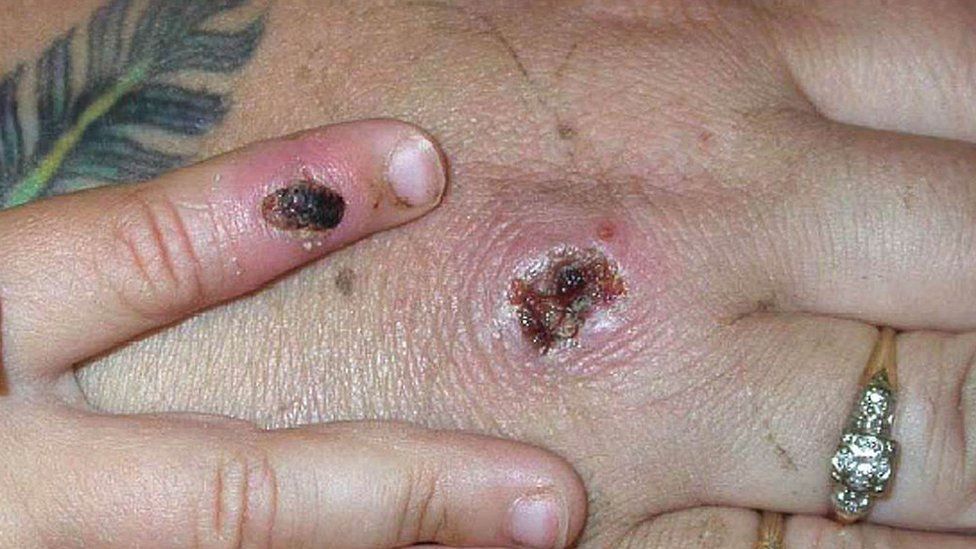
Most people are recovering from monkeypox in two to four weeks, according to the U.S. Centers for Disease Control and Prevention. The virus causes a rash that can spread over the body. People who have caught the virus said the rash, which looks like pimples or blisters, can be very painful.
The current monkeypox outbreak is highly unusual because it is spreading widely in North American and European nations where the virus is not usually found. Historically, monkeypox has spread at low levels in remote parts of West and Central Africa where rodents and other animals carried the virus.
Europe is currently the global epicenter of the outbreak, reporting more than 80% of confirmed infections worldwide in 2022. The U.S. has reported more than 2,500 monkeypox cases so far across 44 states, Washington, D.C., and Puerto Rico.
Tedros said the risk posed by monkeypox is moderate globally, but the threat is high in Europe. There’s clearly a risk that the virus will continue to spread around the world, he said, though it’s unlikely to disrupt global trade or travel right now.
In early May, the United Kingdom reported a case of monkeypox in a person who recently returned from travel to Nigeria. Several days later, the U.K. reported three more cases of monkeypox in people who appeared to have become infected locally. Other European nations, Canada and the U.S. then also began confirming cases. It’s unclear where the outbreak actually began.
The WHO last issued a global health emergency in January 2020 in response to the Covid-19 outbreak and two months later declared it a pandemic.The WHO has no official process to declare a pandemic under its organizational laws, which means the term is loosely defined. In 2020, the agency declared Covid a pandemic in an effort to warn complacent governments about the “alarming levels of spread and severity” of the virus.
The WHO’s lead expert on monkeypox, Dr. Rosamund Lewis, told reporters in May that the U.N. health agency was not concerned about monkeypox causing a global pandemic. She said public health authorities had a window of opportunity to contain the outbreak.
But infectious disease experts are concerned that health authorities have failed to contain the outbreak, and monkeypox will permanently take root in countries where the virus wasn’t previously found with the exception of isolated cases linked to travel.
Monkeypox is not a new virus
In contrast to Covid-19, monkeypox is not a new virus. Scientists first discovered monkeypox in 1958 in captive monkeys used for research in Denmark, and confirmed the first case of a human infected with the virus in 1970 in the nation of Zaire, now called the Democratic Republic of the Congo.
Monkeypox is in the same virus family as smallpox, though it causes milder disease. The WHO and national health agencies have decades of experience fighting smallpox, which was declared eradicated in 1980. The successful fight against smallpox, and the tools developed against it, will provide health officials with important knowledge to combat monkeypox.
Transmission of monkeypox between people was relatively rare in the past, and the virus normally jumped from animals to humans. But monkeypox is now spreading more efficiently between people. The WHO has said the international community did not invest enough resources in fighting monkeypox in Africa before the global outbreak.
“This transmission has been occurring in African countries in two particular zones over a large number of years, and we don’t fully understand what’s driving transmission in those countries,” said Dr. Mike Ryan, head of the WHO’s health emergencies program, earlier this week. “There’s a lot more investigation to do and a lot more investment to make in understanding that problem.”
Gay, bisexual men at highest risk
Monkeypox is primarily spreading through skin-to-skin contact during sex. Men who have sex with men are at the highest risk right now, as the majority of transmission has occurred in the gay community. However, the WHO and the CDC have emphasized that anyone can catch monkeypox regardless of sexual orientation.
Scientists in Spain and Italy detected monkeypox virus DNA in semen from positive patients, though it’s still unclear whether whether the virus can spread through semen during sex. The Spanish scientists also detected monkeypox DNA in saliva samples.
It’s also unclear whether the virus can spread when people are infected but don’t have symptoms, known as asymptomatic transmission.
Lewis, the WHO’s monkeypox expert, said 99% of cases reported outside Africa are among men and 98% of infections are among men who have sex with men, primarily those who have had multiple, recent anonymous or new sexual partners. The virus has been detected outside the gay community, but transmission has been low so far. The CDC confirmed monkeypox in two children on Friday.
The WHO and CDC have repeatedly warned against stigmatizing gay and bisexual men, while at the same time stressing the importance of communicating the reality of how the virus is currently spreading so people in communities at highest risk can take action to protect their health.
“People want the information to know how to protect themselves, in what circumstances are people perhaps at risk or getting infected,” Lewis said earlier this week. It’s crucial for health agencies and community organizers to broadly disseminate information on how to reduce the risk of infection ahead of major celebrations and festivals this summer, she said.
Tedros warned stigma and discrimination are violations of human rights that will undermine the public health response to the outbreak. He called on national governments to protect individuals’ fundamental rights as they respond to the virus.
“We seek your strong commitment to uphold human dignity, human rights so that we can control this outbreak,” Tedros said.
Symptoms and risk factors
The U.S. CDC recommends that people avoid intimate physical contact with individuals who have a rash that looks like monkeypox, and consider minimizing sex with multiple or anonymous partners. People should also consider avoiding sex parties or other events where people aren’t wearing a lot of clothing.
In the past, monkeypox normally began with symptoms similar to the flu, including fever, headache, muscle aches, chills, exhaustion and swollen lymph nodes. The disease then progressed into a rash that can spread over the body. Patients are considered most infectious when the rash develops.
But in the current outbreak the symptoms have been atypical. Some people are developing a rash first, while others are showing a rash without any flu-like symptoms at all. Many patients have developed a localized rash on their genitals and anus.
The CDC and WHO have said the rash is easily confused with common sexually transmitted diseases. They have told health care providers that they should not rule out monkeypox simply because a patient tests positive for a sexually transmitted disease.
Although monkeypox can spread through respiratory droplets, that method requires prolonged face-to-face interaction, according to the CDC. Health officials do not believe monkeypox is spreading through small aerosol particles like Covid. Respiratory droplets are heavier so they do not stay airborne for as long, while Covid is an airborne virus, which is one of the reasons it’s so contagious.
Monkeypox can also spread through contact with contaminated materials, such as bedsheets and clothing.
“This disease is transmissible, but it’s not that transmissible. It’s a disease in which transmission can be contained,” Ryan said. “Like we said in Covid, don’t be the person to pass this disease on.”
Vaccines
Because monkeypox is not a new virus, there are already vaccines and antivirals to prevent and treat the disease it causes, though they are in short supply. The U.S. is already distributing tens of thousands of doses of a vaccine called Jynneos in an effort to quash the outbreak. The Food and Drug Administration approved the two-dose vaccine in 2019 for adults ages 18 and older who are at high risk of monkeypox or smallpox infection.
The Biden administration has distributed more than 300,000 Jynneos doses to states and cities since May and another 786,000 doses are being delivered to the U.S. The Health and Human Services Department has ordered another 5 million doses through 2023.
CDC Director Dr. Rochelle Walensky said the demand for monkeypox vaccines is outstripping the available supply in the U.S., which has led to long lines in places such as New York City — an epicenter of the outbreak.
Jynneos is manufactured by Bavarian Nordic, a biotech company based in Denmark. Right, now Bavarian Nordic has up to 5 million doses available for the rest of the world excluding the U.S., a company spokesperson said. But Bavarian Nordic has the capacity to fill 40 million liquid frozen and 8 million freeze dried doses a year, the spokesperson said.
The U.S. also has more than 100 million doses of an older generation smallpox vaccine called ACAM2000, made by Emergent BioSolutions, that is also likely effective at preventing monkeypox. But ACAM2000 can have serious side effects and is not recommended for people who have weak immune systems, including HIV patients, people who have certain skin conditions and pregnant women.
ACAM2000 uses a mild virus strain in the same family as monkeypox and smallpox to confer immunity. But the mild strain used by the vaccine can replicate, which means people who receive ACAM2000 have to take precautions to make sure they do not give the virus to others or spread a rash from the injection site to other parts of their body. The Jynneos vaccine does not have this risk because it does not use a replicating virus strain.
There is no data yet on the effectiveness of the vaccines against monkeypox in the current outbreak, according to the CDC.
The WHO is not recommending mass vaccination at this time, and the U.S. is currently reserving the vaccines in its stockpile for people who have confirmed or presumed monkeypox exposures. Unlike Covid, vaccines against smallpox and monkeypox can be administered after exposure due to the viruses’ long incubation period. But the vaccines need to be administered within four days of exposure for the best chance of preventing onset of the disease, according to the CDC.
Cases of monkeypox - a rare, little-known disease - are being investigated in European countries including the UK, as well as in the US, Canada and Australia.
20 July 2022
https://www.bbc.com/news/health-45665821
Symptoms of monkeypox include a rash which starts on the face and spreads to the body
In the UK there have been more than 2,000 confirmed cases in recent weeks.
Infections are usually mild and the risk to the general population is low, but the UK government has bought stocks of smallpox vaccine to guard against monkeypox.
More than 100,000 additional vaccine doses - bringing the total to nearly 40,000 doses - have been bought to try and stamp out the disease.
How common is monkeypox?
Monkeypox is caused by the monkeypox virus, a member of the same family of viruses as smallpox, although it is much less severe and experts say chances of infection are low.
It occurs mostly in remote parts of central and west African countries, near tropical rainforests. In those regions, there have been more than 1,200 cases of monkeypox since the start of the year.
Two main strains of the virus - west African and central African - are known to exist, and it's the milder one from west Africa which is now circulating in other regions of the world.
The unusually high numbers of people infected with monkeypox outside of Africa with no travel links to the region, means the virus is now spreading in the community.
The UK Health Security Agency says anyone concerned they could be infected should phone NHS 111 or contact their local sexual health clinic, but call or email ahead of a visit.
It is also advising those infected not to have sex while they have symptoms and use condoms for eight weeks after an infection, as a precaution.
Initial symptoms include fever, headaches, swellings, back pain, aching muscles.
Once the fever breaks a rash can develop, often beginning on the face, then spreading to other parts of the body, most commonly the palms of the hands and soles of the feet.
The rash, which can be extremely itchy or painful, changes and goes through different stages before finally forming a scab, which later falls off. The lesions can cause scarring.
The infection usually clears up on its own and lasts between 14 and 21 days.
How do you catch it?
Monkeypox can be spread when someone is in close contact with an infected person. The virus can enter the body through broken skin, the respiratory tract or through the eyes, nose or mouth.
It has not previously been described as a sexually transmitted infection, but it can be passed on by close contact.
Guidance is advising anyone with the virus to abstain from sex while they have symptoms.
While there is currently no available evidence that monkeypox can be spread in sexual fluids, people confirmed to have the virus are advised to use condoms for eight weeks after infection as a precaution.
It can also be spread by contact with infected animals such as monkeys, rats and squirrels, or by virus-contaminated objects, such as bedding and clothing.
Monkeypox virus particle
How dangerous is it?
Most cases of the virus are mild, sometimes resembling chickenpox, and clear up on their own within a few weeks.
Monkeypox can sometimes be more severe, however, and has been reported to have caused deaths in west Africa.
Are gay men at greater risk?
Although some of the cases have been seen in gay and bisexual men, anyone who comes into close contact with someone who has monkeypox could potentially get the virus.
The UK Health Security Agency (UKHSA) has said "a notable proportion" of the recent cases in the UK and Europe have been found in gay and bisexual men "so we are particularly encouraging them to be alert to the symptoms and seek help if concerned".
The virus was first identified in a captive monkey and since 1970 there have been sporadic outbreaks reported across 10 African countries.
In 2003 there was an outbreak in the US, the first time it had been seen outside Africa. Patients caught the disease from close contact with prairie dogs that had been infected by small mammals imported into the country. A total of 81 cases were reported, but none resulted in deaths.
In 2017, Nigeria experienced the largest known outbreak. There were 172 suspected cases and 75% of victims were men between 21 and 40 years old.
What is the treatment?
Outbreaks can be controlled by infection prevention.
Vaccination against smallpox has been proven to be 85% effective in preventing monkeypox.
Antiviral drugs may also help and the UK has approved one, called tecovirimat, for this.
Should the public be concerned?
Health protection teams are contacting people who've come into close contact with confirmed cases and are at high risk. They are offering advice and monitoring them.
They are advising anyone else who has been in close contact with someone infected by monkeypox to isolate at home for up to 21 days.