Pages

Showing posts with label FDA. Show all posts

Friday, 29 July 2022

Updated Covid-19 booster shots could be available in September

 By Naomi Thomas, CNN

Updated 1951 GMT (0351 HKT) July 29, 2022


https://edition.cnn.com/2022/07/29/health/updated-covid-boosters-fall/index.html


(CNN)Moderna and Pfizer booster shots updated to target Omicron coronavirus subvariants could be available in early fall, pending signoff by federal health agencies, the US Department of Health and Human Services said Friday.

The US Food and Drug Administration advised vaccine makers in June to update the boosters to add an Omicron BA.4/5 component and create a bivalent booster.
"Pfizer and Moderna have indicated that they anticipate the modified vaccines being available as early as September," an FDA spokesperson said.
    HHS announced Friday an agreement to purchase 66 million doses of Moderna's bivalent booster shot for potential use in fall and winter. That's in addition to 105 million bivalent boosters the US government has purchased from Pfizer.
      The FDA spokesperson said that agency "has been working closely with vaccine manufacturers over the past several months to ensure that modified COVID-19 vaccines are available this fall to meet evolving public health needs, following FDA's review for safety and effectiveness. The agency will work expeditiously to review submissions to make COVID-19 vaccines available."
      Updated shots would need to be authorized by the FDA and recommended by the US Centers for Disease Control and Prevention. Pfizer and Moderna have not responded to requests for comment.
      Currently, people 5 and older are eligible for a first booster shot, but only those 50 and older and some immunocompromised people are eligible for second boosters.
        Adults 50 and older who have not received a second booster dose with current Covid-19 vaccines "should consider doing so now," the FDA spokesperson said. "You can still benefit from existing booster options and leave time to receive an updated booster in the fall."
        At this time, the FDA is not considering authorizing a second booster for otherwise healthy adults under 50 with the original formulation of the Covid-19 vaccines.
        "Once boosters containing a BA.4/5 component become available, individuals may consider getting one following an appropriate interval following their prior dose," the spokesperson said.
        In late June, vaccine makers said boosters updated to target Omicron showed a stronger immune response than the current vaccines.
        Combined, the US government's agreements with Moderna and Pfizer would make about 171 million bivalent vaccine booster doses available for the fall and winter, should they be authorized and recommended.
        But the Biden administration added in its announcement Friday that that would not be enough for every US resident. Although both agreements include options to purchase a total of 600 million doses -- 300 million from each company -- those options "can only be exercised with additional funding from Congress," the announcement said.
        "We look forward to receiving these new variant-specific vaccines and working with state and local healthcare partners to make the vaccines available for free in communities around the country this fall," said HHS Assistant Secretary Dawn O'Connell, who leads the Administration for Strategic Preparedness and Response, in the HHS news release.

        Sunday, 19 December 2021

        The mRNA Vaccines Are Extraordinary, but Novavax Is Even Better

         Persistent hype around mRNA vaccine technology is now distracting us from other ways to end the pandemic.

        At the end of January, reports that yet another COVID-19 vaccine had succeeded in its clinical trials—this one offering about 70 percent protection—were front-page news in the United States, and occasioned push alerts on millions of phones. But when the Maryland-based biotech firm Novavax announced its latest stunning trial results last week, and an efficacy rate of more than 90 percent even against coronavirus variants, the response from the same media outlets was muted in comparison. The difference, of course, was the timing: With three vaccines already authorized for emergency use by the U.S. Food and Drug Administration, the nation is “awash in other shots” already, as the The New York Times put it.

        Practically speaking, this is true. If the FDA sees no urgency, the Novavax vaccine might not be available in the U.S. for months, and in the meantime the national supply of other doses exceeds demand. But the asymmetry in coverage also hints at how the hype around the early-bird vaccines from Pfizer and Moderna has distorted perception. Their rapid arrival has been described in this magazine as “the triumph of mRNA”—a brand-new vaccine technology whose “potential stretches far beyond this pandemic.” Other outlets gushed about “a turning point in the long history of vaccines,” one that “changed biotech forever.” It was easy to assume, based on all this reporting, that mRNA vaccines had already proved to be the most effective ones you could get—that they were better, sleeker, even cooler than any other vaccines could ever be.

        But the fascination with the newest, shiniest options obscured some basic facts. These two particular mRNA vaccines may have been the first to get results from Phase 3 clinical trials, but that’s because of superior trial management, not secret vaccine sauce. For now, they are harder and more expensive to manufacture and distribute than traditional types of vaccines, and their side effects are more common and more severe. The latest Novavax data confirm that it’s possible to achieve the same efficacy against COVID-19 with a more familiar technology that more people may be inclined to trust. (The mRNA vaccines delivered efficacy rates of 95 and 94 percent against the original coronavirus strain in Phase 3 trials, as compared with 96 percent for Novavax in its first trial, and now 90 percent against a mixture of variants.

        Pandemic-vaccine success, as I wrote last year, was never just about the technology. You needed a good vaccine, sure—but to get it out the door quickly, you also had to have a massive clinical-trial operation going, and it had to be situated in places where the virus would be spreading widely at just the right time. Even if your candidate worked amazingly well, if you weren’t testing it in the middle of a huge outbreak, you’d have to wait a very long time for the evidence to build.

        The precise timing of these studies mattered a great deal in practice. The Phase 3 clinical trials for Pfizer and Moderna, for example, were up and running in the U.S. by late summer 2020, and so they caught the nation’s giant wave of infections in the fall. By the time Novavax had finished recruiting in the U.S. and Mexico, in February, case rates had been dropping precipitously. This fact alone, independent of any aspect of vaccine technology, did a lot to shape the outcome.

        Corporate strategy was another crucial factor. To “win” the vaccine race, a company would need to be able to produce high-quality vaccine doses reliably and quickly, and in vast numbers. It would also need to field the challenges of working with multiple regulatory agencies around the world. And it would need to do all of this at the same time.

        BioNTech, the German company that developed the Pfizer mRNA vaccine, could not have accomplished so much, so quickly by itself. Last October, the company’s CEO, Uğur Şahin, told German interviewers that BioNTech had sought out Pfizer for help because of the scale of the clinical-trial program necessary for drug approvals. That strategic partnership, and not simply the “triumph of mRNA,” was what propelled them past the post. (Moderna had the advantage of its partnership with the National Institutes of Health.) Consider this: The BioNTech-Pfizer first-in-human vaccine study appeared on the U.S. government’s registry of clinical trials on April 30, 2020—the same day as the first-in-human vaccine study for Novavax, which would be going it alone. In a parallel universe where Novavax had paired up with, say, Merck, this story could have come out very differently.

        In the meantime, the early success of two mRNA vaccines pulled attention away from the slower progress of other candidates based on the same technology. Just two days after last week’s Novavax announcement came the news that an mRNA vaccine developed by the German company CureVac had delivered a weak early efficacy rate in a Phase 3 trial, landing below even the 50 percent minimum level set by the World Health Organization and the FDA. “The results caught scientists by surprise,” The New York Times reported. CureVac is the company that President Donald Trump reportedly tried to lure to the U.S. early in the pandemic, and the one that Elon Musk said he would supply with automated “RNA microfactories” for vaccine production. In the end, none of this mattered. CureVac’s mRNA vaccine just doesn’t seem to be good enough.

        The “sobering” struggles of CureVac perfectly illustrate what epidemiologists call “survivor bias”—a tendency to look only at positive examples and draw sweeping conclusions on their basis. When the Pfizer and Moderna vaccines triumphed, The Washington Post suggested that a bet on “speedy but risky” mRNA technology had paid off with a paradigm-shifting breakthrough. Anthony Fauci called the gamble “a spectacular success.” Such analyses usually had less to say about the non-mRNA vaccines that had gotten into clinical trials just as quickly—and about the other mRNA vaccines that were hitting snags along the way.

        Now we’ve seen what happened to CureVac, and that some mRNA formulations clearly work much better than others. By one count, nine groups were testing mRNA COVID-19 vaccines in animal studies as of May 2020, and six were expected to be in clinical trials a few months later. By the end of the year, only BioNTech-Pfizer, Moderna, and CureVac had reached Phase 3 testing, compared with 13 non-mRNA vaccines. Of the nine mRNA-vaccine candidates that were already testing in animals in mid-2020, just two have proved efficacy at this point, while no fewer than nine vaccines based on more traditional technologies have reached the same mark.

        These other, non-mRNA vaccines have been widely used throughout the world—and some could still make an important difference in the U.S. Although the U.S. has plenty of doses of the Pfizer and Moderna vaccines available right now, demand for them has cratered. The Washington Post reports that in 10 states, fewer than 35 percent of American adults have been vaccinated. An international study of COVID-19 vaccine misinformation, published in May, found that among the most common online rumors were those alleging particular dangers of mRNA technology—that it leads, for example, to the creation of “genetically modified human beings.” The CDC has also made a point of debunking the circulating falsehood that COVID-19 vaccines can change your DNA. For a time, it looked as though the Johnson & Johnson vaccine would help address this worry. It’s based on a fairly new technology, but not as new as mRNA. However, concerns about tainted doses made at a Baltimore factory and the emergence of a very rare but serious side effect have pretty much dashed that hope. The Johnson & Johnson single-dose vaccine has reportedly accounted for fewer than 4 percent of doses administered in the country.

        In this context, the success of the Novavax vaccine should be A1 news. The recent results confirm that it has roughly the same efficacy as the two authorized mRNA vaccines, with the added benefit of being based on an older, more familiar science. The protein-subunit approach used by Novavax was first implemented for the hepatitis B vaccine, which has been used in the U.S. since 1986. The pertussis vaccine, which is required for almost all children in U.S. public schools, is also made this way. Some of those people who have been wary of getting the mRNA vaccines may find Novavax more appealing.

        The Novavax vaccine also has a substantially lower rate of side effects than the authorized mRNA vaccines. Last week’s data showed that about 40 percent of people who receive Novavax report fatigue after the second dose, as compared with 65 percent for Moderna and more than 55 percent for Pfizer. Based on the results of Novavax’s first efficacy trial in the U.K., side effects (including but not limited to fatigue) aren’t just less frequent; they’re milder too. That’s a very big deal for people on hourly wages, who already bear a disproportionate risk of getting COVID-19, and who have been less likely to get vaccinated in part because of the risk of losing days of work to post-vaccine fever, pain, or malaise. Side effects are a big barrier for COVID-vaccine acceptance. The CDC reported on Monday that, according to a survey conducted in the spring, only about half of adults under the age of 40 have gotten the vaccine or definitely intend to do so, and that, among the rest, 56 percent say they are concerned about side effects. Lower rates of adverse events are likely to be a bigger issue still for parents, when considering vaccination for their children.

        Don’t get me wrong—the Pfizer and Moderna vaccines have been extraordinary lifesavers in this pandemic, and we may well be heading into a new golden age of vaccine development. (This week, BioNTech started injections in an early trial for an mRNA vaccine for melanoma.) But even the best experts at predicting which drugs are going to be important get things wrong quite a bit, overestimating some treatments and underestimating others. Pharmaceuticals are generally a gamble.

        But here’s what we know today, based on information that we have right now:  Among several wonderful options, the more old-school vaccine from Novavax combines ease of manufacture with high efficacy and lower side effects. For the moment, it’s the best COVID-19 vaccine we have.

        The Atlantic’s COVID-19 coverage is supported by grants from the Chan Zuckerberg Initiative and the Robert Wood Johnson Foundation.

        Hilda Bastian is a scientist, writer, and founding member of the Cochrane Collaboration. She was formerly the editor of the PubMed Health project at the National Library of Medicine.

        Source

        Friday, 10 September 2021

        Debunked Ivermectin sterility study only had sample size of 37 people

        Claims that Ivermectin causes infertility in men that recently spread online were based on a flawed 2011 study from Nigeria that included only 37 subjects. 

        todayuknews2 hours ago

        A person wearing a lab coat and medical gloves is pictured holding a box containing a bottle of the drug in Cali, Colombia, on July 21, 2020.  LUIS ROBAYO/AFP/Getty

        Viral claims that the drug Ivermectin causes infertility in 85 percent of men were based on the questionable conclusions of a 2011 study that included only 37 subjects.

        Recent news articles and memes made the infertility claim based on a 2011 study conducted in Nigeria. The study focused on Ivermectin as a treatment for river blindness, a parasitic infection endemic to Africa and one of the conditions that the drug is approved to treat in humans. However, infertility is not a known side effect of Ivermectin, according to the Food and Drug Administration (FDA).

        The infertility claim spread quickly due to Ivermectin increasingly being used by some as an unapproved, and likely ineffective, treatment for COVID-19. The 85 percent figure did not come from the Nigerian study itself, but rather from a different study that it references, although no record of the study could be found in the journal cited. The Nigerian study, which was conducted without a control group, also tested the drug’s possible effects on male fertility.

        Out of the 385 men who were originally included in the Nigerian study, data from only 37 was ultimately investigated, with the remaining men excluded because their sperm counts that were already too low. Of the 37 men who had high enough sperm counts to be studied, it was found that their fertility was negatively impacted, although the effect was small in some subjects, and it was not clear whether it was a temporary effect.

        There is little reason to believe that Ivermectin causes infertility in people. The Nigerian study was conducted on a small number of subjects, and questions have been raised over the methodology of the study and the peer-review process of the journal it was published in. Some research has suggested that the drug impacts the fertility of farm animals, but animal research often does not apply to humans.

        There is also little reason to believe recent claims that Ivermectin is a “cure” or useful treatment for COVID-19. While a number of small studies have suggested that Ivermectin may have potential as a COVID-19 treatment, many other studies have shown that there is no benefit or have been inconclusive. Some of the studies that showed positive outcomes have been criticized by experts for poor design and other errors.

        One large meta-analysis in July that was touted as evidence of Ivermectin’s effectiveness against COVID-19 was quickly retracted when it was discovered that fraudulent data was used. Without the fraudulent data, the analysis found that Ivermectin did not impact the survival of COVID-19 patients. Additional research is ongoing, but the available evidence does not support the assertion that Ivermectin is an effective treatment for COVID-19.

        Although the drug is generally well-tolerated when used for approved conditions and at the appropriate doses, the FDA said last week it had “received multiple reports of patients who have required medical attention, including hospitalization, after self-medicating with ivermectin intended for livestock.”

        The FDA warned consumers who may baselessly believe that Ivermectin is a COVID-19 cure that the drug should not be used off-label because it can cause a host of unpleasant side effects aside from infertility, even if it is not sourced from veterinary medicine.

        “Even the levels of ivermectin for approved human uses can interact with other medications, like blood-thinners,” the FDA notice reads. “You can also overdose on ivermectin, which can cause nausea, vomiting, diarrhea, hypotension (low blood pressure), allergic reactions (itching and hives), dizziness, ataxia (problems with balance), seizures, coma and even death.”

        Newsweek reached out to the FDA for comment.

        https://todayuknews.com/world-news/debunked-ivermectin-sterility-study-only-had-sample-size-of-37-people/


        Monday, 9 August 2021

        J&J's Covid vaccine expiration date extended to 6 months

        The FDA Extends The Expiration Date On Johnson & Johnson's COVID Vaccine To 6 Months

        July 28, 20218:06 PM ET

        THE ASSOCIATED PRESS

        Federal regulators have approved a longer shelf life for the Johnson & Johnson 
        COVID-19 vaccine. Damian Dovarganes/AP


        WASHINGTON — Federal health regulators on Wednesday again extended the 
        expiration dates on Johnson & Johnson's COVID-19 vaccine, providing health 
        workers with six more weeks to use millions of doses of the shot.

        The Food and Drug Administration said in a letter to J&J that the shots remain 
        safe and effective for at least six months when properly stored and refrigerated. 
        It's the second time the FDA has extended the shelf life on the vaccines since 
        June, when the agency said they could be used for up to 4 1/2 months. When 
        first authorized in February, the FDA said the vaccines could be stored for three 
        months at normal refrigeration levels.

        Health authorities in many states had recently warned that they could be forced 
        to throw out thousands of doses of the one-shot vaccine without an extension.

        The change gives health providers more time to use remaining shots sitting at 
        pharmacies, hospitals and clinics. After plateauing earlier this summer, vaccination 
        rates have begun climbing again as the contagious delta variant surges across 
        many parts of the country.

        Vaccine expiration dates are based on information from drugmakers on how long 
        the shots stay at the right strength. J&J previously stated that it continues to 
        conduct stability testing with the aim of further extending the shelf life of the shots.

        The FDA has been reviewing expiration dates on all three U.S.-authorized vaccines as companies have continued to test batches in the months since the shots first rolled out. Vaccines from Pfizer and Moderna, authorized in December, have a six-month shelf life.

        J&J's vaccine was highly anticipated because of its one-and-done formulation and easy-to-ship refrigeration.

        But rival drugmakers Pfizer and Moderna, which started shipping shots months earlier, have already supplied more than enough doses to vaccinate all eligible Americans. More than 150 million Americans have been fully vaccinated with the companies' two-dose shots. By comparison, just 13 million Americans have been vaccinated with the J&J shot.

        Use of J&J's vaccine has been hurt by several rare potential side effects. Earlier this month, U.S. health regulators added a new warning to the vaccine about links to a potentially dangerous neurological reaction called Guillain-Barré syndrome.

        That followed a pause in the use of the shot in April after it was linked to a rare blood clot disorder. In both cases, government health advisers said the overall benefits of the shot still greatly outweigh the risks.

        https://www.npr.org/sections/coronavirus-live-updates/2021/07/28/1021992894/fda-extends-expiration-date-johnson-johnson-covid-vaccine-6-months

        Monday, 10 May 2021

        Why You Should Not Use Ivermectin to Treat or Prevent COVID-19

        COVID-19. We’ve been living with it for what sometimes seems like forever. Given the number of deaths that have occurred from the disease, it’s perhaps not surprising that some consumers are looking at unconventional treatments, not approved or authorized by the Food and Drug Administration (FDA). 

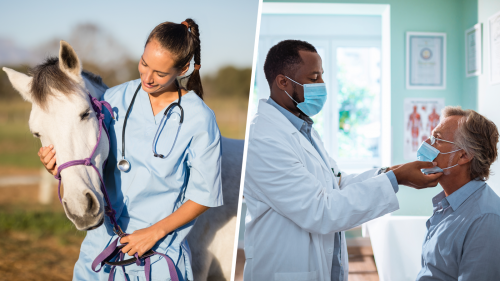
        Combined image of a veterinarian inspecting a horse, and a doctor inspecting a patient.

        Though this is understandable, please beware. The FDA’s job is to carefully evaluate the scientific data on a drug to be sure that it is both safe and effective for a particular use, and then to decide whether or not to approve it. Using any treatment for COVID-19 that’s not approved or authorized by the FDA, unless part of a clinical trial, can cause serious harm. 

        There seems to be a growing interest in a drug called ivermectin to treat humans with COVID-19. Ivermectin is often used in the U.S. to treat or prevent parasites in animals.  The FDA has received multiple reports of patients who have required medical support and been hospitalized after self-medicating with ivermectin intended for horses.

        Here’s What You Need to Know about Ivermectin

        • FDA has not approved ivermectin for use in treating or preventing COVID-19 in humans. Ivermectin tablets are approved at very specific doses for some parasitic worms, and there are topical (on the skin) formulations for head lice and skin conditions like rosacea. Ivermectin is not an anti-viral (a drug for treating viruses).
        • Taking large doses of this drug is dangerous and can cause serious harm. 
        • If you have a prescription for ivermectin for an FDA-approved use, get it from a legitimate source and take it exactly as prescribed. 
        • Never use medications intended for animals on yourself. Ivermectin preparations for animals are very different from those approved for humans. 

        What is Ivermectin and How is it Used?

        Ivermectin tablets are approved by the FDA to treat people with intestinal strongyloidiasis and onchocerciasis, two conditions caused by parasitic worms. In addition, some topical (on the skin) forms of ivermectin are approved to treat external parasites like head lice and for skin conditions such as rosacea. 

        Some forms of ivermectin are used in animals to prevent heartworm disease and certain internal and external parasites. It’s important to note that these products are different from the ones for people, and safe when used as prescribed for animals, only.

        When Can Taking Ivermectin Be Unsafe? 

        The FDA has not reviewed data to support use of ivermectin in COVID-19 patients to treat or to prevent COVID-19; however, some initial research is underway. Taking a drug for an unapproved use can be very dangerous. This is true of ivermectin, too.

        There’s a lot of misinformation around, and you may have heard that it’s okay to take large doses of ivermectin. That is wrong. 

        Even the levels of ivermectin for approved uses can interact with other medications, like blood-thinners. You can also overdose on ivermectin, which can cause nausea, vomiting, diarrhea, hypotension (low blood pressure), allergic reactions (itching and hives), dizziness, ataxia (problems with balance), seizures, coma and even death. 

        Ivermectin Products for Animals Are Different from Ivermectin Products for People

        For one thing, animal drugs are often highly concentrated because they are used for large animals like horses and cows, which can weigh a lot more than we do—a ton or more. Such high doses can be highly toxic in humans. 

        Moreover, FDA reviews drugs not just for safety and effectiveness of the active ingredients, but also for the inactive ingredients. Many inactive ingredients found in animal products aren’t evaluated for use in people. Or they are included in much greater quantity than those used in people. In some cases, we don’t know how those inactive ingredients will affect how ivermectin is absorbed in the human body.

        Meanwhile, effective ways to limit the spread of COVID-19 continue to be to wear your mask, stay at least 6 feet from others who don’t live with you, wash hands frequently, and avoid crowds.


        MUST READ:

        Saturday, 8 May 2021

        07.05.21 Pfizer seeks full FDA approval for its COVID-19 vaccine

         Pfizer and its partner BioNTech SE have asked US regulators for full approval of their Covid-19 vaccine, which may help ease vaccine hesitancy in the community.

        The Food and Drug Administration granted emergency authorisation of their vaccine in late December. Since then, Pfizer has distributed 170 million doses in the US, with the goal of delivering 300 million doses by the end of July.

        By Riley Griffin
        The Sydney Morning Herald

        If the FDA grants full approval, it could also help raise confidence in the vaccine and potentially help to offset worries by some Americans that the shot may have been produced too quickly.

        The full approval would also shift the legal status of the shot, clearing the way for employers and other organisations to mandate vaccination, Peter Marks, director of the FDA’s Centre for Biologics Evaluation and Research, said.

        “Once the vaccine is approved there is a different legal status in terms of what employers can potentially require,” Marks said on April 14, during a webinar sponsored by the American Medical Association. He added that such a mandate may particularly impact the US military.

        Moderna says it plans to initiate a rolling submission for a BLA for its COVID-19 vaccine this month.

        The submission follows the “tremendous progress” they have made in delivering vaccines to millions of Americans and is the next step in a “rigorous FDA review process,” the companies said a statement.

        Nicole Dirnbauer of the Monash Medical Centre opens the Pfizer vaccine.

        Nicole Dirnbauer of the Monash Medical Centre opens the Pfizer vaccine.CREDIT:

        As part of the application, they have submitted nonclinical and clinical data, including the most recent analysis from the Phase 3 clinical trial, where the vaccine’s efficacy and safety profile were observed for as long as six months after the second dose. The duo will also submit required manufacturing and facility data in the coming weeks.


        The companies will first seek approval for the vaccine’s use in individuals 16 years of age and older, but also intend to submit a supplemental biologics license application for those aged 12 to 15 once the required data is available.

        With full approval in hand, Pfizer and BioNTech would finally be able to advertise the product under its branded name, Comirnaty, and distribute the two-shot regimen directly to a wider marketplace.

        “Right now we can only commercialise the vaccine in the US through the government,” Pfizer CEO Albert Bourla said in an interview on Tuesday. “That will open our ability to commercialise the vaccine through all the channels that exist.”

        Bourla said that being granted such a license wouldn’t immediately change the way the Pfizer-BioNTech vaccine reaches people around the world, given governments have secured significant supply.

        Pfizer and BioNTech aim to make 3 billion doses in 2021, much of which has already been purchased by governments around the world. Through year-end, Pfizer expects the vaccine to yield $26 billion in sales. Half of the profits will go to BioNTech.