Pages

Showing posts with label Germany. Show all posts

Monday, 2 August 2021

DW Opinion: Do not write off the AstraZeneca vaccine

The authorities are playing cautiously by freezing AstraZeneca vaccinations. But that doesn't mean that the jab is unsafe, DW's Fabian Schmidt writes.

  • Date 16.03.2021
  • Author Fabian Schmidt
A container with the Oxford-vaccine AZD1222 by AstraZeneca

The AstraZeneca vaccine is on hold in Germany out of an abundance of caution

Yes, two people died from sinus vein thrombosis, and others had to be treated in hospital. And, yes, it happened in both cases after the people had received vaccinations with the Oxford vaccine from Astra-Zeneca. 

But to conclude that the vaccine is dangerous would be entirely premature. First, it is unclear whether the thromboses actually had anything to do with the vaccine.  And secondly, we humans take on much greater risks of thrombosis day after day than we might face as a result of the vaccine.

Cause or correlation?

First, the most important thing: Some people do experience thrombosis — with or without vaccination. Whether it is coincidence or whether there is a causal relationship with vaccination is usually shown by statistics. The question is: Is there an unusual increase of thrombosis cases after vaccination? 

DW science editor Fabian Schmidt

"I will be happily rolling up my sleeve for the Oxford vaccine," DW's Fabian Schmidt says

From what we know so far, that is not the case with the AstraZeneca vaccine. In fact, doctors in the UK alone have already administered more than 11 million doses of the vaccine. Three cases of sinus vein thrombosis have occurred. There have been seven cases in 1.6 million vaccinated people in Germany.

This equates to four cases per million jabs since use of the AstraZeneca vaccine began in Germany in early February. However, this type of thrombosis occurs approximately two to five times per million people per year in the general population even without vaccination.

The cases came from a batch that included a total of 1 million doses. With so many jabs administered, it stands to reason that some people will also experience thrombosis within a certain time frame of vaccination — this may be a coincidence.

Nevertheless, it is right for the regulatory authorities to once again thoroughly examine all study results  and available figures, as many studies have not been fully completed because of the accelerated approval procedures.

A vaccine may protect you against a specific disease, but it won't protect you against  other factors that could cause death. Currently, more very old and seriously ill people are receiving COVID-19 vaccines. People who are already vulnerable may be more likely to die of other causes. 

High risk of thrombosis in everyday life

All of this is no reason to panic: We deliberately take on much higher thrombosis risks elsewhere than they might now — perhaps — come by the way of vaccination. In a well-known and scientifically proved example, for every million women who take the birth control pill, about 1,100 will get thrombosis.

In addition, various circumstances or behaviors  have been shown to double our risk of thrombosis. These include: obesity, travel (especially long-distance flights, car, bus or train rides) and  smoking. 

All of these factors have been clearly proved scientifically. A possible link to vaccinations has not been proved at all.

But we must also consider the following: The sinus vein thromboses that have occurred are considered to be rarer and more dangerous than other forms of thrombosis.

Vaccinations save lives

We are at the beginning of a dangerous third wave  of infection with the coronavirus. For Germany, medical experts are already predicting incidence rates of over 300 per week per 100,000 inhabitants.

All vaccines currently available on the market are shown to work. That means: They prevent severe courses of disease and hospitalization, even with the now-dominant variants.

Vaccinations save lives. And AstraZeneca's vaccine also saves lives.

Given the global spread of the disease, with more than 120 million people now infected and more than 2.6 million deaths, we cannot afford to throw away even a single dose of vaccine.

Each vaccine dose belongs in someone's upper arm. And, when my turn comes, I'll be happy to take the vaccine from AstraZeneca, too. 

DW RECOMMENDS

https://www.dw.com/en/opinion-do-not-write-off-the-astrazeneca-vaccine/a-56888864

Monday, 5 July 2021

22 June 21 - Merkel receives Moderna as second jab after AstraZeneca shot

 German Chancellor Angela Merkel has received a dose of Moderna as her second shot of ...

22 June 2021

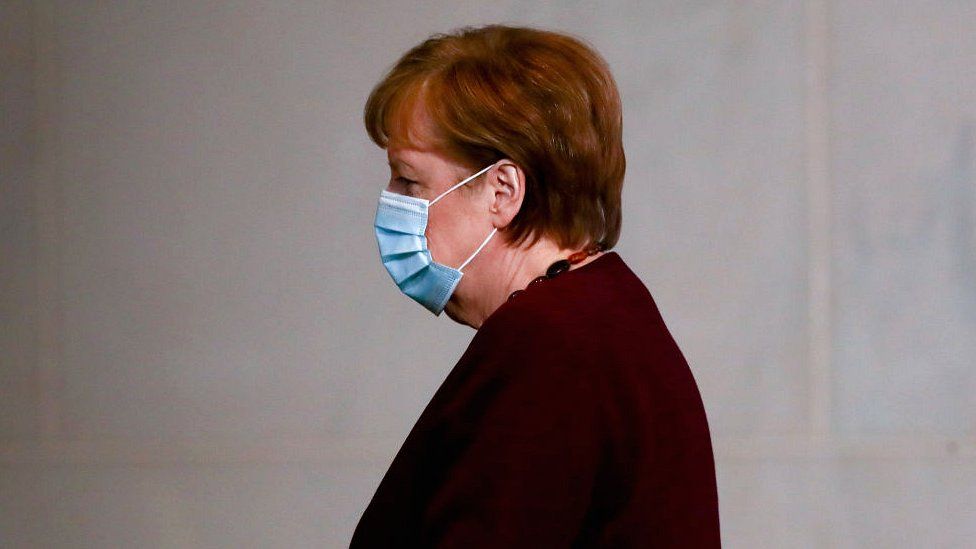
File picture (March 2021) of German Chancellor Angela MerkelIMAGE COPYRIGHTGETTY IMAGES
image captionMrs Merkel first received a dose of the AstraZeneca vaccine in April and then a dose of Moderna a few days ago

German Chancellor Angela Merkel has received a dose of Moderna as her second shot of coronavirus vaccine having had Oxford-AstraZeneca as her first, a government spokesman said.

The 66-year-old leader was vaccinated a few days ago after getting a dose of AstraZeneca in April.

Experts believe mixed dosing of Covid vaccines could be a good idea but it is too early to say for sure.

In March, Germany, along with other European countries, halted the rollout of the AstraZeneca vaccine after a number of blood clots cases were reported.

After a slow start, Germany's vaccination rollout accelerated in recent weeks.

More than half of the country's population has now received their first dose of a vaccine.

In April, Mrs Merkel's spokesman tweeted a photo of her vaccination certificate to show she had received the injection.

The BBC is not responsible for the content of external sites.View original tweet on Twitter

There have been some studies conducted on the mixing of different vaccines.

One study in the UK found that adults were more likely to report mild and moderate side effects after mixing doses of the AstraZeneca and Pfizer Covid vaccines.

Some countries have been looking at mixing vaccines in the face of supply shortages and to improve protection, Reuters news agency reports.

The Canadian provinces of Ontario and Quebec have both said they plan to mix vaccines in the near future, amid uncertainty over shipments of the Oxford-AstraZeneca jab and concerns about rare blood clots.

Presentational grey line
Analysis box by Michelle Roberts, health editor

Experts believe mixed dosing of Covid vaccines could be a very good idea. It might give broader, longer-lasting immunity against the pandemic virus and new variants of it, and offer more flexibility to vaccine rollout.

Studies are under way, but some countries are already allowing it within their national immunisation programs.

Germany initially restricted the use of the AstraZeneca (AZ) vaccine to people under 60 because there wasn't much trial data available on efficacy in older people.

It reversed that decision in April, offering it to all adults. Weeks later Mrs Merkel received her first dose.

More recently, following reports of rare blood clots in a small number of younger people who had the AZ vaccine, Germany recommended that under-60s who had already received a first dose of should have a different coronavirus vaccine for their booster second jab for safety reasons, as a precaution.

Merkel doesn't fit this age bracket, but, nonetheless, she's had Moderna rather than AZ for her second dose.

It may prove to be a decision that gives her better protection, but until we have the evidence from large trials, it is really too early to say for sure.


https://www.bbc.com/news/world-europe-57571791

Thursday, 29 April 2021

4 Mar 21: Covid: Germany approves Astra for over-65s

 Covid: Germany approves AstraZeneca vaccine for over-65s

Published
comments
 2021Comments
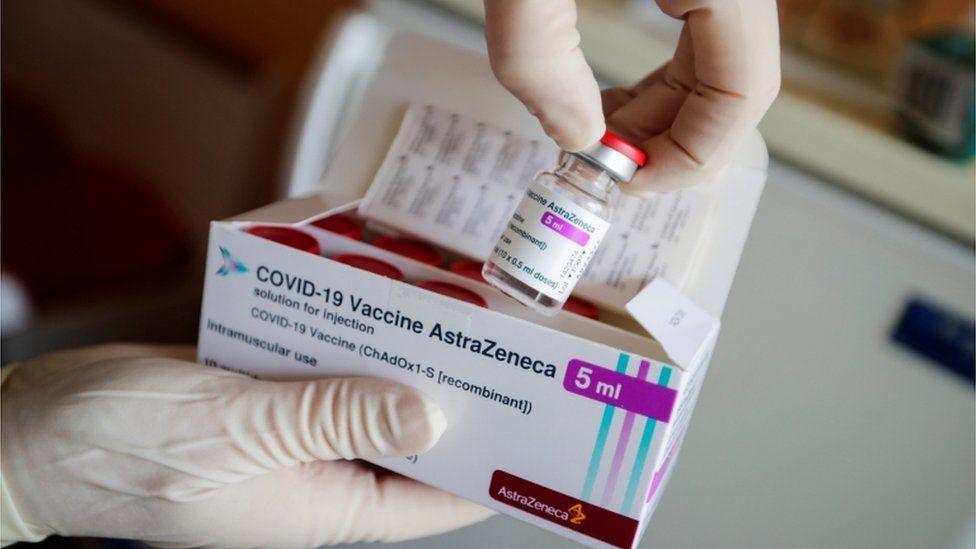
AstraZeneca Covid vaccine shown in Germany, 3 MarchIMAGE COPYRIGHTREUTERS

Germany's vaccine commission has approved the use of the Oxford-AstraZeneca jab in people aged over 65.

The country previously approved it for under-65s only, citing insufficient data on its effects on older people.

That led to public scepticism about its effectiveness, with some Germans spurning it and leaving many doses unused.

But German Chancellor Angela Merkel said recent studies had now provided enough data to approve it for all ages.

Announcing the commission's decision on Thursday, Health Minister Jens Spahn said the move was "good news for older people who are waiting for an injection".

"The new data also shows that the vaccine is even more effective when the first and second jabs are administered 12 weeks apart," the minister said, adding that the law would be updated to incorporate the new recommendations.

Mrs Merkel said on Wednesday that Germany would follow the UK example of stretching the interval between vaccine doses in order to offer as many people as possible an initial shot.

Various studies have shown the AstraZeneca vaccine is highly effective among the elderly.

Belgium says it will also approve the vaccine for older people, following France earlier this week.

About 5% of Germans have so far received a first vaccine shot.

What led to scepticism about the AstraZeneca jab?

The EU's medical regulator approved the use of the Oxford-AstraZeneca vaccine for all age groups in January.

But the rollout was met by some public scepticism after regulators in countries including France, Belgium and Italy recommended that it should not be used for people over 65. Like Germany, they citied insufficient data on its efficacy for older people.

In January French President Emmanuel Macron said the jab was "quasi-ineffective" for older age groups - a suggestion strongly refuted by the UK government and British medical regulators.

The debate came amid an acrimonious dispute between AstraZeneca and the EU over vaccine supplies to member states.

Since then, stocks of the Oxford-AstraZeneca jab have gone unused in several European countries, slowing vaccination efforts.


Meanwhile the UK - which approved the Oxford-AstraZeneca jab for all age groups - has offered a first dose of a vaccine to 20.7 million people, almost a third of its population.

Last week Carsten Watzl, head of the German Society for Immunology, urged his country to change its mind on the Oxford-AstraZeneca vaccine.

In an interview with the BBC, he predicted regulators would have to reverse their decision to not recommend the jab for older people and suggested Mrs Merkel should take the vaccine live on TV to prove it is safe.

How is Germany planning to ease restrictions?

Separately, Mrs Merkel said she had agreed to a phased easing of restrictions with leaders of Germany's federal states but added that there was the option of an "emergency brake" if case numbers got out of control.

"We are at the threshold of a new phase of the pandemic that we can go into not carelessly but still with justified hope," Mrs Merkel said.

From Monday up to five people from two households will be allowed to meet, with children under 14 exempt.

Some shops will reopen provided that regional case numbers are below 50 per 100,00 people. If cases rise over 50 per 100,000 then customers will have to book slots to visit shops. If cases rise to over 100 per 100,000 over three days in a row then restrictions will be reimposed.

What do we know about the AstraZeneca vaccine?

The UK has been using the vaccine made by AstraZeneca, a UK-Swedish pharmaceutical firm, in its mass immunisation programme since December.

UK health officials say it provides "high levels of protection" for all ages.

No one who received the vaccine in trials was admitted to hospital or became seriously ill with Covid-19.

The vaccine is given via two injections to the arm, the second between four and 12 weeks after the first.

line
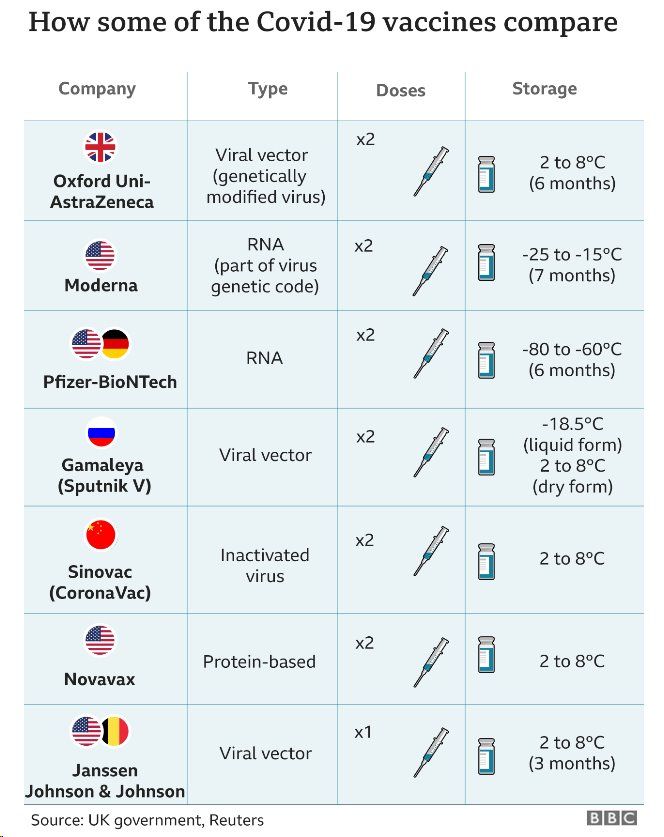
Covid vaccines graphic
1px transparent line

More on this story

https://www.bbc.com/news/world-europe-56275342