Pages

Showing posts with label Australia. Show all posts

Monday, 26 July 2021

The top 3 drugs used to treat COVID-19

 To ensure supply of the top 3 drugs used to treat COVID-19, it’s time to boost domestic medicine manufacturing

July 26, 2021 3.07pm AEST


We now know enough about how COVID works for health authorities to have issued clear guidance on which drugs doctors should use on hospitalised patients. The recommended drugs are dexamethasone, remdesivir, and tocilizumab.

Remdesivir, also known as Veklury, is not manufactured in Australia and the Therapeutic Goods Administration (TGA) has recently issued an alert warning of a shortage of tocilizumab in Australia. And the large dexamethasone manufacturers are based overseas. The website Pharmaoffer, which shows suppliers of active pharmaceutical ingredients, lists the countries that produce the active ingredient in dexamethasone; Australia is not one of them.

More broadly, Australia lacks medicines manufacturing capability and this puts us at significant risk should supplies from overseas continue to be interrupted.

One report released last year described the Australian market for pharmaceuticals as “possibly one of the most vulnerable in the OECD”.

It’s time for Australia to re-invest in domestic medicine manufacturing.

Drugs used to treat COVID-19

Many people diagnosed with COVID-19 experience only mild, or no symptoms at all, and can be managed and monitored at home. Rest is the main treatment, and medicines such as paracetamol and/or ibuprofen can provide symptomatic relief of any mild fevers.

People with moderate to severe COVID-19 are treated in hospital. The medicines doctors will prescribe in hospital depend on a patient’s clinical circumstances, such as whether or not they are receiving oxygen therapy.

The pharmaceutical treatment options include:

  • dexamethasone, a corticosteriod

  • remdesivir, an antiviral and

  • tocilizumab, a monoclonal antibody and immunosuppressive agent (monoclonal antibodies are lab-made proteins that mimic the immune system’s virus-fighting abilities).

Dexamethasone is already used for a wide range of conditions, such as certain forms of cancer and arthritis, and various other disorders. Now, it is used in treatment of COVID-19 to suppress inflammation and immune responses.

Remdesivir works by stopping the replication of viral RNA.

And tocilizumab is sometimes used when COVID-19 patients have signs of systemic inflammation.
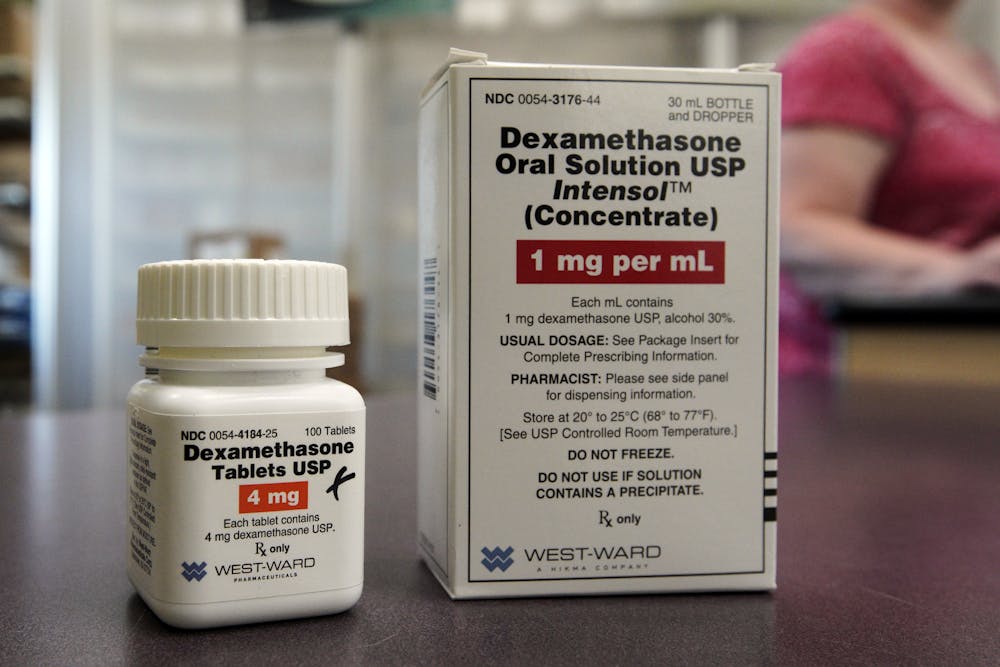
Dexamethasone is already used for a wide range of conditions. Nati Harnik/AP

Where are they made?

Australia is heavily reliant on supply agreements for medicines that come from overseas (and a manufacturing network might include a lot of countries). It’s been reported some of the large dexamethasone manufacturers are in Brazil and India.

To meet growing demand for remdesivir, its company (Gilead) has approved new deals for manufacturing in Egypt, India, and Pakistan. But while the remdesivir manufacturing network now includes more than 40 companies in North America, Europe, and Asia, the medicine is not manufactured in Australia.

Tocilizumab was developed in Japan and is now also licensed for manufacturing by the California-based company Genentech.

Need for Australian manufacturing base

There is an urgent need for Australia to increase local manufacturing of many types of medicines, not just COVID treatments, to secure current and future needs.

In general, Australia does have some medicine manufacturing sites in Australia but several have either closed or are slated for closure.

The Australian government has acknowledged the importance of boosting local production of medicines but it’s unclear what progress has been made.

In March this year, an interim report by the Productivity Commission on vulnerable supply chains again indicated medicines as an area of concern, noting that

the pharmaceutical industry is highly regulated, making entering the market or modifying existing facilities to respond to a crisis a slow and costly process.

The final report from this committee is currently with the government.

Manufacturing of medicines in Australia is regulated by the TGA. According to its website, it can take up to 12 months for an Australian manufacturer to get approval to bring a new manufacturing site online. This means it would take us a long time to act if a supply shortage pops up.

Significant backing from the federal government for local medicine manufacturing would reduce the risk of key medicine shortages in Australia, while also creating many highly skilled jobs.

https://theconversation.com/to-ensure-supply-of-the-top-3-drugs-used-to-treat-covid-19-its-time-to-boost-domestic-medicine-manufacturing-164948

Monday, 10 May 2021

Pfizer beats back variants as AstraZeneca receives a timely boost

Australia’s coronavirus vaccine strategy has received a boost with evidence showing Pfizer’s vaccine offers good protection against COVID-19’s new variants.

By Liam Mannix, The Sydney Morning Herald

https://www.smh.com.au/national/pfizer-beats-back-variants-as-astrazeneca-receives-a-timely-boost-20210510-p57qj0.html


Emerging data from Britain also suggests AstraZeneca’s much-maligned vaccine works just as well as Pfizer’s mRNA jab in the real world, with two doses of either vaccine cutting the risk of contracting COVID-19 by as much as 70 per cent.

Nurse Sioban Cheesman gives Angela Massie her AstraZeneca COVID-19 vaccine in Perth earlier this month.CREDIT:GETTY IMAGES

“It’s really good news,” said Associate Professor James Wood, a leading vaccine expert at the University of NSW.

“It does present herd immunity as a much more achievable proposition in Australia, with our vaccine mix – with the caveat we don’t know what we’ll be seeing in six months’ time.”

The variant of COVID-19 first seen in South Africa, known as B.1.351, has a collection of mutations that appear to cut the ability of antibodies to stop it binding to and entering human cells.

Concern about that variant reached fever pitch when researchers published a study in March suggesting AstraZeneca’s vaccine offered no protection against catching it. But that small study was more suggestive than conclusive, and researchers are still waiting for better data to come in.

The New England Journal of Medicine last week printed a letter from Qatari-based scientists; about half that country’s cases are from the South African variant, with the Pfizer vaccine being quickly rolled out to quell a new outbreak.

After two doses, the Pfizer vaccine was about 70 per cent effective against the South African variant, and about 97 per cent effective against serious illness and death, they said.

“It’s reassuring,” said Professor Fiona Russell, an adviser to the World Health Organisation on vaccines, based at the Murdoch Children’s Research Institute.

“Certainly, Pfizer is a great vaccine. There is no doubt about that.”

However, the study is limited by the fact the researchers did not explicitly test each infected person to see if they had contracted the South African variant. They simply assumed that if they did not have the British variant they must have the South African virus.

“I’m not a big fan of that study,” said Professor Wood.

In clinical trials, Pfizer’s mRNA vaccine recorded an efficacy against symptomatic infection of about 95 per cent, while AstraZeneca’s was closer to 70 per cent, leading to concerns the AstraZeneca jab was inferior (despite both offering seemingly complete protection against severe illness and death).

But drugs often work differently in the outside world, compared to carefully controlled clinical trials.

A new British study, uploaded to medRxiv but not yet peer reviewed, found essentially no difference between the protection offered by Pfizer and AstraZeneca’s jabs.

The large study took swabs from a random selection of people every week; it collected more than 1.6 million swabs between December and April. It found that two doses of Pfizer or AstraZeneca cut the risk of catching COVID-19 by 70 per cent.

That makes earlier, similar findings in Scotland – where AstraZeneca’s vaccine was somehow more effective than Pfizer’s – appear more plausible (a US study published earlier this month put Pfizer’s real-world effectiveness at 90 per cent, but studied a much smaller number of people).

“Is that a surprise? No, not necessarily,” said Professor Russell. “Vaccinologists ... all thought probably most of the vaccines would work similarly and have a similar effectiveness.

“A lot of the differences in clinical trial results are likely based on study design, the populations enrolled, the variants circulating. We have to wait and see, but what happens in the real world is the most important.”

One of the largest mysteries that remains about vaccines is how well they stop infected people passing on the virus. If they do it poorly, even high rates of vaccination are unlikely to stop the virus circulating.

In two separate British studies, researchers looked at thousands of households where a person fell sick. In cases where the sick person had received a vaccine, the chances of them passing on the virus to someone else in the house dropped by about 50 per cent.

Science and health explained and analysed with a rigorous focus on the evidence. Examine is a free weekly newsletter by science reporter Liam Mannix. Sign up to The Age’s here and the Sydney Morning Herald’s here.

https://www.smh.com.au/national/pfizer-beats-back-variants-as-astrazeneca-receives-a-timely-boost-20210510-p57qj0.html

Sunday, 18 April 2021

*Do I still need to get a COVID vaccine if I’ve had coronavirus?

 The COVID vaccine rollout is underway, with Australians lining up to get their jabs. But what if you have already had COVID-19? Is it still a good idea to get vaccinated?


March 25, 2021 5.51am AEDT

Cassandra Berry, Murdoch University

People who have had COVID will still benefit from having a COVID vaccine. Here's why.


Although natural exposure to the virus stimulates immunity, we don’t yet know how long this immunity will last. And people will vary in their ability to mount a protective immune response.

Even if you’ve had COVID-19, you should still get vaccinated. A COVID vaccine may offer more reliable and sustained immunity than a previous infection. At the very least, it will add an extra layer of targeted protection.

Here’s how our immune response works after a natural infection versus a vaccine.

From B cells to neutralising antibodies

Soon after becoming infected with SARS-CoV-2 (the virus that causes COVID-19), our immune cells (T cells and B cells) activate. Activated B cells produce so-called neutralising antibodies. These antibody-secreting cells defend our bodies against the infection by making antibodies that bind to spikes on the virus surface, and block the virus from entering our cells.

Neutralising antibodies spill over into the bloodstream and travel around the body looking to mop up virus. After the infection has resolved, these activated B cells calm down and transition to a resting state. They move from our blood to our lymph nodes and bones. These so-called memory B cells survive for decades, along with help from memory T cells.

But they need a nudge once in a while to ensure they’re ready to kick into gear if we’re exposed to an infection.

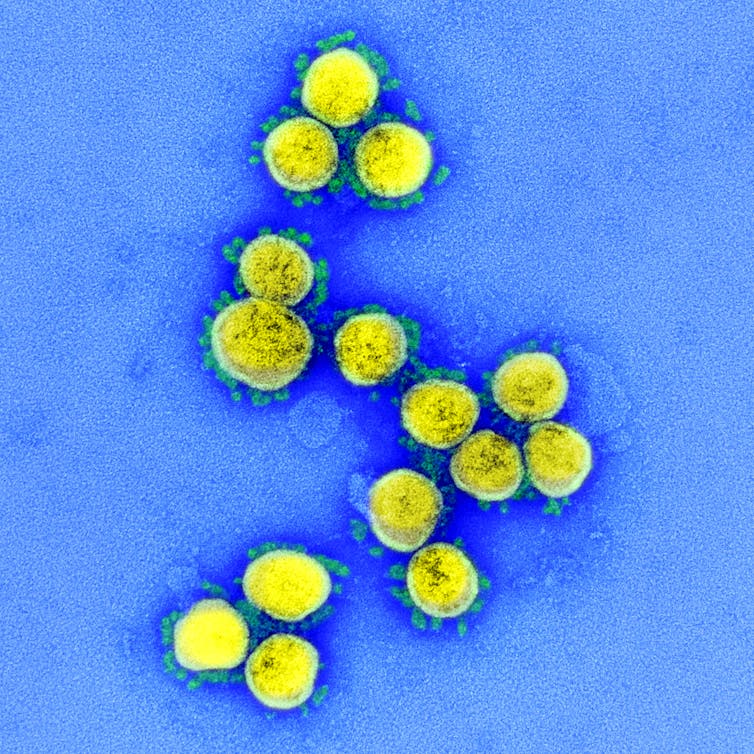
SARS-CoV-2 viral particles have surface spikes (in green), to which antibodies attach. NIAID/flickr

Our immune cells rely on memory

When we’re re-exposed to a virus, or receive a vaccine booster, these memory cells awaken, become activated and produce large amounts of antibodies much faster. This immune memory reduces the risk we’ll become infected with SARS-CoV-2. But if we do, it allows for quicker healing from COVID-19.

Sustained neutralising antibody levels indicate a good degree of protection against SARS-CoV-2. How long we hang onto natural immunity after COVID-19 is variable and depends on viral, human and environmental factors. For example, the viral variant can make a difference, along with our genes, underlying health conditions, and age.

These factors can affect our neutralising antibody levels, which can wane over time to dip below protective levels.

As COVID-19 hasn’t been around for a particularly long time, it’s difficult to know how long natural immunity generally lasts. However, antibodies and immune memory appear to last for at least two months.

For patients who have recovered from SARS, a related coronavirus, research has shown they maintained antibodies for up to two to three years following infection.


Read more: The second phase of Australia's COVID vaccine rollout is underway, despite a rocky start. Here's what you need to know


Immune responses to a vaccine

Again, because of the short time frame, we have limited data on sustained antibody responses following vaccination. But immunity appears to be strong three months after the Oxford/AstraZeneca vaccine.

With COVID-19 vaccines, certain variable factors have been targeted, in a way they can’t with natural infections. For example, considerations like the dose size and the time between doses are all established to confer optimal immunity.

As we continue to monitor people who have received the COVID vaccines, we’ll develop a better understanding of protective immunity and its longevity.

Staying on top of variants

Natural immunity from infection may protect against other variants to some degree, but vaccines will play a crucial role as the virus continues to mutate.

It may be necessary to get regular boosters of the COVID vaccine until the pandemic is under control. This will provide protection against variants our pre-existing antibodies may not be able to neutralise.

Boosters enhance our broad immunity to parts of the spike proteins shared between different virus variants. Antibodies produced to these common regions can neutralise the virus and stop infection.

We saw this to a limited extent in people who had common cold infections with other coronaviruses before COVID-19.

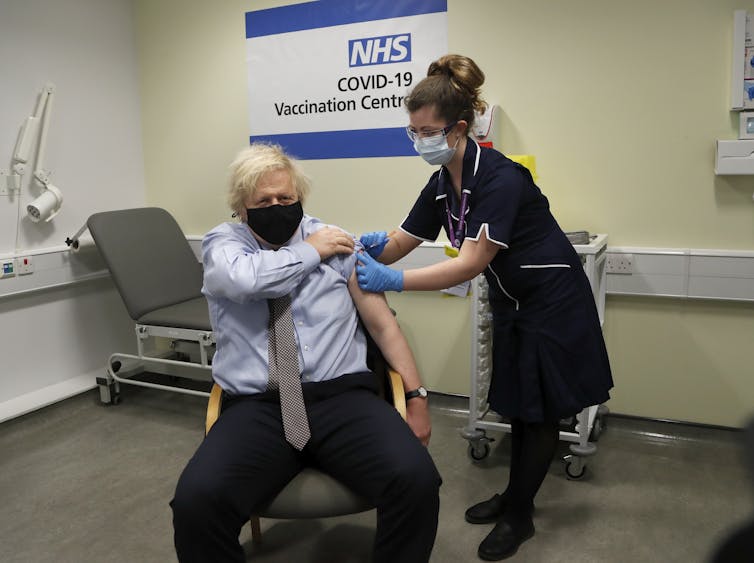
Boris Johnson receives the vaccine.
Boris Johnson, who was in intensive care with COVID last year, received the first dose of his COVID vaccine recently. Frank Augstein/AP

Only one jab? Vaccines as a cure for long COVID?

There’s been some research suggesting people who have had COVID may only need one dose of the vaccine to be protected.

For people who have had COVID, one dose may serve to top up their antibodies to protective levels. This is because they’re starting on a stronger footing in terms of their antibody levels and immune memory, compared to people who haven’t had the virus.

But experts in Australia still recommended two doses, regardless of whether you’ve had COVID.


Read more: Why we'll get COVID booster vaccines quickly and how we know they're safe


Meanwhile, reports have indicated people experiencing long COVID may also benefit from vaccination. We’re not sure how this happens, but symptoms may improve with clearance of any hidden virus reservoirs from the body. Research into this phenomenon is ongoing.

At the end of the day, when the vaccine is available to you, you should get vaccinated, even if you’ve had COVID-19. While the vaccine is likely to protect you, it’s also important to protect others, as we look towards a goal of herd immunity.

CoronavirusImmune responseneutralising antibodiesCOVID-19COVID vaccinesImmune memory

https://theconversation.com/do-i-still-need-to-get-a-covid-vaccine-if-ive-had-coronavirus-157599

Tuesday, 13 April 2021

What is Novavax, Australia’s third COVID vaccine option? And when will we get it?

As AstraZeneca is no longer the preferred vaccine for Australian adults under 50, attention is turning to what other COVID-19 vaccine options are in our arsenal.

Professor of Medical Microbiology, University of Sydney

April 13, 2021 4.47pm AEST

The federal government has ordered 40 million doses of the Pfizer vaccine, which will become the mainstay of the rollout, while AstraZeneca will continue to be administered for people over 50 in the current phase 1B.

The federal government also this week ruled out using Johnson & Johnson’s one-shot vaccine.

But Australia does have a deal for a third vaccine, by US biotech company Novavax. The government has ordered 51 million doses of this vaccine, though it’s yet to be approved by Australia’s drug regulator, the Therapeutic Goods Administration (TGA), which is expected to make a decision in the third quarter of the year.

At this stage, Novavax would be made offshore and imported, although Melbourne-based biotech CSL can make the vaccine if requested by the federal government.

How does the Novavax vaccine work?

The Novavax vaccine is given as two doses, similar to the Pfizer and AstraZeneca shots already being used in Australia.

It can be stored for up to three months at fridge temperature, which differs from the Pfizer mRNA vaccine which needs to be kept at ultra-low temperatures. In saying that, the TGA said last week the Pfizer vaccine can be stored at normal freezer temperatures for two weeks during transport, and at fridge temperatures for five days — though must still be kept ultra-cold after transport and in the long-term.

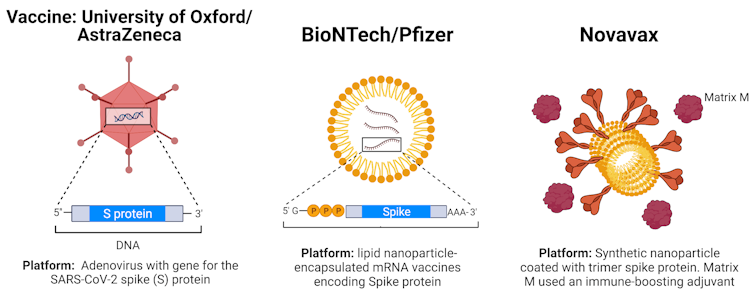
A graphic comparing Australia's three vaccine options
Comparing Australia’s three COVID-19 vaccine options. Jamie Triccas, made with BioRenderCC BY-ND

The vaccine also uses a different technology to the Pfizer and AstraZeneca vaccines. It’s a “protein subunit” vaccine; these are vaccines that introduce a part of the virus to the immune system, but don’t contain any live components of the virus.

The protein part of the vaccine is the coronavirus’ “spike protein”. This is part of the other COVID-19 vaccines in use but in a different form.


Read more: New coronavirus variant: what is the spike protein and why are mutations on it important?


The Novavax vaccine uses a version of the spike protein made in the lab. The spike proteins are assembled into tiny particles called “nanoparticles” which aim to resemble the structure of the coronavirus, however they cannot replicate once injected and the vaccine cannot cause you to get COVID-19.

In order for these subunit vaccines to generate strong protective responses, they need to include molecules that boost your immune system, called “adjuvants”. The goal of these adjuvants is to mimic the way the real virus would activate the immune system, to generate maximum protective immunity.

Novavax includes an adjuvant based on a natural product known as saponin, an extract from the bark of the Chilean soapbark tree.

How effective is the vaccine compared to those already in use in Australia?

The interim data from phase 3 testing, released in March, was very encouraging. When tested in the UK in a clinical trial including more that 15,000 people, the vaccine was 96% effective at preventing COVID-19 disease for those infected with the original strain of the coronavirus.

This compares well to the Pfizer vaccine, with an efficacy of 95%, and recent data from AstraZeneca demonstrating 76% efficacy against COVID-19.

The Novavax vaccine is also safe. In early clinical testing the vaccine caused mainly mild adverse events such as pain and tenderness at the injection site, and no serious adverse reactions were recorded. In the larger trials, adverse events occurred at low levels and were similar between the vaccine and placebo groups.

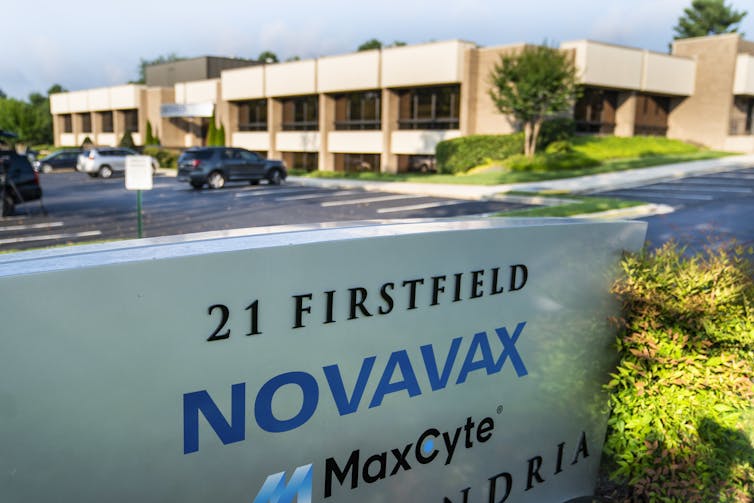
A general view of the Novavax headquarters, Maryland, USA.
Novavax’s efficacy against the original strain of the coronavirus is 96%, and 86% against the UK variant. Jim Lo Scalzo/EPA/AAP

What about protection against variants?

In the UK trial, the vaccine maintained strong protection against disease in people infected with the B.1.1.7 “UK variant”, demonstrating 86% efficacy.

This is good news because the B.1.1.7 variant is now dominant in many European countries, is more transmissible and deadly than the original SARS-CoV-2 virus, and is responsible for most of the cases that have arisen recently in Australia.


Read more: The UK variant is likely deadlier, more infectious and becoming dominant. But the vaccines still work well against it


Less encouraging is protection against the B.1.351 variant first identified in South Africa, which can evade immunity that developed in response to earlier versions of the virus. The efficacy of Novavax’s shot dropped to 55% in protecting against COVID-19 symptoms from this variant. Protection against severe disease however was 100%, indicating the vaccine will still be important in reducing hospitalisation and death due to this variant.

Novavax, along with the other major vaccine companies, are developing booster vaccines to target the B.1.351 variant. Novavax are planning to test a “bivalent” vaccine, which targets two different strains, using the spike protein from both the original Wuhan strain and the B.1.351 variant.


Read more: Why we'll get COVID booster vaccines quickly and how we know they're safe


https://theconversation.com/what-is-novavax-australias-third-covid-vaccine-option-and-when-will-we-get-it-157227