Pages

Showing posts with label GM Alfafa. Show all posts

Saturday, 3 November 2012

All GM Field Trials in India to be Stopped

October 30 2012 | 20,147 views

GM Crop Field

Story at-a-glance

  • A five-member Technical Expert Committee (TEC) appointed by the Supreme Court of India unanimously recommended that all GM field trials in India should be stopped until certain conditions have been met
  • The Committee also recommended a 10-year moratorium on field trials of all Bt food crops and a moratorium on field trials of herbicide-tolerant crops until an independent assessment has evaluated its “impact” and “suitability”
  • Over the past 16 years, it’s estimated that more than a quarter of a million Indian farmers have committed suicide after being convinced to plant Monsanto’s genetically modified (GM) seeds (especially Bt cotton), then having their crops fail, leaving them in financial ruin
  • Evidence demonstrates that the claims made that GM foods are safe and beneficial to the environment simply aren’t true
  • Americans are currently being kept in the dark regarding GM foods, as they are not labeled despite being found in upwards of 80 percent of processed foods; California stands poised to vote on Proposition 37, which would require GM foods to be labeled, on November 6


By Dr. Mercola

One week from today California voters will vote on Prop 37 and we will see if truth will win out over corporate greed, and hopefully people will finally be given the right to know what is in their food.

The state of affairs in India with respect to GM foods is further validation of the importance of labeling GM foods with Prop 37 in California.

Over the past 16 years, it's estimated that more than a quarter of a million Indian farmers have committed suicide after being convinced to plant Monsanto's genetically modified (GM) seeds (especially Bt cotton), then having their crops fail, leaving them in financial ruin.

Earlier this year, India's National Biodiversity Authority (NBA), a government agency, sued Monsanto, the world leader in GM crops and seeds, and their collaborators, the Maharashtra Hybrid Seeds Company, for biopiracy, accusing them of stealing local varieties of eggplant to develop a genetically modified version.

It seems now that the country may have had enough, and is citing the precautionary principle in their announcement that all GM field trials should be stopped until certain conditions have been met.

India to Ban Field Trials of GM Crops

In October 2012, a five-member Technical Expert Committee (TEC) appointed by the Supreme Court of India unanimously recommended that all GM field trials in India should be stopped until the following conditions have been met:1
  • Specific sites for conducting field trials have been designated and certified and sufficient mechanisms for monitoring the trials put in place.
  • A panel of scientists, qualified in evaluation of the biosafety data of GM crops, has been engaged for scrutiny and analyses of the safety data.
  • Conflict of interest in the regulatory body has been removed.
  • The requirement for preliminary biosafety tests prior to field trials including sub-chronic toxicity in small animals has been included.
Two other noteworthy recommendations were also included in the TEC report:
  • A 10-year moratorium on field trials of all Bt food crops, based on the overall status of current food safety evaluations for these crops (including data on Bt cotton and Bt eggplant)
  • A moratorium on field trials of herbicide-tolerant crops until an independent assessment has evaluated its "impact" and "suitability"
It seems India is poised to join the ranks of those countries who do not want to use their population and land as guinea pigs to test out GM crops... others who have said "no" to GMOs (genetically modified organisms) include:2
New Zealand: No GM foods are grown there Switzerland: No GM crops, animals and plants until 2013
Germany: No GM corn Madeira: This small Portuguese island has a ban on GM crops
Ireland: GM crops were banned for cultivation in 2009, and foods containing GM foods can be voluntarily labeled as such Japan: No GM seeds are planted in the country (but wild contamination from imported GM canola have been found growing near ports)
France: Asked the European Commission to suspend Monsanto's authorization to plant GM MON 810 corn, but the EU stepped in and blocked the ban Austria, Hungary, Greece, Bulgaria and Luxembourg: All have bans on both cultivation and sale of GMOs

An Inside Look at India's Struggles With GM Crops

The film Bitter Seeds looks at the beginning of the consumer goods' supply chain – the raw materials – shedding much-needed light on the crisis created by Monsanto's genetically engineered Bt cotton.

The film features Manjusha Amberwar, an 18-year-old Indian village girl who wants to become a journalist in order to expose the severity of the problems caused by Monsanto's seed monopoly scheme. Farming debts claimed the life of her own father, a respected village leader. Manjusha interviews several families of local farmers who resorted to drinking pesticide. One of the village elders told her:
"In my time there were no suicides. Even the poor could survive by working hard. But there are no other seeds available now. Traditional seeds have disappeared. We farmers are illiterates. We follow false advertising like a dog follows bread."
What many still do not know is that farming has changed dramatically over the past few decades. Seeds have traditionally been saved and shared between farmers from one harvest season to the next. You rarely ever had to buy new seed. Nature, when left alone, provides you with the means to propagate the next harvest in a never-ending cycle.

In the 1970's, hybrid seeds were introduced into India, promising better yields using chemical fertilizers and insecticides. But it didn't take long before yields began to drop as the agricultural chemicals took their toll on the soils. Farm debts began driving Indian farmers to suicide in 1997, and it hasn't stopped since. In fact, matters have quickly gotten worse in the decade since Monsanto introduced its "revolutionary" Bt cotton, which cannot be saved or shared from season to season, but must be continually repurchased.

Genetically engineered seeds also require expensive agricultural chemicals, and more water – a commodity few farmers have access to unless it rains. Buried in debt and struggling against the rising cost of GM seeds and the chemicals required, combined with failing yields and GE-created super weeds and resistant pests, one Indian farmer now commits suicide every 30 minutes.

Are You Being Fed Lies?

You've probably heard that GM crops are safe and represent the "future of food" – a way to increase crop yields and feed the world. (That is, if you've heard anything at all... many people have heard precious little about GM foods, even though they're already in up to 80 percent of processed foods in the United States.)

Well, the authors of the report GMO Myths and Truths3 (who include Michael Antoniou, PhD, a 28-year veteran of genetic engineering technology who has himself invented a number of gene expression biotechnologies, as well as John Fagan, PhD, a leading authority on food sustainability, biosafety, and GMO testing) took a science-based approach to evaluating the available research, and came to the conclusion that most of the scientific evidence regarding safety and increase yield potential do not support the claims made at all. In fact, the evidence demonstrates that the claims for genetically engineered foods are not just wildly overblown; they simply aren't true... The authors concluded GM crops:
  • Are laboratory-made, using technology that is totally different from natural breeding methods, and pose different risks from non-GE crops
  • Can be toxic, allergenic and less nutritious than their natural counterparts
  • Are not adequately regulated to ensure safety
  • Do not increase yield potential
  • Do not reduce pesticide use but increase it
  • Create serious problems for farmers, including herbicide-tolerant "superweeds," compromised soil quality, and increased disease susceptibility in crops
  • Have mixed economic effects
  • Harm soil quality, disrupt ecosystems, and reduce biodiversity
  • Do not offer effective solutions to climate change
  • Are as energy-hungry as any other chemically-farmed crops
  • Cannot solve the problem of world hunger but distract from its real causes – poverty, lack of access to food and, increasingly, lack of access to land to grow it on
According to their report, there are three potential sources of adverse health effects from genetically engineered foods:
  1. The genetically modified gene product – for example, the Bt toxin in GM insecticidal crops may be toxic or allergenic
  2. The GM transformation process may produce mutagenic effects, gene regulatory effects, or effects at other levels of biological structure and function that result in new toxins or allergens and/or disturbed nutritional value
  3. Changes in farming practices linked to the use of a genetically modified organism may result in toxic residues – for example, higher levels of crop contamination with the herbicide Roundup are an inevitable result of using GM Roundup Ready® crops

Do You Eat These Common Sources of GM Foods?

If you live in the United States and want to avoid GM crops, it isn't easy because they are already in commercial production – and GM crops are not labeled. According to the Non-GMO Project, GM crops already in production in the U.S. include:4

Alfalfa (first planting 2011) Canola (approx. 90% of U.S. crop) Corn (approx. 88% of U.S. crop in 2011)
Cotton (approx. 90% of U.S. crop in 2011) Papaya (most of Hawaiian crop; approximately 988 acres) Soy (approx. 94% of U.S. crop in 2011)
Sugar Beets (approx. 95% of U.S. crop in 2010) Zucchini and Yellow Summer Squash (approx. 25,000 acres) Animal products (milk, meat, eggs, honey, etc.) because of contamination in feed

Common ingredients derived from these ubiquitous GM crops, which are added to the majority of U.S. processed foods, include:5

Amino Acids Aspartame Ascorbic Acid Sodium Ascorbate
Vitamin C Citric Acid Sodium Citrate Ethanol
Flavorings ("natural" and "artificial") High-Fructose Corn Syrup Hydrolyzed Vegetable Protein Lactic Acid
Maltodextrins Molasses Monosodium Glutamate Sucrose
Textured Vegetable Protein (TVP) Xanthan Gum Vitamins Yeast Products

Time is Running Out to Help Support GM Labeling With Proposition 37

Currently, a major problem facing Americans is forced ignorance. Even though many are undoubtedly concerned about the environment and the future of their children, they can't opt to avoid GM foods even if they want to, simply because the U.S. refuses to label them.

This must change – and California stands poised to decide the fate of Proposition 37, which would require genetically engineered foods to be identified on the label, on November 6.

Although many organic consumers and natural health activists already understand the importance of Proposition 37, it cannot be overemphasized that winning the battle over Prop 37 is perhaps the most important food fight Americans – not just Californians – have faced so far. But in order to win this fight for the right to know what's in our food, we need your help, as the biotech industry is spending tens of millions of dollars for their propaganda.

Please remember, the ONLY reason they're spending this amount of cash to "inform" you in this debate is because they want to PREVENT you from ever knowing that the foods you buy contain genetically engineered ingredients – and this includes trusted organic and all-natural brands! Ask yourself WHY?

Could it be because dozens of studies have now provided scientific evidence that GE foods cause severe health problems, including multiple organ damage and massive cancerous tumors in the first-ever lifetime feeding study?

The failure or success of this ballot initiative is wholly dependent on your support and funding! There are no major industry pockets funding this endeavor. In order to have a chance against the deep pockets of Big Biotech and transnational food corporations, it needs donations from average citizens.

So please, I strongly encourage you to make a donation to this cause. You can also contact EVERY person you know that lives in California and encourage them to view some of these videos and get educated on the issues so they can avoid succumbing to the propaganda, as Monsanto and company are paying tens of millions of dollars to deceive the voters in California.

We need EVERY vote we can to win in November.

The election is just over ONE week away.

It's important to realize that getting this law passed in California would have the same overall effect as a national law, as large companies are not likely going to label their products as genetically engineered when sold in California (the 8th largest economy in the world), but not when sold in other states. Doing so would be a costly PR disaster. So please, I urge you to get involved and help in any way you can, regardless of what state you live in.
  • Whether you live in California or not, please donate money to this historic effort, through the Organic Consumers Fund.
  • If you live in California and want to get involved, please contact CARightToKnow.org. They will go through all volunteer requests to put you into a position that is suitable for you, based on your stated interests and location.
  • No matter where you live, please help spread the word in your personal networks, on Facebook, and Twitter. For help with the messaging, please see CARightToKnow.org.
  • Talk to organic producers and stores and ask them to actively support the California Ballot. It may be the only chance we have to label genetically engineered foods.
For timely updates, please join the Organic Consumers Association on Facebook, or follow them on Twitter.
Donate Today! Donate Today!

[+] Sources and References
[+] Comments (25)


Wednesday, 12 September 2012

GMO Foods – What’s All the Fuss?

June 2012

Watch out for genetically modified organisms (“GMO”). About a year ago, in early 2011, the FDA approved GMO alfalfa, claiming that Monsanto’s weed-resistant Roundup Ready alfalfa is “safe.” One of the main problems with this claim is that since alfalfa pollen is notorious for flying all over the place, the GMO alfalfa can easily spread to non-GMO fields without permission from farm owners. And therein lies the issue — GMO crops aren’t allowed in organic products. So if GMO alfalfa inadvertently ends up feeding cows bred to produce organic milk or beef, the organic label no longer applies.

The majority of American consumers erroneously believe that the FDA approves GMO foods through rigorous, in-depth, long-term studies. Nothing could be further from the truth. It is imperative to fully understand the severe ramifications of ingesting this laboratory created, if you will pardon the expression, “food.” Genetic engineering/modification of food involves the laboratory process of artificially inserting genes into the DNA of food crops or animals. The result is called a genetically modified organism, or GMO.

Click the thumbnail image below for an enlightening GMO graphic.
 

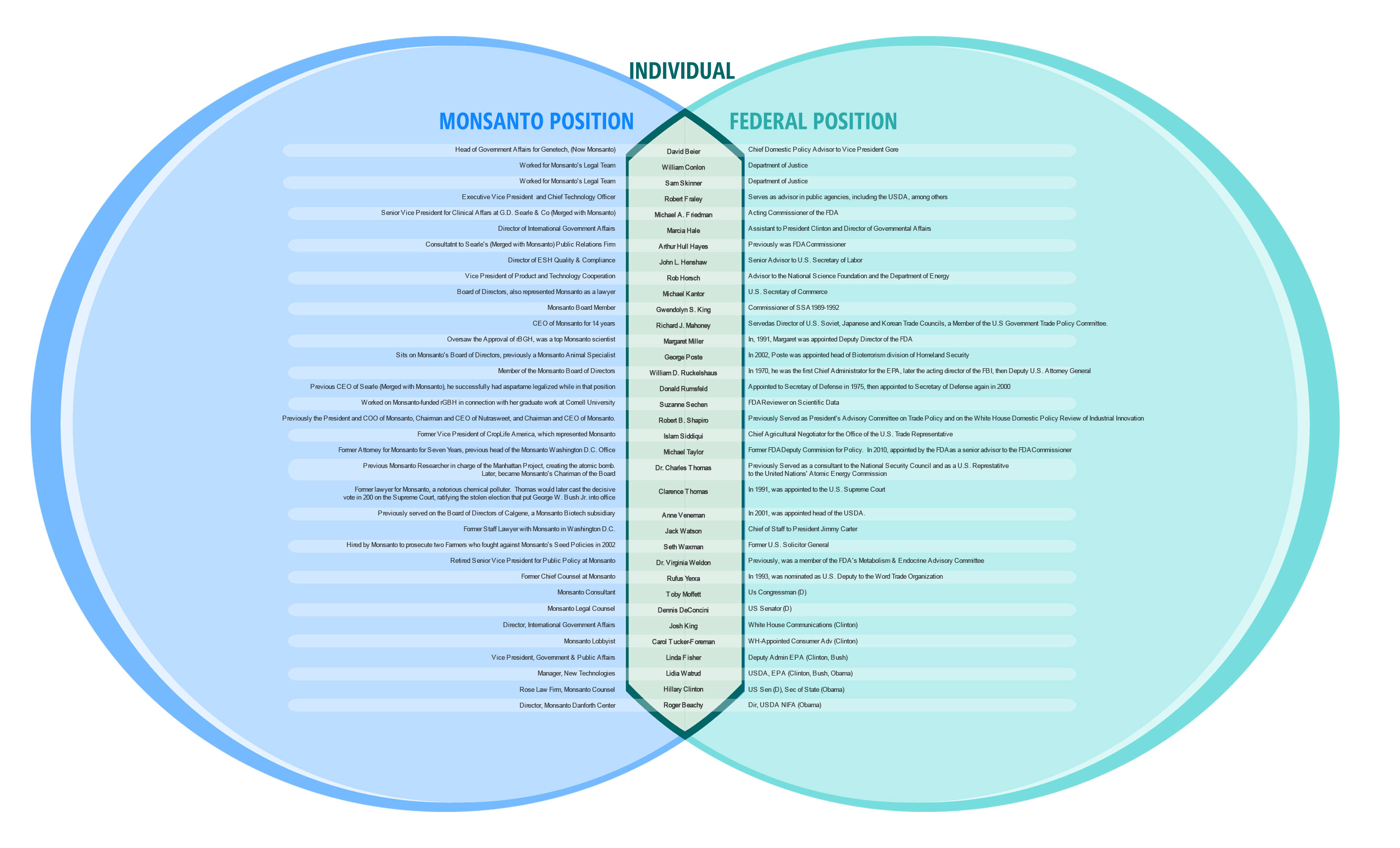
GMO’s can be engineered with genes from bacteria, viruses, insects, animals, or even humans. The primary reason the plants are engineered is to allow them to basically drink poison. They’re inserted with foreign genes that allow them to survive otherwise deadly doses of poisonous herbicides, fungicides, and insecticides. The only “testing” for safety that is required is for the GMO producer to submit a self-authored report on the new GMO’s safety. This scam was devised by Michael Taylor, a former FDA lawyer who established the “no testing” policy by reasoning that GMO’s are “substantially equivalent” to food, and food has already been determined to be safe. Taylor (second cousin to Tipper Gore) is notorious for his “revolving door” employment within the US government and Monsanto and was chosen by Obama as the FDA Deputy Commissioner for foods (aka the “food safety czar”) in July 2009. While at Monsanto, Taylor’s main responsibility was gaining regulatory approval of the GMO cancer-causing bovine growth hormone (rBGH).

Effectively, in the area of American food safety, we now have the “fox” guarding the “henhouse.” You see, we have been given a false sense of security about the safety of our food supply. Ignorance is the key in this campaign of deception, as only about 20% of Americans even know if they’ve ever eaten GMO food in their lifetime! The five main GMO foods are soy, corn, cotton, canola, and sugar beets, but as I mentioned, alfalfa is also rapidly becoming GMO. The fact of the matter is that GMO’s have been linked to toxic and allergic reactions, sick, sterile, and dead livestock, and damage to virtually every organ studied in lab animals. Numerous studies of GMO corn and soy have shown that they cause STERILITY in hamsters by the 3rd generation!

Here’s a major area of concern: foods containing GMOs don’t have to be labeled in the USA! Monsanto has fought hard to prevent labeling laws. This is alarming, since approximately 75% of processed foods in the USA now contain GMO ingredients. Fifty countries, including France, Germany, and Italy have banned or restricted GMOs, while the EU, Japan, China, Korea, Australia, New Zealand and many other nations now require mandatory GMO labeling. However, the USA doesn’t even require GMO foods to be labled, despite the fact that recent polls indicate that more than 80% of Americans want GMO foods to be labeled.

How to identify ORGANIC fruits and vegetables: The PLU code (price lookup number), tells you the following: a 5-digit number, beginning with the #9 = organic; a 5-digit number, beginning with the #8 = GMO; a 4-digit number means grown by conventional means.

http://www.cancertruth.net/2012-june-newsletter/

Tuesday, 17 July 2012

Monsanto Promises Pain to EU, Assault Underway


July 10 2012 | 21,659 views


Story at-a-glance

  • The European Commission has issued a proposal to drop the policy of zero tolerance for unapproved and untested GMOs in food; the proposal suggests setting a threshold below which contaminated imports could enter Europe’s food chain
  • In 2011, the EU decided to allow contamination with up to 0.1 percent of unapproved and untested GMOs in animal feed, which was previously not allowed
  • France recently asked the European Commission to suspend Monsanto's authorization to plant genetically modified MON 810 corn, but the EU stepped in and blocked the ban
  • GM opponents are urging the EU to reject the proposals, noting the pressure to drop their zero tolerance policy regarding GM contamination is coming from the U.S. government, the WTO (World Trade Organization) and the biotech industry


By Dr. Mercola
The European Union (EU) has historically taken a strict, cautious stance regarding genetically modified (GM) crops, much to the chagrin of Monsanto and in stark contract to the United States.

For instance, while GM crops are banned in several European countries, and all genetically modified foods and ingredients have to be labeled, this is in stark contrast to the U.S., where Monsanto has effectively restricted any unfavorable legal actions because of the massive conflict they have with federal regulatory agencies. 
Recently Connecticut and Vermont where ready to pass statewide GMO labeling requirements but backed out at the last minute when biotech giant Monsanto threatened to sue them if it was passed.

As a result, the U.S. has only recently begun passing legislation that protects the use of GM seeds and allows for unabated expansion, in addition to the fact that GM ingredients do not have to be labeled.

It's quite clear that the U.S. government, which is closely tied to Monsanto, has been aiding and abetting Monsanto's tireless and often ruthless quest to control the world's food crops.

U.S. diplomatic cables released by WikiLeaks, showed the government even conspired to find ways to retaliate against Europe for refusing to use GM seeds, mainly by engaging in aggressive trade wars against reluctant nations.i As you might suspect, the EU has been under heavy pressure to add some slack to their GM regulations – and it seems they are about to cave …

EU Proposes to Drop Zero Tolerance Policy

The European Commission has issued a proposal to drop the policy of zero tolerance for unapproved and untested GMOs in food. The proposal suggests setting a threshold below which contaminated imports could enter Europe’s food chain.

This is similar to the EU’s move in 2011 … they once had a zero tolerance policy regarding GM contamination from unapproved GMOs in animal feed, but last year decided to allow contamination with up to 0.1 percent of such materials. At the time, Greenpeace EU agriculture policy adviser Stefanie Hundsdorfer said:ii
“If the safety of a GM crop has not been tested in Europe, it should not be allowed. Setting a tolerance threshold, however low, is a sign that Europe is losing control over its own food production to please American exporters. The danger now is that EU countries come under pressure from the pro-GM lobby to also allow GM contamination in food products for direct human consumption.”
And, alas, that moment has come, just over one year later. Several GM opponents are urging the Department for Environment, Food and Rural Affairs, Secretary of State Caroline Spelman to reject the proposals, noting:iii
“Pressure to drop the zero tolerance policy comes from the US government, the WTO and the biotech industry.”

EU Blocks France’s Ban on GM Corn

France recently asked the European Commission to suspend Monsanto's authorization to plant genetically modified MON 810 corn, citing "significant risks for the environment" shown in recent scientific studies (Germany has also banned the cultivation of MON 810 corn).

The EU stepped in and blocked the ban, which was an unsettling move to put it mildly, considering that in a leaked cable from 2007, Craig Stapleton, who was the U.S. ambassador to France at the time, commented on France's plan to ban the cultivation of GM corn, and stated that retaliation would occur:
"Europe is moving backwards not forwards on this issue with France playing a leading role, along with Austria, Italy and even the [European] Commission... Moving to retaliation will make clear that the current path has real costs to EU interests and could help strengthen European pro-biotech voice.

... Country team Paris recommends that we calibrate a target retaliation list that causes some pain across the EU since this is a collective responsibility, but that also focuses in part on the worst culprits. The list should be measured rather than vicious and must be sustainable over the long term, since we should not expect an early victory."

UK Also Moving Full Steam Ahead with GMOs

Meanwhile, in the UK the Agriculture Biotechnology Council (ABC) published a new report "Going for Growth," which, according to GMWatch, “calls for GM to be put at the heart of agricultural development in the UK.” But ABC is not a government authority; it’s a GM industry lobby group that represents the interests of Monsanto, Bayer, DuPont, Syngenta and other biotech giants.

However, the ABC is meeting with key UK government officials to present their case, and reportedly “the industry’s push for GM is already being welcomed.”

Ironically, around this same time, a leading supporter of GM foods in the UK, George Freeman, has been touting a supposedly “healthier” broccoli that fights heart disease as GM, and using it to show how “GM food can improve health.” But it turns out the broccoli, sold under the brand Marks & Spencer is not GM at all, but is produced using natural plant breeding methods!

Freeman, who has received money from the biotech industry, is now in hot water with Marks & Spencer, who has banned GM foods for more than 10 years, and was one of the first UK retailers to put such a ban in place!

This type of thing has actually happened before. In 2008, retired chief government scientist in the UK, Professor Sir David King made claims that drought-resistant crops that have increased yields by 30% were being planted in South Africa – even though the plants were only in a trial period, and effectiveness had yet to be proven. And as reported in the Guardian:iv
“King has been wrong before about new crops in Africa, claiming that a successful project near Lake Victoria was benefiting from GM technology, before having to admit the crops involved were not GM at all.”

GM Soy Linked to Illnesses in Farm Pigs

As you probably know the reason why there’s such heated controversy over the allowance of GM crops is due to their many health dangers, and the fact that their genes are capable of transferring to non-GM plants ‘horizontally,’ which means you cannot contain them. They absolutely WILL contaminate their conventional and organic counterparts, so one day soon there may be no such thing as “GM-free,” because everything will be contaminated – especially with the recent approval of GM alfalfa.

Jeffrey Smith, author of Seeds of Deception and Genetic Roulette: The Documented Health Risks of Genetically Engineered Foods, provides overwhelming evidence that genetically engineered foods are unsafe and should never have been introduced. Smith has documented at least 65 serious health risks from GM food products.

Among them:
  • Offspring of rats fed GM soy showed a five-fold increase in mortality, lower birth weights, and the inability to reproduce
  • Male mice fed GM soy had damaged young sperm cells
  • The embryo offspring of GM soy-fed mice had altered DNA functioning
  • Many US farmers report sterility or fertility problems among pigs and cows fed GM corn
  • Investigators in India have documented fertility problems, abortions, premature births, and other serious health issues, including deaths, among buffaloes fed GM cottonseed products
There are countless examples of GM crop failures, as well as GM-associated toxicity being observed in animals fed the plants. For instance, a farmer in Denmark became frustrated because his pigs were sick. The pigs had chronic diarrhea, birth defects, reproductive problems, reduced appetite, bloating, stomach ulcers, weaker and smaller piglets, and reduced litter sizes – and they were being fed GM soybeans.

The farmer looked into the effects of GM foods and their associated herbicides, and stopped feeding his 450 sows GM soy, giving them non-GM fishmeal instead. It only took two days for him to see noticeable results -- for the better.v

GM Crops are Not All They’re Cracked up to Be

Virtually all of the claims of benefit of GM crops – increased yields, more food production, controlled pests and weeds, reductions in chemical use in agriculture, drought-tolerant seeds – have not materialized. The Global Citizens' Report on the State of GMOs states: vi
  • Contrary to the claim of feeding the world, genetic engineering has not increased the long-term yield of a single crop.
  • Herbicide tolerant (Roundup Ready) crops were supposed to control weeds and Bt crops were intended to control pests. Instead of controlling weeds and pests, GE crops have led to the emergence of super-resistant weeds and super-resistant pests … Herbicide resistant crops such as Roundup Ready cotton can create the risk of herbicide resistant "superweeds" by transferring the herbicide resistance to weeds.
  • Despite claims that genetically modified organisms (GMOs) will lower the levels of chemicals (pesticides and herbicides) used, this has not been the case. This is of great concern both because of the negative impacts of these chemicals on ecosystems and humans, and because there is the danger that increased chemical use will cause pests and weeds to develop resistance, requiring even more chemicals in order to manage them.
  • Monsanto has been claiming that through genetic engineering it can breed crops for drought tolerance and other climate-resilient traits. This is a false promise.
Among the false claims made by Monsanto and the Biotechnology industry is that GE foods are safe. However, there are enough independent studies to show that GE foods can cause severe health damage.

Learn More about Genetically Engineered Foods

Due to lack of labeling, many Americans are still unfamiliar with what genetically engineered foods are. We have a plan to change that, and I urge you to participate and to continue learning more about genetically engineered foods and helping your friends and family do the same.

To start, please print out and use the Non-GMO Shopping Guide, created by the Institute for Responsible Technology. Share it with your friends and family, and post it to your social networks. You can also download a free iPhone application, available in the iTunes store. You can find it by searching for ShopNoGMO in the applications.

Your BEST strategy for now, however, is to simply buy USDA 100% Organic products whenever possible, (as these do not permit genetically engineered ingredients) or buy whole fresh produce and meat from local farmers. The majority of the genetically engineered organisms (GMOs) you're exposed to are via processed foods, so by cooking from scratch with whole foods, you can be sure you're not inadvertently consuming something laced with altered ingredients.

When you do purchase processed food, avoid products containing anything related to corn or soy that are not 100 percent organic, as any foods containing these two non-organic ingredients are virtually guaranteed to contain genetically engineered ingredients, as well as toxic herbicide residues.

To learn more about genetically engineered foods, I highly recommend the following films and lectures:

Important Action Item: Support California's Ballot Initiative to Label GMO's!

In 2007, then-Presidential candidate Obama promised to "immediately" require GM labeling if elected. We’re still waiting.. 
.

Fortunately, 24 U.S. states have (as part of their state governance) something called the Initiative Process, where residents can bring to ballot any law they want enacted, as long as it has sufficient support. California has organized just such a ballot initiative to get mandatory labeling for genetically engineered foods sold in their state. Michigan and Washington are also starting similar campaignsvii. Since California is the 8th largest economy in the world, a win for the California Initiative would be a huge step forward, and would likely affect ingredients and labeling nation-wide.

A coalition of consumer, public health and environmental organizations, food companies, and individuals has already submitted the California Right to Know Genetically Engineered Food Actviii to the State Attorney General. They needed 800,000 signatures to get the Act on this year's ballot, and they succeeded! The next step is the campaigning. Remember, if California can get the law passed in November, it’s going to have the same impact as national law, because large companies are not likely going to label their products as genetically engineered when sold in California, but not when sold in other states. Doing so would be a PR disaster. So it’s going to have an impact on national labeling, even if other states do not create initiatives of their own.

Thousands of volunteers have already been enlisted, but more are needed. It’s going to be an enormous battle, as the biotech industry will outspend us by 100 to 1, if not more, for their propaganda.

Needless to say, the campaign needs funds. So if you have the ability, I strongly encourage you to make a donation. But they also need more volunteers, because that’s how we’re going to win this battle. The biotech industry may outdo us in funding ability, but we as consumers still outnumber them. Pamm Larry, the California grandmother who created the initiative, is correct when she says we need to reach every single California community—large and small.

I urge you to get involved and help in any way you can. Be assured that what happens in California will affect the remainder of the U.S. states, so please support this important state initiative, even if you do not live there!
  • If you live in California and want to get involved, please contact LabelGMOs.org. They will go through all volunteer requests to put you into a position that is suitable for you, based on your stated interests and location
  • No matter where you live, please help spread the word in your personal networks, on Facebook, and Twitter. For help with the messaging, please see LabelGMOs.org’s “Spread the Word!” page
  • Whether you live in California or not, please donate money to this historic effort, either through the LabelGMOs.org, or the Organic Consumers Fund
  • Talk to organic producers and stores and ask them to actively support the California Ballot. It may be the only chance we have to label genetically engineered foods.
  • Distribute WIDELY the Non-GMO Shopping Guide to help you identify and avoid foods with GMOs. Look for products (including organic products) that feature the Non-GMO Project Verified Seal to be sure that at-risk ingredients have been tested for GMO content. You can also download the free iPhone application that is available in the iTunes store. You can find it by searching for ShopNoGMO in the applications.
  • For timely updates, please join the Organic Consumers Association on Facebook, or follow them on Twitter.
  • Look for in-depth coverage of the issue at the Institute for Responsible Technology, subscribe to Spilling the Beans, and check out their Facebook or Twitter.
Donate Today!
References:


Thursday, 9 February 2012

GMOs - Linked to Cancer ...

Don't Eat it: Linked to Cancer and Gets into Your Blood

Posted By Dr. Mercola | February 07 2012 | 227,596 views


Story at-a-glance

  • Genetically modified crops will be phased out from being grown in Boulder County, where the Parks and Open Space Advisory Committee voted to no longer allow GMOs on county-owned land
  • The decision to transition out GM crops came from a recommendation from the county's Food and Agriculture Policy Council, and was in large part influenced by a turnout of 250 residents at a public meeting, most of whom voiced their opinion against GMOs
  • The health effects of eating genetically engineered foods are largely unknown, but research to date suggests they may play a role in cancer, birth defects, lung damage, organ disruption, allergies, DNA damage and more
  • A 2012 California Ballot Initiative is underway that would require mandatory labeling of genetically engineered foods and food ingredients. If California voters pass this ballot initiative, it will likely be the beginning of the end for genetically engineered food in the U.S. -- find out how you can get involved

By Dr. Mercola
In November 2011, about 250 Boulder County residents attended a public meeting to discuss the planting of GM (genetically modified) crops on county-owned land.

Their turnout, together with an anti-GMO (genetically modified organism) recommendation from the county's Food and Agriculture Policy Council, led county officials to vote for a phase out of genetically engineered crops on open space.

This is a powerful testimony to the influence residents can have on their local regulations when they stand together for a cause; you, too, can work toward enacting such a phase out in your area as well.

Boulder Residents, County Officials Say "No" to GMOs

Boulder's Parks and Open Space Advisory Committee voted 5-4 in support of the Food and Agriculture Policy Council's recommendation to phase out the planting of GM crops on the county's open space.

Currently, about 16,000 acres of county-owned land are planted with genetically engineered corn; the new rule will mean these crops will be transitioned out in favor of traditional GMO-free farming practices.

The area has been a hot-spot for GMO debate since 2009, when local farmers wanted to plant genetically engineered sugar beets in the county.

Following public outcry, County commissioners delayed the farmers' request. Since then, a local survey showed that 56 percent of Boulder County residents supported a ban on GM crops, and now their voices have been heard.1 As reported by the Boulder Daily Camera2, Parks and Open Space Advisory Committee member John Nibarger said:
"There's the voters' side of this, and there's the farmers' side of this … I think we heard rather strongly ... (that a lot of voters) don't want to see GM crops."

Americans Already Eating GM Foods, While Other Countries Have Banned Them

GM corn, soybeans, canola, and sugar beets have made their way into approximately 80 percent of current U.S. processed grocery store items, now that up to 90 percent of several U.S. grown crops are grown with genetically engineered seed. So if you live in the United States, you have most certainly already been exposed to GM foods -- most likely a lot of them.

This is why Boulder's move to phase out GM crops is such a breath of fresh air, as finally a governing body in the United States is stepping up to protect its residents from this massive, uncontrolled experiment -- a move that has already taken place in other parts of the world, and in four counties in California and a city in Maine.

Genetically engineered seeds are banned in Hungary, as they are in several other European countries, such as Germany and Ireland. Peru is also following the precautionary principle, and has even passed a law that bans genetically modified ingredients within the nation for 10 years.3

The issue of protecting farmland from invading GMOs is a serious one, so much so that Hungary recently destroyed nearly 1,000 acres of corn crops because they were found to be mistakenly grown with GM seeds. The discovery that the farmland was planted with GM seeds came when the season was already underway, so the harvest was completely lost.

What would prompt the Hungarian government to take such a drastic step?

Perhaps it is the fact that GM crops simply cannot be contained, and inevitably will contaminate the environment with GM DNA. Or it could be that they do not want superweeds, triggered by the overuse of Roundup herbicide on GM Roundup Ready crops, overtaking their farmland the way they are now doing in the United States. Then again, it could be the unknown threats to human health -- and the fact that new research shows toxins from GM crops are now appearing in human blood -- that made them think twice.

The other, and more serious issue, is the hidden one. Nearly all GM crops are designed with genes to resist a potent herbicide called Round Up or glyphosate. The newest science is showing that glyphosate is actually FAR more dangerous than people realize. It just is not widely appreciated yet, and the U.S. is spreading massive amounts of it every year.  
The consequences of this chemical abuse will have profoundly devastating consequences and the longer we wait to remove this toxin the worse it will be.

Either way, they, and a growing number of people around the world, are clearly well educated about the dangers of GM foods … which is a lesson the U.S. government still needs to learn.

Genetically Engineered "Pesticide" Toxin Now Found in Human Blood

Upwards of 65 percent of U.S. corn crops contain a special gene added that allows them to produce an insecticide. This way, when bugs attempt to eat the corn they're killed right away (specifically their stomach is split open) because the plant contains an invisible, built-in pesticide shield.

The particular gene added to most corn crops is a type of Bt-toxin -- produced from Bacillus thuringiensis bacteria. Genetic engineers remove the gene that produces the Bt in bacteria and insert it into the DNA of corn (and cotton) plants. They claim that Bt-toxin is quickly destroyed in human stomachs -- and even if it survived, it won't cause reactions in humans or mammals...

But studies are now showing that this is not the case, as Bt toxin is readily passing into the human bloodstream and animal studies have already shown that Bt-toxin does cause health effects in animals, including potentially humans. As Jeffrey Smith, executive director of the Institute for Responsible Technology, wrote:
"Mice fed natural Bt-toxin showed significant immune responses and caused them to become sensitive to other formerly harmless compounds. This suggests that Bt-toxin might make a person allergic to a wide range of substances. Farm workers and others have also had reactions to natural Bt-toxin, and authorities acknowledge that "People with compromised immune systems or preexisting allergies may be particularly susceptible to the effects of Bt."

In fact, when natural Bt was sprayed over areas around Vancouver and Washington State to fight gypsy moths, about 500 people reported reactions—mostly allergy or flu-like symptoms. Six people had to go to the emergency room.

… The Bt-toxin produced in the GM plants is probably more dangerous than in its natural spray form. In the plants, the toxin is about 3,000-5,000 times more concentrated than the spray, it doesn't wash off the plants like the spray does, and it is designed to be more toxic than the natural version. In fact, the GM toxin has properties of known allergens and fails all three GM allergy tests recommended by the World Health Organization (WHO) and others."
It's reasons such as this why the precautionary principle should absolutely be used in regard to exposing humans and the environment to GM crops. Unfortunately, it appears Cry1Ab, a specific type of Bt toxin from GM corn, is already quite prevalent in humans; upon testing 69 pregnant and non-pregnant women who were eating a typical Canadian diet (which included foods such as GM soy, corn and potatoes), researchers found Bt toxin in:
  • 93 percent of maternal blood samples
  • 80 percent of fetal blood samples
  • 67 percent of non-pregnant women blood samples
Other potential dangers have also been uncovered, including:
GM peas caused lung damage in mice Offspring of rats fed GM soy showed a five-fold increase in mortality, lower birth weights, and the inability to reproduce
GM potatoes may cause cancer in rats Male mice fed GM soy had damaged young sperm cells4
Bacteria in your gut can take up DNA from GM food The embryo offspring of GM soy-fed mice had altered DNA functioning
GM foods lead to significant organ disruptions in rats and mice, specifically the kidney, liver, heart and spleen Several U.S. farmers reported sterility or fertility problems among pigs and cows fed on GM corn varieties
Bt corn caused a wide variety of immune responses in mice, commonly associated with diseases such as arthritis, Lou Gehrig's disease, osteoporosis, and inflammatory bowel disease Investigators in India have documented fertility problems, abortions, premature births, and other serious health issues, including deaths, among buffaloes fed GM cottonseed products


Intense Lobbying Efforts Aim to Keep Americans in the Dark about GM Foods

The food and agriculture biotechnology industry has spent more than $572 million in campaign contributions and lobbying expenditures in just over a decade, according to an analysis by Food & Water Watch.5 Key among the goals of this intense lobbying effort is to prevent GM food labeling and keep Americans in the dark about the contents of their food. The analysis states:
"The food and agriculture biotechnology industry has been flexing its financial political muscle to ease the regulatory oversight of genetically modified foods. Lobbying efforts for some of these firms and groups have included approval of cloned food and genetically engineered food, animals and livestock.

Companies are also fighting to eliminate or prevent labeling on genetically modified foods in the United States and preventing other countries from regulating genetically modified foods. These efforts have dovetailed with lobbying to tighten intellectual property law protections over patented seeds and animals in attempts to further benefit the biotech industry."
Over 95 percent of Americans polled said they think GM foods should require a label, stating it's an ethical issue and consumers should be able to make an informed choi 
 Like Europeans, Americans are suspicious of GM foods, and a large part of why many continue to buy them is because they are unaware that they're already in the food. A prominent GM food label would be a death sentence to U.S. GM crops, which are right now enjoying a free for all when it comes to entering the food market.

Industry lobbying is clearly working, as to date biotech companies have evaded mandatory labeling laws (although a new California initiative may change all of that). They also succeeded in getting GM alfalfa approved, which quite literally threatens the entire organic industry.

A large part of the problem, and one of the reasons why the United States has not taken a precautionary stance the way other countries have, is that the United States Department of Agriculture (USDA) and the U.S. Food and Drug Administration (FDA) are heavily influenced by biotech giant Monsanto. In the first quarter of 2011 alone, Monsanto spent $1.4 million on lobbying the federal government -- and this was a drop from a year earlier, when they spent $2.5 million during the same quarter.

The FDA, the USDA, and the U.S. Trade Representative all have a special set of revolving doors leading straight to Monsanto, which has allowed this transnational giant to gain phenomenal authority and influence, as well as get their genetically engineered crops planted on the lion's share of U.S. farmland.


However, just as changes in Boulder could prove to be a tipping point that begins a trend toward eliminating GM crops from American soil, a 2012 ballot initiative has been launched in California, which will require mandatory labeling of genetically engineered foods and food ingredients -- also an important step toward ultimately eliminating these toxic foods from the market.

You Can Join the Fight Against GMOs

The people of Boulder County have made it clear that they will not tolerate GM crops on their local land; now you, too, can let your opinion be heard. Several organizations, including Mercola.com, the Organic Consumers Association, the Institute for Responsible Technology, and the Environmental Working Group, are working to generate a tipping point of consumer rejection to make GMOs a thing of the past.

Here's how you can get involved:
  • If you live in California and are willing to attend a short training session and then start collecting petition signatures (you will be part of a team of 2-4 people) for the California Ballot Initiative, sign up here. (For more information see: The California Ballot Initiative: Taking Down Monsanto.) Also remember to share this information with family and friends in California!
  • Whether you live in California or not, please donate money to this historic effort
  • Talk to organic producers and stores and ask them to actively support the California Ballot. It may be the only chance we have to label genetically engineered foods.
  • Distribute WIDELY the Non-GMO Shopping Guide to help you identify and avoid foods with GMOs. Look for products (including organic products) that feature the Non-GMO Project Verified Seal to be sure that at-risk ingredients have been tested for GMO content. You can also download the free iPhone application that is available in the iTunes store. You can find it by searching for ShopNoGMO in the applications.
  • For timely updates, please join the Organic Consumers Association on Facebook, or follow them on Twitter
  • Look for in-depth coverage of the issue at the Institute for Responsible Technology, subscribe to Spilling the Beans, and check out their Facebook or Twitter.
  • You can also join the Non-GMO Project on Facebook, or Twitter
In the meantime, the simplest way to avoid GM foods is to buy whole, certified organic foods. By definition, foods that are certified organic must never intentionally use GM organisms, must be produced without artificial pesticides and fertilizers and come from an animal reared without the routine use of antibiotics, growth promoters or other drugs. 
Additionally, grass-fed beef will not have been fed GM corn feed, although now that GM alfalfa is approved, grass-fed will not always mean GMO free.

You can also look for foods that are "non-GMO verified" by the Non-GMO Project.

Important Action Item: Support California's Ballot Initiative to Label GMO's!

In 2007, then-Presidential candidate Obama promised to "immediately" require GM labeling if elected. So far, nothing of the sort has transpired.


Fortunately, 24 US states have (as part of their state governance) something called the Initiative Process, where residents can bring to ballot any law they want enacted, as long as it has sufficient support. California has been busy organizing just such a ballot initiative to get mandatory labeling for genetically engineered foods sold in their state.  
The proposed law will be on the ballot for 2012.

Michigan6 and Washington are also starting similar campaigns.

Since California is the 8th largest economy in the world, a win for the California Initiative would be a huge step forward, and would affect ingredients and labeling nation-wide. Last month, a coalition of consumer, public health and environmental organizations, food companies, and individuals submitted the California Right to Know Genetically Engineered Food Act to the State Attorney General. Now, they need 800,000 signatures to get the Act on next year's ballot.

I urge you to get involved and help in any way you can.

If you live in California, volunteer to gather petition signatures. If you live outside of California, please donate to help support this Initiative and spread the word to everyone you know in California. Be assured that what happens in California will affect the remainder of the U.S., so please support this important state initiative, even if you do not live there!  
References:

  • 1 Survey: 56% Would Vote to Ban GMOs on Boulder County Open Space, Daily Camera, November 6, 2011: Laura Snider.
  • 2 Second Committee Votes to Phase Out Boulder County GMOs, Daily Camera, November 17, 2011: Laura Snider.
  • 3 Peru Passes Monumental Ten-Year Ban on Genetically Modified Foods, Natural Society, June 24, 2011: Anthony Gucciardi.
  • 4 Ultrastructural Analysis of Testes from Mice Fed on Genetically Modified Soybean, European Journal of Histochemistry, October 2004: 48 (4); 448-454, Vecchio, L. et al. (PDF)
  • 5 Food and Agriculture Biotechnology Industry Spends More Than Half a Billion Dollars to Influence Congress, FoodAndWaterWatch.org, November 2010. (PDF)
  • 6 Michigan GMO Labeling Campaign.


Source: Daily Camera November 17, 2011

Related Links:


http://articles.mercola.com/sites/articles/archive/2012/02/07/colorado-bans-gmo-crops.aspx

Tuesday, 20 December 2011

Could 93% of These Beans be Cancer-Causing?

Unhealthy Foods Experts Won't Eat

Posted By Dr. Mercola | December 20 2011 | 63,362 views


Story at-a-glance
  • Many common foods are best avoided if you want to maintain good health, such as genetically engineered foods, canned foods (particularly acidic foods like tomatoes), corn-fed beef, and microwave popcorn, due to the dangerous additives and contaminants inherent in these foods
  • Genetically engineered (GE) food is one of the most pressing dangers facing us as a species. A brand new organism thriving in GE soy and animals given GE animal feed has been identified, and a link between it and high rates of miscarriage and infertility in a number of animals has been established
  • The vast majority of US-grown corn, soy, canola, cottonseed oil, and sugarbeets are genetically engineered, which means virtually every processed food you buy that does not bear the "100% USDA Organic" label is likely to contain at least one GE component
  • The widespread use of glyphosate, the active ingredient in the herbicide Roundup, is exacerbating the problem. Glyphosate immobilizes certain nutrients, rendering them inaccessible to the plant, which in turn robs you of essential micronutrients you’d normally get from your food. It also cannot be washed off, as it is absorbed systemically through the plant, which means you’re consuming far more herbicide than ever before
  • Glyphosate is suspected of causing genetic damage, infertility and cancer. It is also acutely toxic to fish and birds and can kill beneficial insects and soil organisms that maintain ecological balance


By Dr. Mercola
When deciding what's healthy and what's not, it pays to take note of what the actual experts are saying, as opposed to just listening to industry propaganda regurgitated by talking heads in the mass media and government health agencies.

Wake Up World has assembled a list of foods that are avoided by people who know the facts.

Here are a few examples:

Genetically engineered (GE) foods: Not only do genetically modified (GM) foods encourage the massive spraying of insecticides, but studies have shown that pesticide-producing genes in these foods transfer to your intestinal flora.

GM foods come with a staggering environmental, political, economic, and social cost.

Canned tomatoes: Food can lining contains bisphenol-A (BPA), a synthetic estrogen that has been linked to many illnesses.

The problem worsens when the cans contain acidic food such as tomatoes, which leach BPA into the food.

Corn-fed beef: Cattle evolved to eat grass rather than corn. 

But modern cattle are fed so as to fatten them up faster, not to keep them healthy.

The result is beef that is much less nutritious.

Microwave popcorn: Chemicals that line the bag, such as PFOA, have been linked to infertility in humans and various forms of cancer in animal tests.

To see the rest of the list, please see the original article.

Here, I'll focus on the issue of genetically engineered foods, as I believe that is one of the most pressing dangers facing us as a species.

As Humans, We are Part of the Ecological System

While industry giants like Monsanto hold fast to the claim that genetically engineered (GE) foods are completely safe, those who have actually taken the time to investigate this issue have come to horrific conclusions. Alternative terms for GE foods include genetically modified (GM), or GMO (genetically modified organism).

Everyone really needs to understand that agriculture is a system based on inter-related factors. In order to maintain ecological balance and health, you must understand how the system works as a whole, and realize that any time you alter one part of that system, you change the interaction of all the other components as well, because they work together.

This is the fundamental problem with genetically engineered foods of all kinds.

Seeds such as Monsanto's Roundup Ready corn, canola and soy are genetically altered to be able to withstand otherwise lethal dousing of the toxic herbicide Roundup.

While this may sound attractive at first, as in theory it should improve yield by cutting down on weeds, the end result is anything but beneficial… The weed control and increased yield premise has been found to be severely flawed, as farmers around the world are now losing acreage to glyphosate-resistant super-weeds at an alarming rate. According to the British Institute of Science in Society, the US has fared the worst, now combating 13 different glyphosate-resistant weed species in 73 different locations.
By ignoring the laws of nature and thinking they can fool it into submission, Monsanto and other biotech corporations are creating ecological imbalance that is already wreaking havoc on our environment, and this imbalance will ultimately trickle down and can destroy human health as well.

MOST Major US Food Crops are Now Genetically Engineered!
Many still don't realize just how much of our food supply has been genetically engineered (GE). As of this year, 93 percent of soybeans grown in the US are genetically engineered, as are:
  • 86 percent of all corn
  • 93 percent of canola
  • 93 percent of cottonseed oil 

Between 2008 and 2009, a full 95 percent of all sugarbeets planted were also Roundup Ready.  
This means that virtually every processed food you encounter at your local supermarket that does not bear the "100% USDA Organic" label is likely to contain at least one GE component!

Earlier this year, the US Department of Agriculture (USDA) also deregulated genetically engineered alfalfa, which is a perennial crop commonly used in cattle feed, which will further contaminate animal products. There's even a great risk that GE alfalfa may contaminate organically-raised animals, as alfalfa is a perennial crop that can easily spread and end up in organic alfalfa fields.

Are You Listening to the Experts, or Falling for Industry Propaganda?

Dr. Don Huber is an expert in an area of science that relates to the toxicity of genetically engineered (GE) foods, and his warnings couldn't be more clear: genetically engineered seeds have already created a brand new organism that now threatens plant-, animal-, and probably human, health. Furthermore, the use of glyphosate, the active ingredient in the herbicide Roundup, is exacerbating the problem, as glyphosate has been found to cause a number of health problems in and of itself.

In the video below, Dr. Huber discusses both of these concerns.  


In this recent interview, Dr. Huber explains how the introduction of glyphosate-resistance has had a direct impact on soil microbes. This has occurred because, again, agriculture is an inter-related system. Herbicides such as Roundup are chelators, which means they form a barrier around specific nutrients, preventing whatever life form is seeking to utilize that element from utilizing it properly. That applies to everything from plants to soil microbes, to animals and humans...

This may actually be one of the primary reasons why genetically engineered foods appear to be able to cause such profound health problems in those who consume them.

Glyphosate Destroys Soil Microorganisms, which Denatures Food

Glyphosate, even in plants genetically engineered to withstand it, affects about 25 different enzymes in the process of chelating (i.e. immobilizing) critical micronutrients. As a result, the nutritional efficiency of genetically engineered (GE) plants is profoundly compromised. Micronutrients such as iron, manganese and zinc can be reduced by as much as 80-90 percent in GE plants!

Naturally, when you consume these foods, you're no longer getting the essential micronutrients that these foods used to provide in your diet, and your health can suffer as a result.

But that's not all.

Roundup Ready crops are very heavily sprayed with Roundup, and the resulting glyphosate residue cannot be removed or washed off—it actually becomes part of the plant. As a result, humans are now ingesting far more of this herbicide than we ever have before because it's systemic through the entire plant.

Without Healthy Soils, Human Health is Decimated…

According to Dr. Huber, about 20 percent of the glyphosate migrates out of the plant's roots and into the surrounding soil. Once in the soil, the glyphosate kills beneficial soil microorganisms in the same way it kills weeds, because they have the same critical metabolic pathway. The thing we must all understand is that once you destroy the beneficial microbes in the soil, you've destroyed the food grown in it, because the quality of the food is almost always related to the quality of the soil, which depends on a healthy balance of microorganisms.

It is in fact the microorganisms in the soil that allow the plants to utilize the nutrients...

Are you beginning to sense the intricate inter-relatedness of the agricultural system?

Are you beginning to understand the importance of sustainable, environmentally conscious agriculture? If we want to live and thrive for generations to come, we simply cannot turn a blind eye to what's being done to our food supply, because without proper nutrition, we simply cannot exist


New "Franken-Organism" Threatens Plant-, Animal- and Human Health

Dr. Huber has also blown the whistle on a brand new concern relating to genetically engineered crops—a groundbreaking finding that could spell absolute disaster for our entire food supply.

A brand new micro-fungal-type organism has been identified, which has been linked to what researchers are now calling Sudden Death Syndrome (SDS). The organism was initially identified by veterinarians around 1998—about two years after the introduction of Roundup Ready soybeans, which is one of the staple feeds. The vets were puzzled by sudden high reproductive failure in animals. While sporadic at first, the phenomenon has continued to increase in severity.

Dr. Huber was recently informed of a dairy experiencing a 70 percent miscarriage rate!

According to Dr. Huber, the cause-effect relationship between high reproductive failure and this new microbial entity has already been established, but the research has not yet been published. The reason for the delay is because they really do not know what the organism is!
"It's not a fungus. It's not bacteria. It's not a mycoplasma or a virus – [although] it's about the same size of a small virus… They have pictures of it… You can see the interactions with it. They can now culture it. It's self-replicating… If you have yeast, bacteria, or a fungus in the culture, this entity grows very well."
What is known is that:
  • It's an entirely new entity, previously unknown to science
  • It's definitely found in genetically engineered corn and soybeans
  • It causes infertility and miscarriage in cattle, horses, pigs, sheep, and poultry
"We can anticipate with that broad spectrum of animal species, which is extremely unusual, that it will also [affect] humans," Dr. Huber says. "We've seen an increasing frequency of miscarriage and a dramatic increase in infertility in human populations in just the last eight to 10 years."
Earlier this year, Dr. Huber urged the USDA to investigate the matter and suspend approval of GE alfalfa until proper studies have been completed, but his warnings fell on deaf ears and GE alfalfa was deregulated earlier this year despite vigorous opposition…

Important Action Item: Support California's Ballot Initiative to Label GMO's!

In 2007, then-Presidential candidate Obama promised to "immediately" require GM labeling if elected. So far, nothing of the sort has transpired.


Fortunately, 24 US states have (as part of their state governance) something called the Initiative Process, where residents can bring to ballot any law they want enacted, as long as it has sufficient support. California has been busy organizing just such a ballot initiative to get mandatory labeling for genetically engineered foods sold in their state. The proposed law will be on the ballot for 2012.

Michigan and Washington are also starting similar campaigns.

Since California is the 8th largest economy in the world, a win for the California Initiative would be a huge step forward, and would affect ingredients and labeling nation-wide. Last month, a coalition of consumer, public health and environmental organizations, food companies, and individuals submitted the California Right to Know Genetically Engineered Food Act to the State Attorney General. Now, they need 800,000 signatures to get the Act on next year's ballot.

I urge you to get involved and help in any way you can.

If you live in California, volunteer to gather petition signatures. If you live outside of California, please donate to help support this Initiative and spread the word to everyone you know in California. Be assured that what happens in California will affect the remainder of the US states, so please support this important state initiative, even if you do not live there!
Volunteer Today!
Donate Today!
 
How to Say "No" to GMOs
There's a lot of excellent information on the hazards of genetically modified foods available these days for those who care to look. For more information, I highly recommend Jeffrey Smith's books, Seeds of Deception, and Genetic Roulette: The Documented Health Risks of Genetically Engineered Foods, which provide overwhelming evidence that GM foods are unsafe and should never have been introduced in the first place. Smith is the executive director of the Institute for Responsible Technology, whose Campaign for Healthier Eating in America is designed to create the tipping point of consumer rejection of GMOs (genetically modified organisms) to rid them from our food supply.

Additionally, there are a number of films and videos available for viewing, including:
Since the U.S. government prevents the labeling of GM foods, it's imperative to educate yourself on what they are, and to help spread awareness on how to avoid these foods.

First and foremost, avoid most processed foods, unless it's labeled USDA 100% Organic. You can also avoid GM foods that are not found in processed foods, if you know what to look for. There are currently eight genetically modified food crops on the market (plus GM alfalfa, which is used as an animal feed and will primarily affect animal products raised in confined animal feeding operations, aka 'factory farms.'):
Soy Sugar from sugar beets
Corn Hawaiian papaya
Cottonseed (used in vegetable cooking oils) Some varieties of zucchini
Canola (canola oil) Crookneck squash

The free Non-GMO Shopping Guide is a great resource to help you determine which food brands and processed food products are GM-free. Print it out for yourself, and share it with everyone you know. If you feel more ambitious you can order the Non-GMO Shopping Tips brochure in bulk, and bring them to the grocery stores in your area. Talk to the owner or manager and get permission to post them in their store.

Additionally, to help you find non-GMO, organically grown, wholesome food in your area, check out these helpful resources:

Source: Wake Up World December 2011

Related Links:


 www.mercola.com
.