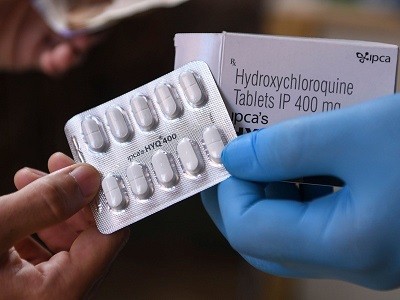
Pages

Showing posts with label anti-parasitic. Show all posts

Saturday, 4 September 2021

The shaky science behind ivermectin as a COVID-19 cure

Studies are inconclusive and misinformation is rampant. But many Americans now see a deworming medicine as a go-to drug to prevent and fight the Delta variant.

Over the last month, Frank Wallmeyer and several other farm supply store owners in some parts of the United States noticed an antiparasitic medication called ivermectin flying off the shelves. At his own store in Jacksonville, Florida, ivermectin sales have nearly tripled, and the phone rings at least a dozen times each day with inquiries about the drug, Wallmeyer says.

But many of those inquiring weren’t looking to get rid of worms in cattle and horse intestines. Rather, they wanted to use the drug for themselves or their loved ones to prevent and treat COVID-19. Touted as a miracle COVID-19 cure by some doctors and campaigners, despite lacking scientific support, ivermectin seems to be in high demand among unvaccinated Americans. As the fast-spreading Delta variant ravages the country, the search for alternative medication has led vaccine sceptics to ivermectin. Although the Food and Drug Administration has approved ivermectin to treat certain parasites in humans and animals, its use against COVID-19 isn’t authorized.

Poison control centers in several states including Florida, Mississippi, and Texas reported a recent surge in calls and cases associated with ivermectin misuse and overdose. Also, the Centers for Disease Control and Prevention reported that in the week ending August 13, 2021, more than 88,000 prescriptions were written for ivermectin, representing a 24-fold increase from the pre-pandemic baseline of 3,600 prescriptions per week. That meant some physicians were prescribing the drug for COVID-19, despite the FDA’s stand.

“It vastly complicates the management of [COVID-19] patients because there are so many and there is so much misinformation,” says John Sinnott, an epidemiologist at University of South Florida’s Morsani College of Medicine who is also affiliated with Tampa General Hospital.

Also, the drug preparations and doses vary for animals and humans, and the FDA warned people of potential harm from consuming the concentrated animal version, which contains inactive ingredients not tested for use in humans.

In an August 21 tweet, the FDA issued a warning: “You are not a horse. You are not a cow. Seriously, y’all. Stop it.”

But even human-grade ivermectin, considered generally safe for approved purposes—worms, head lice, and skin conditions such as rosacea—can cause side effects including headaches, nausea, diarrhea, skin rashes, and spikes in blood pressure. And seizures can result from high doses, leading to hospitalization.

What science tells us

While some studies suggest reduced risk of death, and others hint at fewer COVID-19 patients progressing to severe disease after taking ivermectin at an early stage of infection, the evidence is shaky. “We don't know whether ivermectin is helpful or not in the fight against COVID-19,” says Stephanie Weibel, a biologist at the University of Wuerzburg in Germany. “Trustworthiness of the pool of available studies is limited.”

In a recent review of 14 ivermectin studies, Weibel and her colleagues found that often the trials enrolled few patients or weren’t designed well, sometimes leading researchers to overestimate ivermectin’s impacts. She encourages more robust clinical trials, like the one underway at the University of Oxford in the United Kingdom.

Even Merck, an ivermectin manufacturer, in a February 2021 statement said that its own analysis of the scientific literature didn’t support the drug’s use against COVID-19. However, the argument that supporters sometimes make is that even if ivermectin use may not provide obvious benefits, it can’t hurt.

“If there isn’t evidence that the product works, then any risk the product might convey is unacceptable,” says Peter Lurie, president of the Center for Science in the Public Interest and former associate commissioner at the FDA. “We have people who have gotten ill from ivermectin, who’ve wasted a bunch of money for no proven benefit, and the concern is that ivermectin is diverting people from things that actually work: vaccines, masks, and social distancing.”

Also, ivermectin supporters, who possibly weren’t able to acquire prescriptions for the drug from their physicians, may resort to the animal-version stocked in farm supply stores, not knowing the difference. The recommended dose for animals is much higher, and if people ingest ivermectin at that high dose, they’re likely to be poisoned, says Michael Teng, a health virologist at the University of South Florida.

Some vaccine sceptics are also resorting to ivermectin to prevent getting COVID-19, even though there is no strong scientific evidence to support such behavior and physicians warn against using ivermectin for extended periods. As of now, the FDA states that ivermectin should only be used or prescribed for COVID-19 in a clinical trial setting, which often involves follow-ups and health monitoring for the enrolled participants.

What triggered the ivermectin frenzy

Ivermectin was discovered and developed in the 1970s. In a hunt to find antiparasitic compounds, scientists identified a new species of bacteria—Streptomyces avermitilis—from soil near a golf course in Japan that eradicated worms in mice. The microbes produced therapeutic molecules called avermectins, which were responsible for deworming and which later led to the creation of a commercialized veterinary drug called ivermectin. In 1987, after human clinical trials showed its effectiveness against river blindness caused by the parasitic worm Onchocerca volvulus, the FDA approved the drug for humans in 1996 under the brand name Stromectol.

Since then, ivermectin has come to be recognized as a safe treatment for several tropical diseases caused by parasites ranging from mites to roundworms.

So, when scientists were looking to test safe generic drugs that could be repurposed for COVID-19 treatment, ivermectin made the list.

Among the earliest research included a study published online in April last year that showed how high ivermectin doses prevented the replication of SARS-COV-2, the virus responsible for COVID-19, in test tubes. While the researchers didn’t test the drug for treating or preventing COVID-19 in humans or animals, the study made headlines and piqued the general public’s interest in ivermectin. The FDA quickly issued a warning against its use to cure COVID-19. Two letters sent to the journal’s editor expressed concerns about the high ivermectin dose used in the experiments.

Around the same time, a controversial paper which had not yet been peer reviewed and was later retracted entirely, claimed large reduction in mortality among COVID-19 patients given ivermectin. Although the study didn’t make the cut for publication in a scientific journal, it helped popularize ivermectin in Latin America.

As the efficacy and safety of ivermectin continued to be tested in clinical trials across the world, the results of a November 2020 publication led by Egyptian researcher Ahmed Elgazzar renewed interest in the drug’s potential. The preprint study claimed substantial recovery among COVID-19 patients given ivermectin in the early stages of infection and a reduction in mortality exceeding 90 percent. But ethical concerns led to the paper’s withdrawal in July this year.

“It’s troubling that people are putting their faith in a drug not proven to be effective against COVID,” Teng says. “I wish people would just take the vaccine.”

https://www.nationalgeographic.com/science/article/the-shaky-science-behind-ivermectin-as-a-covid-19-cure

Friday, 3 September 2021

Ivermectin developer hopes pill could prevent Covid


The developer of ivermectin is performing late-stage trials on a drug that could actually prevent COVID-19.


Mansur Shaheen For Dailymail.Com

2 Sep 2021

© Provided by Daily Mail Merck, developer of ivermectin, has begun late-stage trials for the drug molnupiravir that could actually prevent transmission of COVID-19 (file photo)

Merck & Co partnered with Ridgeback Biotherapeutics to develop molnupiravir.

Enrollment for late-stage trials for their drug have already started. 

The companies hope the drug could prevent COVID-19 infection in patients, but have yet to share further detail of how exactly it will be used. 

Merck is also the developer of ivermectin, an anti-parasite drug that has gained infamy due to false claims that it could combat the virus - which is the real use for molnupiravir.

The belief that worming drug ivermectin could potentially treat COVID-19 spawns from an Australian study from March 2020 that showed the drug could inhibit replication of virus cells.

Results from that study are not applicable to real life, though, as the concentrations of the drug used by researchers is too high to be used on people, Dr Timothy Geary, a parasitic drug expert who has studied the drug for over a decade told the DailyMail.com.  

That has not stopped many from trying to treat themselves with the drug though.

Prescriptions for it are easy to get, according to an investigation by Salon and instances of prescriptions have increased 24-fold.

Many who can not acquire prescriptions are taking it a step further, and purchasing versions of the drug made for animals like horses.

While taking the drug in human doses, even when unneeded, is safe, according to Geary, a person using the drug in larger doses made for animals could suffer a severe overdose. 

The Kenilworth, New Jersey based company that develops the anti-parasite drug warned against using ivermectin to combat COVID-19 in a statement February.

'[There is] no scientific basis for a potential therapeutic effect [of ivermectin] against COVID-19 from pre-clinical studies; No meaningful evidence for clinical activity or clinical efficacy in patients with COVID-19 disease, and; A concerning lack of safety data in the majority of studies,' the study read.

Ivermectin has received approval from the U.S. Food and Drug Administration (FDA) to treat parasite type diseases like onchocerciasis and lymphatic filariasis.

Molnupiravir could fill the role that many are currently incorrectly using ivermectin for.

© Provided by Daily Mail Ivermectin is an FDA approved anti-parasite drug. It is not believed to have any ability to combat viruses like COVID-19 (file photo)

A study by the University of North Carolina at Chapel Hill found that the drug could prevent replication of viral cells of COVID-19 and other similar viruses.

The drug, which can be taken via a pill, is now entering late stage trials in the United States as Merck plans to eventually seek FDA approval.

Over 1,300 volunteers aged 18 or older will be recruited for the study and live in a house with someone who has a symptomatic case of the COVID-19.

Merck also plans to use the drug in some lower income countries in the meanwhile, attempting to acquire emergency authorization.

The company has partnered with Indian generic drug manufacturers to produce and sell versions of molnupiravir in the country, pending approval from local regulators.

Merck hopes the drug could help alleviate these countries COVID-19 situations while they await a larger supply of the vaccine. '

Only around 36 percent of Indians have received at least one shot of the virus, and less than 11 percent are fully vaccinated. 

© Provided by Daily Mail

https://www.msn.com/en-gb/health/medical/ivermectin-developer-hopes-pill-could-prevent-covid/ar-AANZTeg

Tuesday, 15 June 2021

Ivermectin: Unproven COVID treatment is hindering drug trials

Latin America’s embrace of an unproven COVID treatment is hindering drug trials

Unchecked ivermectin use in the region is making it difficult to test the anti-parasite
drug's effectiveness against the coronavirus.

Doctors in biosecurity suits tend to patients with COVID-19 at the Regional Hospital of Iquitos, Peru

Peru (a hospital in Iquitos shown here) has been one of the nations hit hardest by the COVID-19 pandemic.Credit: EFE News Agency/Alamy

As much of the world waits for an effective vaccine to curb the COVID-19 pandemic, some in Latin America are turning to an unproven treatment. There isn’t enough evidence that the drug, ivermectin, is safe or effective as a coronavirus therapy, however. So researchers are cautioning against using it outside clinical trials. Still, people in the region have rushed to take it, making it hard for researchers to properly test it.

Ivermectin, an inexpensive, over-the-counter medicine, has been used for decades to treat livestock and people infested with parasitic worms — and in the past few months, its popularity as a preventative against COVID-19 has surged in Peru, Bolivia, Guatemala and other Latin American countries.

The drug has been so in demand that in May, health-care workers passed out some 350,000 doses to residents in northern Bolivia. That same month, the Peruvian police seized around 20,000 bottles of animal-grade ivermectin that was sold on the black market as a treatment for human coronavirus infections. And in July, a university in Peru announced that it would produce 30,000 doses to bolster the country’s supply.

But the evidence that ivermectin protects people from COVID-19 is scant. Some early studies in cells and humans hinted that the drug has antiviral properties, but since then, clinical trials in Latin America have struggled to recruit participants because so many are already taking it.

“Of about 10 people who come, I’d say 8 have taken ivermectin and cannot participate in the study,” says Patricia García, a global-health researcher at Cayetano Heredia University in Lima and a former health minister for Peru who is running one of the 40 clinical trials worldwide that are currently testing the drug. “This has been an odyssey.”

The price of popularity

Ivermectin grabbed attention in April, when scientists were throwing every already-approved drug they could at the coronavirus. Researchers in Australia had noted that high doses of ivermectin could stop the virus from replicating in cells1. Shortly afterwards, a preprint appeared online that suggested the drug could reduce coronavirus-related deaths in people.

That report was later removed from the site by some of its authors because, they told Nature, the study was not ready for peer review. The preprint had included an analysis of electronic health records by the company Surgisphere, which provided unreliable COVID-19 data sets that raised red flags for scientists in late May. By June, two other high-profile COVID-19 studies were retracted that contained data from the firm.

A pharmacist holds the anti-parasite drug ivermectin for sale in Bolivia

Doctors are prescribing the anti-parasite drug ivermectin to people in Latin America to protect them against the coronavirus, despite a lack of evidence.Credit: Rodrigo Urzagasti/Reuters

But as far as many doctors and patients in Latin America were concerned, ivermectin’s reputation was already cemented. Doctors began justifying the drug’s use against COVID-19, arguing that even if it didn’t work, at least it had a proven safety profile for treating parasites, says César Ugarte Gil, an epidemiologist at Cayetano Heredia who is running the clinical trial with García.

The eagerness to use the treatment only grew as the virus spread aggressively throughout Latin America. About 153,000 people in Brazil have died of COVID-19 — the second largest death toll globally. And Argentina, Colombia and Peru have all posted some of the largest case numbers worldwide. “I do not judge a doctor who has a dying patient before him and, desperate, tries anything [to save her],” says Carlos Chaccour, a Venezuelan researcher at the Barcelona Institute of Global Health in Spain. “The problem is when non-evidence-based public policies are made.”

The implementation of such policies kicked off on 8 May, when the Peruvian Ministry of Health recommended using ivermectin to treat mild and severe cases of COVID-19. Days later, Bolivia’s government added the drug to its guidelines for treating coronavirus infections. The municipality of Natal, in Rio Grande Do Norte, Brazil, also promoted it as a preventative — to be taken by health-care professionals and people at increased risk of severe illness from the virus, because of “its safe pharmacological profile, clinical experience using it against other diseases, cost and dosage convenience”.

Peru and Bolivia have been transparent about how slim the evidence is for using ivermectin against COVID-19. “It is a product that does not have scientific validation in the treatment of the coronavirus,” acknowledged Bolivian health minister Marcelo Navajas in a press conference on 12 May.

The situation troubles researchers who are trying to run clinical trials. Not only is the drug’s popularity making it difficult to recruit people who have not already taken it — which is necessary to show the drug’s effectiveness — but also doctors are not documenting possible side effects when they prescribe the drug, meaning valuable data on its safety are being lost, says Ugarte Gil.

Self-medication is on the rise because people can easily buy ivermectin at drug stores, says pharmacologist Carlos Calderón Ospina from the University of El Rosario in Bogotá. In June, some of his colleagues published a report suggesting that, because of the way it binds to proteins in blood plasma, the drug would need to be given at high concentrations to achieve an antiviral effect in humans2. “These very high doses would carry a risk of adverse effects that would be unacceptable,” he says.

Although most people tolerate ivermectin well, it has been linked to tremors, convulsions, lethargy and disorientation. A 2018 analysis found cases of brain damage and coma in people with a genetic mutation that allows ivermectin to pass from the bloodstream into the brain3.

“What we’re having is a populist treatment, instead of an evidence-based treatment,” says García.

Trials crack on

But that doesn’t mean researchers have given up on collecting the necessary evidence. In late September, Alejandro Krolewiecki, an infectious-disease physician at the National University of Salta in Orán, Argentina, and his colleagues announced the results of a small clinical trial evaluating ivermectin’s effectiveness against COVID-19. The researchers recruited 45 people with mild and moderate COVID-19 and gave ivermectin to 30 of them for 5 consecutive days at a daily dose about 3 times as high as what’s used to treat parasite infections; the rest of the participants received only standard COVID-19 care. Their findings suggest that in people who absorbed a higher concentration of ivermectin, “a clearer, faster and more intense viral elimination occurred”, says Krolewiecki.

The news is encouraging, says Chaccour, who has been critical of ivermectin’s use in Latin America. But it’s not enough to give ivermectin wonder-drug status, he adds, particularly because Krolewiecki’s results have not yet been published, peer-reviewed or replicated.

Krolewiecki agrees. “It is a bit reckless for someone to say, from the studies we have completed, that we should prescribe this drug,” he says.

More data are on the way. In the next few weeks, Chaccour plans to submit results from a pilot study for publication. His team recruited 24 people with COVID-19 and administered ivermectin to some of them and a placebo to the others. Chaccour declined to tell Nature whether the results look promising, but he’s encouraged that trials are yielding data, even if slowly.

“That’s what we asked for from the beginning,” he says. “There should be some guidance before making public-policy decisions.”

Still, researchers might never have sufficient data to justify ivermectin’s use if its widespread administration continues in Latin America. The drug’s popularity “practically cancels” the possibility of carrying out phase III clinical trials, which require thousands of participants — some of whom would be part of a control group and therefore couldn’t receive the drug — to firmly establish safety and efficacy, says Krolewiecki.

As unchecked use of ivermectin grows, he says, “the more difficult it will be to collect the evidence that regulatory agencies need, that we would like to have, and that will get us closer to identifying the real role of this drug”.

Nature 586, 481-482 (2020)

UPDATES & CORRECTIONS

  • Correction 02 December 2020: This story was updated to reflect that Natal is not a state in Brazil. It is the capital city in Rio Grande do Norte, Brazil.

References

  1. 1.

    Caly, L. et al. Antivir. Res. https://doi.org/10.1016/j.antiviral.2020.104787 (2020).

    PubMed Article Google Scholar 

  2. 2.

    Peña-Silva, R. et al. Br. J. Clin. Pharmacol. https://doi.org/10.1111/bcp.14476 (2020).

    PubMed Article Google Scholar 

  3. 3.

    Chandler, R.E. Am. J. Trop. Med. Hyg. 98, 382–388 (2018).

    PubMed Article Google Scholar 

Download references

https://www.nature.com/articles/d41586-020-02958-2


Saturday, 30 January 2021

Tokyo considers trials of parasite drug Ivermectin for COVID-19

The Tokyo Metropolitan Government plans to conduct clinical trials of the anti-parasitic drug Ivermectin at metropolitan and public hospitals to assess its effectiveness against COVID-19, Nikkei has learned.

The Tokyo Metropolitan Government plans to conduct clinical trials of the anti-parasitic drug Ivermectin to assess its effectiveness in treating COVID-19 patients with mild symptoms.   © Reuters

Clinical trials of Ivermectin have been carried out for treatment and prevention purposes in such countries as Japan, the U.S. and India.

Ivermectin was developed by Kitasato University professor emeritus Satoshi Omura, for which he won the 2015 Nobel Prize in physiology or medicine. The drug has proved effective in eradicating parasitic infections in Africa and other regions. It has been given to billions of people and no serious adverse effects have been reported.TOKYO -- The Tokyo Metropolitan Government plans to conduct clinical trials of the anti-parasitic drug Ivermectin at metropolitan and public hospitals to assess its effectiveness against COVID-19, Nikkei has learned.

Clinical trials will be conducted on patients with mild symptoms. Patients who are hospitalized mostly have moderate or serious symptoms. The metropolitan government will finalize the details of the study, including the size and duration of clinical trials, after the infection situation settles down.

The Tokyo government hopes to support the trials using some beds at metropolitan and public hospitals. Ivermectin will be given to patients with mild symptoms, comparing their response with those receiving a placebo.

Experiments with cells have shown that Ivermectin is effective in inhibiting the growth of COVID-19.

If Iivermectin, which comes in tablet form and is easy to handle, is confirmed to be effective, it is expected to be used for home-care patients, whose numbers are rising as hospital beds fill up in Tokyo.

Kitasato University Hospital began clinical trials of Ivermectin last September. The hospital announced that it will administer the drug to 240 patients by the end of March to see if it shortens the time required for patients to test negative in polymerase chain reaction tests.  

Clinical trials of Ivermectin have been carried out for treatment and prevention purposes in such countries as Japan, the U.S. and India.

Ivermectin was developed by Kitasato University professor emeritus Satoshi Omura, for which he won the 2015 Nobel Prize in physiology or medicine. The drug has proved effective in eradicating parasitic infections in Africa and other regions. It has been given to billions of people and no serious adverse effects have been reported.

https://asia.nikkei.com/Spotlight/Coronavirus/Tokyo-considers-trials-of-parasite-drug-for-COVID-19


MUST READ:

Tuesday, 26 January 2021

Ivermectin - Wonder drug from Japan and Covid-19 Articles

Ivermectin, ‘Wonder drug’ from Japan: the human use perspective

Andy CRUMP, Satoshi ÅŒMURA
Proc Jpn Acad Ser B Phys Biol Sci. 2011 Feb 10; 87(2): 13–28. doi: 10.2183/pjab.87.13
PMCID: 
PMC3043740

Is Cited by the Following 40 Articles in this Archive:

David A. Jans, Kylie M. Wagstaff
Biochem Biophys Res Commun. 2020 Oct 21 doi: 10.1016/j.bbrc.2020.10.042 [Epub ahead of print]
PMCID: 
PMC7577703
Surjeet Verma, Danielle Twilley, Tenille Esmear, Carel B. Oosthuizen, Anna-Mari Reid, Marizé Nel, Namrita Lall
Front Pharmacol. 2020; 11: 561334. Published online 2020 Sep 25. doi: 10.3389/fphar.2020.561334
PMCID: 
PMC7546787
David A. Jans, Kylie M. Wagstaff
Cells. 2020 Sep; 9(9): 2100. Published online 2020 Sep 15. doi: 10.3390/cells9092100
PMCID: 
PMC7564151
Gaber El-Saber Batiha, Ali Alqahtani, Omotayo B. Ilesanmi, Abdullah A. Saati, Amany El-Mleeh, Helal F. Hetta, Amany Magdy Beshbishy
Pharmaceuticals (Basel) 2020 Aug; 13(8): 196. Published online 2020 Aug 17. doi: 10.3390/ph13080196
PMCID: 
PMC7464486
Fatemeh Heidary, Reza Gharebaghi
J Antibiot (Tokyo) 2020 Jun 12 : 1–10. doi: 10.1038/s41429-020-0336-z [Epub ahead of print]
PMCID: 
PMC7290143
Khan Sharun, Kuldeep Dhama, Shailesh Kumar Patel, Mamta Pathak, Ruchi Tiwari, Bhoj Raj Singh, Ranjit Sah, D. Katterine Bonilla-Aldana, Alfonso J. Rodriguez-Morales, Hakan Leblebicioglu
Ann Clin Microbiol Antimicrob. 2020; 19: 23. Published online 2020 May 30. doi: 10.1186/s12941-020-00368-w
PMCID: 
PMC7261036
Sinead M O’Donovan, Hunter Eby, Nicholas D Henkel, Justin Creeden, Ali Imami, Sophie Asah, Xiaolu Zhang, Xiaojun Wu, Rawan Alnafisah, R. Travis Taylor, James Reigle, Alexander Thorman, Behrouz Shamsaei, Jarek Meller, Robert E McCullumsmith
Version 1. Res Sq. Preprint. 2020 Apr 30. doi: 10.21203/rs.3.rs-25643/v1
PMCID: 
PMC7336712
Mike Bray, Craig Rayner, François Noël, David Jans, Kylie Wagstaff
Antiviral Res. 2020 Jun; 178: 104805. Published online 2020 Apr 21. doi: 10.1016/j.antiviral.2020.104805
PMCID: 
PMC7172803
Johnathan M Sheele, Gale Ridge, Xiaolin Li, Danie Schlatzer, Elizabeth Lesser
Cureus. 2019 Nov; 11(11): e6098. Published online 2019 Nov 8. doi: 10.7759/cureus.6098
PMCID: 
PMC6901371
Yuriy A. Noskov, Olga V. Polenogova, Olga N. Yaroslavtseva, Olga E. Belevich, Yuriy A. Yurchenko, Ekaterina A. Chertkova, Natalya A. Kryukova, Vadim Yu Kryukov, Viktor V. Glupov
PeerJ. 2019; 7: e7931. Published online 2019 Oct 25. doi: 10.7717/peerj.7931
PMCID: 
PMC6816395
Maria Zachari, Sigurdur R. Gudmundsson, Ziyue Li, Maria Manifava, Ronak Shah, Matthew Smith, James Stronge, Eleftherios Karanasios, Caterina Piunti, Chieko Kishi-Itakura, Helena Vihinen, Eija Jokitalo, Jun-Lin Guan, Folma Buss, Andrew M. Smith, Simon A. Walker, Eeva-Liisa Eskelinen, Nicholas T. Ktistakis
Dev Cell. 2019 Sep 9; 50(5): 627–643.e5. doi: 10.1016/j.devcel.2019.06.016
PMCID: 
PMC6739445
Prashanth Selvaraj, Joshua Suresh, Edward A. Wenger, Caitlin A. Bever, Jaline Gerardin
Malar J. 2019; 18: 307. Published online 2019 Sep 5. doi: 10.1186/s12936-019-2942-4
PMCID: 
PMC6727392
Lais Pessanha de Carvalho, Thaisa Lucas Sandri, Edésio José Tenório de Melo, Rolf Fendel, Peter G. Kremsner, Benjamin Mordmüller, Jana Held
Antimicrob Agents Chemother. 2019 Aug; 63(8): e00085-19. Prepublished online 2019 May 20. Published online 2019 Jul 25. doi: 10.1128/AAC.00085-19
PMCID: 
PMC6658753
Patrycja Nowak-Sliwinska, Leonardo Scapozza, Ariel Ruiz i Altaba
Biochim Biophys Acta Rev Cancer. 2019 Apr; 1871(2): 434–454. doi: 10.1016/j.bbcan.2019.04.005
PMCID: 
PMC6528778
Kofi Dadzie Kwofie, Kai Sato, Chizu Sanjoba, Akina Hino, Rieko Shimogawara, Michael Amoa-Bosompem, Irene Ayi, Daniel A. Boakye, Abraham K. Anang, Kyung-Soo Chang, Mitsuko Ohashi, Hye-Sook Kim, Nobuo Ohta, Yoshitsugu Matsumoto, Shiroh Iwanaga
PLoS Negl Trop Dis. 2019 Mar; 13(3): e0007235. Published online 2019 Mar 25. doi: 10.1371/journal.pntd.0007235
PMCID: 
PMC6433226
Wioletta Barańska-Rybak, Elżbieta Kowalska-Olędzka
Postepy Dermatol Alergol. 2019 Feb; 36(1): 58–62. Published online 2019 Feb 22. doi: 10.5114/ada.2019.82825
PMCID: 
PMC6409879
Mohammed S. Samannodi, Andrew Zhao, Rodrigo Hasbun
Am J Case Rep. 2018; 19: 1378–1381. Published online 2018 Nov 20. doi: 10.12659/AJCR.911269
PMCID: 
PMC6253560
Tie-Long Xu, Yin Han, Wei Liu, Xing-Ya Pang, Bin Zheng, Yi Zhang, Xiao-Nong Zhou
PLoS Negl Trop Dis. 2018 Nov; 12(11): e0006934. Published online 2018 Nov 19. doi: 10.1371/journal.pntd.0006934
PMCID: 
PMC6277121
Dana M. Cairns, Jodie E. Giordano, Sylvia Conte, Michael Levin, David L. Kaplan
ACS Omega. 2018 Oct 31; 3(10): 12392–12402. Published online 2018 Oct 1. doi: 10.1021/acsomega.8b01451
PMCID: 
PMC6210064
Balázs Csóka, Zoltán H. Németh, Ildikó Szabó, Daryl L. Davies, Zoltán V. Varga, János Pálóczi, Simonetta Falzoni, Francesco Di Virgilio, Rieko Muramatsu, Toshihide Yamashita, Pál Pacher, György Haskó
JCI Insight. 2018 Jun 7; 3(11): e99431. Published online 2018 Jun 7. doi: 10.1172/jci.insight.99431
PMCID: 
PMC5997389
Staci M. Dreyer, Kelsey J. Morin, Jefferson A. Vaughan
Malar J. 2018; 17: 148. Published online 2018 Apr 3. doi: 10.1186/s12936-018-2296-3
PMCID: 
PMC5883420
Helena Greter, Bruno Mmbando, Williams Makunde, Mohamed Mnacho, William Matuja, Advocatus Kakorozya, Patrick Suykerbuyk, Robert Colebunders
BMJ Open. 2018; 8(3): e017188. Published online 2018 Mar 31. doi: 10.1136/bmjopen-2017-017188
PMCID: 
PMC5884367
Sheraz Khoja, Nhat Huynh, Alicia M.P. Warnecke, Liana Asatryan, Michael W. Jakowec, Daryl L. Davies
Psychopharmacology (Berl) 
Published in final edited form as: Psychopharmacology (Berl). 2018 Jun; 235(6): 1697–1709. Published online 2018 Mar 2. doi: 10.1007/s00213-018-4869-9
PMCID: 
PMC5949264
Jessica Montour, Deborah Lee, Cathy Snider, Emily S. Jentes, William Stauffer
Am J Trop Med Hyg. 2017 Dec 6; 97(6): 1833–1835. Published online 2017 Sep 5. doi: 10.4269/ajtmh.17-0337
PMCID: 
PMC5805057
Issa N. Lyimo, Stella T. Kessy, Kasian F. Mbina, Ally A. Daraja, Ladslaus L. Mnyone
Malar J. 2017; 16: 239. Published online 2017 Jun 6. doi: 10.1186/s12936-017-1885-x
PMCID: 
PMC5461717
Melanie Abongwa, Richard J Martin, Alan P Robertson
Acta Vet (Beogr) 
Published in final edited form as: Acta Vet (Beogr). 2017 Jun; 67(2): 137–152. Published online 2017 Jun 26. doi: 10.1515/acve-2017-0013
PMCID: 
PMC5798647
Nurit Degani-Katzav, Revital Gortler, Marina Weissman, Yoav Paas
Front Mol Neurosci. 2017; 10: 92. Published online 2017 Apr 6. doi: 10.3389/fnmol.2017.00092
PMCID: 
PMC5382172
Nurit Degani-Katzav, Moshe Klein, Moran Har-Even, Revital Gortler, Ruthi Tobi, Yoav Paas
Sci Rep. 2017; 7: 42481. Published online 2017 Feb 20. doi: 10.1038/srep42481
PMCID: 
PMC5317004
Wei-June Chen
Biomed J. 2016 Apr; 39(2): 93–97. Published online 2016 Jun 6. doi: 10.1016/j.bj.2016.04.002
PMCID: 
PMC6139675
Kwadwo K. Frempong, Martin Walker, Robert A. Cheke, Edward Jenner Tetevi, Ernest Tawiah Gyan, Ebenezer O. Owusu, Michael D. Wilson, Daniel A. Boakye, Mark J. Taylor, Nana-Kwadwo Biritwum, Mike Osei-Atweneboana, María-Gloria Basáñez
Clin Infect Dis. 2016 Jun 1; 62(11): 1338–1347. Published online 2016 Mar 21. doi: 10.1093/cid/ciw144
PMCID: 
PMC4872292


https://www.ncbi.nlm.nih.gov/pmc/articles/PMC3043740/citedby/