Bill Gates has been one of the most outspoken public figures about the coronavirus pandemic. But the billionaire philanthropist and Microsoft co-founder has also become a leading target of various conspiracies that have popped up around the spread of Covid-19.
Conspiracy theories falsely linking Gates to the coronavirus’ origins in some way or another were mentioned 1.2 million times on television or social media from February to April, according to an analysis by The New York Times and Zignal Labs, a media analytics company, released on Friday.
That’s roughly 33% more than the second most popular coronavirus conspiracy theory topic during that time, which linked 5G wireless technology with the viral pandemic.
In fact, in April, conspiracy theories linking Gates to coronavirus — including some claiming Gates had prior knowledge that there would be a coronavirus pandemic, or another claiming the billionaire wanted to implant the global population with vaccine microchips to fight the Covid-19 disease — peaked at 18,000 mentions on TV and social media per day, according to Zignal Labs.
Gates is a regular presence in television and podcast interviews in which he’s weighed in on the Bill & Melinda Gates Foundation’s $250 million pledge to help the world develop an effective coronavirus vaccine. He’s also, at times, been critical of the timing of the U.S. government’s response to the global pandemic.
“The U.S. is past this opportunity to control (COVID-19) without shutdown,” Gates said during a TED Connects online video interview in March. “We did not act fast enough to have an ability to avoid the shutdown.”
Gates also said this week that President Donald Trump’s decision to defund the World Health Organization (WHO) is “as dangerous as it sounds.”
Conspiracy theorists have also seized on the fact that Gates has been outspoken about the broader threat a global pandemic could pose for several years, with some claiming that fact as evidence the billionaire knew, specifically, about coronavirus ahead of time.
For example, Gates — who has reportedly stockpiled food in his basement to prepare for a pandemic, according to his wife, Melinda — gave a TED Talk speech in 2015 warning people that an infectious virus was a greater risk to humanity than nuclear war. That speech has seen 25 million new views on YouTube in recent weeks, according to The New York Times, and various anti-vaccination groups and the conspiracy group QAnon now reportedly cite the video as supposed evidence of Gates’ foreknowledge of the event.
On YouTube, popular videos falsely linking Gates to the spread of coronavirus have been shared millions of times, the Times notes, while Zignal Labs found that more than 16,000 Facebook posts spreading misinformation about Gates and coronavirus were liked and commented on almost 900,000 times this year.
YouTube and Facebook responded to the Times’ report by noting that the companies are working to stop misinformation about coronavirus on their platforms.
In March, CNBC reported on Facebook’s efforts to remove “false claims and conspiracy theories that have been flagged by leading global health organizations.” Facebook also said at the time that the social networking giant would give free advertising space to the WHO to share information on the virus from health experts.
The Poynter Institute’s PolitiFact website has also actively tried to swat down various conspiracy theories linking Gates to coronavirus.
Meanwhile, Gates himself declined to comment for the Times’ report.
However, Mark Suzman, chief executive of the Bill & Melinda Gates Foundation, told the newspaper it is “distressing that there are people spreading misinformation when we should all be looking for ways to collaborate and save lives.”
A conspiracy theory website distorted the facts about an emergency preparedness exercise to suggest that the “GATES FOUNDATION & OTHERS PREDICTED UP TO 65 MILLION DEATHS” from the coronavirus now spreading. The event dealt with a hypothetical scenario involving a fictional virus.
A conspiracy theory website distorted the facts about an emergency preparedness exercise to suggest that the “GATES FOUNDATION & OTHERS PREDICTED UP TO 65 MILLION DEATHS” from the coronavirus now spreading. The event dealt with a hypothetical scenario involving a fictional virus.
Full Story
We’ve previously explained that the outbreak of a respiratory disease that began in Wuhan, China, is from a new coronavirus, and that the term “coronavirus” refers to a group of viruses, not one unique strain. The virus now spreading is beingreferred to as the 2019 novel coronavirus, or 2019-nCoV.
But online headlines sharedonsocialmedia have capitalized on the generic term “coronavirus” to falsely suggest that organizations in the public health space made predictions about the new virus even before the outbreak began in December.
Amid the news about the new virus, the conspiracy theory website InfoWars ran a Jan. 24 headline, since picked up elsewhere, that claimed: “BILL AND MELINDA GATES FOUNDATION & OTHERS PREDICTED UP TO 65 MILLION DEATHS VIA CORONAVIRUS — IN SIMULATION RAN 3 MONTHS AGO!”
“Foundation also funded group who owns virus patent and is funding research for a vaccine to stop it from spreading,” a misleading subhead reads.
There was in fact an exercise (called “Event 201”) that took place in October that was hosted by the Johns Hopkins Center for Health Security — which the Gates Foundation participated in — that focused on emergency preparedness in the event of a “very severe pandemic.” But it didn’t deal with 2019-nCoV, and it didn’t make real-life predictions about death tolls.
“To be clear, the Center for Health Security and partners did not make a prediction during our tabletop exercise. For the scenario, we modeled a fictional coronavirus pandemic, but we explicitly stated that it was not a prediction,” the center said in a statement. “Instead, the exercise served to highlight preparedness and response challenges that would likely arise in a very severe pandemic. We are not now predicting that the nCoV-2019 outbreak will kill 65 million people. Although our tabletop exercise included a mock novel coronavirus, the inputs we used for modeling the potential impact of that fictional virus are not similar to nCoV-2019.”
In other words, the event centered on a made-up coronavirus — and not one with the same features of the virus currently spreading. The fictionalized scenario involved a disease starting in pig farms in Brazil and spreading around the world, leading to 65 million deaths. Again, that was all made up for the simulation. Videos of, and information on, the event are easily accessible online; the Center for Health Security has hosted similarevents in the past, too.
It’s not surprising that such a simulation would have focused on a type of coronavirus, said David Hamer, professor of global health and medicine at Boston University and faculty member of the university’s National Emerging Infectious Diseases Laboratories.
Hamer said the goal of such a simulation — which often brings together representatives from across disciplines such as academia, public health and government — “is to present an unknown scenario and have the groups work in teams to develop an emergency response.”
“They can be pretty intense. The designers try to make them very realistic,” he told FactCheck.org. “Respiratory viruses like coronavirus, like SARS, like MERS are good examples to use in a format like this because of the facility in which they can spread.”
But, he said, it’s important to distinguish a disease like 2019-nCoV as just one virus in a larger classification: “This is a relatively common family of viruses, but there is quite a range of pathogenicity in the family.”
The claim that the Gates Foundation “funded group who owns virus patent and is funding research for a vaccine to stop it from spreading” is similarly misleading.
The patent the InfoWars story links to — No. 10,130,701 — is for a mutated form of avian infectious bronchitis virus (IBV), a different coronavirus that infects poultry, but not people, as we’ve explained before. That patent was filed by the Pirbright Institute — a research institute in the U.K. that works to prevent viral diseases of livestock — and the mutations were created to weaken the virus so that it could be used as a vaccine to protect chickens from IBV.
Matthew Frieman, a coronavirus researcher at the University of Maryland, told us previously that that patent has nothing “to do with the new 2019-nCoV virus.”
Pirbright, addressing misinformation about its patent, said that the organization “does not currently work with human coronaviruses” and that its “research is focused on animal coronaviruses, primarily chickens.”
“The Institute holds Patent no. 10130701 which covers the development of an attenuated (weakened) form of the coronavirus that could potentially be used as a vaccine to prevent respiratory diseases in birds and other animals,” it said in a statement. “Many vaccines are made in this way, from flu to polio. We have not yet developed an IBV vaccine, but research is ongoing.”
Pirbright has received continued funding from the Gates Foundation, including for its Livestock Antibody Hub, but said its “patented work was not funded” by the foundation.
The Gates Foundation routinely gives money to combat diseases, including for vaccine development and delivery. It recently announced it would commit $10 million in funds and technical support to help the responders in China and Africa contain the spread of the new coronavirus.
Editor’s note: FactCheck.org is one of several organizations working with Facebook to debunk misinformation shared on social media. Our previous stories can be found here.
Learning a little more about the tests for COVID-19 will help you understand why it’s so hard to get one when you need it... , AT
ADAM GLANZMAN / THE WASHINGTON POST VIA GETTY IMAGES
The coronavirus crisis is in large part a testing crisis. We are reading about tests. Arguing about tests. And, in many cases, struggling mightily to obtain tests for ourselves. But while test shortages are making headlines, there’s a lot about the technology behind these tests that isn’t as clear to the public. It’s like we’re all on one of those reality shows where you agree to marry a total stranger, entering into a high-stakes relationship with someone you couldn’t pick out of a crowd.
So let’s get a little more acquainted with the tests we can’t stop talking about. At the very least, learning a little more about the tests for COVID-19 will help you understand why it’s so hard to get one when you need it.
What happens when you get a COVID-19 test?
First, a medical professional puts a swab — an extra long, one-headed Q-tip — way, way, way up your nose. That captures viral particles, along with a bunch of other stuff that Dr. Davey Smith, a research virologist at the University of California, San Diego, referred to as “biological gunk,” like mucus and random cells. The next step, Smith said, is isolating the viral RNA — the genetic material that the virus uses to replicate itself. The RNA in a virus like the one that causes COVID-19 is similar to DNA, but instead of the twisted ladder of a double helix, it’s half that because it’s split down the middle. Some viruses carry their genetic code as DNA, but RNA virusesmutate a lot faster. That feature helps them jump species and evade both natural and medical efforts to kill them. Influenza, for instance, mutates so quickly that we need a new vaccine for it every year.
Just like DNA can identify a person, RNA can identify the virus that causes COVID-19. Isolating it requires a series of steps — adding different chemicals and repeatedly spinning the sample in a centrifuge — that aim to separate the sample into layers like a fancy cocktail shot, with the layer containing the RNA floating on the top. Then the RNA has to be further purified. There’s more than one way to separate out RNA, and companies sell kits that include the chemicals you need to make it work (called reagents, because they’re used to induce a chemical reaction).
Why the US can’t process coronavirus tests as fast as South Korea
From there, the RNA is mixed with short segments of DNA called primers. The primers and RNA get combined with loose building blocks of DNA, enzymes that work like genetic construction crews, and more reagents. Mix it all up, and your RNA turns into DNA.
Finally, the new DNA needs to be replicated until you have enough of it to actually study. That’s another chemistry kit — more primers, building blocks and reagents — doing what basically amounts to biological copy-paste, over and over. This is called a polymerase chain reaction (PCR) and the primers used here are especially important. These replication primers are basically fragments of the virus you’re looking for, Smith said, that will bind to the genetic material of that specific virus and nothing else If there’s no COVID-19 in the sample, then COVID-19 primers won’t replicate any DNA.
“We put in some special dyes so when it builds the right DNA we’re looking for, we can see the color light up on special machines,” Smith said. If you had COVID-19, your sample will now show up with freshly built, brightly colored DNA to prove it.
Wow, that’s a lot. Is that why people can’t get their COVID-19 test results for several days?
Well, no. This process is not particularly special or time-consuming and involves techniques used all the time in genetic research. PCR, in particular, is so crucial to the entire field that the guy who invented it won a Nobel Prize back in 1993. We use this same technique to test for all kinds of other viruses, from influenza to Zika, said Dr. Mary Jo Trepka, an infectious disease epidemiologist at Florida International University.
PCR doesn’t actually take that long to do — you can get results from an influenza PCR test in 30 minutes. Meanwhile, the chemistry set-style kits are something you can order from a website, and other needed machines can be as cheap as a used sedan. Any lab that works regularly with DNA has the ability, in theory, to do this testing.
In other words, the bottleneck slowing down test results is not a technical one. It’s about logistics and supplies, Smith said. In the earliest days, the Centers for Disease Control and Prevention was conducting all the COVID-19 testing in-house so they could monitor quality control, and they’ve been slow to authorize new labs to use their test kits. As more labs came online, though, they began running low on everything from the swabs they stick up people’s noses to the reagents that power the PCR’s chemical reactions to the human lab techs who actually do the tests, Smith and Trepka told me. It’s like a traffic jam.
Compare that to South Korea, where people can get their results in about a day. There, the government had been stockpiling the necessary chemicals for years after COVID-19’s cousin MERS briefly hit that country in 2015. That helped the country move quickly to approve and decentralize testing as soon as COVID-19 arrived.
So, wait. Is there no difference between South Korea’s test and ours, then?
There is a difference, but that doesn’t have much to do with why ours takes so much longer, Smith said. The differences are really just about which primers are being used. Researchers choose which chunks of a virus’s genetic code to use as a primer with an eye to making sure those primers are a) unique to the specific virus they’re looking for and b) likely to get preserved in any random bit of viral RNA scraped off the back of somebody’s nasal cavity. If the primer isn’t unique enough, you can get false positives. If the sequence your primer is looking for doesn’t make it from nose to test tube, then you’ll get false negatives.
There’s not really anything wrong with the primers the CDC test uses, Smith told me. Even when the CDC test was malfunctioning, that was about an inconsistent reagent, not the unique primers. South Korea is faster than us because it can conduct the tests in more places, and could right from the start. Plus, it has more supplies to do the tests with.
Is there no other way to test for COVID-19?
For right now, nope. That’s changing fast, though there are trade-offs. PCR is a great way to test for viruses because it’s both specific (unlikely to produce false positives) and sensitive (unlikely to produce false negatives), Trepka said. There are other tools that doctors use to test for more familiar viruses. For instance, if you think you have the flu, there’s a test you can take right in your doctor’s office that looks for antigens — the substances on a virus that stimulate your immune system into action. It produces results in as little as 10 minutes, but it’s not very sensitive and might tell you that you have the flu even if you don’t. “They’re helpful in clinical care but we don’t use them to monitor outbreaks,” Trepka said.
Meanwhile, new tests — like one from Swiss pharmaceutical company Roche that the Food and Drug Administration authorized on March 13 — are under development. The Roche test is 10 times faster at producing results than the standard PCR system. But unlike the PCR test, it requires the use of a rare (and proprietary) instrument. There are only 110 of these machines in the whole country. And that test still requires reagents, Smith said. As big companies like Roche bring these kinds of testing systems online, they’re sucking up the already limited quantities of reagent that smaller labs need for PCR tests. These big companies, such as Roche, are also making more reagent, Smith said. “But it’s very much profit-driven and they can corner the market very quickly,” he told me. “That’s not the end of the world, but it’s hard in the middle of the epidemic.”
CORRECTION (March 24, 2020, 9:43 a.m.): An earlier version of this article misstated the scientific definitions of sensitive and specific. When a test is sensitive it is unlikely to produce false negatives, and when a test is specific it is unlikely to produce false positives.
Maggie Koerth is a senior science writer for FiveThirtyEight. @maggiekb1
Getting tested for coronavirus in the U.S. has been difficult to impossible for many people, starting with technical difficulties with the kits initially developed by the Centers for Disease Control and Prevention (CDC) and continuing with shortages in swabs, reagents and other parts of test kits.
But despite these problems, private labs and companies are developing new tests to detect SARS-CoV-2, the virus that causes COVID-19. Some of these tests are designed to detect the virus without having to send samples to centralized laboratories. Others are blood tests that are meant to reveal whether someone has been exposed to the coronavirus in the past, even if they aren't currently sick.
The emerging array of tests can be hard to keep straight. Below, we break down the different types of tests and highlight some of the new tests that are slowly becoming available.
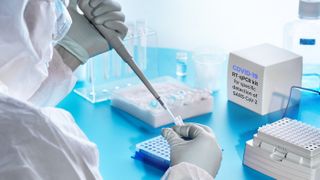
Most coronavirus testing discussed by public officials and the media refers to polymerase chain reaction testing, better known as PCR. These tests start with a nasopharyngeal swab, or a swab that goes up the nose far back into the throat. This swab collects mucous, saliva, bits of cells and — if present — viral RNA. The samples are then sent to a lab, where researchers apply chemicals to remove everything but the RNA. Enzymes are then added to transcribe the RNA into DNA. Next, this DNA is put into a real-time PCR (RT-PCR) machine along with another set of chemicals. The RT-PCR machine heats and cools the samples in a process that essentially Xeroxes the DNA, making thousands of copies of any genetic material in the samples.
Scientists then use sets of DNA fragments that complement fragments found in the coronavirus. If any viral genetic material is present, these fragments will bind to it. Chemical markers attached to the DNA release fluorescence when this DNA binding occurs. It's these flashes of fluorescence that scientists use to determine whether the virus is present in a sample.
The CDC's original failed test for the coronavirus was a PCR test. It did successfully detect SARS-CoV-2, said David Kroll, a professor of pharmacology at the Skaggs School of Pharmacy at the University of Colorado Anschutz Medical Campus. But one of the chemicals used in the test also responded to non-coronavirus genetic material as if the virus were present — returning false positive results. After this failure, the Food and Drug Administration issued Emergency Use Authorizations for private labs and hospitals to develop their own coronavirus PCR tests. These tests still have to meet the CDC's bar for accuracy, but they don't have to go through the long process of typical FDA approval. As of March 30, 20 emergency authorizations had been granted for different tests. The up-to-date list is on the FDA website.
These privately developed tests differ slightly from one another. They may home in on different regions of the coronavirus genome, for example. And some are made to work with a specific company's RT-PCR equipment, said Dr. Bobbi Pritt, a pathologist and microbiologist at the Mayo Clinic in Rochester, Minnesota. But these technical differences don't change how the tests function.
"They're all detecting the viral genetic material," Pritt told Live Science.
Large companies are ramping up production of coronavirus tests. For instance, Roche's test was given emergency authorization on March 13, and Stat News reported that the company could produce 400,000 tests a week. Likewise, Thermo Fisher Scientific plans to produce 5 million tests by April 3.
Typically, a RT-PCR tests take just a few hours to complete, according to ThermoFisher Scientific. But transporting samples to central labs takes time, as does preparing the samples to run. There have been reports of people waiting a week or more for test results as labs inundated with samples struggle to keep up.
The other limit to RT-PCR is that it detects only active infections. If someone has previously contracted the coronavirus and has recovered, RT-PCR won't detect it.
Making coronavirus diagnoses faster
Some companies are rolling out point-of-care tests, which are tests that can be done entirely within clinics or doctors' offices — or even in the parking lot of a mobile drive-through testing site.
These tests can be helpful for letting medical professionals know right away if a patient has COVID-19, which might save valuable hospital space and personal protective equipment (PPE). A negative test means that a person might be sent home without concern for infecting others, or treated by health care providers without gear such as N95 masks. Quick testing might also help a sick doctor or nurse know whether they must self-isolate for 14 days or whether they can return to the front lines more quickly, Pritt said.
Point-of-care tests can use PCR or other methods of quickly copying the genetic material in a sample so that any viral genes are detectable. Regardless of the precise reactions used, these tests require a proprietary piece of equipment, usually around the size of a toaster, and a set of one-time-use cartridges that contain all the chemicals needed for the procedure. The patient gives a sample, usually via a nasopharyngeal swab, which is inserted into the cartridge. The cartridge goes into the testing device, which heats and cools it to facilitate the proper chemical reactions. The results come back in less than an hour.
Similar technology is already used for rapid testing for other viruses, such as influenza, said Laura Dullanty, the marketing manager for Mesa Biotech, a San Diego-based company that received emergency-use authorization from the FDA for a new 30-minute coronavirus test on March 24. Developing the test, which is PCR-based, wasn't a huge technical challenge, said Melissa Obtera, a scientist and project manager at the company. The company used the CDC's chemical primers as a starting point, along with the equipment it already has for flu and RSV (a respiratory virus most common in babies and toddlers).
The real challenge, Obtera told Live Science, will be producing the cartridges and testing systems quickly. The company must practice social distancing on the manufacturing lines to keep workers from falling ill. Nonetheless, Dullanty said, the company is currently working with several county health departments and hospital systems to get the tests into use.
Meanwhile, Illinois-based medical technology company Abbott announced that it had emergency-use authorization to ship its rapid coronavirus tests starting this week. The test can return positive results in 5 minutes and rule out the coronavirus in 13 minutes, according to a news release. It uses a set of proteins to amplify viral genetic material without the temperature changes needed in traditional PCR. The company plans to start shipping 50,000 tests a day by April 1.
Cepheid, a California-based biotech company, has also received emergency authorization for its point-of-care PCR coronavirus test, Live Science previously reported. The test can return results in 45 minutes, according to Cepheid. The company begins shipping the tests this week.
While the point-of-care tests have benefits, they likely won't be a major factor in increasing overall testing rates, Kroll said. Abbott's test, for example, can run a sample in 5 minutes, but that's only one sample. Traditional PCR machines at central labs may take a few hours, but a machine can run large numbers of tests at a time. Many use standard 96-well plates, so they can run 96 samples at once. Thus, a point-of-care test might be able to provide quicker answers to individual patients, but they can]t handle the large numbers of tests needed to get a clearer picture of the pandemic.
Beyond detecting active infections, getting a handle on the pandemic will require tests that can detect anyone who has ever been exposed to SARS-CoV-2 — even if they fought it off without showing symptoms. These tests, called serological tests, search the blood for antibodies to the virus.
Knowing who has already been infected is important for three reasons, Kroll said. One, health care workers who have been exposed and likely have immunity can go to work with less fear, and perhaps use less PPE than those who have not been exposed. That could help ease the strain on scarce PPE supplies, Kroll told Live Science. In addition, by testing the general population, individuals may be able to ease their social-distancing routine and even go back to work first once stay-at-home orders ease. Finally, those who have been sick might be able to help cure those who are severely ill.
"Serology could potentially be used to identify people who have protective immunity that could help other people," Pritt said.
It's called convalescent plasma treatment, and it works on a simple principle: Those who have fought off the infection have antibodies in their blood that helps the immune system take down SARS-CoV-2. These antibodies can be isolated from the blood of recovered patients and then injected into patients who are ill. The hope is that the antibodies will start stimulating the sick patients' immune systems to better fight the disease. This treatment is now being tested in New York City.
The CDC has been developing two serological tests for coronavirus for weeks, Stat News reported. On March 18, virologist Florian Krammer of the Icahn School of Medicine at Mount Sinai and colleagues posted a preprint paper describing their serological test, which they are now working to get into clinical use. The Krammer lab has set up a website describing their ingredients and techniques for any other lab that would like to use them. Researchers at the Mayo Clinic are developing serological tests as well, Pritt said.
There are also efforts to import already-developed serological tests from other countries. For example, the distributor Ideal Rehab Care Inc. has been approved to import a test from a Singapore-based manufacturer, according to the distributor's law firm.
Some companies are working on rapid serological tests that can be delivered at the point of care. SureScreen Diagnostics, for example has developed a testing strip to detect antibodies to the coronavirus in the blood; it works a bit like an at-home pregnancy test, with a paper readout and a colored line to indicate infection. The company touts the test as a way to work around the shortage of the swabs needed for PCR-based tests. But rapid antibody testing likely won't help detect cases early, Pritt said, as it typically takes around 8 days for the body to mount an antibody response to the virus. Serological testing may be useful in some cases where someone has been sick for more than 8 days without access to a test for active infections, she said.
"When you get into serology, it's more of these potential uses that we're still learning a lot about," Pritt said.
As coronavirus has shown itself to be widespread in the U.S., there has been some debate over the value of testing versus assuming anyone with symptoms has COVID-19, Kroll said. But even with widespread community transmission, testing can help track the disease, especially as it penetrates into lesser-hit regions.
"It's too serious of a disease to back off on testing," he said.