Pages

Monday, 23 December 2019

Having trouble sleeping? Hormonal changes can affect sleep quality for women

The physical needs of women and men differ, as we well know, and it is no different when it comes to sleep.
Monday, 23 Dec 2019
Women may find that they experience more sleep interruptions during their premenstrual and menstrual periods every month. — AFP
What we know about the major distinctions in sleep requirements of men and women include:
  • Women’s sleep rhythms seem to change more slowly than that of men.
  • Women enjoy the stages of deep sleep into their 30s.

    By their 20s, men start to experience a decline.
  • Women get more slow wave sleep, compared to men.

    This is a critical component of sleep that helps you wake up feeling refreshed and ready for the day.
  • Women have less issues with waking up in the middle of the night, compared to men.
On the surface, it would appear that women should be getting better quality sleep.
But our precious sleep can be disrupted by various factors and a particular problem is the surge and decline of our hormones every month.
Women will find that the premenstrual and menstrual periods during the month are the most common times when sleep interruptions occur, some of which may be in the form of difficulty sleeping, acute dreams and waking up in the middle of the night.
Why I’m so tired
In general, if you feel drowsy throughout the day, you may not be getting the kind of sleep quality that you really need.
Apart from hormonal disturbances, here are other factors that could explain why you go through the day feeling like you aren’t well-rested:
  • You’re always busy

    Between juggling a full-time job, caring for children, wife duty and miscellaneous responsibilities at home and within the community, it’s not surprising for women to feel like the multi-load of responsibilities on their shoulders can be a tremendous drain on daily energy levels.
  • Hormonal changes

    Going through premenstrual days, menopause, puberty, pregnancy and menstruation all have an effect on hormonal balance.

    It would appear that one main culprit of sleep disruption in women are hormones.

    Although oestrogen is beneficial to improving the quality of rapid eye movement (REM) sleep, the rise and fall of hormones due to imbalance or changes in the body is the reason for these disruptions.

    For example, when progesterone levels in women rise after ovulation, fatigue or drowsiness also increases, and it is the reverse when progesterone is low – sleep quality suffers.
  • Not enough hours of quality sleep

    This usually comes as a result of the demands of a very busy schedule.

    While you may get an adequate number of sleeping hours, it is not the same as getting high quality sleep that makes you feel well rested.

    A brain that is deprived of sleep is more prone to increased irritability and feelings of anxiety, as well as physical discomfort such as headaches.
How much to sleep
The amount of sleep that a person needs hinges on many factors, in particular, their age.
A general guideline for determining the amount of sleep goes as follows:
  • Infants (ages 0-3 months) require 14-17 hours daily.
  • Babies (ages 4-11 months) require 12-15 hours daily.
  • Toddlers (ages 1-2 years) require about 11-14 hours daily.
  • Pre-school children (ages 3-5) require 10-13 hours daily.
  • School-age children (ages 6-13) require nine to 11 hours daily.
  • Teenagers (ages 14-17) require about right to 10 hours daily.
Most adults need seven to nine hours of sleep, although some people may need as few as six hours or as many as 10 hours of sleep each day.
Women who are in their first trimester of pregnancy require more sleep than the average woman.
Older adults (ages 65 and older) need seven to eight hours of sleep each day.
However, researchers have pointed out that, on average, women need twenty more minutes of sleep than men, because women use more of their brain during the day to multitask, and thus, require more rest.
Deprived of sleep
Sleep deprivation causes many serious concerns.
Past studies have shown that sleep-deprived individuals perform as poorly as individuals under the influence of alcohol in driving simulators or while conducting tasks requiring hand-eye coordination – and chugging caffeinated drinks while you are sleep-deprived does not help.
Even small signs can hint at your lack of adequate sleep. Keep an eye out for the following:
  • Changes in mood.
  • Inability to focus on tasks.
  • Falling asleep soon after sitting or lying down on the couch.
  • Sleepiness or tiredness, even during sedentary activities like watching a movie or commuting through public transport.
  • Feeling a need for a nap or naps during the day.
Healthwise, the consequences of not getting enough sleep include:
  • High risk of chronic conditions such as heart attack, weight gain, a rise in blood pressure or diabetes
  • Dark circles and wrinkles
  • Low libido
  • Memory problems, and the eroding ability to think clearly and make good decisions
  • Lowered immune system that exposes you to sickness
  • Depression
For a chance at getting better sleep, cultivate long-term healthy habits.
Despite a busy schedule, getting a good night’s rest will ensure that you won’t encounter sleep-related problems.
Go to bed before midnight and try to follow these guidelines:
  • Regulate your sleep schedule.

    Wake up and go to bed at the same time, even on the weekends.
  • Practice having a bedtime routine that includes dim lighting, soft music, aromatherapy or a hot bath.
  • Make your bedroom a sleep sanctuary.

    It should be clean, airy and dimly lit to encourage a feeling of relaxation.

    Turn off your mobile phone to reduce the amount of blue light that disrupts your brain from switching off, and read a book instead.
Prioritising sleep
Modern life has its many advantages, but its fast-paced nature doesn’t take into account the harmful effects on women’s sleep health.
A disturbance in sleep patterns leads to problems like poor concentration and fatigue, among other things.
While getting adequate quality sleep is essential for everyone, regardless of age, women who wish to live a life of being an all-rounded career and family woman may find that a lack of sleep can become an increasingly serious issue.
Making it a priority to improve sleep health will help women lead happier and more productive daily lives.
https://www.thestar.com.my/lifestyle/health/2019/12/23/hormonal-changes-can-affect-sleep-quality-for-women

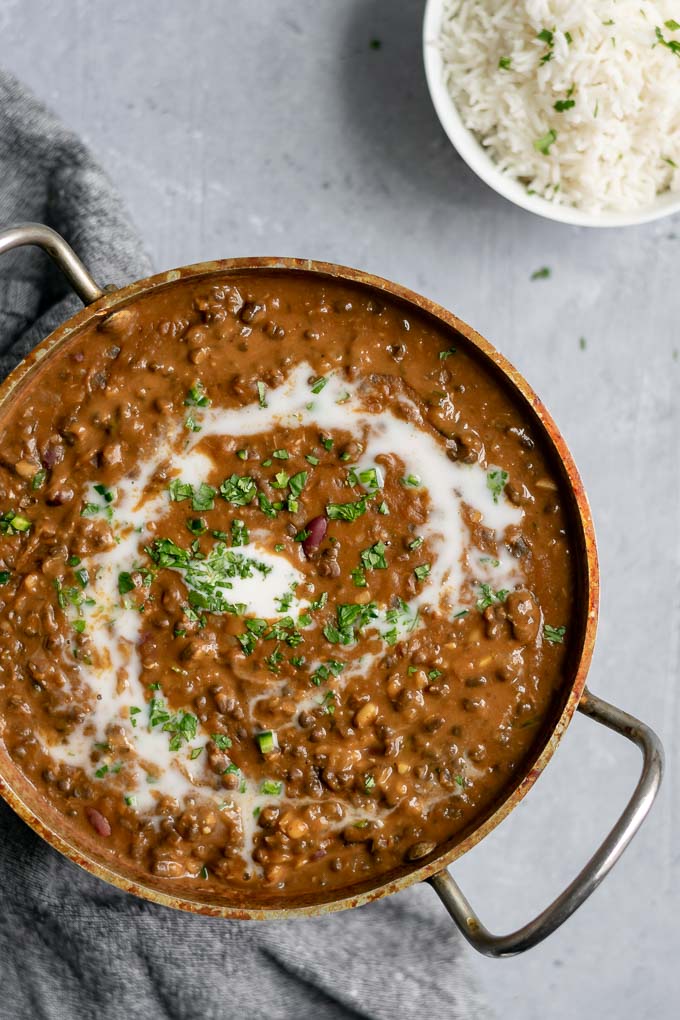
Indian VEGAN DAL MAKHANI

Dal makhani is an urad dal and kidney bean butter curry and this vegan version of the popular Indian dish is absolutely mouth watering and delicious!

 BY 

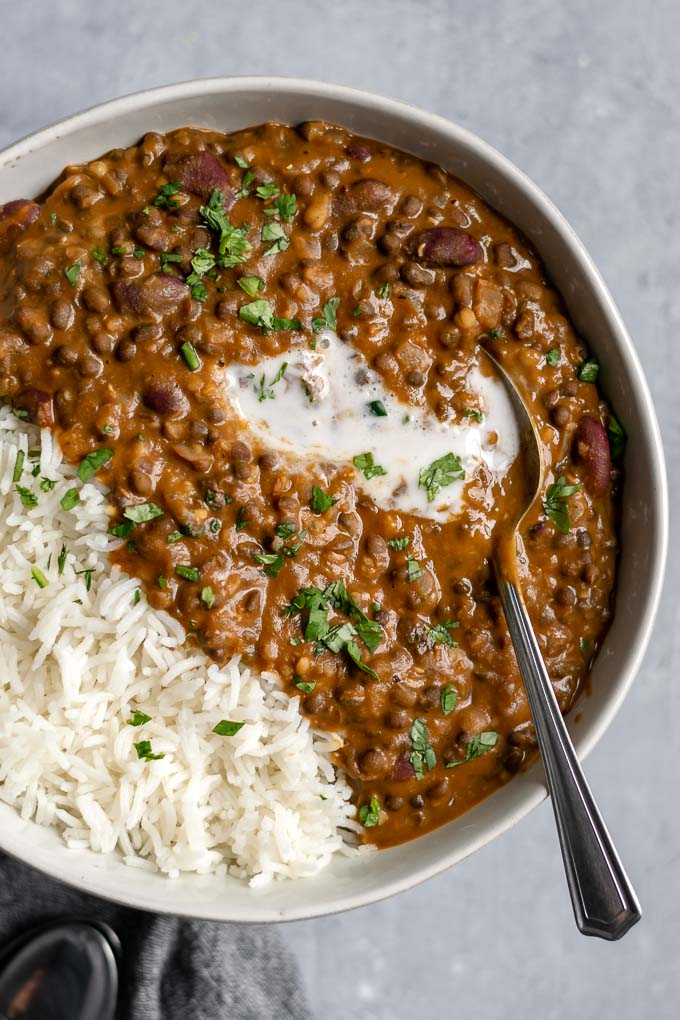
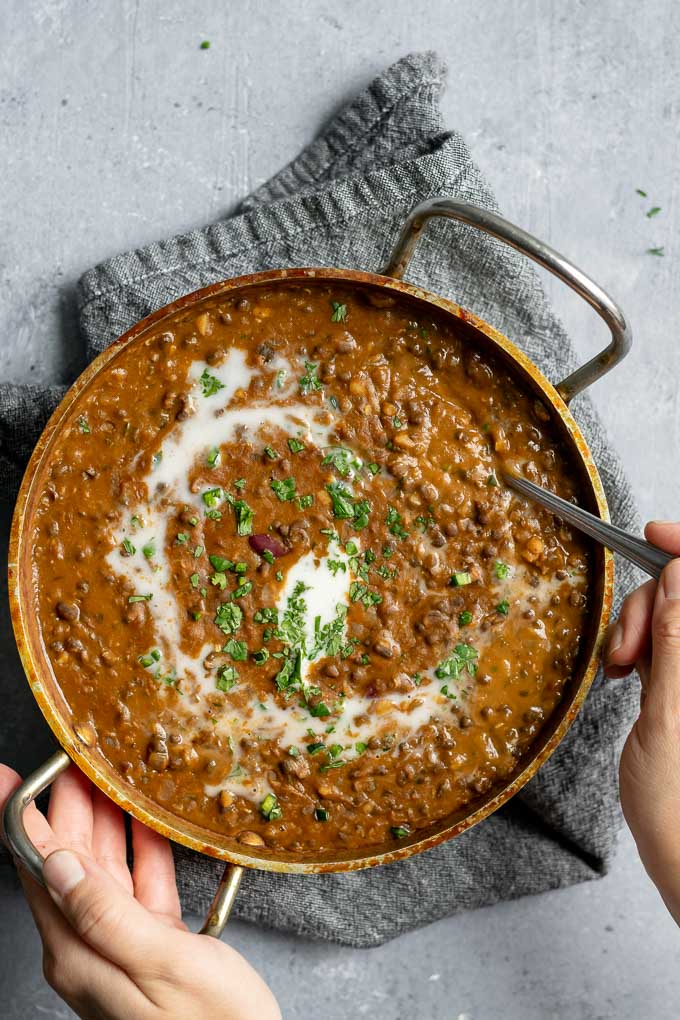
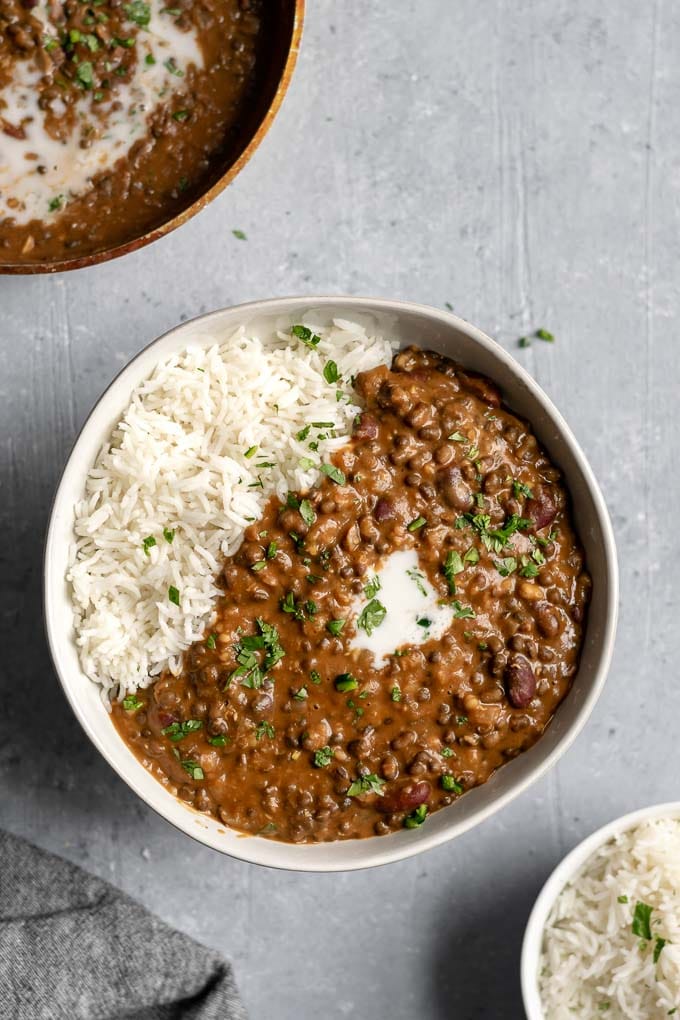
vegan dal makhani with a swirl of coconut milk and garnished with cilantro served with a bowl of basmati rice
Dal Makhani (pronounced makh-nee) is probably everyone’s favorite dal. It’s creamy and rich, with a silky almost luscious texture to the gravy. It hits those perfect savory notes, bursting with Indian spices and balanced with just enough of the sweet leaning ones.
Dal translates to pulses (and typically refers to lentils) while makhani means with butter. But while this dish is essentially named “lentils with butter,” we all know and love it specifically as the Punjabi dish of urad dal with kidney beans cooked in a creamy rich tomatoey gravy.
As the name might suggest, this dish is not the most vegan friendly of restaurant dals. Traditional recipes often stick an entire stick of butter (that’s 8 tablespoons, if anyone is counting) in a recipe such as this, and after that will still add a bit of cream. And that doesn’t even include the oil or butter used to fry a tadka.
Now home cooked recipes are likely to decrease the amount of butter or cream, but they are still laden with it, making this dish one of those you probably want to make on your own if you want to avoid dairy.
And thankfully, the vegan version of this dish is just as delicious–if not more! It has the richness without alllllll that butter. It’s made creamy with coconut milk (though if you needed to avoid coconut for any reason you could use a thick cashew cream), and the rich flavors come from the carefully chosen spices and pulses used in the recipe.
First we have whole urad dal, also commonly known as black gram. You want to be sure you have the whole bean, which has a black skin. If the beans are white, that means they have been peeled and split (which means faster cooking time, no need to soak prior, etc).
Urad dal is the star of this dish. I have on occasion made a similar recipe with black beluga lentils when out of urad dal, and while the results are very flavorful and good, they certainly aren’t 100% the same and it’s not the traditional dish.
The black gram lentils create a thick and luscious texture when cooked in water. They’re a little sticky and really unique, and worth the little bit of extra time to make a dal with them (and by that I just mean you’ll want to soak your lentils for at least 6 hours before cooking! You can do it). Especially when you consider what nutritional powerhouses those little lentils are.
Urad dal is paired with red kidney beans (called rajma) in dal makhani. These buttery red beans provide a nice textural counterpoint in the dish, and help the creamy gravy turn a beautiful red color. While you can cook them from the dried bean alongside the dal, I personally find it super easy to just crack open a can of the beans.
The lentils (and beans if you’re making them from scratch) are cooked separately then added into the tadka once fully cooked. Now the tadka refers to a cooking technique of tempering spices in oil before adding to a dish. Cooking the spices in oil releases flavor, as the flavor molecules of spices tend to be oil soluble.
You only want to cook whole spices in oil as ground spices will burn quickly. To keep this recipe easy and more accessible I use pre-ground and store bought garam masala, along with ground coriander seed, ground turmeric, and cayenne (because spicy Indian food is better). We add these ground spices after the liquid so that they do not burn.
Once the whole spices are toasty and fragrant, we add the minced garlic, ginger, and chiles so they have a chance to release some of their best flavors before the onion gets added. The onion is cooked until soft and golden. Together this makes up the tadka.
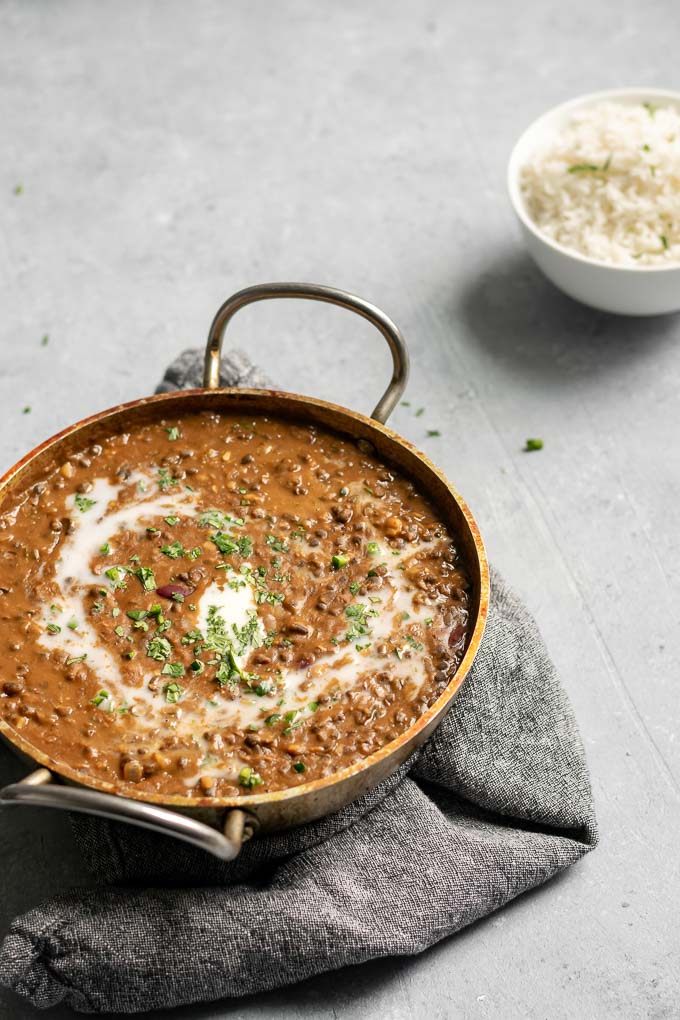
vegan dal makhani with a swirl of coconut milk and garnished with cilantro served with a bowl of basmati rice
To the tadka we add tomato puree (also known as strained tomatoes), the leftover cooking water from the lentils + a little extra water to make a total of 1 1/2 cups liquid, salt, the ground spices, and crush in some fenugreek leaves (kasoori methi). If you don’t have the kasoori methi, still make the dish, just know it would be better and more authentic with the fenugreek in it! It’s real good 😛 .
This cooks a bit to infuse the spices into the sauce, then add the lentils and beans, bring it to a simmer and let it cook away (covered!) for a half hour over super low heat. I let it cook for a full 30 minutes because this brings out the best flavor.
Dal makhani is one of those dishes that tastes best when simmered for long periods of time over low heat, and will definitely taste somehow magically even better the next day! But in 30 minutes you will have a deliciously richly flavored stew.
At the very end we add the cream, in this case coconut cream. You can scoop it out from the top of a separated can of coconut milk. But if all you have is well combined coconut milk then just use the creamy milk and it’ll be great still.
Add water if you need to thin the dal at any point and serve it with fresh cilantro and basmati rice. You can even make some restaurant style naan for an INSANELY delicious and satisfying meal. Feel free to browse through my other Indian recipes for more tasty curries if you want to make a feast!
I love love love dal makhani and I am so glad that this recipe is easily made vegan. Whether you are a diehard dal makhani lover or have never eaten the dish, you really should try it! It’s just insanely good and really like no other dal or lentil soup!
https://www.thecuriouschickpea.com/vegan-dal-makhani/

The Great Indian Curry Hack

As a broke immigrant college student, I was heartbroken by US Indian food. So I learned how to make my own with ingredients I could find.

Niranjana Iyer

Jul 10 2019


Photo by Jason Leung on Unsplash


Over the years, I’ve shared my recipe with non-Indian friends, and they’ve always been astounded how easy it is. Is it authentic? they ask, and I reply that I make Indian dishes using it for my mom, who has never complained. Authenticity has its place in cooking, yes, but it’s not at the top of my list when it comes to recipes. I want to feed people I love food they enjoy. My friends and family take second helpings of what I make, and that’s good enough for me.


The Great Indian Curry Base Recipe

This curry base is great with chickpeas, kidney beans, black-eyed peas, firm tofu, paneer, and vegetables that don’t lose their shape after an intense boil. This sauce happens to be vegan, but you can substitute the cooking oil with ghee if you are vegetarian. Caveat: this base does not go well with sweet vegetables like carrots or corn. It does not like vegetables that turn mushy when cooked. No zucchini! And absolutely no lentils. Daal is an entirely different beast.
  • 1 medium onion
  • 4 cloves garlic and 1/2 inch piece of ginger — or, 2 tbsp ginger-garlic paste
  • 1 Serrano or Indian green chile
  • 3 medium tomatoes
  • 1/2 tablespoon cumin seeds
  • 1/2 teaspoon turmeric powder
  • 1 teaspoon coriander powder
  • 1 teaspoon cumin powder
  • 1 teaspoon Garam Masala powder
  • Salt to taste
  • Cooking oil
  • Garnish
  • Cilantro — a fistful
  • One lemon
  1. Finely chop or slice the onion.
  2. Mince the garlic and the ginger. (Or use ginger-garlic paste, but fresh is waaaay better.)
  3. Finely chop the chile of your choice.
  4. Dice the tomatoes. You can also puree them if you like a smoother sauce.
  5. Heat 2–3 tbsp vegetable oil in a wok or heavy pot.
  6. Add the cumin seeds, and when they sizzle and wiggle about, add the onions. Cook on medium heat till the onions are done. This step takes long and is boring, but don’t skip it, or the raw onion smell will linger in the dish long after you’re done cooking.
  7. Add the ginger, garlic, and chili. I toss in the seeds and innards of the chili because I like living on the edge. Stir and cook for a few minutes.
  8. Add the coriander powder, cumin powder, and turmeric powder. I don’t know what the turmeric adds to the flavor, but it gives the dish a nice color and prevents cancer. Also, it’s not an Indian meal till your best tea-towel has acquired a turmeric stain.
  9. The base should smell strong but good. If it smells onion-y, keep cooking.
  10. Now add the tomato. If the tomatoes are not flavorful, add half a tsp sugar to the pot — it’ll balance out with the heat and tart. Add salt to taste — 2 tsp or more.
  11. Cook on medium heat till the tomatoes disintegrate completely. If it’s very dry and looks like it might burn, moisten with a tiny splash of water (I use a spray bottle to mist it). You want to have an intensely-flavored reddish-brown paste when you are done.
That is it. You can scale all quantities up or down. The above amounts make 1 cup (8 oz), but I usually make a big batch and freeze it. Remember, you can tinker with every ingredient in this recipe — make it according to the intensity of your spices, the potency of the chili/e, and your personal taste.
When you are ready to make your Indian meal, throw 1 cup of the base into a heavy-bottomed pot, and add 1 cup of water. Toss in 1.5 cups of whatever cooked legume or parboiled vegetable you’re planning to use. (Use your intuition — if you’ve chosen a vegetable that cooks fast, you don’t need to parboil it.) Bring it all to a boil, then turn down the heat and simmer for 5–10 minutes. The sauce should reduce so it’s thick but liquid. Stir occasionally so nothing sticks to the bottom of the pot.
Just before you turn off the heat, add the garam masala. You add it late in the game to preserve the aroma of the spices in the masala.
Turn off the heat and squeeze in half a lemon. Garnish with a fistful of chopped cilantro. Please don’t skip this last step. Serve with rice, Indian breads and tortillas, and what the hell, ciabatta. This recipe serves 4.
Once you’ve mastered the basic recipe, you can add different spices each time you make it, and vary the garnishes, so everything you make does not taste the same. Add a bay leaf, a clove or two, a pod of cardamom, or a few grinds of your pepper mill. If you want to be fancy, add 1 tsp Amchur (dry unripe mango powder that adds a lovely tartness to lighten stodgy chickpeas and potatoes), or ½ tsp Kashmiri Chili powder (it’s less spicy than regular chili powder and a vibrant, brilliant red). If you are very brave, you can add a pinch of asafetida. I’ve squirted in Sriracha when I’m feeling adventurous. Add all spices at the spice stage (step 8).
Serving suggestions: Grate in some fresh ginger if you’ve made kidney beans. Mix in some minced red onion for potatoes. Extra lemon. Add some beaten yogurt to the sauce before serving to make the dish milder. Go forth and explore!


https://medium.com/tenderlymag/the-great-indian-curry-hack-8ff87031fc1c