Pages

Wednesday, 10 March 2021

Khairy Welcomes Private Sector Procuring Approved Covid-19 Vaccines

The vaccine minister says that Malaysia aims to achieve herd immunity by Feb 2022, with a target of 160,000 daily doses administered during the second and third phase of the Covid-19 vaccination programme.

By CodeBlue | 10 March 2021

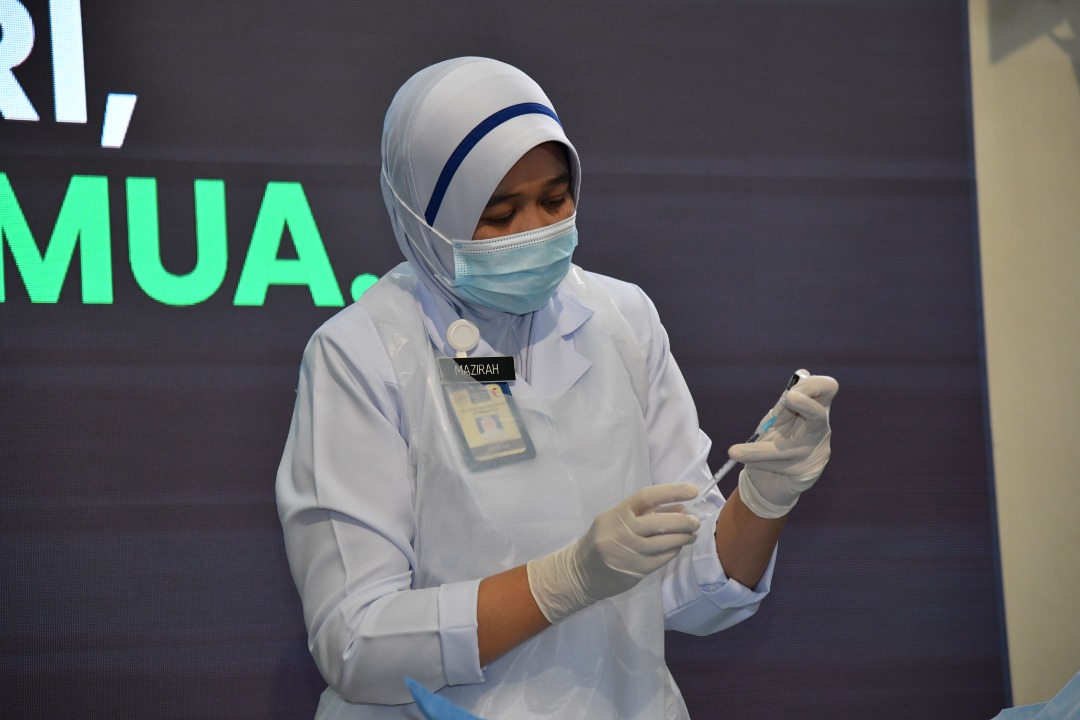
KUALA LUMPUR, March 10 — Vaccine Minister Khairy Jamaluddin today encouraged the private sector to procure Covid-19 vaccines approved by local pharmaceutical regulators, paving the way for a potential parallel vaccine rollout by private health care providers.

Khairy was responding to a statement on Facebook by former Prime Minister Najib Razak, who asked the government to state clearly if private clinics and hospitals are able to purchase their own supply of Covid-19 vaccines, as currently there is mixed information on the involvement of private health care providers in the inoculation drive.

Najib pointed out that on March 6, Science, Technology, and Innovation Deputy Minister Ahmad Amzad Hashim said that although there were requests from the private sector to purchase Covid-19 vaccines through the government, the priority for the government is still to get adequate supply of vaccines for 80 per cent of the population. 

“With regards to the purchase of vaccines by the private sector, as I have mentioned yesterday, most of the vaccine manufacturers only carry out negotiations with governments,” Khairy responded to Najib in a comment on his Facebook post.

“If Dato’ Sri still doesn’t want to believe, I cannot do anything, I leave it up to Dato’ Sri.

“But if there are private parties who are able to carry out negotiations with vaccine manufacturers, especially those that have received approval from the NPRA (National Pharmaceutical Regulatory Agency) (Pfizer, AstraZeneca, and Sinovac), please do so. I really welcome it,” added the science, technology and innovation minister. 

Previously, Malaysian-based pharmaceutical company Pharmaniaga Bhd announced that it planned to sell some of its Sinovac vaccine doses to the private sector. Pharmaniaga is undertaking the fill-and-finish processing of Sinovac’s vaccine.

Solution Biologics, the distributor of Chinese CanSino’s vaccine, has also expressed plans to supply private health care providers with the vaccine, on top of selling 3.5 million doses to the Malaysian government. 

Private hospitals have previously urged the government to allow a parallel private Covid-19 vaccine rollout, with doses independently procured by private facilities, in order to expedite Malaysia’s vaccination coverage. As such, private health care providers have urged NPRA to quickly approve other Covid-19 vaccines authorised in other countries, such as Moderna. 

Khairy highlighted today that Malaysia targets to achieve herd immunity by February 2022, as mentioned in the National Covid-19 Immunisation Programme (PICK) guideline. 

He said that during the second and third phase of PICK, since the target number of daily doses administered will have to be raised up to 160,000, the Ministry of Health will increase the number of vaccinators to 7,000.

“With 7,000, we are able to achieve a number of more than 160,000. But we don’t want to over-promise as we are aware that vaccine supply will be sent over in stages,” Khairy told Najib. 

As Najib has raised multiple issues on the Covid-19 vaccine rollout several times on his Facebook page, Khairy invited Najib to a briefing on PICK, along with all other Members of Parliament. 

“I hope Dato’ Sri comes for the briefing. Dato’ Sri can ask directly and I am ready to answer. After that, Dato’ Sri can share the truth to Dato’ Sri’s Facebook readers.”

h

Malaysia Lists Covid-19 Vaccination Priority Groups

By Boo Su-Lyn | 05 March 2021

MOH lists priority groups for Covid-19 vaccination with the Pfizer vaccine, conditions when one should postpone getting a shot, and contraindications.

  • 59

KUALA LUMPUR, March 5 — The Ministry of Health (MOH) has prepared a list of priority groups for Covid-19 vaccination, ahead of the second phase of the national rollout targeting the elderly and people with comorbidities.

Health Minister Dr Adham Baba said the priority groups in MOH’s “Guidelines for Covid-19 Vaccination: Criteria to Consider Before Vaccination Using Comirnaty Vaccine (Pfizer-BioNTech)” updated March 2, as sighted by CodeBlue, are not listed according to the order of when they will get the vaccine. It is simply a list.

“The prepared guidelines are a reference for medical professionals in evaluating one’s suitability to receive the vaccine,” Dr Adham told CodeBlue yesterday.

“However, the numbers in the list are not the order of priority. It’s just a list; same priority.”

MOH guidelines state that individuals in the priority groups should consult their treating clinician before getting the Pfizer-BioNTech vaccine. These are the priority groups as follows:

MOH guidelines state that Covid-19 vaccination with the Pfizer-BioNTech shot should be deferred or postponed in these conditions:

MOH guidelines, which recommend the Pfizer-BioNTech jab for adults aged 18 and above, list three contraindications, or conditions when one should not take the vaccine:

The MOH guidelines also say everyone who gets a Covid-19 vaccine should be monitored on site. People who have history of allergy or who have had any type of immediate allergic reaction to a vaccine therapy should be monitored for at least 30 minutes after getting the vaccine.

All other people should be monitored for at least 15 minutes after getting the vaccine.

Vaccination providers should have appropriate medications and equipment such as epinephrine, antihistamines, stethoscopes, blood pressure cuffs, and timing devices and access to emergency trolley at all Covid-19 vaccination sites.

The government has scheduled the second phase of the national Covid-19 vaccination programme starting April, targeting 9.4 million people aged 60 years and above and those with underlying health conditions.

Friday, 5 March 2021

Malaysia Lists Covid-19 Vaccination Priority Groups

 MOH lists priority groups for Covid-19 vaccination with the Pfizer vaccine, conditions when one should postpone getting a shot, and contraindications.

By Boo Su-Lyn | 05 March 2021

  • 59

KUALA LUMPUR, March 5 — The Ministry of Health (MOH) has prepared a list of priority groups for Covid-19 vaccination, ahead of the second phase of the national rollout targeting the elderly and people with comorbidities.

Health Minister Dr Adham Baba said the priority groups in MOH’s “Guidelines for Covid-19 Vaccination: Criteria to Consider Before Vaccination Using Comirnaty Vaccine (Pfizer-BioNTech)” updated March 2, as sighted by CodeBlue, are not listed according to the order of when they will get the vaccine. It is simply a list.

“The prepared guidelines are a reference for medical professionals in evaluating one’s suitability to receive the vaccine,” Dr Adham told CodeBlue yesterday.

“However, the numbers in the list are not the order of priority. It’s just a list; same priority.”

MOH guidelines state that individuals in the priority groups should consult their treating clinician before getting the Pfizer-BioNTech vaccine. These are the priority groups as follows:

MOH guidelines state that Covid-19 vaccination with the Pfizer-BioNTech shot should be deferred or postponed in these conditions:

MOH guidelines, which recommend the Pfizer-BioNTech jab for adults aged 18 and above, list three contraindications, or conditions when one should not take the vaccine:

The MOH guidelines also say everyone who gets a Covid-19 vaccine should be monitored on site. People who have history of allergy or who have had any type of immediate allergic reaction to a vaccine therapy should be monitored for at least 30 minutes after getting the vaccine.

All other people should be monitored for at least 15 minutes after getting the vaccine.

Vaccination providers should have appropriate medications and equipment such as epinephrine, antihistamines, stethoscopes, blood pressure cuffs, and timing devices and access to emergency trolley at all Covid-19 vaccination sites.

The government has scheduled the second phase of the national Covid-19 vaccination programme starting April, targeting 9.4 million people aged 60 years and above and those with underlying health conditions.

Wednesday, 3 March 2021

Soursop - Cancer-Fighting Super Fruit Stuns Scientists

 A tropical fruit that’s been attracting serious attention as a cancer fighter once again proves that foods can be powerful medicine against cancer. This fruit from the graviola plant has been used in folk medicine for more than a century, and contains more than 200 different natural phytochemicals that are beneficial in the human body.

By Lee Euler / August 26, 2020


A tropical fruit that’s been attracting serious attention as a cancer fighter once again proves that foods can be powerful medicine against cancer.

This fruit from the graviola plant has been used in folk medicine for more than a century, and contains more than 200 different natural phytochemicals that are beneficial in the human body.1

Among these phytochemicals are acetogenins, which scientists believe can annihilate even the most aggressive cancers, such as brain cancer.

The graviola plant is known by many names, graviola in Brazil, soursop in England and guanabana in Spain and in the U.S.

The tropical plant can grow 18 feet high. Its hanging fruit is lumpy and bulbous — downright ugly, some people think — yet has such a wonderful taste that one writer dubbed it the “frog prince of the plant kingdom.”2

So it’s no surprise that graviola fruit is used to make smoothies, fruit drinks, ice cream, candy and sherbets across Spain and Central and South America. But to cancer researchers, graviola is more than just a tasty treat.

Remarkable healing powers

Much of the research into graviola is centered on the actions of the acetogenins, which the graviola plant makes from long chain fatty acids.

Acetogenin molecules are shaped like microscopic kites and this feature, researchers believe, gives them the ability to interfere with the actions of mitochondria in cancer cells.

Remember, it’s the mitochondria in any cell that manufacture energy to allow the cell to survive. When acetogenins disrupt the energy supply in cancer cells, they can’t reproduce in large numbers to form a tumor or spread to other parts of the body.

Tests in Asia show that acetogenins in extracts from graviola can cause the mitochondrial membranes in cancer cells to leak and induce oxidative damage to the cell, causing it to die. If you imagine a cancer cell as a car, this process is similar to what would happen if you got a leak in the fuel line, gasoline spilled on the engine, and fire erupted.

While your local fire department can douse a car fire, the result of the oxidative fire to cancer cells is apoptosis – a self-destruct program built into cells that triggers death when they are severely compromised.3

Best of all, acetogenins appear to damage only cancer cells, leaving healthy cells alone.

Holding the line against brain cancer 

One of the most deadly types of brain cancer involves astrocytes. Astrocytes are star-shaped cells that are critical for the healthy function of the blood-brain barrier—the natural barrier that keeps toxins out of brain tissue. Astrocytes are also essential for supplying nutrients to brain neurons and for repairing damaged neurons, as well as for normal cell signaling.

You can imagine that when astrocytes “go rogue” and become cancerous, the results are usually deadly. One such cancer, glioblastoma, often claims its victims within twelve to fifteen months.

That’s why the latest research on graviola is so exciting.

A study in Asia shows that extracts made from graviola can have epigenetic effects, or effects on genes, that may make brain cancers like glioblastoma more treatable.

In these studies, the researchers tested various extracts of graviola, from the fruit, leaves and seeds, finding that each could individually interfere with a cancer-defending gene called MUDENG, otherwise known as Mu-2-related death-inducing gene, or simply, MuD.

The actions of MuD in brain cancer cells is to help these malignant cells survive circumstances that might otherwise kill them off via apoptosis. But the Asian researchers found that the graviola extracts, particularly an extract made from the fruit of the plant, can disarm this cancer cell defense system and help finish off these tumor-forming cells.4

Graviola helps fight other cancers, too  

Additional research demonstrates that graviola is useful against a number of other cancers to help patients:

  • Lower the risk of colon cancer. Research shows that an extract from graviola leaves acts as an antioxidant in the digestive tract and slows the formation of tumors in the colon.5
  • Prevent the growth and spread of pancreatic cancer. A study at the University of Nebraska shows that an extract made from graviola leaves and stems may kill pancreatic cancer cells by increasing their oxidative stress, cutting off their blood supply and acting in ways that spur the immune system to attack the malignancy.6
  • Slow the growth of prostate cancer. An investigation at the University of Colorado Denver shows that an extract made from graviola fruit pulp can reduce inflammation in the prostate that is linked to faster growth of cancer.7

Best of all, graviola is safe, unlike many conventional cancer treatments. In fact, graviola’s phytochemicals are so beneficial for good health that graviola fruit has been used to help nursing mothers increase milk production.

Powerful folk medicine
confirmed by modern science 

Graviola has another remarkable benefit, according to research in Spain. Lab tests at the University of Seville show that an extract made from the leaves of the plant can reduce the mood swings, irritability and muscle aches of fibromyalgia.8

“The consumption of extract of Annonamuricata (graviola) leaves in pharmaceutical form and in the correct dosage can reduce the chronic pain, anxiety and depression that accompany this disease. This extract comes from the traditional preparation using decoction,” says researcher Ana MaríaQuilez, who is with the university’s Medicinal Plants Research group.

None of this is any surprise to folk medicine’s traditional healers. They’ve long used traditional decoctions of graviola to fight cancer, pain, fever, infection, inflammation, diarrhea and dysentery, and to heal wounds.

From what I’ve seen, the research into the health benefits of graviola – both for fighting cancer and healing other health problems – is just beginning. Already, a number of alternative doctors routinely prescribe graviola as part of their cancer-fighting protocol.

As scientists look more closely at how the phytochemicals in graviola help the body fight cancer, we hope their research will catch the attention of conventional oncologists who can then begin to see how powerful natural extracts from plants can be in treating cancer.

Best regards,

Lee Euler,
Publisher

References:

  1. https://www.ncbi.nlm.nih.gov/pmc/articles/PMC6091294/#sec9title
  2. https://www.washingtonpost.com/archive/lifestyle/travel/1993/01/31/ahhhhhh-the-soursop
    /0384e624-0a10-4d5c-9d6a-d01b26d382c7/
  3. https://pubmed.ncbi.nlm.nih.gov/25860620/
  4. https://pubs.rsc.org/en/content/articlehtml/2019/ra/c8ra10039j
  5. https://www.ncbi.nlm.nih.gov/pmc/articles/PMC4393181/
  6. https://www.ncbi.nlm.nih.gov/pmc/articles/PMC3371140/
  7. https://pubmed.ncbi.nlm.nih.gov/26979487/
  8. https://www.sciencedirect.com/science/article/pii/S2213434418300045
https://www.cancerdefeated.com/cancer-fighting-super-fruit-stuns-scientists/