Pages

Tuesday, 12 May 2020

Rats are infecting humans with hepatitis, and nobody knows how

(CNN)In 2018, infectious disease experts at the University of Hong Kong came across an unusual patient.
The 56-year-old man, who had undergone a liver transplant, was showing abnormal liver functions with no obvious cause.
Updated 1136 GMT (1936 HKT) May 8, 2020
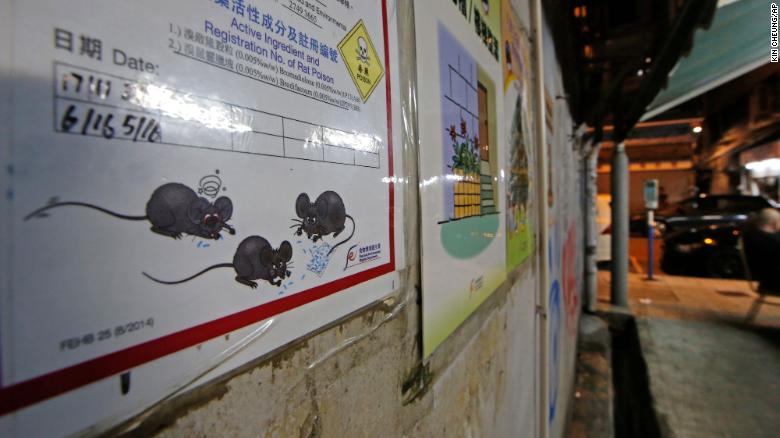


A notice of rat poison in an alley in Hong Kong in November 2018.
Tests found that his immune system was responding to hepatitis E -- but they couldn't actually find the human strain of the hepatitis E virus (HEV) in his blood.
    Hepatitis E is a liver disease that can also cause fever, jaundice and an enlarged liver. The virus comes in four species, which circulate in different animals; at the time, only one of these four was known to infect humans.
    With tests for that human strain of HEV negative, the researchers redesigned the diagnostic test, ran it again -- and found, for the first time in history, rat hepatitis E in a human.
    "Suddenly, we have a virus that can jump from street rats to humans," said Dr. Siddharth Sridhar, a microbiologist and one of the HKU researchers who made the discovery. It was such an unusual and unprecedented infection that the team wondered if it was a "one-off incident, one patient who was in the wrong place at the wrong time."
    But then it happened again. And again.
    Since that first study, 10 more Hong Kong residents have tested positive with rat hepatitis E, also known as rat HEV. The most recent case came a week ago; a 61-year-old man with abnormal liver function tested positive on April 30. And there might be hundreds more infected undiagnosed people out there, said Sridhar.
    The housing estate where the 56-year-old rat hepatitis E patient lived in Hong Kong. Signs of a rat infestation were found here after he was confirmed infected in 2018.
    The housing estate where the 56-year-old rat hepatitis E patient lived in Hong Kong.
    Signs of a rat infestation were found here after he was confirmed infected in 2018.


    The human strain of hepatitis E is typically transmitted through fecal contamination of drinking water, according to the World Health Organization.
    But the rat strain poses a new mystery: nobody knows exactly how these people are getting infected. In the two years since the discovery, researchers have yet to identify the exact route of transmission from rats to humans. They have theories -- maybe the patients drank contaminated water like the usual human strain, or handled contaminated objects -- but nothing's been definitively proven.
    The 61-year-old recent patient has authorities particularly stumped; there were no rats or rat excrement in his home, nobody else in his household has shown symptoms, and he has no recent travel history.
    "Based on the available epidemiological information, the source and the route of infection could not be determined," said Hong Kong's Centre for Health Protection (CHP) in a statement on April 30. The man is still in the hospital, and the CHP's investigation is ongoing.

    What we know, and don't know

    The research team and city authorities have been trying to better understand this new health threat since 2018.
    They've made some progress. Their diagnostic tests have been refined and improved. They've spread awareness among the health care sector so doctors know to test for rat HEV, and launched public awareness campaigns.
    Scientists are testing rat populations citywide to try to identify clusters before they can jump to humans, which has provided data on how many rodents in the city carry rat HEV and which areas have the most rats.
    Hong Kong officials place rat traps in an effort to determine whether rats contributed to a 2003 pneumonia outbreak.
    Hong Kong officials place rat traps in an effort to determine whether rats contributed to a 2003 pneumonia outbreak.

    But there is still much that remains unknown. They don't know how long this virus' incubation period is -- meaning how long it takes for patients to get sick after exposure. They're still trying to find a treatment, as the medication used to treat the human variant of hepatitis E has had mixed results on patients with rat HEV.
    And, of course, the biggest unknown that continues to vex scientists is the how.
    Not knowing how the virus jumps from rats to humans makes it very difficult to prevent further infections -- or even to make sense of all the data researchers have collected. For instance, people who live in rat-infested areas should theoretically be at higher risk, yet some infected patients come from neighborhoods with low rat numbers.
    "What we know is the rats in Hong Kong carry the virus, and we test the humans and find the virus. But how exactly it jumps between them -- whether the rats contaminate our food, or there's another animal involved, we don't know," said Sridhar. "That's the missing link."
    What are the different kinds of hepatitis? 01:19
    One solution could be to just get rid of all the rats in Hong Kong, but rat eradication is a long, complicated feat that isn't very feasible. It would require reducing places they can shelter as well as their access to food, with measures like preventing food from being discarded in back alleys.
    For now, all authorities can do is urge people to take preventative measures, like washing their hands before eating, storing food properly or in the fridge, and keeping the household clean and disinfected with minimal nesting places for rodents.

    This could be happening everywhere

    This likely isn't just a Hong Kong problem, or even a recent one, experts say. Rat HEV could be infecting people in New York or Paris, and we just don't know it -- because nobody is testing for it.
    "My feeling is, this has been going on for a long time," said Sridhar. "2017, 2018 is definitely not the first time it's happened in the world."
    Within Hong Kong, the 11 confirmed cases are likely just the tip of the iceberg, he added. Doctors were able to test them for rat HEV because they sought medical attention for symptoms, or were receiving checkups because of pre-existing conditions or transplants.
    But there may be hundreds of infected cases in the community, who don't fall in these categories and haven't been diagnosed, he said.
    Many people with hepatitis E only experience mild symptoms, and in some cases don't even know they're infected or go to the hospital.
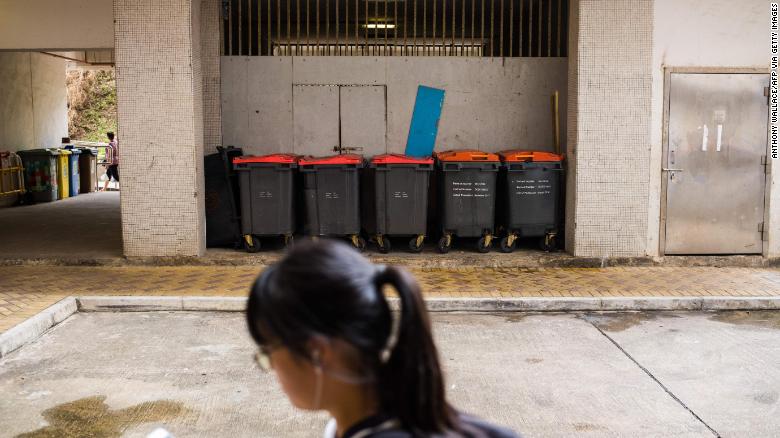
    A girl walks past large trash bins at housing estate where the 2018 rat hepatitis patient lived. A rat infestation was found in the estate.
    A girl walks past large trash bins at housing estate where the 2018 rat hepatitis patient lived. A rat infestation was found in the estate.
    But the virus can have serious health consequences, particularly for patients with weakened immunity. Young, healthy people with no pre-existing conditions may be able to recover on their own -- but for vulnerable populations, it could cause chronic hepatitis that patients can't shake off, as well as long-term liver damage and tissue scarring.
    Apart from the 11 cases in Hong Kong, only one other case has been confirmed globally -- a man in Canada, who had previously traveled to Africa. He went to the hospital after experiencing hives, nausea, severe jaundice and an inflamed liver, and tested positive for rat HEV, according to a report in February 2019.
    The only reason authorities caught this case was because they used a broad type of test that detects many strands of hepatitis E virus, said researchers in the report, which was published in the Journal of Infectious Diseases. Otherwise, "the diagnosis might have been missed," the report said.
    This is the problem -- most countries aren't testing for rat HEV, so there's a good chance they're just missing diagnoses, said Sridhar.
    It takes a specialized test, like the one HKU designed, to specifically look for rat HEV in humans. It's not a difficult test to make, but it hasn't been adopted widely because nobody thought until recently that rat HEV was even a threat to humans.
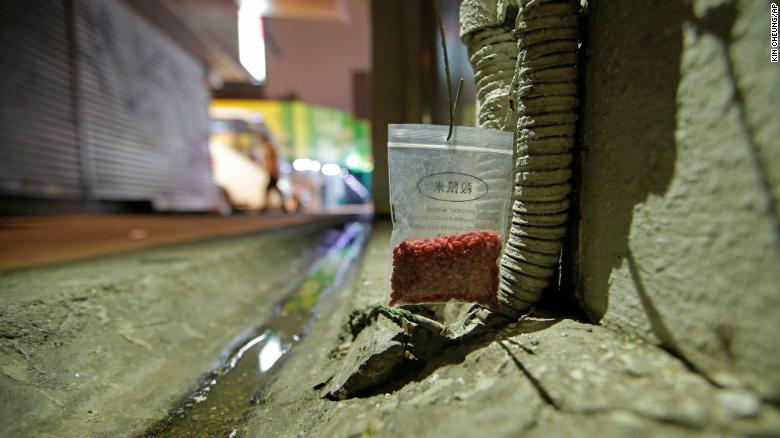
    A bag of rat poison in an alley in Hong Kong, in November 2018.
    A bag of rat poison in an alley in Hong Kong, in November 2018.

    For instance, in Europe a "lack of awareness by physicians and poorly standardized diagnostics led to under reporting" in hepatitis E cases, said Cornelia Adlhoch of the European Centre for Disease Prevention and Control (ECDC) and Sally Baylis of Germany's Paul-Ehrlich-Institut, in a letter published this March in the journal Hepatology.
    Only last year did the ECDC finally develop guidelines for how to collect data and report information on hepatitis E, said the letter -- but these new guidelines focused on the human variant and didn't include rat HEV, leaving what Sridhar calls "a blind spot in our diagnostics."
      This blind spot, and the possibility that the virus is infecting people globally without any control measures, place some of society's most vulnerable people at risk -- the elderly, HIV-affected communities, those with pre-existing conditions, and more.
      "This should not be happening," said Sridhar. "We need ongoing vigilance in the public to control this unusual infection. I really hope that public health authorities take the first step and look at how much their populations are actually being exposed to rat hepatitis E."
      https://edition.cnn.com/2020/05/08/health/hong-kong-rat-hepatitis-intl-hnk-scn/index.html

      Monday, 11 May 2020

      Antibody-based test kits cannot be used to diagnose Covid-19, says Health DG

      PETALING JAYA: The Antibody Rapid Test Kit (RTK) for Covid-19 or serological tests that use blood samples from a finger prick cannot be used to diagnose the disease, says the Health Ministry.
      Health director-general Datuk Dr Noor Hisham Abdullah (pic) said this is because the presence of antibodies are unable to validate active infections while negative results are no guarantee that the individual tested is not infected with the disease.
      Monday, 11 May 2020  7:24 PM MYT
      Dr Noor Hisham, however, said that the test can be used to conduct studies of the prevalence of the Covid-19 infection in the community or among target groups, such as the working group.
      “This is in line with the World Health Organisation's (WHO) recommendation that RTK antibodies can be used in epidemiological studies.
      “There is no solid evidence from scientific studies showing that people who have recovered from Covid-19 and have antibodies are protected from a second infection,” he said in a press conference on Monday (May 11).
      Several parties had brought up the issue of the use of RTK antibodies at private clinics for the screening of those who were returning to work.
      Dr Noor Hisham said that the test to detect the Covid-19 is an antigen-based test through Real-Time Reverse Transcription-Polymerase Chain Reaction (rRT-PCR) or the RTK Antigen test.
      He said both tests require the use of nasal swabs by trained members using appropriate personal protective equipment (PPE) and laboratory equipment such as the Biological Safety Cabinet (BSC) when processing samples were taken.
      The rRT-PCR detects the presence of Covid-19 in an individual's body by looking at genetic material taken from swabs.
      The RTK antibody method is conducted on blood samples but only detects the presence of antibodies to the coronavirus, and not the virus itself.
      Antibodies will only show up in the body after seven to 14 days of an individual being exposed to the virus.
      A negative result, however, does not mean that an individual has not been infected.
      As of Monday (May 11), a total of 6,726 Covid-19 infections were detected in the country, with 109 deaths recorded.
      https://www.thestar.com.my/news/nation/2020/05/11/antibody-based-test-kits-cannot-be-used-to-diagnose-covid-19-says-health-dg


      • PETALING JAYA: The Health Ministry has advised against using the antibody rapid test kit (RTK) to ascertain if a person has been infected with the Covid-19...
        12 May 2020 / 14:26
      • PETALING JAYA: The Health Ministry has advised against using the antibody rapid test kit (RTK) to ascertain if a person has been infected with the Covid-19 virus.
        Health Director-General Datuk Seri Dr Noor Hisham Abdullah (pix) said the RTK is an antibody serological test that requires a drop of blood taken from a finger. He said this method cannot be used to detect the virus.
      The RTK antibody test is available at private clinics for those wanting to know if they have been infected before they return to work.
      Noor Hisham said yesterday that the issue has been raised by several parties.
      He said the only way to detect Covid-19 virus is through an antigen that is done using a process called “Real Time Reverse Transcription-Polymerase Chain Reaction or simply known as RTK antigen test.
      He said both tests require the use of nasopharyngeal swabs taken by trained medical officers who should be wearing personal protective equipment. Laboratory equipment is used to process the samples.
      Noor Hisham said RTK antibody serological tests using blood samples from a finger cannot be used to detect the virus.
      “This is because the presence of antibodies does not confirm there is an infection, while negative results do not guarantee the individual tested is not infected with Covid-19.”
      However, he said the RTK antibody test could be used for conducting a study of the prevalence of Covid-19 infection in a community or target group such as a working group.

      The valid tests to detect Covid-19 virus is based on antigen through Real-time Reverse Transcription-Polymerase Chain Reaction (rRT-PCR) or RTK Antigen test, said Health director-general Datuk Dr Noor Hisham Abdullah (pix) today.
      He said both tests (rPT-PCR and RTK Antigent) require Nasopharyngeal (NPS) Swabs by trained medical officers who are wearing personal protective equipment (PPE).
      Hisham pointed out that RTK Antibody serological tests by using blood samples from the finger prick cannot be used to detect the virus.
      “This is because the presence of antibodies does not confirm the current infection and a negative result does not guarantee that the individual being tested is not infected with Covid-19,“ he said.
      However, he said the RTK could be used for conducting a study of the prevalence of Covid-19 infection in a community or target group such as a working group.


      KUALA LUMPUR: The Social Security Organisation will only accept the ‘Reverse Transcriptase-Polymerase Chain Reaction’ (RT-PCR) method for Covid-19 screening under its Program Saringan Prihatin (PSP) initiative and not the ‘Rapid Test Kit (RTK) Antibody’ methodology.
      Socso said it was taking this measure based on the latest guidelines from the Health Ministry (KKM) on Covid-19 screening which only recognises RT-PCR as the methodology and the National Security Council’s decision on the same matter.
      “Socso views the recommendation on the Covid-19 screening methodology for workers at high risk very seriously, The screening tests will be undertaken by the existing service providers and also others who will be appointed to enable more efficient delivery.
      “This screening is compulsory for foreign workers in the construction sector or those working in red zones only,” Socso said in a statement here today.
      Prior to this, Socso had announced that under its PSP initiative on testing for Covid-19 on workers of companies operating during the Movement Control Order (MCO) period would entail two phases namely RT-PCR followed by the RTK Antibody.
      Socso will be providing more information at its Portal Prihatin Perkeso at https://prihatin.perkeso.gov.my. -Bernama


      Tuesday, 5 May 2020

      Antibody that stops coronavirus infecting living cells is found, giving hope in battle with Covid-19

      A group of scientists have discovered an antibody that appears to prevent coronavirus from infecting human cells. 

      Richard Hartley-ParkinsonTuesday 5 May 2020 7:31 am

      Microscopic view of Coronavirus, a pathogen that attacks the respiratory tract. Analysis and test, experimentation. Sars. 3d render
      It is hoped the antibody will lead to treatment and ultimately a vaccine against coronavirus (Picture: Getty)

      The discovery is seen as a major breakthrough and could significantly help those developing treatments and vaccines against the killer virus. Professor Berend-Jan Bosch, co-lead author of the study, said the antibody – called 47D11 – targets the bug’s ‘spike protein’. It hooks onto a locking point on human cells to insert its genetic material, makes multiple copies of itself and spreads throughout the body. 

      He said: ‘Such a neutralising antibody has potential to alter the course of infection in the infected host, support virus clearance or protect an uninfected individual that is exposed to the virus.’ 

      It could lead to a therapy that would be given to somebody immediately after they become infected or exposed. The antibody binds to an enzyme called ACE2 that acts as the viruses ‘doorway’ to cells. Covid-19 is an infectious disease triggered by a strain known as SARS-CoV-2 (severe acute respiratory syndrome coronavirus). 

      It is spread through small respiratory droplets from sneezing or coughing – leading to fever, cough and difficulty breathing. In tests the monoclonal antibody neutralised SARS-CoV-2. Further studies are planned to see if the findings translate to the clinic. 

      Professor Bosch and colleagues identified it from 51 cell lines from mice that had been engineered to carry human genes. When they were exposed to different coronaviruses they produced antibodies to the spike protein. Only one – 47D11 – destroyed both SARS-CoV and SARS-CoV-2. It was then turned into a fully human version.

      Professor Bosch said: ‘This cross-neutralising feature of the antibody is very interesting and suggests it may have potential in mitigation of diseases caused by future-emerging related coronaviruses.’ 

      The study published in Nature Communications offers potential for ‘prevention and treatment of COVID-19,’ said Professor Bosch. It builds on almost two decades of work by the same team since the first SARS epidemic of 2002 that killed almost 800 people and infected over 8,000. 

      Professor Bosch said: ‘Using this collection of SARS-CoV antibodies we identified an antibody that also neutralises infection of SARS-CoV-2 in cultured cells. 

      The coronavirus pandemic has spread so rapidly it’s infected more than 3.3 million and claimed almost a quarter of a million lives. Co-lead author Professor Frank Grosveld, of Erasmus Medical Centre in Rotterdam, said: ‘This discovery provides a strong foundation for additional research to characterise this antibody and begin development as a potential Covid-19 treatment.

      ‘The antibody used in this work is “fully human” – allowing development to proceed more rapidly and reducing the potential for immune-related side effects.’ 

      Conventional therapeutic antibodies are first developed in other species and then must undergo additional work to ‘humanise’ them. 

      The therapy is being developed by Massachusetts based global tech giant Harbour BioMed. Founder and chair Dr Jingsong Wang said: ‘This is groundbreaking research. Much more work is needed to assess whether this antibody can protect or reduce the severity of disease in humans. 

      ‘We expect to advance development of the antibody with partners. We believe our technology can contribute to addressing this most urgent public health need and we are pursuing several other research avenues.’