Pages

Tuesday, 2 August 2016

The Chilling History of Monsanto’s Rise to Power

Snuck Into Your Food, but It Should Be Banned as Found Linked to Cancer

Once you eat food containing this, it ends up in your gut where it can decimate your beneficial bacteria and wreak havoc on your health. Research has also linked it to reproductive problems and endocrine disruption, and according to a new study, 93 percent of Americans have detectable levels of this chemical in their urine.


Story at-a-glance

  • Monsanto’s products include saccharin, aspartame, Agent Orange, PCBs, DDT, Roundup (the active ingredient of which is glyphosate) and herbicide-resistant genetically engineered seeds
  • Since 1974, 1.8 million tons of glyphosate have been applied to US fields; two-thirds of that volume has been sprayed in the last 10 years; 9.4 million tons of glyphosate was used worldwide
  • Tests show 93 percent of Americans have detectable levels of glyphosate in their urine, at an average level of 3.096 parts per billion (ppb)


By Dr. Mercola
In the featured video, journalist Abby Martin discusses Monsanto's rise to power and how the company has managed to saturate the global environment with its toxic chemicals, largely through immoral means.
In May, the University of San Francisco revealed the results from a testing project that began in 2015. The tests, commissioned by the Organic Consumers Association (OCA), found that 93 percent of Americans have detectable levels of the chemical glyphosate in their urine.1
Glyphosate is the most widely used agricultural chemical in the world, and it's an active ingredient in Monsanto's broad-spectrum herbicide Roundup. As noted by the Detox Project:2
"Glyphosate, labeled a 'probable human carcinogen' by the World Health Organization's cancer agency IARC in 2015, has now been revealed to be ubiquitous in the first ever comprehensive and validated LC/MS/MS testing project to be carried out across America...
Glyphosate was found ... at an average level of 3.096 parts per billion (ppb). Children had the highest levels with an average of 3.586 ppb. The regions with the highest levels were the West and the Midwest with an average of 3.053 ppb and 3.050 ppb respectively."

Glyphosate Contamination Is 'Everywhere'

Glyphosate has been found in a wide array of samples, including blood, urine, breast milk, drinking water and more. Results from a German study3 published in 2012 showed that even people who have no direct contact with agriculture have significant concentrations of glyphosate in their urine.
In fact, every single urine sample collected from city dwellers around Berlin tested positive for glyphosate, with values ranging from 0.5 to 2 nanograms per milliliter (ng/ml), which is between five and 20 times the permissible upper limit for glyphosate in German drinking water, set at 0.1 ng/ml.
Why do most people have traces of this probable carcinogen in their bodies, regardless of where they live?
The answer is because glyphosate is sprayed on virtually all food crops around the world. In fact, glyphosate is the most heavily used weed killer in history. Roundup is the most commonly used formulation but glyphosate can also be found in other pesticide formulas.4
Since 1974, 1.8 million tons of glyphosate have been applied to US fields; two-thirds of that volume has been sprayed in the last 10 years.5
In 2014 alone, farmers sprayed enough glyphosate to apply 0.8 pounds of the chemical to every acre of cultivated cropland in the US Between 1974 and 2014, 9.4 million tons of glyphosate was used worldwide.

Glyphosate Threatens Ecological, Animal and Human Health

As noted by The Center for Biological Diversity, the heavy use of glyphosate — particularly on genetically engineered (GE) Roundup Ready crops, which are also developed by Monsanto — has been implicated in the dramatic decline in Monarch butterflies.
Evidence6,7 has also linked glyphosate to Bee Colony Collapse Disorder (CCD) and honeybee starvation,8 along with toxicity to soil, woodland plants, amphibians, fish, aquatic environments and mammals,9 causing reproductive problems and endocrine disruption.
According to other recent research, glyphosate may also promote antibiotic resistance by disrupting gut bacteria and dysregulating manganese utilization (manganese accumulation in bile acids allows Salmonella to gain a stronghold there).

Monsanto, a 'Sinister Threat to the Planet's Ecosystem'

Considering the many concerns raised by scientists about the toxic nature of glyphosate and formulations containing glyphosate (which typically turn out to be even more toxic than glyphosate in isolation), you'd think the US government, if not Monsanto itself, would take action to protect human health.
Instead, they've done the converse. In fact, it could easily be said that without the support by government officials and regulators, Monsanto would never have been able to achieve its current power status.
As noted by Martin:
"Monsanto has already proven it cannot be trusted to care about anything but money, especially when lives are at stake.
A quick look at the corporation's scandalous history reveals it is a sinister threat to the planet's ecosystem, economies around the world, as well as the livelihoods and very lives of millions of people."
The company's history goes all the way back to 1901, when John Francis Queeny founded Monsanto Chemical Works in St. Luis, Missouri. His father-in-law, a sugar merchant named Emmanuel Mendes de Monsanto provided funding.
"During the sugar shortage in World War I, the Monsanto Company convinced America the solution was buying its fake sweetener, saccharin," Martin says. The company was also enlisted to help with American bomb making.
"From its inception, the corporation employed the shadiest of tactics to avert laws that infringed on profits," Martin says. To circumvent the regulations and high taxes in St. Luis, Monsanto moved its business four miles south, establishing its own town, Monsanto, Illinois.
Not surprisingly, regulations were lax in the town of Monsanto, and corporate taxes were low. As a result, the town attracted a number of other factories. According to Martin, "the town's head even admitted to The Wall Street Journal that it was created to be a sewer. Today, it's a toxic wasteland."

A History of Concealment

Monsanto became a leading producer of polychlorinated biphenyls (PCBs), producing nearly all PCBs sold in the US, an estimated 1.25 billion pounds. As noted by Martin, the toxicity of PCBs were known, and concealed, by Monsanto executives.
Today, lingering PCB pollution has led to at least 700 lawsuits on behalf of people who claim their exposure to PCBs caused non-Hodgkin lymphoma.10
In 2002, Monsanto was found guilty of decades of "outrageous acts of pollution" in the town of Anniston, Alabama, where it dumped PCBs into the local river and secretly buried the toxic chemical in a landfill.11
The charge of "outrageous" in Alabama law requires the act to be "so outrageous in character and extreme in degree as to go beyond all possible bounds of decency so as to be regarded as atrocious and utterly intolerable in civilized society."
Indeed, internal documents revealed Monsanto had full knowledge of the severity of the pollution problem it caused for at least three decades, and decided to cover it up. As reported by The Washington Post at the time:12
"In 1966 ... Monsanto managers discovered that fish dunked in a local creek turned belly-up within 10 seconds, spurting blood and shedding skin as if dropped into boiling water. In 1969, they found a fish in another creek with 7,500 times the legal PCB level. But they never told their neighbors, and concluded that 'there is little object in going to expensive extremes in limiting discharges' ...
[D]ocuments – many featuring warnings such as "CONFIDENTIAL: Read and Destroy" – suggested a company-wide preoccupation with maintaining its $22-million-a-year PCB monopoly regardless of health or environmental risks. 'We can't afford to lose one dollar of business,' one internal memo declared.
A committee the company formed to address controversies about PCBs had only two formal objectives: 'Permit continued sales and profits' and 'protect image of ... the corporation.'"

US Government Shields Monsanto From PCB Fallout

Seattle recently filed a lawsuit against Monsanto for PCB pollution. They want Monsanto to pay to help clean up pollution it caused in the Duwamish River and also wants to hold the company responsible for making the river's fish too contaminated to eat.13
San Diego has also sued Monsanto for polluting the Coronado Bay with PCBs,14 while San Jose, Oakland, Berkeley, California and Spokane, Washington have filed lawsuits against Monsanto for continuing to produce and promote PCBs despite knowing their hazards.15
However, it remains to be seen whether these lawsuits will ever move forward. Congress is in the process of updating the Toxic Substances Control Act and the House of Representatives has conveniently slipped in a clause that many are calling a "gift" to Monsanto, as the paragraph shields the company from legal liability related to PCBs.

Monsanto's War Contributions: Atomic Bomb, DDT and Agent Orange

Most people are unaware that in 1943, Monsanto joined the US war machine. Monsanto head Charles Allen Thomas received an invitation from the Pentagon, asking him to join the Manhattan Project. Monsanto's laboratories subsequently produced polonium for the atomic bomb, which ended up being dropped on Hiroshima, Japan.
According to Martin, Monsanto was also responsible for irradiating American citizens on US soil, supplying radioactive iron for human experiments. Between 1945 and 1947, Vanderbilt University researchers fed radioactive iron to nearly 900 pregnant women to test the effects of radiation on the human body and fetus.
Monsanto also produced one of the world's first pesticides, dichlorodiphenyltrichloroethane, better known as DDT. Advertised not only as harmless but actually good for human health, DDT was widely used without any safety precautions whatsoever to kill off disease-carrying mosquitoes.
For three decades, marketing campaigns assured DDT's safety and benefits, despite the growing number of scientific investigations suggestion otherwise. Today the toxicity of DDT is well-recognized, but it was public pressure that forced the US government to finally ban the chemical in 1972.
Monsanto's contributions to the US war machine continued during the Vietnam War, when the company became a leading producer of Agent Orange, a defoliant that had severe health consequences for those exposed to it, thanks to the presence of dioxin. According to Martin, Monsanto and the US government were aware of the toxic nature of dioxin, but hid it from the public.
Still to this day, Vietnamese people, American veterans and chemical plant workers suffer the consequences of exposure. In the town of Nitro, where Monsanto dumped dioxin for years without informing the residents, people also suffer elevated rates of cancer and other health problems. Byproducts from the manufacture of Agent Orange were also dumped into New Jersey's Passaic River for decades, turning it into one of the most contaminated waterways in the US.

Monsanto Tries to Rebrand Itselfbe labeled clearly without a smartphone scan code because not everyone owns a smartphone.

The FDA is threatening the existence of our food supply. We have to start taking action now. I urge you to share this article with friends and family. If we act together, we can make a difference and put an end to the absurdity.

Boycott Smart Labels Today

When you see the QR code or so-called Smart Label on a food product, pass it by. Products bearing the Grocery Manufacturer’s Association’s (GMA) Smart Label mark are in all likelihood filled with pesticides and/or GMO ingredients.

The GMA’s 300-plus members include chemical technology companies, GE seed and food and beverage companies. Monsanto, Dow and Coca-Cola are just some of the heavy-hitters in this powerful industry group, which has showed no qualms about doing whatever it takes to protect the interest of its members.

Don’t waste your time searching through their website, which may or may not contain the information you’re looking for. If they insist on wasting your time and making your shopping difficult, why reward them with a purchase? A little known fact is that the GMA actually owns the "Smart Label" trademark that Congress has accepted as a so-called “compromise” to on-package GMO labeling, and that’s another reason why I believe the Smart Label mark is the mark of those with something to hide such as Monsanto.
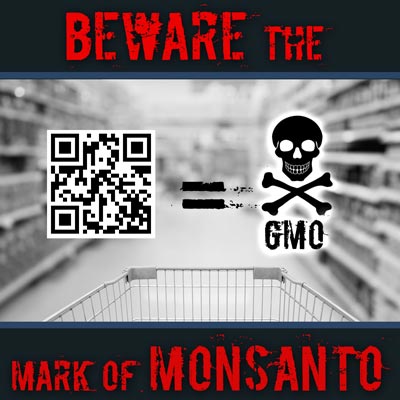

Will you financially support a corrupt, toxic and unsustainable food system, or a healthy, regenerative one? There are many options available besides big-brand processed foods that are part of the “GMA’s verified ring of deception.” You can:
  • Shop at local farms and farmers markets
  • Only buy products marked either “USDA 100 percent Organic” (which by law cannot contain GMOs), “100 percent Grass-Fed,” or “Non-GMO Verified”
  • If you have a smartphone and you don’t mind using it, download the OCA’s Buycott app to quickly and easily identify the thousands of proprietary brands belonging to GMA members, so you can avoid them, as well as identify the names of ethical brands that deserve your patronage
Last but not least, encourage good companies to reject QR codes and to be transparent and clear with their labeling. This will eventually ensure that all GMO foods can easily be identified by the GMA’s “verified ring of deception” mark that is the Smart Label.
Campbell’s, Mars, Kellogg’s, ConAgra and General Mills all vowed to voluntarily comply with Vermont's GMO labeling law by labeling all of their foods sold across the U.S. Will their plans change if the current “compromise” gets passed by the Senate? That remains to be seen, but if you like these companies, I would encourage you to reach out to them and ask them to remain steadfast in their promise.

Non-GMO Food Resources by Country

If you are searching for non-GMO foods, here is a list of trusted sites you can visit.

http://articles.mercola.com/sites/articles/archive/2016/07/23/monsanto-glyphosate-contamination.aspx

Monday, 1 August 2016

Lives Remembered: Sir David Goodall, 1931 - 2016

A WELL-REGARDED High Commissioner in India, Sir David Goodall played a crucial role in the 1985 Anglo-Irish Agreement.


Sir David Goodall and wife, Morwenna Peecock
Sir David Goodall played a key role in the Anglo-Irish treaty

A classical scholar who gained a first at Trinity, Oxford and a devout Roman Catholic, he proved an ideal person to start the negotiations that would lead to the Good Friday Agreement and the Northern Ireland Peace Process. 
Arthur David Saunders Goodall was brought up in Yorkshire, where he attended Ampleforth College and discovered a passion for art. 
After Oxford he served for a year as subaltern in the King’s Own Yorkshire Light Infantry before entering the Foreign Office in 1956.
He was soon marked out as one to watch and by the 1960s took over the German desk in the Foreign Office at the height of the Cold War. From there he moved steadily upwards, in 1979 being appointed as Minister to Bonn (the then West German capital) until promotions propelled him to become Deputy Under-Secretary in the Foreign Office from 1982 to 1987.
He acted as secretary of the Ministerial Committee for Overseas Affairs and was especially valued for his work on the Anglo-Irish Agreement, his Irish ancestry and Catholic heritage complemented by his diplomatic skills and pure common sense. His subsequent four years in India were rewarded with the GCMG, the highest honour for members of the Diplomatic Service. 
Although his artistic ability had come to light when he was still at school, it was not until Sir David read Painting As A Pastime by Winston Churchill that he took it up himself. He painted in India, travelling through most of its states and wherever he went thereafter.
Sir David Goodall's paintingNC
Sir Winston Churchill's 'Painting As A Pastime' inspired Goodall to tour India and paint
From 1995 he was chairman of Leonard Cheshire Disability, which helps disabled people, and in accordance with his abiding interest in all things Irish, he also became chairman of Anglo-Irish Encounter and the British-Irish Association. In 1996 he was the Visiting Professor at the Institute of Irish Studies, part of Liverpool University, and he was on the Council of Durham University. 
He wrote and illustrated two books: Remembering India and Ryedale Pilgrimage and spent his retirement in Ampleforth. 
In 1962 he married Morwenna Peecock. She and their three children survive him.
http://www.express.co.uk/life-style/life/694894/Lives-Remembered-Sir-David-Goodall-1931-2016?_ga=1.32546430.1191218348.1468924780

What You See in the Toilet Can Give You Valuable Insights into Your Health

What’s normal and what’s not when you look into the toilet after using it? You can learn a great deal about your overall health by taking a look at your stool and noting its color, size, shape, consistency, odor and other features

Toilet Habits

February 14, 2013

Story at-a-glance

  • What’s normal and what’s not when you look into the toilet after using it? You can learn a great deal about your overall health by taking a look at your stool and noting its color, size, shape, consistency, odor and other features
  • Your toileting habits, such as your frequency of elimination and the ease with which you move your bowels, can provide additional clues to your health status
  • If you know what to look for, you may be able to detect health problems early enough to stop them in their tracks, including serious diseases like celiac disease, hepatitis, urinary tract infections and stones, malabsorption disorders, inflammatory bowel disease, pancreatitis, cancer and others
  • Suggestions are given for optimizing your gastrointestinal function, including how to build healthy gut flora, and what things to avoid due to their potential adverse effects on your GI system, which is crucial to your immune health
By Dr. Mercola
When it comes to toileting habits, the topic is not exactly a favorite among Americans – at least for those above the age of four. Mention poop and you can easily clear a room – or at the least, generate some unusual facial expressions, nervous laughter, and wisecracks about "too much information."
But your bodily emissions are an important health topic that deserves serious attention, regardless of the "ick factor." In fact, if you ignore what you deposit in your toilet, you could be flushing your health down the drain!
Did you know the average person generates about five TONS of stool in his or her lifetime? Turns out, there is much to be learned from this mountain of poop.
The shape, size, color, and other fecal features can tell you a great deal about your overall health, how your gastrointestinal tract is functioning, and even give you clues about serious disease processes that could be occurring, like infections, digestive problems, and even cancer. Poop comes in just about all the colors of the rainbow... and please forgive me for using the words poop and rainbow in the same sentence.
Although there is a certainly a wide variety of stool colors, textures and forms that are considered "normal," there are definitely things that, if seen or experienced, warrant immediate medical attention. With this in mind, the overview that follows covers what you need to know about what's normal and not normal in the bathroom department.

What is Normal Stool?

Your stool is about 75 percent water. The rest is a fetid combination of fiber, live and dead bacteria, miscellaneous cells and mucus.1, 2 The characteristics of your stool will tell you a good deal about how happy and healthy your digestive tract is – the color, odor, shape, size, and even the sound it makes when it hits the water and whether it's a "sinker" or a "floater" are all relevant information.


The Bristol Stool Chart is a handy tool that may help you learn what you're going for. Ideally, your stool should approximate Types 3, 4 and 5, "like a sausage or a snake, smooth and soft" to "soft blobs that pass easily." Type 4 is the Holy Grail.3


Fiber tends to bulk up your stool and acts like glue to keep the stool stuck together, instead of in pieces. If your stool is on the softer side, short of diarrhea ("soft serve," as some call it), it could be related to lactose intolerance, artificial sweeteners (sorbitol and Splenda), or a reaction to fructose or gluten.

Look, Listen and Smell Before You Flush

What's normal and what's not when you look into the toilet? The following table will help you narrow down what to look for, so that you aren't needlessly alarmed. Of course, there are a few signs that ARE cause for concern, and those are listed too. If you have a change in stools accompanied by abdominal pain, please report this to your physician.4
Healthy StoolUnhealthy Stool
Medium to light brownStool that is hard to pass, painful, or requires straining
Smooth and soft, formed into one long shape and not a bunch of piecesHard lumps and pieces, or mushy and watery, or even pasty and difficult to clean off
About one to two inches in diameter and up to 18 inches longNarrow, pencil-like or ribbon-like stools: can indicate a bowel obstruction or tumor – or worst case, colon cancer; narrow stools on an infrequent basis are not so concerning, but if they persist, definitely warrant a call to your physician
S-shaped, which comes from the shape of your lower intestineBlack, tarry stools or bright red stools may indicate bleeding in the GI tract; black stools can also come from certain medications, supplements or consuming black licorice; if you have black, tarry stools, it's best to be evaluated by your healthcare provider
Quiet and gentle dive into the water...it should fall into the bowl with the slightest little "whoosh" sound – not a loud, wet cannonball splash that leaves your toosh in need of a showerWhite, pale or gray stools may indicate a lack of bile, which may suggest a serious problem (hepatitis, cirrhosis, pancreatic disorders, or possibly a blocked bile duct), so this warrants a call to your physician; antacids may also produce white stool
Natural smell, not repulsive (I'm not saying it will smell good)Presence of undigested food (more of a concern if accompanied by diarrhea, weight loss, or other changes in bowel habits)
Uniform textureFloaters or splashers
Increased mucus in stool: This can be associated with inflammatory bowel disease like Crohn's disease, or ulcerative colitis, or even colon cancer, especially if accompanied by blood or abdominal pain

Does Your Stool Have a Really Bad Odor?

If your stool has an extraordinarily bad odor, it should not be ignored. I am referring to an odor above and beyond the normally objectionable stool odor. Stinky stool can be associated with a number of health problems, such as:7
  • A malabsorptive disorder
  • Celiac disease
  • Crohn's disease
  • Chronic pancreatitis
  • Cystic fibrosis
Cystic fibrosis (CF) is a disease caused by a defective gene that causes your body to produce abnormally thick, sticky mucus, which builds up and causes life-threatening lung infections and serious digestive problems. Most cases of CF are diagnosed before the age of 2, so this is more of a concern with infants and toddlers.
Speaking of malodorous things, what about gas? Passing gas (flatulence) is normal. Not only is it normal, it's a good sign that trillions of hard working gut bacteria are doing their jobs. People pass gas an average 14 times per day – anywhere from one to four pints of it!8 Ninety nine percent of gas is odorless, so you may even be unaware you're passing it. Think about it – were it not for an exit, we'd all blow up like balloons!

How Often Should You Move Your Bowels?

Normal bowel habits vary. When we talk about regularity, what we're really talking about is what's regular for you. Three bowel movements per day to three per week is considered the normal range.
What's more important than frequency is the ease with which you move your bowels. If you need to push or strain, something is off – moving your bowels should take no more effort than urinating or passing gas. The thing to watch for is a sudden change in your bowel habits. Many factors can affect regularity, such as diet, travel, medications, hormonal fluctuations, sleep patterns, exercise, illness, surgery, childbirth, stress and a whole host of other things.9

Constipation and Diarrhea


The average body takes between 18 and 72 hours to convert food into poop and pass it on out. When this time is significantly shortened, the result is diarrhea because your intestine doesn't have time to absorb all of the water. Conversely, when transit time is lengthened, you may end up constipated because too much water has been absorbed, resulting in hard, dry stools.

Constipation is defined as passing hard, dry stools that you have to strain to move, and it's typically accompanied by decreased frequency of defecation. Straining is not normal, nor are experiencing feelings of incomplete elimination, bloating, crampiness, or sluggishness after going number two. If you're over the age of 65, your risk of becoming constipated increases significantly.
Chronic, untreated constipation can lead to fecal impaction,10 which can be a serious medical condition. Laxatives should be avoided at all cost and used only as a last resort. If you absolutely must use a laxative, make sure it is used for only a very short period of time.
Common Causes of INCREASED Bowel Frequency/Diarrhea11
LifestyleDiseases and Conditions
Eating more fruits and vegetables (increased fiber)Hyperthyroidism (overactive thyroid)
Increased exerciseCrohn's disease
Drinking more waterUlcerative colitis
Emotional stressCeliac disease
Food allergiesIrritable bowel syndrome (IBS)
Medication side effects
Gastrointestinal infection
Common Causes of DECREASED Bowel Frequency/Constipation12, 13
LifestyleDiseases and Conditions
Change in diet, less fiber, less fruits and vegetablesPregnancy, childbirth, or hormonal disturbances
Emotional stressProblems with the muscles or nerve in the intestine, rectum or anus
Ignoring the urge to "go," travel and scheduling factors that cause you to hold itIrritable bowel syndrome (IBS)
Insufficient exerciseDiabetes
Inadequate hydrationHypothyroidism (underactive thyroid)
Calcium or iron supplementsLocal pain or discomfort around the anus, such as from fissures or hemorrhoids
Drugs such as narcotic painkillers (codeine, for example), diuretics, antacids, antidepressants, and excess or overused laxativesLess often: diverticulitis, intestinal obstruction, colorectal cancer, multiple sclerosis, Parkinson's disease and spinal cord injury
Food allergies

How to Score a Home Run with Your Bowel Movements

Most gastrointestinal problems can be prevented or resolved by making simple changes to your diet and lifestyle. If you aren't achieving poo perfection, or if you don't feel right, then look at the following factors and consider making a few changes. These strategies will help reverse constipation or diarrhea, in addition to helping prevent recurrences.
  • Remove all sources of gluten from your diet (the most common sources are wheat, barley, rye, spelt and other grains)
  • Eat a diet that includes whole foods, rich in fresh, organic vegetables and fruits that provide good nutrients and fiber; most of your fiber should come from vegetables, not from grains
  • Avoid artificial sweeteners, excess sugar (especially fructose), chemical additives, MSG, excessive amounts of caffeine, and processed foods as they are all detrimental to your gastrointestinal (and immune) function
  • Boost your intestinal flora by adding naturally fermented foods into your diet, such as sauerkraut, pickles, and kefir (if you tolerate dairy); add a probiotic supplement if you suspect you're not getting enough beneficial bacteria from your diet alone
  • Try increasing your fiber intake; good options include psyllium and freshly ground organic flax seed (shoot for 50 grams of fiber per 1,000 calories consumed).
  • Make sure you stay well hydrated with fresh, pure water
  • Get plenty of exercise daily
  • Avoid pharmaceutical drugs, such as pain killers like codeine or hydrocodone which will slow your bowel function, Antidepressants, and antibiotics can cause a variety of GI disruptions
  • Address emotional challenges with tools like EFT
  • Consider squatting instead of sitting to move your bowels; squatting straightens your rectum, relaxes your puborectalis muscle and encourages the complete emptying of your bowel without straining, and has been scientifically shown to relieve constipation and hemorrhoids

Consider a Bidet

As a practical and affordable alternative to toilet paper, you might want to try a bidet. Bidets are the norm in Europe—no bathroom is found without one. Once you experience a bidet, you'll probably never go back to toilet paper! A bidet is refreshing in a way toilet paper will never be, is gentler and less irritating than wiping with paper, and reduces hand contamination. Whenever I travel it is one of the items that I miss most from my home. Nearly everyone that I know has received one just loves them.
The bidets pay for themselves in no time with the money saved on toilet paper, as well as helping save valuable environmental resources. You still need a sheet or two of toilet paper to dry yourself, but that is a tiny fraction of what you would need to clean yourself. But more importantly they clean your bottom far more effectively than simply using dry toilet paper. They are easy to install, as no plumber is required. I've made my favorite bidet available in the Mercola store.
http://articles.mercola.com/sites/articles/archive/2013/02/14/normal-stool.aspx