Pages

Monday, 3 August 2015

Scientists discover there are five kinds of prostate cancer

In landmark research, British scientists in Cambridge have shown that the most common cancer among men in the UK can be classified into five types, depending on its DNA.

Treatment set to be transformed by findings that allow doctors to distinguish deadliest tumours:
  • Discovery that there are five kinds of prostate cancer could help treatment 
  • May allow doctors to better distinguish between slow & fast-growing types
  • Landmark research by British scientists shows that it depends on its DNA 
  • It could save lives of some of the 11,000 who die from disease each year

Healthwise

By Fiona Macrae, Science Editor For The Daily Mail
30 July 2015


Prostate cancer treatment could be transformed by the discovery that it is actually five different diseases.
Landmark research: British scientists have shown that prostate cancer can be classified into five types, depending on its DNA
Landmark research: British scientists have
shown that prostate cancer can be classified
into five types, depending on its DNA

In landmark research, British scientists have shown that the most common cancer among men in the UK can be classified into five types, depending on its DNA.

The breakthrough could allow doctors to better distinguish the more common, slow-growing forms of the disease from the deadlier, faster-growing varieties – the ‘holy grail’ of prostate cancer research.

This would spare some men unnecessary treatment and save the lives of some of the 11,000 who die from the disease each year.

Prostate cancer is unusual because while many men may have the disease, it can grow so slowly it might not cause any problems and the patient eventually dies of something else.

But others have a fast-growing, dangerous form and need urgent attention to survive. Doctors use a variety of techniques, including blood tests, biopsies, microscopy and scans, to determine those most at risk.

But the difficulty in identifying the aggressive type means many men with the so-called ‘pussycat’ form are subjected to painful and unnecessary treatments that can cause side-effects such as incontinence and impotence – and some men with the more dangerous ‘tiger’ version may not get the powerful drugs they need.

But by peering deep into the DNA of tissue samples from 250 men, scientists from the Cancer Research UK Cambridge Institute and Addenbrooke’s Hospital, also in Cambridge, showed the disease can be split into five main types.

Two have the worst prognosis, and are a sign that a man has the more dangerous ‘tiger’ form, two more signal the ‘pussycat’ version and the fifth lies between in terms of severity. 

Importantly, the genetic analysis is more accurate than the existing methods for determining how serious the cancer is, the scientists report in the online journal EBioMedicine.

Finding: Scientists from the Cancer Research UK Cambridge Institute and Addenbrooke’s Hospital made the discovery. Two types have the worst prognosis, two signal the 'pussycat' version and one is in between

... AND CHEMICAL IN PLASTIC COULD RAISE THE RISK OF PROSTATE CANCER 


A common chemical found in plastic food containers, cans, cosmetics and till receipts may increase the risk of prostate cancer, scientists have warned.

Unborn boys exposed to bisphenol A (BPA) had damaged stem cells that can lead to the cancer.

The chemical interferes with the body’s hormonal balance by mimicking the female hormone oestrogen, which is produced by men in higher quantities as they age. Scientists from the University of Illinois at Chicago grew a simplified, miniature prostate 1mm in diameter developed from human embryonic stem cells.

This showed that exposure to the chemical, which softens plastics, can cause overproduction of stem cells in the developing prostate. An abnormally high number of stem cells in any organ can be a risk factor for developing cancer. Professor Gail Prins said: ‘This is as definitive as it gets.’

Professor Malcolm Mason, Cancer Research UK’s prostate cancer expert, said: ‘The challenge in treating prostate cancer is that it can either behave like a pussycat – growing slowly and unlikely to cause problems in a man’s lifetime – or a tiger, spreading aggressively and requiring urgent treatment.

‘But at the moment we have no reliable way to distinguish them. This research could be game-changing, and could give us better information to guide each man’s treatment – even helping us to choose between treatments for men with aggressive cancers.

‘This could mean more effective treatment, helping save more lives and improve the quality of life for thousands.’


Black men are more than twice as likely to be diagnosed with prostate cancer than white men, researchers claim.

But Asian men have around half the chance of being diagnosed with and dying from the disease compared with white men.

Prostate Cancer UK estimated the lifetime risk of being diagnosed was 13.3 per cent for white men, 29.3 per cent for black men and 7.9 per cent for Asian men. The lifetime risk of dying from the disease was 4.2 per cent for white men, 8.7 per cent for black men and 2.3 per cent for Asian men.

White, black and Asian men diagnosed with the cancer all have a one in three chance of dying from it.

The research was published in the journal BMC Medicine.

‘Super Anti-Cancer Spice’ Turmeric Could Fight Type 2 Diabetes, Fuel Weight Loss

Turmeric, with its unique flavor and rich yellow color, is known as “Indian gold” for its many healing properties. Science is only beginning to uncover the many ways in which this ancient home remedy serves as a natural medicine that can be picked up at virtually any grocery store for barely a fraction of the price of prescription drugs.

Healthwise


The research is overwhelming
by Julie Fidler
Posted on July 21, 2015

turmeric-roots-735-350

Past Research Proves Turmeric’s Anti-Cancer Power

In the 1990s, Bharat Aggarwal, Ph.D. and colleagues from the University of Texas M.D. Anderson Cancer Center in Houston sprinkled a bit of turmeric on some cancer cells in the lab and were flabbergasted by what they found. “The effect was staggering,” Dr. Aggarwal told Men’s Health in 2011. Just a pinch of the powdered perennial plant blocked a biological pathway required for melanoma, prostate and other cancers to grow.
Eight years ago, Chinese researchers found that curcumin, the primary constituent of turmeric, could play a pivotal role in treating prostate cancer by inhibiting hormones known to trigger the disease. Also in 2007, University of Alabama scientists discovered that combining curcumin with traditional radiation therapy killed prostate cancer cells that had previously become radiation-resistant.
In June, preliminary research by UCLA researchers found that a synthetic version of turmeric helps kill cancer cells that had been resistant to a common chemotherapy drug. The team hopes that someday turmeric will be utilized as a treatment for head and neck cancers.

Now the Spice is Being Used for Diabetes Control

Now, scientists want to know if a combination of turmeric and Omega-3 fatty acids might delay the onset of Type 2 diabetes or stave it off completely. Scientists from the University of Newcastle’s Nutraceuticals Research Group, led by Professor Manohar Garg, are on the hunt for 80 participants for a new clinical study to find out exactly that.
“The root cause of type 2 diabetes is systemic inflammation, which impacts insulin secretion and function,” said Garg. “We want to nip the inflammation in the bud,” he said, adding that both curcumin and Omega-3 fats are important anti-inflammatory agents. [1]
Diabetes is a metabolic disease primarily caused by a lack of insulin produced by the pancreas, or the body’s resistance to insulin. Previous research has shown that the curcumin in turmeric works to adjust the insulin in the body. Turmeric assists the pancreas in regulating and stabilizing insulin levels, thereby lowering glucose levels. Actually, the turmeric and diabetes connection is one Natural Society has reported on before. [2]
There’s also evidence that turmeric can help people lose weight, and obesity is one of the leading causes of Type 2 diabetes. A study from Xi’an Jiaotong University School of Medicine found that “cure-cumin” (as Dr. Aggarwal and his colleagues now refer to curcumin) can counter the negative effects of a “junk food” diet.
The study found that turmeric consumption improved insulin resistance and leptin resistance, both strongly associated with weight gain. The study’s authors wrote:


“By diminishing the sediment of fat, relaxing the lymphatic return, and refraining the apoptosis of beta cells, the curcumin might significantly decrease the level of insulin resistance and leptin resistance caused by the high fat diet.”
Turmeric has a long list of medicinal uses – so start eating it! If you’re not a big fan of Indian food, no worries: there are loads of tasty ways to enjoy the spice. You can even incorporate it into beverages, thanks to turmeric’s mellow, sweet flavor. Turmeric is shaping up to a real-life miracle drug, minus the side effects and regulatory red tape.
Source: http://naturalsociety.com/super-anti-cancer-spice-turmeric-could-fight-type-2-diabetes-fuel-weight-loss

Healthwise

Saturday, 1 August 2015

Ginger Root Kills Ovarian & Prostate Cancer Cells Better than Chemo

Thanks to research from the University of Michigan and nearly three centuries of medicinal use, we can now utilize ginger root to not only kill ovarian cancer cells, but also prostate cancer cells with zero toxicity.

Healthwise

 OCTOBER 27, 2013

BY CHRISTINA SARICH

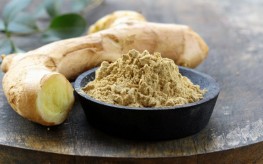
ginger

Truly among the great medicines of the world, ginger has long been used to treat inflammation and nausea, but the results presented in a session at the American Association for Cancer Research show that in every single instance where ginger powder was used to treat cancer cells, they all died as a result of being exposed to the compound. In medical lingo this is called apoptosis (cancer cell suicide.) When ginger is present, the cells even attack one another, called autophagy.


While ginger has been deemed a great natural remedy for those who are undergoing chemotherapy, it can also be used in larger quantities to treat cancer of its own accord.
Another study showing ginger’s ability to fight ovarian cancer concludes with:
“Ginger inhibits growth and modulates secretion of angiogenic factors in ovarian cancer cells. The use of dietary agents such as ginger may have potential in the treatment and prevention of ovarian cancer.”
Ginger has also been proven to treat prostate cancer. The British Journal of Nutrition published the results of an American study recently in which ginger extract (zingiber officinale) killed human prostate cancer cells while healthy prostate cells were left alone. Whole ginger extract was revealed to shrink prostate tumor size by a whopping 56%. (Researchers used daily oral feeding of 100 mg/kg body weight of ginger extract in rats).
“Remarkably, daily oral feeding of 100 mg/kg body weight of GE inhibited growth and progression of PC-3 xenografts by approximately 56 % in nude mice, as shown by measurements of tumour volume. Tumour tissue from GE-treated mice showed reduced proliferation index and widespread apoptosis compared with controls, as determined by immunoblotting and immunohistochemical methods. Most importantly, GE did not exert any detectable toxicity in normal, rapidly dividing tissues such as gut and bone marrow. To the best of our knowledge, this is the first report to demonstrate the in vitro and in vivo anticancer activity of whole GE for the management of prostate cancer.”
Further adding to the benefits of ginger, the spice has no toxicity when consumed even in high doses, and does not cause people to endure the very uncomfortable side effects of chemo and radiation treatments. The American Cancer Society admits  that more than 15% of men will be diagnosed with prostate cancer, and more than 20,000 American women will be diagnosed with ovarian cancer this year. Many of these cases can be helped with ginger root.
While Big Pharma would have these men and women endure very invasive treatments, some simple ginger root powder can cause their cancer cells to commit a certain death.

From: http://naturalsociety.com/ginger-root-kills-ovarian-prostate-cancer-cells-better-chemo


Healthwise