Pages

Tuesday, 24 October 2017

Obesity Responsible for 40 Percent of Diagnosed Cancers


October 18, 2017

obesity rate rising

Story at-a-glance

  • Cancers unrelated to obesity declined 13 percent between 2005 and 2014 while obesity-related cancer incidence rose by 7 percent; in 2014 more than 630,000 Americans were diagnosed with obesity-related cancer
  • Obesity-related cancers accounted for 40 percent of all diagnosed cancers in 2014; 55 percent of all cancers in women and 24 percent of cancers in men were related to obesity
  • Considering more than 20 percent of American adolescents are already in the obese category; awareness of the obesity-cancer link needs to grow if we’re to successfully combat cancer rates in coming decades
  • Visceral fat is particularly hazardous. Recent research links excess belly fat alone (regardless of bodyweight) to an increased risk for lung and gastrointestinal cancers in postmenopausal women
  • Obesity is associated with significant medical costs and lost productivity. An obese 20-year-old who sheds enough weight to drop down into the overweight category will save nearly two-thirds of his or her lifetime costs
By Dr. Mercola
Nearly 30 percent of the global population is overweight or obese and this has a significant impact on cancer rates, experts say. In a 2014 report, obesity was linked to an estimated 500,000 cancer cases worldwide each year.1,2 More recent statistics from the U.S. Centers for Disease Control and Prevention (CDC) shows the reality is far grimmer than that — at least in the U.S.

Obesity-Related Cancers on the Rise in the US

While cancers unrelated to obesity declined by 13 percent between 2005 and 2014, obesity-related cancer incidence rose by 7 percent, and in 2014 more than 630,000 people were diagnosed with obesity-related cancer in the U.S. alone.3,4,5 Overall, obesity-related cancers accounted for a whopping 40 percent of all diagnosed cancers in 2014. As reported by Reuters: 6
“According to the International Agency for Research on Cancer, 13 cancers are associated with overweight and obesity. They include meningioma, multiple myeloma, adenocarcinoma of the esophagus, and cancers of the thyroid, postmenopausal breast, gallbladder, stomach, liver, pancreas, kidney, ovaries, uterus and colon and rectum (colorectal).” 
Previous data from the American Association for Cancer Research (AACR) suggests excess body weight is responsible for about 25 percent of the relative contribution to cancer incidence, ranking second only to smoking.7 When combined with other high-risk behaviors, such as a poor diet and lack of exercise, the relative contribution rises to 33 percent, making optional lifestyle-related factors a significant contributor to many cancers.

Obesity-Related Cancers Disproportionally Affect Women

Women are at greatest risk. Compared to men, women are more than twice as likely to develop obesity-related cancer,8 and the longer a woman is overweight, the greater her risk.9 The latest CDC data shows that 55 percent of all cancers in women were related to obesity whereas obesity accounted for “just” 24 percent of male cancer cases.10 Overall, endometrial, ovarian and postmenopausal breast cancer accounted for 42 percent of all obesity-related cancers.
According to the authors, “Observational studies have provided evidence that even a 5-kg (11-pound) increase in weight since early adulthood is associated with increased risk of overweight- and obesity-related cancers.” Despite such evidence, few people are fully aware of this association.
As noted by CDC deputy director Dr. Anne Schuchat,11 “That obesity and overweight are affecting cancers may be surprising to many Americans. The awareness of some cancers being associated with obesity and overweight is not yet widespread.” Considering the fact that nearly 71 percent of American adults are either overweight or obese, and over 20 percent of adolescents are already in the obese category,12 awareness of this link needs to grow if we’re to successfully combat rising cancer rates in coming decades.

‘Fat and Fit’ Myth Promotes Unhealthy Ideals

Many still hold fast to the idea that you can be overweight and metabolically healthy, or “fat and fit,” but the cases in which this might be true are few and far in between. While this notion helps combat weight-related depression and poor self-esteem, it ignores the very real health risks associated with excess body weight.
As noted in a 2013 review and meta-analysis13 that included data from more than 61,000 people, obese individuals were more likely to die sooner or have heart-related problems than people of normal weight — even if they were otherwise healthy — causing the researchers to conclude that:
"Compared with metabolically healthy normal-weight individuals, obese persons are at increased risk for adverse long-term outcomes even in the absence of metabolic abnormalities, suggesting that there is no healthy pattern of increased weight."
More recent research confirms that visceral fat — the fat buildup around your internal organs, which typically shows as an increased waist size — is directly associated with insulin resistance, high blood pressure, heart disease, stroke and cancer. In the U.S., Greece, Iceland and New Zealand, over 90 percent of adult men and half of all children were found to have this risk factor.14

Belly Fat Especially Risky for Postmenopausal Women

As noted by Medical News Today,15 “So-called metabolically obese normal weight individuals may still have impaired health, and up to 50 percent of these individuals may be ignored by current BMI [body mass index] measurements.” Other recent research has linked excess belly fat alone (regardless of bodyweight) to an increased risk for lung and gastrointestinal cancers in postmenopausal women. According to study author Line Maersk Staunstrup, a doctoral student at Nordic Bioscience ProScion in Denmark:16
"The average elderly women can very much use this information, as it is known that the menopause transition initiates a shift in body fat towards the central trunk area. Therefore, elderly women should be especially aware of their lifestyle when they approach the pre-menopause age."

How to Measure Your Body Composition

Indeed, BMI has been repeatedly shown to be an unreliable way to measure a person’s body composition as it fails to take into account muscle mass and intra-abdominal (visceral) fat mass.
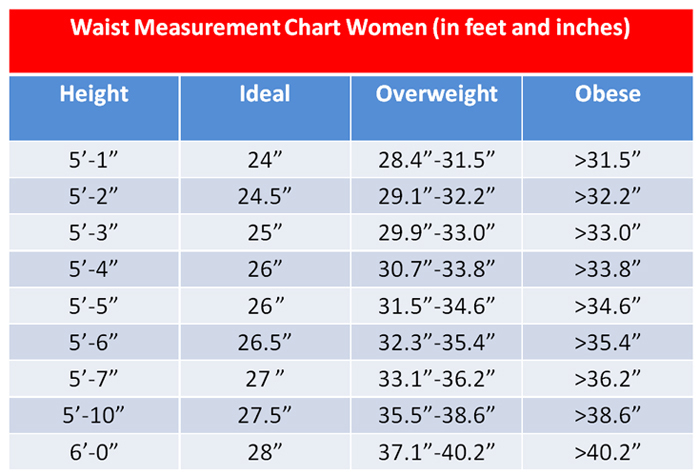
A far more accurate measurement is to measure your waistline (the distance around the smallest area below the rib cage, above your belly button) in relation to your height. Waist circumference is the easiest anthropometric measure of total body fat. A general guide for healthy waist circumference is as follows:
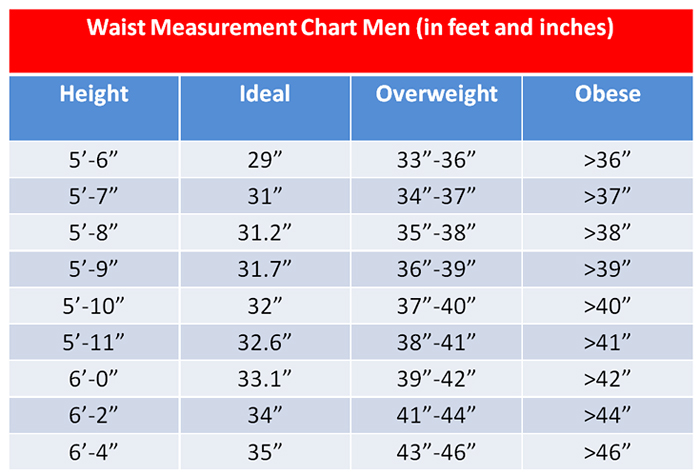
Waist Measure for Men
Waist Measurement for Women
Alternatively, you can measure your waist-to-hip ratio. This is done by measuring the circumference of your hips at the widest part, across your buttocks. Then measure your waist at the smallest circumference of your natural waist, just above your belly button. Divide your waist measurement by your hip measurement to get the ratio, or use the University of Maryland’s online waist-to-hip ratio calculator.17
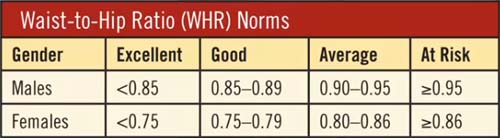
Normal Waist to Hip Ratio

The High Cost of Obesity

Other research also deconstructs the “fat and fit” notion, showing obesity eventually takes a toll on health — and finances — even if the person is currently healthy. Using computer modeling, the researchers estimated the financial cost of obesity for different age groups. As an example, a 50-year-old obese individual with normal blood pressure and cholesterol levels has a price tag in excess of $36,000 in direct medical care and lost productivity.
Not surprisingly, weight loss was associated with significant savings. Not only could health insurance premiums be lowered across the board if society as a whole did not struggle with an excess of obesity-related health problems, but individuals would also save on co-pays, and they’d be able to maintain their productivity in the workforce. As reported by Medicine Net:18
“The researchers estimated that if an obese 20-year-old shed enough pounds to drop to the overweight category, almost two-thirds of his lifetime costs to society could be avoided … If a healthy but obese 70-year-old crossed to the overweight category, her lifetime costs could be cut by about 40 percent …”

How Excess Weight Contributes to Cancer

Obesity can raise your risk of cancer in several ways. Some cancers, especially breast and endometrial cancer, are sensitive to the female sex hormone estrogen, and fat cells produce an excess of this hormone. This is also why obesity in young children is such a grave concern. By carrying excess weight (and excess estrogen) for many years, if not decades, they’re at a significantly heightened risk of cancer as adults.  
Obesity is also associated with elevated inflammation levels in your body, which can contribute to cancer growth. One of the basic reasons why nutritional ketosis works so well against cancer is because it very effectively and efficiently lowers inflammation. A high-sugar diet, which tends to pack on the pounds, also feeds cancer by providing cancer cells with their preferred fuel.
A healthy high-fat diet, on the other hand, tends to discourage cancer growth, as cancer cells lack the metabolic flexibility to use ketones derived from fat as fuel.
It is likely that obesity represents an indirect marker for the true cause of the problem that contributes to both obesity and cancer, namely insulin resistance, which is also associated with leptin resistance and activation of the mTOR pathway. By lowering your blood sugar levels and normalizing your insulin receptor sensitivity, exercise has a similar effect, as this too creates an environment less conducive to cancer growth.

Cutting Carbs Is More Effective Than Cutting Calories

Calorie counting used to be the go-to solution for weight loss. However, research shows it’s not the cutting of calories that has the most profound effect, it’s cutting down on net carbs. One of the reasons for this is because, compared to fat and protein, carbohydrates have the greatest effect on insulin, which drives fat storage. Carbohydrate restriction also activates AMPK, an enzyme and powerful signaling protein that monitors cellular energy levels and drives several important metabolic pathways.
This includes pathways involved in fat burning, the building of mitochondria, insulin regulation and glycogen breakdown — all of which have important implications not only for fat loss but also for general health. Importantly, recent research19 (summarized in the video above) shows a high-carb diet — even if you reduce calories to a level designed for weight loss — will prevent AMPK activation.
What’s more, eating a low-carb diet will activate AMPK even if your calorie count is excessive! This can help explain why it’s so difficult to lose weight on a low-calorie diet when a large portion of those calories come from carbohydrates. That said, calorie restriction does have its merits, especially when you start talking about calorie restriction in terms of cyclical fasting. From my perspective, the timing and frequency of your meals is really the key to unlocking healthy metabolism.

Nutritional Ketosis — The Key to Cancer Prevention and Treatment

I’ve written a number of articles detailing the anticancer potential of nutritional ketosis. For a more in-depth review, revisit my interview with Thomas Seyfried, one of the leading pioneers in the nutritional treatment of cancer. He's been teaching neurogenetics and neurochemistry as it relates to cancer treatment at Yale University and Boston College for more than 25 years.
He wrote an excellent medical textbook for alternative oncologists on this topic called “Cancer as a Metabolic Disease: On the Origin, Management, and Prevention of Cancer,” and is currently involved in preclinical research at Boston College. His book costs over $100 but you can get a free summary20 of it here. Earlier this year, I announced my pledge to raise $1 million to support Seyfried’s work by matching donations.
Another front-runner in this field is Dr. Abdul Slocum with the ChemoThermia Oncology Center in Turkey, where they’re reporting remarkable successes using metabolically supported cancer therapies in a broad range of advanced stage cancers, including those involving the pancreas, lung, breasts, ovaries and stomach. Many of Slocum's patients have failed traditional therapies and some have even been sent home to die.
When they enter his clinic, they’re immediately placed on a ketogenic diet and remain on it throughout their treatment. By incorporating nutritional ketosis, they’re able to minimize the amount of chemotherapy required without sacrificing effectiveness. On the contrary, effectiveness is massively increased, as their bodies are put into a metabolic state that is inhospitable to cancer cells, making them more vulnerable and easier to eradicate.

Cyclical Ketogenic Diet for Optimal Health and Disease Prevention

Research reveals a vast majority of Americans eat all day long. Most also consume a majority of their daily calories late in the evening and this type of eating pattern is a recipe for weight gain and metabolic dysfunction. The reason so many struggle with their weight (aside from eating processed foods that have been grossly altered from their natural state) is because they rarely, if ever, skip a meal.
As discussed above, carrying excess weight is a significant risk factor for 13 different types of cancer. The good news is that by eating the right foods and reducing the frequency of your eating, you not only will shed weight as a natural side effect of normalizing your metabolism, you’ll also reduce your risk of chronic disease, including cancer, to a significant degree.
If you already have cancer, the combination of a ketogenic diet and intermittent fasting can significantly improve your chances of recovery. This is the kind of eating plan I detail in my latest book, “Fat for Fuel.” From my perspective, it's nothing short of medical negligence to fail to integrate this type of dietary strategy into a patient's cancer treatment plan (along with optimizing vitamin D).
A ketogenic diet along with intermittent fasting can be easily integrated into whatever cancer treatment plan you decide to follow. Personally, I believe it's absolutely crucial, no matter what type of cancer you're trying to address. To learn more, please see “Burning Fat for Fuel Increases Quality and Quantity of Life.”
https://articles.mercola.com/sites/articles/archive/2017/10/18/obesity-health-risks.aspx

Monday, 23 October 2017

Curious Cook: Vegetarianism and other dietary tales, Part 1

Do vegetarians live longer, healthier lives? This series of five stories on vegetarianism under the Curious Cook column checks out the claim.


Curious Cook: Vegetarianism and other dietary tales, Part 1


My sons and their girlfriends recently came to stay at our place in France. The girls are genuinely nice people, and one of them is very strictly vegetarian. As someone with always a few slabs of emergency steaks in the freezer, vegetarianism posed a few logistical issues during mealtimes but nothing we could not manage, especially as she very kindly conjured up a very delicious vegetarian dinner for everyone one evening.
It did, however, provoke an interest in what happens when people diligently decline to eat meat (I had not met a single vegetarian in France before) – and research highlighted some interesting wide-ranging findings which may also help non-vegetarians like me.
So this series of articles – in five parts – is not only about vegetarianism, it basically ended up as a review of human dietary tracts along with some biochemical, industrial and ecological factors that affect our food and well-being in the modern world.

The Fake News

But first, let us debunk a few common fallacies that swirl around the media. One common fallacy is that humans are by nature not meat eaters – it is claimed that we do not have the jaw and teeth structure of carnivores.
It is true that humans are not designed to eat raw meat but that is because our jaws have evolved to eat cooked meat, which is considerably softer and much easier to chew.
And there is evidence that humans have been cooking meat for at least 450,000 years, probably even longer – a sign is the overbite in human teeth (our upper teeth are slightly in front of our lower teeth in the jaw) which indicates the preponderance of soft cooked meats in the diet.
True carnivores need much stronger jaws, perfectly aligned teeth and big cutting incisors precisely because they cannot cook meat and must therefore cut and chew tough raw flesh with their teeth.
They also spend a much longer time chewing and eating to obtain the same calories from their food.
Another fallacy is that meat is somehow acidic and difficult to process through the long human intestinal system. In fact, the pre-digestion of food in the acidic cavity of the stomach results in a lumpy mush called chyme – this acidic chyme is then treated by pancreatic juices as it passes through the duodenum.
The strong bicarbonate ions in the pancreatic juices render the chyme alkaline as it enters the intestines – and the reason is because digestive enzymes in the small intestines work better in a mildly alkaline environment.
Yet another common piece of misinformation is that humans are not really designed to digest meat in any case – and this is the reason for many dietary disorders.
However, humans produce several pancreatic enzymes specifically to digest fats and proteins, such as pepsin, trypsin, chymotrypsin, lipase, et cetera.
Perhaps the most telling indicator is probably human bile, which contains salts such as bilirubin and biliverdin which break down and emulsify animal fats so that the pancreatic enzymes can process chyme more efficiently. The composition of human bile is therefore significantly different from the bile of animals that eat only greens, such as ruminants.
What is more true is that during most of human evolution, the supply of meat was very variable – it would have been extremely unlikely that Palaeolithic man ate meat (or ate at all) every day whereas it is now possible for ordinary people to have substantial amounts of fresh meat every day of the year, and for every meal as well if they so desired.
This has been true for only less than a century due to modern production, refrigeration and transport logistics. Whether this possible over-consumption of meat is a significant factor for various modern dietary-induced issues will be discussed later.

human beings are evolved for an omnivore diet, but more and more are leaning towards vegetarianism
No matter what has been said, all the evidence points clearly to humans being omnivores, which are capable of eating and digesting both animal and plant foods efficiently.
There are other dubious claims about meat consumption; for example, meat has been blamed for the increase of human allergies.
The fact is that 90% of all human allergies can be traced to just seven foods: milk, eggs, nuts, fish, shellfish, wheat and soy bean products – please note that none of these are animal-based meats.
An allergic reaction to pork, lamb or beef is actually quite rare, unless humans have been bitten by certain insects such as the Lone Star tick (or possibly the Castor Bean tick), in which case the huge overproduction of an antibody called immunoglobulin E (or IgE) caused by the bite can render humans allergic to mammalian meat – the antibody IgE is basically the human body’s defence against an alien carbohydrate called alpha-gal generally found in most mammalian flesh, apart from primates.
How this allergy to meat is induced by an insect is fascinating – nobody really knows, though there are several theories currently undergoing validation.
Meat has also been blamed for causing other diseases, especially since processed meats had been classified in late 2015 as a Group 1 carcinogen by the WHO, citing an 18% increased risk of bowel cancer.
This sounds dramatic but in the context of an overall incidence rate of 6% for bowel cancer (in the United Kingdom), an 18% increase of risk raises that overall risk up from 6% to 7%.
This of course is not good news, but it is also not nearly so alarming. If you wish to know more, please look up an earlier article on http://www.star2.com/living/viewpoints/2015/11/13/processed-meats-who-says-its-bad/ where it is explained that the problem issues are actually the nitrates, nitrites and other chemicals added into processed meats.
As for meat causing other diseases, please note that most common serious allergies are not caused by eating meat, as mentioned earlier. If meat is a consistent disease-causing agent, one would have expected many more allergies and reactions among the general population.

A vegetarian dish of varied plant-based ingredients like taro, beans and nuts contains the protein we need.
A nest of fried mashed taro is filled with a vegetarian treasure chest. Many plant-based foods such as soy, oats, peanuts, lentils, squash, courgettes, kale, et cetera, are excellent alternate sources of protein. – Filepic

Meat Isn’t Always Necessary

On the other hand, despite what the meat industry may say about the importance of proteins, there is really no requirement for the superfluous consumption of animal proteins, especially by adults.
Many plant-based foods such as soy, oats, peanuts, lentils, squash, courgettes, kale, et cetera, are excellent alternate sources of protein. It is practically impossible to suffer protein deficiency if a varied vegetarian diet is followed.
However, there may be some slight issues with totally excluding animal proteins – more on this later.

Omnivores

So no matter what has been said, all the evidence points clearly to humans being omnivores, which are capable of eating and digesting both animal and plant foods efficiently. And this was clearly a huge evolutionary advantage for humans as it opened up a much wider supply of food.
Cooking and agriculture (including meat farming) were the two major foundation developments that allowed humans to become the dominant species on our planet. A little explanation is on http://www.thestar.com.my/lifestyle/food/features/2014/05/11/what-you-probably-didnt-know-about-cooking/

Now The Real Research

It has often been claimed – and there is good credible evidence to support the claim – that vegetarianism generally leads to better longevity and a lower incidence of coronary heart disease (CHD) and cancers in humans.
Perhaps the most relevant study is an American investigation published as the “Vegetarian Dietary Patterns and Mortality in Adventist Health Study 2” (also known as AHS-2) where the dietary habits of 73,308 participants (all US-based Seventh Day Adventists) were studied in depth, even breaking down diets into categories like non-vegetarian (general meat eaters), semi-vegetarian, pesco-vegetarian, lacto-ovo vegetarian, and vegan.
If you are interested, for the purposes of this study, a semi-vegetarian is someone who consumes meat and fish once a week, a pesco-vegetarian is a fish-eater but who can also eat meat once a month, a lacto-ovo vegetarian eats eggs and dairy but restricts consumption of fish and meat to once a month, and vegans are those who eat eggs, dairy, fish and meat only up to once a month.
Without dabbling into the detailed statistics, one of the major overall conclusions was that mortality was found to be 12% lower for subjects who are NOT general meat-eaters – statistically-speaking, this is quite a big deal.

A vegetarian diet generally leads to better longevity in humans.
There is good credible evidence to support the claim – that a vegetarian diet generally leads to better longevity and a lower incidence of coronary heart disease (CHD) and cancers in humans.
Interestingly, the study also found that the incidence of strokes was higher for female subjects who were NOT meat-eaters though this item was not originally presented as a research outcome.
Also, there was no hugely conclusive evidence that incidence of cancers was altered by diets though it does seem that female vegetarians have a lower risk of female-specific and gastrointestinal cancers.
However, the AHS-2 findings contrasted somewhat with another comprehensive study done in the United Kingdom: the European Prospective Investigation into Cancer and Nutrition-Oxford University (EPIC-Oxford) called “Mortality in vegetarians and comparable non-vegetarians in the United Kingdom” covering 60,310 subjects.
The categories are a little different too, being more simply divided into regular meat eaters, low meat eaters, fish eaters and then vegetarians, including vegans.
In the EPIC-Oxford study, no statistically significant differences were found in the overall mortality rates for all categories, though there was some concurrence with AHS-2 in terms of lower death rates from CHD for vegetarians.
Due to the significant variance in the findings between AHS-2 and EPIC-Oxford, especially regarding mortality rates, further analysis was done on the discrepancies and some probable explanations for the differences between AHS-2 and EPIC-Oxford have been noted.
One is that the dietary patterns of AHS-2 and EPIC-Oxford subjects are themselves subject to wide differences; for example, the amount of fibre consumed by AHS-2 subjects averaged over 46g per day compared to around 27g per day for the UK subjects.
The amount of Vitamin C (ascorbic acid) consumed by the UK subjects was also around only half the amount consumed by the US subjects.
Other statistical elements which may skew results are the age of the research participants and how long they have maintained their dietary choices – the US Seventh Day Adventists have generally adopted healthy eating as a lifestyle choice since birth based on their beliefs.
However, in the UK, being a vegetarian is a dietary choice that started only around 1972 before gaining mainstream popularity much later. Therefore the UK vegetarians have not been life-long vegetarians in general.
It should be noted that before the 1990s, people who did not eat meat in the UK were often considered strange, super-religious, a little ill or possibly all three.
Another factor may be the lifestyle choices of meat eaters, who may consume more unhealthy fried foods or perhaps also indulge in tobacco and/or alcohol as they would be less restricted by a desire for healthy foods – meat eaters in the US also eat significantly more meat than other countries.


Vegetarians were known as Pythagoreans until the mid-19th century – this name was derived from the famous 6th century BC Greek mathematician who was probably one of the earliest ethical vegetarians. Filepic
As an aside, vegetarians were known as Pythagoreans until the mid-19th century – this name was derived from the famous 6th century BC Greek mathematician who was probably one of the earliest ethical vegetarians.
Oddly, people who were strictly Pythagoreans were also forbidden to eat beans and Pythagoras himself was allegedly killed when he refused to escape from his enemies by walking across and damaging a bean field.
Till today, no one really knows why he was so extraordinarily considerate to beans.
There is now a constant barrage of blogs, glossy magazines and fanciful articles into the pros and cons of vegetarianism – much of it is rather biased towards the pros, which on closer inspection also do not amount to much more than fads, anecdotes and opinions, such as the various “clean eating” movements.
One recent odd item of research indicated that the type of vegetarian diet can also affect human health, particularly CHD.
It seems that ingesting lots of “unhealthful” plant foods such as refined grains, sugary (plant-based) drinks, potato fries, et cetera, can be bad for health compared to eating unprocessed fibre-rich vegetables, less sugar and foods which are not deep-fried in oil. If you are now thinking that news about this subject has gone silly, then I have to agree.
However, the large-scale research results are overall reasonably compelling, especially when applied to diseases such as CHD.
Additionally, it is important to stress that research definitions of the vegetarian (or “non-meat eating”) categories did NOT actually mean a total abstinence of meat, dairy or fish, even though true vegans are also included in these categories.
Coming up: So the next part will deal with some dietary realities – and also include a few more thoughts about AHS-2 and EPIC-Oxford. In any case, you will see that dietary issues are not always as simple as they seem.

https://www.star2.com/food/food-news/2017/10/23/vegetarianism-and-other-dietary-tales-1/


5 life-extending benefits of resveratrol

The most familiar connection to red wine is the “French Paradox.” Researchers have discovered that in regions of France where the population enjoys a high-fat diet but consumes a lot of red wine with meals, the incidence of heart attacks is considerably lower than in other parts of the world.
They now believe that the benefits of red wine — that is the resveratrol found in the red wine — extends to brain health, cancer protection and longevity, in addition to being cardio-protective.
We can get the resveratrol compound from several foods, with grapes and wine being the most abundant sources. But resveratrol can also be found in seeds as well as skin and fruit of vaccinium berries such as bilberries, raspberries, blueberries and cranberries.
Here are 5 benefits of resveratrol that can help you lead a longer, healthier life:

1. It protects your heart


Hypertension, or high blood pressure, is the silent killer. It is the most common form of cardiovascular disease, which is the leading cause of death in the United States.
But cardiovascular disease is preventable and, in many cases, reversible — and diet plays an important role.
The most important use of resveratrol is related to the protection of the blood vessels and heart, which lies in its antioxidant, anti-inflammatory, and blood flow properties.
Resveratrol helps prevent damage to blood vessels, reduces “bad” cholesterol and prevents blood clots. For example, according to a study from the European Journal of Pharmacology, resveratrol helps protect you from atherosclerosis, or plaque build up in the arteries.

2. It helps you look younger

In an effort to look our best, we spend a fortune on facial creams, special soaps and other treatments designed to improve our appearance. But one of the most effective ways to look younger, researchers say, is to eat the foods that support the health of your skin.
A study at Newcastle University in England demonstrates that nutrients in certain foods can help facial skin cells help fight aging. The most potent of these natural chemicals are antioxidants that support mitochondria (cellular structures that produce energy) such as resveratrol found in red wine.
It may also slow the growth of the bacteria that lead to skin blemishes.

3. It prevents or inhibits some cancers

You may already know that calorie restriction turns on a certain set of genes called “sirtuins” that help you live linger.
Those same sirtuins can also help you survive – and protect you against – breast cancer.
Resveratrol is the compound that turns on sirtuins. So if you want to give yourself an epigenetic advantage against cancer, it might be a wise idea to add red huckleberries, cranberries, lingonberries and blueberries to your diet.
Several studies have also noted that resveratrol makes tumor cells more susceptible to chemotherapy and radiation treatment, increasing the chances of a full recovery from all types of cancer, including aggressive tumors.

4. It protects the brain

Inflammation is a major problem for people with Alzheimer’s. In fact, it’s what causes the brain damage that leads to the life-altering memory loss, confusion and personality changes that make the disease so scary.
But the good news is, if you know a disease is caused primarily by inflammation, it’s easier to figure out a solution.
And, unsurprisingly, the most promising solution for Alzheimer’s may be a potent anti-inflammatory compound… one that’s been revered for its health-giving properties for over a decade now… resveratrol.
So raise a glass of wine when you next dine on a delicious dinner from the brain-healthy list of foods (below), toast your good health, good fortune and youthful brain — and enjoy a modest serving of dessert if you want.

5. It boosts insulin sensitivity

There’s a nutrient that you already know has tremendous benefits for your heart and brain. It’s even anti-aging, but can also increase insulin sensitivity (improve insulin function) and lower blood sugar — naturally. It’s resveratrol.
In one study, 19 men with type 2 diabetes took a placebo or 5 mg of resveratrol (the antioxidant polyphenol) twice per day. Researchers asked the men not to eat foods with high amounts of resveratrol, such as red wine and grapes, peanuts and berries.
After four weeks, while the placebo group had not improved, men who had taken resveratrol had far fewer signs of oxidative stress, and much higher levels of a protein that helps cells absorb and use glucose. Doctors said this is the first study in humans to show that resveratrol improves insulin sensitivity.

How much is enough?

With supplementation of a nutrient, it’s important to know how much and what to take.
First thing to remember with resveratrol is that there are three, not two forms. There’s trans, cis and dihydro-resveratrol. All have health-enhancing properties, but the most studied and powerful for insulin function is the trans form.
Inexpensive resveratrol supplements will be in the cis-form. Even trans-resveratrol will turn into cis if stored improperly. This is why high-quality trans-resveratrol supplements cost a bit more.
Second, you want to take a high enough dose that it will have a positive effect on your whole body. That means not falling for the cheap 500 mg “resveratrol” pills and instead opting for at least 40 mg of pure trans-resveratrol each day.
https://easyhealthoptions.com/5-life-extending-benefits-resveratrol/